Recommended Free Tools
Some links on this page are affiliate links: if you buy through them we may earn a commission, at no extra cost to you.
A pergola can feel private from one chair and completely exposed from another. That is why the best privacy upgrade is not always enclosing every side. On our job sites, we start by standing and sitting in the actual use areas: dining table, lounge chairs, grill station, hot tub, outdoor kitchen, and walkway. Then we mark the real sight lines from neighbor windows, decks, sidewalks, driveways, and pool areas.
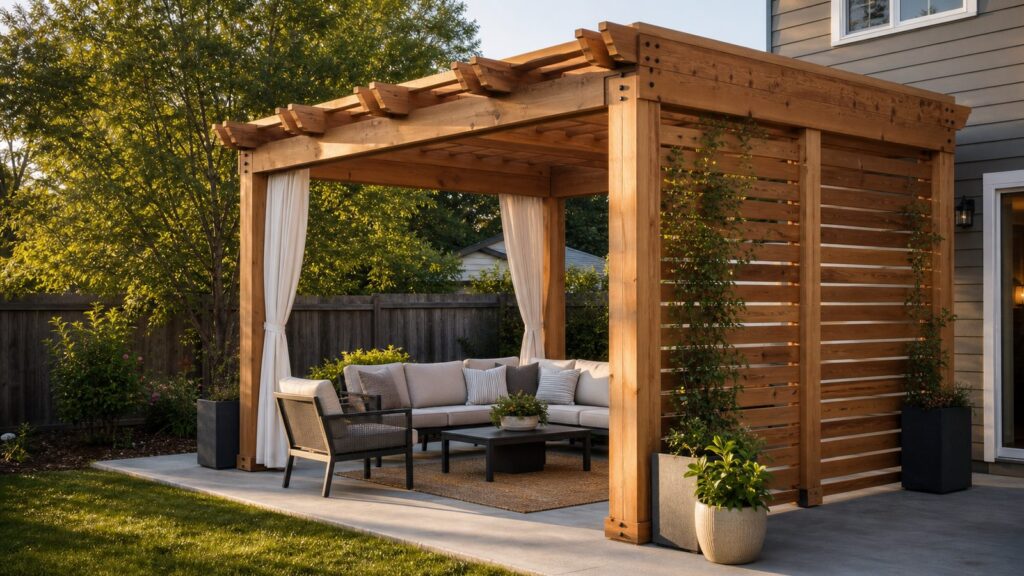
Most homeowners only need to block one or two angles. A 6- to 12-foot privacy screen in the right location can do more than curtains on all four sides. The right solution also needs to handle wind, sun, drainage, maintenance, and local code. A privacy feature that looks good on a calm spring day can become a sail in a thunderstorm if it is attached casually to a pergola frame.
As an Amazon Associate I earn from qualifying purchases.
Free tools Windows power users keep installed
One-click scans. No signup required.
For 2026 budgeting, a new installed pergola commonly falls around $2,100 to $6,400 nationally, with many projects averaging near $4,000 to $4,200. Larger custom pergolas, motorized louvered systems, masonry bases, electrical work, and engineered footings can push that much higher, often $15,000 to $50,000 or more. Privacy upgrades are usually less expensive than the pergola itself, but they still deserve real planning.
Here are five practical ways to add privacy to a pergola, from the fastest fabric upgrade to built-in walls that look like part of the original construction.
#1 Best Overall

- 𝗢𝘂𝘁𝗱𝗼𝗼𝗿 𝗣𝗿𝗶𝘃𝗮𝗰𝘆 𝗦𝗰𝗿𝗲𝗲𝗻 𝗳𝗼𝗿 𝗣𝗮𝘁𝗶𝗼, 𝗚𝗮𝗿𝗱𝗲𝗻 & 𝗕𝗮𝗹𝗰𝗼𝗻𝘆:Transform your outdoor area with this decorative metal privacy screen. The 72x44in freestanding panel creates a modern garden divider that shields unwanted views while adding a contemporary touch to your patio, balcony, or backyard.
- 𝗗𝗲𝗰𝗼𝗿𝗮𝘁𝗶𝘃𝗲 𝗟𝗮𝘀𝗲𝗿 𝗖𝘂𝘁 𝗧𝗿𝗼𝗽𝗶𝗰𝗮𝗹 𝗟𝗲𝗮𝗳 𝗗𝗲𝘀𝗶𝗴𝗻:Features an elegant laser-cut tropical leaf pattern that blends art and function. This modern outdoor décor screen adds visual interest and turns your patio or garden into a relaxing, stylish retreat.
- 𝗛𝗲𝗮𝘃𝘆-𝗗𝘂𝘁𝘆 𝗦𝘁𝗲𝗲𝗹 & 𝗥𝘂𝘀𝘁𝗽𝗿𝗼𝗼𝗳 𝗙𝗶𝗻𝗶𝘀𝗵:Built from thick, heavy-duty steel with a durable black powder-coated finish, this rust-resistant metal privacy fence stands strong against rain, sun, and wind — ensuring beauty and stability through every season.
- 𝗩𝗲𝗿𝘀𝗮𝘁𝗶𝗹𝗲 𝗙𝗿𝗲𝗲𝘀𝘁𝗮𝗻𝗱𝗶𝗻𝗴 𝗗𝗶𝘃𝗶𝗱𝗲𝗿 𝗣𝗮𝗻𝗲𝗹:Perfect as a garden privacy wall, patio divider, or balcony screen. Use one panel for a decorative accent or connect multiple panels for expanded coverage — a practical and elegant addition to any outdoor landscape.
- 𝗘𝗮𝘀𝘆 𝗗𝗜𝗬 𝗜𝗻𝘀𝘁𝗮𝗹𝗹𝗮𝘁𝗶𝗼𝗻 & 𝗦𝘁𝗮𝗯𝗹𝗲 𝗦𝘁𝗿𝘂𝗰𝘁𝘂𝗿𝗲:Includes base plates, hardware, and step-by-step instructions for a quick DIY setup. The freestanding design ensures flexible placement and reliable stability — ideal for renters or homeowners who want instant outdoor privacy.
1. Outdoor Curtains for Fast, Adjustable Privacy
Outdoor curtains are the quickest way to soften a pergola and block side views. They work especially well around dining areas, lounge seating, and hot tubs where you want privacy at certain times but open airflow the rest of the day.
For most standard pergolas, expect a practical installed budget of about $200 to $1,000. Basic outdoor curtain sets often run roughly $70 to $150 or more per set, but the finished cost depends on how many openings you cover, whether you use rods, aircraft cable, or track systems, and whether a contractor installs the hardware. Custom solution-dyed acrylic panels, heavier hems, marine-grade tracks, and large openings can cost more.
Do these 3 things before closing this tab:
1Fix the driver behind crashes, sound loss and screen glitches2Repair Windows errors before they cause bigger problems3Scan for outdated or missing drivers - takes under a minuteWhere Curtains Work Best
Curtains are strongest when the privacy need changes throughout the day. For example, a west-facing side may need afternoon glare control, while the neighbor-facing side only needs coverage during evening use. Curtains let the pergola stay open when privacy is not needed.
They are also a good choice when the pergola is already built and you do not want to add posts, panels, or a permanent wall. In many cases, curtains can be installed in one day once materials are on site.
Builder Details That Matter
Use weather-rated fabric, not indoor drapery fabric. Look for UV resistance, mildew resistance, reinforced grommets or tabs, and washable panels. Polyester outdoor curtains are common at the low end. Higher-end acrylic fabrics usually hold color better in strong sun.
Hardware matters as much as fabric. We prefer stainless steel, hot-dip galvanized, powder-coated, or manufacturer-approved coated hardware outdoors. Cheap plated hardware can rust quickly, stain the patio, and leave streaks on posts. For windy yards, add tie-backs, bottom weights, guide cables, or side tracks so the curtain does not whip into furniture, grills, fans, or lighting.
Do not hang curtains close to open flames. Keep fabric clear of grills, fire pits, heaters, and hot exhaust. If the pergola has a ceiling fan, confirm the curtain cannot blow into the blade path.
2. Roll-Down Shades, Bamboo Blinds, or Exterior Screens
Roll-down shades are a cleaner, more controlled option than curtains when you want privacy on demand without a fabric-draped look. They are a strong fit for street-facing pergolas, side yards, outdoor kitchens, and patios where one side gets heavy sun or direct neighbor views.
Costs vary widely. Basic manual outdoor shades may be a few hundred dollars per opening. Standard blind and shade projects often fall around $144 to $434 for product and labor in national data, but exterior products tend to run higher because of size, wind exposure, and hardware. Outdoor blinds are often quoted around $90 to $300 per unit, while motorized exterior shades can run $350 to $1,000 or more per opening. A side-track outdoor shade system for a large 10-foot by 10-foot opening can land around $2,500 to $3,500.
Manual vs Motorized Screens
Manual shades are simpler, cheaper, and easier to service. They work well for smaller openings and seasonal use. Motorized screens make sense when openings are large, the pergola is used daily, or the screen needs to integrate with lighting, fans, smart controls, or a louvered roof system.
Windows Errors? Fix Them Before They Spread
Repair common Windows errors and clear accumulated junk for a smoother, more stable PC - no reinstall needed.Free scan · no reinstallCrashes, No Sound, or Screen Glitches?
Random freezes, missing sound and display glitches usually trace back to one bad driver. Find and replace yours safely.Free scan · under a minuteRank #2

- 【Wind & Rust Resistant Design】—— Wind-permeable panels with expansion bolts and ground stakes ensure stability outdoors. Both panels and screws are powder-coated, with waterproof leg plugs for excellent rust, weather and corrosion resistance.
- 【Modern & Stylish Decor】 —— The elegant black finish paired with louvered panel design ensures this privacy screen blends seamlessly into your living space. Its three separate panels can also be used for DIY decor, helping you craft a trendy,
- 【Sturdy Metal Construction】 —— Designed with two vertical panels and one horizontal panel, paired with a square-tube reinforced frame for solid structure and excellent stability. The powder-coated surface effectively improves sun and water resistance, preventing rust and corrosion while offering great weather resistance for long-lasting durability.
- 【Create Your Private Oasis】 —— Perfect for pools, patios, balconies, gardens and more. It blocks the view of passersby and neighbors without sacrificing aesthetic appeal, helping you build a private retreat that’s uniquely yours.
- 【Installation Instructions】—— All necessary mounting hardware and easy-to-follow instructions are included in the package. Pre-drilled holes are provided for all screw positions, making installation achievable for both seasoned DIY enthusiasts and first-time installers (Heavy-duty reinforced panels – 2+ people recommended for assembly.).
If you add motorized screens, lighting, outlets, heaters, or fans, budget roughly $500 to $2,000 or more for electrical work. Use a licensed electrician for exterior circuits, GFCI protection, weather-rated boxes, and code-compliant wiring. Costs rise when trenching, panel distance, smart controls, or permits are involved.
Wind and Track Systems
A roll-down screen catches wind. The larger the opening and the tighter the fabric, the more seriously the attachment points need to be treated. Side tracks improve privacy, reduce flapping, and help the screen behave better in wind, but they also transfer force into the pergola structure.
Before installing a large exterior shade, check the pergola posts, beam connections, lateral bracing, and footings. A freestanding pergola with light posts and minimal bracing may not be ready for a tightly controlled screen system. In high-wind regions, coastal areas, and exposed yards, product wind ratings and local building requirements matter.
3. Lattice, Trellis, or Horizontal Slat Panels
Fixed panels give a pergola a built-in, architectural look. They are usually the best middle ground when homeowners want privacy every day but still want airflow. Lattice, trellis, and horizontal slat screens can block views without making the pergola feel like a closed room.
Simple DIY lattice panels can be inexpensive. Three vinyl lattice privacy panels can be built for under about $150 in materials in basic examples, though that assumes simple conditions and homeowner labor. A more durable contractor-built screen usually costs more. Budget roughly $150 to $500 for simple DIY panels and hardware, or $500 to $2,500 or more for professionally framed wood, PVC, composite, or cedar screens depending on length, height, finish, post work, and access.
Horizontal slat privacy walls often price like custom fence work. In 2026, privacy fence costs commonly range from $20 to $60 per linear foot installed. Wood is often in the $13 to $45 or $25 to $55 per linear foot range depending on market, height, species, finish, and source. Vinyl privacy fencing often runs $30 to $60 or more per linear foot. Pergola-integrated screens may price higher per foot because small custom work takes careful layout, attachment, trimming, staining, and finish carpentry.
How Much Spacing Is Right?
For horizontal slats, spacing drives both privacy and airflow. A 1/2-inch to 1-inch gap gives strong privacy from many angles while still letting air move. A 1-1/2-inch to 2-inch gap feels lighter and works well when the goal is partial screening rather than full blockage. Wider gaps can still block views if the screen is placed at the right angle.
Height matters too. A 4-foot screen may be enough beside a seated dining area. A 5- to 6-foot screen is more typical for blocking a neighbor deck or side yard. Taller screens may trigger zoning, fence, or accessory structure rules, especially near property lines.
Quick wins for a faster PC:
Clear out junk files and repair common Windows errorsFree Scan →Fix the driver behind crashes, sound loss and screen glitchesFind Drivers →Repair Windows errors before they cause bigger problemsFix Now →Material Choices
Cedar looks warm and natural, takes stain well, and fits many pergola styles. Composite and PVC cost more but reduce maintenance. Aluminum is durable and clean-looking, especially with modern pergolas. Pressure-treated lumber can be cost-effective, but it needs proper drying time, sealing, and fastener selection.
On our projects, we avoid fastening privacy panels as an afterthought to trim boards or decorative rafters. Panels should transfer load into posts, beams, blocking, or dedicated framing. Solid or tightly spaced screens can increase wind load substantially, so the connection is part of the structure, not just decoration.
Rank #3

- 𝐃𝐮𝐫𝐚𝐛𝐥𝐞 𝐑𝐮𝐬𝐭𝐩𝐫𝐨𝐨𝐟 𝐌𝐞𝐭𝐚𝐥 𝐎𝐮𝐭𝐝𝐨𝐨𝐫 𝐏𝐫𝐢𝐯𝐚𝐜𝐲 𝐒𝐜𝐫𝐞𝐞𝐧: This freestanding privacy screen is made of thick galvanized steel with a powder-coated finish, offering all-weather resistance and rust protection. Ideal for patios, gardens, and balconies, it serves as a reliable metal outdoor privacy screen that endures rain, sun, and wind without fading or warping.
- 𝐋𝐨𝐮𝐯𝐞𝐫𝐞𝐝 𝐃𝐞𝐬𝐢𝐠𝐧 𝐟𝐨𝐫 𝐌𝐨𝐝𝐞𝐫𝐧 𝐁𝐚𝐜𝐤𝐲𝐚𝐫𝐝 𝐀𝐩𝐩𝐞𝐚𝐥 & 𝐏𝐫𝐢𝐯𝐚𝐜𝐲: Featuring a stylish louvered privacy screen design, this metal panel adds a modern architectural touch to your outdoor space. It helps create a cozy and private atmosphere, shielding your patio or backyard from nosy neighbors or busy streets while still allowing airflow.
- 𝐅𝐫𝐞𝐞𝐬𝐭𝐚𝐧𝐝𝐢𝐧𝐠 & 𝐑𝐞𝐢𝐧𝐟𝐨𝐫𝐜𝐞𝐝 𝐟𝐨𝐫 𝐒𝐭𝐚𝐛𝐥𝐞 𝐎𝐮𝐭𝐝𝐨𝐨𝐫 𝐔𝐬𝐞: Our freestanding metal garden screen includes wide stabilizing legs and secure anchor points for added balance, making it perfect for use on lawns, decks, or concrete. Optional mounting hardware ensures it stays upright even on windy days.
- 𝐐𝐮𝐢𝐜𝐤 𝐃𝐈𝐘 𝐀𝐬𝐬𝐞𝐦𝐛𝐥𝐲 – 𝐍𝐨 𝐒𝐩𝐞𝐜𝐢𝐚𝐥 𝐓𝐨𝐨𝐥𝐬 𝐑𝐞𝐪𝐮𝐢𝐫𝐞𝐝: With all hardware and step-by-step instructions included, this metal privacy divider is easy to assemble and install. Whether used for permanent or temporary screening, you can complete setup in 30 minutes or less without needing professional help.
- 𝐌𝐮𝐥𝐭𝐢-𝐏𝐮𝐫𝐩𝐨𝐬𝐞 𝐏𝐫𝐢𝐯𝐚𝐜𝐲 𝐏𝐚𝐧𝐞𝐥 𝐟𝐨𝐫 𝐇𝐨𝐦𝐞 & 𝐆𝐚𝐫𝐝𝐞𝐧 𝐔𝐬𝐞: This decorative screen works perfectly as a privacy screen for AC unit, trash bins, pool filters, or balcony dividers. It’s also great for defining garden zones, enhancing patio aesthetics, or hiding unsightly outdoor items. A versatile solution for modern outdoor living.
4. Living Privacy Screens With Vines, Planters, and Shrubs
Plants can make a pergola feel private without making it feel enclosed. They also cool the space, soften hardscape, and make privacy improve over time. The tradeoff is maintenance. A living screen needs the right plant for the climate, a watering plan, pruning, and patience.
Costs range from inexpensive annual vines and planter boxes to several thousand dollars for mature trees, large raised planters, irrigation, soil, and professional planting. The biggest cost drivers are plant maturity, container size, soil preparation, irrigation, drainage, regional plant availability, and whether you want instant privacy or are willing to wait one to three growing seasons.
Good Plant Options
Common pergola privacy choices include climbing jasmine, clematis, honeysuckle, grape vines, columnar evergreens, tall ornamental grasses in planters, espaliered shrubs, and regionally appropriate climbing plants. The right answer depends on your USDA zone, sun exposure, winter lows, deer pressure, soil, and irrigation access.
Do not choose plants only by how they look in a nursery. Ask how large they get after five years, whether they attach aggressively, how often they need pruning, and whether they drop fruit, sap, leaves, or flowers onto the patio. A plant that is beautiful on a fence may be annoying over an outdoor dining table.
Planters, Drainage, and Irrigation
Raised planters and planter walls are useful because they put plant mass exactly where privacy is needed. They also avoid planting too close to footings or buried utilities. A 24-inch-deep planter can support many shrubs and vines better than a shallow decorative box, but it gets heavy fast. Soil, water, and mature plants add real load to patios, decks, and elevated structures.
Drainage is not optional. Water should not stain pavers, rot posts, or undermine pergola footings. Use drainage mats, weep paths, saucers where appropriate, and irrigation that can be serviced. For built-in planters, we like to decide irrigation routing before final trim and finish work so tubing is not awkwardly clipped onto finished surfaces later.
The Tool Desk
Outbyte Driver Updater FREEFix the driver behind crashes, sound loss and screen glitchesFind Drivers →Outbyte PC Repair FREERepair Windows errors before they cause bigger problemsFix Now →5. Partial Walls, Fence Tie-Ins, and Planter Walls
A partial wall is often the most effective privacy upgrade because it solves the exact sight-line problem. Instead of enclosing the pergola, you block the view from a neighbor window, road, hot tub, dining area, or outdoor kitchen. This can be a wood feature wall, masonry knee wall, fence extension, planter wall, or combination of materials.
Partial walls cost more than curtains or basic shades, but they look intentional when designed correctly. A small wood privacy wall may price similarly to custom fence work, while masonry, stone veneer, integrated seating, electrical, lighting, or planter construction can move the project into several thousand dollars. If you are already building or renovating the pergola, this is the best time to integrate the wall, posts, lighting, outlets, and drainage.
Best Uses for a Partial Wall
Use a partial wall when the privacy problem is fixed and predictable. A street view from the southeast corner, a second-story bedroom window, or a direct line into a hot tub can often be solved with one well-placed wall. This is where measuring and mocking up pays off. We will often use temporary lumber, cardboard, or landscape flags to test a proposed wall height before framing anything permanent.
A 36- to 42-inch knee wall can screen furniture and define an outdoor room without blocking views while standing. A 5- to 6-foot wall provides stronger privacy for seating or spa areas. Taller walls need closer code review and better structural planning.
Rank #4

- CREATE A MORE PRIVATE OUTDOOR AREA: This 72-inch outdoor privacy screen helps define a comfortable seating, dining or relaxation space without making the area feel closed in. The open geometric metal panels provide partial privacy while allowing natural airflow and light, making the screen suitable as a patio privacy screen, balcony privacy screen, deck privacy screen or decorative fence panel.
- POWDER-COATED STEEL CONSTRUCTION: Made of powder-coated steel with wide 19.7-inch support feet, this freestanding privacy fence screen offers a more substantial feel than common plastic dividers while remaining practical to reposition before anchoring. The open-pattern design reduces wind pressure compared with a fully solid panel, and the included ground stakes or expansion hardware help secure the screen to a suitable surface.
- FREESTANDING 3-PANEL DESIGN: Three connected privacy panels form one complete screen measuring approximately 45.6 inches wide by 71.9 inches high. The tall, narrow footprint fits patios, balconies, decks, porches and gardens without taking up excessive floor space. Additional sets may be placed side by side when wider visual coverage is needed.
- DECORATIVE DIVIDER FOR MULTIPLE SPACES: Use this metal privacy screen as a patio divider, balcony privacy fence, garden screen, porch partition, poolside visual barrier or decorative backdrop. It can also help screen trash cans, air-conditioning units and garden tools, or serve indoors as a room divider panel for apartments, sunrooms, dining areas, bedrooms or offices.
- EASY LABELED ASSEMBLY: Major parts and hardware include matching letter labels that correspond with the illustrated instructions for easier identification. An electric screwdriver are recommended for faster assembly. Secure every panel and support foot with the included hardware before outdoor use. Prior to an incoming storm, ensure the stability of the privacy screen: secure both sides with metal ties, anchor the base with U‑shaped steel stakes, or temporarily move it indoors.
Do Not Ignore Structure
Solid walls create more wind resistance than open lattice or spaced slats. If the wall is tied into the pergola, the pergola must be able to resist the added load. If it is freestanding, it needs its own posts, footings, and bracing. Masonry and stone also introduce weight and foundation questions that should be handled before construction starts.
For high-end outdoor living areas, coordinate privacy walls with lighting, outlets, audio, fans, heaters, and shade controls at the same time. It is cheaper and cleaner to plan conduit, boxes, low-voltage wiring, and blocking before the finish materials are installed.
Cost Comparison for Pergola Privacy Options
The right budget depends on the pergola size, number of sides, exposure, product quality, and whether the existing structure can accept the added load. Use these 2026 ranges as planning numbers, not firm bids.
| Privacy option | Typical 2026 budget | Best for | Main caution |
|---|---|---|---|
| Outdoor curtains | $200-$1,000 installed for many pergolas | Flexible privacy, glare control, softer look | Needs wind control, washable fabric, corrosion-resistant hardware |
| Manual roll-down shades | Often a few hundred dollars per opening | Street-facing or neighbor-facing sides | Large screens need strong attachment points |
| Motorized exterior screens | $350-$1,000+ per opening; large side-track systems about $2,500-$3,500 | Daily use, large openings, premium outdoor rooms | Requires electrical planning and product wind ratings |
| Lattice or trellis panels | $150-$500 DIY; $500-$2,500+ professionally built | Partial privacy with airflow | Tight panels increase wind load |
| Horizontal slat screen | Often comparable to $20-$60 per linear foot fence work, sometimes higher | Modern built-in privacy | Spacing, post attachment, and finish quality matter |
| Living privacy | Low-cost vines to several thousand dollars for mature planting and irrigation | Natural screening, cooling, softer edges | Needs water, pruning, drainage, and climate-appropriate plants |
| Partial wall or fence tie-in | Several hundred to several thousand dollars | Blocking a specific view permanently | May trigger permits, setbacks, structural requirements, or HOA review |
How to Choose the Right Pergola Privacy Idea
Start with the view you want to block, not the product you saw first. Sit in the pergola at the time of day you use it most. Mark the unwanted views: neighbor deck, second-story window, sidewalk, street, driveway, pool equipment, or outdoor kitchen exposure. Then decide whether the privacy needs to be permanent, seasonal, adjustable, or growing over time.
If you only need privacy during dinner, curtains or roll-down shades are usually enough. If the same neighbor-facing side is always exposed, fixed slats or lattice are cleaner. If you want the space to mature and feel cooler, add plants. If the issue is one direct line into a hot tub or lounge area, build one partial wall instead of enclosing the whole pergola.
Airflow matters in most US climates. Solid privacy on three or four sides can turn a comfortable pergola into a hot box, especially in humid areas. Horizontal slats, lattice, mixed planting, and split-height walls usually feel better than full-height solid panels. Good privacy design blocks eyes, not breezes.
Permits, HOA Rules, Setbacks, and 811
Privacy additions can trigger rules even when the original pergola was allowed. Many jurisdictions exempt small accessory structures from permits under certain conditions, but the details vary by city, county, height, square footage, roof type, attachment to the house, electrical work, and location on the lot. Some places treat structures under 120 square feet differently, but that does not automatically exempt zoning, setbacks, wind requirements, easements, or HOA approvals.
Before adding posts, walls, electrical, or a fence tie-in, document the dimensions, height, location, attachment points, materials, and distance to property lines. Clear sketches reduce back-and-forth with the building department or HOA.
What’s actually slowing this PC down?
Pick the symptom - the matching free tool is one click away.
Call 811 before digging for new posts, footings, planter walls, electrical trenching, or irrigation. Utility locating is a basic job-site step, not a formality. Gas, electric, water, communication, and irrigation lines are frequently closer to patios and fence lines than homeowners expect.
Also check clearance around grills, fire pits, heaters, fans, and exterior outlets. Fabric, vines, wood slats, and dry planting material should stay clear of heat sources. Electrical work outdoors should use weather-rated equipment, proper covers, GFCI protection, and licensed installation where required.
Best Value

- STYLISH NATURAL WOOD: This FSC certified wood screen is made with real wood meaning no two boards have the same grain color, finish, or wood knots differing it from vinyl outdoor privacy fence screen panels.
- EASY TO INSTALL: Our wood privacy fence panel assembles in approximately 90 mins and installation is simple and easy. Using a mallet and the included ground stakes, tap your posts into the ground, securing your screen.
- NO DIGGING REQUIRED: Innovative no dig system saves you time and hassle.
- PRIVACY AND CHARM: Our no dig air conditioner fence is perfect for hiding unattractive backyard items such as AC units, trash cans, pool equipment, children's toys, and more.
- DIMENSIONS: Once assembled, your wood outdoor privacy screen will measure 60.5in H x 38.625in W. That's 5ft of height for extra privacy around your patio, deck, garden, or backyard.
When to DIY vs When to Hire a Pro
DIY is reasonable for simple outdoor curtains, small manual shades, lightweight removable panels, and basic planter-based privacy when you are not digging, altering structure, or adding electrical. A handy homeowner can often install curtain rods, tensioned cables, tie-backs, and off-the-shelf shades over a weekend. Simple lattice panels can also be a DIY project if they are low, well-supported, and not pretending to be structural.
Hire a pro when the work changes how the pergola handles wind or load. That includes large roll-down screens, side-track systems, tall slat walls, masonry walls, new posts, new footings, electrical, roof changes, or anything attached to a house. You should also bring in a contractor when the pergola already feels loose, leans, moves in wind, or has undersized posts and weak bracing.
Quick wins for a faster PC:
Fix the driver behind crashes, sound loss and screen glitchesFind Drivers →Repair Windows errors before they cause bigger problemsFix Now →Scan for outdated or missing drivers - takes under a minuteDriver Scan →A professional build is also worth it when finish quality matters. Privacy walls are highly visible. Uneven slat spacing, exposed fasteners, rust streaks, warped boards, poor stain work, and awkward transitions make the whole outdoor space feel patched together. Built correctly, privacy should look like it was part of the pergola design from day one.
Our Practical Recommendation
For most homeowners, the best pergola privacy solution is a combination. Use a fixed screen where the view problem never changes, then add a flexible layer where sun, wind, and privacy shift through the day. For example, install horizontal cedar slats on the neighbor-facing side and outdoor curtains on the dining side. Or use lattice panels with vines on one side and a roll-down solar shade toward the street.
Keep the plan targeted. A pergola is valuable because it is open, shaded, and connected to the yard. The goal is not to turn it into a small room. The goal is to make the space comfortable enough that you actually use it for coffee, dinner, reading, entertaining, or a quiet evening outside.
If you are planning a new pergola, privacy should be designed before the posts are set. That allows the builder to size posts, footings, beams, blocking, electrical, drainage, and finish details around the final use. If the pergola already exists, start with a careful sight-line review and choose the lightest solution that solves the real problem.
The Tool Desk
Outbyte PC Repair FREERepair Windows errors before they cause bigger problemsFix Now →Outbyte Driver Updater FREEScan for outdated or missing drivers - takes under a minuteDriver Scan →Frequently Asked Questions
What is the cheapest way to add privacy to a pergola?
Outdoor curtains are usually the cheapest fast upgrade. Many pergolas can be fitted with weather-rated curtains, rods or cables, anchors, and tie-backs for about $200 to $1,000, depending on size and fabric quality.
Do I need a permit to add privacy screens to my pergola?
Sometimes. Small removable curtains may not need a permit, but fixed walls, new posts, electrical work, tall screens, fence tie-ins, and structural changes can trigger local building, zoning, setback, wind, or HOA requirements.
Are curtains or roll-down shades better for pergola privacy?
Curtains are softer, lower-cost, and flexible. Roll-down shades look cleaner and work better for one exposed side, especially along a street or neighbor-facing view. In windy areas, shades with side tracks usually perform better than loose fabric.
Can privacy panels make a pergola unsafe in high winds?
Yes. Solid panels, tight slats, exterior screens, and curtains can catch wind and transfer force into posts, beams, fasteners, and footings. Large or permanent privacy features should be attached to proper framing, not just decorative trim.
Recommended Free Tools
How do I add privacy without blocking airflow?
Use partial-height screens, lattice, horizontal slats with 1/2-inch to 2-inch gaps, mixed planting, or one targeted wall instead of closing every side. The best design blocks sight lines while leaving air paths open.
What plants work well for pergola privacy?
Common options include climbing jasmine, clematis, honeysuckle, grape vines, columnar evergreens, tall grasses, and espaliered shrubs. Choose plants for your local climate, sun exposure, watering plan, and maintenance tolerance.
Quick Recap
Product prices and availability are accurate as of the date/time indicated and are subject to change. Any price and availability information displayed on Amazon at the time of purchase will apply.

