Outdated Drivers Are Slowing You Down
One free scan finds every outdated or missing driver and matches the right update for your exact hardware.Free scan · exact hardware matchPC Slower Than It Used to Be?
A free scan shows the junk files, broken settings and background clutter dragging Windows down - then fixes them in one click.Free scan · Windows 10 & 11Some links on this page are affiliate links: if you buy through them we may earn a commission, at no extra cost to you.
New York City construction spending is forecast to reach $79.8 billion in 2026, an inflation-adjusted increase of about $10 billion from 2025, according to the New York Building Congress (NYBC) 2026–2028 New York City Construction Outlook Report, published in October 2026. Residential work accounts for most of the growth: spending is expected to approach $27 billion, or 34% of the city total, while permits for 31,442 new housing units are projected. Those permits represent approvals, not apartments already completed or ready for occupancy.
Is New York City construction spending up $10 billion in 2026?
Yes. NYBC forecasts $79.8 billion in 2026 spending in constant, inflation-adjusted dollars, roughly $10 billion more than the 2025 level on the same basis. The report also projects about $81 billion in 2027 and $82 billion in 2028. Across 2026–2028, inflation-adjusted spending is expected to total $242.9 billion, 16% above the previous three-year period.


As an Amazon Associate I earn from qualifying purchases.
The distinction between real and nominal dollars matters. The $10 billion comparison removes inflation; nominal spending, which includes the effect of higher prices, is higher. Readers comparing the outlook with budgets, contracts or older reports should confirm which dollar basis is being used.
How much of the increase is residential?
Residential construction is the largest growth engine in the forecast. NYBC expects residential spending to reach nearly $27 billion in 2026, increasing its share of citywide spending from 30% in 2025 to 34% in 2026. For 2026–2028, inflation-adjusted residential spending is projected to be 64% higher than in the preceding three-year period, an increase of approximately $32 billion.
Popular on Amazon
The category includes new construction as well as rehabilitation and renovation work. NYBC reports average residential construction cost rising from $174,000 per unit in 2025 to $184,700 in 2026. Including renovations, residential capital spending averages $649 per square foot and could total about $27 billion by the end of 2026.
How many new housing units will NYC permit?
The outlook projects 31,442 housing-unit permits in 2026, up from 19,724 in 2025. It forecasts 32,803 units in 2027 and 34,904 in 2028.
What’s actually slowing this PC down?
Pick the symptom - the matching free tool is one click away.
NYBC attributes the increase to large-scale rezonings, the City of Yes initiative and conversions of offices to residential use. The figures describe permits issued or expected, not a guaranteed count of finished apartments. The report does not establish how many units will be affordable, how permits will be distributed among the five boroughs or when the homes will be occupied.
Also popular on Amazon

- As Seen In: The New York Times, Good Morning America, Cornell Alumni Magazine, Bay Area Parent
- Designed to teach financial concepts to children aged 4-10 in a fun and engaging way.
- Each book in the series focuses on a different financial concept, breaking down complex ideas into simple, easy-to-understand language, accompanied by colorful illustrations that keep young readers interested.
What is driving New York’s construction boom?
Policy and land-use changes
Rezoning decisions and the City of Yes initiative are opening additional development capacity. Office-to-residential conversions are another source of housing activity, although conversion feasibility varies with building layouts, code requirements, financing and neighborhood demand.
Large projects and institutional investment
Three licensed casino developments account for approximately $17.6 billion of planned non-residential investment: Hard Rock Metropolitan Park near Citi Field ($8.1 billion), Resorts World’s Aqueduct expansion ($5.5 billion) and Bally’s Bronx at Ferry Point ($4 billion). Their inclusion materially lifts the citywide non-residential forecast, but the projects remain planned investments rather than a measure of completed construction.
Public capital programs
Government construction spending is projected at $23.8 billion. Transportation, public facilities and the Metropolitan Transportation Authority capital plan are among the major components, providing a substantial public-sector pipeline alongside private development.
Also popular on Amazon
How do residential, non-residential and government spending compare?
| Category | 2026 forecast | What it includes or explains |
|---|---|---|
| Residential | Nearly $27 billion | About 34% of citywide spending; new construction, rehabilitation and renovations |
| Non-residential | About $29 billion | Commercial and other private work, including three planned casino projects totaling about $17.6 billion |
| Government | $23.8 billion | Transportation, public facilities and the MTA capital plan among the principal elements |
These categories are reported on the outlook’s inflation-adjusted basis unless otherwise noted. They are components of the citywide forecast, not separate additions to the $10 billion increase.
How much physical construction is forecast?
NYBC expects more than 57 million gross square feet of construction in 2026, with approximately 72% residential. The forecast rises to 59 million gross square feet in 2027 and 63 million in 2028. Gross square footage measures building area and does not translate directly into apartments, usable floor area or completed projects; a single project can also contain substantial non-residential space and common areas.
Will construction spending create more jobs?
Private construction employment is forecast at 142,855 jobs in 2026, 143,212 in 2027 and 143,569 in 2028. NYBC also reports that jobs supported per $1 million of spending have fallen from a pre-pandemic average of 2.7 in 2017–2019 to 1.8 in 2026 as construction costs increased. That ratio means higher spending does not automatically produce a proportionate increase in employment.
Also popular on Amazon
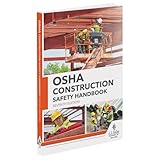
- 2024 OSHA Construction Safety Book is the seventh edition with the new OSHA HazCom final rule on 5/20/24. While the rule takes effect 7/19/24, the compliance dates don’t begin until 1/19/26 per 29 CFR 1910.1200(j).
- Construction Site Book offers quick access to essential OSHA regulations, jobsite hazards, and practical safety tips. It also helps employees identify hazards and prevent injuries and illnesses.
- Features easy-to-read format, full-color images, chapter quizzes with answer key, and comes in a compact size making it a convenient reference for employees.
- Critical topics include Confined Space Entry; Cranes & Derricks; Electrical Safety; Emergency Response; Ergonomics & Back Safety; Excavations; Fall Protection; First Aid & Bloodborne Pathogens; HazCom; Health & Wellness; Jobsite Exposures; Lockout/Tagout; Ladders & Stairways; Materials Handling/Storage; Motor Vehicles; PPE; Scaffolds; Site Safety & Security; Slips, Trips & Falls; Tool Safety; Welding, Cutting & Brazing; and Work Zone Safety.
- Specifications: 5 1/4” x 7 1/4", English, Soft bound. 7th Edition. Copyright 2024.
What could slow the forecast?
- Interest rates: More expensive borrowing can delay starts, reduce project size or make conversions unviable.
- Tariff uncertainty: Changes affecting imported materials can complicate pricing and procurement.
- Material costs: Escalating prices can reduce margins and push projects back into redesign or rebidding.
- Federal infrastructure funding: Uncertainty over federal support could affect transportation and other public works.
The outlook therefore describes a strong trajectory, not a guarantee that every planned dollar or permit will become completed construction.
What should readers take from the 2026 outlook?
The central shift is residential: housing-related spending, permits and floor area are all forecast to expand sharply, supported by rezonings, City of Yes policies and office conversions. Public infrastructure and several very large private projects add breadth to the pipeline. The most important qualification is measurement: the headline $10 billion gain is inflation-adjusted, permits are not completed homes, and the report does not provide a borough-by-borough or affordability breakdown.
Frequently Asked Questions
Does a housing permit mean a new NYC apartment is already under construction?
No. A permit authorizes specified work after review, but a project can still face financing, contracting, inspections, site conditions or legal delays before construction begins. Some permitted projects are ultimately revised or do not proceed.
Also popular on Amazon
Why can construction spending rise faster than construction employment?
Materials, equipment, land, insurance and financing can raise the cost of each project without requiring the same number of additional workers. NYBC’s decline in jobs per $1 million of spending illustrates that relationship.
Does the forecast show how many affordable homes New York will add?
No. The published outlook gives total projected housing-unit permits, but it does not state the affordable share. Affordability would require separate information about program eligibility, income limits, rents and project financing.
Do these 3 things before closing this tab:
1Repair Windows errors before they cause bigger problems2Scan for outdated or missing drivers - takes under a minute3Clear out junk files and repair common Windows errorsAre office-to-residential conversions included in the residential figures?
The outlook identifies office-to-residential conversions as one reason permits are expected to increase. Its reported residential totals also include rehabilitation and renovation activity, so the figures are broader than ground-up apartment construction alone.
Quick Recap
Product prices and availability are accurate as of the date/time indicated and are subject to change. Any price and availability information displayed on Amazon at the time of purchase will apply.

