Some links on this page are affiliate links: if you buy through them we may earn a commission, at no extra cost to you.
The best community gardens are designed as shared neighborhood infrastructure, not merely as rows of private plots. A strong plan combines productive growing space with safe soil, reliable water, accessible paths, pollinator habitat, storage, education, and a management system that keeps the site active after the opening workday.
The best community gardens are designed as shared neighborhood infrastructure, not merely as rows of private plots. A strong plan combines productive growing space with safe soil, reliable water, accessible paths, pollinator habitat, storage, education, and a management system that keeps the site active after the opening workday.
As an Amazon Associate I earn from qualifying purchases.
Crashes, No Sound, or Screen Glitches?
Random freezes, missing sound and display glitches usually trace back to one bad driver. Find and replace yours safely.Free scan · under a minuteWindows Errors? Fix Them Before They Spread
Repair common Windows errors and clear accumulated junk for a smoother, more stable PC - no reinstall needed.Free scan · no reinstallThese seven ideas work for a new garden or for upgrading an underused one. Adapt the layout to the site, local climate, applicable building and accessibility requirements, and the garden’s actual volunteers and partners.
Disclosure: The equipment categories mentioned below are optional implementation aids. Check dimensions, materials, certifications, capacity, local availability, and site requirements before buying.
Popular on Amazon

- Large capacity: Provide enough growth space for deep-rooted plants like potatoes, tomatoes, broccoli, etc. Tall enough to keep pets away from the garden planter and give you easy access!
- Stable and Solid Construction: Double card frames on the two sides of the sheet make the raised garden kits more durable and stable, and 4 reinforcing rods make the whole raised garden bed more stable. Never worry about its distortion or collapse and it presents a much more beautiful design.
- Open bottom: Sits on the ground garden bed, provide good drainage, keep weeds away from soil, defense against pests, and protect your plants. An open base design supports soil drainage, It is more conducive to the healthy growth of plants and balances soil moisture. Planter raised beds will be the best choice for your garden planting.
- Environment-Friendly: Built with an open bottom so it keeps the plants away from root rotting and water built up.
- Easy to assemble: We come with nuts, bolts, washers and instructions so that you can easily assemble without any experience.
1. Let the community design the garden—and its rules
Start with the people who will use, maintain, and live near the garden. Invite prospective gardeners, nearby residents, schools, food-access organizations, neighborhood groups, and the eventual garden coordinator to help define the project.
Before choosing a layout, agree on the garden’s primary purpose. It might use:
- Individual allotment plots;
- Shared production beds;
- Donation or food-access growing;
- Children’s and teaching gardens; or
- A hybrid of several models.
Then write a short action plan covering the crops, planting methods, growing structures, water access, storage, responsibilities, and year-one goals. A practical launch sequence is one community vision meeting, one site-design session, and a seasonal workday calendar before construction begins.
The operating rules should answer ordinary questions before they become disputes:
- How large are plots, and what counts as acceptable use?
- Who waters shared beds and newly planted areas?
- How are tools checked out, returned, and maintained?
- Which pest-management methods are allowed?
- How are shared or donated vegetables divided?
- What volunteer hours or maintenance duties are expected?
- How are conflicts handled?
- What happens when a plot is neglected or abandoned?
This is not paperwork for its own sake. CDC community-garden implementation work identified trained coordinators, partnerships, volunteer recruitment, education, and recordkeeping as important supports for garden maintenance and sustainability. A local Cooperative Extension office or Master Gardener program may also be able to provide region-specific growing, training, and soil-testing referrals; verify what is available in your area.
2. Build an accessible raised-bed section with permanent paths
Include at least one group of raised or container beds that can be reached without stepping into planting soil. This helps people who garden from a seated position, have limited mobility, or cannot comfortably bend to ground level. Raised beds can also improve growing conditions on compacted or unsuitable urban ground.
The Tool Desk
Outbyte Driver Updater FREEFix the driver behind crashes, sound loss and screen glitchesFind Drivers →Outbyte PC Repair FREERepair Windows errors before they cause bigger problemsFix Now →Also popular on Amazon
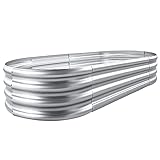
- Each raised metal garden bed size: 4×2×1ft ,7.14Cu
- Upgraded quality and structure: raised garden beds outdoor are made of Q195 galvanized metal sheet, double-layer anti-corrosion galvanizing and oval structure design, which is more beautiful, can withstand greater pressure at the interface, is not easy to loose, and the interface will not Deformed and can be reused for many years.
- Easy to set up, this galvanized stock tank only takes about 5 minutes to easily assemble and continue planting plants.
- Open base: This planter raised garden bed metal galvanized is designed with an open base, which can effectively avoid water accumulation and decay, protect the roots of plants, and allow the roots to better absorb nutrients
- Double thickness: The average thickness of this galvanized planter galvanized sheet reaches 0.78mm, and the thickest part can reach 1.56mm, which is extremely stable. Compared with the ordinary rectangular elevated garden bed with a thickness of 0.3mm, it will be the right choice for you. buy it! ! !
Use a mixture of bed heights rather than assuming that one standard dimension works for everyone. Keep some beds at ground level, add several higher beds, and provide nearby seating and shade. The accessible route should connect the entrance to the beds, water points, tools, and gathering areas without requiring users to cross planting spaces.
Permanent paths protect the soil from compaction and make circulation predictable. They should be firm, stable, unobstructed, and wide enough for the people and mobility devices the garden is intended to serve. The cited ADA Title II primer describes an accessible route as the path used to enter and move through a facility and identifies a minimum three-foot route; local accessibility rules and site-specific standards still need to be checked before construction.
An optional raised garden bed kit can simplify one small demonstration area, but a community garden should compare modular products with site-built beds before committing. Check the bed’s material, interior dimensions, drainage, anchoring, working height, delivery requirements, and the amount of soil it needs. Raised beds do not remove the need to investigate possible contamination.
3. Make soil safety the first planting decision
Do not begin with seeds. Begin with the property’s history and a soil-safety plan.
Do these 3 things before closing this tab:
1Scan for outdated or missing drivers - takes under a minute2Clear out junk files and repair common Windows errors3Fix the driver behind crashes, sound loss and screen glitchesInvestigate whether the site was previously used for industry, vehicle repair, construction, demolition, waste disposal, intensive pesticide use, or another activity that could have left contaminants behind. Gardens near busy roads or on unknown fill deserve particular care. Soil fertility testing alone may not include lead, arsenic, mercury, pesticides, or other contaminants unless those analyses are specifically requested.
Use an appropriate Cooperative Extension or environmental laboratory to determine which samples and analyses fit the property. EPA guidance recommends considering site history, contaminant testing, certified soil sources, safe compost, and exposure-reduction or remediation measures where needed. USDA food-safety guidance also recommends testing ground soil for contaminants and taking care with nonmunicipal irrigation water.
A consumer soil test kit may help with basic fertility information such as pH or nutrients, but it is not automatically a substitute for qualified laboratory testing for lead, arsenic, pesticides, or other environmental contaminants. Use the kit only for the purpose its instructions and local experts support.
If direct in-ground food production is inappropriate, options may include raised beds or containers filled with documented food-growing soil, a suitable barrier or cap, relocating edible crops, or other measures recommended by environmental professionals. Do not assume that material labeled “clean fill” is safe for food production without documentation and appropriate testing.
Recommended Free Tools
Also popular on Amazon

- Multifunctional Design: This garden planter is separated into two growing areas for different plants or planting methods. The baffle can be removed to form a bigger growing area.
- Practical Use: With this plants box, you can cultivate plants like vegetable, flower, or herbs in your patio, yard, garden, and greenhouse, making it more convenient to manage.
- Simple Assembly: This divisible garden bed is built in a simple yet stable structure by heavy-duty screws and tight connection piece by piece. It is very easy and quick to put them together.
- Flexible DIY: The corner posts have been upgraded that the number of slotting on the posts is increased from 2 on the opposite 2 faces into 4 on 4 faces. Such a change enables users to combine two or more such planting beds more flexibly and fixedly.
- Stable Construction: Our planting raised bed has a piece of complete side plate at each side of the garden bed. It is fixed firmly without leakage of soil. The whole structure is very stable, and the installation is very easy.
4. Pair water conservation with a dependable irrigation plan
Design water access before installing beds. Identify the source, pressure, hose routes, shutoff points, drainage, freeze protection, and who will be responsible for opening, closing, and monitoring the system.
A municipal source is generally easier to manage for watering and cleaning. Wells, ponds, cisterns, and other nonmunicipal sources may require testing and recordkeeping when used around edible crops. A resilient garden can combine:
- A lockable hose bib or controlled access point;
- Labeled watering stations;
- Drip or soaker irrigation;
- Mulch to slow evaporation;
- Moisture checks rather than calendar-only watering; and
- A written watering rota with backup volunteers.
Rain barrels and cisterns can supplement irrigation and reduce runoff, but roof runoff may collect bacteria, bird waste, and chemicals from roofing materials. EPA cautions that water quality should be considered before rain-barrel water is used on edible plantings. Unless local testing and guidance support that use, reserve stored rainwater for ornamental beds, trees, and other low-contact areas.
An optional drip irrigation kit for raised beds or hose timer can make watering more consistent, but selection depends on water pressure, bed layout, climate, maintenance capacity, and local rules. Do not promise universal water savings from a particular product; good design, leak checks, and correct scheduling matter more than the label.
5. Create a managed community compost and soil-building loop
A compost station can turn suitable local leaves, yard trimmings, and eventually approved food scraps into an amendment for the garden. EPA describes community composting as a local model that collects organic material, engages residents, and returns finished compost to nearby gardens, parks, farms, or other soils. Finished compost adds organic matter and can support water infiltration and retention, reduce erosion, and improve disturbed soil.
Start with a controlled system rather than an open dumping area. Post:
- An accepted-materials list;
- A clear list of prohibited materials;
- Instructions for balancing carbon-rich “browns” and wetter “greens”;
- Moisture and turning or aeration procedures;
- Rules for preventing plastic, treated wood, diseased material, and other contamination; and
- The name of the person or team responsible for inspection.
Keep the station away from obstructed routes and manage odors, pests, runoff, and access. Do not invite unrestricted food-scrap dumping before the garden has a trained operator and a contamination-control plan.
An optional community compost bin or compost tumbler may fit a small garden, but capacity, access, aeration, pest control, and maintenance are more important than the equipment style. Begin with leaves and plant residues; expand to approved food scraps only when the operating system can handle them.
6. Add a native pollinator and teaching garden around the food beds
A perimeter or demonstration bed can make the garden more welcoming while supporting pollinators and teaching visitors how food production connects with local ecology. It also gives children, visitors, and residents without a plot a low-pressure way to participate.
Also popular on Amazon

- 2 feet height: Compared with the ordinary 1-foot garden bed, this raised garden box has been improved in all aspects in terms of aesthetics, stable performance, and soil volume. It is time to replace the previous small planter box with a large raised planter box Now, it must be your better choice! ! !
- Large volume: Our large metal raised garden boxes of several specifications have a planting volume of 8×4×2ft=64 cubic meters Feet = 396 gallons. The box with 24 inches deep is very suitable for planting beans, broccoli and other medium to deep root plants
- Durable high-quality material: Galvanized steel raised garden bed is made of upgraded coated steel plate, which has strong anti-rust and corrosion resistance. It can be exposed to the sun, rain and snow for a long time, Reinforced cross bars and fixed piles have been added to help the metal panel maintain its shape and prevent warping and soil leakage over time. Environmentally friendly paint is used on all parts, which does not pollute the soil and provides a healthy environment for plants.
- Open base: This Galvanized planter raised beds uses a bottomless design that allows crops with developed rhizomes to grow without restriction, allowing excess water to be easily drained, and maintaining soil and nutrients.
- Easy to assemble: We provide detailed installation instructions, you can complete the assembly in a short time and start your planting immediately
Choose plants according to the local ecoregion, soil, moisture, mature size, bloom period, and maintenance capacity. Avoid treating a generic national seed mix as universally appropriate. Favor several regionally suitable native species with staggered bloom periods so flowers are available across the growing season. Include interpretive signs about native plants, beneficial insects, vegetable production, and pesticide reduction.
Pollinator habitat can include flowering plants, suitable nesting areas, and some bare or lightly vegetated ground where appropriate to the local species. Avoid unnecessary pesticide exposure and use nonchemical pest-management methods first. If a pesticide is ever considered, follow the product label and applicable local requirements, and account for exposure to gardeners and pollinators.
When purchasing, look for native pollinator plants from a reputable regional source rather than choosing a generic mix without checking species suitability or invasive-plant guidance. Confirm the plants are appropriate for the garden’s region before ordering.
Quick wins for a faster PC:
Clear out junk files and repair common Windows errorsFree Scan →Scan for outdated or missing drivers - takes under a minuteDriver Scan →7. Design harvest-sharing, learning, and volunteer coordination into the site
The garden’s social infrastructure is as important as its beds. Reserve space or growing capacity for at least one shared-use feature, such as:
- A donation plot;
- A shared herb bed;
- A children’s garden;
- A cooking or nutrition demonstration;
- A seed-exchange area;
- A seasonal harvest table; or
- A school or community-group planting project.
Community gardens can create opportunities for healthy-food access, physical activity, nutrition education, social connection, and community engagement, but results depend on access, participation, crop choices, and management. A donation bed alone does not guarantee a reduction in food insecurity.
Assign a coordinator or small team to welcome gardeners, maintain the calendar, train volunteers, track produce, organize workdays, communicate with schools and food-access partners, and keep records. Publish a monthly workday schedule and make responsibilities visible. Log harvested pounds or donated boxes where practical, then review participation, maintenance, crop performance, and safety issues at the end of the first season.
Independent reader supportYour contribution helps us test, update, and keep practical guides available for everyone.Recommended implementation order
- Confirm control and purpose. Verify land control, permissions, utilities, partners, insurance or risk requirements, and the garden’s primary purpose.
- Investigate the site. Review history, soil, water, drainage, sunlight, utilities, access, slopes, and potential hazards.
- Approve the layout. Show food beds, accessible beds, permanent paths, water, compost, pollinator areas, storage, seating, gathering space, and waste handling.
- Write the operating rules. Assign coordination, watering, tool management, compost oversight, plot use, produce sharing, conflict resolution, and abandonment procedures.
- Build the minimum viable garden. Prioritize safe soil, reliable water, accessible circulation, a manageable number of beds, and secure storage before adding complex features.
- Add capacity gradually. Expand into composting, rainwater capture, shared production, teaching events, and pollinator habitat as volunteers and maintenance systems grow.
- Evaluate after one season. Review harvests, donations, participation, volunteer hours, water problems, soil or pest concerns, accessibility barriers, and repairs before the next build phase.
A practical first-year checklist
- Land control and local permissions confirmed
- Community purpose and operating rules written
- Site history and soil-safety questions documented
- Appropriate soil testing completed
- Water source tested or assessed as needed
- Accessible route and permanent paths included in the plan
- Raised, ground-level, and shared beds balanced for the intended users
- Tool storage and checkout procedure established
- Watering rota and backup contact published
- Compost materials and stewardship responsibilities clearly defined
- Regionally appropriate pollinator plants selected
- Workdays, education events, harvest sharing, and data collection scheduled
Frequently asked questions
Should every community garden use raised beds?
No. Raised beds are useful for accessibility, compacted ground, and some contamination-management approaches, but they cost more to build and fill and still require safe soil decisions. A mix of in-ground, raised, container, and shared beds may serve the community better.
Also popular on Amazon
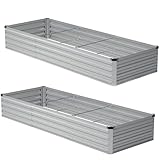
- Specialized in Garden Bed: Size:10x2x1ft.Ideal choice for your gardens,yards and patio to grow vegetables,flowers,fruits and other plants.
- Upgraded Structure and Extra Thickness: The garden bed is made of galvanized metal steel, which can be used for many years without getting rust and deformed.
- Open Bottom Design: The transparent structure at the bottom can prevent water accumulation and protect the roots of plants.At the same time,it can be planted in any position as needed.
- Four Plastic Caps: The garden bed come with 4 protective caps, which install in the 30 corners of the garden bed. Compared with the ordinary rectangular raised garden bed with none components, the caps can protect you from injuring and better looking!
- Quick Setup: With lesser screws and better structure, you just need few minutes to setup your new raised garden bed!
Can rain-barrel water be used on vegetables?
Not automatically. Roof runoff can contain bacteria, bird waste, and roofing-related chemicals. Use it on edible crops only when testing and local public-health or agricultural guidance support that practice. Otherwise, use stored rainwater for ornamental or low-contact plantings.
What is the most important feature to fund first?
Fund the conditions that make the garden safe and maintainable: site investigation, appropriate soil testing, dependable water, accessible circulation, secure tools, and a coordinator. Decorative features and extra beds can wait until the core system works.
How much space should be reserved for shared or donated crops?
There is no universal percentage. Base the allocation on the garden’s purpose, participating partners, expected demand, available volunteers, and realistic watering and harvesting capacity. A smaller, reliably maintained donation bed is better than a larger neglected one.
Frequently Asked Questions
Should every community garden use raised beds?
No. Raised beds are useful for accessibility, compacted ground, and some contamination-management approaches, but they cost more to build and fill and still require safe soil decisions. A mix of in-ground, raised, container, and shared beds may serve the community better.
What’s actually slowing this PC down?
Pick the symptom - the matching free tool is one click away.
Can rain-barrel water be used on vegetables?
Not automatically. Roof runoff can contain bacteria, bird waste, and roofing-related chemicals. Use it on edible crops only when testing and local public-health or agricultural guidance support that practice. Otherwise, use stored rainwater for ornamental or low-contact plantings.
What is the most important feature to fund first?
Fund the conditions that make the garden safe and maintainable: site investigation, appropriate soil testing, dependable water, accessible circulation, secure tools, and a coordinator. Decorative features and extra beds can wait until the core system works.
How much space should be reserved for shared or donated crops?
There is no universal percentage. Base the allocation on the garden’s purpose, participating partners, expected demand, available volunteers, and realistic watering and harvesting capacity. A smaller, reliably maintained donation bed is better than a larger neglected one.
The Bottom Line
Start with community purpose, site safety, water, access, and stewardship. Then add productive beds, compost, pollinator habitat, and shared harvest features at a pace the garden can maintain.
Free tools Windows power users keep installed
One-click scans. No signup required.
Quick Recap
Product prices and availability are accurate as of the date/time indicated and are subject to change. Any price and availability information displayed on Amazon at the time of purchase will apply.

