Do these 3 things before closing this tab:
1Clear out junk files and repair common Windows errors2Fix the driver behind crashes, sound loss and screen glitches3Repair Windows errors before they cause bigger problemsYes, you can mulch tomato plants with grass clippings, and for many homeowners it is one of the cheapest useful mulches available. The key is not to treat grass clippings like bark mulch. Grass is high in nitrogen, fine-textured, and quick to break down. If you dump it around tomatoes in a wet 3-inch pile, it can mat, smell, shed water, and stress the plants. If you dry it first and apply it in thin lifts, it can conserve soil moisture, suppress weeds, reduce soil splash, and add organic matter as it decomposes.
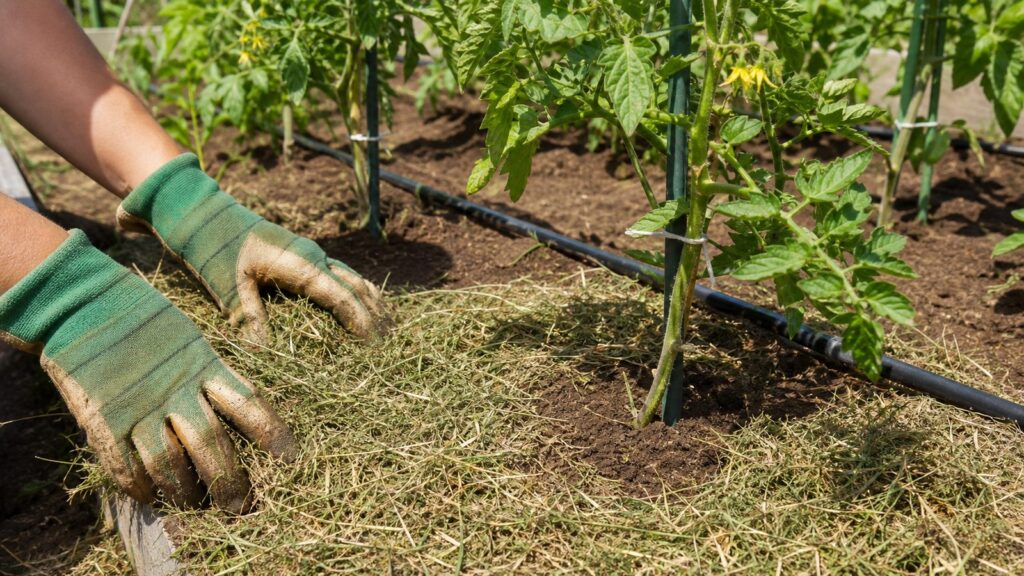
On our landscape and exterior job sites, we treat organic material the same way we treat drainage or grading: small details decide whether the system works. With tomatoes, the safe method is simple. Use only untreated clippings, let them wilt or dry, weed and water the bed first, keep the mulch 2 to 3 inches away from the tomato stem, and build the layer gradually to about 1 to 2 inches settled depth.
As an Amazon Associate I earn from qualifying purchases.
The one hard stop is herbicide risk. Tomatoes are broadleaf plants and can be badly damaged by lawn weed killers carried in grass clippings. If you do not know what was sprayed on the lawn, do not put those clippings on tomatoes. Purchased straw, shredded leaves, or clean compost is cheaper than losing a season of tomato plants.
Windows Errors? Fix Them Before They Spread
Repair common Windows errors and clear accumulated junk for a smoother, more stable PC - no reinstall needed.Free scan · no reinstallOutdated Drivers Are Slowing You Down
One free scan finds every outdated or missing driver and matches the right update for your exact hardware.Free scan · exact hardware matchWhy Grass Clippings Work Around Tomato Plants
Grass clippings are a fast-decomposing organic mulch. Around tomato plants, they help in four practical ways: they reduce evaporation, slow weed growth, moderate soil temperature swings, and reduce soil splash onto lower leaves during rain or irrigation.
That last point matters. Tomato diseases are often encouraged by wet foliage and soil splashing onto the lower plant. Mulch is not a cure for tomato blight, but a clean mulch layer can reduce the amount of soil thrown onto leaves during watering. Pair that with drip irrigation or a soaker hose and you have a much better setup than bare soil hit with an overhead sprinkler.
Grass clippings also return organic matter to the bed. They break down faster than straw, leaves, or wood chips, so they are better as a seasonal, renewable mulch than as a one-time blanket. Expect to refresh the bed several times during the growing season, especially in July and August when tomatoes are drawing hard on soil moisture.
#1 Best Overall

- Part Number: 664-04007 , 664-04007A , 664-04011 , 664-04027 , 664-04034 , 664-04034A , 664-04034B , 664-04065 , 964-04007 , 964-04011 , 964-04034 , 964-04034A , 964-04034B , 964-04065, 664-04054, 664-04115, 664-04068, 664-04122, 964-04054, 964-04068, 964-04115, 964-04122, 964-04007A
- Grass collection bag replace 21 Inch Grass Bag. Fits most walk-behind lawn mower models (2004-2010), Known Fitment Compatibility: CC439 CC469 CC46ES CC46M CC46MZ
- This product does not include grass catcher frame. Please check your user manual to ensure this is the right part for you mower model
- Compatible With Ryobi Model: 12A-466M011 (2008), 12A-466M011 (2009), 12A-466M066 (2008), 12A-466M066 (2009), 12AD566N063 (2003), 12A-466N211 (2008), 12AD566N711 (2004), 12A-466N211 (2009), 12AD566N766 (2004), 12A-466N266 (2008), 12A-466N266 (2009), 12A-469R766 (2005), 12AE449A211 (2007), 12A-536N063 (2003), 12AE449A266 (2007), 12AE449D011 (2007), 12A-562Q711 (2009), 12AE449D011 (2008), 12A-566N711 (2004), 12AE449D066 (2007), 12A-566N766 (2004), 12AE449D066 (2008), 12AE449E211 (2008)
- Compatible With Ryobi Model:12AF569O711 (2004), 12AF569O766 (2004), 12AS569O063 (2003), 12AV556O711 (2006), 12AV565N011 (2007), 12AV565Q711 (2006), 12AV565Q711 (2007), 12AV565Q766 (2007), 12AV566F211 (2007), 12AV566F266 (2007), 12AV566M011 (2008), 12AV566M066 (2008), 12AV566N011 (2007), 12AV566N066 (2007), 12AV566N211 (2008), 12AV566N266 (2008), 12AV566N711 (2005), 12AV569N766 (2005), 12AV569Q711 (2006), 12AV569Q766 (2006), Bolens 11A-414A065 (2009)
The benefit is strongest in small home gardens where the lawn is known to be untreated. Material cost is usually $0 if you are using clippings from your own mower bag. The tradeoff is handling: you need to dry the clippings, apply them lightly, and watch for matting.
Recommended Free Tools
When Not to Use Grass Clippings on Tomatoes
Do not use grass clippings around tomatoes if the lawn has been treated with weed-and-feed, broadleaf herbicide, or any persistent pasture-style herbicide. This is the most expensive mistake homeowners make with clipping mulch. Tomato plants are sensitive, and herbicide residue can cause curled leaves, twisted new growth, stunting, poor fruiting, or complete plant failure.
For typical broadleaf lawn herbicides, a conservative homeowner rule is to wait at least two or three mowings before considering the clippings for garden use. That assumes the product label allows clippings to be reused after that interval. Always follow the product label first.
Be more cautious with persistent herbicides such as aminopyralid, clopyralid, picloram, or aminocyclopyrachlor. These products can remain active in hay, grass clippings, manure, compost piles, and soil amendments for a long time under some conditions. If those products may be involved, keep the material out of the vegetable garden entirely.
Use This Quick Safety Checklist
- Was the lawn treated in the last month? Do not use the clippings unless the label clearly allows it and enough mowings have passed.
- Was a persistent herbicide used? Do not use the clippings on tomatoes.
- Are the clippings wet, slimy, or hot in the bag? Dry them first or skip that batch.
- Has the lawn gone to seed? Avoid using those clippings unless you are willing to manage weed pressure later.
- Is the tomato bed cold, soggy, or poorly drained? Wait. Organic mulch can hold cool moisture where you do not want it.
If the source is uncertain, run a simple bioassay before using composted or aged clippings in the main bed. Mix a sample of the questionable material with potting soil and grow a few peas, beans, or tomato seedlings. If the seedlings twist, curl, yellow, or stall compared with a control pot, keep that material out of the garden.
The Tool Desk
Outbyte PC Repair FREERepair Windows errors before they cause bigger problemsFix Now →Outbyte Driver Updater FREEFix the driver behind crashes, sound loss and screen glitchesFind Drivers →Best Timing: Wait Until the Soil Is Warm
Do not rush heavy organic mulch onto tomato beds in cool spring weather. Grass clippings insulate the soil. That is useful in summer, but in spring it can slow warming and delay tomato establishment.
As a practical benchmark, tomato transplants need soil above about 55 degrees F to establish successfully, and they perform better when soil is closer to 65 to 70 degrees F. In northern or high-elevation areas, wait until the bed is reliably warm before building a mulch layer. A $8 to $20 soil thermometer is a good tool for this; check 2 to 4 inches deep in the morning for a realistic reading.
In warm regions, you can mulch sooner once transplants are established and the bed is not waterlogged. In cool regions, give tomatoes time to root into warm soil first. If warming is the immediate goal, black plastic can be used temporarily before or at planting, then replaced or supplemented with organic mulch once summer heat arrives.
A good working schedule is this: transplant tomatoes, water deeply, let the plants settle for 7 to 14 days, confirm the soil is warm, then begin thin grass-clipping applications. In hot climates, you may start sooner if the bed is already warm and drying quickly.
Rank #2

- VERIFY YOUR EXACT MOWER MODEL – Designed for specific 14- and 16-inch reel mowers. Confirm that your mower’s exact model number appears on the compatibility list and that it has the required lower attachment points before ordering.
- CONFIRMED MODEL COMPATIBILITY – Designed to fit models 1204-14, 1304-14, 1415-16, 204-14, 304-14, 415-16, 304-14S, 415-16S, 1415-16SK, 1304-14GC, 1314-14EW, 1715-16EW and 1816-16EW. Compatibility should not be assumed based only on brand or cutting width.
- COLLECTS A PORTION OF CLIPPINGS – Helps reduce loose clippings left on the lawn, but it may not capture every clipping. Collection performance varies with mower model, attachment alignment, grass length, mowing speed and catcher fill level.
- FOR FREQUENT, LIGHT-DUTY MOWING – The compact catcher is best suited for regularly maintained grass and small lawns. Long or heavy clippings can fill the catcher quickly, requiring frequent emptying and repositioning of accumulated grass.
- FOLDABLE CATCHER WITH SUPPORT FRAME – Constructed with polyester fabric, a plastic bottom and wire support frame. Attach the lower hooks and handle strap securely before mowing, and avoid sharp turns or reversing that could cause the catcher to detach.
How Thick Should Grass Clipping Mulch Be?
The safe target is a loose, breathable layer that settles to about 1 to 2 inches. Do not try to build that in one wet pass. Fresh grass clippings should go down in very thin lifts, often only 1/4 inch at a time. Dry clippings can be applied a little thicker, but 1 inch at a time is still plenty for most tomato beds.
Grass is fine-textured. When it is wet or piled too deep, the blades knit together into a mat. That mat can block air, slow water infiltration, become hydrophobic when dry, and create anaerobic decay that smells sour. Around tomato plants, that is exactly the wrong environment.
On compacted clay soil or sloped beds, go thinner. A matted grass layer on a slope can shed water downhill instead of letting it soak into the root zone. On sandy soil in hot weather, you can refresh more often, but still use thin applications.
| Material | Best Tomato Bed Depth | Strengths | Watchouts |
|---|---|---|---|
| Dry grass clippings | Build gradually to 1 to 2 inches settled | Usually free, adds organic matter, easy to refresh | Herbicide risk, matting, weed seed, breaks down fast |
| Straw | 2 to 4 inches loose | Good airflow, easy around vegetables, longer-lasting than grass | May contain weed seed; costs more than home clippings |
| Shredded leaves | 2 to 3 inches | Good organic matter, often free in fall | Whole leaves can mat; shredding matters |
| Wood chips or bark | 2 to 3 inches, kept away from stems | Long-lasting paths and perennial areas | Not ideal to dig into annual vegetable soil each season |
| Black plastic | Sheet material, edges pinned | Warms spring soil, strong weed control | No organic matter, irrigation must be planned, summer heat can build |
Step-by-Step: Mulching Tomatoes With Grass Clippings
1. Confirm the Clippings Are Safe
Use clippings only from a lawn you know. The best source is your own untreated lawn. Avoid clippings from commercial properties, roadsides, parks, neighbors’ yards with unknown spray history, and any lawn that recently received weed-and-feed.
If you use a lawn service, ask for the exact product names and dates applied. Do not accept a vague answer such as “standard weed control” for a vegetable garden. You need to know whether the clippings are safe for broadleaf food crops.
2. Mow Before the Lawn Goes to Seed
Clippings from a clean, regularly mowed lawn are better than clippings from tall grass loaded with seed heads. Tomato beds are already busy enough without importing weed seed. If the lawn is weedy or has gone to seed, use those clippings on a non-food utility area only, or compost them separately if you are confident there is no herbicide issue.
3. Dry the Clippings First
Fresh clippings can be used only in extremely thin layers, but dry or wilted clippings are easier and safer to handle. Spread them on a tarp, driveway, or clean paved area in a shallow layer. Turn them once or twice with a rake. Depending on sun, humidity, and thickness, they may be ready in a few hours or by the next day.
You are not trying to make hay. You just want the clippings lighter, looser, and less clumpy. If they smell sour, feel slimy, or are heating in a pile, they are too wet and too dense for tomato mulch.
4. Weed and Water Before Mulching
Mulch is not a substitute for bed prep. Pull weeds first, especially near the tomato stems and cage bases. Then water the soil deeply. For tomatoes, a useful target is moist soil 6 to 8 inches deep about once every 7 days, adjusted for rainfall, soil type, and heat.
Rank #3
- Part number: 3800095004 Grass Bag Catcher and 3705442002 Bag Frame
- Compatible with Ego Model: LM2000 and LM2000-S 20" Lawn Mower
- Compatible with Ego Model: LM2100, LM2100SP, LM2101, LM2102SP, LM2130SP, LM2135SP, LM2140SP, LM2142SP, LM2150SP and LM2156SP 21" Lawn Mower
- Includes 3800095004 Grass Bag Catcher and 3705442002 Bag Frame
- To ensure a satisfactory shopping experience for customers, if you encounter any questions or problems, please do not hesistate to contact us. We will do our best to help you fix any issues.
Watering before mulching matters because dry soil under mulch can stay dry longer than expected. After the mulch is down, use drip irrigation, a soaker hose, or a watering wand aimed at the soil. Avoid blasting water from above the plant canopy.
5. Keep a Bare Collar Around Each Stem
Leave 2 to 3 inches of bare soil around the tomato stem. Do not pile grass against the plant. Moist mulch pressed against the stem can encourage rot, pest shelter, and disease pressure. If lower leaves touch the mulch surface, prune those leaves off with clean shears.
This small bare collar is standard job-site thinking: separate vulnerable material from moisture. The same principle applies when we keep siding, trim, and framing away from grade. Contact points are where problems start.
What’s actually slowing this PC down?
Pick the symptom - the matching free tool is one click away.
6. Apply a Thin First Layer
For dry clippings, spread about 1/2 inch to 1 inch around the plant, feathering the material evenly across the bed. For fresh clippings, use no more than about 1/4 inch and let that layer dry before adding more. Keep the surface fluffy. If you can lift the layer as a single mat, it is too thick or too wet.
Do not bury irrigation tubing under a packed layer of grass. If you use drip line, lay it on the soil first, then mulch lightly over and around it so water reaches the root zone.
7. Rebuild the Layer Over the Season
Grass clippings shrink quickly. That is normal. Add light refresh layers after mowing, as long as the clippings are clean and dry. Over time, aim for a settled 1 to 2 inch layer. In hot midsummer weather, you may refresh every 1 to 2 weeks. In mild weather, every 3 to 4 weeks may be enough.
If the mulch turns into a sealed mat, rake it loose or remove the matted portion and restart with thinner applications. The bed should accept water readily. After watering, pull back a small spot and check that moisture reached the soil below.
Cost: Grass Clippings vs Purchased Mulch in 2026
For a small tomato bed, grass clippings usually win on cost. The material is typically free if it comes from an untreated home lawn. Your real costs are handling tools: a tarp for drying, a rake, gloves, and possibly a mower bagging setup.
Basic DIY tool costs in 2026 are modest: a bow rake or leaf rake runs about $15 to $45, garden gloves $5 to $25, a soil thermometer $8 to $20, a hose nozzle or watering wand $10 to $35, a tarp $10 to $30, and a wheelbarrow or garden cart $70 to $200 or more. Many homeowners already own most of these.
If you buy alternative mulch, national 2026 mulch-only pricing generally runs about $2 to $13 per bag or $25 to $135 per cubic yard, depending on material, region, color, and bagged versus bulk purchasing. Installed mulch commonly runs about $50 to $150 per cubic yard including delivery and labor. Small homeowner projects often land around $75 to $325 total, with typical delivery fees around $50 to $100 when bulk material is brought to the property.
| Option | Typical 2026 Cost | Best Use |
|---|---|---|
| Home grass clippings | $0 material cost | Untreated lawns, small tomato beds, frequent refreshes |
| DIY tools if needed | About $48 to $155 for rake, gloves, thermometer, nozzle, and tarp | Homeowners setting up a repeatable garden routine |
| Bagged mulch | About $2 to $13 per bag | Small beds where clean material matters more than lowest cost |
| Bulk mulch material | About $25 to $135 per cubic yard | Larger beds, paths, landscape areas |
| Installed mulch | About $50 to $150 per cubic yard installed | Larger landscape jobs, limited time, heavier material handling |
For six tomato plants in a small raised bed, purchased straw or shredded leaves may cost more than grass clippings but can be worth it if your lawn has herbicide history, seed heads, or wet clippings that cannot be dried properly.
Quick wins for a faster PC:
Scan for outdated or missing drivers - takes under a minuteDriver Scan →Repair Windows errors before they cause bigger problemsFix Now →Rank #4

- 【Replacement Part Numbers】 Designed to replace 964-05104, 964-04090A, 964-04096A, 964-04096, 964-04090, 664-05104, 664-04096A, 664-04096, 664-04090A and 664-04090 grass bag assembly part numbers.
- 【2 Pack with Hard Bottom】 Includes 2 replacement grass bag assemblies with hard bottom design for compatible rear bagger systems. Bags only; catcher frame, mounting frame and hardware are not included. Please reuse your original frame.
- 【Wide Brand Compatibility】 Compatible with selected MTD, Troy-Bilt, Cub Cadet, Craftsman, Bolens, Ryobi, Yard-Man, Yard Machines, White, Huskee and Remington lawn mower rear bagger systems.
- 【Compatible Bagger Models】 Fits 19A30002, 19A30003, 19A30004, 19A30018, 19A30031OEM 42" & 46" Twin Bagger, 19A30045OEM 36" Bagger, 19A30003000, 19A30003OEM, 19A30002000 and 190-180A applications.
- 【More Bagger Kit Fitment】 Also fits compatible 19A40002, 19A40003, 19A40004, 19A40005 42" Boot Kit, 19A40006 44" Boot Kit, 19A40007 50" & 54" Boot Kit, 19A70001, 19A70004, 19A70005, 19A70006, 19A70007, 19A70010, 19A70012, 19A70034, 19A70043, 19A70043100 and 19B70004 bagger systems. Please compare your original bag and frame style before ordering.
Common Problems and How to Fix Them
The Mulch Smells Sour
Sour odor means the clippings are too wet and oxygen-starved. Pull the layer apart with a rake and let it dry. If it is slimy, remove it from around the tomatoes and restart with dry clippings in thinner lifts. Do not keep adding fresh grass over a sour mat.
Water Runs Off Instead of Soaking In
The grass layer has likely matted or dried into a water-shedding surface. Break it up by hand or with a small rake. On slopes, reduce the depth and apply shorter, lighter layers. Check the soil after irrigation to confirm water is reaching 6 to 8 inches deep.
Tomato Leaves Curl or New Growth Looks Twisted
Stop using the clippings immediately and consider herbicide contamination, especially if symptoms show on new growth. Remove the mulch from the tomato bed without tilling it into the soil. Water normally, avoid adding suspect compost, and monitor new growth. Badly damaged plants may not recover well enough to fruit normally.
Weeds Are Coming Up Through the Mulch
The source lawn may have had seed heads, or the layer may be too thin and broken down. Pull weeds before they establish. Next time, mow earlier, avoid seedy clippings, and maintain a breathable 1 to 2 inch settled layer.
Free tools Windows power users keep installed
One-click scans. No signup required.
DIY or Hire a Pro?
Mulching tomatoes with grass clippings is usually a DIY job. It is light work, the material is close at hand, and the process rewards frequent small applications. A homeowner with a rake, tarp, gloves, and watering setup can handle a typical tomato bed in 20 to 45 minutes per mowing cycle, not counting drying time.
Hire a pro or bring in a landscape crew when the project is larger than the tomato bed. If you are rebuilding raised beds, correcting drainage, installing drip irrigation, improving compacted soil, grading around the garden, or mulching several hundred square feet, professional help can make sense. Labor commonly runs about $35 to $95 per hour depending on market and scope, or roughly $20 to $55 per cubic yard for mulch installation. Delivery and minimum trip charges can dominate small jobs, so bundle work when possible.
A pro is also worth considering if the garden sits near a slope, patio, foundation, or drainage inlet. Mulch and soil movement are small details until they end up against siding, across hardscape, or in a storm drain.
Safety, Cleanup, and Local Rules
Grass clippings are natural, but they still need responsible handling. Keep clippings out of streets, gutters, storm drains, drainage swales, and waterways. Loose clippings can move with runoff and contribute nutrients where they do not belong. Many cities also have yard-waste rules that control pickup days, acceptable bags, seasonal schedules, and whether grass clippings are collected at all.
Best Value

- 【Compatibility】This lawn mower bag compatible with EGO LM2000, LM2100, LM2101, LM2130, LM2000-S 21 mowers. Model numbers: 3800109002, 3800095004(Note: Excludes framework).
- 【Durable Material】This shop vac bags constructed from reinforced polyester fabric, this grass collection bag delivers exceptional abrasion and tear resistance for long-lasting durability and extended service life.
- 【Practical Performance】This vacuum bag featuring focused on grass clipping collection, the capacity is tailored to meet the operational demands of the corresponding mower, reducing the frequency of emptying and enhancing lawn maintenance efficiency.
- 【Sustainable Material】 Made of recyclable fabric, adhering to environmental protection requirements, which is gentle and safe for families, pets and the ecosystem.
- 【Easy Installation】Precisely fits mower interfaces for tool-free attachment and removal.
If you dry clippings on pavement, keep them contained on a tarp or sweep the area afterward. Do not leave piles where rain can carry them into the street. If you cannot use the clippings safely, leave them on the lawn while mowing, compost clean untreated material, or follow your local yard-waste program.
There is no building permit for mulching tomato plants, but there may be HOA rules, municipal yard-waste rules, or stormwater requirements that apply to how you store and dispose of lawn debris. For rental properties and managed communities, confirm the rules before stockpiling clippings outdoors.
Bottom Line
Grass clippings are a good tomato mulch when they pass three tests: untreated, dry, and thinly applied. Use your own clean lawn if possible. Wait until the tomato bed is warm, water and weed first, leave a 2 to 3 inch bare collar around each stem, and build the mulch gradually to a loose 1 to 2 inch settled layer.
The method is cheap, practical, and effective, but it is not forgiving of shortcuts. Wet piles, herbicide-treated grass, and thick mats can create more problems than they solve. Treat grass clippings as a light seasonal mulch, refresh them as they break down, and your tomato bed will hold moisture better through the hottest part of the season.
Frequently Asked Questions
Can you put grass clippings around tomato plants?
Yes, if the clippings are from an untreated lawn, mostly dry, and applied in thin layers. Keep them 2 to 3 inches away from tomato stems and build gradually to a loose 1 to 2 inch settled layer.
How thick should grass clipping mulch be for tomatoes?
Fresh clippings should be applied in very thin layers, about 1/4 inch at a time. Dry clippings can go down about 1/2 to 1 inch at a time. The final settled depth should usually be 1 to 2 inches.
Should grass clippings be fresh or dry before mulching tomatoes?
Dry or wilted clippings are safer. Fresh wet clippings mat easily, block air and water, and can smell as they decay. Spread clippings on a tarp or pavement until they are lighter and less clumpy.
Can I use grass clippings if my lawn was treated with weed killer?
Do not use recently treated clippings around tomatoes unless the product label specifically allows it. For typical broadleaf herbicides, wait at least two or three mowings. Avoid clippings entirely if persistent herbicides such as aminopyralid, clopyralid, or picloram may have been used.
When should I mulch tomato plants in spring?
Wait until the soil is reliably warm. Tomatoes establish at soil temperatures above about 55 degrees F and prefer roughly 65 to 70 degrees F. In cool regions, heavy organic mulch applied too early can delay soil warming.
Do grass clippings prevent tomato blight?
Grass clippings do not prevent blight by themselves, but mulch can reduce soil splash onto lower leaves, which may reduce disease pressure. For best results, combine mulch with drip irrigation, pruning lower leaves, and good plant spacing.
Quick Recap
Product prices and availability are accurate as of the date/time indicated and are subject to change. Any price and availability information displayed on Amazon at the time of purchase will apply.

