What’s actually slowing this PC down?
Pick the symptom - the matching free tool is one click away.
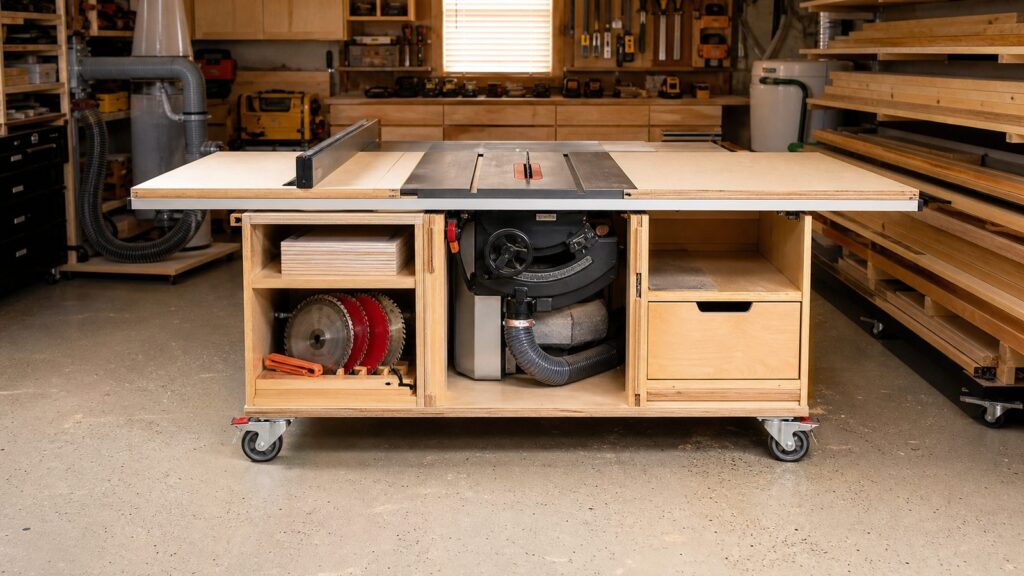
A space-saving double-duty table saw workbench should do four jobs well: hold the saw at a precise height, provide a flat outfeed and assembly surface, store the tools that belong with the saw, and move only when you want it to move. This free plan is built around those priorities. It is not tied to one saw brand, because the right way to build this bench is to measure your exact saw and make the saw bay adjustable.
For most small garage shops, the sweet spot is a mobile bench about 72 in. long, 36 in. deep, and 34 to 36 in. high. That gives enough outfeed support for cabinet parts, enough top surface for layout and assembly, and a footprint that can still park against a wall. The saw platform should be set so the metal saw table lands exactly flush with the surrounding work surface, or up to 1/32 in. lower. Never let the saw table sit proud of the bench top, because plywood and face-frame parts will catch as they leave the blade.
As an Amazon Associate I earn from qualifying purchases.
In 2026, a realistic DIY materials budget runs from about $275 to $850 for most builds, assuming you already own the table saw and common shop tools. A premium version with drawers, laminate, heavy casters, a router wing, and better dust collection can exceed $1,500. Hiring a carpenter or cabinetmaker to build a custom station commonly lands around $900 to $2,500 or more, depending on finish level, local labor rates, and whether electrical work is part of the project.
The Tool Desk
Outbyte Driver Updater FREEScan for outdated or missing drivers - takes under a minuteDriver Scan →Outbyte PC Repair FREEClear out junk files and repair common Windows errorsFree Scan →What This Workbench Is Designed to Do
On our job sites and in cabinet work, the table saw station becomes a workflow center. A sheet good comes off the truck, gets broken down, lands on an outfeed surface, and then moves into assembly. If the saw is sitting on a folding stand with no support behind it, every cut asks for another pair of hands. A proper mobile table saw workbench solves that problem without requiring a full cabinet shop.
#1 Best Overall
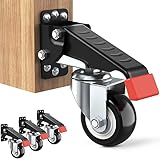
- IMPROVED VERSION - The workbench caster kit uses thicker steel, stronger screws, three holes on the top and the bottom of the plate, better wheels and bearings. Add rubber sleeve to protect contact part between human body and the caster, new design which is different from other Retractable Casters
- SIMPLE OPERATION - This 4 retractable caster wheels work by simply pushing down on the pedals to raise your workbench off the floor. Once elevated you can move your bench, table or machine as desired, then lift up on the pedals to disengage and your workbench, table, cabinet, stand or machine sits firmly on the floor at its original working height.
- DURABLE CONSTRUCTION - The heavy duty workbench wheels are constructed with durable solid steel and urethane wheels, which can smoothly move 360 degree. The wear-resistant urethane wheels is more steadier for heavy duty benches. Suitable for extensive daily use like workbe.
- STRONG FOOT PEDAL - Each lift pedal is ribbed and textured to provide extra grip when foot pressure is applied. All the four urethane casters together can provide you a total weight capacity of 660 lbs. The workbench casters will work on workbenches, stands, tables, cabinets and lightweight machinery with flat bases.
- Package Included - The workbench retractable casters include 4 workbench caster assemblies, all the necessary mounting hardware and instructions.
This design combines a recessed jobsite table saw, a flat outfeed table, an assembly bench, a lower storage base, and optional fold-down extension support. The saw remains removable for blade changes, calibration, motor cooling, cleaning, and eventual replacement. That matters. A bench built too tightly around one saw becomes scrap when the saw dies or the fence rail layout changes.
The plan works for common jobsite saws from DeWalt, Bosch, Skil, SawStop, Ridgid, Metabo HPT, and similar manufacturers. The key is not copying a fixed online dimension. Measure your saw body, fence rails, dust port, blade-tilt clearance, power switch location, miter-slot height, guard height, and fence travel before you cut the saw bay.
Recommended Finished Dimensions
For a one-car garage bay or compact basement shop, start with a 72 in. long by 36 in. deep bench. If you mostly cut cabinet plywood, go 84 to 96 in. long if the room allows it. If your shop is extremely tight, a 60 in. by 30 in. version still works, but you will rely more on roller stands or a fold-down outfeed wing.
Quick wins for a faster PC:
Clear out junk files and repair common Windows errorsFree Scan →Fix the driver behind crashes, sound loss and screen glitchesFind Drivers →Repair Windows errors before they cause bigger problemsFix Now →Finished height should usually be 34 to 36 in. Most jobsite saws have a table height near that range when removed from the factory stand, but every saw is different. Build the bench height around the saw table, not around a generic workbench number. The adjustable saw shelf lets you fine-tune the final height after the bench is on casters.
Base Layout
Use this as the baseline plan:
- Overall bench length: 72 in.
- Overall bench depth: 36 in.
- Finished height: 34 to 36 in.
- Saw bay width: saw width plus 2 to 3 in. for access and shimming
- Saw bay depth: saw depth plus clearance for fence rails, dust hose, and tilt movement
- Outfeed zone behind blade: at least 36 in.; 48 in. is better for cabinet parts
- Left-side work surface: 18 to 30 in., depending on saw position
- Top thickness: doubled 3/4 in. plywood, torsion box, or 3/4 in. plywood with replaceable 1/4 in. hardboard skin
If you are right-handed and use the table saw for cabinet rips, setting the saw slightly right of center often gives you a larger left-side assembly and staging area. If you want a router insert later, leave one wing wide enough for a 9-1/4 in. by 11-3/4 in. or larger router plate, plus fence support.
2026 Cost Range and Material Choices
Lumber and sheet-good prices still move enough that a good plan should include a range, not a fantasy number. In July 2026, NAHB reported framing lumber was up 1.4% week over week, 3.1% higher than one month earlier, and 0.3% lower year over year. Gordian reported plywood products jumped 11% from Q2 to Q3 2026, while pine boards rose about 3%. As a retail benchmark, 3/4 in. x 4 ft. x 8 ft. birch plywood has been listed around $74.98 at a major home center, with birch plywood pricing broadly varying by size and grade.
For this build, one inefficient plywood layout can add a full $50 to $100 sheet. Before buying material, sketch your cuts on paper or use a cut-list optimizer. Keep the top pieces, cabinet sides, dividers, and shelves oriented cleanly so you do not waste a sheet on one missed panel.
| Build Level | Typical 2026 Materials Cost | What It Includes |
|---|---|---|
| Basic DIY | $275-$450 | Construction 2x lumber, 1-2 sheets of 3/4 in. plywood or MDF, screws, glue, open shelf, budget locking casters or leveling feet. |
| Mid-Range DIY | $450-$850 | Cabinet-grade plywood, doubled or torsion-box top, 4 heavy-duty locking casters, drawer slides, edging, dust fittings, replaceable hardboard or MDF top skin. |
| Premium DIY | $850-$1,500+ | Baltic-birch or prefinished plywood, laminate top, router-table wing, full-extension drawers, high-capacity casters, onboard power strip, upgraded dust collection. |
| Professional Custom Build | $900-$2,500+ | Labor and materials for a fitted station, drawers, finishing, transport, and shop-specific detailing. |
Do not forget consumables. Glue, brad nails, pocket screws, sandpaper, finish, extra blades, clamps, inserts, dust fittings, and small mistakes can add $75 to $250. Those costs are real, and they are why many “cheap” workbench plans finish higher than expected.
Materials and Hardware List
This list assumes a 72 in. by 36 in. mobile bench with an adjustable saw shelf, open lower storage, and a replaceable top skin. Modify quantities for a longer bench or drawer-heavy design.
Rank #2

- Upgraded Workbench Caster Wheels: These workbench caster wheels are built with an extra-thick steel mounting plate and 3" wear-resistant urethane wheels, providing a heavy-duty capacity of up to 920 pounds. Engineered to meet the demands of daily use, these workbench caster wheels offer greatl durability and require minimal maintenance
- Simple Operation Retractable Casters: Once the retractable casters are mounted, simply step on the central foot pedal to lift your workbench 3/4 inch off the ground, allowing for smooth and easy movement to your desired location. When the pedal is released, the retractable casters are disengaged, stabilizing your workbench at its original height. Please note that these retractable casters are not designed for use on uneven or rough surfaces
- Non-slip Side Mount Casters: Each foot pedal is coated with an orange powder finish and features a non-slip texture. This design ensures secure and effective operation while offering additional grip, making it easier to control the movement and stability of your workbench
- 360°Rotation Lifting Casters: Equipped with high-quality 360-degree swivel mechanisms and sturdy wheels, these lifting casters provide effortless movement across various flat surfaces. They help reduce user strain and enhance efficiency, making it easier to maneuver heavy items or equipment around your workspace
- Stepdown Caster Wheels Kit: This step down caster wheels set comes complete with all the required mounting screws for a straightforward installation. For better results, we recommend pre-drilling holes in your workbench legs to facilitate a more efficient setup and ensure a secure fit
- Two to three sheets of 3/4 in. plywood, preferably birch, cabinet-grade, or quality AC plywood
- One sheet of 1/4 in. hardboard or MDF for a replaceable sacrificial top skin
- Four 2x4s or ripped plywood strips for internal stretchers and blocking
- Four heavy-duty locking casters rated at 250 lb each minimum; 350 lb each is better
- 3 in. construction screws or structural screws for base framing
- 1-1/4 in. and 1-5/8 in. wood screws for plywood assembly
- Wood glue
- Threaded leveling bolts, T-nuts, carriage bolts, or shim stock for the adjustable saw shelf
- Dust port fittings sized to your saw, typically 2-1/2 in. or 4 in.
- Magnetic switch or accessible power strip only if rated properly and mounted where it will not collect dust
- Hardwood, PVC, or iron-on edging for exposed plywood edges
- Optional drawer slides, T-track, toggle clamps, laminate, router plate, and fold-down leg hardware
For caster math, do not rate the bench based on the empty frame. A jobsite saw may weigh 50 to 110 lb. The plywood bench can weigh 150 to 250 lb. Add blades, clamps, jigs, router gear, fasteners, and stored tools, and the total can easily exceed 300 to 600 lb. Four 250 lb casters give a 1,000 lb combined rating before accounting for uneven floors and rolling shock. That margin is worth paying for.
Free Plan: Build Sequence
1. Measure the Saw Before Cutting the Bench
Remove the saw from its stand and place it on a flat surface. Measure the table height from the surface, the total width with fence rails, the body width below the table, the depth from front rail to rear dust port, the blade-tilt swing, and the height needed for the guard and riving knife. Also confirm that the power switch remains reachable from the operator side.
Free tools Windows power users keep installed
One-click scans. No signup required.
Write these numbers down. Then add 1 to 1-1/2 in. of side clearance around the saw body where practical. The filler panels can close the visual gap later. Clearance is what lets you service the saw without tearing apart the bench.
2. Build a Rigid Base Box
Cut two long side panels and two end panels from 3/4 in. plywood, or frame the base from straight 2×4 stock with plywood skins. For a cleaner cabinet-style build, plywood panels are flatter and easier to square. A typical base height before casters and top is about 27 to 30 in., depending on your saw and caster height.
Assemble the base square, checking diagonals before the glue sets. Add internal dividers or stretchers at the saw bay, storage shelf, and caster locations. The base must resist racking when the bench rolls across a garage slab. If the frame twists, your saw height changes and your outfeed support becomes unreliable.
3. Add the Adjustable Saw Shelf
The saw shelf is the heart of the plan. Make it from 3/4 in. plywood doubled at the edges or fully laminated if the saw is heavy. Support it on cleats, threaded bolts, or slotted brackets so it can move up and down at least 1/2 in. during final leveling.
Set the saw in place and use a straightedge across the table saw top and bench surface. Adjust until the saw table is flush or 1/32 in. below the workbench top. Check the front, back, left, and right edges. A saw that is level at one corner but high at another will fight you during long rips.
4. Build the Top Flat, Not Just Strong
A thick top is useful, but flatness matters more than brute weight. For most homeowners, a doubled 3/4 in. plywood top with a replaceable 1/4 in. hardboard skin is practical and affordable. If you want a flatter assembly surface, build a torsion-box top with a plywood grid between skins.
Leave an opening for the saw table and make removable zero-clearance filler panels around the saw. Screw the sacrificial top skin from above with countersunk screws. When glue, finish, saw marks, and job-site wear beat it up, remove the skin and replace it without rebuilding the bench.
Rank #3

- PREMIUM WORKBENCH MOBILITY: The workbench casters kit is designed to transform your heavy stationary workbenches into mobile stations instantly. Simply step on the pedal to lift your workbench off the floor to a specific height, allowing you to move it effortlessly to any desired location for cleaning or rearranging your garage space
- HEAVY DUTY 600 LBS CAPACITY: Constructed with durable solid steel and premium urethane wheels, this retractable caster set is built for endurance. The heavy-duty mechanism can support a total weight capacity of up to 600 lbs (150 lbs per wheel), providing a rock-solid base for your heavy tables, cabinets, and machinery stands.
- RETRACTABLE & STABLE DESIGN: These stepdown casters feature a unique retractable mechanism. When not in use, the wheels lift off the ground, allowing your furniture to sit firmly on its original legs for maximum stability while working. The ribbed pedal design provides extra grip, making the foot-operated lifting smooth and anti-slip.
- 360-DEGREE MANEUVERABILITY: Equipped with 360-degree swivel brackets, these heavy duty bench wheels offer exceptional maneuverability. The smooth-rolling urethane wheels glide easily across concrete or wood floors without marking or damaging surfaces, ensuring quiet and flexible movement in tight workshop spaces.
- EASY INSTALLATION KIT: This 4-pack set comes with all necessary mounting hardware for a quick setup. These represent the ideal side-mounted solution for DIY enthusiasts. Please Note: These casters are designed for side mounting on table legs; ensure your workbench has suitable flat vertical legs for secure attachment.
5. Add Storage Where It Supports the Workflow
The best storage for a table saw bench is boring and close at hand. Add slots for the rip fence, miter gauge, throat plates, push sticks, featherboards, blade wrenches, and spare blades. A lower shelf works for bulky jigs and small dust collectors. Drawers are worth adding if you use the bench every week, but they are not required for a useful first build.
PC Slower Than It Used to Be?
A free scan shows the junk files, broken settings and background clutter dragging Windows down - then fixes them in one click.Free scan · Windows 10 & 11Outdated Drivers Are Slowing You Down
One free scan finds every outdated or missing driver and matches the right update for your exact hardware.Free scan · exact hardware matchKeep heavy items low. A mobile bench with saw weight, drawers, and tools stored high can feel unstable when rolling over an uneven slab. Put blades, hardware bins, and routers below the top line whenever possible.
6. Route Dust Collection With Access
Plan dust collection before the top goes on. Most jobsite saws use a 2-1/2 in. rear port; some shop systems step up to 4 in. hose. Route the hose so it does not kink, catch the fence, or block the saw from being lifted out.
Use gravity and cleanout access. Slope interior dust panels toward the port, avoid dead corners, and include a removable cleanout panel. Fully boxing in the saw without access may look neat, but it usually turns into a packed dust chamber.
Table Saw Safety Details That Belong in the Plan
A built-in table saw station must not make the saw less safe than it was on its factory stand. Keep the blade guard, riving knife, anti-kickback pawls, fence, miter gauge, and power switch usable. Safety equipment that has to be removed because the bench opening is too tight is a design failure.
Recommended Free Tools
OSHA guidance for table saw use emphasizes adequate stock clearance, standing out of the kickback path, using the fence for cuts parallel to the blade, and avoiding unsafe long-board crosscuts on the table saw. CPSC table saw safety materials also identify blade guards and riving knives as important safety features. Injury research has found blade guards were removed in 67% of blade-contact injuries in one study, which is exactly why the bench must preserve guard and riving-knife clearance.
Build in a dedicated push-stick pocket at the operator side. Do not store push sticks in a drawer you have to open mid-cut. Keep the off switch visible and reachable. If the saw has a paddle switch, the bench face should not block it. If you add an auxiliary switch or power strip, use properly rated equipment and keep it away from heavy dust buildup.
Kickback and Clearance Zones
Leave room to stand slightly to the side of the blade path, not directly behind the workpiece. Maintain clear infeed and outfeed space. For ripping 8 ft. sheet goods, a 72 in. bench is helpful but not magic; you still need room before and after the blade. In a garage, that may mean opening the overhead door, moving a vehicle, or using a track saw for the first breakdown cuts.
Do not use the table saw for long-board crosscuts that should be handled with a miter saw, circular saw, or track saw. A large workbench can give a false sense of control. The operation still has to match the tool.
Rank #4

- EASY TO OPERATE: The retractable caster is different from ordinary casters in that it is side-mounted. It is very easy to use, just put your foot on the pedal and step down to lift it while operating, then if you lower the workbench, you just need to lift the pedal. The item comes with instructions and installation template.
- IMPROVED MATERIALS: Workbench casters are constructed of durable solid steel and high quality PP casters. Brackets have thicker steel and stronger screws. Maximum load capacity is 700LBS (4 casters)
- MOBILITY and STABILITY: Retractable casters provide both mobility and stability. They can easily move workbench or equipment when needed, and then lower it to lock it firmly for stability, making it a versatile castor for a variety of applications.
- VERSATILE APPLICATIONS: These casters are used in a wide range of applications, including furniture, workbenches and other equipment, where the ability to switch between mobility and stability is essential.
- 360-DEGREE CASTERS: The workbench casters equiped with 360-degree swivel bracket, the casters wheels can turn to any directions.
Garage Electrical and Permit Notes
This table saw workbench is shop furniture, not a structural building project. In most cases, building a freestanding mobile bench does not require a building permit. The conversation changes when you add new circuits, a hardwired dust collector, wall-mounted equipment, fixed cabinetry, or penetrations through garage separation walls.
Many jobsite table saws run on 120V circuits and draw heavy startup current. If the saw shares a circuit with a shop vac, lights, battery chargers, and a freezer, nuisance tripping is likely. A dedicated garage receptacle circuit can be the right fix, but that is electrical work. Depending on your panel capacity, conduit route, wall finish, permit fees, and local labor, electrical add-ons can cost several hundred to several thousand dollars.
Garage separation also deserves respect. If your garage wall or ceiling separates the garage from living space, do not casually cut holes for dust collection, cords, or storage without understanding the required separation assembly. Keep mobile dust collection and cords inside the garage unless a qualified pro confirms the correct way to route anything through rated construction.
When to DIY vs. When to Hire a Pro
DIY makes sense if you are comfortable cutting plywood accurately, assembling square cabinets or frames, installing casters, and tuning the saw shelf. Expect one full weekend for a basic version and two to four weekends for a cleaner cabinet-style build with drawers, edging, finish, and dust collection. A careful homeowner with a circular saw, guide rail, drill, clamps, square, straightedge, and sander can build this successfully.
Hire a carpenter or cabinetmaker if the bench needs to fit a very tight garage layout, carry a heavy cabinet saw, include finished drawers and laminate, integrate a router table, or serve as a professional production station. Also hire licensed electrical help for new circuits, 240V service, subpanel work, hardwired dust collection, or any wiring you are not qualified to perform.
The pro-built option costs more, but it can be the better value when accuracy and downtime matter. A cabinetmaker will think through sheet-good support, fence clearance, drawer sequencing, edge durability, and how the bench behaves after six months of use. For a homeowner who wants a polished small-shop centerpiece without spending four weekends tuning plywood parts, that is a reasonable trade.
Independent reader supportYour contribution helps us test, update, and keep practical guides available for everyone.Commissioning Checklist Before the First Cut
Before you rip the first board, treat the bench like a small machine installation. Roll it into position, lock the casters, and push against the bench from several directions. If it shifts, fix that before cutting. Locking both the wheel and swivel is preferable on a mobile saw station because swivel movement can let the bench creep under side pressure.
- Verify the saw table is flush with the work surface or up to 1/32 in. lower.
- Confirm the saw is parallel to the miter slots according to the saw manual.
- Set the fence square and parallel as required by the manufacturer.
- Check blade 90-degree and 45-degree stops with a reliable square or gauge.
- Install and test the riving knife and blade guard.
- Make sure the power switch is reachable from the operator position.
- Confirm the dust hose is clear and does not interfere with blade tilt or saw removal.
- Place push sticks, featherboards, and hearing and eye protection within reach.
- Test the casters on your actual floor with the saw and stored tools loaded.
- Make one test cut in scrap and check that the workpiece slides cleanly across the outfeed surface.
Recheck the saw height after a week of use. Casters settle, plywood moves, and stored weight changes. That is why the adjustable saw shelf is worth the extra time. A few turns of a leveling bolt or a thin shim can bring the station back into alignment.
Common Mistakes to Avoid
The most common mistake is building the saw bay from someone else’s dimensions. Even saws with similar table sizes can have different fence rails, switch housings, dust ports, handles, and motor clearances. Measure your exact saw and leave access space.
Best Value

- SIMPLE OPERATION - This 4 retractable caster wheels work by simply pushing down on the pedals to raise your workbench off the floor. Once elevated you can move your bench, table or machine as desired, then lift up on the pedals to disengage and your workbench, table, cabinet, stand or machine sits firmly on the floor at its original working height.
- IMPROVED VERSION - The workbench caster kit uses thicker steel, stronger screws, three holes on the top and the bottom of the plate, better wheels and bearings. Add rubber sleeve to protect contact part between human body and the caster, new design which is different from other Retractable Casters
- DURABLE CONSTRUCTION - The heavy duty workbench wheels are constructed with durable solid steel and urethane wheels, which can smoothly move 360 degree. The wear-resistant urethane wheels is more steadier for heavy duty benches. Suitable for extensive daily use like workbe.
- STRONG FOOT PEDAL - Each lift pedal is ribbed and textured to provide extra grip when foot pressure is applied. All the four urethane casters together can provide you a total weight capacity of 720 lbs. The workbench casters will work on workbenches, stands, tables, cabinets and lightweight machinery with flat bases.
- Package Included - The workbench retractable casters include 4 workbench caster assemblies, all the necessary mounting hardware and instructions.
The second mistake is using light-duty casters. Cheap casters flex, roll during cuts, and change the saw height. A bench that weighs 500 lb loaded should not sit on four casters rated for 125 lb each. Buy with margin.
The third mistake is forgetting outfeed and infeed clearance. A mobile bench saves space when parked, but cutting still needs space. Plan where an 8 ft. board or plywood strip goes before and after the blade.
The fourth mistake is burying maintenance access. You need to change blades, clean dust, adjust the saw, remove the throat plate, reach the cord, and eventually replace the saw. Removable filler panels, an open back, and a lift-out saw bay make the bench useful for years instead of one season.
Do these 3 things before closing this tab:
1Fix the driver behind crashes, sound loss and screen glitches2Repair Windows errors before they cause bigger problems3Scan for outdated or missing drivers - takes under a minuteBottom Line
A good double-duty table saw workbench is not just a table with a hole in it. It is a small-shop work platform that makes cutting, assembly, storage, and cleanup easier in the same footprint. Build it around your exact saw, use a flat top, choose casters with real load margin, preserve every safety feature, and make the saw removable.
For most homeowners, the mid-range version is the best value: cabinet-grade plywood, a doubled or torsion-box top, four quality locking casters, a replaceable skin, simple storage, and clean dust routing. That usually keeps the project in the $450 to $850 materials range while delivering a bench that feels solid enough for real cabinet and trim work.
Frequently Asked Questions
How much does it cost to build a mobile table saw workbench in 2026?
Most DIY builds cost about $275-$850 in materials, assuming you already own the saw and common tools. A premium version with drawers, laminate, a router wing, and upgraded dust collection can exceed $1,500. A custom professional build commonly runs about $900-$2,500 or more.
What size should a table saw workbench be for a small garage shop?
A practical small-shop size is about 72 in. long, 36 in. deep, and 34-36 in. high. Tight shops can use a 60 in. by 30 in. version, while cabinet-focused shops benefit from 84-96 in. of length if floor space allows.
Do these 3 things before closing this tab:
1Clear out junk files and repair common Windows errors2Fix the driver behind crashes, sound loss and screen glitches3Repair Windows errors before they cause bigger problemsHow do I make the workbench top flush with my table saw?
Build the saw on an adjustable shelf using bolts, cleats, slotted brackets, or shims. Set the saw in place, bridge the saw table and bench top with a straightedge, and adjust until the saw table is flush or up to 1/32 in. below the surrounding surface.
Can I keep the blade guard and riving knife on a built-in table saw bench?
Yes, and the bench should be designed so you can. Measure guard height, riving-knife travel, blade tilt, throat-plate access, and fence movement before cutting the saw opening. A bench that forces guard or riving-knife removal is poorly designed.
Does a freestanding table saw workbench need a building permit?
Usually no. A mobile workbench is shop furniture. Permits or code requirements may apply if you add new electrical circuits, hardwired dust collection, fixed cabinetry, or penetrations through garage separation walls.
Are locking casters safe for a mobile table saw station?
They can be, if they are high quality and rated with margin. Choose casters that lock both the wheel and swivel, and size them for the loaded bench weight, not the empty frame. A loaded station can easily weigh 300-600 lb.
Quick wins for a faster PC:
Fix the driver behind crashes, sound loss and screen glitchesFind Drivers →Repair Windows errors before they cause bigger problemsFix Now →Scan for outdated or missing drivers - takes under a minuteDriver Scan →Quick Recap
Product prices and availability are accurate as of the date/time indicated and are subject to change. Any price and availability information displayed on Amazon at the time of purchase will apply.

