Free tools Windows power users keep installed
One-click scans. No signup required.
Micro-concentrator photovoltaics (micro-CPV) can convert sunlight at efficiencies far above ordinary silicon panels, but they are not yet a straightforward replacement for mainstream solar. The technology focuses sunlight through arrays of miniature optics onto highly efficient III–V multijunction cells. Using less of that expensive semiconductor material—and manufacturing many small components in parallel—could reduce costs. However, precise tracking, optical alignment, thermal control and long-term reliability remain significant requirements.
What are micro-CPV solar panels?
Micro-CPV is a form of concentrating photovoltaics. Instead of covering most of a panel with conventional silicon cells, the system uses small lenses and secondary optical elements to concentrate direct sunlight onto miniature, high-efficiency solar cells.
As an Amazon Associate I earn from qualifying purchases.
A simplified optical path is:
Sunlight → lens array → secondary optic → miniature III–V multijunction cell → electrical interconnect
What’s actually slowing this PC down?
Pick the symptom - the matching free tool is one click away.
The word micro refers to the scale and arrangement of the optical and photovoltaic components. It does not simply mean a smaller conventional solar panel. Micro-CPV uses repeated miniature optical and cell units assembled into a larger module.
#1 Best Overall

- [ Package Content ] 5PC 5Voltage 200mA Polycrystalline Solar Panels with Wire
- [ Dimension] 110mmx60mm/4.33"x 2.36" (L*W); Thickness: 2.5mm/0.1"
- [ DIY Your Own Model ] Suitable for home lighting and different kinds of low-power DC appliances, for science projects, for solar powered water pump, small solar power system, etc.
- [ High Quality ] High quality epoxy resin, unique technology to make the components beautiful and strong, anti-wind and snow, increase the service life of solar panels.
Fraunhofer ISE’s micro-CPV project describes an architecture using a low-cost lens array, spherical-lens secondary optics, miniature III–V concentrator cells and microcells interconnected across a larger panel structure.
How micro-CPV differs from ordinary solar PV
| Technology | How it generates power | Tracking and weather response |
|---|---|---|
| Flat-plate silicon PV | Silicon cells receive sunlight directly across the panel surface. | Usually fixed or mounted on simple structures; it can use both direct and diffuse sunlight. |
| Conventional CPV | Lenses or mirrors focus sunlight onto smaller III–V multijunction cells. | Normally requires accurate dual-axis tracking and strong direct sunlight. |
| Micro-CPV | Miniaturised arrays of lenses, secondary optics and III–V cells perform concentration in repeated small units. | Still depends on direct sunlight and accurate tracking, but aims to simplify and scale assembly. |
Ordinary silicon modules are difficult to beat on simplicity. They have a mature supply chain, broad installer support and no requirement for precision solar tracking in most applications. Micro-CPV instead trades mechanical and optical complexity for higher conversion efficiency and potentially greater power density.
Why concentrating sunlight can produce higher efficiency
III–V multijunction cells capture more of the spectrum
III–V multijunction cells stack semiconductor junctions with different bandgaps. Each junction is suited to a different portion of the solar spectrum, reducing some of the losses that limit a single-junction silicon cell.
The U.S. Department of Energy explains that multijunction devices can achieve cell efficiencies above 45% in research settings. These cells are highly effective but generally more expensive than silicon, which makes covering an entire conventional panel with them uneconomic.
Optics reduce the required cell area
Micro-CPV uses lenses to direct sunlight onto cells far smaller than the illuminated module area. Concentration levels can reach approximately 1,000 times in the technology described by Fraunhofer ISE. This means the system can use the electrical performance of III–V cells while purchasing substantially less of the costly semiconductor material.
The central economic idea is important: micro-CPV does not make III–V cells intrinsically cheap. It attempts to make them more affordable at module level by using less of them.
Repeated units may be assembled in parallel
Micro-CPV also moves precision work into an array-based manufacturing process. Techniques associated with displays, LEDs, microelectronics and optoelectronics—including parallel assembly, additive processes and self-alignment—could allow many small units to be positioned simultaneously rather than assembled one at a time.
Fraunhofer reports positioning accuracy of approximately ±15 micrometres in its prototype assembly process through self-alignment. That is a promising manufacturing result, but moving from a laboratory or prototype process to dependable, high-volume production remains a separate challenge.
Rank #2

- Compatible with Micro USB & type C Port: 5v solar panel is compatible with a micro USB & USB -C port camera,suitable for battery-powered rechargeable cameras.Not compatible with Arlo, Arlo Pro, Ring, Ring Spotlight Cam, Google Nest,and any plug-in/wired camera without a battery.
- IP66 Waterproof: The protection level of usb c solar panel is IP 66, and the operating temperature range is -5℉~ +120℉. It can work even in bad weather and is very suitable for outdoor use
- Flexibility: solar panel for security camera, 360°adjustable bracket and 10 ft charging cable can allow solar panel to receive sunlight at the most suitable position, and the installation is very flexible
- Easy to Install: It is very easy to connect the solar panel to the camera via the charging cable. Tips: Please take waterproof measures at the camera charging port. The package includes: 1 x 6W solar panel, 1 x adjustable wall mount, 1 x screws bag, 1 x user's manual, 1x USB-C Connector
- High-Efficiency Solar Power: The solar usb charger is high-efficiency and stable monocrystalline silicon solar panels with an output power of 6W, which can provide continuous solar power for your rechargeable security cameras
What has actually been demonstrated?
The most relevant published result is a Fraunhofer ISE micro-CPV prototype module reported at:
- 36.0% ± 0.4% under Concentrator Standard Test Conditions (CSTC).
- 33.0% ± 0.4% under Concentrator Standard Operating Conditions (CSOC).
The figures are reported in Fraunhofer’s technical publication. They describe a micro-CPV module, not a record-setting individual cell.
Fraunhofer also reports a 47.6% concentrator solar-cell efficiency record achieved in 2022. That is a cell-level research result and must not be presented as the efficiency of a commercial panel.
For context, the CPVMatch project reported a CPV module efficiency of 41.4% under CSTC and 39.5% under CSOC. Those are CPV module results, but they should not automatically be attributed to the specific micro-CPV prototype.
Why CSTC and CSOC matter
Concentrator Standard Test Conditions are controlled rating conditions comparable to a laboratory performance measurement. Concentrator Standard Operating Conditions incorporate more realistic assumptions about operating temperature and other conditions.
These figures should not be compared casually with a conventional silicon panel’s nameplate rating. PV technologies can use different test conditions, spectra, temperatures and measurement conventions. A fair comparison should align the test method and then examine annual energy yield, not just peak module efficiency.
How micro-CPV could reduce costs
The proposed cost pathway combines several possible savings:
- Less III–V material: concentrated light allows the expensive multijunction cells to occupy only a small fraction of the module area.
- Parallel manufacturing: repeated micro-optical and cell units may be assembled simultaneously at high throughput.
- Self-alignment: automated or passive positioning could reduce manual precision assembly and improve repeatability.
- Large-area manufacturing methods: processes developed for displays and microelectronics may provide a route beyond bespoke CPV assembly.
- Lower area-related system costs: higher efficiency could reduce land, support-structure, wiring and installation requirements per unit of output.
These are design objectives and potential advantages, not proof that micro-CPV electricity is already cheaper. The full cost includes optics, protective glazing, tracker structures and controls, thermal management, inverters, monitoring, commissioning, cleaning, maintenance and replacement parts.
Rank #3

- [ Package Content ] 5Voltage 200mA 10Pcs Polycrystalline Solar Panels
- [ Dimension] 110mmx60mm/4.33"x 2.36" (L*W); Thickness: 2.5mm/0.1"
- [ DIY Your Own Model ] To charge cell , for home lighting and different kinds of low-power DC appliances, for science projects, for solar powered water pump, small solar power system, etc.
- [ High Quality ] High quality epoxy resin, unique technology to make the components beautiful and strong, anti-wind and snow, increase the service life of solar panels.
The distinction between module cost and levelized cost of electricity (LCOE) is critical. A more efficient module may produce more power from a given area, yet still have a higher installed or operating cost if tracking and maintenance are expensive. The available evidence does not establish a current commercial micro-CPV price, bankable LCOE or mass-market cost advantage.
Why tracking is a fundamental requirement
High-concentration optics work only when direct sunlight enters from the correct direction. A micro-CPV installation therefore needs accurate solar tracking, usually involving a dual-axis mechanism, controls and calibration.
Important questions for a project developer include:
Recommended Free Tools
- What pointing accuracy does the module require?
- How much energy do the motors and controls consume?
- What happens during high winds and tracker stow events?
- How often does the system need calibration?
- How quickly does output fall when the tracker is misaligned?
- What are the service intervals and replacement procedures?
A small pointing error can move the focal spot away from the active cell, causing immediate power loss and potentially creating localised overheating or cell damage. Tracking is not an accessory added to an otherwise conventional panel; it is part of the operating principle.
Weather, heat and operating conditions
Micro-CPV needs direct normal irradiance
Lenses cannot concentrate diffuse sky radiation effectively. Micro-CPV is therefore best suited to locations with high direct-normal irradiance (DNI), clear skies and limited atmospheric haze.
Clouds, aerosols, haze and low solar angles can reduce the system’s advantage. Conventional flat-plate PV continues to generate from a larger share of diffuse light, so it may produce more useful annual energy than a higher-rated CPV system at a poor site.
Concentration does not remove thermal losses
Focusing sunlight onto a small cell increases the thermal-management burden. Cell temperature affects electrical output, while differences in thermal expansion between glass, lenses, adhesives, circuit boards, interconnects and semiconductor assemblies can shift alignment or create mechanical stress.
Quick wins for a faster PC:
Fix the driver behind crashes, sound loss and screen glitchesFind Drivers →Repair Windows errors before they cause bigger problemsFix Now →Fraunhofer’s outdoor characterisation identifies alignment, spectral conditions, ambient temperature, irradiance and wind speed as influences on operating performance. A project assessment should therefore model local weather and temperature rather than relying on a laboratory efficiency figure.
Rank #4
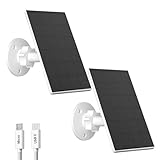
- 【Wide Compatibility】Zivif 2W solar panel is compatible with most rechargeable battery-powered security cameras that feature a Micro USB or USB-C port. NOTE:This USB solar panel is not compatible with Eufy, Arlo, Blink, Ring, Google Nest, Kasa cameras, and not compatible with any plug-in camera without battery.
- 【High-Efficiency Solar Power】Built with high-efficiency monocrystalline silicon cells, this USB-C solar panel absorbs daylight more effectively than standard panels. It provides continuous power for your rechargeable battery security camera under direct daylight, reducing the need for frequent battery replacements or manual recharging.
- 【IP65 WaterProof】Featuring an IP65 waterproof rating, this solar panel charger withstands rain, cold climates, wind, and daylight. Operating reliably in temperatures from -5℉ to 120℉, it’s built for year-round outdoor use. For best performance, clean the panel surface regularly with a soft, damp cloth.
- 【Easy installation】No built-in battery required—simply install the panel outdoors, mount it with the included 360° adjustable bracket, and point it towards direct daylight. The 7.2ft power cord and adjustable wall bracket of this solar panel provide the flexibility to choose the optimal angle for maximum daylight, reducing the need to charge the wireless camera frequently.
- 【Package Includes】2 × 2W Solar Panels, 2 × 360° Wall Mounting Brackets, 2 × Screw Kits, 2 × USB to USB-C Port, 2 × Cable Clip Sets, 1 × User Manual.
Spectral conditions matter
Multijunction cells are designed around a particular solar spectrum. Atmospheric conditions can alter the balance of wavelengths reaching the module and reduce current matching between the cell’s junctions. This is another reason that annual site-specific modelling is more useful than a single peak rating.
Reliability risks developers must investigate
Micro-CPV combines optics, semiconductors, electronics and moving mechanical equipment. Relevant failure modes include:
- Lens yellowing, scratching or optical degradation.
- Moisture ingress and delamination.
- Thermal cycling and interconnect fatigue.
- Loss of optical alignment through thermal expansion or mechanical movement.
- Tracker motor, sensor or control failure.
- Dust and soiling on concentrating optics.
- Mismatch between miniature cells receiving unequal light or ageing at different rates.
- Uneven illumination and localised hot spots.
Soiling can be particularly consequential because the optical path is central to power production. A fixed silicon array may continue producing at reduced output when dirty; a concentrating optic may lose a disproportionate amount of performance if its focal path is disrupted.
Do these 3 things before closing this tab:
1Scan for outdated or missing drivers - takes under a minute2Repair Windows errors before they cause bigger problems3Fix the driver behind crashes, sound loss and screen glitchesBefore procurement, ask for long-duration outdoor data, degradation curves, availability statistics, independent test results, warranty terms and evidence that failed optical or cell units can be replaced without replacing the entire module.
Where micro-CPV could make economic sense
Micro-CPV is most plausible where its efficiency and power density justify additional system complexity.
- High-DNI utility projects: clear, sunny regions may provide the direct sunlight concentration requires.
- Arid locations: strong solar resources can improve the case for tracking-based systems, although dust and cleaning requirements must be included.
- Land-constrained installations: greater power density could be valuable where land or structural area is expensive.
- Specialised commercial or industrial sites: a suitable tracker footprint and professional maintenance may make the technology more practical than on a home roof.
- Space and aerospace applications: high specific power can justify premium III–V technology where mass and area matter more than ordinary terrestrial module price.
- Hybrid systems: CPV and conventional PV can potentially combine direct-light efficiency with silicon’s ability to use diffuse light.
Micro-CPV is generally a poor fit for shaded rooftops, cloudy climates, sites with frequent haze or projects that cannot support moving equipment and specialist maintenance.
Independent reader supportYour contribution helps us test, update, and keep practical guides available for everyone.Micro-CPV compared with its alternatives
Conventional silicon PV
Silicon remains difficult to displace because of its mature global supply chain, relatively simple installation, diffuse-light performance and established financing and warranty ecosystem. Its main disadvantage is lower peak efficiency, which can require more panel area for a given output. The DOE’s PV system-cost benchmarks provide useful context for conventional PV economics.
Crashes, No Sound, or Screen Glitches?
Random freezes, missing sound and display glitches usually trace back to one bad driver. Find and replace yours safely.Free scan · under a minutePC Slower Than It Used to Be?
A free scan shows the junk files, broken settings and background clutter dragging Windows down - then fixes them in one click.Free scan · Windows 10 & 11Tandem perovskite-silicon PV
Tandem cells seek higher efficiency using a silicon base with an additional light-absorbing layer, potentially offering a high-efficiency flat-plate route without the full tracking and optical architecture of CPV. Durability, scale and bankability remain important questions.
Best Value

- Our solar panel made of ETFE material, the power generation conversion rate is up to 22%, far away from the common 15%-18% similar products on the market. Designed for outdoor camera and outdoor wireless device charging(Not Compatible with Plug-in Camera without Battery)
- This USB solar panel operates effectively in extreme temperatures, from -4°F to 140°F. It features an IP65 waterproof and corrosion-resistant design, ensuring long-lasting performance even in harsh outdoor conditions. With a product life of up to 4-5 years, you can say goodbye to frequent replacements. Whether in freezing cold or scorching heat, it ensures stable operation.
- Constructed with high-efficiency monocrystalline silicon, this solar panel weighs only 6 ounces (approximately 2 eggs), with dimensions of 4.6"×6.7" and a weight of just 168g. It is easy to install on roofs, walls, or other outdoor locations. The included **360-degree adjustable wall mount** allows you to easily position the solar panel to maximize sunlight capture, reducing the frequency of recharging.
- Solar panel for camera, this solar panel effectively reduces the risk of high-temperature combustion, ensuring safer use. Compared to other solar panels, it offers a more reliable and secure solution.
- The product includes a solar panel, swivel stand, screw kit, and Android adapter, allowing you to start using it right out of the box. We are committed to providing exceptional customer service. Our customer support team will respond to your inquiries or issues within 24 hours, ensuring a worry-free purchasing experience.
Bifacial and high-density silicon systems
Bifacial modules collect reflected light from the rear and can increase yield without concentrating optics. Vertical PV, elevated agrivoltaics and optimised high-density layouts may also provide greater land-use efficiency with simpler equipment.
Conventional CPV and hybrid CPV/PV
Conventional CPV already uses concentrating optics and multijunction cells. Micro-CPV’s proposed improvement is the miniaturised, array-based manufacturing architecture. Hybrid CPV/PV designs seek to combine CPV’s high direct-light efficiency with conventional PV’s broader-light response; one example of this research is discussed in this CPV/PV paper.
Commercial readiness in 2026
Micro-CPV should currently be treated as a research, prototype and specialised B2B commercialisation opportunity—not as an established residential panel category.
The Tool Desk
Outbyte PC Repair FREEClear out junk files and repair common Windows errorsFree Scan →Outbyte Driver Updater FREEFix the driver behind crashes, sound loss and screen glitchesFind Drivers →Fraunhofer ISE has demonstrated prototype performance and stated that it was preparing a spin-off to commercialise the technology. That is evidence of a commercialisation effort, not proof of a widely available retail product.
The available sources do not establish an off-the-shelf micro-CPV panel with transparent public pricing, a bankable long-term warranty, a broad field-service network or independently verified commercial LCOE. III–V cells, precision optics, testing and development services are generally specialist, specification-dependent and quote-based.
A serious buyer should confirm:
- Whether the offer is a laboratory demonstrator, pilot module or commercial product.
- Module efficiency and system efficiency under clearly defined test conditions.
- Annual yield at the proposed site, including tracker consumption, soiling, temperature, inverter losses and downtime.
- Tracker specifications, wind-stow behaviour and calibration requirements.
- Long-term degradation and outdoor reliability data.
- Replacement availability for optics, cells, interconnects and controls.
- Warranty coverage, performance guarantees and independent certification.
- Supplier financial strength and references from operating projects.
What construction and project teams should evaluate
For a construction project, the key question is not simply whether micro-CPV has a higher efficiency rating. It is whether the complete installation can deliver more usable electricity at an acceptable lifetime cost.
- Start with the solar resource: obtain site-specific DNI, not only global horizontal irradiance.
- Check the geometry: confirm unobstructed solar access, tracker movement, row spacing, foundations and wind loads.
- Model the complete system: include tracking parasitic power, inverter and wiring losses, soiling, downtime and temperature effects.
- Review service access: plan cleaning, calibration, inspection and safe replacement of optical or electrical components.
- Compare alternatives: price high-efficiency silicon, bifacial PV and hybrid configurations on annual delivered energy and lifetime cost.
- Require bankable evidence: do not base procurement on a cell record or short-term prototype result.
The bottom line on micro-CPV solar panels
Micro-CPV is a credible high-efficiency photovoltaic technology. Its strongest evidence is the reported Fraunhofer ISE prototype result of 36.0% under CSTC and 33.0% under CSOC, supported by an architecture that uses miniature III–V cells, concentrated sunlight and precision array assembly.
Its cost promise is conditional. Reducing III–V cell area and using parallel, self-aligned manufacturing could create a path toward lower system costs, but tracking, optics, thermal management, reliability and specialised maintenance remain. Higher module efficiency alone does not prove lower LCOE.
For high-DNI utility, land-constrained and specialised applications, micro-CPV may become a valuable platform. For most residential and ordinary commercial installations, mature silicon PV remains the simpler and more readily bankable choice until micro-CPV suppliers publish broader field data, pricing, warranties and system-level performance.
Quick Recap
Product prices and availability are accurate as of the date/time indicated and are subject to change. Any price and availability information displayed on Amazon at the time of purchase will apply.




