For a typical U.S. home on a conventional kilowatt-hour tariff, a standalone whole-home power-factor-correction device is generally not worth buying to reduce the electric bill. A capacitor can lower the current supplied for some inductive loads, but it normally does not reduce the real energy those appliances consume. Unless your utility charges for kVA, kVAR, demand, or low power factor—or you need to increase generator, inverter, UPS, or transformer capacity—the likely savings are too small to justify the equipment and installation.
The short answer
| Question | Typical answer |
|---|---|
| Does correction reduce current? | Yes, for suitable reactive loads. |
| Does it reduce appliance energy use in kWh? | Usually no. |
| Does it lower a normal residential bill? | Usually not, or only marginally. |
| Can it reduce upstream wiring losses? | Potentially, but usually by a small amount. |
| Can it help a generator or UPS? | Sometimes, by reducing apparent current or kVA demand. |
| Is a universal fixed capacitor appropriate? | Usually not. |
| Should a homeowner install one independently? | No. Panel-mounted capacitors require professional evaluation and installation. |
What power factor correction changes
Power-factor correction is intended to offset the reactive current associated with inductive equipment such as motors, compressors, pumps, and transformers. A capacitor supplies some reactive current locally, reducing the amount that must travel from the utility or upstream equipment.
As an Amazon Associate I earn from qualifying purchases.
That can improve the electrical system’s apparent power factor. It does not automatically make the appliance use less real energy or perform the same task with fewer kilowatt-hours.
- Real power is the power that performs useful work, measured in watts or kilowatts (kW).
- Reactive power moves back and forth between the source and magnetic or electric fields, measured in VAR or kVAR. It is needed by some equipment but does not represent net useful work.
- Apparent power is the product of RMS voltage and current, measured in VA or kVA.
- Power factor is the relationship between real and apparent power:
PF = kW ÷ kVA.
For a simple single-phase load, current can be approximated by:
#1 Best Overall

- WHOLE-HOUSE ELECTRICAL STABILITY Designed to support electrical stability in residential systems with 50A to 200A service panels.
- POWER FACTOR CORRECTION TECHNOLOGY Helps improve electrical efficiency by optimizing reactive power management inside the system.
- ELECTRICAL STABILITY SUPPORT Designed to support electrical stability and power factor performance in residential electrical systems.
- SUPPORTS HIGH-DEMAND APPLIANCES Designed to support electrical stability for HVAC systems, dryers, refrigerators, water heaters, and other compatible high-demand household equipment.
- INDUSTRIAL GRADE CONSTRUCTION Built using durable internal components engineered for long-term residential use.
I ≈ P ÷ (V × PF)
For example, a 1,000-watt load at 120 volts draws approximately 8.3 amps at a power factor of 1.0. The same 1,000-watt load at a power factor of 0.5 draws approximately 16.7 amps of apparent current. Correction may bring the upstream current closer to 8.3 amps, but the load still consumes approximately 1,000 watts of real power, plus the small losses of the appliance and correction equipment.
Lower current is not the same as lower kWh consumption.
Why a lower electric bill usually does not follow
Most ordinary U.S. residential accounts are billed primarily for accumulated energy in kilowatt-hours (kWh). If your appliances still perform the same work and consume the same real power, improving their apparent power factor normally does not materially change the bill.
Quick wins for a faster PC:
Scan for outdated or missing drivers - takes under a minuteDriver Scan →Repair Windows errors before they cause bigger problemsFix Now →NIST’s analysis of residential capacitor products explains this distinction: reduced current and improved power factor can offset each other in the utility-billing relationship, leaving the typical residential bill essentially unchanged. The NIST page was originally published in 2009 and updated in 2025; it remains an explanation of the underlying electrical relationship, not a newly conducted 2026 product test.
Start with the tariff, not the device
Not every customer is billed the same way. Before considering correction, inspect your bill and obtain the applicable tariff from your utility. Look for:
- Energy charges in kWh
- Demand charges in kW
- Reactive-energy charges in kVARh
- Capacity or apparent-power charges in kVA
- Low-power-factor adjustments or penalties
- Time-of-use rates, fixed charges, and minimum bills
Ask the utility in writing whether your specific residential account is billed for kVA, kVAR, demand, or power factor. Do not infer the answer from a seller’s advertisement or from a commercial tariff that applies to a different customer class. The U.S. Department of Energy’s rate guidance emphasizes that the economic case depends on both the load profile and the utility’s billing structure.
Can correction reduce wiring losses?
In principle, yes. Conductor heating losses are proportional to I2R, so reducing current can reduce losses in conductors upstream of the correction point.
In a normal home, however, the amount is usually too small to repay a correction device. The result depends on the size and operating time of the inductive loads, conductor resistance and length, installation location, and device cost.
A capacitor installed at the main panel does not reduce reactive current throughout every branch circuit. It reduces the compensated component between the panel and the source; the branch-circuit conductors from the panel to the motor still carry the load’s current. Load-level correction can be more targeted, but it is generally relevant only when there is a substantial, predictable load and a measurable economic reason to correct it.
Myron Zucker’s electrical-industry FAQ describes typical residential line-loss savings as roughly 1%–2% of the kWh energy charge even when correction is applied at appropriate loads. That is an indicative industry estimate, not a guarantee for every property. A California Energy Commission analysis likewise describes customer-side kWh savings from whole-home devices as potentially very small.
One historical example illustrates the scale. A 2007 calculation based on a 1-horsepower motor, 25 feet of #12 cable, a 0.75 lagging power factor, $0.10/kWh electricity, and other stated assumptions estimated about $0.09 per month in wiring-loss cost for the analyzed motor loads. Those assumptions and prices are obsolete and are not a current national estimate, but they show why physical savings do not necessarily produce an attractive payback.
Rank #2

- 200 AMP Surge Protection: Specifically designed for homes with 200 AMP electrical service, offering robust protection against power surges and voltage spikes.
- Energy Savings: Improves power factor and reduces wasted energy, leading to lower electricity bills and increased efficiency.
- Durable & Reliable: Built with industrial-grade materials, ensuring long-lasting protection for all connected devices and appliances.
- Comprehensive Protection with Warranty: Protects your home or office from electrical surges caused by lightning, power outages, and grid disturbances. Get a Fifteen (15) year comprehensive Warranty.
- Easy Installation: Can be easily installed by a licensed electrician directly into your main electrical panel for seamless protection.
What a whole-home capacitor may not correct
Household loads change constantly. Refrigerators cycle, HVAC compressors and blowers vary with conditions, and washing machines change electrical demand during different operating modes. Some equipment already includes power-factor correction.
Modern electronics can also draw nonsinusoidal current. That creates harmonic or distortion power factor rather than merely the phase shift associated with a simple induction motor. A capacitor selected to correct lagging reactive current is not automatically the correct remedy for harmonic distortion.
A fixed capacitor can also be poorly matched to a changing home load. It may provide too little correction at one moment and create a leading power factor or other power-quality problems at another. The correct size depends on voltage, frequency, motor design, motor rating, mechanical loading, operating conditions, and the type of power-factor problem.
Why “amp reduction” advertising is misleading
Advertisements often highlight lower amperage, higher power factor, lower kVA, reduced “wasted electricity,” or lower transformer and line losses. Those statements may describe a real electrical change while implying a result the device does not normally deliver: a large reduction in household kWh charges.
Recommended Free Tools
Before buying, ask the seller for:
- The exact utility tariff used in the payback calculation.
- Before-and-after real-power measurements under comparable conditions—not current readings alone.
- The measurement location and instrument specifications.
- The device’s standby consumption.
- Electrical certification, ratings, protection, warranty, and installation requirements.
- A written payback calculation based on your actual bill.
- Evidence separating real kWh savings from apparent-current or kVA reduction.
A display showing fewer amps proves only that apparent current fell at that measurement point. It does not prove that the meter will record fewer kWh.
Does correction make appliances more efficient?
Usually not in the consumer sense of “more efficient.” A capacitor may improve the electrical relationship between the source and a motor, but it does not automatically improve motor mechanical efficiency, compressor efficiency, refrigeration-cycle efficiency, heating output, or the appliance’s required real energy for a given task.
For a lower residential bill, more relevant measures usually include HVAC diagnosis and maintenance, air sealing, insulation, duct improvements, efficient heat pumps, replacing an inefficient refrigerator or other major appliance, reducing electric-resistance heating, improving water-heating controls, and shifting flexible loads under a time-of-use tariff.
The DOE appliance standards program covers more than 70 product categories. Its focus on equipment energy consumption is more relevant to household kWh savings than a generic service-panel capacitor.
The Tool Desk
Outbyte Driver Updater FREEFix the driver behind crashes, sound loss and screen glitchesFind Drivers →Outbyte PC Repair FREERepair Windows errors before they cause bigger problemsFix Now →Aftermarket correction is not the same as appliance-integrated PFC
Do not confuse a purpose-designed power-factor-correction circuit inside an appliance or power supply with an aftermarket box attached to a home’s service panel.
Integrated PFC may be engineered to control harmonic current, meet equipment requirements, or make a particular converter or motor-drive system operate correctly over its intended range. It is selected for that equipment’s voltage, load, switching behavior, and thermal conditions. That does not demonstrate that a universal residential retrofit will reduce a homeowner’s bill.
DOE identifies external power supplies as a regulated product category, with federal energy-conservation standards applying since 2007. Equipment-level requirements and customer-level retrofit economics are separate questions.
Rank #3
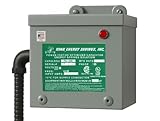
- 200 AMP Surge Protection: Specifically designed for homes with 200 AMP electrical service, offering robust protection against power surges and voltage spikes.
- Improves power factor and reduces wasted energy, leading to lower electricity bills and increased efficiency.
- Durable & Reliable: Built with industrial-grade materials, ensuring long-lasting protection for all connected devices and appliances.
- Comprehensive Protection with Warranty: Protects your home or office from electrical surges caused by lightning, power outages, and grid disturbances. Get a Fifteen (15) year comprehensive Warranty.
- Easy Installation: Can be easily installed by a licensed electrician directly into your main electrical panel for seamless protection.
When power-factor correction can make sense
Correction may deserve professional evaluation in specific circumstances:
Do these 3 things before closing this tab:
1Fix the driver behind crashes, sound loss and screen glitches2Clear out junk files and repair common Windows errors3Scan for outdated or missing drivers - takes under a minuteCommercial-style billing
A home workshop, agricultural property, or mixed-use site may have substantial motors and a tariff with demand, kVA, kVARh, or low-power-factor charges. In that case, the tariff and interval load data—not the property’s label as a residence—determine the economics.
Generators, UPS systems, and inverters
Generators, transformers, UPS systems, and inverters are commonly constrained by kVA, current, or motor-starting capacity. Reducing reactive current can sometimes allow the equipment to support more real power before reaching its limit. That is a capacity or operating benefit, not necessarily an energy-saving benefit.
The appropriate remedy may instead be a correctly sized generator or inverter, soft starter, variable-frequency drive, load-management system, or different equipment configuration. Compatibility with the generator, inverter, transfer switch, battery system, and connected loads must be confirmed.
Long feeders or remote outbuildings
A long private feeder, remote workshop, or unusually high-resistance distribution arrangement can make voltage drop and current-related losses more significant. Even then, correcting undersized wiring, poor connections, or equipment sizing may be more appropriate than installing a universal capacitor.
What’s actually slowing this PC down?
Pick the symptom - the matching free tool is one click away.
Utility programs
Reactive loads can matter to distribution systems at aggregate scale. A NYSERDA study discussed those system-level effects while concluding that aftermarket correction for existing homes was not cost-effective in the near term. A system benefit is not proof of an attractive homeowner payback.
Safety and installation concerns
A panel-mounted capacitor is a permanently connected electrical component, not a harmless plug-in accessory. Professional evaluation is especially important because:
- Capacitors can retain dangerous stored energy after disconnection.
- Incorrect voltage or capacitance can damage equipment.
- Fixed capacitors can overcorrect at light load and create a leading power factor.
- Capacitors can interact with harmonics from electronic loads.
- Resonance can increase distortion or produce excessive voltage or current.
- A failed capacitor can overheat or rupture.
- Improper panel work can cause shock, arc-flash, fire, and code-compliance hazards.
- The device may conflict with solar inverters, batteries, generators, UPS equipment, or transfer switches.
Engineering guidance such as UFC 3-520-01 discusses overcorrection, leading power factor, nonlinear loads, and harmonic concerns. Do not open a service panel or install a capacitor from an online diagram. Use a licensed electrician and, where the financial or technical stakes are substantial, a power-quality engineer.
A practical decision process
- Identify the billing problem. Confirm whether the charge is for kWh, demand, kVA, kVARh, or low power factor.
- Measure the load. Obtain interval data and measure real power, apparent power, power factor, harmonics, voltage, and operating time where relevant.
- Define the goal. Decide whether you need lower energy use, lower demand charges, more generator or UPS capacity, reduced voltage drop, or correction of a power-quality issue.
- Match the remedy. Consider wiring repairs, equipment replacement, load management, soft starting, inverter or generator sizing, or engineered correction.
- Calculate payback. Include equipment, design, installation, protection, maintenance, standby losses, and compatibility work.
- Install professionally. Require appropriately rated and certified equipment, switching or control where needed, and inspection of the completed installation.
What to do instead if your goal is a lower bill
- Use utility interval data to find high-consumption periods and demand peaks.
- Have HVAC equipment inspected, tuned, and correctly sized.
- Improve insulation, air sealing, and duct performance.
- Replace inefficient appliances when the measured savings justify the cost.
- Reduce unnecessary electric-resistance heating.
- Control water-heating energy use.
- Shift flexible loads under time-of-use rates.
- Investigate smart load controls, demand-response programs, and appropriately sized solar or storage.
- Repair loose, damaged, overloaded, or overheated electrical connections.
A plug-in power meter can help compare individual appliances, but a consumer meter’s power-factor display is not a billing-grade energy audit.
Free tools Windows power users keep installed
One-click scans. No signup required.
Final buying checklist
Do not purchase a whole-home power-factor-correction device solely because it promises a fixed percentage reduction in your bill. Proceed only if most of these conditions are met:
- Your actual tariff charges for kVA, kVARh, demand, or low power factor.
- The charge is large enough to justify engineering and installation.
- The load is substantial, predictable, and sufficiently inductive.
- Power-quality and harmonic conditions have been measured.
- The correction can be switched or controlled as the load changes.
- The equipment is correctly rated and certified.
- The payback uses your actual bills and measured data.
- A qualified professional will install it.
- Compatibility with solar, batteries, generators, UPS equipment, and transfer equipment has been checked.
For an ordinary single-family home with kWh-only billing, the answer remains straightforward: do not buy a standalone whole-home PFC device as a bill-saving measure.
Quick Recap
Product prices and availability are accurate as of the date/time indicated and are subject to change. Any price and availability information displayed on Amazon at the time of purchase will apply.




