Induction and radiant smoothtop cooktops both run on electricity, but they heat food differently. Induction heats compatible cookware directly, so it typically responds faster and leaves less residual heat on the glass. Radiant electric heats an element beneath the glass, which then heats the pan; it works with more kinds of cookware and often has a lower initial price. The right choice depends on your pans, cooking habits, budget, and the electrical and countertop requirements of your kitchen.
How induction and radiant electric cooktops work
Induction heats the cookware
An induction cooktop uses electromagnetic energy to generate heat in compatible cookware. Because the pan is heated directly rather than by a hot element under the glass, induction can respond quickly when you change the heat setting. Less heat is transferred to the surface by the appliance, although a hot pan can still warm the glass. The U.S. Department of Energy explains the basic distinction in its induction cooktop guide.
As an Amazon Associate I earn from qualifying purchases.
Radiant electric heats through the glass
A conventional electric smoothtop has a resistance element below the glass surface. The element heats the glass, and the glass transfers heat to the cookware. That surface and element can stay hot after you lower the setting or turn the cooktop off, so changes in heat are less immediate. Consumer Reports describes this difference in its induction-versus-electric comparison.
Induction vs. radiant electric at a glance
| Consideration | Induction | Radiant electric |
|---|---|---|
| How heat reaches the pan | Electromagnetic energy heats compatible cookware directly. | A resistance element heats the glass, which heats the cookware. |
| Heat response | Generally faster to raise or lower; less residual heat from the cooktop itself. | Slower to respond because the element and glass retain heat. |
| Cookware | Requires compatible cookware, usually with a magnetic base. | Works with flat-bottom cookware whether magnetic or not. |
| Initial price | Varies by model; some models may cost more. | Often offers a lower initial appliance price. |
| What to verify before installation | Cookware compatibility, appliance dimensions, and electrical requirements for the specific home and unit. | Appliance dimensions and electrical requirements for the specific home and unit. |
What the performance and efficiency figures mean
Consumer Reports said its tests found induction could boil water 20–40% faster than a typical electric cooktop. The Department of Energy repeated that finding in 2023, attributing it to Consumer Reports. It is a reported test result, not a guaranteed advantage for every model, pot, water volume, or kitchen setup.
#1 Best Overall

- HIGH EFFICIENCY - ChangBERT Induction cooktop offers 9 preset power levels (200-1800W) and 18 preset temperature settings (120-460℉, 20F per level). With an 83% energy efficiency rating, the induction cooker is more efficient than traditional gas or electric stoves, providing quick heat-up and faster cooking times.
- CONSISTENTLY STABLE HIGH-POWER OUTPUT - Built for constant use, it features continuous-duty circuitry for non-stop cooking. The unique power control technology ensures stable high-power output, reduces the temperature of internal electronics, and facilitates low-noise heat dissipation, providing reliable cooking performance. This dependable performance sets it apart from others.
- LARGE COOKING AREA - Features an expanded magnetic coil design that optimizes the winding structure to enhance the transfer of electromagnetic energy directly to the cookware, significantly improving heating efficiency and ensuring more even heat distribution across the bottom of the cookware.
- NSF CERTIFIED & COMMERCIAL GRADE - UL commercial standard 197, completely ETL & NSF approved. It meets industry durability standards, passing a drop test with an impact of 1.5 ft lbs. Designed for large-volume usage, it is ideal for commercial and professional settings such as restaurants, industrial kitchens, and other catering services.
- EASY TO CONTROL & CLEAN - The control buttons with solid tactile response make operation intuitive and precise.With simple and clear display, the Key-Press-Control Panel provides clear visibility and easy control, even with gloves or wet hands. With no open flame or heating element, food does not burn onto the glass cooktop, making it easy to clean greasy dirt.
ENERGY STAR’s archived emerging-technology material for 2021–2022 describes induction as 5–10% more efficient per unit than conventional electric resistance cooking. Separately, ENERGY STAR’s electric-cooking guidance says about 85% of heating energy is transferred to cookware on induction; that figure is presented in comparison with gas, not as a direct efficiency comparison with radiant electric. Neither figure predicts a particular household’s bill. Actual costs depend on electricity rates, cooking habits, appliance models, and purchase prices, and the cited material does not establish a universal lifetime saving for either type.
A separate statistic is sometimes mistaken for a performance measure: the Department of Energy reported that nearly 70% of respondents in a Consumer Reports survey from June 2022 said they would consider induction for their next range or cooktop. That reflects stated consideration in that survey, not purchases or current consumer preference.
Rank #2

- PORTABLE INDUCTION BURNER: Duxtop induction cooktop uses 110/120 V 15 amp electrical outlet–standard in all North American homes. ETL listed and built to North American electrical standards. It is lightweight and compact for easy handling and storage
- Choose from 20 preset power levels (100 to 1800 W) and 20 preset temperature level settings (100 °F to 460 °F). With an 83% energy efficiency, induction burner is more efficient than traditional gas or electric stoves
- DIGITAL LCD SENSOR: Touch control panel: child safety lock keeps the cooking and timer settings from being accidentally changed once they have been set; fast boil button; keep warm button (for 1-30 minutes at 140 °F); up to 10-hour timer button
- Induction stoves rely on cookware to heat, so it’s essential to choose magnetic bottom cookware with a minimum diameter of 5 inches. Auto-pan detection will shut off automatically after 60 seconds if no cookware, or the incorrect cookware is detected
- Although induction itself is a noiseless process, there may be high pitched sounds from the cookware due to multiple layers of metals sandwiched together. Please allow the induction cooker to cool down before cleaning
Advantages and tradeoffs of induction
Why it may suit your kitchen
- Quick, responsive heat: Directly heating the pan makes it easier to adjust promptly when bringing water to a boil, reducing heat, or moving between cooking tasks.
- More control at low heat: Consumer Reports has reported strong low-temperature control in its product testing, although results vary by model.
- Less residual surface heat: The cooktop itself generally contributes less heat to the glass than a radiant element does. This can reduce the chance of lingering heat from the appliance, but it does not make the surface burn-proof.
- Potentially less wasted heat: Heating cookware directly can reduce heat transferred to the surrounding surface. Household energy savings are not guaranteed.
What to consider
- Some pans will not work: Induction requires compatible cookware, and stainless steel is not automatically compatible.
- Cooking may feel different: The quick heat response can take adjustment if you are used to radiant electric.
- Price is model-specific: Prices and features vary. Compare actual models rather than assuming every induction cooktop carries the same premium.
Advantages and tradeoffs of radiant electric
Why it may suit your kitchen
- More cookware flexibility: Flat-bottom cookware can work whether or not it is magnetic, which may let you keep pans that induction would not accept.
- Often lower initial price: Radiant models often cost less up front, but prices vary by model and market.
What to consider
- Heat lingers: The glass and element take time to cool after cooking, so the surface can remain hot after you switch off the heat.
- Heat changes are less immediate: The retained heat can continue cooking food after you lower the setting. Simmering performance varies from one model to another.
Check your cookware before choosing induction
- Test the pans you use most: Hold a magnet to the bottom of each pan. ENERGY STAR’s practical guidance is: “If the magnet sticks to the cookware, it will work with induction.”
- Check the manufacturer’s compatibility information: Pan construction varies, so verify the specific cookware rather than relying only on a material label. Cast iron, enameled cast iron, and some stainless-steel pans are common compatible examples.
- Decide whether to replace any incompatible pans: Include that cost and the inconvenience of changing cookware in your comparison. If keeping your current nonmagnetic pans matters more, radiant electric is the more flexible option.
Choose based on how you cook and what your kitchen needs
- Lean toward induction if quick response, low-heat control, or less residual heat from the cooktop is important and your pans are compatible—or you are prepared to replace some.
- Lean toward radiant electric if you want to keep flat-bottom pans that are not magnetic or put a lower initial appliance price first.
- Compare specific models for burner layout, controls, size, and tested performance. A category label does not tell you how a particular cooktop simmers or fits your cooking routine. Consumer Reports’ induction cooktop guide was updated September 14, 2026; its electric cooktop guide also covers tested models.
- Consider your daily habits: Think about whether faster cooking, steady heat for sauces, concerns about accidentally burning food, children or pets near the cooking area, and adapting to a different heat response matter to your household.
Plan the cooktop installation before buying
For a construction or renovation project, confirm the fit and service requirements before selecting a unit. Check the countertop cutout dimensions, the appliance installation documentation, and the home’s electrical requirements against the exact model. Consumer Reports says the electrical requirements and installation are the same when replacing an old electric cooktop with induction, but that general statement should not replace verification of the appliance and the actual site. If the project involves new wiring, a different layout, or uncertain existing service, have a qualified professional assess it before the countertop or cabinetry is finalized.
What’s actually slowing this PC down?
Pick the symptom - the matching free tool is one click away.
Prices, model availability, promotions, and local incentives can change. The Department of Energy’s 2023 discussion of Inflation Reduction Act rebates is historical; confirm current eligibility and amounts with a location-specific official source rather than relying on older rebate information.
Rank #3
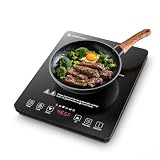
- [20 POWER & TEMPERATURE LEVELS] Experience the epitome of control with 20 adjustable power levels, from a gentle 90W to a robust 1800W, and 20 precise temperature settings ranging from a delicate 120°F to a searing 465°F. With this level of precision, achieving culinary perfection is no longer a challenge. The portable induction cooktop allows you to cook more quickly and doesn’t use as much energy as other cooktops.
- [EFFICIENT INDUCTION COOKTOP] The 1800W induction burner provides outstanding performance with its impressive power capacity, allowing for rapid heating compared to traditional cooktops. This not only accelerates meal preparation but also contributes to lower energy consumption, resulting in cost savings on your utility bills. Its portability makes it an excellent option for cooking in places without a standard stove, such as an office break room.
- [HANDY PRESET MENU] The induction stove is designed for effortless cooking, featuring a smart responsive touchscreen interface and 4 preset cooking functions for boiling water, hot pot, stew, and heat preservation. This induction cooker seamlessly combines convenience and speed, elevating your cooking experience with its exceptional features and user-friendly design.
- [CONVENIENT INDUCTION STOVE]The induction burner has been carefully crafted with your safety and convenience as the top priority. It includes a safety lock function to prevent accidental touch and a waste heat reminder to minimize the risk of burns, providing you with peace of mind. Moreover, its timer function allows you to effectively oversee your cooking process, guaranteeing the optimal quality of your culinary creations.
- [PORTABLE INDUCTION BURNER]The induction cooktop is thoughtfully engineered to accommodate from 4" to 10" pans with magnetic bottoms and is optimized for use in 110 to 120V environments, meeting the standards of North American households. The sleek black ceramic glass panel not only exudes sophistication but also ensures durability and effortless cleaning. Measuring 13.8"*11.0"*1.8", this induction cooker is lightweight and only 5.5 pounds, making it the perfect addition to your kitchen.
Safety and care for glass cooktops
Induction usually leaves less heat from the appliance itself on the surface when no pan is present, and many models detect cookware or stop heating when it is removed. Features differ by model, and heat from a hot pan can still warm the glass. Radiant smoothtops can retain heat after the element is off. Check the safety features in the documentation for the model you are considering, and treat either type of glass surface as potentially hot during and after cooking.
ENERGY STAR cautions that glass or ceramic tops can scratch or crack. Avoid abrasive scouring sponges, and take care not to drop heavy cookware or drag it across the surface.
Quick Recap
Rank #4
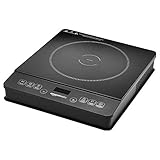
- FLEXIBLE & SPACE-SAVING: This versatile portable induction stovetop allows you to cook meals without a full range, making it the perfect solution for RVs, cabins, studio apartments, and other small spaces where a full kitchen isn't available.
- VERSATILE COOKING: With 8 power levels (300-1800 watts) and temperature range 160-440°F (71-226°C), this cooktop accommodates a wide range of cooking methods: simmering, keeping warm, reheating, pan frying, stir frying, boiling, steaming, roasting, or grilling. Ideal for continuous heating but not recommended for slow or low temperature cooking.
- SMART CONTROL: Convenient pre-set cooking modes and a 3-hour timer make meal planning and execution effortless. The user-friendly LED display features intuitive cooking function controls for seamless meal preparation.
- SAFE OPERATION: Advanced safety features include a child lock, auto-pause function, overheat protection, and voltage warning system.
- EASY MAINTENANCE: The tempered glass surface is durable and allows for effortless cleaning after use.
Product prices and availability are accurate as of the date/time indicated and are subject to change. Any price and availability information displayed on Amazon at the time of purchase will apply.
Do these 3 things before closing this tab:
1Scan for outdated or missing drivers - takes under a minute2Repair Windows errors before they cause bigger problems3Fix the driver behind crashes, sound loss and screen glitches