Recommended Free Tools
Cleaning vinegar is most useful for mineral scale, water spots, soap residue, and light grime on compatible, nonporous surfaces. It is not a universal cleaner, a safe choice for every countertop or appliance, or a substitute for an EPA-registered disinfectant.
Used incorrectly, its acidity can etch marble, limestone, and other acid-sensitive stone; damage some appliance finishes; weaken rubber components with repeated exposure; and create dangerous fumes when mixed with bleach. The safest approach is simple: read the label, dilute as directed, test first, apply sparingly, rinse when required, and dry the surface.
As an Amazon Associate I earn from qualifying purchases.
Disclosure: If shopping links appear on this page, we may earn a commission from qualifying purchases at no extra cost to you. Always verify the product label, concentration, and surface restrictions before buying or using cleaning vinegar.
Free tools Windows power users keep installed
One-click scans. No signup required.
What cleaning vinegar is—and why the label matters
Cleaning vinegar is a vinegar-based cleaner whose active acidity comes from acetic acid. Products sold as cleaning vinegar are commonly about 6% acetic acid. Ordinary distilled white vinegar is often about 4% to 5%, although concentrations vary by brand and product.
#1 Best Overall

- MICROFIBER CLEANING CLOTHS: Microscopic fibers in the Window Cloth grab grime, dust, & more from surfaces like windows and mirrors. The microfiber Glass & Polishing Cloth creates a streak free finish
- EVERYDAY VALUE: Skip disposable sprays & endless paper towels. This Window Cleaning Kit is built to last, delivering a streak-free clean wash after wash - just toss the cloths in the laundry for reuse
- VERSATILE USE: Generously sized and lint free, the Cloth swiftly handles even large windows with just a quick rinse or two. It can wipe cars, mirrors, glasses, lenses, TV screens, and more
- TRULY CLEAN: Our innovative two-step cleaning process quickly removes 99% of grease, grime, and microscopic particles for truly spotless, streak-free, and thorough results every time
- CLEANS WITH JUST WATER: Start by dampening the waffle-weave Window Cloth with water and wiping your surface. Follow up with the smooth-weave, dry Glass & Polishing Cloth to remove streaks
That difference matters, but concentration alone does not tell you whether a product is suitable for a particular surface. Read the bottle for its intended use, dilution instructions, warnings, and restrictions. Do not assume that one brand’s directions apply to another.
Because formulations vary, compare the bottle label before buying: look for a product explicitly labeled for cleaning, verify the acetic-acid concentration, and check its dilution directions and surface restrictions. A commonly sold option is 6% cleaning vinegar, but the label—not the number alone—controls how you use it.
Cleaning vinegar is also not automatically food-safe. Never ingest a product labeled for cleaning, and do not use it in place of vinegar intended for cooking or food preservation.
Choose the right cleaner for the job
Vinegar is a good candidate when the problem is mineral buildup or residue on a surface that the manufacturer says is vinegar-compatible. It is not necessarily better than a formulated cleaner for ordinary dirt, grease, or a specialized finish.
| Cleaning goal | Best starting point | Important limitation |
|---|---|---|
| Hard-water spots or mineral scale | Label-directed vinegar on a compatible surface | Acid-sensitive stone and some finishes can be etched or damaged. |
| Everyday dirt or greasy soil | Water and an appropriate detergent or formulated cleaner | Vinegar may not remove grease as effectively as a detergent. |
| Microwave grime | Steam from water, with vinegar only if the appliance guidance permits it | Vinegar is an optional cleaning aid, not a disinfectant. |
| Appliance odor or residue | The appliance manufacturer’s approved procedure | Recommendations differ by model, finish, seal, and internal material. |
| Illness or raw-meat contamination | An appropriate EPA-registered disinfectant in the United States | Follow the product label and required wet contact time. |
| Food-contact sanitation | Detergent and water, followed by an approved food-contact sanitizer when required | Vinegar alone is not an acceptable sanitizer for food-production or food-handling surfaces. |
The safe cleaning-vinegar method
- Read both sets of instructions. Check the vinegar bottle and the care manual for the surface, fixture, or appliance. The manufacturer’s instructions take priority.
- Identify the material. Do not proceed if the surface is marble, limestone, travertine, another acid-sensitive stone, an unapproved coating, a porous unfinished material, or a component the manufacturer warns against exposing to acids.
- Remove loose debris. Dust, sweep, or wipe away hair, grit, and crumbs first. This reduces scratching when you wipe or scrub.
- Dilute according to the label. Use a product-specific dilution for routine cleaning. Do not assume that undiluted vinegar is more effective or safe.
- Test an inconspicuous area. This is especially important on painted, finished, porous, older, plated, or unfamiliar materials.
- Apply to a cloth or sponge when possible. Avoid flooding seams, joints, controls, electronics, and appliance interiors. A light application gives you more control than saturating the surface.
- Allow a short dwell time. Give mineral residue time to soften, but do not leave acid sitting on an unapproved surface. Reapply for a short period rather than leaving the area soaked for a prolonged time.
- Agitate gently. Use a microfiber cloth, soft sponge, or other nonabrasive tool. Scrubbing harder is not a safe substitute for choosing the right cleaner.
- Rinse if directed, then dry. Remove acidic residue when the product or surface instructions call for rinsing. Drying helps prevent new water spots and leaves less moisture around seams and hardware.
Where cleaning vinegar can be useful
Glass, mirrors, and water spots
A diluted vinegar solution can loosen mineral film and water spots on compatible glass. Apply it lightly to a cloth or spray a small amount, wipe the glass, and dry it with a clean lint-free cloth.
Keep vinegar away from frames, painted trim, plated hardware, seals, and vulnerable coatings unless their care instructions approve it. A glass panel may tolerate vinegar even when its frame or surrounding finish does not.
Shower doors, ceramic tile, and some soap residue
On compatible, nonporous ceramic tile and glass, vinegar’s acidity can help loosen alkaline mineral deposits and some soap residue. It does not eliminate the need for mechanical wiping, and it is not a complete solution for greasy soil, heavy buildup, mildew, or damaged grout and caulk.
The Tool Desk
Outbyte PC Repair FREEClear out junk files and repair common Windows errorsFree Scan →Outbyte Driver Updater FREEScan for outdated or missing drivers - takes under a minuteDriver Scan →Test first on grout, caulk, sealants, painted surfaces, and specialty finishes. Do not use vinegar on stone tile or a stone shower floor unless the stone-care manufacturer explicitly approves it.
Faucets and localized mineral buildup
For a vinegar-compatible fixture, dampen a cloth with the label-directed solution and place it over mineral deposits for a short contact period. Wipe gently, rinse away residue when appropriate, and dry the fixture.
Rank #2

- CRYSTAL CLEAR VISION – EVERY TIME: Our obsessively engineered, best-in-class formula is the only streak-free glasses cleaner that leaves your eyeglasses, sunglasses, camera lenses, and screens ridiculously clean and clear. With almost no effort, our premium ingredients wipe away dirt, grime, and oils, safely and consistently.
- UNMATCHED CLEANING POWER: Crafted from our super-premium, ultra-dense Japanese microfiber, our next generation eyeglass cleaner cloth easily does the heavy lifting, leaving your lenses spotless and scratch-free. We're even washable and reusable for long lasting consistently safe performance.
- MADE IN THE USA - NO COMPROMISES: Our lens cleaning formula is proudly manufactured in the USA with best-in-class ingredients, including lab-grade, Type II DI H2O. Maximize your lens clarity and integrity by insisting on Koala's stringent quality standards and small batch precision production.
- GENTLE AND SAFE FOR ALL LENSES: Our technologically advanced eyeglass cleaning kit features an ultra-pure solution, free from alcohol, toxic chemicals, VOC's, and fragrances. Our fanatically made lens and screen cleaner spray is highly effective on all multi-coated lenses and screens, even those with advanced coatings.
- JOIN THE KOALA FAMILY – INTEGRITY MATTERS: When you choose Koala, you're joining a thriving community of millions who rely on us for their precision lens and device care needs. We believe lenses and screens have integrity too, and deserve supercharged, long lasting performance. We exist to serve that vision.
Avoid assuming that prolonged soaking is safe for plated finishes, rubber parts, stone counters, or protective coatings. For an aerator or removable component, follow the fixture manufacturer’s instructions before soaking it.
Microwave interiors
Vinegar can be an optional steam-cleaning aid. Whirlpool’s consumer guidance describes heating water, optionally with a small amount of vinegar, so the steam loosens microwave grime. Afterward, wipe the interior with clean water and mild dish soap as directed, then dry it.
Quick wins for a faster PC:
Repair Windows errors before they cause bigger problemsFix Now →Fix the driver behind crashes, sound loss and screen glitchesFind Drivers →Clear out junk files and repair common Windows errorsFree Scan →Use a microwave-safe container, follow the appliance manual, and handle the heated container carefully. This procedure loosens food residue; it does not turn vinegar into a disinfectant.
Selected dishwasher-cleaning tasks
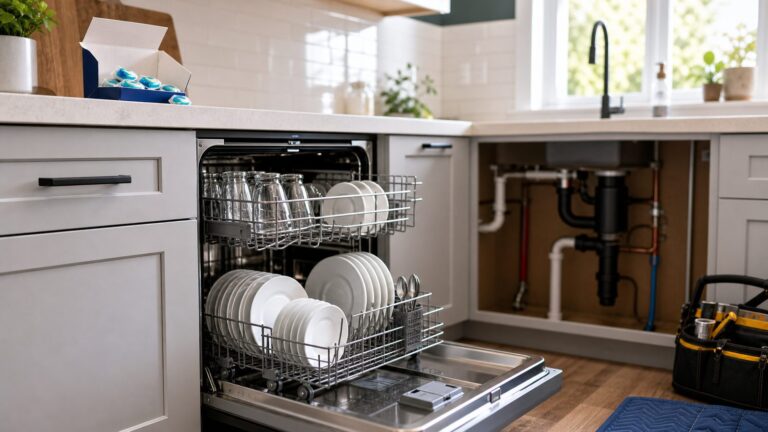
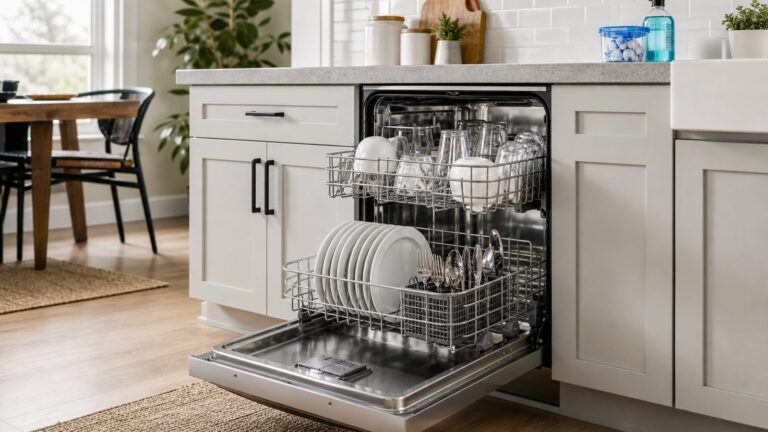
Some appliance manufacturers permit limited vinegar use for odor or residue. For example, Whirlpool describes placing two cups of white vinegar in an upright measuring cup on the lower dishwasher rack for a vinegar rinse in a specific odor-cleaning context.
That is not permission to use cleaning vinegar in every dishwasher. The guidance refers to a particular appliance procedure and white vinegar. Check your own model’s manual before substituting a higher-strength cleaning vinegar or repeating the treatment.
Removable laundry dispensers and approved exterior surfaces
Vinegar may be suitable for a removable dispenser drawer or an exterior surface when the washing-machine manufacturer permits it. Remove the part if the instructions allow, clean it as directed, rinse it thoroughly, and dry it before reinstalling it.
Do not make a routine of pouring vinegar into every washing-machine drum. Repeated exposure can damage rubber seals, hoses, and other internal components. For deeper maintenance, use the purpose-designed appliance cleaner and cycle recommended for your model.
Compatible sealed, nonporous hard surfaces
A properly diluted solution can help remove light grime and mineral film from some sealed, nonporous surfaces. It is a targeted option, not a universal replacement for detergent or a formulated surface cleaner.
Rank #3

- 10x GRIP-ROOT WEAVE - TRAP MORE, WORK LESS: Ultra-absorbent microfiber towels for car Grip Root weave works like PLANT ROOT FOLLICLES, sucking up & LOCKING AWAY 8x to 10x its weight in liquid, particulates, moisture, grime and dirt in far LESS TIME than traditional ‘Heavy Duty’ Cleaning Rags. Each towel features a 2.5mm thick design, providing enhanced durability and better grip during use.
- WON’T LINT, SCRATCH, PILL, SWIRL, SHED, or BLEED like thin, cheaply made microfiber towels for cars. RAPID DRY release layers make these the ideal microfiber towels for cars, creating that spectacular, SWIRL-FREE MIRROR SHINE with our cleaning rags. With a solid 2.5mm thickness, these towels are built to prevent damage while ensuring optimal performance.
- LASTS 1200+ WASHES - That’s 3.27 YEARS worth of use in this 12-pack of COMMERCIAL GRADE 300 GSM Reuseable Cleaning Cloth. The 2.5mm thickness and OVERLOCK BRAIDED STITCHING makes the ideal SUSTAINABLE SOLUTION for cleaning every SURFACE, crack, and CREVICE in your home, garage, or office.
- SOAK IT UP FASTER - 4X’s MORE ABSORBENT than COTTON cloths, these are the microfiber cleaning cloth for cars to get if you want an ALL PURPOSE cleaning towel, crafted with 2.5mm thickness to scoop up your messes, oils, and liquids FASTER than a SPONGE
- UNRIVALED POWER - TEST THIS GRIP-ROOT technology risk-free for 30 full days. With a 2.5mm thick design, it LOCKS AWAY dirt, dust, grime, spills, and messes better than any other high-performance cleaning rags you’ve tried.
Homemade cleaners can be useful for simple jobs, but formulated products may perform better because they are designed for specific soils and materials. “Natural” does not automatically mean safer for every finish, and vinegar is not automatically the greener or more effective choice.
Where you should not use cleaning vinegar
Marble, limestone, travertine, and similar stone
Do not use vinegar on marble. Acid-type cleaners can cause pitting, dulling, and staining. Treat limestone, travertine, and other carbonate-based natural stone as no-vinegar surfaces unless the stone-care manufacturer specifically approves the product.
This applies to countertops, floors, shower walls, vanities, fireplace surrounds, and decorative stone. Do not infer that a stone is vinegar-safe simply because it is sealed or because a small test area did not show immediate damage.
Stainless-steel appliances with unapproved finishes
Stainless steel is not one universal finish. Some appliance manufacturers prohibit vinegar-based cleaners on particular refrigerator or appliance exteriors because they can damage the finish.
Use the appliance manual rather than a general stainless-steel cleaning rule. If the manual calls for a manufacturer-approved stainless-steel cleaner, use that product instead.
Washing-machine interiors, seals, and hoses
Repeated vinegar exposure may damage rubber seals, hoses, and sensitive internal components. Unless the model’s instructions expressly allow it, do not pour cleaning vinegar into the drum, detergent compartment, or other internal pathway.
Electronics, screens, and optical equipment
Do not spray cleaning vinegar directly onto televisions, phones, tablets, computers, control panels, camera lenses, or other electronics. Screens and optical surfaces may have coatings that react poorly to household cleaners. Use the device manufacturer’s approved method and apply any permitted cleaner to a cloth rather than directly to the device.
Unsealed wood, unfinished materials, leather, and specialty coatings
Do not use vinegar on unsealed or unfinished wood, leather, painted finishes, or specialty coatings without explicit manufacturer approval. Porous materials can absorb liquid, while finishes can discolor, dull, or otherwise change.
Rank #4

- Complete Glasses Cleaning Kit: SmoTecQ's premium cleaning kit includes 2x 2oz of plant-based, alcohol-free spray cleaner, plus 2 ultra-soft microfiber cloths and 1 travel pouch - engineered for spotless cleaning of eyeglasses, sunglasses, and screens.
- Gentle, Alcohol-Free Formula: Our advanced formula uses only purified de-ionized water and plant-based ingredients, leaving no streaks or residue. Free from harsh chemicals, perfect for sensitive coatings.
- Ultra-Soft Microfiber Cloths: The included high-density microfiber cloths are designed to lift fingerprints, oil, dust, and smudges without scratching delicate lenses. Enjoy a clear, streak-free finish every time.
- Suitable for All Lenses & Screens: Ideal for prescription eyeglasses, sunglasses, AR-coated lenses, smartphones, tablets, cameras, and more - this kit delivers the clarity you deserve for all your devices.
- Compact, Travel-Friendly Design: The 2oz spray bottles fit easily in your purse, bag, or luggage. The included drawstring pouch keeps everything neatly stored for on-the-go convenience
Food-contact surfaces when sanitation is required
Vinegar is not an acceptable sanitizer for food-production or food-handling surfaces. Clean the surface with detergent and water first. When sanitizing is required, use an appropriate food-contact sanitizer according to its label, including any dilution, application, and contact-time instructions.
Cleaning is not sanitizing or disinfecting
Cleaning removes dirt, food, and organic matter, usually with soap or detergent. Sanitizing reduces certain microorganisms to a level specified by a product’s approved claims. Disinfecting is a stronger, regulated claim involving specified organisms, application conditions, and contact times.
PC Slower Than It Used to Be?
A free scan shows the junk files, broken settings and background clutter dragging Windows down - then fixes them in one click.Free scan · Windows 10 & 11Crashes, No Sound, or Screen Glitches?
Random freezes, missing sound and display glitches usually trace back to one bad driver. Find and replace yours safely.Free scan · under a minuteIn the United States, an EPA-registered product must carry the relevant disinfecting or sanitizing claims on its label. Vinegar should not be described as an EPA-registered disinfectant unless the exact product has the applicable registration and claims.
If the job involves illness, raw-meat contamination, or another pathogen concern, choose an EPA-registered disinfectant and follow its label, including the required wet contact time. In the United States, EPA registration and label claims—not the word natural or the presence of acetic acid—are what support a disinfecting claim.
Outside the United States, use a product approved by the relevant national or local authority. In every case, clean visible soil first when the disinfectant label instructs you to do so, and keep the surface visibly wet for the full stated contact time.
Independent reader supportYour contribution helps us test, update, and keep practical guides available for everyone.Do not mix vinegar with bleach or other cleaners
Never mix cleaning vinegar with chlorine bleach. Vinegar is an acid, and acid combined with bleach can release irritating chlorine gas that can harm the eyes and airways.
Keep vinegar separate from bleach, ammonia, hydrogen peroxide, dish soap, essential oils, and commercial cleaners unless the exact product directions and safety documentation specifically support the combination. Do not layer one cleaner over another without rinsing and checking both labels. A mixture that produces no obvious reaction is not necessarily safe or effective.
If you accidentally create a dangerous mixture, leave the area and get fresh air. Contact emergency services or Poison Control as appropriate. Do not try to neutralize the mixture by adding another household chemical.
Best Value
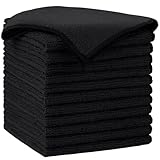
- Ultra-soft, Scratch-free, Lint-free, and Streak-free: These soft and non-abrasive microfiber cloths won’t scratch surfaces, paints, coatings, or any other delicate surface, including stainless steel appliances, can be used to clean all surfaces, including stainless steel appliances
- Highly Absorbent: Made from premium quality fabric, AIDEA Microfiber Cleaning Cloths have a soft, plush touch; highly absorbent and quick-drying; provide exceptional absorbency and quickly wick away water to keep you dry; thick and large enough for multiple purposes such as cleaning kitchen surfaces, house furniture, window glass, and cars
- Long-Lasting and Machine Washable: These cleaning towels are quick-drying and easy to wash; Save time and energy; Machine-washable and can be used wet or dry; Reusable hundreds of times without losing effectiveness; Remain soft and absorbent for cleaning kitchen and bathroom surfaces, glass, electronics, and automotive detailing
- Non-linting, Fade-resistant Fabrics: AIDEA Microfiber Cleaning Cloths can be washed hundreds of times without linting or fading; the perfect companion for maintaining cleanliness in your family; help you effortlessly tackle all your cleaning needs
- Versatile: Cleaning towels are highly versatile; suitable for various cleaning tasks in kitchens, bathrooms, on glass surfaces, vehicles, and household items; effectively absorb stains while also protecting surfaces from damage
Practical dilution and recipe guidance
There is no single universal vinegar recipe because products differ in concentration and labeling. Use this framework instead:
- Routine compatible-surface cleaning: Follow the bottle’s dilution instructions. One commercial cleaning-vinegar product may direct users to mix one-half cup per gallon of water, but that is product-specific rather than a rule for every brand.
- Mineral deposits: Use the label-approved concentration for a short contact period. Reapply if necessary instead of leaving the surface saturated for a long time.
- Microwave steam cleaning: Use water and only the small amount of vinegar permitted by the appliance guidance, then wipe with clean water and dry.
- Regulated 3% acetic-acid treatment: USDA APHIS materials describe a 1:1 mixture of typical 6% cleaning vinegar and water for a specific regulated treatment context. That procedure includes pre-cleaning and a 10-minute wet contact time. It must not be repurposed as a general household disinfecting recipe or pathogen-control claim.
Do not increase the concentration simply because residue is stubborn. First confirm that vinegar is appropriate for the material, then use a short dwell time, gentle agitation, and a second application if the label permits.
What’s actually slowing this PC down?
Pick the symptom - the matching free tool is one click away.
What to do when vinegar does not work
- White crust remains: The deposit may need another short application and gentle mechanical removal. If the surface is not approved for vinegar, stop and use the manufacturer’s recommended descaler instead.
- Greasy film remains: Switch to a detergent formulated to remove grease. Acidity is not a substitute for surfactants designed for oily soil.
- The surface looks cloudy or streaky: Rinse away residue if the material permits, then dry completely with a clean cloth.
- The finish becomes dull, rough, discolored, or tacky: Stop using vinegar immediately. Rinse only if the manufacturer’s instructions permit it, avoid further scrubbing, and contact the surface or appliance manufacturer for recovery advice.
- You are cleaning after illness or raw-meat handling: Stop treating vinegar as the solution and use the appropriate regulated disinfectant or food-contact sanitizer.
A quick decision guide
- Is the problem mostly mineral scale or water spotting? Vinegar may help if the surface is compatible.
- Is the surface marble, limestone, travertine, unsealed wood, leather, a screen, or an unknown specialty finish? Do not use vinegar unless the manufacturer explicitly approves it.
- Is it an appliance, seal, hose, coating, or plated fixture? Check the model or material instructions before applying acid.
- Is the soil ordinary dirt or grease? Start with detergent or a formulated cleaner.
- Is the goal to kill pathogens? Use an appropriately labeled EPA-registered disinfectant in the United States, or the relevant approved product in your jurisdiction.
- Will the surface contact food? Clean with detergent and water, then use an approved food-contact sanitizer when required.
- Are you considering a mixture? Do not mix vinegar with bleach, ammonia, hydrogen peroxide, or other cleaners.
Frequently Asked Questions
Is cleaning vinegar stronger than white vinegar?
Often, yes. Cleaning vinegar is commonly about 6% acetic acid, while ordinary distilled white vinegar is often about 4% to 5%. Concentration varies, so follow the bottle label rather than assuming all products are interchangeable.
Can I use cleaning vinegar on every countertop?
No. Do not use it on marble, limestone, travertine, or other acid-sensitive natural stone. For any countertop, especially a sealed, painted, porous, or specialty surface, follow the manufacturer’s care instructions and test an inconspicuous area first.
Does cleaning vinegar disinfect?
Not in the regulated sense required for pathogen-control claims. For illness, raw-meat contamination, or another disinfection need, use an appropriately labeled EPA-registered disinfectant in the United States and follow its required contact time.
Can I pour cleaning vinegar into my washing machine?
Do not make this a routine practice unless your specific model’s instructions allow it. Repeated exposure can damage rubber seals, hoses, and other internal components. Use the manufacturer’s recommended appliance cleaner for deeper maintenance.
Do these 3 things before closing this tab:
1Fix the driver behind crashes, sound loss and screen glitches2Repair Windows errors before they cause bigger problems3Scan for outdated or missing drivers - takes under a minuteCan I mix vinegar with bleach or dish soap?
Never mix vinegar with bleach. Acid and bleach can release dangerous chlorine gas. Do not mix vinegar with dish soap, ammonia, hydrogen peroxide, essential oils, or commercial cleaners unless the exact product directions and safety documentation specifically approve the combination.
The Bottom Line
Bottom line: Use cleaning vinegar as a label-directed acid cleaner for compatible mineral deposits, water spots, and residue—not as a universal cleaner or disinfectant. Test first, avoid acid-sensitive and manufacturer-restricted materials, never mix it with bleach or other cleaners, and choose detergent, appliance-specific products, or an approved disinfectant when those are the better tool.
Quick Recap
Product prices and availability are accurate as of the date/time indicated and are subject to change. Any price and availability information displayed on Amazon at the time of purchase will apply.