The most reliable way to remove a deeply rooted bush or small tree is to expose and sever the root crown and major lateral roots, then remove the crown whenever the site and plant size make that practical. Young, isolated plants can often be pulled out after digging around them in moist soil. Larger woody shrubs and saplings usually require cutting the stems for access, trenching around the base, cutting anchor roots, and monitoring for regrowth.
Cutting the top alone is not the same as removing the plant. Many deciduous shrubs and trees resprout from the stump, and some species send shoots from lateral roots well away from the original plant. Stump grinding clears the visible stump but may leave those roots behind. Your method should therefore match both the plant and your goal: visible clearance, replanting, or long-term eradication.
As an Amazon Associate I earn from qualifying purchases.
Choose the removal method before you start
First decide whether you need to clear an obstacle or eliminate a living root system. The right approach depends on the species, stem diameter, root architecture, soil moisture, access, nearby utilities, and the amount of follow-up you can provide.
| Situation | Best starting method | What to expect afterward |
|---|---|---|
| Young, isolated bush or sapling with a small stem | Dig around the root crown and pull it roots-and-all | Backfill the hole and watch for missed roots or shoots |
| Established bush with several woody stems | Cut the canopy down, excavate around the crown, and sever major roots | Remove the root crown and monitor for residual regrowth |
| Large stump where immediate replanting is not required | Professional or rental stump grinding | Remove excess chips and watch for shoots from remaining roots |
| Vigorous resprouter or invasive plant | Root-crown removal, repeated shoot removal, or a legally labeled cut-stump treatment | Monitor for several growing seasons and follow local disposal guidance |
| Plant near wires, a building, road, fence, or underground utility | Stop and arrange qualified tree-care help | Do not turn a hazardous removal into a DIY cutting project |
Safety checks before digging or cutting
Call 811 before excavation
Contact 811 several days before digging so underground electric, gas, water, communications, and other utilities can be marked. The required waiting period varies by state, and a private line serving a detached structure or other feature may not be covered by the public marking service. Do not assume that a shallow-looking root is safe to cut until the digging area has been cleared.
#1 Best Overall

- GARDENING ESSENTIAL: Steel blade plant shears with extendable handles ideal for a variety of pruning tasks like making high or hard-to-reach cuts, trimming flower stems, maintaining your herb garden, and more to encourage overall plant health
- MAXIMUM POWER AND PRECISION: Low-friction blade coating makes smooth cuts, reduces gumming, and enhances rust resistance; Self-sharpening design ensures every cut is clean and crisp; Extendable and non-slip grip handles allow for more control of clippers
- LONG-LASTING AND RELIABLE: Steel blades stay sharp through heavy use and provide excellent durability for lasting value; Fiskars pruning shears and tools are built to last
- QUALITY GARDEN TOOLS: Designed to help you cultivate a better garden, Fiskars garden and yard tools are equipped with smart technologies and award-winning, ergonomic features that make it easier and more enjoyable to transform your outdoor space
- INCLUDES: 1 pair Fiskars Power-Lever Extendable Hedge Shears; Lifetime warranty
Look up, not just down
Do not work near energized overhead power lines. OSHA treats brush and tree work within 10 feet of energized lines as line-clearance tree trimming that requires qualified personnel and appropriate equipment. If branches, stems, tools, or a falling plant could enter that distance, use a qualified professional instead of attempting to improve the clearance yourself.
Assess the plant as a falling object
A small tree can still be dangerous if it is leaning, dead, hollow, storm-damaged, split, under tension, or positioned above a house, vehicle, fence, road, or person. Look for hanging limbs, cracks, unusual lean, damaged roots, and stems trapped against other vegetation. Keep children, pets, and bystanders outside the work area. If the work involves climbing, rigging, elevated cutting, a substantial trunk, or a plant that could strike a target, arrange a certified arborist for small tree removal or another qualified tree-removal service.
Method 1: Pull a small bush or sapling out roots-and-all
Pulling is the cleanest method when the plant is young, isolated, and small enough to lift without damaging nearby plants, structures, or utilities. It is not a universal solution for mature shrubs with extensive lateral roots or for trees with a large taproot.
Step-by-step
- Water the soil the day before. Deeply water the area unless it is already saturated, unstable, or prone to collapse. Moist soil generally releases roots more readily than hard, dry soil.
- Reduce the canopy. Use loppers or a pruning saw to remove branches and side stems, but leave enough trunk or central stem to serve as a handle. Smaller stems are easier to control and expose more of the root crown.
- Expose the root crown. Dig around the stem cluster until you can see the swollen transition between stems and roots. Do not begin with a hard yank against hidden roots; that can leave the crown behind or damage desirable plants nearby.
- Sever lateral roots. Cut the largest visible side roots with a sharp spade, root saw, or mattock. Work around the plant rather than pulling in one direction against uncut roots.
- Apply controlled leverage. Once the main roots are exposed, rock the crown gently to identify remaining anchor roots. Cut those roots or use a suitable lever only after checking that the plant will not fall onto a person, structure, or desirable tree.
- Use a puller only within its rating. A manual tree and shrub puller can provide useful leverage for small stems in stable soil. A manufacturer example is rated for stems up to 1 inch in diameter, but ratings differ by tool and do not account for every root system. Follow the specific tool instructions, keep people out of the load path, and do not use a puller on a large stem, deep taproot, unstable soil, or roots intertwined with valuable plants.
- Inspect the hole. Remove the root crown and major root fragments that are practical to retrieve, especially if the species is known to resprout from roots. Then backfill and compact the hole.
Stop pulling if the tool, chain, rope, or stem begins to bend, slip, or move unpredictably. More force is not a substitute for exposing the root system.
Method 2: Dig out the root crown and cut the anchor roots
Digging is usually the best hands-on method for a deeply rooted bush that cannot be lifted directly. It takes longer than cutting the plant at ground level, but it removes more of the structure capable of producing new shoots.
Rank #2

- Sharp Blade: hedge clippers made of quality alloy steel and have a low-friction, non-stick coating helps the blades glide through wood to make your tough pruning work easy. Hedge trimmer is ideal for trimming hedges and shaping decorative shrubs
- Save Effort: shock absorbing bumpers help reduce the pressure on your arm at the end of the cuts, garden shears gardening tools effortless pruning will let you enjoy in gardening
- Sturdy Enough: triangular steel tube is sturdy enough and hedge shears will long lasting sharp even through heavy use
- Ergonomic Grip for Effortless Control: ergonomic design of grip is non-slip and easy to hold, soft rubber will provides comfort and anti-fatigue when you are pruning in the lawn or yard
- Wide Application: gardening shears is ideal for trimming living branch, pruning fruit tree, bushes and landscaping, so you can handle any pruning work indoor or outdoor
- Cut the stems to a manageable height. Reduce the canopy, but leave a short central stem or handle until the root crown is loose. That handle lets you rock the crown and reveal roots without putting your hands among hidden cuts.
- Mark a working circle. Begin a trench around the stem cluster and expand it as roots are exposed. The required radius varies with the plant; do not assume that digging immediately beside the stems will expose the major roots.
- Remove soil gradually. Use a shovel for loose soil and a cutter mattock for digging roots where the ground is compacted or filled with woody roots. A cutter mattock is useful for breaking hard soil and severing small-to-medium roots, but swing it only where you have clear control and know what lies beneath the blade.
- Use a digging bar carefully. A digging bar for stump removal can break compacted ground and provide leverage around the stump. Pair it with a shovel rather than treating it as a precision root cutter. Do not pry against a suspected utility or against a structure whose footing could be damaged.
- Cut large roots individually. Use a root saw or another tool designed for the root diameter. A reciprocating saw with an appropriate pruning blade may be useful above clean soil when operated according to its instructions. Keep dirt and grit away from cutting mechanisms.
- Rock, inspect, and cut. Push or rock the root crown slightly to expose remaining anchor roots. Cut or pry those roots only after confirming the movement is controlled.
- Remove the crown. Lift out the root crown and as many major roots as practical. If the plant is a vigorous resprouter, sift the excavated soil for broken root pieces before backfilling.
Never use a chainsaw in soil or against dirt-covered roots. Soil and grit quickly damage the chain and increase the chance of kickback. Use root-specific hand tools or clean the work area thoroughly before using any powered wood-cutting tool.
Method 3: Cut the plant and manage the regrowth
Sometimes excavation is impractical or would damage the roots of a desirable tree. In that case, cut the plant as close to the ground as safely possible and treat the job as an ongoing suppression program—not a one-time removal.
Quick wins for a faster PC:
Clear out junk files and repair common Windows errorsFree Scan →Fix the driver behind crashes, sound loss and screen glitchesFind Drivers →Most deciduous trees and shrubs can resprout after the trunk or stems are cut. Some plants also produce shoots from underground lateral roots, so new growth may appear away from the original stump. Aspen-type plants are a well-known example of this behavior. Privet can regenerate from both stump and roots, and root fragments may also resprout.
Nonchemical follow-up
- Inspect the stump and surrounding soil regularly during the growing season.
- Remove new shoots as soon as they appear, cutting them at or below ground level where practical.
- Repeat the treatment throughout the season and in subsequent growing seasons. Repeated removal can gradually deplete root reserves, but it may take more than one season.
- Record where shoots appear. Growth several feet away from the stump suggests that lateral roots or underground connections remain.
- Where appropriate, use an opaque cover to exclude light from the stump for an extended period. This can reduce stump sprouting, but it is not dependable against shoots arising from distant lateral roots.
This approach works best where the site can be inspected consistently and where suppression is acceptable. It is a poor choice if you need to replant immediately or cannot return to remove shoots.
Method 4: Use a cut-stump herbicide only when the label permits it
A labeled cut-stump treatment can be useful for an aggressive resprouter when complete excavation is impractical. It is not a universal solution, and it should never be improvised with household chemicals, fuel, salt, or an unverified stump product.
Rank #3

- Perfect present for Christmas, Mother's Day, Birthday, Anniversary, Valentine's Day, etc. Note: You can release the safety lock after starting the machine, by pressing and holding the ON/OFF switch. Tips: The blue viscous liquid flowing out of the blade gear is lubricating oil, which lubricates the gear and prevents rust.This is normal and helps lubricate the gear
- Upgrade Power Motor: WORKPRO cordless grass trimmer has been upgraded with a powerful motor, and the 2-in-1 design makes switching from mowing to hedging quick and easy. This handheld grass shear can meet your pruning needs even if you are a beginner
- Lightweight & Easy to Use: This handheld hedge trimmer is very lightweight, weighing only 0.82 lbs, easy to operate and carry, and you can even easily complete the trimming work with one hand. Compared to most cordless grass shears designed with side safety buttons on the market, our hedge trimmer's safety button is located at the top of the handle, making it more user-friendly for people with small hands. Grass cutter is also suitable for elderly people to use this electric grass trimmer
- USB-C Charging Convenience: The Type-C charging cable can be charged from a mobile phone charger (5V/2A), laptop/PC, car, or power bank USB port, making charging more convenient anywhere. Our grass shear is equipped with a 2000mAh high-capacity battery, allowing you to use the battery grass trimmer for extended periods without worrying about battery life issues. This cordless shrubbery trimmer takes approximately 2-3 hours to fully charge
- Better Cutting Ability: The cordless grass cutter is equipped with sharp blades (5.9'' long shrub shear and 4.17'' wide grass shear), providing perfect trimming effects for lawn, hedge, or garden edges, dead perennial plants, cleaning small shrubs and twigs in the yard. The hedge trim blades are best suitable for less than 7.95 mm thickness branches. Moreover, blade replacements are simple, fast, without any tools, safe, and convenient
How the treatment is generally used
The usual process is to make a fresh cut close to the ground and apply a product labeled for the target plant, site, and cut-stump method to the cambium or appropriate outer stump area. The exact product, concentration, application timing, and treated surface must come from the current label. For many woody plants, late summer and fall are often more favorable because carbohydrates are moving toward the roots; heavy spring sap flow can reduce uptake. The label takes priority over any general seasonal rule.
What’s actually slowing this PC down?
Pick the symptom - the matching free tool is one click away.
Limits and legal requirements
- A cut-stump application may control the stump without eliminating connected roots or distant suckers.
- Response is species-dependent. The Pennsylvania guidance cited in the research specifically notes poor cut-stump response for tree-of-heaven, so species-specific advice matters.
- The pesticide must be registered and labeled for the site, target plant, application method, and intended use in your location.
- EPA pesticide labels are legally enforceable. Using a pesticide inconsistently with its label is illegal.
- Prevent drift and runoff. Keep the product away from desirable plants, water, pets, children, and people, and follow every requirement for protective equipment, storage, spill response, and disposal.
Do not provide or follow a generic mixing rate from an old article. Product registrations and labels vary by geography and can change. If the plant is invasive, near water, or entangled with desirable roots, contact your local extension service or a licensed applicator for species-specific guidance.
Method 5: Excavate or grind an existing stump
When the top has already been cut—or the plant is too large for hand pulling—stump excavation and stump grinding are the two practical choices. They solve different problems.
Excavate the stump
Excavation removes the stump and some major roots, making it preferable where you need to replant immediately, where a remaining root mass could obstruct construction, or where disease concerns make removal of woody material important. Dig around the stump, expose the anchor roots, cut them individually, and lever the stump out only after underground utility hazards have been cleared.
Excavation becomes labor-intensive when the stump is large, deeply rooted, or connected to extensive lateral roots. Avoid using a vehicle or improvised chain arrangement to yank it out: stored tension can release suddenly and damage property or injure people.
Do these 3 things before closing this tab:
1Repair Windows errors before they cause bigger problems2Fix the driver behind crashes, sound loss and screen glitches3Clear out junk files and repair common Windows errorsRank #4
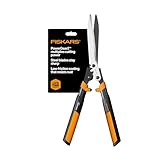
- GARDENING ESSENTIAL: Steel blade garden shears ideal for a variety of pruning tasks like making high or hard-to-reach cuts, trimming and shaping hedges or decorative shrubs, and more to encourage overall plant health
- MAXIMUM POWER AND PRECISION: Gardening shears that feature our PowerGear gear mechanism that multiplies your leverage to maximize branch-cutting power over traditional designs
- LONG-LASTING AND RELIABLE: Hardened, precision-ground blades stay sharp through heavy use and provide excellent durability; great alternative to electric bush trimmers or gas-powered hedge clippers
- COMFORTABLE GARDEN TOOLS: Hedge clippers with a lightweight design and shock-absorbing bumpers that reduce strain on your hands, wrists, and muscles; SoftGrip handles enhance comfort and control
- QUALITY GARDEN TOOLS: 10" blades with low-friction blade coating for smoother cuts with less gumming and improved rust resistance; Fiskars pruning shears and tools are built to last
Grind the stump
Grinding is usually faster than hand excavation and removes the visible stump below grade. It is useful when the objective is to reclaim the surface for lawn, mulch, or a nonimmediate planting area. A stump grinder rental may be available in compact and larger models, but inventory, size limits, delivery, and training vary by rental location.
Grinding does not necessarily remove every lateral root, the entire root crown, or connected suckers. It also creates a large volume of chips. If the area will become a planting bed, remove excess chips from the planting hole and replace them with suitable soil; decomposing material can settle and leave a depression. If the plant was diseased, invasive, or a vigorous root sucker, ask an extension professional or tree-care specialist how much root material and debris should be removed.
Before renting a grinder
- Confirm that 811 marking is complete and that no private utility is in the machine’s work area.
- Check the grinder’s cutting depth, access width, transport requirements, and operating instructions.
- Keep bystanders and pets well away from the machine and discharge area.
- Use the required eye, hearing, foot, hand, and other protective equipment.
- Do not operate the machine on unstable slopes or where you cannot control its movement.
- Hire the work out if the stump is close to a foundation, utility, retaining wall, road, or other target.
Tools that match the job
| Tool | Best use | Important limitation |
|---|---|---|
| Loppers and pruning saw | Reducing the canopy before digging | Choose by branch diameter; they do not remove the root system |
| Cutter mattock | Breaking compacted soil and cutting small-to-medium roots | Requires a clear swing path and careful control around utilities |
| Digging bar | Breaking hard soil and providing controlled leverage | Not a substitute for a root saw and unsafe against unknown utilities |
| Root saw | Cutting exposed woody roots | Use only after the root and surrounding area are visible |
| Manual shrub or tree puller | Small stems in stable soil when a roots-and-all pull is realistic | Respect the diameter rating; it is not for large trees or deep taproots |
| Stump grinder | Removing a visible stump below grade | May leave lateral roots and does not guarantee eradication |
A chainsaw can be relevant for a trained operator performing permitted ground-level work on a larger woody stem, but it is not a beginner shortcut. CDC safety guidance calls for a properly sized saw, chain brake and guards, regular maintenance, a hard hat, eye and hearing protection, gloves, cut-resistant legwear, and ankle-covering boots. If chainsaw use is genuinely within your training and site conditions, chainsaw protective chaps should meet applicable protective standards, such as the standards identified for the specific product. PPE reduces injury severity; it does not make an unstable tree, utility-line exposure, or inexperienced felling safe.
Independent reader supportYour contribution helps us test, update, and keep practical guides available for everyone.When professional removal is the safer choice
Hire a qualified tree-care professional when any of the following applies:
- The plant is within the utility-line danger area or could fall toward a line.
- It leans toward a house, vehicle, road, fence, retaining wall, or neighboring property.
- The trunk is dead, hollow, split, storm-damaged, under tension, or too large for controlled ground-level work.
- Removal requires climbing, rigging, elevated cutting, or lowering branches.
- Roots threaten a foundation, drainage system, paved surface, or utility.
- The plant may be diseased or invasive and needs specialized handling or disposal.
- You cannot establish a clear escape route and exclusion zone.
- You would need to use a chainsaw or stump grinder beyond your training and physical control.
Ask the contractor whether the quotation covers only cutting, stump grinding, root excavation, debris removal, or follow-up treatment. Those are different services. A grinder quotation that leaves lateral roots in place may be appropriate for lawn restoration but inadequate for an invasive plant eradication project.
Cleanup, backfilling, and monitoring
- Remove the root crown and loose fragments. Pay particular attention to fragments when dealing with a known resprouter or invasive plant.
- Handle debris responsibly. Fruit, seeds, viable roots, and cut stems can spread some plants. Follow local invasive-species and green-waste rules rather than moving the material to another property or placing it in an ordinary compost pile without checking.
- Backfill in lifts. Replace soil in manageable layers and compact each layer to reduce later settling. Do not leave a deep void that can collect water or collapse under foot traffic.
- Regrade carefully. Direct water away from structures, but do not bury the trunk flare or root crown of a nearby desirable tree.
- Remove excess stump chips from planting areas. Use appropriate soil in the planting hole and expect some settling where a large stump was ground.
- Monitor for several growing seasons. Annual inspection is especially important for plants that sucker or regenerate from roots. Remove or treat new shoots promptly according to the selected method.
- Protect bare soil. Replant, seed, or mulch as appropriate to limit erosion and reduce the opportunity for another invasive plant to establish.
What not to do
- Do not assume that one cut kills a woody shrub or tree.
- Do not promise yourself that stump grinding equals complete root eradication.
- Do not pour boiling water, salt, diesel fuel, or random stump chemicals into the soil. These approaches can fail to kill the root system and can damage soil, nearby plants, water, or property.
- Do not use a chainsaw in dirt or on soil-covered roots.
- Do not pull a large stump with a vehicle or a makeshift tensioning system.
- Do not apply an herbicide without reading the current label for the exact product, plant, site, and method.
- Do not work around energized lines or an unstable tree as though it were routine yard cleanup.
The regrowth warnings in this article reflect university extension guidance on woody-plant resprouting and lateral-root suckering. The utility and tree-work cautions reflect 811, OSHA, and CDC safety guidance; pesticide-use requirements come from EPA labeling rules. Product availability and local disposal requirements vary by location.
Best Value

- 2-in-1 Grass Shears & Bush Trimmer - This cordless handheld combo includes a 5.5" long hedge trimmer blade and a 3.25" wide grass shear blade for versatile yard care. Cuts branches up to 0.31" (8mm) thick with clean results.
- Upgraded Power Motor - Powered by a 1100 RPM motor and sharp 65Mn steel blades, it delivers precise trimming for lawns, hedges, garden edges, bushes, shrubs, and small plants with consistent cutting performance.
- Lightweight & Ergonomic - Weighs only 1.05 lbs, supporting easy one-handed operation and better control. This design makes it simple to carry and maneuver. The TPR non-slip handle provides a comfortable grip and helps reduce hand fatigue during extended use.
- Enhanced Safety Design - Features a dual safety lock system to help prevent accidental activation. After starting, release the safety lock and continue trimming smoothly with the ON/OFF switch. Designed for reliable cordless use, this compact tool provides peace of mind for beginners and experienced gardeners alike.
- Cordless & Low-Noise Operation - Enjoy quieter trimming compared to larger equipment. Equipped with a built-in 1500mAh rechargeable lithium battery and battery level indicator. The cordless design allows easy trimming in front yards, backyards, and around flower beds without dealing with tangled cords or bulky tools.
Frequently Asked Questions
Will cutting a bush down to the ground kill it?
Usually not. Many deciduous shrubs and trees resprout from the stump, and some species produce shoots from lateral roots. Cutting can be the first step for access, but you must either remove the root crown, repeatedly remove new shoots, or use a properly labeled cut-stump treatment where permitted.
Is stump grinding the same as removing the roots?
No. Grinding removes the visible stump and some wood below grade, but lateral roots and connected underground growth can remain. Monitor the area for shoots, and use excavation or species-specific follow-up if complete eradication is the goal.
Crashes, No Sound, or Screen Glitches?
Random freezes, missing sound and display glitches usually trace back to one bad driver. Find and replace yours safely.Free scan · under a minuteWindows Errors? Fix Them Before They Spread
Repair common Windows errors and clear accumulated junk for a smoother, more stable PC - no reinstall needed.Free scan · no reinstallWhat is the best time to remove a deeply rooted bush?
For digging and pulling, soil that is moist but stable is generally easier to work than hard, dry soil; watering the day before can help. For a cut-stump herbicide, late summer or fall is often preferred for many woody plants, but the current product label and local guidance control the timing.
How long should I watch the area for regrowth?
Watch through several growing seasons, especially if the plant is known to sucker or regenerate from roots. Inspect at least annually and remove new shoots promptly. Shoots appearing away from the stump indicate that lateral roots or underground connections may remain.
Can I remove a small tree beside a power line myself?
Do not attempt it if the tree, branches, tools, or falling material could come within 10 feet of an energized line. OSHA identifies this as line-clearance tree-trimming work requiring qualified personnel and appropriate equipment. Arrange qualified professional help instead.
The Bottom Line
For a small, isolated sapling, moisten the soil, expose the root crown, sever the lateral roots, and pull the plant out intact. For a larger bush, cut the stems for access and excavate the crown and anchor roots. If you only cut or grind the stump, plan for monitoring because regrowth and lateral-root suckers may continue. Call 811 before digging, stay clear of energized lines and unstable trees, and use a qualified professional whenever the site or equipment makes the work hazardous.
Quick Recap
Product prices and availability are accurate as of the date/time indicated and are subject to change. Any price and availability information displayed on Amazon at the time of purchase will apply.




