Recommended Free Tools
Yes, baking soda and vinegar may help a mildly slow or smelly drain—but they are not a dependable cure for a serious clog. The fizz is a real acid-base reaction, but it produces carbon dioxide, water, and sodium acetate rather than a powerful solvent that reliably dissolves hair, compacted food, or a heavy grease blockage. Poison Control explains that household drains are generally not airtight, so the gas usually escapes instead of creating enough pressure to force out a clog.
Best use: Try this method once for a mildly slow drain, light residue, or odor when no other chemical has been used. Use a plunger, drain stick, hand auger, P-trap cleaning, or a plumber for a fully blocked, recurring, deep, or multi-fixture blockage.
As an Amazon Associate I earn from qualifying purchases.
Before adding anything, answer the most important safety question: Has commercial drain opener, bleach, ammonia, toilet cleaner, or another chemical already gone into the drain? If the answer is yes—or you are not sure—do not add vinegar, do not plunge, and do not snake the drain. Follow the product label and contact a plumber if the blockage remains.
PC Slower Than It Used to Be?
A free scan shows the junk files, broken settings and background clutter dragging Windows down - then fixes them in one click.Free scan · Windows 10 & 11Crashes, No Sound, or Screen Glitches?
Random freezes, missing sound and display glitches usually trace back to one bad driver. Find and replace yours safely.Free scan · under a minuteWhen baking soda and vinegar are worth trying
This is a reasonable low-risk experiment for a drain that is slow rather than completely blocked, especially when the likely problem is light residue near the opening. It may improve a drain affected by soap scum, toothpaste residue, odor, or a light film of grease. It is also a non-caustic alternative for someone who wants to avoid commercial chemical drain openers.
#1 Best Overall
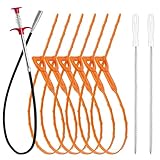
- 【Metal Claw Grabber for Stubborn Clogs】 This extra-long 35.5-inch metal grabber features a flexible yet sturdy shaft and a 4-claw tip that opens and closes by the handle. It bends easily into curved pipes and P-traps to latch onto solid obstructions, toys, and thick hair clogs that plastic snakes simply can’t grip.
- 【6 Extra-Long Drain Snakes】 With a 25-inch length that reaches deeper than standard 20-inch tools, these highly flexible barbed wands glide into tight drains to hook hair, food particles, and grime. The tiny hooked teeth make insertion smooth and removal effective, and they rinse clean in seconds for repeated use.
- 【2 Pipe Brushes for Daily Maintenance】 These durable, bendable brushes reach the pipe inner walls to scrub away stubborn buildup, slime, and odor-causing residue that clogs often start from. Regular use helps maintain a smooth water flow, prevent future blockages, and keep drains fresh without harsh chemicals.
- 【9-Piece All-in-One Professional Tool Set】 Everything you need in one kit: 1 metal claw grabber for tough clogs, 6 drain snakes for hair, and 2 pipe brushes for routine deep cleaning. It’s a cost-effective alternative to expensive plumber visits, covering removal, extraction, and prevention with a single set.
- 【Simple Operation and Wide Application】 Just insert, twist or push, and pull out the clog—no complicated steps. Suitable for kitchen sinks, bathroom basins, showers, bathtubs, toilets, and sewer drains. The tools are reusable and designed to be safe for your pipes while delivering strong cleaning performance.
It is much less likely to solve an obstruction that must be physically removed. A dense hair mat, solid object, compacted food mass, tree roots, or a blockage deep in a branch line or main sewer line will generally require mechanical clearing or professional equipment. Pinellas County notes that fats, oils, and grease adhere to pipe walls and progressively reduce the pipe opening; prevention is more dependable than trying to wash a heavy grease plug away with a homemade mixture. See its grease and drain guidance.
| Drain condition | How suitable is this method? | Better next step |
|---|---|---|
| Odor or light residue | Reasonable as a cleaning or freshening treatment | Clean the stopper or strainer as well |
| Slightly slow sink | May help, although plunging is usually more reliable | Try the recipe once, then plunge if needed |
| Soap scum or toothpaste near the opening | Possible benefit | Remove visible residue and use a drain stick if accessible |
| Light grease film | Possible limited benefit when flushed with hot tap water | Improve grease-disposal habits; use a plumber for a solid grease blockage |
| Hair clog | Usually poor candidate | Pull out the hair or use a drain stick or hand auger |
| Fully blocked drain with standing water | Do not make this the first move | Bail out water, plunge, snake, or inspect the P-trap |
| Solid object, toy, jewelry, roots, or food mass | Not appropriate | Remove it mechanically or call a plumber |
| Several fixtures backing up | Unlikely to help | Arrange professional diagnosis |
There is no reliable standardized household test establishing an exact success rate for baking soda and vinegar. Be suspicious of precise claims such as a recipe clearing a stated percentage of clogs.
Safety checks before you start
- Do not use this method after commercial drain cleaner. Vinegar can react with drain opener and produce dangerous fumes, according to Pinellas County. Product instructions also warn against mixing drain cleaners with other chemicals.
- Never mix vinegar with bleach. The combination can form chlorine gas. Clorox gives the same warning.
- Do not combine the mixture with ammonia, toilet cleaner, disinfectant, or any other product. “Natural” does not mean universally safe or effective.
- Wear gloves and eye protection. Drain water and loosened debris can splash, and the reaction can foam over the opening.
- Do not use this as a toilet-unclogging method. Use a toilet plunger or toilet auger designed for the fixture.
- Use hot tap water rather than automatically pouring boiling water into an unknown or plastic plumbing system.
- Stop using the fixture if sewage is backing up, several fixtures are affected, or the pipes are leaking or visibly damaged.
Do not start with baking soda and vinegar if the drain is completely blocked
Standing water makes it harder for the ingredients to reach the obstruction and can dilute or hold the mixture above the blockage. If a sink, tub, or shower is fully backed up, use this sequence instead:
The Tool Desk
Outbyte Driver Updater FREEFix the driver behind crashes, sound loss and screen glitchesFind Drivers →Outbyte PC Repair FREERepair Windows errors before they cause bigger problemsFix Now →- Stop adding water to the fixture.
- Bail out or wet-vac as much standing water as practical. Wear gloves and avoid splashing.
- Remove the stopper, strainer, or drain cover and clear visible hair, food, or other debris.
- Try the appropriate plunger.
- Use a drain stick or hand auger if the blockage is within reach.
- For a sink, inspect and clean the P-trap.
- Call a plumber if the obstruction persists or other fixtures are also backing up.
The EPA recommends a plunger or plumber’s snake for drain clogs. Those tools act on the obstruction directly, which is why they are generally a better first-line treatment for a genuine blockage.
The recommended baking soda and vinegar method
What you need
- ½ cup baking soda
- 1 cup ordinary white vinegar
- A removable drain stopper or damp cloth
- Hot tap water
- Gloves and, preferably, eye protection
This is a moderate recipe, not a scientifically standardized dose. Published recipes vary considerably: Pinellas County lists ½ cup of each; Connecticut’s environmental guidance and Roto-Rooter use ½ cup of baking soda and 1 cup of vinegar; Cornell Cooperative Extension and Home Depot list 1 cup of each; and California’s Department of Toxic Substances Control lists ¼ cup of baking soda with 2 ounces of vinegar. You can compare those recommendations through Connecticut DEEP, Roto-Rooter, Cornell Cooperative Extension, Home Depot, and the California Department of Toxic Substances Control.
Step-by-step instructions
- Stop using the fixture. If there is more than a small amount of water in the basin, remove it first rather than treating a pool of standing water.
- Remove the stopper, strainer, or cover. Pull out visible hair, food, sludge, or other debris. A small drain stick or tweezers may be more effective than any liquid treatment for material you can reach.
- Confirm the chemical history. Do not continue if a commercial drain opener, bleach, ammonia, toilet cleaner, or another chemical may be in the pipe.
- Pour ½ cup of baking soda into the drain. Try to place it at the opening instead of scattering it around the fixture.
- Add 1 cup of white vinegar slowly. Pour carefully because the mixture will fizz and may rise toward the opening.
- Cover the opening with a removable stopper or damp cloth. This helps contain splashes and keeps the ingredients at the drain opening. It does not turn the plumbing into a sealed pressure vessel. Do not install a rigid airtight cap while adding a large quantity of reacting material.
- Wait 10 to 15 minutes. Keep children and pets away from the fixture during the reaction.
- Remove the cover and flush gradually with hot tap water. Pour slowly at first so water does not splash back. Hot tap water is the safer general recommendation when the pipe material and condition are unknown.
- Test the drain. Run a modest amount of water and observe whether it drains normally.
- Stop if it did not work. If the drain is somewhat better but still slow, one cautious repeat may be reasonable. If there is no improvement, do not keep repeating the recipe; switch to a plunger, drain tool, P-trap cleaning, or professional help.
Why the mixture fizzes—and why fizzing is not proof of unclogging
Baking soda is sodium bicarbonate, a base. Vinegar contains acetic acid. When they meet, they undergo an acid-base neutralization:
NaHCO₃ + CH₃COOH → CO₂ + H₂O + CH₃COONa
The visible bubbles are carbon dioxide. The other products are water and dissolved sodium acetate. The reaction is documented in an Ohio State chemistry demonstration. It is not producing a powerful solvent that reliably dissolves hair, a solid food mass, a foreign object, or a serious grease plug.
Rank #2

- 【Soft & Flexible Barbed Wand】This 4-pack 20inch drain clog remover features a multi-tooth design, making it perfect for navigating various strainers and pipes to easily hook and remove hair and debris.
- 【High-Quality Material】Crafted from durable polypropylene , this drain snake is tough yet flexible, designed to tackle hair clogs swiftly. The drain snake hair drain clog remover easily maneuvers through tight bends and P-traps in your plumbing.
- 【User-Friendly Operation】Operating this snake drain hair removal tool is simple—just insert, twist, and pull to remove blockages. This drain cleaner is safe to use, protecting your hands while delivering effective results.
- 【Eco-Conscious and Reusable】 Opt for this reusable drain snake instead of harsh chemical solutions. Ideal for kitchen sinks, toilets, bathtubs, and more, this drain clog remover offers a sustainable and cost-effective way to maintain clear drains.
- 【Versatile Application】 Whether in the kitchen, bathroom, or other areas, this drain snake hair drain clog remover is versatile enough to handle clogs in sinks, toilets, bathtubs, and sewers, easily flexing around P-traps where clogs are most common.
The Ohio State demonstration reports that, under its stated conditions, approximately 100 mL of vinegar at about 5% acidity reacted with roughly 5 mL of baking soda powder and produced about 2.1 liters of carbon dioxide, with excess baking soda remaining. The practical lesson is that common “one cup of each” recipes are not chemically exact formulas. More baking soda does not automatically make the treatment stronger, and if a drain cannot flush freely, excess powder may remain in the trap or pipe. That is a chemistry-based caution, not proof that excess powder causes every failed treatment.
Covering the drain can keep the mixture in contact with residue near the opening and reduce splashing. It should not be described as a way to build powerful pressure. Household drains normally allow gas to escape, and Poison Control specifically cautions that the reaction is unlikely to melt tough oil- or grease-based clogs.
How hot should the flushing water be?
Use hot tap water, not automatically boiling water. Some municipal and extension recipes call for boiling water, but that is not a universal instruction for every plumbing system. Drano’s product directions specify hot rather than boiling water, and Home Depot warns against boiling water where a drain is connected to PVC.
Pipe material and condition matter. Charlotte Pipe’s technical manual lists 140°F as the maximum operating temperature for its ABS and PVC piping systems and warns that exceeding maximum working temperature can contribute to system failure or property damage. You can review the technical manual.
- Use hot tap water when the pipe material is unknown.
- Do not treat boiling water as a safe universal choice for PVC or ABS drains.
- Avoid boiling water in old, damaged, leaking, or visibly fragile plumbing.
- Pour carefully to prevent scalding and splashback.
- If a commercial product label specifies hot—not boiling—water, follow that label.
What to do when baking soda and vinegar fail
Choose the next method according to the likely location and type of obstruction.
1. Remove visible hair or debris
For a bathroom sink, shower, or tub, remove the stopper or grate and pull out what you can see. Hair is usually a physical obstruction, so a drain stick, tweezers, or a hand auger is more targeted than an acid-base reaction. Clean the stopper itself before reinstalling it.
2. Use a plunger
A plunger is often the most useful next step for a partially blocked sink, tub, or shower. Do not plunge if commercial drain opener is still in the pipe; caustic liquid can splash onto your skin or into your eyes. Drano’s instructions and Pinellas County’s guidance both warn against plunging after chemical drain opener has been used.
- Put enough water in the fixture to cover the plunger cup, if the fixture is not already holding water.
- Place the cup directly over the drain and create a firm seal.
- For a sink with an overflow opening, block the overflow with a damp rag.
- For a double-basin kitchen sink, seal the second drain so pressure is directed toward the blockage.
- Use controlled up-and-down strokes while keeping the seal intact.
- Check whether the water begins to drain, then flush with hot tap water.
3. Use a drain stick or hand auger
A short drain stick is useful for hair close to a bathroom drain. A hand auger or longer cable can reach deeper blockages. Lowe’s guidance on drain snakes explains that longer cables are suited to deeper obstructions that plungers and surface treatments may not reach.
Rank #3

- Professional: This professional plumbers snake comes complete with 25 ft Steel, more than enough for most household clog, keeping your drains flowing smoothly. In addition, the pipe snake comes with a pair of gloves, which help to keep your hands clean and safe. What's more the springs can be stored in the drum to keep it tidy than conventional drain cleaner.
- Easy to Use: The sewer snake spring is both flexible and tough to enable you to easily take tight bends, and the large crank knob and grip handle makes it easy to use, our drain snake with drill attachment could Use Manually or Powered(not included drill), which help to remove the blockages more convenient and effective. (NOTE: Need to pull the spring out or feed it back by hand. For sticky and hard clog, please pour in liquid clog remover to loose the blockage before operate the drain auger which will help a better dredging.)
- Multiple Uses for Tackling Clogs: This snake drain clog remover is professional using for various drains such as kitchen, bathroom, utility sinks, bathtubs, and shower drains, sewer and floor drains. The drain clog hair remover is equipped with special tips for clearing downspouts and even central vacuum lines. (NOTE: For pipe diameter from 1/2" to 3". Not for clog for toilets)
- Premium Quality: The sink drain clog remover is made of high-impact ABS drum housing for long-lasting durability. The springs are made of high-quality 72A Mn-steel, our shower drain clog remover also offers an upgraded metal mouth to reduce wear, an easy to use stop screw to secure the cable in place.
- Life Time Support: Suggest to unblock the drain 2-3 month/time to keep it clean. It is better than to spending over hundreds of dollars in liquid drain removals or calling a plumber every time when you meet a clogged drain in your house. This drain cleaner tool is reusable and saving your money and time.
- Remove the stopper or strainer.
- Feed the tool into the drain until you feel resistance.
- Rotate the cable while applying controlled pressure.
- Pull the tool back periodically to remove captured hair or debris.
- Continue until resistance decreases and the drain begins to flow.
- Flush with hot tap water.
Do not snake a drain after chemical drain cleaner has been used. Stop if the pipe appears corroded or damaged, if the tool will not advance safely, or if you may be forcing a solid object farther into the system.
4. Clean the sink’s P-trap
The P-trap is the curved section of pipe beneath a sink and is a common location for food, grease, and small objects to collect. This procedure applies to an accessible sink trap, not a hidden or damaged installation.
- Place a bucket beneath the curved trap.
- Loosen the slip nuts carefully.
- Remove the trap and empty its contents into the bucket.
- Clean and rinse or scrub the trap.
- Reassemble the pieces in their original orientation.
- Hand-tighten plastic fittings carefully; do not over-tighten them because plastic connectors can crack.
- Run water and inspect every joint for leaks.
Home Depot provides a similar P-trap cleaning procedure.
Quick wins for a faster PC:
Repair Windows errors before they cause bigger problemsFix Now →Fix the driver behind crashes, sound loss and screen glitchesFind Drivers →Clear out junk files and repair common Windows errorsFree Scan →Special cases by fixture
Kitchen sink
First determine whether the problem is a blocked drain or a garbage disposal that is jammed or not operating. If the disposal runs but the sink does not drain, the blockage may be downstream of the disposal. If the disposal is silent, humming, or jammed, follow the manufacturer’s instructions and turn off power before inspecting it. Never put your hand into a garbage disposal. If appropriate for the model, check its reset switch after power is safely disconnected.
For a double-basin sink, water may rise in the second bowl because both basins share a drain connection. Seal the second basin when plunging. Keep grease, oil, coffee grounds, and fibrous food scraps out of the drain; a disposal does not make fats and grease harmless. The EPA’s septic guidance and Pinellas County both advise against sending grease and problematic materials into drains.
Bathroom sink, shower, or tub
Hair is the leading reason to favor physical removal. Clean the stopper, remove the shower grate if necessary, pull out visible hair, and use a drain stick or hand auger for deeper buildup. A plunger can help if the drain remains partially blocked. Baking soda and vinegar may freshen the drain or affect light residue, but they are unlikely to remove a compacted hair mat.
Toilet
Do not treat a toilet as an ordinary sink or shower drain. Use a toilet plunger with a flange or a toilet auger designed for the trap. Many sink drain openers are ineffective in toilets because of the toilet’s trap configuration, as explained in Drano’s FAQ. If the bowl is overflowing or another fixture is backing up, stop using water and call a plumber.
What’s actually slowing this PC down?
Pick the symptom - the matching free tool is one click away.
Homes with septic systems
Do not make a blanket claim that baking soda and vinegar are “septic-safe” in every quantity or situation. Small amounts of these household ingredients are not the same as caustic commercial drain opener, but septic owners should still favor mechanical clearing and avoid grease, drain cleaners, and excessive household chemicals. The EPA advises septic owners to keep grease, oils, drain cleaners, and other problematic materials out of the system; see its frequently asked questions about septic systems.
Rank #4

- 8-PACK FOR 8X THE VALUE – Stop reusing dirty, bent snakes. With 8 tools in every order, you always have a fresh one ready for every sink, shower, and tub in your home. Keep one in each bathroom – no more running back and forth.
- EXTENDED | GRIPS HAIR THAT STANDARD TOOLS MISS – 25-inch length reaches deeper than standard 20-inch tools. The barbed, multi-tooth design hooks onto hair and soap scum that smooth snakes would just push through. Works in P-traps, curved pipes, and tight drain openings.
- FITS STANDARD DRAINS – The 0.45-inch snake width works in most sink, shower, and tub openings (check that your drain hole is larger than 0.45 inch for best results). For toilets, use the angled tip to navigate the trap without scratching porcelain.
- NO TOOLS, NO CHEMICALS, NO MESS – Insert, twist, pull – clogs come out in seconds. The flexible PP material bends through pipes without scratching or damaging surfaces. Ideal for DIY beginners and experienced homeowners alike.
- SAVE BIG ON PLUMBER FEES – Ditch costly plumber visits and toxic chemical drain cleaners. These reusable snakes pay for themselves after just one use. Rinse, dry, and store – they're ready for the next clog.
When to call a plumber
Skip homemade treatments and arrange professional help when:
- Several sinks, tubs, showers, or toilets are slow or backing up at the same time.
- Sewage or wastewater is backing up into the home.
- The blockage returns repeatedly after temporary improvement.
- You suspect a main-line or deeper branch-line obstruction.
- Plunging, snaking, and accessible P-trap cleaning have not restored flow.
- The pipes are old, corroded, leaking, fragile, or inaccessible.
- A garbage disposal problem persists after the manufacturer’s basic troubleshooting.
- Commercial drain cleaner has already been used or may still be in the pipe.
Multiple poorly draining fixtures can indicate a deeper plumbing blockage, and Lowe’s recommends professional help when the blockage cannot be safely reached. Tell the plumber what product was used, approximately how much, and when it was poured into the drain.
What to do after exposure to drain cleaner
If commercial drain cleaner has splashed into the eyes or onto the skin, someone has inhaled fumes, or the product has been swallowed, do not attempt to neutralize it with vinegar or another household ingredient. In the United States, contact Poison Control through webPOISONCONTROL or call 1-800-222-1222. Seek emergency care for severe symptoms, breathing trouble, serious burns, collapse, or other urgent signs.
Preventing the next clog
- Use a sink strainer and empty it into the trash.
- Scrape food scraps into the garbage or compost rather than rinsing them down the sink.
- Never pour cooking grease or oil down the drain. Let it cool and dispose of it according to local guidance.
- Keep coffee grounds, fibrous vegetable scraps, and other solids out of the plumbing.
- Clean sink stoppers, shower grates, and strainers regularly.
- Do not rely on routine baking soda-and-vinegar treatments to compensate for grease or food entering the drain.
Prevention is particularly important for grease. Fats, oils, and grease can stick to pipe walls and narrow the passage over time, so a bubbling treatment is not a substitute for keeping them out of the plumbing.
Frequently Asked Questions
Can baking soda and vinegar unclog a hair-filled drain?
Usually not. Hair is a physical obstruction, so remove the stopper and pull out visible hair with a drain stick, tweezers, or a hand auger. Use a plunger for remaining partial blockage.
Should I cover the drain while the mixture reacts?
Use a removable stopper or damp cloth to contain splashes and keep the mixture near the opening. Do not assume this creates powerful pressure: household drains are generally not airtight, and you should not install a rigid airtight cap while adding large quantities of reacting ingredients.
Can I use boiling water after baking soda and vinegar?
Hot tap water is the safer general choice, especially when the pipe material is unknown. Avoid treating boiling water as universally safe for PVC or ABS plumbing, and do not use it in old, damaged, or fragile systems.
Free tools Windows power users keep installed
One-click scans. No signup required.
Can I use this method after pouring Drano or another drain opener into the pipe?
No. Do not add vinegar or any other product, and do not plunge or snake while chemical residue may remain. Follow the product label and tell a plumber which chemical was used.
Is baking soda and vinegar safe for a septic system?
Do not make a blanket septic-safe claim. Small amounts are not the same hazard as caustic drain opener, but septic owners should prioritize mechanical clearing and keep grease, drain cleaners, and excessive household chemicals out of the system.
The Bottom Line
Baking soda and vinegar can be worth one cautious try on a mildly slow or smelly drain, but fizzing is not proof that the blockage has dissolved. Use ½ cup of baking soda, 1 cup of white vinegar, a removable cover, a 10–15 minute wait, and hot tap water. Never use the mixture after another chemical, do not rely on it for toilets or solid obstructions, and move promptly to a plunger, drain snake, P-trap cleaning, or a plumber when the drain remains blocked.
Quick Recap
Product prices and availability are accurate as of the date/time indicated and are subject to change. Any price and availability information displayed on Amazon at the time of purchase will apply.

