Yes—you can turn clean, fully finished soap slivers into usable new bars. The simplest method is called rebatching: grate the scraps, soften them gently with a small amount of distilled water, press the thick mixture into a mold, and let the bars dry.
The important limitation is safety. Rebatch only soap that you can identify and know is finished and suitable for skin. Do not casually reuse an unknown commercial cleansing bar, a batch that may contain excess lye, or soap that causes burning or unusual irritation.
As an Amazon Associate I earn from qualifying purchases.
What rebatching does—and what it does not do
Rebatching, also called hand-milling or hot rebatching, softens finished soap so it can be consolidated into a new shape. Because the original soap has already gone through saponification, you normally do not add lye.
Rebatched soap is usually dense and rustic. It will not necessarily become a smooth, glossy bar like a commercially manufactured bar or a carefully made cold-process bar. Expect a textured surface, folds, small air pockets, and possibly uneven color or scent.
#1 Best Overall
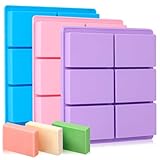
- Food-Safe & Premium Silicone: SJ soap mold crafted from soft, flexible, high-grade silicone for superior durability. Features a non-stick, easy-release surface and withstands extreme temps from -40°F to 446°F (freezer to oven-safe). Completely BPA-free and family-safe.
- Effortless Release: Simply pour your soap mixture into the molds and let it set. The soft, flexible silicone and non-stick surface make releasing your soap a breeze – just gently push from the bottom for perfect, unbroken bars. Pro Tip: Place the mold on a baking sheet for easier handling and removal.
- Value Pack: Each set includes 3 sturdy silicone molds. Each mold has 6 cavities (3.15" L x 2.15" W x 0.75" H per cavity). The overall tray measures 7.8" L x 7" W x 0.8" H. Each cavity holds approximately 2.8 fl oz of liquid. Great value for frequent crafters!
- Enjoy Creative Crafting: This versatile 6-cavity silicone molds makes soap crafting easy – but that's not all! Perfectly sized for Rice Krispies Treats, teacakes, jellies, chocolates, cheesecakes, muffins, panna cotta, candles, resin art, clay crafts, plaster, and more. Endless creative possibilities await!
- Trusted Quality & Satisfaction Guarantee: SJ specializes in silicone innovation, bringing you top-quality silicone soap molds. We stand behind our products! If you have any questions or concerns, contact us directly for prompt and satisfactory solutions. Your happiness is our priority.
Think of rebatching as a practical way to reduce waste and salvage usable soap—not as a method for reproducing the original bar perfectly.
Which soap scraps are suitable?
The best candidates are clean, hardened scraps whose ingredients and intended use are known. Examples include:
- Trimmings from your own finished cold-process or hot-process soap
- Slivers from a known handmade soap bar
- Bars that are fully hardened and have already been intended for skin cleansing
Sort scraps before combining them. Strongly different fragrances or colors can produce an unpleasant scent or a muddy, marbled appearance. If the final result matters, group similar soaps together.
What’s actually slowing this PC down?
Pick the symptom - the matching free tool is one click away.
Be cautious with store-bought bars
“Soap” is often used informally for many types of cleansing products. Some commercial bars contain synthetic detergents, conditioners, specialty additives, or fragrances, and not every product sold as soap fits the traditional regulatory definition of soap. These products may soften, separate, or behave unpredictably when reheated.
If you do not know what a bar contains, the safest choice is to avoid rebatching it for skin use. A soap saver bag or another no-heat option may be more appropriate for clean scraps.
Do not rebatch questionable or potentially lye-heavy soap
Do not use a batch that has visible lye pockets, causes burning or unusual irritation, has an unexplained chemical odor, or may contain excess lye. Cracks, unattractive texture, or cosmetic defects can sometimes be corrected by rebatching; suspected lye imbalance is a separate safety problem.
Treat suspected lye-heavy soap as potentially caustic. Do not give it to anyone for skin contact or assume that reheating will make it safe. Follow an appropriate soapmaking safety procedure for assessment or disposal.
Recommended Free Tools
Materials and equipment
- Clean soap slivers or trimmings
- A box grater, cheese grater, or sharp knife
- Distilled water
- A slow cooker, double boiler, or heavy heat-safe pot
- A heat-resistant silicone soap mold or another heat-resistant mold
- A spoon or silicone spatula
- Heat-resistant gloves
- Parchment or wax paper to protect the work surface
A silicone soap mold makes the reshaping step easier because softened soap can be pressed into it and released after cooling. Choose a mold for shaping rather than expecting it to make the soap pourable; rebatch normally has a thick, mashed-potato-like consistency.
You probably already own a grater. A box grater is useful for firm bars, while a knife works well for softer scraps. Use dedicated equipment if the soap contains strong fragrance, colorants, or other craft additives, and do not return those tools to food preparation without cleaning them appropriately.
Rank #2
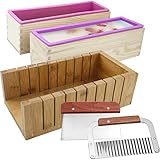
- Must-have soap making accessory: works well for both cp and mp soaps.2 stainless steel wavy & straight soap mold loaf
- Perfect for soap making, 10 slots for cutting the soap equally into 1 inch each.(44oz silicone)
- It's not only for soap, but also wonderful for cutting loaf, dessert and pastry, chocolate, jelly,muffin, conditioning food and so onetc.
- Temperature safe from-40 to +446 degrees fahrenheit (-40 to +230 degrees celsius). safe use in microwave, fridge, freezer and dishwasher,the silicone insert is robust and thick which
- This set is a one-stop supplies for all of your soap-making crafts needs
How to rebatch old soap slivers into new bars
1. Sort and clean the scraps
Remove hair, lint, packaging fragments, and any visibly contaminated material. Check that every piece is fully hardened and identifiable. Do not include scraps that have developed an unexplained odor, show signs of contamination, or irritate your skin.
2. Grate or chop the soap finely
Grate firm bars with a box grater or chop softer pieces with a knife. Smaller pieces soften more evenly and reduce the time they need over heat. Avoid making large chunks, which can remain hard while the surrounding soap becomes overheated.
3. Add distilled water sparingly
Put the grated soap into your slow cooker, double boiler, or heavy heat-safe pot. Begin with only a small amount of distilled water. The precise quantity depends on the soap’s formulation, age, and remaining moisture, so do not flood the mixture at the beginning.
Add more only if the mixture looks dry or the pieces are not softening. Too much water can leave you with a soft bar that requires a longer drying period.
4. Heat gently and stir regularly
Use low or medium-low heat. Stir often, scraping the bottom and sides so the soap does not scorch. A covered pot can help retain moisture, but it still needs regular monitoring.
If you prefer a controlled appliance, a small slow cooker can be used for the heating stage, provided it allows close supervision and gentle heat. A double boiler is another option for separating the soap from the direct heat source.
Windows Errors? Fix Them Before They Spread
Repair common Windows errors and clear accumulated junk for a smoother, more stable PC - no reinstall needed.Free scan · no reinstallCrashes, No Sound, or Screen Glitches?
Random freezes, missing sound and display glitches usually trace back to one bad driver. Find and replace yours safely.Free scan · under a minuteKeep children and pets away from the work area, and never leave heating soap unattended. Avoid splashing the hot, wet mixture.
5. Stop at a cohesive, thick consistency
Rebatch soap generally does not turn into a thin liquid. Stop heating when the softened soap forms a cohesive, thick mass resembling mashed potatoes. It should be soft enough to pack but not necessarily smooth enough to pour.
Do not keep increasing the heat just to make the mixture glossy or fluid. Excessive heat can scorch the soap, damage its texture, and drive off some fragrance. Separation or a burnt smell is a sign to stop and reassess rather than continue heating.
Rank #3
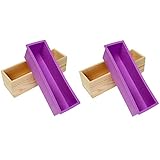
- Cold resistant and high temperature resistant,temperature: -40°F to 446°F (-40°C to 230°C)
- Silicone mold dimension(L x W x H):10"x3"x2.7",wood box dimension(L x W x H):11"x3.5"x3.2",it can
- Produce 1.2kg soap;Net weight:17Oz,Color:purple
- Perfect suitable for soap,cake, ice cream,chocolate, etc.
- Package includes: 1x silicone mold , 1x wood box
6. Add optional ingredients cautiously
If you want to modify the batch, add only small amounts of compatible fragrance, color, or dried botanical material after the soap has softened. Avoid fresh food, wet plant material, and unknown additives. They can affect stability, appearance, scent, and skin tolerance.
Quick wins for a faster PC:
Scan for outdated or missing drivers - takes under a minuteDriver Scan →Repair Windows errors before they cause bigger problemsFix Now →Fix the driver behind crashes, sound loss and screen glitchesFind Drivers →For fragrance, follow the supplier’s usage guidance rather than guessing. A fragrance suitable for candles or another application is not automatically suitable for skin-cleansing soap. Adding more fragrance will not necessarily improve the result and may increase irritation risk.
7. Pack the hot soap into the mold
Put on heat-resistant gloves before handling the hot mixture. Spoon the soap into the mold and press it firmly into the corners. Work in layers if necessary, compacting each layer with the back of a spoon or spatula.
Tap the filled mold gently on the counter to help release large air pockets. The surface may remain uneven; smoothing it with a damp spatula can improve the appearance, but it will not usually create a factory-smooth finish.
Heat-resistant gloves are sensible when moving or packing hot, wet soap, but use gloves rated for the temperatures and handling conditions involved. Gloves do not make it safe to touch overheated soap or to handle a potentially caustic batch.
8. Cool, unmold, cut, and dry
Let the mold sit until the loaf is firm enough to release cleanly—often around 24 hours, although the time varies with the mold, amount of water, and soap formulation.
Unmold the loaf and cut it into bars if necessary. The bars may be usable once cool, but allow approximately one to two weeks of additional drying when possible. This gives excess water time to evaporate and generally produces a harder, longer-lasting bar.
Place the bars where air can circulate around them. Avoid sealing freshly rebated bars in an airtight container, since trapped moisture can prolong drying.
Rank #4

- Complete Soap Making Kit: this unique craft soap making kit includes 1 x Bamboo Cutter Box, 2 x 42oz Silicone Mold, 1 x Pine Soap Holding Box, 1 x Stainless Straight Slicer, 1 x Stainless Wavy Slicer, 60 x Stickers, 50 Plain Bags, 1 x 10Ft Hemp Rope; This soap molds is nice for beginners and experienced soap makers, and can meet all the tools you need in the soap making process
- Quality Materials: this home soap making molds is made of quality silicone and wood, durable, easy to use, non-stick, easy to peel, soft and waterproof, ensuring your soap slides out nice every time! Does not contain any harmful chemicals; Can be repeated use for a long time
- Create Precise 1" Slices: our soap making supplies and soap cutter make sure your soap bars come out nice consistent every single time without any hassle: this soap making supplies includes a uniquely designed wooden box that is sectioned off in exact one inch increments, ideal for making one inch thick bars of soap
- Suitable Size: our soap molds for soap making the external dimensions of the pine soap holding box approx. 11 x 3.54 x 3.23 inch; Available soap mold approx. 10.24 x 3.07 x 2.76 inch; Cutter box approx. 11.1 x 5.91 x 3.5 inch; Wavy slicer is 7.1 x 4.53 inch; Straight slicer approx. 6.1 x 4.41 inch; Rope approx. 10 ft bag: 7.87 x 5.51 inch; Sticke diameter 1.38 inch
- Widely Application Fashionable Gift: use our soap molds to making soap to make loved ones feel special, homemade gifts are always more special, this Silicone Soap Molds Making Kit adopts rectangular design, provide special, quality and valuable handmade soap as a gift for your friends and family
Small-batch method for only a few slivers
For a handful of scraps, use a small heat-safe bowl or a small double boiler:
Free tools Windows power users keep installed
One-click scans. No signup required.
- Grate or finely chop the scraps.
- Add a few drops or teaspoons of distilled water—start with the smaller amount.
- Warm the mixture slowly while stirring.
- Stop when it becomes cohesive rather than trying to turn it into a liquid.
- Press it into a small silicone cavity mold.
- Allow it to cool and harden, then give it additional drying time.
You can shape the softened soap by hand only after it has cooled enough to handle safely. Never knead hot, wet soap with bare hands.
Troubleshooting rebatch soap
| What you see | Likely issue | What to do |
|---|---|---|
| The mixture is thick and lumpy | Normal rebatch texture | Continue gentle heating and stirring only until the mass is cohesive. Pack it firmly into the mold. |
| Dry pieces remain hard | Pieces are too large or there is not enough moisture | Keep the heat low, stir, and add a very small amount of distilled water if the mixture remains dry. |
| The bottom smells burnt or looks scorched | Heat is too high or the soap was not stirred often enough | Stop heating. Do not scrape scorched material into the rest of the batch. |
| The mixture separates | Too much heat, too much liquid, or an incompatible formulation | Stop adding water and reduce or stop the heat. If it will not become cohesive, do not assume the finished bar will be reliable for skin use. |
| The finished bar is very soft | Excess water or insufficient drying | Give it more air-drying time. Future batches should begin with less water. |
| The bars have a rough surface or air pockets | Normal result of packing thick soap | Compact the mixture more firmly and tap the mold gently next time. The appearance is cosmetic if the soap itself is known to be safe. |
| The finished bar burns or causes unusual irritation | Possible unsuitable ingredients, contamination, or lye imbalance | Stop using it on skin. Do not try to correct a potentially unsafe batch by reheating it. |
What if the colors and fragrances are mixed?
Mixed scraps can produce a brown, gray, or muddy color, especially when several pigments are combined. Fragrances may also blend into something quite different from the original scents. If you want a predictable result, rebatch similar colors and fragrance families separately.
You can leave the mixture unscented. This is often preferable when the scraps already contain several fragrances or when the finished bar will be used by someone with sensitive skin. Do not make medical, antibacterial, eczema, or other treatment claims for the new bars.
Independent reader supportYour contribution helps us test, update, and keep practical guides available for everyone.Alternatives when rebatching is not suitable
Use a soap saver bag
A soap saver bag lets you use small scraps without heating them. Put compatible, clean slivers in the bag, wet it, and use it as a scrubby pouch. This is the lowest-risk option for ordinary scraps when you do not need to create a single molded bar.
The Tool Desk
Outbyte PC Repair FREERepair Windows errors before they cause bigger problemsFix Now →Outbyte Driver Updater FREEFix the driver behind crashes, sound loss and screen glitchesFind Drivers →Embed scraps in a new handmade batch
Known soap scraps can sometimes be used decoratively as embeds in a new handmade batch. Plan for the pieces and the surrounding soap to dry and shrink compatibly, and make sure the scraps are fully finished and suitable for the intended use.
Consider laundry use only when the formulation is known
Some homemade laundry-soap recipes use grated bar soap, but that does not prove that every body bar or detergent bar is suitable for laundry. Do not assume that a commercial cleansing bar will perform properly in clothing, a washing machine, or septic systems. Use only a formulation you know is appropriate for that purpose and follow a reliable recipe.
Regulatory and skin-use caution
In the United States, cleansing products can fall into different regulatory categories depending on their composition and the claims made about them. A product represented only as traditional soap is treated differently from a detergent-based cosmetic or a product marketed with therapeutic or antibacterial claims.
Best Value

- Massage Silicone Molds for Soaps: Our hair molds include 2-pack soap molds silicone shapes, 8 cavities in total so can make 8 bars of soap at a time, each cavity is about 4.5 oz, the silicone soap mold is reusable and won't crack or break like hard plastic molds. Soap-making mold dimensions: 11.22*4.22*1.75 inch; Cavity size: 3.4*2.35*1.12 inch; Cavity Capacity: 5 ounces, These soap-making supplies are safe to be used in ovens, microwave ovens, and freezers, and dishwashers. Temperature is safe from -104 to +446 degrees Fahrenheit (-40 to +230 degrees Celsius).
- Hair Care At Home: Suffering from hair loss and split ends? You can enjoy a luxurious salon scalp massage that nourishes your hair and scalp. The silicone 3D hair brush design is perfect for massaging the scalp to enhance circulation, quicken conditioner absorption, and deep clean debris for a more refreshing scalp.
- Self-Defining Hair Care: Mix your preferred hair care ingredients, like honey, coconut, and rosemary. Fill up a hair comb ice mold with the mixture and freeze it for 24 hours. Take it out and massage the semi-wet hair. Non-stick coating silicone molds for easy release and quick cleanup - dishwasher, oven, and microwave safe.
- Various Functions: shampoo bar mold with unique patterns, can be used to make handmade soaps, essential oil ice massage bars, rosemary water hair massagers, shampoo bars, lotion bars, bath bomb massage, candles, baking, chocolate, jelly, cake decoration and so on. Silicone massage bar soap molds are made from 100% food-grade silicone, flexible and durable, non-stick, easy to remove, and quick clean.
- Gift Ideas: Our soap silicone molds can make various DIY homemade soap, made perfect massage bars of soap may serve as the ultimate gift for every creative person whose favorite hobby is soap making. They also will be good gift choices for Christmas, Birthday, New Year, and Thanksgiving Day.
For a home-rebatched bar, keep the description accurate: it is a rebated cleansing bar made from known finished soap. Do not label it as antibacterial, therapeutic, eczema-treating, or medically beneficial without the appropriate evidence and regulatory basis. If a finished bar causes irritation, discontinue use rather than trying to rescue it cosmetically.
How to get better results next time
- Keep scraps from strongly different fragrances separate.
- Grate the soap finely instead of heating large chunks.
- Start with less distilled water; it is easier to add moisture than remove it.
- Use low heat and stir frequently.
- Pack the softened soap firmly into the mold to reduce voids.
- Allow extra drying time before judging the final hardness.
- Label the finished bars with their ingredients when possible.
- Use dedicated tools for heavily scented or colored soapmaking projects.
Frequently Asked Questions
Do I need to add lye when making new bars from soap scraps?
Normally, no. Rebatching uses soap that has already gone through saponification, so the scraps are softened and reshaped rather than chemically remade. Do not use this assumption to rescue a batch that may be lye-heavy or otherwise unsafe.
Can I melt soap scraps completely into a liquid?
Usually not. Rebatch soap commonly becomes a thick, cohesive mass with a mashed-potato-like texture. Trying to make it pourable by increasing the heat can cause scorching, separation, texture problems, or fragrance loss.
How long should rebatch soap dry before use?
It may be usable once it has cooled and hardened, but approximately one to two weeks of additional drying generally helps excess water evaporate and produces a harder, longer-lasting bar. The exact time depends on the formulation and how much water was added.
Can I combine different kinds of soap scraps?
You can combine known, fully finished soaps, but the result may have an unpredictable color, scent, lather, or texture. Keep strongly different fragrances and colors separate if appearance or scent matters.
Do these 3 things before closing this tab:
1Clear out junk files and repair common Windows errors2Scan for outdated or missing drivers - takes under a minute3Repair Windows errors before they cause bigger problemsCan I rebatch ordinary commercial body wash bars?
Use caution. Products sold as soap may contain synthetic detergents, conditioners, or other additives and may not behave predictably when reheated. If the ingredients and intended use are unclear, choose a no-heat option or do not reuse the scraps for skin contact.
The Bottom Line
To make new bars from old soap slivers, use only clean, identifiable, fully finished soap; grate it finely; soften it gently with a little distilled water; press the thick mass into a heat-resistant mold; and let it dry thoroughly. A rustic finish is normal. If the original soap may contain excess lye or causes irritation, do not rebatch it for skin use.
Quick Recap
Product prices and availability are accurate as of the date/time indicated and are subject to change. Any price and availability information displayed on Amazon at the time of purchase will apply.

