Recommended Free Tools
The most effective way to get rid of bagworms is to remove their bags before spring hatch. If young larvae have already emerged, treat them promptly while they are small and actively feeding. Once bagworms become large, their protective cases make insecticides less reliable and the damage can be severe—especially on arborvitae, juniper, spruce, pine, cedar, and Leyland cypress.
A successful control plan is therefore a matter of timing: remove overwintering bags from fall through early spring, scout weekly around your local hatch period, and use only a product labeled for bagworms and the specific plant when treatment is necessary.
As an Amazon Associate I earn from qualifying purchases.
What bagworms look like
Common bagworms (Thyridopteryx ephemeraeformis) are moth larvae that build portable, spindle-shaped or cone-shaped cases from silk, needles, leaves, and other pieces of the host plant. The case is usually the easiest part to identify. Small bags may look like bits of debris, while mature bags can resemble small brown cones or ornaments attached to twigs.
Bagworms are easy to confuse with other caterpillar pests:
#1 Best Overall

- POWERFUL ADHESIVE FOR FAST CAPTURE: These sticky mouse traps feature a strong adhesive formula designed to capture mice, rats, and insects quickly. The durable glue traps for mice hold pests securely, making them a reliable pest control solution for homes, garages, basements, and storage areas.
- EFFECTIVE MOUSE TRAPS INDOOR FOR HOME: Designed for indoor pest control, these mouse traps indoor for home work well in kitchens, basements, garages, and attics. The glue traps can be placed along walls, corners, or areas where rodent activity is common.
- VERSATILE STICKY TRAPS FOR MULTIPLE PESTS: These glue traps help capture mice, rats, roaches, spiders, and other crawling insects. The strong adhesive surface provides dependable performance for a variety of indoor pest control needs.
- EASY TO USE AND DISPOSE: Simply peel off the release paper and place the mouse glue traps where pests travel. The traps can be used flat or folded into a box shape for targeted trapping. Disposal is simple and cleanup can be done with vegetable oil and mild soap.
- LOW-PROFILE DESIGN FOR DISCREET PLACEMENT: Our pest control traps can be placed flat or folded into a box for targeted pest control; these spider traps can be placed under baseboards, beds, or in tight spaces for optimal results
- Bagworms carry individual cases and move or feed from inside them.
- Fall webworms create loose, communal webs around branches and foliage.
- Tent caterpillars also form group webs, usually in branch crotches, rather than individual portable bags.
Bagworms feed on many ornamental trees and shrubs. Evergreens are particularly vulnerable because they may not replace lost foliage quickly. Heavy feeding can weaken a plant, cause extensive defoliation, and in serious cases contribute to the death of an already stressed tree or shrub. Deciduous trees can also be attacked and may recover more readily, depending on the severity and timing of the damage.
When to treat bagworms
Common bagworms generally produce one generation each year. Eggs overwinter inside the bags left attached to the plant by females from the previous season. A single bag may contain several hundred eggs—extension sources report figures ranging roughly from 300 to 1,000—so leaving even a few bags in place can recreate an infestation.
Hatch commonly begins from late May through June, but there is no universal calendar date. Temperature, weather, and location affect the timing. In some regions, the practical treatment window may extend into July; in others, hatch may occur earlier or later. Use your state or local Cooperative Extension office for regional scouting information rather than relying on a date from another climate.
- Fall through early spring: Search for and remove every reachable bag before eggs hatch.
- Around local hatch: Inspect plants at least weekly for tiny bags, feeding injury, or larvae hanging from silk threads.
- While larvae are small: Hand removal is still effective, and labeled treatments such as Bt work best.
- Later in the season: Large larvae are harder to kill because their cases provide greater protection. Severe defoliation may already have occurred.
8 ways to get rid of bagworms
1. Hand-pick bags during fall, winter, and early spring
For small trees, shrubs, and light infestations, hand-picking is usually the safest and most cost-effective control method. Inspect susceptible plants from fall through early spring, when bags are easy to see and the eggs inside are inactive. Look along branch interiors, around twig junctions, and throughout dense evergreen foliage.
Remove every bag you can reach. Do not assume that a bag is empty because it looks old or because you do not see larvae moving. Overwintering eggs are protected inside the case and may remain viable until the next hatch.
Rank #2
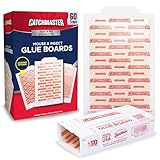
- READY TO USE: Insect and Mouse glue traps are intended for use without mouse bait. For best use, leave the mouse trap with paper on so pests can acclimate to the trap, then place the glue board along known or suspected rodent pathways.
- YEAR-ROUND CONTROL: Catchmaster glue traps for mice and rats are pesticide-free and mess-free. The insect and mouse traps are perforated to tear off and place glue directly against baseboards to secure traps and prevent drag offs. When placed in an area with normal conditions, mouse traps indoor for home can last up to one full year.
- NO MESS CONVENIENCE: The bulk pack of disposable sticky traps for mice and rats is made with heavy-duty adhesive and can fold into a tunnel shape for use in tight or dusty areas. The sticky mouse trap can be used as a standalone trap or as an insert for other Catchmaster traps.
- TOTAL COVERAGE: The glue mouse pad trap can be used indoors in residential, commercial, or industrial buildings, and sensitive areas where rodenticides or snap traps are undesirable or prohibited. Our 60M glue boards cover 30 sq. in. and are proudly made in the USA, fast acting and pesticide-free.
- INTELLIGENT PEST MANAGEMENT: At our core, we are dedicated pest detectives. We believe in utilizing a science-based approach to integrated pest control. We call this approach Intelligent Pest Management. We leave no stones unturned when it comes to pests
Wear gloves if desired, especially when handling rough branches or plant material. Hand removal is less practical on tall trees, dense canopies, or plants with a severe infestation; those situations may require professional help.
2. Destroy the bags instead of dropping them
Removing bags from the branches is only half the job. Do not simply drop them beneath the plant. Intact bags can still release eggs, and larvae may crawl back onto the plant.
Do these 3 things before closing this tab:
1Clear out junk files and repair common Windows errors2Scan for outdated or missing drivers - takes under a minute3Repair Windows errors before they cause bigger problemsPlace collected bags in a bucket of soapy water, crush them thoroughly, or seal and discard them according to local waste guidance. Soapy water is useful here for destroying hand-picked bags; it should not be treated as a general-purpose foliar pesticide unless a product label or authoritative local recommendation specifically supports that use.
Optional tools such as garden gloves, a small bucket for soapy water, and hand pruners can make manual cleanup easier. Pruners are not a bagworm cure, but they may help remove dead twigs or severely damaged, expendable growth when appropriate for the plant.
3. Scout weekly when hatch is expected
Begin close inspections around the time bagworms normally hatch in your area. Check at least once a week, paying special attention to the newest foliage and the protected interior of dense evergreens.
Newly hatched larvae can be difficult to see. Look for:
The Tool Desk
Outbyte PC Repair FREEClear out junk files and repair common Windows errorsFree Scan →Outbyte Driver Updater FREEFix the driver behind crashes, sound loss and screen glitchesFind Drivers →Rank #3

- READY TO USE: Max-Catch Glue Traps are designed to attract insects, ants, mice, roaches, spiders, crickets & other rodents. Leave trap with paper on so pests can acclimate, place glue boards along suspected rodent pathways, wait 24-hours and remove paper. For best results, do not add bait as it decreases the effectiveness of the trap.
- YEAR-ROUND CONTROL: Catchmaster glue traps are pesticide-free and mess-free. When placed indoors in an area with normal conditions, glue traps can last up to one full year. Better control pest infestation with Max-Catch traps, the go-to choice for the PROs.
- HOME & FAMILY PROTECTION: Designed to help you keep your family protected from unwanted pests in your home, Max Catch Glue Traps are intuitive, secure and effective. If using the sticky mouse trap in an area with dust or other debris, fold the insect and rodent trap into a tunnel to protect the glue.
- TOTAL COVERAGE: Mouse traps can be used indoors in residential, commercial, or industrial buildings and sensitive areas where rodenticides or snap traps are undesirable or prohibited. Our glue boards are proudly made in the USA, fast acting and pesticide-free, keeping your family and home protected from pests!
- INTELLIGENT PEST MANAGEMENT: At our core, we are dedicated pest detectives. We believe in utilizing a science-based approach to integrated pest management. We call this approach Intelligent Pest Management. We leave no stones unturned when it comes to pests and we have unwavering conviction in our products.
- Tiny cone-shaped bags, sometimes only a fraction of an inch long.
- Small pieces of foliage moving across the plant.
- Fresh feeding injury or sparse patches in the newest growth.
- Silk threads hanging from branches as young larvae disperse by wind, a behavior often called ballooning.
Finding a few small larvae early gives you more options. You may be able to remove them by hand, treat them with a labeled biological insecticide, or use another product permitted for the plant and site. Waiting until bags are large generally reduces treatment success.
4. Apply Bt while the larvae are small
A product containing Bacillus thuringiensis var. kurstaki—often called Bt or Btk—is a selective biological insecticide used against caterpillars, including young bagworms. The caterpillar must eat the treated foliage, so Bt is most useful when larvae are small, exposed, and actively feeding.
If treatment is appropriate for your plant, a Bt caterpillar control product can be a practical option for reachable ornamental trees and shrubs. Products sold under brand names such as Dipel or Thuricide are examples identified by extension or manufacturer sources, but formulations, availability, and permitted uses can change. Choose based on the active ingredient and current label, not on the brand name alone.
Before applying Bt:
- Confirm that the label lists bagworms or the relevant caterpillar use.
- Confirm that your ornamental plant and application site are listed.
- Follow the label for mixing, coverage, protective equipment, storage, and reapplication.
- Apply when larvae are actively feeding and weather conditions allow proper coverage.
Bt is selective for susceptible caterpillars, but it is still a pesticide. “Biological” does not mean that every use is automatically risk-free. Keep people and pets away as directed on the label and prevent drift onto unintended areas.
5. Consider a labeled spinosad or other reduced-risk option
Extension guidance identifies spinosad as another option for young bagworm larvae. In professional or landscape settings, products containing chlorantraniliprole may also be used. These products are not interchangeable, and homeowner availability and legal use depend on the exact formulation, state registration, plant species, and application site.
Use spinosad, chlorantraniliprole, or any other insecticide only when the current product label specifically permits the intended use. Do not assume that a product labeled for caterpillars on vegetables, turf, or one ornamental species is automatically legal or suitable for bagworms on another tree.
Rank #4

- READY TO USE: Spider and Insect glue traps are intended for use without insect or roach bait. For best use, leave the spider trap with paper on so pests can acclimate to the trap, then place insect traps indoor along known or suspected pest pathways.
- YEAR-ROUND CONTROL: Catchmaster glue traps are pesticide-free and no-mess. The sticky bug catcher traps are an effective and easy solution for insect and rodent problems. When placed in an area with normal conditions, the insect and spider traps can last up to one full year.
- HOME & FAMILY PROTECTION: Designed to help you keep your family protected from unwanted pests in your home, Spider and Cockroach Trap is intuitive, secure and effective. Our insect killer traps are easy to place, simply put the sticky traps against walls & along pathways to catch unwanted pests and insects. Our products are tested under the harshest field conditions to ensure maximum reliability for any level of pest control expert.
- TOTAL COVERAGE: Use the insect and roach traps indoor in residential, commercial, or industrial buildings, and sensitive areas where rodenticides or snap traps are undesirable or prohibited. Our bug trap glue boards are proudly made in the USA, fast acting and pesticide-free, keeping your family and home protected from pests! Set includes three (3) packs of four (4) traps each, for twelve (12) total traps.
- INTELLIGENT PEST MANAGEMENT: At our core, we are dedicated pest detectives. We believe in utilizing a science-based approach to integrated pest management. We call this approach Intelligent Pest Management. We leave no stones unturned when it comes to pests and we have unwavering conviction in our products.
6. Use a conventional insecticide only when warranted
For severe infestations—or plants too large for practical hand removal—a conventional insecticide may be appropriate if it is labeled for bagworms and the specific ornamental plant or site. Extension sources mention active ingredients such as acephate, carbaryl, and permethrin among possible labeled materials, but no active ingredient is universally safe, effective, or legal for every situation.
Broad-spectrum insecticides can harm beneficial insects and other non-target organisms. Before choosing one, consider whether the infestation is severe enough to justify the added risk, whether the plant can be treated safely, and whether a targeted option is available. Always follow the current label; the label governs where, how, and at what rate a pesticide may be used.
7. Improve coverage and follow application safety rules
Coverage matters, especially on arborvitae, Leyland cypress, and other dense evergreens where larvae can hide inside the canopy. A treatment that reaches only the outer surface may miss much of the infestation.
Use only the equipment specified or allowed by the product label. For a reachable shrub or small tree, a pressurized garden sprayer may be useful for applying a labeled liquid treatment, but sprayer choice does not override pesticide directions. Calibrate or measure carefully, avoid runoff and drift, and do not exceed the label rate.
Follow these precautions:
- Read the entire label before mixing or applying the product.
- Wear the protective clothing and equipment the label requires.
- Keep children, pets, and other people away for the label-specified interval.
- Avoid spraying during wind, rain, extreme heat, or other conditions that can cause drift or poor coverage.
- Do not apply a product to an unlisted plant, site, or use.
- Store and dispose of leftover pesticide and containers according to the label and local requirements.
8. Hire an arborist or licensed applicator for difficult trees
Professional treatment is the safer and more practical choice when a tree is tall, heavily infested, near power lines, difficult to cover thoroughly, or already showing substantial dieback. Spraying a large tree from the ground may provide poor coverage and can create unnecessary exposure or drift.
When requesting an estimate, ask the contractor:
- How the pest was identified.
- Which product or active ingredient will be used.
- Whether the product label covers bagworms on your specific plant and site.
- When treatment will occur relative to local hatch.
- How many applications may be needed and how success will be evaluated.
- Whether the applicator holds any license required by your state or local government.
A licensed arborist for bagworms or qualified professional tree-care applicator is especially appropriate for high trees, power-line conflicts, and plants with extensive damage. Verify licensing requirements in your area before hiring.
Quick wins for a faster PC:
Clear out junk files and repair common Windows errorsFree Scan →Scan for outdated or missing drivers - takes under a minuteDriver Scan →Best Value

- READY TO USE: The sticky insect and mouse pad are intended for use without rat or mouse bait. For best use, leave the mouse trap with paper on so pests and rodents can acclimate to the trap, then place the rodent and insect trap along known or suspected pathways. Our products are tested under the harshest field conditions to ensure maximum reliability for any level of pest control expert.
- YEAR-ROUND CONTROL: Catchmaster glue traps for mice and rats and insects are pesticide-free and mess-free. The sticky mouse traps are an effective and easy solution for insect and rodent problems. When placed in an area with normal conditions, insect and mouse glue traps indoor for home can last up to one full year.
- NO MESS CONVENIENCE: Our bulk disposable glue boards are made with heavy duty adhesive, are mess-free and easily fold into tunnel shape for use in tight or dusty areas. Glue boards can be used as a standalone mouse glue trap or as an insert for other Catchmaster traps.
- TOTAL COVERAGE: The mouse and bug catcher can be used indoor in residential, commercial, or industrial buildings, and sensitive areas where rodenticides or snap traps are undesirable or prohibited. Our glue boards are proudly made in the USA, fast acting and pesticide-free, keeping your family and household protected from pests!
- INTELLIGENT PEST MANAGEMENT: At our core, we are dedicated pest detectives. We believe in utilizing a science-based approach to integrated pest management. We call this approach Intelligent Pest Management. We leave no stones unturned when it comes to pests and we have unwavering conviction in our products.
What not to do
- Do not wait until the bags are large. Large cases protect larvae and make late-season insecticide applications less reliable.
- Do not drop removed bags on the ground. Destroy or dispose of them so eggs cannot hatch later.
- Do not spray by calendar date alone. Monitor local hatch and target young, actively feeding larvae.
- Do not use a pesticide without checking its current label. Plant species, application sites, rates, and state registrations differ.
- Do not assume one treatment prevents future infestations. Scout again next season and remove overwintering bags.
- Do not rely on natural enemies alone during a major outbreak. Predators and parasitoids may contribute to suppression, but they may act too slowly to prevent serious damage.
- Do not assume a defoliated evergreen will fully recover. Recovery depends on the species, the severity and timing of damage, the plant’s health, and how much living foliage remains.
A practical bagworm control plan
- Confirm the diagnosis. Look for individual portable bags rather than communal webs.
- Remove bags whenever you find them. Begin in fall or winter and continue through early spring.
- Destroy what you remove. Use soapy water, crushing, or sealed disposal rather than leaving bags under the plant.
- Mark your local hatch window. Ask your state or local Cooperative Extension office about regional timing, degree-day information, or scouting reports.
- Inspect weekly during hatch. Search the newest growth and inner canopy for tiny bags and silk threads.
- Treat young larvae only when necessary. Start with a labeled Bt product when appropriate; consider other labeled options based on severity and site.
- Get professional help for tall or hazardous trees. Do not attempt unsafe spraying near power lines or from unstable ladders.
- Recheck the plant. Continue monitoring and repeat only as permitted by the product label.
Frequently Asked Questions
Are bagworms harmful to trees?
Yes. Bagworms feed on ornamental trees and shrubs, with especially serious potential damage on arborvitae, juniper, spruce, pine, cedar, and Leyland cypress. Heavy feeding can severely defoliate evergreens, weaken them, and contribute to plant death in serious cases. Deciduous trees may recover more readily, but recovery is not guaranteed.
Can Bt kill bagworms?
Bt, specifically Bacillus thuringiensis var. kurstaki, can control young bagworm larvae when they eat treated foliage. It works best soon after hatch, while larvae are small and exposed. Use only a product whose current label permits the intended plant, site, and pest use.
Can a tree recover after bagworm damage?
It depends on the tree species, how much foliage was lost, when the damage occurred, the plant’s overall health, and whether living foliage remains. Deciduous trees often have better recovery prospects than severely defoliated evergreens, but no recovery outcome can be promised.
Should I remove bagworms in winter?
Yes. Winter through early spring is an excellent time to remove bags because eggs are overwintering inside them and have not yet hatched. Destroy or seal the bags after removal rather than dropping them on the ground.
Outdated Drivers Are Slowing You Down
One free scan finds every outdated or missing driver and matches the right update for your exact hardware.Free scan · exact hardware matchPC Slower Than It Used to Be?
A free scan shows the junk files, broken settings and background clutter dragging Windows down - then fixes them in one click.Free scan · Windows 10 & 11How often should I check for bagworms?
Inspect at least weekly around your area’s expected hatch period, commonly late May through June but variable by region and weather. Continue looking in the plant’s interior and newest foliage because newly hatched larvae can be very small.
The Bottom Line
Bagworm control starts before hatch: remove and destroy overwintering bags, then scout weekly around your local hatch period. If young larvae appear, a properly labeled Bt product is often a useful targeted option; other insecticides may be appropriate only when their labels cover the exact plant and site. For tall, hazardous, or badly damaged trees, hire a licensed professional rather than attempting an unsafe or poorly covered application.
Quick Recap
Product prices and availability are accurate as of the date/time indicated and are subject to change. Any price and availability information displayed on Amazon at the time of purchase will apply.

