The safest way to store a cordless tool battery is to follow the manual for that exact battery and tool, keep it dry, cool, shaded and protected from impact, and use only an approved charger and replacement battery. Before putting any pack away, inspect it for swelling, cracks, leaks, unusual heat or smoke. Remove a battery showing any of those signs from service; do not charge or use it until the manufacturer or a qualified battery-recycling service gives you instructions.
Most construction-site batteries are lithium-ion, but charge levels, temperature limits and whether a pack should remain in the tool vary by model. The procedures below explain a safe routine while identifying where the product manual takes precedence.
As an Amazon Associate I earn from qualifying purchases.
What makes cordless battery storage safe?
A battery is both an energy source and a piece of electrical equipment. Storage conditions affect its physical safety, readiness and ability to deliver power. Moisture can damage contacts and electronics; heat and direct sun can raise cell temperature; impacts can deform the casing; and an unsuitable charger can create an electrical or thermal hazard.
Outdated Drivers Are Slowing You Down
One free scan finds every outdated or missing driver and matches the right update for your exact hardware.Free scan · exact hardware matchWindows Errors? Fix Them Before They Spread
Repair common Windows errors and clear accumulated junk for a smoother, more stable PC - no reinstall needed.Free scan · no reinstallFor workplace handling, the Occupational Safety and Health Administration (OSHA) says lithium-ion batteries and devices should be kept in dry, cool locations and that users should follow the manufacturer’s instructions for storage, use, charging and maintenance. See OSHA’s lithium-ion battery controls. Those instructions are more authoritative than a generic percentage or temperature range because battery chemistry, pack construction and tool electronics differ.
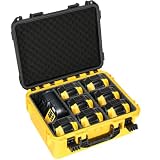
#1 Best Overall

- DESIGNED FOR DEWALT BATTERY STORAGE - At Turokacase, we understand that battery are valuable investments and should be treated with the utmost care. Different power tools often require multiple battery, which can easily get scattered in toolboxes, garages, or vehicles, risking disorganization and potential damage. That’s why we created this case specifically for Dewalt 12V/20V/60V Battery and chargers—to ensure they are safely organized, protected, and always ready for use. Give your valuable batteries the protection they deserve, and stop wasting time searching through clutter.
- DIY ADJUSTABLE DIVIDERS - At Turokacase, flexibility is key. Our tools battery case features adjustable dividers, allowing you to tailor the layout to fit all forDewalt 12V/20V/60V Battery and chargers. We know every user’s needs are different, so we designed this battery case to adapt to your setup. This level of customization gives you the freedom to organize your gear your way, ensuring your battery and chargers get the storage they deserve.
- COLOR DESIGN INSPIRED BY YOUR TOOLS - The yellow and black color scheme of our battery storage case is inspired by the distinctive colors of your forDewalt tools. This combination reflects the rugged durability and strength of the tools it protects. The vibrant yellow and bold black make the battery storage case stand out while matching the powerful aesthetic of your forDewalt tools—because your storage should be as strong and stylish as the tools you rely on.
- PREMIUM QUALITY YOU CAN TRUST— We take quality seriously - The battery case is made of new polypropylene resin (not recycled) to ensure ruggedness; this resin is incredibly impact resistant. Waterproof (IP67 rated), dustproof, and shockproof, it shields your for milwaukee battery from drops, scratches, and everyday wear and tear, ensuring they stay safe for years.
- THOUGHTFUL DETAIL DESIGN - Our battery storage case is built with a unique double-lock system, combining flip latches and press-lock buckles for enhanced security and easy access. The ergonomic, non-slip handle ensures a comfortable grip, while the air valve design helps release pressure, keeping your contents safe. Every detail has been carefully engineered to provide maximum protection, convenience, and ease of use.
The guidance in this article is primarily for lithium-ion packs. If your tool uses another chemistry, or if the battery is permanently built into the tool, use the instructions supplied for that product rather than applying lithium-ion advice automatically.
Start with the exact battery and tool manual
Before choosing a storage routine, identify the battery model, the tool platform and whether the pack is removable. Look for the operating instructions, battery label or the manufacturer’s online manual. Record any limits for charging, storage temperature, transport, cleaning and long-term storage.
Check these four details
- Battery chemistry and model: Do not assume two packs with the same voltage have the same storage requirements.
- Removable or integrated design: A removable pack can usually be inspected separately. An integrated pack may require the complete tool to be stored and serviced.
- Permitted temperature: Use the stated storage range for that model, not the range printed for a different platform.
- Long-storage charge instruction: Some manufacturers specify a partial charge; others may give different directions or tell you to leave the pack installed.
OSHA’s battery safety and health guidance also says chargers and batteries should be approved for the device. A connector that physically fits is not proof of electrical compatibility.
Recommended Free Tools
Choose a suitable storage location
Pick a place that remains dry, shaded and reasonably cool through the entire storage period. In a construction environment, that normally means an indoor tool room, a ventilated cabinet or another protected area—not an exposed truck bed, a roof, a damp shed or a vehicle dashboard.
Rank #2
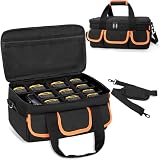
- 【Unique Design】The main compartment of the WELIDAY Battery Organizer features 11 adjustable dividers, allowing you to customize the storage layout to suit different battery sizes. Whether it's a DeWalt 20V 9Ah lithium battery or other battery types, each has its own designated spot, making battery storage clear, organized, and easy to see.
- 【Large Capacity Battery Box】This Battery Storage Bag allows for neat and organized battery storage. It is perfectly compatible with DeWalt 12V/20V/60V (DCB104, DCB107, DCB112, DCB115, DCB118, DCB126, DCB200, DCB201, DCB202, DCB203, DCB204, DCB205, DCB206, DCB207, DCB208, DCB210, DCB606, DCB609, DCB3244) batteries and chargers from numerous brands and models. Measuring 15.8 x 7.9 x 7.1 inches and can be stored in one bag.
- 【Multi-Pocket Design】 The WELIDAY Power Tool Battery Organizer Bag not only has a main zippered pocket, but also two additional side mesh pockets and three front Velcro pockets. Batteries, charging cables, small tools, and other accessories are neatly organized for easy access, eliminating clutter.
- 【All-Around Protection】 The WELIDAY Battery Carrying Case is made of high-quality, durable materials, offering shockproof, dustproof, non-slip, drop-proof, and moisture-proof features. Thickened foam ensures each battery is stored independently, preventing conductivity and collisions.
- 【Easy to Carry】The WELIDAY Power Tool Battery Organizer Bag features a detachable and adjustable comfortable shoulder strap for comfortable carrying without shoulder strain. The sturdy handles and D-ring design on both sides allow for easy switching between hand-carrying and shoulder-carrying, ensuring durability and allowing you to travel with ease.
Control the main storage hazards
| Hazard | Why it matters | Control |
|---|---|---|
| Water, condensation or high humidity | Can corrode contacts and damage electronic protection circuits. | Store indoors in a dry location; dry a wet pack according to the manual before any charging or use. |
| Direct sunlight and radiant heat | Can raise pack temperature beyond the maker’s limit even when surrounding air feels moderate. | Use shade and keep packs away from windows, heaters, hot machinery and sun-heated vehicle interiors. |
| Impact, crushing or falling tools | Can crack the housing or damage cells without an immediately visible failure. | Use a stable shelf, drawer or fitted container where heavy equipment cannot land on the pack. |
| Loose metal objects | Can bridge terminals and cause a short circuit. | Keep packs separated from keys, fasteners and other conductive items; use the terminal cover supplied with the battery if provided. |
| Temperature outside the manual’s range | May reduce performance or create a charging and safety problem. | Measure the actual storage area when conditions are extreme and follow the model-specific limit. |
A case or closed box can add protection from dust, impact and accidental contact. STIHL’s guidance for its lithium-ion batteries gives a closed box in a dry place as an example and says to protect the battery from direct sunlight and the elements. A container does not make a hot, damp or sun-exposed location safe; the location itself still has to meet the battery maker’s limits.
How to store a battery at the end of a workday
Use this sequence for a removable pack after work. If the tool manual gives a different order, use that instead.
- Switch the tool off. Wait for moving parts to stop and disconnect any accessory that the manual says to remove.
- Remove the pack if instructed. Do not force a battery out of a damaged tool or leave it installed simply because removal is difficult.
- Inspect the housing and terminals. Look for cracks, swelling, leakage, discoloration, deformation or dirt that could prevent a solid connection.
- Keep moisture away. If the pack or contacts are wet, stop and follow the manufacturer’s drying and service directions. Do not place a wet battery on a charger.
- Protect the terminals. Fit the original terminal cap when supplied, or place the battery in a compartment that prevents contact with metal objects.
- Put it in the selected dry, shaded storage area. Keep packs from being crushed by saws, chargers, fuel containers or building materials.
- Store the charger separately when practical. Protect its cable and connector from damage, and use it only with the battery platform it approves.
Do not leave a pack connected to a charger merely for convenience. Charging duration, completion behavior and whether a charger may remain connected are product-specific; follow the maker’s charging instructions.
How to prepare batteries for weeks or months of storage
Long-term storage requires an additional check because a pack may sit through changing temperatures and may not be inspected every day.
Rank #3
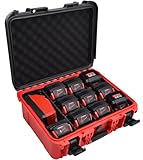
- DESIGNED FOR MILWAUKEE BATTERY STORAGE - At Turokacase, we understand that battery are valuable investments and should be treated with the utmost care. Different power tools often require multiple battery, which can easily get scattered in toolboxes, garages, or vehicles, risking disorganization and potential damage. That’s why we created this case specifically for Milwaukee M18 and M12 batteries and chargers—to ensure they are safely organized, protected, and always ready for use. Give your valuable batteries the protection they deserve, and stop wasting time searching through clutter.
- DIY ADJUSTABLE DIVIDERS - At Turokacase, flexibility is key. Our tools battery case features adjustable dividers, allowing you to tailor the layout to fit all Milwaukee M18/M12 batteries and chargers. We know every user’s needs are different, so we designed this battery case to adapt to your setup. This level of customization gives you the freedom to organize your gear your way, ensuring your battery and chargers get the storage they deserve.
- COLOR DESIGN INSPIRED BY YOUR TOOLS - The red and black color scheme of our battery storage case is inspired by the distinctive colors of your Milwaukee tools. This combination reflects the rugged durability and strength of the tools it protects. The vibrant red and bold black make the battery storage case stand out while matching the powerful aesthetic of your Milwaukee tools—because your storage should be as strong and stylish as the tools you rely on.
- PREMIUM QUALITY YOU CAN TRUST— We take quality seriously - The battery case is made of new polypropylene resin (not recycled) to ensure ruggedness; this resin is incredibly impact resistant. Waterproof (IP67 rated), dustproof, and shockproof, it shields your for milwaukee battery from drops, scratches, and everyday wear and tear, ensuring they stay safe for years.
- THOUGHTFUL DETAIL DESIGN - Our battery storage case is built with a unique double-lock system, combining flip latches and press-lock buckles for enhanced security and easy access. The ergonomic, non-slip handle ensures a comfortable grip, while the air valve design helps release pressure, keeping your contents safe. Every detail has been carefully engineered to provide maximum protection, convenience, and ease of use.
- Read the long-storage section first. Confirm whether the battery should be removed from the tool, whether a partial charge is required and whether the manual gives a special temperature range.
- Charge only with the approved charger. Stop at the level and time specified by the manufacturer. Do not substitute a charger from another platform because the plug or voltage appears similar.
- Use the stated storage charge. As one model-specific example, STIHL says its applicable lithium-ion batteries should be stored at 40–60% charge, indicated by two LEDs on those batteries. That is a STIHL recommendation, not a universal rule for every brand, battery chemistry or tool.
- Allow the pack to be stored only within its specified temperature range. STIHL lists -10°C to 50°C for its lithium-ion batteries while directing users to the exact tool instructions for model-specific temperatures. Other products may specify different limits.
- Separate and protect the pack. Use the supplied cap or a purpose-sized compartment so terminals cannot touch metal and the case cannot be crushed.
- Label the pack if several platforms are present. A simple model or platform label reduces the chance that a worker will put a compatible-looking but unapproved pack on a charger.
- Inspect before returning it to service. Check for physical changes, moisture and unusual odor or heat, then follow the manual’s reactivation procedure.
There is no safe universal “storage percentage” for every cordless battery. If the manual does not state a long-storage level, do not invent one; contact the manufacturer or an authorized service channel.
Charging practices that protect the pack
Use the charger and replacement battery specifically designed and approved for the tool. OSHA’s guidance links approved equipment and manufacturer directions to safer charging and handling. Keep the charging area dry and free of materials that could be damaged by heat, and place the charger where its ventilation openings are not blocked.
Before connecting a charger
- Confirm that the battery and charger belong to the same approved platform.
- Inspect the pack, connector and charger cable for damage, cracking, contamination or exposed conductors.
- Check that the battery is dry and at a temperature permitted by the manual for charging.
- Use the manufacturer’s sequence for inserting the battery and starting or stopping a charge.
While and after charging
- Follow the charger indicators and the specified charging time; do not bypass a fault indication.
- Keep the charger and battery where workers can notice an unusual temperature rise, odor or smoke.
- When charging is complete, store or use the battery as the manual directs rather than leaving it connected indefinitely.
- If the pack becomes unusually hot, swells, leaks or smokes, stop charging if it is safe to do so, isolate the area and follow the manufacturer’s emergency guidance.
Inspect and maintain batteries without opening them
Routine maintenance should be limited to the actions allowed by the manual. Never open a battery pack, defeat its protection circuitry or attempt a cell-level repair on a construction site.
Free tools Windows power users keep installed
One-click scans. No signup required.
What to inspect
- Housing: Look for bulging, cracks, dents, punctures, melted areas or a lid that no longer closes correctly.
- Terminals and contacts: Check for corrosion, bent metal, embedded debris or discoloration.
- Leakage or odor: Any liquid, residue or unusual smell is a reason to stop using the pack and seek manufacturer guidance.
- Temperature: A battery that becomes hotter than expected during storage, charging or normal use needs attention.
- Electrical behavior: Repeated charger faults, sudden shutdowns or a major change in runtime should be investigated through the maker’s service process rather than bypassed.
OSHA specifically identifies bulging, cracking, leaking, rising temperature and smoke as warning signs. Remove a battery or device showing these conditions from service and follow the manufacturer’s instructions for handling a failed pack.
Rank #4
Cleaning
Keep the exterior and contacts free of dust using only the method approved in the manual. Do not immerse a battery, spray liquid into its connector or scrape contacts with a metal tool. If construction dust or moisture has entered the housing, stop using the pack and ask the manufacturer or a qualified service provider how it should be evaluated.
Handling batteries on a construction site
Site conditions change quickly, so storage controls have to work during transport between the workshop, vehicle and work area.
During transport
- Use a compartment or case that prevents batteries from sliding, being struck or contacting loose metal hardware.
- Keep packs out of direct sun and away from heat sources. A closed vehicle can become much hotter than the outdoor air, so do not treat a parked vehicle as climate-controlled storage.
- Keep batteries dry when moving between buildings. If rain or wash water reaches a pack, follow the manual before charging.
- Do not carry a visibly damaged pack with ordinary tools. Isolate it and obtain manufacturer or recycling-facility instructions.
At the work face
Place spare batteries where falling materials, wet concrete, cutting debris and traffic cannot damage them. Return unused packs to protected storage instead of leaving them on a roof, scaffold, slab or vehicle hood. If a battery is repeatedly exposed to conditions outside the manual’s limits, change the storage arrangement rather than relying on a case to compensate.
Removable versus integrated batteries
For a removable battery, storage normally concerns the pack and the tool separately: inspect both, protect the pack’s terminals and keep the tool’s battery bay clean and dry. For an integrated battery, the complete tool may need to remain in storage, and the manual may specify a different charging or service procedure.
Best Value

- 【For Dewalt Battery Storage】Please note that the listing only sells hard case, only a bag specially designed for Dewalt/Milwaukee/Makita/Ryobi 12V/18V/20V Battery & Charger
- 【Extra Large Tool Battery Case】Tailored dewalt storage bag, also for Milwaukee/for Makita/for Ryobi 12V/18V/20V Battery & Charger. Fits for Dewalt 20V 12V 18V MAX battery (DCB200 DCB201 DCB202 DCB203 DCB204 DCB205 DCB206 DCB208) batteries, 60V (DCB606 DCB609) batteries and battery charger, also compatible with dewalt MAX XR DCS356B DCS367B DCS571B DCCS620B DCS369B DCHT820B DCS334B DCG413B DCD996B DCL043, Size 15.7 * 11.8 * 4.0 in
- 【DIY for Your Space】Equipped with DIY partitions, adaptable for different brands of batteries, the partitions may seem hard, but the surface is covered with a hard cushioning sponge, which provides shock protection for the battery and tools
- 【Travel Battery Case】With the shoulder strap, comfortable and easy carrying to take this for dewalt battery case anywhere, store and leave at any time after work
- 【Sturdy & Durable】This battery storage case combines a rugged 1080D Oxford cloth exterior with a shock-absorbent EVA inner shell. Water-resistant, tear-proof, and easy to clean, it shields your for DeWalt batteries from dust, moisture, and accidental drops. The reinforced stitching and heavy-duty zippers ensure years of reliable use
Do not dismantle a tool to reach an integrated pack or attempt to convert it to a removable system. If the tool cannot be stored within its specified temperature or moisture limits, contact the manufacturer or an authorized service provider before placing it in a long-term storage area.
How to choose a battery storage case or box
A case is an accessory, not a substitute for correct environmental conditions. Compare options against the battery platform and the hazards at your site.
| Comparison point | Questions to ask |
|---|---|
| Platform fit | Does the compartment match the exact battery dimensions and allow the terminal cover to remain in place? |
| Moisture protection | Does it keep ordinary dust and splashes away without trapping a wet battery inside? |
| Impact protection | Will the pack remain secure if the case is moved or another tool is placed beside it? |
| Terminal protection | Are contacts isolated from fasteners, keys and other conductive objects? |
| Ventilation and heat | Does the storage arrangement avoid trapping heat, and does it comply with the battery maker’s instructions? |
| Identification | Can workers distinguish battery platforms and damaged packs quickly? |
STIHL’s closed-box example supports the general use of a dry, protective container for its batteries, but it does not establish compatibility, certification or safety for every case or battery platform. Check the case dimensions and the battery manufacturer’s instructions before purchase.
Quick wins for a faster PC:
Repair Windows errors before they cause bigger problemsFix Now →Fix the driver behind crashes, sound loss and screen glitchesFind Drivers →What to do when a battery shows a problem
| Symptom | Immediate response |
|---|---|
| Bulging, cracked or punctured housing | Remove from service. Do not charge, use or press the housing back into shape. Follow the manufacturer’s damaged-battery instructions. |
| Leakage or unusual odor | Avoid contact with the material, isolate the pack and obtain manufacturer or designated recycling-facility guidance. |
| Rising temperature or smoke | Stop use and charging if it is safe, keep people away and follow the manufacturer’s emergency procedure. Contact emergency services when the situation presents an immediate fire risk. |
| Charger repeatedly reports a fault | Disconnect according to the charger instructions and have the battery and charger evaluated through the approved service channel. |
| Sudden loss of runtime without visible damage | Check the manual for diagnostic steps and service options. Do not open the pack or substitute an unapproved charger. |
| Battery became wet | Do not charge it until the manufacturer provides a safe drying or inspection procedure. |
A battery that looks normal after a severe impact can still have internal damage. If the pack was crushed, dropped from height or exposed to water, report the event and seek the maker’s instructions before putting it back into service.
Recycling and disposal at end of life
Do not put lithium-ion batteries or devices containing them in municipal trash or ordinary recycling bins. OSHA directs users to designated recycling facilities and advises contacting a local battery-recycling center for instructions, especially when a battery is damaged. See OSHA’s control guidance and its battery safety guidance.
Keep an end-of-life battery out of charging areas while arranging disposal. Tell the facility if the pack is swollen, leaking, hot, cracked or otherwise damaged; damaged batteries may require different transport and intake instructions. Do not puncture, crush, burn or dismantle a pack to make it easier to discard.
Quick Recap
A practical decision sequence for crews
- Is the battery’s model and manual known? If not, identify it before charging or assigning a storage location.
- Is the pack dry, intact and within its permitted temperature? If no, isolate it and obtain manufacturer instructions.
- Is the charger approved for that exact platform? If no, do not connect it.
- Is the battery being stored for more than the normal work cycle? If yes, apply the manual’s long-storage charge and removal instructions.
- Can the storage area remain dry, shaded, cool and protected from impact? If no, move the storage arrangement rather than relying on a container alone.
- Does the pack show bulging, cracking, leakage, rising temperature or smoke? If yes, remove it from service and follow damaged-battery and recycling guidance.
Product prices and availability are accurate as of the date/time indicated and are subject to change. Any price and availability information displayed on Amazon at the time of purchase will apply.

