Crashes, No Sound, or Screen Glitches?
Random freezes, missing sound and display glitches usually trace back to one bad driver. Find and replace yours safely.Free scan · under a minutePC Slower Than It Used to Be?
A free scan shows the junk files, broken settings and background clutter dragging Windows down - then fixes them in one click.Free scan · Windows 10 & 11An enameled Dutch oven does not need traditional cast-iron seasoning. Its porcelain-enamel coating is bonded to the iron and is already the finished cooking surface, so you should not bake on layers of oil as you would with bare cast iron. Clean it with warm water, ordinary dish soap and a soft sponge, then dry it promptly. Use the care booklet for your exact model whenever it differs from general advice, especially for dishwasher use, exposed rims and allowable cleaners.
Does an enameled Dutch oven need to be seasoned?
No. Traditional seasoning is a layer of polymerized cooking oil built on uncoated cast iron. Enamel changes the maintenance requirement: the smooth glass-like coating separates food from the iron and serves as the finished cooking surface. Baking oil onto it is unnecessary and can leave a sticky film, smoke or discoloration.
Lodge states that none of its enameled cast-iron pieces require seasoning, including models with a black interior. That guidance applies to the enamel surface, not to any small area of exposed iron such as an uncoated rim. If your own manufacturer supplies a care booklet, follow it over generic cast-iron instructions. A manual may specify how to treat a rim, knob, lid edge or other fitting that is not enameled.
As an Amazon Associate I earn from qualifying purchases.
What to use instead of seasoning
- Wash the interior and lid with warm water and ordinary dish soap.
- Use a soft sponge, cloth or other nonabrasive tool.
- Dry all surfaces promptly, including the rim and underside of the lid.
- Apply a thin film of cooking oil or cooking spray before adding food if it helps release food or makes cleanup easier. This is a cooking aid, not a seasoning layer.
First-use setup
Before cooking, remove labels and packaging, inspect the enamel for chips or cracks, and read the model-specific booklet. The booklet controls details such as maximum heat, dishwasher approval, oven temperature, lid hardware and care for exposed metal. A new pot normally needs only a first wash; it does not need an oil-baking cycle.
- Wash. Use warm water, a small amount of ordinary dish soap and a soft sponge. Rinse away all soap.
- Inspect. Look at the cooking surface, rim, lid edge and handles under good light. Do not use a pot with loose, sharp or flaking enamel; contact the manufacturer about the defect.
- Dry. Wipe the pot and lid completely. Pay particular attention to any exposed iron or metal edge identified in the manual.
- Prepare for cooking. If desired, wipe a very thin layer of cooking oil over the cooking surface before adding ingredients. Do not heat an empty oiled pot unless the instructions for your model specifically allow it.
The routine washing method
Let the pot cool before washing. Sudden temperature changes can stress enamel, so do not move a hot Dutch oven directly into cold water or place a cold pot on a hot burner. Once it is cool enough to handle, use this sequence:
#1 Best Overall

- YOUR NEW GO-TO ENAMELED CAST IRON CLEANER: The Lodge Enameled Cast Iron Cleaner will keep your enamel cast iron pans looking and cooking its best for generations. This gentle cleanser is entirely bleach and dye-free and specially designed to clean enameled cast iron, inside and out.
- HOW TO CLEAN ENAMEL CAST IRON COOKWARE: Step 1. Wash your cast iron cookware by hand, using a small amount of the Lodge Enameled Cast Iron Cleaner (for stubborn, stuck-on food, simmer water for 3-5 minutes. Use a pan scraper after the pan has cooled. Step 2. Dry promptly and thoroughly with a lint-free cloth or paper towel. Step 3. Rub a light layer of Seasoning Spray onto the surface of your cookware. Use a paper towel to wipe the surface until no oil residue remains.
- FAMILY-OWNED: Lodge is more than just a business; it is a family. The Lodge family founded the company in 1896, and they still own it today. From environmental responsibility to community development, their heads and hearts are rooted in America. Lodge products are made in the USA with non-toxic, PFOA & PTFE free material.
- Remove loose food. Scrape gently with a wooden, silicone or plastic utensil. Avoid sharp edges that can gouge the coating.
- Wash with warm soapy water. Work with a soft sponge or cloth. Ordinary dish soap is appropriate for routine cleaning.
- Rinse thoroughly. Soap residue can leave a dull film, especially on dark or pale interiors.
- Dry immediately. Use a towel rather than leaving water to evaporate. Dry exposed rims, lid edges and fittings specified by the manufacturer.
- Store with airflow. Keep the lid slightly ajar, or place a folded cloth between lid and pot if your storage arrangement permits. This reduces trapped moisture and odor.
Can you put an enameled Dutch oven in the dishwasher?
Dishwasher guidance is model- and brand-specific. Le Creuset UK says its enamelled cast-iron casseroles are dishwasher-safe but recommends hand washing to keep the coating clean and lustrous. A dishwasher cycle can also expose a pot to detergent, heat and contact with other items that may dull or mark the finish. Hand washing is the conservative choice for preserving appearance. If your manual permits a dishwasher, load the pot so it cannot strike other cookware, use the recommended cycle, and dry it promptly when the cycle ends.
How to clean stuck-on food
Burned sauce, starch and protein usually respond to soaking rather than aggressive scrubbing. Escalate gradually so the enamel is not scratched.
Step 1: Soak before scrubbing
Fill the cooled pot with warm water and enough dish soap to make a mild solution. Le Creuset recommends soaking for about 15–20 minutes before washing. Empty the water and loosen the softened residue with a soft sponge or a non-sharp plastic or wooden utensil. Repeat the soak if necessary instead of applying more force.
Rank #2

- Bottle Size: 8. 45 fluid ounces (250ml)
- Made in France
- Simply apply cleaner, rinse with water, and wipe clean
- Works on both sand-interior and matte black interior
Step 2: Use a permitted cleaner for slight stains
Lodge recommends its Enamel Cleaner or another ceramic cleaner for slight stains, used according to the cleaner’s directions. Confirm that the product is intended for enameled cookware and check your pot’s manual before applying it. Follow the label’s contact time and rinsing instructions; do not combine cleaners.
Step 3: Treat persistent marks cautiously
Le Creuset identifies its Cast Iron Cookware Cleaner, Bar Keeper’s Friend, or a baking-soda-and-water paste for certain marks or tough residue. These are brand-page recommendations, not universal permission for every enamel finish. Test any approved cleaner on a small inconspicuous area first, use a soft cloth, rinse extremely well and stop if the surface becomes dull or rough. Never substitute a metal scourer or stiff abrasive brush because a residue problem is easier to correct than a scratched coating.
Why is my enameled cast iron stained?
Stains can develop from browned oil, tomato, wine, coffee, tea, minerals in water or food that boiled over. A mark may be cosmetic rather than evidence that the enamel has failed. First identify whether the surface is merely discolored or physically damaged.
Rank #3

- YOUR NEW GO-TO ENAMELED CAST IRON CARE KIT: The Lodge 5 Piece Care Kit has all the essentials to use and care for your cast iron cookware. The set includes a 11oz Cleaner, Black Pan Scraper, Scrub Brush, Package of Pot Protectors, and Use & Care Booklet. This care kit will keep your enameled cast iron and stoneware pans looking and cooking its best for generations.
- HOW TO CLEAN ENAMEL CAST IRON COOKWARE: Step 1. Wash your cast iron cookware by hand, using a small amount of the Lodge Enameled Cast Iron and Stoneware Cleaner (for stubborn, stuck-on food, simmer water for 3-5 minutes. Use a pan scraper after the pan has cooled. Step 2. Dry promptly and thoroughly with a lint-free cloth or paper towel. Step 3. Rub a light layer of Seasoning Spray onto the surface of your cookware. Use a paper towel to wipe the surface until no oil residue remains.
- FAMILY-OWNED: Lodge is more than just a business; it is a family. The Lodge family founded the company in 1896, and they still own it today. From environmental responsibility to community development, their heads and hearts are rooted in America. Lodge products are made in the USA with non-toxic, PFOA & PTFE free material.
- Flat discoloration with a smooth feel: treat it as a stain. Soak, wash, and use only a cleaner allowed by your manual.
- Gray or silver streaks: these can be metal transfer from utensils or a rack. Try warm soapy water first; use an approved ceramic or cookware cleaner only if needed.
- Roughness, a chip, a crack or exposed iron: stop using abrasive methods and ask the manufacturer about the condition. Do not attempt to rebuild chipped enamel with seasoning oil.
- Sticky brown film: oil or sugar may have polymerized on the surface. A warm soak and approved cleaner are safer than high heat or bare-cast-iron stripping methods.
Heat, cooking and thermal-shock precautions
Enamel is durable but not indestructible. Use gradual temperature changes and stay within the heat limits for your model. Do not place a cold pot on a preheated burner, pour cold liquid into a very hot pot, or transfer a hot pot straight to a cold, wet surface. Set it on a dry trivet or heat-safe surface instead.
High heat is not a substitute for seasoning and can damage food, enamel or handles. Le Creuset’s current care guidance says enameled cast iron can be used for dry cooking only when correctly used at low to medium heat settings. That is brand-specific guidance, not a universal temperature rule for every Dutch oven. Some recipes call for preheating, but follow the manufacturer’s stated burner and oven limits rather than a generic bare-iron technique.
Cooking habits that reduce sticking
- Preheat gradually at the setting allowed by the manual.
- Add oil or cooking spray before food if the recipe and manufacturer permit it.
- Allow proteins to release naturally before turning them; forcing them with a metal edge can mark the surface.
- Deglaze with liquid while the pot is still warm, not by shocking a smoking-hot pot with ice-cold water.
- Lift the pot rather than sliding it across a glass cooktop or countertop, which can damage the base or the surface underneath.
Protecting rims, lids and hardware
The cooking interior may be fully enameled while the rim, lid edge or a small fitting remains exposed metal. Moisture left in those areas can cause discoloration or corrosion even though the enamel itself is intact. Wipe them dry after every wash and follow any oiling instruction in the manual for exposed iron.
Rank #4
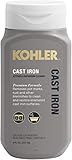
- Clean & Restore Surfaces: This cast iron cleaner removes pot marks, rust and other blemishes to clean and restore enameled cast iron surfaces
- Nonabrasive Cleaner: Premium formula restores shine of enameled cast iron surfaces
- Kitchen & Bathroom Cleaner: This 8oz squeeze bottle can be used as both a kitchen and bathroom cleaner
- Please note: May be used on other branded enameled cast iron surfaces, however testing in an inconspicuous area first is recommended
Do not slam the lid onto the pot or stack heavy cookware directly on the enamel. Use a separator supplied or approved by the manufacturer if you stack pieces. Check knobs and handles periodically for looseness, and tighten or replace them only as the maker instructs; avoid improvising hardware that could loosen in an oven.
Manufacturer guidance: what is common and what is not
The central no-seasoning rule is consistent, but cleaning details vary. The table separates broadly applicable routine care from instructions tied to a particular manufacturer or page.
| Question | Lodge guidance | Le Creuset guidance | How to apply it |
|---|---|---|---|
| Is seasoning required? | No seasoning is required for enameled cast-iron pieces, including black interiors. See Lodge’s enameled cast-iron care page. | Le Creuset’s care material treats enamel as the finished surface rather than a bare-iron seasoning project. | Do not bake on oil. Follow your own model’s booklet if it gives a different instruction for an exposed part. |
| Routine washing | Warm water, dish soap and nonabrasive tools are the baseline. | Warm soapy water and gentle tools are recommended. | Cool first, wash gently and dry promptly. |
| Stuck food or slight stains | Use Enamel Cleaner or another ceramic cleaner according to its directions. | Soak about 15–20 minutes; certain marks may be treated with approved cookware cleaner, Bar Keeper’s Friend or baking-soda paste. | These cleaner permissions are brand-specific. Check the manual and product label before use. |
| Dishwasher | Use the product guide and model instructions. | Le Creuset UK says its enamelled cast-iron casseroles are dishwasher-safe but recommends hand washing to preserve a clean, lustrous coating. | Hand washing is the conservative option; dishwasher use is not automatically transferable between brands or parts. |
| Heat and dry cooking | Follow the model’s product guide. | The current care page limits correctly used dry cooking to low-to-medium heat settings. | Do not generalize one brand’s heat rule to every pot; use the maker’s limits. |
Relevant manufacturer references are Lodge’s product guide, Le Creuset’s enameled-cast-iron care article, Le Creuset’s Dutch-oven cleaning guide and Le Creuset UK’s casserole-care instructions.
Best Value

- 2-piece set includes: 3.25" Nylon Brush Kitchen Product, Cerise with Enameled Cast Iron 8.45 fl. oz. Cookware Cleaner
- Nylon Brush; Perfect to clean between ridges in grill pan; Dishwasher Safe
- Bottle Size: 8.45 fluid ounces (250ml); Simply apply cleaner, rinse with water, and wipe clean
- Works on both sand-interior and matte black interior
- Environmental-friendly; Made in France
Common mistakes and safer corrections
| Mistake | Why it causes trouble | Safer correction |
|---|---|---|
| Following bare-cast-iron seasoning instructions | Oil baking is unnecessary on enamel and may create smoke or a sticky coating. | Wash and dry the enamel; use a little cooking oil only as a cooking aid. |
| Scrubbing with steel wool or a metal pad | Hard abrasive contact can scratch or dull enamel. | Soak first, then use a soft sponge and a permitted cleaner. |
| Pouring cold water into a hot pot | The rapid temperature change can stress the coating. | Let the pot cool, or add liquid gradually within the maker’s instructions. |
| Using maximum burner heat to speed cooking | Excess heat can damage the finish or violate model limits. | Use gradual low-to-medium heat unless the manual states otherwise. |
| Leaving water on an exposed rim | Uncoated metal can discolor or corrode. | Towel-dry the rim and other exposed areas immediately. |
| Assuming every dishwasher recommendation is identical | Brands and components differ; detergent and contact can affect appearance. | Check the exact manual and hand wash when preserving finish matters most. |
Storage and long-term care
After cleaning, make sure the pot and lid are completely dry before storage. Store in a dry cabinet, keep the lid slightly open when practical, and avoid trapping a damp cloth inside. If you stack cookware, protect the enamel with a manufacturer-approved separator and do not place a heavy pan on an unsupported lid.
Inspect the coating occasionally rather than waiting for a problem during cooking. A smooth stain is usually a cleaning issue; a chip, crack or spreading defect is a product-condition issue. Photograph the area and contact the manufacturer if you need a repair or replacement decision. Do not sand, strip or season over damaged enamel.
Do these 3 things before closing this tab:
1Repair Windows errors before they cause bigger problems2Fix the driver behind crashes, sound loss and screen glitches3Clear out junk files and repair common Windows errorsA practical care checklist
Use this short checklist after each use:
- Did the pot cool before it met water?
- Was warm water, ordinary dish soap and a soft tool enough for routine soil?
- Did you soak stuck food instead of attacking it with metal?
- Did you use a cleaner only when its label and the pot’s manual allow it?
- Did you dry the cooking surface, rim, lid edge and fittings?
- Did you store the pot without trapped moisture or abrasive contact?
- For heat, dishwasher and exposed-metal questions, did you follow the exact model’s instructions?
Following those steps keeps the enamel doing the job it was designed to do: providing a finished, non-seasoning cooking surface over cast iron while preserving the coating and the hardware around it.
Quick Recap
Product prices and availability are accurate as of the date/time indicated and are subject to change. Any price and availability information displayed on Amazon at the time of purchase will apply.

