The Tool Desk
Outbyte PC Repair FREERepair Windows errors before they cause bigger problemsFix Now →Outbyte Driver Updater FREEScan for outdated or missing drivers - takes under a minuteDriver Scan →To season a traditional, unenameled cast-iron skillet, coat it with an extremely thin layer of cooking oil, wipe away nearly all of the excess, and bake it upside down at high heat. The heat polymerizes the oil into a hard protective layer that helps prevent rust and improves food release. Seasoning is not a one-time treatment, however: the surface becomes more durable through regular cooking, cleaning, drying, light oiling, and heating.
First: does your skillet need seasoning?
Before putting a pan in the oven, identify the type and condition of the cookware. The correct process depends on whether the iron is raw, pre-seasoned, damaged, or covered with enamel.
As an Amazon Associate I earn from qualifying purchases.
| Skillet condition | What to do |
|---|---|
| New traditional cast iron marked “pre-seasoned” | It is generally ready to cook. Wash it, dry it thoroughly, apply a very light coat of oil, and begin using it. An additional oven cycle is optional rather than automatically necessary. |
| Bare or stripped cast iron | Wash away transit oil or residue, dry it completely, and apply two or three thin oven-seasoning layers before regular use. |
| Rusty, sticky, or severely patchy cast iron | Remove loose rust and tacky residue, wash and dry the skillet, then rebuild the finish with thin seasoning coats. |
| Enameled cast iron | Do not season it. The enamel is a glass-like coating and does not require the raw-iron seasoning process. Follow the cookware maker’s care instructions instead. |
A patchy appearance alone does not necessarily mean the pan has failed. New seasoning may look bronze, brown, or uneven before it develops a darker, more uniform patina.
Outdated Drivers Are Slowing You Down
One free scan finds every outdated or missing driver and matches the right update for your exact hardware.Free scan · exact hardware matchWindows Errors? Fix Them Before They Spread
Repair common Windows errors and clear accumulated junk for a smoother, more stable PC - no reinstall needed.Free scan · no reinstallWhat seasoning actually is
Seasoning is not a layer of food flavoring. It is oil that has polymerized—chemically changed and hardened—on the iron surface. That bonded layer provides some protection against moisture and rust and creates a smoother, easier-release cooking surface.
#1 Best Overall

- Versatile Cooking Skillet: The Lodge Cast Iron Skillet is a multipurpose, everyday cooking pan that excels at searing, sautéing, baking, frying, and campfire meals
- Pre-Seasoned & PFAS-Free: This pre-seasoned skillet is made with 100% natural vegetable oil for a naturally nonstick finish and is a non-toxic cookware option, completely PFAS-free
- Superior Heat Distribution: The heavy-duty cast iron frying pan cooks evenly, making it ideal for precision recipes and consistent results
- Safe & Comfortable Handling: The skillet includes a silicone heat-resistant handle holder for transport after cooking, plus a teardrop handle for easy lifting and control
- About Lodge Cast Iron: Made in the USA, Lodge cookware is versatile and as easy to clean as it is to cook with; taste a difference in your cooking with cast iron
It is also not the same as permanent nonstick coating. Food can still stick if the pan is cold, the heat is excessive, too little cooking fat is used, or the food is turned before it has naturally released. A well-maintained skillet becomes easier to cook with over time, but technique remains part of the result.
How to season a cast-iron skillet in the oven
This method is suitable for bare or traditional unenameled cast iron. If the manufacturer gives different temperature limits or care instructions, use those instructions instead.
1. Wash the skillet
Wash the pan with hot water. A small amount of dish soap is acceptable for removing manufacturing residue, transit oil, or old food deposits. Soap does not automatically destroy properly bonded seasoning.
What’s actually slowing this PC down?
Pick the symptom - the matching free tool is one click away.
For stuck-on food, use a pan scraper or brush. Alternatively, add a little water, briefly simmer it on the stovetop, and scrape after the pan has cooled enough to handle safely. Do not put a hot cast-iron pan under cold running water; the sudden temperature change can stress the cookware.
2. Dry it completely
Dry the skillet with a lint-free cloth or paper towel. Then warm it briefly on the stovetop or in a low oven to evaporate moisture trapped in pores, seams, or around the handle.
This step matters because bare iron exposed to moisture can rust quickly. Do not leave the pan soaking in the sink or allow it to air-dry unattended.
Rank #2

- Quality Cast Iron Frying Pan: The Lodge Seasoned Cast Iron Skillet is loved for its great heat retention, incredible durability, and ability to make almost any recipe you dream up
- Naturally Seasoned for Non-Stick Finish: Each pre-seasoned skillet arrives ready to use with a smooth non-stick finish that cooks evenly and improves with every use, perfect for eggs, meats, and more
- Heavy-Duty & Long-Lasting: This cast iron frying pan is crafted for durability and multipurpose use, with an easy-grip teardrop handle designed for comfort and control
- Versatile & Multipurpose: This versatile cooking skillet is oven safe, stovetop compatible, and ideal as a camping cooking pan
- About Lodge Cast Iron: Made in the USA, Lodge cookware is versatile and as easy to clean as it is to cook with; taste a difference in your cooking with cast iron
3. Apply a suitable cooking oil
Coat the cooking surface, sides, exterior, bottom, and handle if the entire piece is bare. High-smoke-point oils such as grapeseed or sunflower oil are suitable choices. A purpose-made cast-iron seasoning oil is also an option, but it is not required; an appropriate ordinary cooking oil can work when applied correctly.
Quick wins for a faster PC:
Repair Windows errors before they cause bigger problemsFix Now →Fix the driver behind crashes, sound loss and screen glitchesFind Drivers →There is no need to treat one oil as universally superior. The most important variables are the oil’s suitability for high heat, the thinness of the coating, complete removal of visible excess, and adequate baking temperature.
4. Wipe almost all of the oil away
This is the step most likely to determine whether the finish is smooth or sticky. Rub the oil over the entire pan, then use a clean cloth or paper towel to buff it aggressively until the surface looks almost dry.
The skillet should appear lightly satin or matte—not wet, pooled, or glossy. If you can see oil collecting in corners or leaving a slick film on the towel, keep wiping. A thick coat does not create a better finish; it is more likely to remain tacky or cure unevenly.
5. Bake the skillet upside down
Put the skillet upside down in the oven. A sheet of foil or a baking tray on the rack below can catch any small drips.
One manufacturer-recommended full-seasoning schedule is:
- Warm the pan at 225°F for 10 minutes.
- Remove it carefully, apply the oil, and wipe away nearly all of it.
- Increase the oven to 475°F.
- Bake the skillet upside down for one hour.
Use the temperature and limits specified by your skillet’s manufacturer if they differ, particularly if the pan has a coated handle, unusual construction, or another component that may not tolerate the same heat.
6. Let it cool safely
Turn off the oven and allow the skillet to cool inside before handling it. Cast iron remains dangerously hot long after the oven has been switched off. Use dry, heat-resistant protection when moving it.
Rank #3
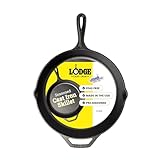
- Quality Cast Iron Frying Pan: The Lodge Seasoned Cast Iron Skillet is loved for its great heat retention, incredible durability, and ability to make almost any recipe you dream up
- Naturally Seasoned for Non-Stick Finish: Each pre-seasoned skillet arrives ready to use with a smooth non-stick finish that cooks evenly and improves with every use, perfect for eggs, meats, and more
- Heavy-Duty & Long-Lasting: This cast iron frying pan is crafted for durability and multipurpose use, with an easy-grip teardrop handle designed for comfort and control
- Versatile & Multipurpose: This versatile cooking skillet is oven safe, stovetop compatible, and ideal as a camping cooking pan
- About Lodge Cast Iron: Made in the USA, Lodge cookware is versatile and as easy to clean as it is to cook with; taste a difference in your cooking with cast iron
7. Repeat thin coats when necessary
Bare, stripped, or restored iron commonly benefits from two or three complete seasoning layers. Repeat the wash-or-wipe, dry, very-thin-oil, and bake process rather than applying one heavy coat.
Do these 3 things before closing this tab:
1Clear out junk files and repair common Windows errors2Fix the driver behind crashes, sound loss and screen glitches3Repair Windows errors before they cause bigger problemsDo not worry if the first coats are not perfectly black. Color and texture can change as the seasoning develops. Continued cooking and proper maintenance are part of the process.
The thin-coat rule
Most seasoning problems trace back to applying more oil than the heat can polymerize evenly. The goal is not to leave a visible layer of liquid oil on the skillet. Apply enough to cover the iron, then remove almost everything you can see.
- Too much oil: sticky, gummy, streaked, or uneven finish.
- Very thin oil: drier-looking, more even coat that hardens more reliably.
- Repeated thin coats: better for building a durable surface than one thick coat.
How to maintain seasoning after every use
You do not need to strip and fully re-season the skillet after every meal. Ordinary cooking adds more polymerized oil over time. The routine below protects the finish and prevents moisture from causing rust.
- Cool the pan enough to handle safely. Do not grab it bare-handed or shock a very hot skillet with cold water.
- Wash by hand with hot water. A small amount of mild dish soap is acceptable. Remove food residue rather than allowing it to remain trapped in the finish.
- Scrape or scrub as needed. A pan scraper, brush, or suitable scrubber can remove stuck food. Use the least aggressive method that gets the pan clean.
- Dry immediately. Wipe it thoroughly, then warm it briefly on the stovetop or in the oven to remove remaining moisture.
- Apply a very light oil coat. Rub the oil over the cooking surface and buff until the skillet looks dry rather than greasy.
- Warm it briefly if needed. Gentle heat evaporates residual moisture and helps set the maintenance coat.
For routine cleaning, a cast-iron pan scraper or cleaning brush is optional; a household utensil may be sufficient. Avoid implying that abrasive tools are always appropriate, especially when the finish is new or already damaged.
Cooking habits that improve release
Seasoning works best when paired with sensible heat and timing:
Rank #4

- Superior Heat Retention: The Cast Iron Skillet distributes heat evenly across the surface for perfect cooking results. Ideal for searing, sautéing, frying, baking, and more.
- Versatile Cooking: Our cast iron cookware is suitable for use on stovetops, ovens, grills, and even campfires, offering unmatched versatility for indoor and outdoor cooking.
- Pre-Seasoned for Immediate Use: Comes pre-seasoned with vegetable oil, to enhance the non-stick performance and deliver authentic flavors right out of the box. Is an ideal cooking gift for men and women.
- Easy-Grip Handles: Features ergonomically designed handles, for a secure grip and safe handling, even with oven mitts.
- Easy Care: It is recommended to rub the pan with a light coating of vegetable oil after every wash. Allow the cast iron skillet to cool completely before washing it in hot soapy water with a sponge and a regular dish washing liquid soap.It is not dishwasher-safe.
- Preheat the skillet gradually for several minutes over low heat before increasing the temperature.
- Use enough cooking fat for the food and recipe.
- Give food time to brown and release naturally before trying to turn it.
- Use moderate heat when learning the pan; cast iron holds heat well, so high heat is not always necessary.
- Expect a new or recently restored skillet to improve over repeated uses rather than perform like a mature finish immediately.
What to do when something goes wrong
Why is my skillet sticky?
The most likely cause is too much oil. Clean away the tacky residue as thoroughly as appropriate, dry the pan, and repeat the seasoning process with a substantially thinner coat. Before baking, wipe until the surface looks nearly dry.
Free tools Windows power users keep installed
One-click scans. No signup required.
If the residue is light, additional controlled heating and careful cleaning may help. If it is thick, gummy, or widespread, more thorough removal may be needed before rebuilding the seasoning.
Why is the seasoning blotchy or uneven?
Patchy bronze or dark areas can be normal while a new finish develops. Continue cooking, clean and dry the pan after use, and apply thin maintenance coats. Add another full seasoning layer if portions of the iron are genuinely bare or rusty.
Unevenness is more concerning when it is accompanied by sticky residue, flaking, or exposed rust. In that case, remove the failing material instead of repeatedly baking more oil over it.
How do I remove rust?
Remove surface rust and any loose residue, then wash the skillet. Dry it completely—warming it briefly helps—and restore the protective oil layer with thin oven-seasoning coats. Store the pan dry; do not leave it soaking or sitting wet in the sink.
Recommended Free Tools
Why does food still stick?
Seasoning improves release but does not eliminate the need to preheat, use adequate cooking fat, and wait for food to brown. A recently stripped or newly purchased pan may also need repeated cooking before the surface becomes more forgiving.
Can I cook acidic foods in cast iron?
Tomatoes, wine, citrus, and other acidic ingredients can be hard on developing seasoning and may remove some of it. Limit long cooks with acidic ingredients while the finish is new or being rebuilt. A well-established surface is generally more tolerant, but clean, dry, and lightly oil the skillet afterward.
Best Value

- Exceptional Heat Retention: Enjoy perfectly cooked meals with cast iron skillets that provide even heat distribution, ideal for searing, frying, and baking in a 12 inch frying pan.
- Versatile Cooking Options: Utilize this multipurpose skillet on the stove top, during camping trips, or on the grill; perfect for various cooking methods and outdoor adventures
- Pre-Seasoned for Immediate Use: Comes pre-seasoned with vegetable oil, to enhance the non-stick performance and deliver authentic flavors right out of the box. Is an ideal cooking gift for men and women.
- Ideal Size for Any Occasion: The 12 Inch Skillet is perfect for both indoor and outdoor cooking a reliable Chef's Pan that meets all your culinary needs.
- Ample Cooking Space: Experience the convenience of a large frying pan that can handle family meals also great for smaller tasks with a small cast iron skillet option available.
Traditional cast iron versus enameled cast iron
Traditional cast iron has exposed iron and relies on seasoning for added rust protection and improved release. Enameled cast iron has a glass-like enamel surface and does not need seasoning. Do not put an enameled piece through a raw-iron oven-seasoning routine or heat it empty unless the manufacturer specifically permits that use.
When in doubt, check the model’s care instructions and inspect the cooking surface. A colored, smooth, glass-like interior is likely enamel; a dark, iron-textured surface is generally traditional cast iron. The manufacturer’s instructions take priority, especially for cookware with mixed materials or coated handles.
A simple decision guide
- Is it enameled? Do not season it.
- Is it traditional and already pre-seasoned? Wash, dry, lightly oil, and cook. Add a full oven cycle only if the finish needs reinforcement.
- Is it bare, stripped, rusty, or sticky? Clean and dry it, then apply two or three extremely thin oven-seasoning coats.
- Does food stick? Check preheating, cooking fat, and timing before assuming the skillet needs stripping.
- Does it rust? Remove the rust, dry the pan completely, and rebuild the protective oil layer.
Frequently Asked Questions
Do I need to season a pre-seasoned cast-iron skillet before using it?
Usually not. Wash and dry it, apply a very light coat of oil, and begin cooking. An additional oven cycle is useful when the finish is bare, damaged, rusty, or noticeably weak.
Can I use dish soap on cast iron?
Yes. A small amount of mild dish soap can be used to remove food and residue. Wash by hand, dry the skillet immediately and completely, then apply a very light coat of oil.
What is the best oil for seasoning cast iron?
No single oil is universally best for every cook. Suitable high-smoke-point oils such as grapeseed or sunflower oil can work, as can a purpose-made seasoning oil. Applying a very thin coat and wiping away visible excess matters more than buying a particular brand.
How often should I fully re-season a cast-iron skillet?
Not after every meal. Regular cooking and maintenance build the surface gradually. Use a full oven-seasoning cycle when the skillet is bare, rusty, sticky, or has areas where the seasoning has failed.
Can I season an enameled cast-iron skillet?
No. Enameled cast iron does not require raw-iron seasoning. Follow the cookware manufacturer’s cleaning and heating instructions instead.
The Bottom Line
The reliable formula is simple: clean the traditional cast iron, remove every trace of moisture, apply an almost invisible film of suitable oil, wipe away the excess, and bake it upside down. Build the finish with repeated thin coats—not thick ones—and maintain it by washing, drying, lightly oiling, and cooking regularly. If the pan is enameled, skip seasoning entirely.
Quick Recap
Product prices and availability are accurate as of the date/time indicated and are subject to change. Any price and availability information displayed on Amazon at the time of purchase will apply.

