Some links on this page are affiliate links: if you buy through them we may earn a commission, at no extra cost to you.
Yes—data-center heat can warm nearby offices, laboratories, and other buildings, but only when the heat source, water temperature, demand schedule, controls, and backup systems are designed as one plant. The most successful approach is not simply piping exhaust heat to a radiator. It matches each temperature level to a suitable load, cascades heat through several uses, and provides a way to reject surplus heat when demand disappears.
Data centers and high-performance computing facilities run cooling equipment continuously. As SmithGroup puts it, “Data centers and high-performance computing centers always require cooling and constantly reject heat.” That rejected heat is an energy stream that a neighboring building or campus may be able to use instead of producing the same heat separately.

As an Amazon Associate I earn from qualifying purchases.
The Tool Desk
Outbyte PC Repair FREEClear out junk files and repair common Windows errorsFree Scan →Outbyte Driver Updater FREEFix the driver behind crashes, sound loss and screen glitchesFind Drivers →The opportunity is substantial, but it is not automatic. Heat recovery depends on a useful sink—the right heating demand at the right time and temperature. A system may have plenty of heat in summer, when adjacent buildings need little or no heat, or it may produce low-temperature water that cannot directly serve a high-temperature laboratory loop. The engineering question is therefore not whether heat exists, but where it can go, at what temperature, during which season, and with what equipment between source and sink.
What data-center waste heat is—and why temperature matters
Servers convert electrical power into computation and ultimately heat. Cooling systems collect that heat through air, chilled water, or liquid loops and then transfer it to another fluid or to the outdoor environment. Heat recovery captures part of that stream before final rejection and sends it to a building heating system, domestic-water process, ventilation system, or another compatible load.
Popular on Amazon

- Used Book in Good Condition
Two characteristics determine whether recovery is useful:
- Quantity: how much heat is available and how steadily it is produced.
- Quality: the temperature of the recovered water or air and the temperature required by the receiving load.
High quantities do not compensate for an unsuitable temperature. SmithGroup’s Argonne planning example illustrates the problem: the proposed exascale computer would reportedly produce 95°F water year-round, while the amount of heat would exceed nearby laboratories’ heating demand. The water would still be too cool for direct laboratory heating without additional equipment or a lower-temperature use.
Free tools Windows power users keep installed
One-click scans. No signup required.
Temperature matching also changes by season. Offices, conference areas, radiant floors, outside-air tempering, and some process loads can often accept lower-temperature heat than a high-bay laboratory system. A campus may therefore use several temperature levels in sequence rather than sending every load the hottest available water.
How an integrated heat-recovery system works
1. Map the source and every potential sink
Start with the data center’s cooling architecture: air-cooled or liquid-cooled equipment, supply and return-water temperatures, annual operating profile, and the minimum cooling capacity that must remain available. Then inventory nearby loads by temperature requirement, operating hours, and seasonal demand. Include offices, laboratories, radiant floors, ventilation air, domestic hot water, and process uses where applicable.
2. Match temperature before calculating annual energy
Identify which loads can use recovered heat directly and which need a heat-recovery chiller or heat pump to raise the temperature. A low-temperature loop may serve offices and radiant floors, while a higher-temperature loop serves laboratories. The receiving system’s required temperature, not merely the data center’s total heat output, determines the direct-use opportunity.
Also popular on Amazon
3. Transfer heat without compromising cooling
Heat exchangers, hydronic controls, and dedicated recovery equipment must keep the computing load within its required cooling range. In some designs, the data center’s return water becomes a useful heat source or cooling medium; in others, a heat-recovery chiller simultaneously removes heat from computing equipment and produces higher-quality heating water.
Windows Errors? Fix Them Before They Spread
Repair common Windows errors and clear accumulated junk for a smoother, more stable PC - no reinstall needed.Free scan · no reinstallCrashes, No Sound, or Screen Glitches?
Random freezes, missing sound and display glitches usually trace back to one bad driver. Find and replace yours safely.Free scan · under a minute4. Cascade the heat
Use the highest-temperature water where it has the greatest value, then send the lower-temperature output to another load. Cascading increases the period during which recovery is useful and avoids wasting moderate-temperature heat that cannot serve the first load directly.
5. Provide supplemental heat and a rejection path
Recovery will not cover every peak or every season. The heating plant must be able to supplement the recovered stream, and the cooling plant must be able to reject heat when nearby demand is absent. A design that omits either function can force the data center to curtail recovery or jeopardize cooling reliability.
6. Control the plant as one system
Controls should coordinate data-center cooling, building heating, outdoor conditions, loop temperatures, and available demand. The system needs clear operating modes for summer, winter, shoulder seasons, peak heating, and periods when the host buildings cannot accept more heat. Metering each loop allows operators to verify how much heat is transferred and when backup or rejection equipment is running.
Case study: NREL Energy Integration Facility in Golden, Colorado
SmithGroup describes the National Renewable Energy Laboratory’s Energy Integration Facility as an example of aligning a liquid-cooled high-performance data center with laboratory and office heating needs. The facility has three major hydronic systems, including low- and high-temperature heating loops.
Quick wins for a faster PC:
Repair Windows errors before they cause bigger problemsFix Now →Fix the driver behind crashes, sound loss and screen glitchesFind Drivers →Clear out junk files and repair common Windows errorsFree Scan →Also popular on Amazon

- 【Premium Quality】Our plate heat exchanger is made of high quality 316L stainless steel which are brazed together by 99.9% copper at the edges for a reliable and rugged part to form a durable, integral piece that can resist leakage and withstand high pressure and temperature.
- 【Convenient For Use And Energy Saving】Smooth Thread makes a easy, quick, flexible hookup. Highly conductive and super-thin stainless steel plates make good performance and economy for heating transfer and cooling without electricity consumption and oxygen consumption.
- 【Product Parameter】250,000 - 330,000 BTU CAPACITY: Depending on the application, this product can produce 250kBtu to 330kBtu per hour. 30 PLATES; 4"x 12", 1" MPT: 30 brazed plates work to efficiently heat water for your application.
- 【Multiple Applications】AB water heat exchanger offers the highest level of thermal efficiency and durability in a compact & lightweight unit, perfect for domestic water heating, Floor Heating, Snow Melting, District or Zone Heating Systems, Outdoor Wood Furnaces, Hydraulic and Lube Oil Coolers, Radiator Heating, Hydronic Heating, Solar Heating, Wood Boiler.
- 【Product Support】 Quality-focused manufacturing backed by responsive support for product questions, selection and installation guidance.
A recovery system first transfers data-center heat into the building and campus heating network. Heat that cannot be used is rejected to the environment. The low-temperature heat serves offices, conference areas, and radiant floors. The hottest available water goes to high-bay laboratories and is then reused to temper outside air. During winter, campus heat supplements the high-temperature loop.
This arrangement is a true cascade: one heat stream serves a demanding load, then its remaining useful energy is applied to ventilation air. SmithGroup says the temperature differential allows recovery to continue through winter despite seasonal limits. The lesson is structural rather than a universal performance promise: multiple loops, supplemental heat, and a planned rejection path make recovery more resilient than a single building-to-building connection.
Case study: MSOE Diercks Hall and the “Rosie” supercomputer
The Milwaukee School of Engineering example is primarily a coordinated cooling and economization strategy, not a claim that all rejected computer heat is exported to another heating customer.
According to SmithGroup, the air-cooled supercomputer uses the building’s warmer chilled-water return as its primary cooling source during summer. That lets the computer avoid the colder supply water needed for the building’s own cooling and dehumidification. In winter, when the base building does not need cooling, the computer switches to dedicated rooftop condensers and uses Milwaukee’s cold outdoor conditions for “free cooling.”
What’s actually slowing this PC down?
Pick the symptom - the matching free tool is one click away.
| Reported project detail | Qualification |
|---|---|
| $34 million | Donation primarily funding the MSOE facility from Dwight and Dian Diercks, as reported by SmithGroup in 2022. |
| 65,000 square feet | Area of the MSOE computer science facility, as reported by SmithGroup in 2022. |
| Over 60% | Share of the building’s energy consumed by the supercomputer, as reported by SmithGroup in 2022. |
The design demonstrates why cooling-side integration deserves separate analysis from direct heat export. Sharing a warmer return-water loop can reduce the need for very cold computer cooling in summer, while winter economization can reduce mechanical cooling. Neither measure, by itself, establishes that the computer’s rejected heat is heating a neighboring building.
Also popular on Amazon

- High-Quality Materials: The entire unit is copper brazed at edges and contact points, forming a durable and leak-resistant piece that withstands high pressure and temperature.
- Durable and Corrosion-Resistant: Features epoxy-coated fins, providing high hardness, wear resistance, and corrosion protection. This reduces internal water vapor scaling, promoting maximum heat exchange between air and fins. Suitable for operating temperatures of -40-356℉ / -40-180°C.
- Efficient Heat Transfer: The heat exchanger generates up to 160kBtu per hour, with 12 aluminum fins per inch and 3 rows of 3/8" seamless copper tubes. The threaded copper tubes increase the contact area and capacity of the fluid medium, significantly enhancing the heat exchanger's performance.
- Large Heat Exchange Area: With an effective heat exchange area of 18”x20” and 242 fins, this heat exchanger provides excellent heat transfer performance to meet various needs.
- Tight and Leak-Proof: To eliminate the possibility of micro-leaks, the heat exchanger uses high-pressure vacuum brazing and undergoes rigorous leak testing, ensuring long life and high reliability.
Case study: Argonne National Laboratory planning for exascale computing
SmithGroup discusses Argonne as a planning and master-planning scenario for a future generation of exascale high-performance computing. It is not an operating system with verified results.
The planned supercomputer was described as using more than 20 MW and producing 95°F water year-round. The quantity of heat would exceed the heating demand of adjacent laboratories, yet the reported water temperature would limit direct laboratory heating. Studied approaches included heat-recovery chillers that cool computing equipment while producing higher-quality heating water, and direct use of low-grade heat to help warm outside air.
Argonne’s example separates two design questions that are often conflated: whether there is enough heat, and whether that heat is hot enough. A lower-temperature use, such as outside-air preheating, may be practical even when direct connection to a laboratory heating loop is not. Alternatively, a heat-recovery chiller can upgrade the temperature while performing the cooling duty the computer already requires.
Do these 3 things before closing this tab:
1Fix the driver behind crashes, sound loss and screen glitches2Repair Windows errors before they cause bigger problems3Scan for outdated or missing drivers - takes under a minuteDirect use, upgraded heat, and cooling integration
| Design path | Best fit | Key constraint |
|---|---|---|
| Direct hydronic transfer | Nearby loads whose required temperature matches the data-center loop, such as low-temperature offices or radiant floors. | Limited by the source and sink temperatures and by simultaneous demand. |
| Cascaded hydronic loops | Campuses with several loads at different temperature levels. | Requires coordinated piping, controls, and a defined sequence of uses. |
| Heat-recovery chiller or heat pump | Situations where computing heat is plentiful but too cool for the target heating loop. | Adds equipment and electrical demand; the design must preserve dependable cooling. |
| Outside-air tempering | Ventilation systems that can accept low-grade heat. | Useful demand varies with outdoor conditions and airflow. |
| Cooling-side integration | Buildings where the data center can use warmer chilled-water return or seasonal outdoor economization. | Improves cooling coordination but is not the same as exporting heat to a heating customer. |
Seasonal operation: the part many concepts miss
Heat recovery is easiest when computing heat and building heat demand occur at the same time. Winter usually offers the strongest heating sink, but the system still has to handle cold-weather temperature requirements and peak loads. Summer can present the opposite condition: the data center continues producing heat while offices may require cooling rather than heating.
A robust design therefore defines operating modes instead of assuming one year-round destination:
Also popular on Amazon
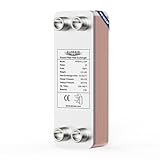
- Excellent Quality: This brazed plate heat exchanger is made of high-quality SS316L stainless steel, brazed with copper in a vacuum environment, ensuring a reliable and robust component. It offers superior resistance to high temperatures, high pressures, corrosion, and leaks, playing an excellent role in supporting various refrigeration, heating, high-temperature, and high-pressure industrial fields.
- Heat-transfer Efficiency increased by 99%: The heat exchanger adopts a fishbone corrugated design, which increases the intensity of the turbulence and creates various support points that reduce the secondary side pressure, resulting in a rapid increase in channel heat transfer efficiency by 99%.
- Convenient to Use and Energy Saving: The smooth threads allow for quick and flexible disassembly and installation. Ultra-thin stainless steel plates provide excellent performance and economy in heating and cooling, improving energy efficiency and reducing operating expenses.
- Product Parameter:Mode WHE4X12-20P can produce up to 275000 btu per hour depending on different applications, 5.6 sq.ft heat transfer area,4"x12"-20 plates with 1"MPT.
- One-year limited warranty: The stainless steel heat exchanger provides exceptional thermal efficiency and durability in a compact, lightweight design and ALORAIR offers a one-year limited warranty covering manufacturing defects.
- Winter: prioritize heating loops, use supplemental campus heat for peaks, and cascade remaining heat to ventilation or other lower-temperature loads.
- Shoulder seasons: use recovered heat where demand exists and modulate between recovery and rejection as loads change.
- Summer: prioritize reliable computer cooling; use return-water integration or other cooling-side strategies where the building can accept them.
- No-demand periods: reject surplus heat through condensers, cooling towers, or another engineered path without interrupting computing operations.
A practical design checklist
- Confirm the cooling source. Document whether the computers are air-cooled, liquid-cooled, or connected to a hydronic loop, and record supply and return temperatures.
- Quantify the heat profile. Establish continuous, peak, and minimum heat availability rather than relying on a single nameplate value.
- Inventory nearby loads. Record each building’s heating temperature, schedule, seasonal demand, and distance from the data center.
- Rank direct uses. Assign the hottest water to loads that require it and reserve lower-temperature heat for offices, radiant surfaces, or outside-air tempering.
- Test temperature upgrading. Where direct use fails, evaluate a heat-recovery chiller or heat pump as part of the cooling design.
- Design backup and rejection. Keep supplemental heat for cold snaps and a reliable heat-rejection route for periods with no useful sink.
- Coordinate controls and metering. Measure source, transfer, loop, and backup energy so operators can see whether the intended sequence is working.
- Check resilience and maintenance. The data center’s cooling duty remains mission-critical; recovery equipment must be bypassable and serviceable without threatening uptime.
What the published examples do—and do not—prove
The cases show design approaches, not a standardized product or a guaranteed financial return. The SmithGroup perspective published by Building Design + Construction on November 28, 2022, reports the project and planning figures cited above, but it does not provide independently verified energy savings, emissions reductions, payback periods, or a comparative evaluation. Those outcomes depend on local utility rates, climate, building schedules, equipment temperatures, controls, and the amount of heat that can actually be used.
Brian Rener, identified by SmithGroup as its vice president and data centers leader, describes a market in which data and artificial intelligence are driving facilities that must be adaptable, flexible, sustainable, and resilient. That framing fits heat recovery only when sustainability measures are integrated with the core reliability mission. A system that cannot reject heat safely, maintain cooling during a building outage, or meet peak heating demand is not a complete solution.
The bottom line for owners and designers
Data-center waste heat is most valuable when it is treated as part of a campus energy system rather than as a spare pipe from a server room to a boiler plant. NREL shows the value of multiple hydronic temperatures and heat cascading. MSOE shows how coordinated cooling and seasonal economization can reduce conflicts between a computer and its host building. Argonne shows why a very large heat quantity can still be difficult to use when the water is only 95°F.
Before committing to equipment, match source and sink temperatures, map simultaneous demand, choose between direct transfer and temperature upgrading, sequence several loads where possible, and retain both backup heat and heat rejection. Those decisions determine whether recovery operates through the year or becomes an attractive concept that works only under a narrow set of conditions.
Quick Recap
Product prices and availability are accurate as of the date/time indicated and are subject to change. Any price and availability information displayed on Amazon at the time of purchase will apply.

