The most reliable way to reduce hospital noise is to work in sequence: identify when and where noise occurs, correct equipment and maintenance faults, change routines that create avoidable sound, then apply room acoustics or engineering controls that do not compromise alarms, communication, ventilation, cleaning, fire safety or infection prevention.
Noise is not one problem. A ventilator alarm, a slamming door, reverberation from hard walls and vibration transmitted through pipework require different remedies. Treating every complaint with acoustic panels, signage or quieter equipment can waste money and create new risks. A source-based assessment gives facilities leaders a defensible plan.
As an Amazon Associate I earn from qualifying purchases.
Why are hospitals and healthcare facilities so noisy?
Healthcare buildings combine round-the-clock activity, hard cleanable surfaces and equipment that must signal reliably. The mix changes by department and time of day, but common sources include:
- Clinical alarms, ventilators, monitors, infusion devices, generators, orthopedic saws and dental drills.
- Heating, ventilation and air-conditioning (HVAC) equipment, fans and air movement.
- Overhead paging, telephones, radios and staff conversations.
- Doors, hardware and visitor movement, especially when doors slam.
- Carts, beds and equipment being moved through corridors.
- Reflections from floors, ceilings, walls and other hard surfaces that make each sound persist and combine with later sounds.
CDC/NIOSH training material notes that excessive sound can interfere with communication and concentration and hinder patient rest and recovery. The practical implication is that a hospital may need both source controls (making a device, door or routine quieter) and room controls (reducing the sound that reflects and spreads).
#1 Best Overall

- 2.25-inch LCD Screen with Backlight: This TS-501B sound level meter is measured noise levels are expressed in decibels and displayed on the 2.25-inch LCD screen, it easy to read on a big display design. Long press the backlight button to turn on a backlight, making it easy to view even in dim light
- Decibel Meter with A/C Weighting: TopTes TS-501B decibel meter uses a precise condenser microphone to capture sound. It’s equipped with A-weighting and C-weighting facilities that measure noise levels from 30 to 130 dB with an accuracy of 1.5 dB, Frequency from 30 to 8000Hz. Perfect for monitoring noise levels in communities, home theaters, audio systems, automobiles, workshops, schools, offices, factories
- MAX/MIN Measurement: The sound pressure level (SPL) meter has Max or Min measurement values to represent the maximum/minimum (high/low peak) value of the sound produced within a certain time, and the data hold function can freeze the current reading based on the sound measurement according to individual needs
- Easy Use and Feature Packed: The non-slip side design ensures that the portable noise meter fits easily in the hand. TS-501B SPL meter is a battery-operated noise meter that comes with three durable batteries and has an automatic power off function to extend battery life. A low battery indicator will appear on the screen when the battery is low to remind the user to replace the battery in time
- What’s in the Box: One TS-501B Decibel Meter, Three AAA Batteries, One User Manual, One Carry Case. The device has been factory calibrated to ensure high measurement accuracy and compliance with quality standards.
Noise differs by care area
Historical figures cited by CDC/NIOSH illustrate the variation rather than establish a current national average: an emergency-department range of 61–69 dB, neonatal intensive-care-unit readings of 55–89 dB, and some intensive-care-unit measurements above 100 dB were attributed to Berglund, Lindvall and Schwela (1999). These are secondary-reported historical values, so use them to prompt local measurement, not to predict what every unit will experience.
What noise level is acceptable in a hospital room?
CDC/NIOSH healthcare workplace training attributes a patient-area target of 40 dB during the day and 35 dB at night to the World Health Organization. The page does not identify the underlying WHO edition, and the figures are guidance rather than a universal legal limit for every room, country or facility type. Confirm the acoustic criteria adopted by your jurisdiction, health authority and project brief.
| Figure | How to interpret it |
|---|---|
| 40 dB daytime; 35 dB nighttime | WHO guidance as reported in CDC/NIOSH material for patient areas; not automatically a statutory limit. |
| 150.8 dBC peak; 108 dBA average | Values from a 2010 survey of patient rooms at one hospital unit (Akbar-Khanzadeh and Braskie). They are not representative of all hospitals. |
| 61–69 dB emergency departments; 55–89 dB NICUs; some ICUs above 100 dB | Historical ranges attributed by CDC/NIOSH to Berglund, Lindvall and Schwela (1999); use only as context for a local assessment. |
dBA measurements weight sound roughly according to human hearing; dBC retains more low-frequency content. A single number can hide an important pattern: a short alarm peak, a continuous HVAC hum and intermittent corridor activity may have the same average but need different controls. Record the time profile and source as well as the level.
Do these 3 things before closing this tab:
1Repair Windows errors before they cause bigger problems2Scan for outdated or missing drivers - takes under a minute3Clear out junk files and repair common Windows errorsHow can a hospital find its most important noise sources?
Begin with observation and maintenance records before selecting products or construction work. The objective is to connect a measurable pattern to a controllable cause.
Rank #2
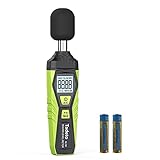
- 【Accurate Measurement】 The measuring range of the sound level meter is 30dB to 130dB . Highly accurate with ± 2.0 dB. Real-time monitoring can give you accurate data on the sound level in the area.
- 【A/C Weighted Measurement】 The A weighted simulates the frequency characteristics of low-intensity human ear noise, which is suitable for the detection of ambient noise. The C weighted simulates the frequency properties of high-intensity noises of the human ear, which are suitable for the sound pressure analysis of machine motors and machines. More professional measurement methods provide users with a more perfect user experience.
- 【Fast and Slow Measurement】 The sound level meter has the function of converting the fast and slow response rate. The fast response rate uses a time constant of 0.125s/time for general environmental measurement. The slow response rate uses a 1s/time constant, which is used for environmental measurements with relatively large changes in noise levels.
- 【Digital LCD Display 】 The digital display is a 4-digit LCD display with a resolution of 0.1 dB. Backlit LCD digital display, the reading effect is clearer in dark places. When the battery is low, the LCD display will display a low voltage icon, indicating that the power is low at this point and the battery needs to be replaced.
- 【Convenient and Lightweight 】Tadeto sound level meter is lightweight and easy to carry. It's widely used in factories, transportation, car, baby room and audio system offices, sound quality control in homes, schools, and construction sites.
- Define the area and outcome. Identify the rooms, corridors or workstations where patients cannot sleep, staff cannot communicate or alarms are difficult to distinguish. Set a practical observation window that includes the relevant shift, visiting period and overnight hours.
- Log each event. Record date, time, location, apparent source, duration, operating activity and whether the sound was a peak or a continuing background. Note doors, carts, paging, conversations, alarms, fans and construction activity separately rather than writing “general noise.”
- Screen with an appropriate meter. A sound-level meter can show patterns and help prioritize rooms. The 2010 patient-room survey used both a dosimeter and a sound-level meter. A calibrated assessment, frequency analysis or exposure evaluation may require an industrial hygienist or acoustician.
- Check the source while it operates. Listen at the device, mounting point, door, grille or wall before assuming the room needs treatment. Compare a quiet period with a busy period and, where safe, compare identical rooms.
- Review records and interview users. Maintenance logs, alarm histories, work orders and cleaning schedules can reveal a loose panel, worn wheel, failing fan or recurring delivery route. Ask nurses, porters, patients, visitors and environmental-services staff what happens immediately before the disturbance.
- Rank causes by harm and controllability. Give priority to sounds that disturb sleep, mask clinical communication or create repeated peaks. A modest but constant source may deserve attention before a rare loud event if it affects many rooms.
Keep the baseline, instrument details, calibration status and operating conditions with the project record. Without that context, a later reading cannot show whether a change actually helped.
First fix maintenance and equipment problems
NIOSH engineering guidance advises ensuring machinery is in good repair and all maintenance procedures have been completed before implementing noise controls. This is often the fastest and least disruptive intervention.
Maintenance checks that commonly matter
- Inspect fans, motors, pumps and compressors for imbalance, worn bearings, loose guards and damaged mounts.
- Check wheels, casters, brakes and loose panels on carts, beds and mobile equipment.
- Inspect door closers, hinges, latches, seals and strike plates so doors close reliably without slamming.
- Look for rattling ceiling tiles, grilles, diffusers, pipe supports and service panels.
- Verify that alarms are functioning as designed and that nuisance alarms are not being caused by poor sensor placement, consumables or delayed response.
- Investigate vibration travelling through rigid pipe or structural connections. NIOSH identifies anti-vibration connectors as a potential control for vibration transmitted through rigid pipe mounting; a qualified engineer should confirm suitability.
Do not lower alarm volume or disable an alert simply to improve a sound reading. Any alarm change requires clinical governance, risk assessment and confirmation that the signal remains detectable in the intended location.
Reduce avoidable routine noise without weakening care
Operational controls are useful when the source is behavior, workflow or timing rather than a defective machine. A survey of one hospital unit suggested vibrating pagers, quiet reminders, signs asking visitors and staff to lower voices and measures to prevent doors from slamming. Those suggestions are local options, not a validated universal package or a guaranteed percentage reduction.
Rank #3

- Accurate 30-130dB Noise Measurement: The Goldeep SL750A decibel meter measures sound levels from 30 to 130dB with ±1.5dB accuracy and a 31.5Hz-8KHz frequency response. This sound decibel meter is ideal for checking home noise, neighbor noise, traffic sound, office noise, construction sites, factories, classrooms, baby rooms and musical instruments.
- A/C Weighting for Different Sound Environments: This digital sound level meter supports A/C weighting modes for more flexible noise testing. A-weighting is suitable for environmental noise such as urban traffic, schools, offices, business areas and construction sites. C-weighting is designed for industrial noise from machinery, equipment, aerospace, high-speed rail and other high-intensity sound sources.
- dB/SONE Units for Sound & Loudness Testing: Use the dB unit to measure sound intensity for environmental noise, machine noise, traffic noise and workplace noise. Switch to SONE to better understand perceived loudness, making this db meter useful for music, audio systems, acoustic checks and instrument noise control..
- FAST/SLOW Response with MAX/MIN Tracking: The spl meter includes FAST and SLOW response settings. FAST response, 0.125s per reading, is useful for changing noise levels, while SLOW response, 1s per reading, is suitable for steady-state noise. MAX/MIN value tracking helps record peak and minimum noise levels over a period of time.
- Easy-to-Use Sound Meter for Daily & Professional Needs: Designed with data hold, clear LCD display, anti-slip grip and a windbreak ball, this sound meter is practical for indoor and outdoor use. Package includes 1 sound level meter, 2 AAA 1.5V batteries and 1 user manual, so you can start measuring noise right away.
Build a workable quiet-hours routine
- Define quieter periods for patient-rest areas and publish them at staff entrances, visitor points and handoff locations.
- Use vibration or visual notification where a pager or phone does not need an audible signal. Confirm coverage and response times before changing the alert mode.
- Route deliveries, linen collection and waste movement away from sleeping rooms when clinical schedules allow.
- Place carts and equipment where they will not strike door frames or wall protection; replace damaged wheels promptly.
- Train staff to close doors by the handle and report defective closers instead of relying on repeated reminders.
- Use respectful, specific prompts (“please lower voices outside patient rooms”) rather than broad instructions that staff and visitors may ignore.
Measure whether the routine changes alter the targeted events and whether they introduce missed calls, delayed responses or extra travel. A quiet-hours policy that impedes care is not a successful noise control.
Choose the right acoustic or engineering control
Room acoustics and sound transmission are different problems. Absorptive products reduce reflections inside a space; they do not automatically stop sound entering through a wall, door, window or building system. Barriers and enclosures address a source path, but their performance depends on height, position, gaps, frequency and airflow.
| Control | Best fit | Important limitations and checks |
|---|---|---|
| Absorptive wall or ceiling treatment | Reducing reverberation and reflected speech or equipment sound in an appropriate room. | Will not seal a transmission path through a wall or door. Verify cleanability, fire performance, infection-control suitability and access for maintenance. |
| Baffles | Large rooms or ceilings where reflected sound is a major contributor. | NIOSH recommends baffles exposed on both sides. Confirm that suspension, sprinklers, lighting, airflow and cleaning access remain compliant. |
| Barrier or screen | Line-of-sight sources such as a workstation, device or conversation area. | Taller barriers placed close to the source are generally more effective. Low-frequency sound can travel around a barrier. |
| Sealed enclosure | Low-frequency or high-energy equipment whose sound must be contained. | Requires careful treatment of ventilation, heat, access, fire protection and maintenance. A partial cover may provide little benefit. |
| Isolation or vibration control | Noise transmitted through mounts, pipework or structure. | Needs source-path diagnosis and engineering review; an absorber in the room may not address structure-borne sound. |
Absorbers, barriers and enclosures
NIOSH explains that hard surfaces reflect sound and increase the overall level. Porous materials such as textiles and foam absorb sound; thicker absorptive material is more useful for lower-frequency noise. Place absorption on the noisy side of a barrier or screen where appropriate. A barrier works best when it is tall and close to the source, but low-frequency energy can diffract around it. Blocking low-frequency sound effectively may require a fully sealed enclosure.
Quick wins for a faster PC:
Repair Windows errors before they cause bigger problemsFix Now →Fix the driver behind crashes, sound loss and screen glitchesFind Drivers →Clear out junk files and repair common Windows errorsFree Scan →These are general engineering principles, not a specification for a particular healthcare product. In a clinical environment, every proposed panel, baffle, screen or enclosure must be reviewed for disinfectant compatibility, soil retention, fire rating, impact resistance, accessibility, infection prevention and replacement procedures.
Rank #4

- 【Widely Used】The noise meter is the use of environmental sound level instrument, can be widely used in such as factories, workshops, schools, residential, office areas, traffic roads, audio and other occasions of sound level measurement. Also suitable for noise engineering, product quality control, health,prevention and control.
- 【Accurate Measurement】Measuring Range:30~130dB ;Accuracy:±1.5dB(94dB@1KHz);Display Resolution:0.1dB
- 【A Weighted Measurement】 A Weighted network (automatic switching range display)
- 【Fast/Slow mode selection】Press the MODE key, you can convert the response speed of the noise meter, FAST fast, SLOW slow
- 【MAX/MIN Measurement】Press RANGE key to measure the maximum value of MAX and minimum value of MIN.A maximum duration of more than 3 seconds is recorded, with a normal test sampling rate of 0.5 seconds. The maximum error is ± 5%.
Protect ventilation, infection control and clinical communication
Healthcare HVAC does more than provide comfort: it maintains temperature and humidity, removes contaminated air and supports airborne-infection controls. CDC guidance calls for ventilation systems to be monitored and maintained, with requirements that vary by healthcare zone and applicable standards.
Do not seal, relocate or enclose grilles, diffusers, return paths or equipment merely because they are noisy. A change that lowers sound but disrupts pressure relationships, filtration, air changes or humidity can create a greater safety problem. Facilities engineering and infection-prevention personnel should approve any acoustic treatment that affects airflow or access to HVAC components.
Also verify that a treatment does not mask alarms, impede staff sightlines, obstruct equipment movement, interfere with sprinklers or violate fire and building requirements. CDC emphasizes communication among stakeholders when addressing environmental issues such as noise and vibration.
The Tool Desk
Outbyte PC Repair FREERepair Windows errors before they cause bigger problemsFix Now →Outbyte Driver Updater FREEScan for outdated or missing drivers - takes under a minuteDriver Scan →Use a decision framework before spending on construction
Compare each proposed intervention against the same criteria. A simple matrix keeps a low-cost operational fix from being overlooked and prevents an attractive product from being installed in the wrong location.
Best Value
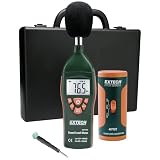
- Datalogs up to 16,000 readings with USB interface for downloading to a PC
- Triple LCD displays humidity, temperature, and date (year, month, and day)
- Programmable from keypad or PC
- Selectable data sampling rate
- User programmable audible and visual alarms
| Decision question | What to establish |
|---|---|
| What source is addressed? | Behavior, equipment condition, vibration, reverberation or sound transmission. |
| What happens to care? | Whether communication, alarm audibility, response time, visibility and access improve or deteriorate. |
| Can it be cleaned? | Whether surfaces tolerate the facility’s disinfectants, inspection and replacement schedule without retaining soil. |
| Is it code-compliant? | Fire performance, egress, structural loading, sprinkler clearance, accessibility and local building requirements. |
| What expertise is needed? | Routine maintenance, calibrated measurement, industrial hygiene, acoustics, mechanical engineering or infection-prevention review. |
| What is the disruption? | Installation access, patient relocation, shutdowns, noise during construction and ongoing maintenance burden. |
For a new facility or major refurbishment, consult the applicable healthcare acoustic criteria early. NHS England describes Health Technical Memorandum 08-01 as guidance for acoustic criteria in the design and management of new healthcare facilities; its publication page was updated January 26, 2024. The complete document and local requirements determine project-specific values.
How to verify that a noise project worked
- Repeat the same observation plan. Measure the same rooms, times, operating conditions and source categories used for the baseline.
- Report more than an average. Include peak events, duration, frequency where available and the number of disturbances during patient-rest periods.
- Check clinical outcomes. Ask whether staff can communicate, alarms remain recognizable and workflow is still practical. Record complaints and near misses rather than relying on a single meter reading.
- Inspect the control itself. Confirm that panels, baffles, barriers, connectors and door hardware remain secure, cleanable and accessible.
- Reassess after seasonal or operational change. HVAC loads, construction, staffing, visiting patterns and equipment replacement can change the noise profile.
If readings remain high after obvious maintenance and routine changes, or if low-frequency, structure-borne or multi-room transmission is suspected, obtain an assessment from an experienced noise-control professional. Complex projects often need calibrated measurements, frequency analysis and a modeled path rather than trial-and-error installation.
Common mistakes and how to avoid them
- Installing absorbers before finding the source: A panel cannot repair a failing fan, rattling grille or slamming door.
- Treating one reading as the whole problem: Peaks, averages and reverberation describe different conditions.
- Using office-grade materials without healthcare review: Cleanability, fire behavior and infection-control requirements may rule out an otherwise effective material.
- Sealing HVAC components: This can undermine ventilation and pressure control. Obtain facilities and infection-prevention approval first.
- Reducing alarm volume indiscriminately: Lower sound is not safer if a needed alert is missed.
- Relying on signs alone: Reminders work only when paired with workable routes, functioning doors, suitable notification modes and feedback.
- Assuming a historical number is a compliance limit: The 40/35 dB figures are attributed guidance, and the cited survey values are from specific settings. Confirm current local criteria.
A practical governance model
Assign one project owner, but involve the people who control each risk. Facilities engineering can diagnose equipment, structure and HVAC; clinical operations can test communication and alarm workflows; infection prevention can review materials, cleaning and airflow implications; environmental services can assess day-to-day cleanability; and frontline staff and patients can identify disturbances a short inspection misses.
Document the source, chosen control, responsible department, approval checks, installation date and verification result. This turns noise reduction from a one-time renovation into a maintenance and quality-improvement cycle.
The bottom line for hospital noise reduction
Start with a source-and-time log, confirm the pattern with suitable measurement, and repair equipment before buying acoustic products. Then combine targeted routine changes with absorptive treatment, barriers, vibration isolation or sealed enclosures only where the source and frequency justify them. Every intervention must preserve alarm audibility, communication, ventilation, infection control, fire safety, cleaning and access. Local measurements and applicable healthcare standards—not a generic decibel promise—should determine the final design.
Quick Recap
Product prices and availability are accurate as of the date/time indicated and are subject to change. Any price and availability information displayed on Amazon at the time of purchase will apply.

