The Tool Desk
Outbyte Driver Updater FREEFix the driver behind crashes, sound loss and screen glitchesFind Drivers →Outbyte PC Repair FREERepair Windows errors before they cause bigger problemsFix Now →The best grape harvest usually starts with aggressive dormant pruning, not gentle trimming. On an established vine, it is normal to remove roughly 80–90% of the previous season’s growth. Grapes develop on new shoots that emerge from selected buds on one-year-old wood, so leaving a tangle of old canes usually creates too many shoots, excessive shade, weak airflow, delayed ripening, and more disease pressure.
The exact cut depends on the grape variety, climate, vine age, spacing, trellis, and whether the vine is trained for cane pruning or spur pruning. Use the guide below to identify the vine’s structure, choose the right method, and avoid treating one bud count or diagram as a universal rule.
As an Amazon Associate I earn from qualifying purchases.
When to prune grapevines
For most home vineyards in the United States, prune during the dormant season, after the worst winter cold has passed but before the buds begin to break. In Oregon, an approximately January-to-early-March window is commonly used; in much of the eastern United States, the practical dormant period may extend from November into April. Those are regional examples, not dates that apply everywhere.
Free tools Windows power users keep installed
One-click scans. No signup required.
In a cold climate, waiting until the risk of severe cold has eased lets you inspect the vine for winter injury and retain additional buds if necessary. In a frost-prone location, delayed or double pruning can preserve options, but the best timing and technique depend on the cultivar and training system. Check your state extension service or a cultivar-specific guide when local conditions are unusual.
#1 Best Overall
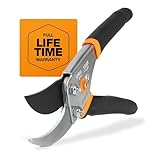
- CLEAN CUTS FOR LIVE GROWTH: Bypass blade design is ideal for pruning delicate flower stems and green growth, helping reduce crushing and plant damage while cutting stems and small branches up to 5/8” in diameter
- BLADES STAY SHARP: Precision-ground steel blades are engineered to stay sharp through heavy use, & all-steel construction provides lasting durability, delivering consistent cutting performance for regular garden maintenance & detailed pruning tasks
- SMART BLADE FEATURES: Blade coating helps reduce friction for smoother cuts, minimizes sap buildup & gumming, and enhances resistance to rust for longer-lasting performance in outdoor conditions; sap groove keeps the blades from sticking during use
- COMFORTABLE, CONTROLLED GRIP: Ergonomic, non‑slip handle enhances control and reduces hand fatigue during repetitive cuts; easy‑open safety lock secures the blade for safe transport and compact storage
- INCLUDES: (1) Fiskars Bypass Pruning Shears designed for everyday gardening and plant care and backed by a Lifetime Warranty. Product care tips: Wipe pruners clean after each use to prevent sap build-up and lightly oil blade for longer product life
- Ideal target: finish dormant pruning before budbreak.
- Cold regions: prune late enough to assess winter damage, but before sustained new growth.
- After bud swell: work carefully so you do not knock off viable buds.
- Late-winter sap bleeding: sap flowing from cuts is generally not considered harmful, although pruning before budbreak remains the normal goal.
Learn the vine’s structure before making cuts
Most pruning mistakes begin with confusing permanent framework wood with replaceable fruiting wood. Take a few minutes to identify these parts:
- Trunk
- The permanent vertical stem rising from the ground.
- Cordon
- A semi-permanent horizontal arm trained along a wire. Cordons are the main framework of many spur-pruned vines.
- Cane
- A previous season’s green shoot that has matured into brown, dormant, one-year-old wood. Selected canes carry the next crop in a cane-pruned system.
- Spur
- A one-year-old cane shortened to a small section with several buds, commonly two to four depending on the cultivar and training system.
- Head region
- The upper part of the trunk where renewal and fruiting canes originate on a cane-pruned vine.
- Bud or node
- A swollen point on a dormant cane where a bud and former leaf attachment are located.
Fruit is produced on current-season shoots growing from selected dormant buds on one-year-old canes or spurs. The trunk and cordons are normally permanent framework; the annual pruning decision concerns which new wood will carry the crop and which old, weak, diseased, or badly positioned wood should be removed.
Choose cane pruning or spur pruning
First determine how the vine is trained. Do not automatically shorten every branch to the same length. The two main systems work differently.
Cane pruning
Cane pruning replaces the previous year’s fruiting canes each winter. You retain a small number of strong, well-positioned one-year-old canes and remove the old fruiting canes after harvest and dormancy.
In one Oregon State University example, a mature cane-pruned vine retains two to four fruiting canes, each cut to approximately 15 buds, plus a one- or two-bud renewal spur near each fruiting cane. The same guidance gives different overall bud totals for wine and table grapes, which is a useful reminder that the example is not a universal prescription.
Cane pruning is often useful for table grapes, cooler-climate systems, and cultivars whose basal buds—the buds nearest the cane’s base—are less fruitful. It also provides a way to renew a cordon that has developed long stretches of unproductive or “blind” wood. The retained canes are tied along the fruiting wire, so this system requires planning and a support structure that can accommodate them.
Rank #2

- Widely Used: Pruning shears for gardening include 3 different blades and gloves for a variety of general pruning work. Great for trimming flowers, plants, bonsai, hydroponics, herbs, light branches and so on. Shears gardening tools are ideal for pruning needs and perfect gift for gardening friends
- Comfortable Handle: Garden shears pruning made by high-purity PP+TPR plastic; Clippers for gardening hand grip is very comfortable, plant clippers has strong toughness and strength
- Garden Gloves: Gardening gloves,made of soft comfortable cotton fabric, can protect yourself from dirt, skin wounds and nasty splinters when doing yard chores. The grip latex coating provides anti-slip or sure control when grabbing garden and yard tools
- Secure Easy to Lock: Plant shears have a safety locking mechanism to keep the sharp blades securely closed when not in use, and can effectively reduce accidental injuries. Pruning scissors are perfect design
- What You Get: 4 Pack Garden shears handheld include 1 x plant scissors with curved blade, 1 x garden cutters with serrated blade, 1 x plant cutter scissors with straight tip blade,1 x Garden Gloves
Spur pruning
Spur pruning keeps the cordons in place and cuts selected one-year-old shoots back to short spurs distributed along those cordons. One extension example uses two- to three-bud spurs spaced about four to six inches apart, while other recommendations vary with the cultivar and training system.
Spur pruning can work well for established cordon-trained vines when the variety has fruitful basal buds. However, some American grape types and hybrids produce poorly from their basal buds. If you shorten every cane to a spur on such a vine, the result may look neat while producing a disappointing crop. Consult the variety’s pruning recommendation before converting a cane-pruned vine to spur pruning.
Select the right fruiting wood
Good retained canes are generally mature brown or cinnamon-colored wood, approximately pencil thickness or slightly larger, with healthy buds and a position that allows easy training. As a representative selection guide, the University of Georgia describes desirable canes around 1/3 to 3/8 inch in diameter and roughly 3 to 5 feet long. These measurements help you compare candidates; they are not a mandatory size for every grapevine.
Prefer canes that are:
- Healthy, mature, and brown rather than green;
- Roughly pencil-thick, without being excessively coarse;
- Exposed to enough sunlight to mature properly;
- Located near the correct fruiting zone;
- Spaced so the resulting shoots will not all emerge from one crowded point; and
- Easy to tie to the trellis without severe bends or rubbing.
Remove or avoid canes that are dead, dried, hollow, broken, visibly diseased, very thin, badly shaded, crossing, dangling, or growing in an unsuitable direction. Exceptionally thick, vigorous “bull” canes are not automatically the best choice: they may have less useful bud spacing or be difficult to train.
Tools and safety equipment
For routine dormant pruning, use sharp bypass hand pruners and keep a pair of grape pruning shears available for one-year-old canes and short spurs. A clean, sharp bypass blade makes a more controlled cut than a dull tool that crushes the cane. Loppers are useful for older, thicker wood, especially during renovation, but not every vine requires them.
Wear durable gloves when handling cut brush and trellis wire, and use safety glasses when cutting overhead or removing stiff, springy canes. A pruning saw may be appropriate for large permanent-wood cuts. Young vines may also need a training stake or rod, vine ties, and trellis wire, depending on the support already installed.
Step-by-step dormant pruning for an established vine
- Inspect the trellis and vine. Identify the trunk, cordons or head region, fruiting wire, and any obvious winter injury before deciding what to retain.
- Remove dead, broken, and diseased wood first. Cut back to healthy wood or remove the affected section as appropriate. Do not leave infected pieces in the canopy or on the ground where they can contribute to recurring woodborne disease.
- Clear badly misplaced growth. Remove dangling, crossing, inward-growing, shaded, and competing wood that cannot be trained into a useful position.
- Identify healthy one-year-old canes. Look for mature brown wood near the fruiting zone. On a cane-pruned vine, select the strongest, best-positioned candidates. On a spur-pruned vine, identify the one-year-old shoots distributed along the cordon.
- Choose the pruning system. Retain replacement canes and renewal spurs for cane pruning, or shorten suitable one-year-old shoots to evenly distributed spurs for spur pruning.
- Set the crop potential. Remove excess canes, spurs, and buds rather than trying to keep every possible growing point. The correct number depends on vine size, variety, vigor, spacing, climate, and the production goal.
- Preserve renewal wood. On a cane-pruned vine, leave a short renewal spur in a position where it can produce next year’s replacement cane. Without renewal wood, the fruiting zone can gradually move away from the trunk or head.
- Make clean cuts. Avoid ragged, crushed cuts. Do not leave long, unnecessary stubs, but do not cut so close that the remaining bud is damaged.
- Tie retained canes. Before bud swell, gently position cane-pruned fruiting canes along the wire. Tie them without rubbing or snapping the buds.
How many buds should you leave?
Use published bud counts as starting examples, not as a recipe. Oregon State University gives examples of approximately 20–30 buds for wine grapes and 50–80 buds for table grapes in a particular cane-pruned framework. Its spur-pruning example allows approximately 20–60 buds depending on variety. The University of Georgia gives a broad example of 30–60 buds for many mature American-type bunch grapes.
These ranges differ because crop load depends on cultivar, vine size, climate, spacing, trellis design, vigor, and local production goals. A vine carrying too many buds may produce excessive shade, small or late-ripening fruit, poor fruit quality, and weak growth the following year. A vine carrying too few buds may respond with overly vigorous, leafy shoots. Start with a local recommendation and adjust over successive seasons based on shoot density, ripening, fruit quality, and the vine’s vigor.
Rank #3

- DUAL CUTTING POWER: VERSATILE PRUNING COMBO --- With both Pruning Shears and Pruning Snip, this combo delivers unmatched versatility. Whether you're delicately trimming flowers and shrubs, tackling thicker tree branches, or tending to your vegetable and fruit garden, our combo pack excels in all areas. They're also perfect for landscaping projects and maintaining the health and appearance of indoor plants. With this pack, you have a versatile tool that simplifies your gardening tasks.
- ULTRA SHARP --- Much less effort to cut branches with our combo pack. Our pruning shears are crafted from premium Stainless Steel, and the pruning snip features a stainless steel blade with a titanium coating. Our garden scissors and garden clippers boast exceptional durability and sharpness. A perfect pruning shears for gardening and a must-have garden tool, hedge clippers pruners for gardening.
- RUST PROOF STAINLESS STEEL GARDENING SHEARS --- Our branch cutter tree pruner combo is built to last.
- SENIORS AND ARTHRITIS FRIENDLY --- Our pruners for gardening have comfortable handles that are easy to grip. With a non-slip texture for enhanced control, you can confidently prune in wet conditions. You can work longer without any hand fatigue.
- SAFETY LOCK PREVENTS ACCIDENTS --- Both of our pruning shears and pruning snips come with a built-in safety lock that securely holds the blades closed when not in use, preventing any accidental openings that could lead to injuries. This feature is designed for easy, one-handed activation, offering convenience and peace of mind whether you're storing the combo or carrying them in your pocket or toolkit. Trust in the safety and simplicity of our combo pack for all your gardening needs.
Pruning young grapevines: build the framework first
During the first two or three years, the goal is not maximum fruit. It is to establish a strong root system, a straight trunk, and the permanent cordon or fruiting-wire structure suited to the trellis.
Year one
Choose the strongest shoot to become the trunk and train it vertically to a stake, training rod, or suitable support. Remove competing shoots as needed so the vine’s energy is concentrated in the intended trunk. A weak young vine may need even more selective pruning rather than a large number of retained buds.
Year two
Continue developing the trunk and guide it to the intended wire. Depending on the training system and vine growth, select the shoots that will become cordons or the upper framework. Do not force a weak vine to carry a full mature structure before it is ready.
Year three and beyond
Establish the cordons and future spur positions, or create the head region and fruiting-canewood layout for a cane-pruned system. Remove early flower clusters when establishment is the priority. Reducing the first crop allows more resources to support shoot growth and vine reserves. A young vine that looks undercropped but develops a sound framework is usually making better long-term progress than one loaded with fruit.
Training hardware depends on the trellis design, but grape vine ties, training stakes or rods, and suitable trellis wire can make it easier to establish the trunk and position replacement canes. Use ties that support the vine without cutting into expanding wood, and inspect them as the trunk thickens.
Quick wins for a faster PC:
Scan for outdated or missing drivers - takes under a minuteDriver Scan →Repair Windows errors before they cause bigger problemsFix Now →Fix the driver behind crashes, sound loss and screen glitchesFind Drivers →How to renovate an overgrown or neglected vine
Renovation is different from routine annual pruning. An old vine may have a tangled canopy, long stretches of unproductive wood, dead sections, or disease-damaged trunks and cordons. Do not simply count a few branches and cut everything else without first understanding the framework.
- Assess whether the permanent structure is sound. Find healthy trunk, cordon, or head-region wood and identify sections that are dead or diseased.
- Remove dead and infected wood. Discard it rather than leaving it in the canopy or composting it casually. Incomplete removal of infected tissues can allow woodborne disease to persist.
- Reduce the tangle in stages where possible. Retain healthy, well-placed replacement wood and remove the most obstructive excess growth first. A staged correction can be safer when winter injury, disease, or the vine’s true structure is uncertain.
- Rebuild toward a simple framework. The long-term objective may be one strong trunk with well-placed canes, or a renewed cordon system, depending on the trellis and cultivar.
- Expect a recovery period. A severely reduced vine may need a season or more to rebuild productive wood. Avoid compensating by leaving an excessive crop the following year.
In severe cases, substantial cutting back and rebuilding may be necessary. If the trunk or cordons are extensively diseased, consult a local extension service or plant pathologist before deciding whether renovation is worthwhile.
Rank #4
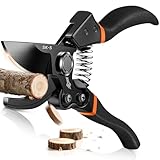
- LONG-LASTING SHARPNESS: Japanese SK5 bypass blade with titanium coating is tested through 5,000 cuts to maintain a sharp edge and deliver clean, consistent cuts on live stems and branches
- BUILT FOR 5X DURABILITY: Heavy-duty 3-layer titanium-coated SK5 blade resists wear and corrosion, while anodized aluminum handles and high-hardness screws reinforce the pruner. Repeated cutting tests show up to 5X the durability of standard pruners
- POWERFUL 4X LEVER CUTTING: The optimized lever-action design multiplies cutting force up to 4X, making thicker branches easier to prune with less hand effort. Cuts branches up to 3/4" with smooth, controlled power for everyday garden pruning
- ARTHRITIS & SENIORS FRIENDLY: Ergonomic non-slip rubber handles cushion pressure and provide a secure, comfortable grip, helping reduce hand and wrist fatigue. A comfortable hand pruner for seniors, arthritis and longer pruning sessions
- ONE-HAND SAFETY LOCK: The easy-access safety lock opens and closes with one hand for faster trimming, then securely holds the blades closed for safer carrying and storage
Spring and summer follow-up
Dormant pruning establishes the approximate crop load and the number of potential shoots, but it does not finish canopy management. Once shoots begin growing, inspect the vine again.
When shoots reach approximately six inches, thin excess shoots where appropriate so that one primary shoot remains at a node rather than allowing several crowded shoots to develop. This early thinning is particularly useful on vigorous or dense vines and is easiest while shoots are young and tender.
Recommended Free Tools
Later follow-up may include fruit thinning and canopy management. The aim is an open canopy with adequate light and air movement, not a leafless vine exposed to excessive sun. Summer work refines the structure created by dormant pruning; it does not replace the annual removal of excess dormant wood.
Common grape-pruning mistakes
- Only trimming the tips: This leaves too much old wood and too many growing points.
- Pruning by the calendar alone: Budbreak, winter injury, frost risk, cultivar, and local climate all affect timing.
- Using spur pruning automatically: Basal-bud fruitfulness varies among grape varieties.
- Confusing canes with cordons: One-year-old canes are replaceable fruiting wood; cordons are semi-permanent framework in a spur-trained system.
- Ignoring the trellis: The pruning method must match the support and the direction in which wood can be trained.
- Keeping dead or diseased wood: It occupies productive space and may preserve disease problems.
- Maximizing fruit on young vines: Early structure and root establishment normally matter more than an initial harvest.
- Using universal bud counts: Published numbers are tied to particular cultivars, systems, and growing conditions.
- Knocking off buds while tying: Position selected canes carefully, preferably before bud swell.
A practical decision guide
| What you see | Likely approach |
|---|---|
| Established cordon with well-spaced, fruitful basal buds | Spur pruning may be appropriate; confirm the cultivar’s recommendation. |
| Variety with poor basal-bud fruitfulness | Cane pruning is often safer because longer canes retain more fruitful buds. |
| Young vine with a thin trunk or incomplete trellis | Prune for trunk and framework development, not a full crop. |
| Overgrown vine with healthy but tangled wood | Renovate toward a simple framework, possibly over more than one season. |
| Dead or visibly diseased sections | Remove and discard affected wood; seek local diagnosis if the disease or structural damage is extensive. |
| Very vigorous vine with dense shoots | Use a disciplined dormant bud load followed by early shoot thinning. |
Use local recommendations for the final numbers
The central principles are consistent across university extension guidance: grapes fruit on current-season shoots from selected one-year-old wood, established vines benefit from substantial annual pruning, and canopy density must be controlled. The details are not universal. Before making a major change, verify the dormant-season window, pruning system, bud count, and cultivar response with your state extension service or a reliable cultivar guide.
Take particular care if you grow muscadines, cold-climate grapes, frost-sensitive varieties, or commercial wine grapes. Their training systems and pruning recommendations can differ materially from the home-garden bunch-grape examples described here.
Frequently Asked Questions
Can I prune a grapevine in the fall?
Fall pruning is generally less desirable where winter injury is a concern. In most regions, wait until the vine is dormant, the worst cold has passed, and budbreak has not yet begun. The exact window depends on climate and cultivar.
Best Value
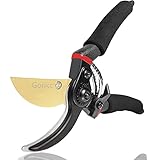
- Drop-forged construction delivers exceptional durability and sturdiness for long-term heavy garden use.
- Premium SK-5 steel blade with titanium coating and ultra-fine polishing ensures sharpness, rust resistance, and smooth cutting.
- Ergonomic non-slip aluminum handles wrapped with PVC offer lightweight strength, comfort, and reduced hand fatigue.
- Built-in sap groove effectively channels away sap to prevent sticking and keep blades clean during pruning.
- Capable of cutting branches up to 3/4 inch in diameter, ideal for live plants, stems, and light woody pruning tasks.
How much of a grapevine should I cut off?
An established vine may have roughly 80–90% of the previous season’s growth removed during dormant pruning. That does not mean cutting the permanent trunk or cordons indiscriminately; retain selected one-year-old canes or spurs according to the training system.
Why does my heavily pruned grapevine produce more fruit?
Grapes form on current-season shoots emerging from selected buds on one-year-old wood. Heavy annual pruning limits overcrowding, shade, and excessive crop load, helping the remaining shoots develop better airflow, light exposure, ripening, and fruit quality.
What is the difference between cane pruning and spur pruning?
Cane pruning removes old fruiting canes and retains a few new long canes plus renewal spurs. Spur pruning keeps permanent cordons and shortens selected one-year-old shoots to short spurs. The cultivar’s basal-bud fruitfulness helps determine which method is suitable.
Should I let a young grapevine fruit?
Usually, establishment comes first. Remove early clusters when necessary to direct resources toward a strong trunk, roots, cordons, and reserves. A young vine should not be managed like a mature vine simply to obtain an early harvest.
What’s actually slowing this PC down?
Pick the symptom - the matching free tool is one click away.
The Bottom Line
For the best harvest, prune grapevines decisively while they are dormant: remove dead and diseased wood, identify the permanent framework, retain only well-placed one-year-old canes or suitable spurs, preserve renewal wood, and adjust bud numbers to the cultivar and vine vigor. Then thin crowded shoots in spring. If you are unsure whether the vine is cane- or spur-trained, or if it is neglected or diseased, identify the structure and obtain local guidance before making major cuts.
Quick Recap
Product prices and availability are accurate as of the date/time indicated and are subject to change. Any price and availability information displayed on Amazon at the time of purchase will apply.

