Protect a tropical home in this order: keep rainwater away from the structure, stop leaks and persistent dampness, hold indoor relative humidity at 50% or lower, dry any water intrusion within 24–48 hours, and exclude mosquitoes with sound screens and weekly removal of standing water. The correct roof, foundation, drainage, ventilation, and materials depend on local rainfall, wind, soil, flood exposure, building codes, power reliability, and mosquito species, so use this sequence as a prevention framework rather than a universal construction specification.
Why tropical homes need a moisture-first plan
Warm air can hold substantial moisture, while intense rain can overwhelm a blocked gutter or a low point beside a foundation in minutes. Once water remains in wood, drywall, carpet, insulation, or furnishings, mold can grow. Open doors, torn screens, roof cavities, and containers left outdoors then provide routes or breeding places for mosquitoes. Treating only the visible symptom—running a fan, spraying an insecticide, or repainting a stained wall—leaves the source in place.
As an Amazon Associate I earn from qualifying purchases.
The most reliable sequence is preventive and physical: move bulk water away outside; repair the entry point; reduce indoor moisture; dry wet materials safely; then close insect entry routes and remove water in which mosquitoes can reproduce. U.S. Environmental Protection Agency (EPA), U.S. Centers for Disease Control and Prevention (CDC), and World Health Organization (WHO) guidance supports that order. Their recommendations are not a substitute for a local engineer, building official, flood specialist, or pest professional where site hazards are unusual.
The Tool Desk
Outbyte Driver Updater FREEFix the driver behind crashes, sound loss and screen glitchesFind Drivers →Outbyte PC Repair FREERepair Windows errors before they cause bigger problemsFix Now →Keep heavy rain away from the building
Maintain the roof drainage path
Inspect roof coverings, flashing, valleys, penetrations, gutters, and downspouts before the wet season and after major storms. A small roof leak can wet concealed framing long before a ceiling stain appears. Clear leaves and sediment, look for separated joints or rust holes, and confirm that water actually exits at the bottom of each downspout instead of spilling against a wall.
#1 Best Overall

- 🪟【Perfect 6 in 1 screen repair kit】 Our window screen kit is more comprehensive and professional than other kits in the market. One kit is enough for you to easily install a screen window. HOOK - can remove old spline. Spline - can put in screen. CLIPS - can Fix Screen. Bearing ROLLER - can be convex to press, concave to roll it. Fiberglass SCREEN MESH + Professional Tools. Installation can be completed in just a few steps, easily DIY. Just buy once, in one step, a must at home.
- 🪟【Effective screen and visibility】 ① The length of 48 "× 118 "is enough for multiple uses, free to DIY. Suitable for all kinds of windows or doors at home. ②Standard mesh 18 X 16 weave, keeps mosquitoes、insects from entering buildings. ③ Carbon black color ensures light transmission while protecting privacy. ④ Fiberglass, edge won't be scattered after cutting, ⑤ flame retardant, stop burning in 5s to ensure your safety. ⑥ The attached dust can be washed off with water. ⑦ Material is durable, so you don't have to worry about pets scratching the screen window at home.
- 🪟【2pcs Screen Bearing Roller ] Our kit includes steel roller and nylon roller. Most of the screen rollers on the market are simple, but ours are made of a bearing structure, which is stronger, smoother, and has a longer service life.Metal roller -Recommended to install metal mesh. Nylon roller-Recommended to install fiberglass mesh, The screen rolling tool has a double side, convex wheel, and concave wheel. Two kinds of rollers can meet a wider range of needs.
- 🪟【Sufficient Screen Spline&Clip】𝐕𝐈𝐍𝐘𝐋 𝐒𝐏𝐋𝐈𝐍𝐄 -50 ft length can install more screens. This spline has high tensile strength and will not break. The hollow design is easy to press into the groove but also provides enough pressure to secure the screen. Diameter: 0.14 in fits most 0.12~0.16 in wide window and door screen frame grooves. 𝐒𝐂𝐑𝐄𝐄𝐍 𝐇𝐎𝐋𝐃𝐄𝐑 𝐂𝐋𝐈𝐏𝐒- 8 pcs are enough to fix a window and can be used repeatedly. Made of manganese steel and nickel-plated materials, hard and durable, with nice flexibility and smooth touch, keeping the screen fixed firmly.𝐑𝐄𝐌𝐎𝐕𝐀𝐋 𝐇𝐎𝐎𝐊 -Sharp, the aged spline can be hooked out by a screen hook.
- 🪟【Widely used & repeatedly used】Window Screens can be used many times, suitable for window screens, sliding screen doors, terrace screens, RV screens, and even aquarium parachute stands, etc., and apply to patio screens, garden screens, pool screens, porch screen, sliding door, entry door, storm door, patio door, etc. All the screen window tools are of high quality,and can be reused to help you install various windows in your home!
EPA’s concise heavy-rain instruction is: “Keep gutters and down spouts free of debris and leaks. Direct downspouts away from the house.” Use the agency’s wording as the basic test: water should leave the roof through an intact, unobstructed route and discharge far enough away that it cannot immediately soak the foundation or crawl space. The distance and discharge method must fit the lot, soil, neighboring properties, and local rules; do not assume one outlet detail works on every tropical site.
Correct ground that holds water beside walls
Walk the perimeter during or immediately after a storm. Puddles touching the foundation, wet soil that stays saturated, or water flowing toward doors indicates a grading or drainage problem. Regrading can send surface runoff away, while an underground drain may be appropriate where the site cannot be reshaped. Such work can affect retaining walls, septic systems, utilities, and adjacent lots, so have a qualified local contractor or civil professional establish the safe solution.
Protect foundations, crawl spaces, and openings
Keep soil, mulch, and stored materials from bridging the wall or covering vents. Check foundation joints, service penetrations, window wells, door thresholds, and crawl-space access panels for paths that admit wind-driven rain. A crawl space needs a deliberate drainage and ventilation approach suited to the local code and flood level; simply sealing or opening it without diagnosing the water source can trap moisture or allow contaminated floodwater inside.
Recommended Free Tools
Use construction guidance without inventing a universal tropical design
For new work or a major renovation, EPA’s Moisture Control Guidance for Building Design, Construction and Maintenance addresses site drainage, foundations, walls, roof and ceiling assemblies, plumbing, HVAC, and verification. It is broad professional guidance, not a prescription for a single roof pitch, foundation height, wall assembly, or ventilation rate. A local designer must reconcile those moisture-control principles with wind loads, flood maps, corrosion exposure, termites, materials available in the region, and the adopted building code.
Find and remove the source of indoor moisture
Use a hygrometer to see the pattern
CDC recommends keeping indoor humidity no higher than 50% all day to help prevent mold. A hygrometer can show whether humidity rises overnight, after cooking and bathing, during rain, or when an air conditioner cycles off. It measures conditions; it does not remove water or repair a leak. Place it in occupied rooms rather than directly beside a supply vent, stove, shower, or dehumidifier so the reading represents the space people use.
Rank #2

- Easy and Fast: Cut a suitable size or shape of the screen repair tape, then cover the tear or hole you want to repair. No tools needed and only seconds you're done! Fast and easy way to repair screens temporarily or permanent
- Ultra Strong Adhesive: This screen door repair kit was made of fiberglass and specialized glue, it is durable and will stick to any screen surface. Clean the contact part before use to make sure the screen patchs stay on the surface of your window screen and screen door for a longer time
- Wide Application: The window screen repair kit can be used both indoor and outdoor,it is waterproof and can be used normally between -4°F-158°F. It can be applied to fix tears and holes in window screens, screen door mesh repair, tent, pool screens and other mesh screen repair
- Extra long and Save money: The size of the screen repair tape is 2 IN X 30 FT, you can use more of them to repair a larger hole. No need to spend a lot to replace the entire screen mesh then
- Note: This window screen tape is NOT invisible and ventilated. Remember to peel off the release liner and attach the correct side to the tears and holes or it will not very sticky
Repair leaks before adding equipment
Trace stains, peeling paint, swollen trim, musty odors, and recurring damp spots to their source. Inspect roof and wall leaks, plumbing joints, bathroom fittings, condensate drains, appliance hoses, and the area around windows. CDC identifies leaks in roofs, windows, and pipes, as well as flooding, as common places where mold can grow. Drying the surface while leaving a failed flashing detail or pipe connection guarantees a return visit from the moisture.
Control moisture generated indoors
- Run kitchen and bathroom exhaust fans that vent outdoors, not into a ceiling void or attic.
- Vent clothes dryers outdoors and keep the duct short, intact, and free of lint restrictions.
- Use air conditioning or a dehumidifier when they can safely lower humidity; clean filters, coils, and condensate paths according to the equipment instructions.
- Keep air moving between rooms so humid pockets do not remain behind furniture or inside closets, while avoiding airflow that spreads contaminated dust during cleanup.
- Dry wet towels, laundry, and bath mats promptly rather than allowing them to raise humidity in a closed room.
Equipment supports source control. A dehumidifier cannot compensate for rain entering a wall, a blocked condensate drain, or groundwater rising through a slab. In a power interruption, prioritize fixing the entry path and increasing safe cross-ventilation when outdoor air is drier; never use combustion equipment indoors.
Understand mold risk and clean it safely
What persistent dampness means for occupants
WHO’s 2009 Guidelines for Indoor Air Quality: Dampness and Mould identify prevention or minimization of persistent dampness and microbial growth on interior surfaces and within building structures as the most important way to avoid adverse health effects. CDC notes that damp or moldy environments may cause a stuffy nose, sore throat, cough, wheeze, burning eyes, or rash in some people. People with asthma, allergies, chronic lung disease, or impaired immunity can face greater concern; exposure does not make every occupant ill.
In its summary of the Institute of Medicine’s 2004 findings, CDC reports sufficient evidence linking indoor mold exposure with upper-respiratory symptoms, cough, and wheeze in otherwise healthy people; asthma symptoms among people with asthma; and hypersensitivity pneumonitis in susceptible people. These are population-level evidence statements, not a prediction about an individual household.
Remove visible or smelled mold while fixing moisture
CDC advises removing mold that is visible or smelled and correcting the moisture problem. It does not recommend routine home mold testing; a test result cannot replace finding and stopping the water. For small areas on hard, cleanable surfaces, use household products or soap and water. CDC also lists a bleach solution of no more than 1 cup of household laundry bleach in 1 gallon of water. Never mix bleach with ammonia or any other cleaner, follow the product label, and provide fresh air.
Rank #3
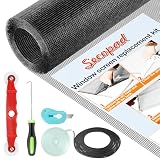
- Extra Large Screen Mesh: The window screen mesh is sufficient to replace multiple standard-sized windows. Made of durable fiberglass material, it can be easily cut and is wear-resistant, allowing you to DIY as desired
- Easy To Install: Secopad window screen repair kit includes necessary tools and accessories: screen spline, screen roller, removal hook, screen cutter and ruler. These make it easier and faster to replace while helping you save money and time
- Pet and Kids Friendly: Window screen replacement helps to ventilation and protect your kids and pets at the same time. The screen material is waterproof, you can ventilate the room whenever you want, rain or shine outside
- Long service life: The service time of the window screen door repair kit is at least 5 years. This screen for windows is well-lighted and can be used for kinds of screen windows, sliding screen doors, patio screen mesh, porch screen and so on
- Additional Note: The window screen kit is FOLDED in the package, don't worry if there are some creases, it will disappear after installation
Porous materials such as saturated drywall, carpet, ceiling tile, upholstered furniture, and some insulation may not be restorable once moldy or flood-contaminated. Do not spread spores by dry-scraping or using a fan that blows across the affected area. Wear appropriate protective equipment, isolate the work area where practical, and obtain professional advice when the affected area is extensive, sewage-contaminated, inside HVAC components, or beyond the household’s ability to clean safely.
Quick wins for a faster PC:
Repair Windows errors before they cause bigger problemsFix Now →Fix the driver behind crashes, sound loss and screen glitchesFind Drivers →Respond to a leak or flood in the first 48 hours
Make the area safe before entering
Floodwater can carry sewage, chemicals, sharp debris, and electrical hazards. Turn off power only from a dry, safe location and have a qualified electrician assess circuits or outlets that were wet. Leave if the structure appears unstable. Do not use gasoline-powered pumps, generators, or engines indoors or within 20 feet of doors, windows, or vents; CDC gives that minimum separation to prevent deadly carbon-monoxide accumulation.
Remove water and wet materials quickly
CDC advises drying a flooded home fully and quickly, targeting 24–48 hours when conditions are safe, to reduce mold growth. Remove standing water with a suitable pump or wet-dry vacuum, then take out saturated porous materials that cannot be cleaned. Photograph damage for records before disposal when doing so does not delay drying.
Dry toward the outdoors
- Open windows and doors when outdoor weather is dry enough and security and air quality permit.
- Place fans so they blow air outward through an opening, rather than driving contaminated air deeper into the home.
- Run dehumidifiers in closed areas while monitoring heat, condensate, and electrical safety.
- Open cabinets, remove drawers, and separate wet contents so air reaches hidden surfaces.
- Measure moisture in suspect materials or have a professional verify that walls, floors, and framing are dry before closing them or reinstalling finishes.
Keep contaminated HVAC equipment off
Do not switch on a furnace, air conditioner, or air-handling system that was flooded or contaminated. CDC advises having an experienced service professional check and clean a flooded HVAC system before reuse; ductwork, insulation, electrical controls, and condensate pans may all need attention. A portable fan or dehumidifier that was submerged also requires evaluation before energizing.
Stop the next entry
After immediate drying, correct the route that brought water in: restore roof and gutter discharge, reshape ground that slopes toward the building, and address crawl-space drainage and ventilation. Cleaning without this step only resets the clock until the next storm.
Do these 3 things before closing this tab:
1Scan for outdated or missing drivers - takes under a minute2Repair Windows errors before they cause bigger problems3Fix the driver behind crashes, sound loss and screen glitchesRank #4

- Easy and Fast: Cut a suitable size or shape of the screen repair tape, then cover the tear or hole you want to repair. No tools needed and only seconds you're done! Fast and easy way to repair screens temporarily or permanent
- Ultra Strong Adhesive: This screen door repair kit was made of fiberglass and specialized glue, it is durable and will stick to any screen surface. Clean the contact part before use to make sure the screen patchs stay on the surface of your window screen and screen door for a longer time
- Wide Application: The window screen repair kit can be used both indoor and outdoor,it is waterproof and can be used normally between -4°F-158°F. It can be applied to fix tears and holes in window screens, screen door mesh repair, tent, pool screens and other mesh screen repair
- Multiple Sizes and Save money: There are 3 sizes includeded, you can choose or cut a suitable size and shape of the screen repair tape. No need to spend a lot to replace the entire screen mesh then
- Note: This window screen tape is NOT invisible and ventilated. Remember to peel off the release liner and attach the correct side to the tears and holes or it will not very sticky
Keep mosquitoes outside and eliminate breeding water
Build a continuous screen-and-door barrier
Install intact window and door screens, repair tears promptly, and keep doors closed rather than propped open. A window screen repair kit can patch a small tear in an existing screen, but it is a maintenance aid—not proof that every screen type or frame is properly installed. Replace badly bowed frames, failed seals, or mesh with gaps that allow insects through. Use air conditioning when possible to reduce the need for open windows.
Apply the weekly water-container routine
Once a week, empty and scrub, turn over, cover, or discard anything outdoors that holds water. CDC specifically includes buckets, tires, planters, toys, small pools, birdbaths, and saucers. Scrubbing matters because eggs can adhere to container surfaces after water is poured out. Arrange items so rain cannot collect again between inspections.
Secure stored water
Tightly cover cisterns, rain barrels, and other storage containers. Where a lid cannot be used, CDC says wire mesh with holes smaller than an adult mosquito can cover the opening. Check the edge for gaps and keep overflow lines from creating a puddle beside the container.
Use chemicals only after physical control
If mosquitoes remain indoors after screens are repaired and breeding sites are removed, CDC says an indoor insecticide or pest-control professional may be considered. Follow the product label and local public-health directions exactly, including re-entry and ventilation instructions. Indoor insecticide alone will not keep a home mosquito-free, and nuisance mosquitoes after a storm are not automatically evidence that they carry disease. Local vector species and disease risks determine additional measures.
Free tools Windows power users keep installed
One-click scans. No signup required.
Choose the response by water source, urgency, and scale
| What you observe | Most likely first priority | Who may need to help |
|---|---|---|
| Gutters overflow, downspouts discharge at the wall, or rain pools beside the foundation | Clear and repair roof drainage; redirect discharge and correct site grading or engineered drainage. | Roofing, drainage, or civil professional when the outlet, soil, neighboring property, or retaining structures are involved. |
| A localized stain, musty odor, or damp patch that returns after drying | Trace and repair the roof, wall, window, plumbing, or HVAC-condensate leak before relying on a dehumidifier. | Qualified building contractor, plumber, roofer, or HVAC technician according to the source. |
| Indoor humidity remains above 50% even without a visible leak | Improve outdoor-vented exhaust, dryer venting, air circulation, air-conditioning operation, or dehumidification; verify condensate drainage. | HVAC professional if equipment cannot hold the target or repeatedly leaks. |
| Floodwater, sewage, or widespread wet materials are present | Protect people, isolate electricity, remove water, and begin safe drying toward the 24–48-hour target. | Remediation, electrical, structural, or public-health professionals; contaminated or extensive damage is not a routine cleaning job. |
| Mosquitoes enter despite closed doors and cleaned yard items | Find screen, door, roof, or service-entry gaps and recheck hidden water containers, gutters, drains, and stored-water lids. | Pest professional or local vector-control authority for persistent or regionally significant activity. |
This framework separates the water source from the equipment used to manage it. Drainage and leak repair address bulk water; ventilation, air conditioning, and dehumidification manage indoor moisture; screens and container management address mosquitoes. Climate, construction type, code requirements, power reliability, and local pest ecology determine the final design.
Best Value

- Easy and Fast: Cut a suitable size or shape of the screen repair tape, then cover the tear or hole you want to repair. No tools needed and only seconds you're done! Fast and easy way to repair screens temporarily or permanent
- Ultra Strong Adhesive: This screen door repair kit was made of fiberglass and specialized glue, it is durable and will stick to any screen surface. Clean the contact part before use to make sure the screen patchs stay on the surface of your window screen and screen door for a longer time
- Wide Application: The window screen repair kit can be used both indoor and outdoor,it is waterproof and can be used normally between -4°F-158°F. It can be applied to fix tears and holes in window screens, screen door mesh repair, tent, pool screens and other mesh screen repair
- Extra long and Save money: The size of the screen repair tape is 2IN X 15FT, you can use more of them to repair a larger hole. No need to spend a lot to replace the entire screen mesh then
- Note: This window screen tape is NOT invisible and ventilated. Remember to peel off the release liner and attach the correct side to the tears and holes or it will not very sticky
Set up a maintenance cycle that catches failures early
Before the wet season
- Inspect roof coverings, flashing, gutters, downspouts, window seals, door thresholds, and visible foundation penetrations.
- Confirm that surface water has a route away from the house and that crawl-space or under-floor drainage is not blocked.
- Test exhaust fans, air-conditioning condensate drains, dehumidifiers, and dryer venting.
- Check every screen, door closer, and water-storage cover; stock compatible screen-repair materials.
- Place a hygrometer in a representative living area and record a baseline reading.
After major rain
- Look for new ceiling or wall staining, ponding, overflowing gutters, wet crawl spaces, and water around electrical equipment.
- Empty roof drains and outdoor containers before mosquito larvae develop.
- Investigate any odor or dampness that remains after surfaces appear dry.
Every week during mosquito season
Perform the empty-and-scrub, turn-over, cover, or discard routine for water-holding items. Include places that are easy to overlook, such as saucers beneath planters, toys under vegetation, tarps, clogged drains, and the folds of pool covers.
After any indoor water entry
Start the safety assessment and drying process immediately, document what became wet, and keep flood-contaminated HVAC equipment off until professionally cleared. Do not close walls, replace flooring, or repaint merely because the surface looks dry; hidden moisture can remain in assemblies.
Know when local expertise is essential
Get a qualified local assessment when water repeatedly enters despite basic maintenance, the lot floods or sits below surrounding grades, a retaining wall or foundation moves, a crawl space remains wet, or a renovation changes roof, wall, foundation, or drainage loads. Local officials and engineers can account for wind exposure, rainfall intensity, flood elevation, soil, corrosion, termites, materials, and code requirements that general health guidance cannot specify.
Use a remediation or environmental professional for extensive mold, sewage or chemical contamination, hidden wall or ceiling moisture, occupants with serious respiratory vulnerability, or HVAC contamination. Use a licensed electrician when floodwater reaches wiring, outlets, panels, generators, or appliances. For persistent mosquitoes, a pest professional or public-health agency can identify breeding sites and locally appropriate controls without assuming that every species presents the same disease risk.
A practical order of operations
- During the next dry period, trace every route by which rain, groundwater, plumbing water, or condensation can reach the structure.
- Clear and repair gutters and downspouts, establish a safe discharge route, and correct ground that directs water toward walls.
- Repair roof, window, wall, plumbing, and HVAC leaks; then verify that wet assemblies actually dry.
- Measure indoor humidity and keep it at or below 50% with outdoor-vented exhaust, air conditioning, or dehumidification while the source is being corrected.
- After a flood or major leak, make the area electrically and structurally safe, remove water, and dry it fully within 24–48 hours when conditions allow.
- Keep flooded HVAC systems and questionable electrical equipment out of service until qualified professionals inspect them.
- Repair screens, close doors, cover stored water, and perform the weekly container routine before considering insecticide.
This sequence reduces the three conditions that make tropical homes difficult to protect: uncontrolled bulk water, persistent indoor dampness, and easy insect access. Its implementation must still be adapted to the site and local requirements.
Quick Recap
Product prices and availability are accurate as of the date/time indicated and are subject to change. Any price and availability information displayed on Amazon at the time of purchase will apply.

