Recommended Free Tools
The most reliable way to prevent rot in a timber store is to control moisture before it reaches the wood, then make sure any timber that does get wet can dry. Keep the roof and rainwater goods sound, move runoff away from the walls and base, preserve soil and siding clearances, ventilate enclosed spaces, and never cover wet or suspect timber. Use naturally durable or preservative-treated wood where exposure cannot be removed, and use pressure-treated material when ground contact is unavoidable. Treatment is a second line of defence—not a substitute for fixing a leak, blocked gutter or drainage defect.
Why moisture control determines whether a timber store lasts
Wood decay fungi need moisture, oxygen and a suitable temperature. In a store building, the moisture usually arrives through a small number of repeatable routes: roof leaks, failed roof-to-wall junctions, overflowing gutters, wind-driven rain, splashback, damp ground, condensation, plumbing leaks or timber buried against soil. Once wood stays wet, decay can progress inside a joint or wall even when the exposed face looks acceptable.
As an Amazon Associate I earn from qualifying purchases.
The USDA Forest Products Laboratory identifies two connected principles: start with sound, dry lumber, and use details that shed water and promote drying. That means prevention is not a single coating. It is a building-wide drainage and ventilation strategy that keeps water out, limits the time wood remains wet, and leaves inspection access so a defect can be found early.
Do these 3 things before closing this tab:
1Clear out junk files and repair common Windows errors2Fix the driver behind crashes, sound loss and screen glitches3Repair Windows errors before they cause bigger problemsA preservative can improve the durability of a suitable piece of wood, but it cannot stop water entering through a failed roof or remove moisture trapped behind an impervious repair. If a store already has decay, correct the moisture condition first and then assess the remaining timber and the loads it carries.
#1 Best Overall
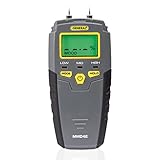
- HUMIDITY SENSOR: Our handy meter tool can quickly determine what level of remediation is needed to keep your family safe from black mold. High levels of dampness that go untreated are the leading cause of harmful fungus growth in the home.
- WATER LEAK DETECTOR: Finding the moisture content in your wood or drywall is the first step in early prevention. Continuously check and test suspicious water stains around the house so you can determine whether the area is wet or has already dried. Low, medium and high moisture tones and on-screen icons, Reading HOLD button
- MOISTURE READER: The mold test features large 0.3" high digits in a backlit LCD for quick and easy detecting. Our mildew scanner includes extra 8mm stainless steel pins, a protective cap that doubles as a calibration checker, and a “9V” battery.
- MOLD TESTER: For an accurate test read, stick the stainless steel pins into the surface of what you're measuring. The gauge has a broad range of 5 - 50% for wood and 1.5 - 33% for building materials such as concrete and drywall.
- GENERAL TOOLS: We're a recognized leader in designing and developing specialized precision tools dedicated to delivering exceptional customer service. We encourage artisans and DIYers to work smarter, measure better, and repair more productively.
Find every moisture source before making repairs
Begin with an inspection on a wet day if possible, followed by a second inspection after the building has had time to dry. Trace water from its highest entry point to the lowest damp mark; the wettest visible area is not always directly below the leak.
Use a top-to-bottom inspection route
- Roof covering and penetrations: Look for slipped, cracked or corroded roofing, open fasteners, damaged flashings, failed sealant and holes around vents, flues or services.
- Roof-to-wall junctions: Check abutments, verges, eaves and corners for staining, open joints and wind-driven rain paths. Pay particular attention to the wall on the prevailing-weather side.
- Gutters and downpipes: Check for sags, splits, blocked outlets, loose joints and discharge that lands beside the building. Overflow marks on fascia or wall boards show where water has been travelling.
- Walls, openings and base: Inspect cladding joints, door thresholds, window sills, vents and the lowest boards for swelling, soft fibres, staining or insect activity.
- Ground and drainage: Look for soil piled against timber, standing water, blocked channels, leaking taps, downpipe pools, dense vegetation and wood debris holding damp against the base.
- Interior and stored contents: Check corners, the underside of the roof, behind shelving and around any plumbing. Condensation can wet a cold wall even when the roof is sound.
U.S. Environmental Protection Agency moisture-control guidance treats drainage, foundations, walls, roofs and plumbing as connected systems. A repair that deals only with the visible stain can leave the actual pathway untouched.
Separate surface damage from structural risk
Discolouration, mould-like growth and a musty smell indicate a moisture problem, but they do not by themselves show how much strength has been lost. Probe accessible timber carefully with a screwdriver or awl, look for crushed fibres and check joints, posts, beams and sole plates that carry loads. Do not assume a sound-looking surface means the core is sound, and do not cut or jack a structural member without competent assessment.
What’s actually slowing this PC down?
Pick the symptom - the matching free tool is one click away.
Stop rain reaching the timber
Keep the roof watertight
Repair the roof before replacing decayed wall or floor timber. Replace failed coverings and flashings, renew open fixings with compatible materials, and close service penetrations with a durable detail rather than a smear of sealant. A roof that is merely patched from inside can continue wetting insulation, rafters and wall heads.
Roof overhang has a major effect on wall wetting. USDA Forest Products Laboratory guidance describes an overhang of about 0.6 m (2 ft) as desirable in relevant conditions; an earlier Forest Products Laboratory report recommends at least 2 ft for a one-storey building in areas of substantial rainfall. These are technical recommendations, not universal code requirements. Wind exposure, rainfall, roof pitch, building orientation and local rules may require a different detail.
Rank #2

- 🌲【Accurate and fast measurements reveal hidden water leaks】: It has 2 high-precision pins that can penetrate the surface to be tested and quickly measure moisture content to estimate potential moisture increase throughout the home. COCZOW moisture meter is the ideal tool for measuring moisture.
- 🌲【Professional Wood Moisture Meter】: 6 calibrated scales. Our moisture meter is a great tool for manufacturers, floorers, inspectors and wood suppliers to quickly and easily measure moisture content (% Mc). You can quickly determine if the moisture content is low (5-12%), medium (12-17%) or high (17-60%). Checking moisture content prevents wood from cracking and warping.
- 🌲【Widely Used】: PM6811A moisture meter is ideal for carpentry, building construction, agricultural restoration and floor laying. Measure moisture content of wood products such as hardwood floors, cabinets, furniture, lumber, lath, beams, plywood, panels, composite boards, window frames, forestry wood, coils, building materials, etc.
- 🌲【User-friendly】: With LCD backlight, the backlight color is divided into three types of green, yellow and red, or display the moisture content of different measurement types. Hold function, maximum/minimum moisture measurement function and 5-minute automatic shutdown function (no power supply required).
- 🌲【Why choose COCZOW Wood Moisture Meter】: LED display function, large measuring range (wood: 2.0%-75.0%. Building materials: 1.5-30%), durable stainless steel needle, heat insulation, light weight and easy to carry. Get professional and accurate results with Peakmeter Wood Moisture Tester.
Make gutters and downpipes part of the protection system
Fit and maintain gutters where roof runoff would otherwise strike walls or splash at the base. Keep outlets and downpipes clear of leaves and sediment, repair leaking joints and secure loose brackets. Discharge water far enough from the building, or into a suitable drainage arrangement, that it cannot pond beside the foundation. The correct outlet depends on the site: avoid directing water toward a neighbour, a slope that can erode, or a retaining structure.
Inspect gutters after autumn leaf fall and after severe weather. A gutter that overflows only during heavy rain can still repeatedly wet the same end grain and wall joint, so do not judge it solely on a dry-day visit.
Limit splash and wind-driven wetting
Roof drip lines, hard paving and bare soil can bounce water onto siding. Maintain a clean strip around the building, use a ground surface that drains away, and avoid storing boards, bins or firewood against the wall. Where the site is exposed, an overhang, properly detailed flashing and a rain-screen or ventilated cladding arrangement can provide additional drying space, subject to the construction system and local requirements.
Keep the base above soil and standing water
Untreated framing and siding should not sit where soil can remain wet against them. USDA Forest Products Laboratory guidance gives general minimum clearances of 200 mm (8 in.) between soil and framing and 150 mm (6 in.) between soil and siding. In locations with frequent hard rains, it describes a foundation height of roughly 300 to 460 mm (12 to 18 in.) above grade. Treat these as technical recommendations for the stated conditions, not as universal code requirements; check your local rules and the actual foundation design.
Improve the ground around the store
- Remove soil, mulch, leaves and timber offcuts that bridge the clearance.
- Trim plants so foliage cannot stay against the siding or block air movement and inspection.
- Maintain a visible, drainable margin around the building. Regrade or add a suitable drainage layer where water flows toward the walls.
- Keep downpipe outlets, hose connections and irrigation lines away from the foundation, and repair leaks promptly.
- Do not bury the bottom of cladding to hide a gap; raise, trim or replace it with a detail designed for ground exposure.
Clearance also gives you a chance to see an early leak. If a skirt, planter or stored material conceals the base, a small defect can remain wet for months.
Rank #3

- ✅【Accurate & Trusted Measures, Identify Moisture Level】With accurate & trusted performance, Mecurate moisture meter can detect moisture content from wood to building material. A reliable must-have tool for home owners, woodworkers, painters & architects to detect moisture level and spot hidden damage, which would save potential expensive repairs.
- ✅【2 Mode 8 Scale,Guaranteed Accuracy】With 0.1% resolution, the moisture meter has 2 mode : wood and building material. Wood mode has 8 calibrated scales for different wood types with full list on manual. Integrated with "Self-Testing" Aid on protective cap, users can calibrate the tool before use.
- ✅【3 Colored Indicators, Fast Spot Problem】Integrated with 3 colored indicators, together with intuitive on-screen icons for low/medium/high moisture content. Fast and accurately identify the dampness.
- ✅【Multi Function Easy Use】Integrated with temperature detection in °C/°F, one button click to know ambient temperature. Hold button to freeze the reading plus low battery icon to remind battery replacement. Comes with a jumbo smart backlit display, gives extended visibility suited to any ambient brightness. Side covered with anti-slip material, provides comfort firm grip.
- ✅【Packed for Convenience】Comes with a water resistant carry pouch. A "Wood Type Quick-Search Index Table" printed on back of the device, help adjust setup quick-and-easy.A full wood list on user manual to help quick identify correct scale.
Preserve ventilation and drying opportunities
Water damage becomes more severe when wet timber is sealed in. Provide planned ventilation to roof voids and under-floor areas where the construction requires it, while screening openings against pests. Keep air paths clear of insulation, stored goods and dust. Do not block low-level vents with soil or vegetation.
Ventilation is not a cure for bulk water. A fan or vent cannot compensate for a roof leak, and moving humid air through a cold store can increase condensation. First stop liquid water, then provide enough air movement for the remaining moisture to leave.
Store contents so the building can dry
Leave a gap between boxes and external walls, keep goods off the floor, and avoid packing the roof space tightly. Damp contents can release moisture into the store; wet firewood, soil-filled pots and unsealed liquids are common sources. Arrange shelving so you can inspect corners, thresholds and the underside of the roof.
Handle and store lumber correctly
Protect replacement boards, studs and beams from rain and ground contact from the moment they arrive. The Forest Products Laboratory advises storing lumber off the ground, under cover where practical, with ventilation that allows wet material to dry. Stack pieces on level bearers, align supports so boards do not sag, and use spacers when a pack needs airflow. Keep the cover weatherproof but open at the sides; wrapping wet timber tightly can trap moisture.
Do not assume a supplier’s description of material as dry means it is dry enough for your assembly. An electrical wood-moisture meter can provide a check before timber is enclosed. Readings vary with species, temperature and the meter, so use the instrument consistently and treat an unexpectedly high or changing reading as a reason to investigate rather than as a precise guarantee of service performance.
Free tools Windows power users keep installed
One-click scans. No signup required.
Rank #4

- FIND HIDDEN WALL MOISTURE EARLY — Check suspicious drywall and building surfaces after a leak, water stain, or other moisture concern. Detect abnormal moisture before a small issue develops into more extensive damage and costly repairs
- CHECK BEFORE YOU REPAIR — Don't rely on a wall looking or feeling dry. Use the moisture meter to check questionable areas before painting, repairing, or covering the surface, helping you make decisions based on actual moisture readings.
- CHECK FIREWOOD BEFORE YOU BURN — Test firewood before placing it in your fireplace or wood stove. Knowing the moisture level of your firewood helps you choose wood that is ready for burning and avoid relying on appearance alone.
- PIN-TYPE TESTING FOR DIRECT MEASUREMENTS — The contact pins penetrate the material to measure moisture inside wood and building materials. This makes it useful for checking areas where surface conditions may not tell the whole story.
- ONE TOOL FOR TWO IMPORTANT HOME CHECKS — Keep it ready for two practical jobs: checking walls for hidden moisture and checking firewood before burning. A simple way to make informed decisions before a moisture problem becomes expensive or wood goes into the fireplace.
Use a pin-type moisture meter before closing repairs
- Choose accessible points in the replacement timber and in adjacent retained wood, including end grain, joints and areas near the suspected leak.
- Insert the pins to a consistent depth without touching fasteners or wiring. Take several readings rather than relying on one spot.
- Compare readings between visibly dry and suspect areas and note the date, location and weather.
- Allow wet timber to dry, improve the moisture source and recheck. A falling reading supports the conclusion that drying is occurring; a persistent or rising reading means the pathway remains.
- Do not use the meter to infer hidden structural capacity. It measures moisture at its pins and cannot locate or repair the leak.
Repair existing rot in the right order
Rot repair should follow the moisture pathway, not precede it. If a roof, gutter, drainage or plumbing defect remains, new timber can decay in the same location.
A practical repair sequence
- Make the area safe. Isolate unstable shelving, roofs or walls and obtain a site-specific structural assessment where posts, beams, trusses, floor joists or connections are weakened.
- Stop the water. Repair the roof and rainwater goods, correct ground levels and deal with condensation or plumbing leaks.
- Expose enough of the assembly. Remove finishes or cladding only as far as needed to inspect the full extent of damp and decay. Avoid closing a cavity while hidden timber is still wet.
- Dry the construction. Use natural airflow and controlled temporary measures appropriate to the building. Protect exposed timber from new rain while it dries.
- Decide what can remain. A competent person should judge whether a member retains adequate section and connections. Surface hardness alone is not a structural test.
- Replace or reinforce with suitable material. Fit sound, dry lumber where the moisture source has been eliminated. If exposure cannot be corrected, select preservative-treated or naturally durable material appropriate to that exposure.
- Restore drainage and inspection access. Rebuild flashings, membranes, cladding joints and ventilation paths so the repair can dry and be checked later.
USDA guidance states that when the source is fully eliminated, weakened wood can be replaced with dry lumber. If the source cannot be corrected, it recommends preservative-treated wood or all-heartwood lumber of a naturally decay-resistant species. That choice does not remove the need for a structural decision about the damaged member.
Independent reader supportYour contribution helps us test, update, and keep practical guides available for everyone.Choose replacement timber for the exposure
There is no single “rot-proof” timber for every part of a store. Compare the actual exposure, the species and its treatability, the treatment process, the ability to inspect and dry the member, and applicable local or environmental requirements.
| Location or condition | Suitable direction | Important qualification |
|---|---|---|
| Interior or protected above-ground timber after the leak is eliminated | Sound, dry lumber suitable for the structural or joinery use | Keep it dry in storage and provide a detail that sheds incidental water. |
| Above-ground timber exposed to weather or recurring dampness | Naturally durable heartwood or preservative-treated wood rated for the exposure | Performance depends on species, preservative, penetration, retention and treatment method. |
| Timber that must touch or be close to soil | Pressure-treated wood intended and labelled for ground contact, or a design that removes the contact | Do not substitute an unspecified coating or temporary water repellent for pressure treatment. |
| Wet, infected or enclosed timber | Dry the assembly and correct the moisture source before closing it | Treatment cannot make a persistently wet detail sound. |
The Forest Products Laboratory’s pressure-treated-wood guidance and its chapter on wood preservatives emphasise that treatment is not interchangeable between products. Chemical type, penetration and retention, wood species and the treatment process all affect performance. Follow the product label, use classification and local requirements; do not infer suitability from the words “treated” or “weather resistant” alone.
Outdated Drivers Are Slowing You Down
One free scan finds every outdated or missing driver and matches the right update for your exact hardware.Free scan · exact hardware matchPC Slower Than It Used to Be?
A free scan shows the junk files, broken settings and background clutter dragging Windows down - then fixes them in one click.Free scan · Windows 10 & 11When naturally durable wood makes sense
Naturally durable heartwood can be appropriate for an above-ground repair where the species is known and the detail limits wetting. Sapwood is generally not equivalent to durable heartwood, and a durable species still fails when water is trapped against it or it is placed in a hazard beyond its intended use.
Best Value

- Quick moisture detection: This moisture tester can detect hidden moisture in wood. The probe reaches a measurement depth of 10mm, leaving only two tiny pinholes on the surface.
- For accurate readings, fully insert the pins into materials. The full-length electrodes detect true moisture content even if the surface is wet while the interior stays dry.
- Large screen, easy to read: MT19C is equipped with a color LCD display screen, which will automatically sound and light an alarm when the humidity measurement range is exceeded. The HOLD key function enables easy capture of readings even in difficult to measure areas.
- Built in flashlight, suitable for dark areas: The wood hygrometer has a built-in flashlight that allows you to accurately measure humidity even in basements, behind walls, or other dark enclosed spaces.
- Replaceable probe: The electrode length of the moisture meter is 12 millimeters, equipped with a pair of spare needles to ensure long-term stable use and reduce usage costs.
When pressure treatment is needed
Use pressure-treated material rated for the intended hazard when ground contact or another persistent exposure cannot be designed out. Verify the use category, preservative, required penetration and retention on the product information. Cutting, drilling or planing treated boards can expose untreated interior wood; follow the treatment provider’s instructions for any field-cut protection and for handling waste.
Detail the vulnerable parts of a timber store
Posts, sole plates and floor edges
These are close to splash and ground moisture. Keep them above the recommended clearance, isolate them from wet masonry where the design calls for it, and ensure the floor edge does not form a water trap. Replace damaged sections only after checking the bearing and connection details.
Door thresholds and openings
Thresholds receive direct rain and traffic damage. Provide a sloped, drained sill, maintain seals without blocking required drainage paths, and keep the external landing from directing water inward. Check the bottom of door jambs and the adjoining sole plate for hidden decay.
Cladding, corners and end grain
Seal or protect end grain according to the cladding system, maintain overlaps and flashings, and avoid joints that face upward. Keep cladding clear of soil and leave the intended ventilation cavity open. Do not rely on paint to bridge a moving or open joint.
Roof voids and ceiling timbers
Look for staining around fasteners, valleys and penetrations, and for condensation on cold surfaces. Maintain designed ventilation and do not compress insulation into eaves paths. A dry roof void still needs periodic inspection after storms.
Maintenance schedule that catches problems early
| Interval | Checks |
|---|---|
| After severe rain or wind | Roof coverings, flashings, gutters, downpipes, splash marks, standing water and any new interior staining. |
| Seasonally | Clear gutters and vents, trim vegetation, remove leaves and wood debris, check soil clearances and inspect door thresholds. |
| Annually | Inspect roof-to-wall junctions, cladding joints, foundation or supports, floor edges and concealed corners; record changes in photographs. |
| Before and after major repairs | Check replacement and retained timber with a consistent pin-type moisture-meter method, allow drying, and document the corrected drainage detail. |
Keep a simple log of the inspection date, weather, defect, action and follow-up reading. A record helps distinguish a one-off spill from a recurring leak and shows whether a repair is actually drying.
Common mistakes and how to correct them
- Painting over staining: Find and stop the water first; otherwise the finish hides a worsening defect.
- Adding a sealant bead to every joint: Sealant cannot replace a flashing, slope or drained overlap and may block a designed outlet.
- Covering wet timber with cladding or insulation: Leave the assembly open until it is thoroughly dry and the source is fixed.
- Putting treated wood on wet soil: Pressure treatment does not make poor drainage acceptable. Raise the timber or redesign the contact.
- Trusting one meter reading: Take a pattern of readings and investigate the cause; a meter does not reveal hidden decay or repair a leak.
- Blocking vents to keep rain out: Use a properly screened, weather-shedding vent detail rather than eliminating drying airflow.
- Replacing only the visibly soft face: Inspect the full member, joints and bearing. Structural capacity may be reduced beyond the damaged surface.
When to call a professional
Obtain a qualified building or structural assessment when decay affects a load-bearing post, beam, truss, floor joist, wall plate or connection; when movement, sagging or cracking is present; when the moisture source is hidden; or when access requires temporary propping. Local building-control, environmental and waste rules may govern structural alterations and treated-wood disposal. A professional can specify a safe sequence and confirm that the replacement, flashing, drainage and ventilation details work together.
Quick Recap
A decision checklist before you close the wall
- Have the roof, flashings, gutters and downpipes been checked and repaired?
- Does runoff discharge away without pooling or splashing onto the base?
- Are soil-to-framing and soil-to-siding clearances preserved, with access for inspection?
- Is the timber demonstrably dry enough for the assembly, based on repeated checks rather than appearance?
- Has the full extent of decay and any structural consequence been assessed?
- Does the replacement wood match the above-ground, weather-exposed or ground-contact hazard?
- Will the completed detail shed water, ventilate where intended and remain inspectable?
- Are the product label, treatment limitations and local requirements understood?
Product prices and availability are accurate as of the date/time indicated and are subject to change. Any price and availability information displayed on Amazon at the time of purchase will apply.

