Recommended Free Tools
Gutter guards do not prevent ice dams: the main cause is heat escaping from the home and warming snow on part of the roof, followed by meltwater refreezing at colder eaves. The durable fix is to reduce that heat loss with careful ceiling air sealing and adequate insulation. Snow removal can be a temporary measure, while eaves membrane helps limit leaks if a dam forms; neither substitutes for addressing heat flow.
How ice dams form—and what icicles tell you
Ice dams form when snow covers a roof and some roof areas stay above freezing while lower areas, often at the eaves, remain below freezing. Snow melts over the warmer area, runs down the roof, and freezes when it reaches the colder section. As ice builds into a ridge, it can hold water behind it. That backed-up water may find openings in roof coverings and reach the attic, walls, or interior.
As an Amazon Associate I earn from qualifying purchases.
The uneven roof temperatures are usually driven by heat escaping from the house, though solar warming can occasionally contribute. Icicles are a sign that melting is happening somewhere on the roof, even if a dam is hidden beneath snow. They are a warning to assess conditions, not proof that a gutter guard is defective.
The important point is that the visible ice at the roof edge is often downstream of the underlying cause. A colder eave can freeze water that melted higher up, and an ice ridge can then hold additional liquid water against the roof covering. A leak may therefore appear inside some distance from the edge or after the dam has been present for a while. The location of a drip alone does not necessarily identify the heat-loss path or the precise roof opening.
#1 Best Overall

- The original USA-made Snow Roof Rake
- Rugged - made of the highest quality strong, yet lightweight aluminum
- Smart engineering - rollers prevent shovel head from touching your roof
- Easy to use - remove snow with ease
Do gutter guards cause ice dams?
The main mechanism described by the University of Minnesota Extension and U.S. Department of Energy building-science guidance is heat loss and uneven roof temperatures—not the presence of a gutter guard. Guards sit near the eave, where ice may be visible, but that location alone does not establish that the guard caused the problem. The available guidance does not show that all guard designs cause ice dams, nor does it establish that guards prevent them.
Changing or removing a guard is therefore not a dependable fix for heat escaping into the roof. Ice can also affect gutters and guards, but the durable prevention strategy is to address the building conditions that warm the roof unevenly.
That distinction matters when deciding what to inspect. A guard is at the point where meltwater reaches the eaves, while the temperature difference that drives melting may originate much farther up the roof or in the attic below it. The reviewed sources do not compare guard models or establish that one design is a cure. If ice appears around a guarded gutter, treat it as a reason to examine the roof and attic conditions rather than as conclusive evidence of a guard defect.
Outdated Drivers Are Slowing You Down
One free scan finds every outdated or missing driver and matches the right update for your exact hardware.Free scan · exact hardware matchPC Slower Than It Used to Be?
A free scan shows the junk files, broken settings and background clutter dragging Windows down - then fixes them in one click.Free scan · Windows 10 & 11How do I stop icicles from forming on gutter guards?
There is no reliable guard-specific adjustment that stops icicles when the underlying cause is roof warming and meltwater refreezing at the eaves. Focus first on reducing heat transfer from the house. Icicles may recur until air leakage and insulation problems are addressed, and their presence alone does not identify exactly where heat is escaping.
Do not try to solve the problem by repeatedly knocking ice from the guard or gutter. Icicles can fall, and winter roof work can injure people or damage roofing and the house. If water is actively entering the home, that is a leak-response issue requiring prompt attention; it is not a reason to assume a guard change will fix the cause.
How to reduce the conditions that cause ice dams
1. Make the ceiling plane airtight
Start by limiting warm indoor air leaking into the attic through ceiling penetrations. Common trouble spots include openings around plumbing, wiring, fixtures, and chimneys; leaky or poorly insulated attic ducts; knee-wall spaces; and kitchen or bath exhausts that terminate near the roof. Exhaust appliances should vent appropriately outdoors, not dump warm, moist air into the attic.
Air leakage can carry substantial heat into the attic. A weatherization professional can use a blower-door test to assess ceiling airtightness and may use an infrared camera to locate excessive heat loss. After air sealing, confirm that ventilation, exhaust appliances, and combustion devices still have enough air to operate safely and effectively.
Air sealing is the first step because insulation slows heat flow through materials but does not close gaps that let indoor air move into the attic. A sensible assessment looks at the ceiling boundary as a whole, rather than simply adding insulation where it is easiest to reach. The professional can help identify penetrations and less-obvious routes, including transitions around chimneys or knee walls, before insulation conceals them.
Combustion safety is part of the job, not an afterthought. Changes to air leakage can affect the air available to combustion equipment and exhaust appliances. Have the work evaluated so that sealing does not leave those devices without sufficient air to operate safely and effectively. Do not assume that more sealing is automatically safe regardless of the home’s equipment or ventilation.
2. Add or correct insulation after air sealing
Once leaks are addressed, check whether ceiling insulation is adequate and evenly distributed. Insulation often thins near the eaves, where the roof edge is coldest; it should cover the ceiling through to the top plate without blocking the ventilation path. In existing vented attics, blown cellulose or fiberglass should be installed after air sealing and meet or exceed the thermal-performance levels in the locally adopted code.
Rank #2

- Angled blade offers more use in less space and is effective on low pitched roofs and two-story houses
- 21' reach with 7" x 24" blade provides superior snow removal
- Blade rollers protect your shingles while still providing a close shave
- Lightweight aluminum makes it easy to maneuver and protects against wear and tear
- Easy snap-button handle assembly and disassembly
Baffles can help keep insulation from falling into the eaves while preserving an air path beneath the roof deck. Insulation and baffles are parts of an assembly, not stand-alone cures: their suitability depends on roof design, climate, and local requirements.
The Tool Desk
Outbyte Driver Updater FREEScan for outdated or missing drivers - takes under a minuteDriver Scan →Outbyte PC Repair FREERepair Windows errors before they cause bigger problemsFix Now →Even coverage matters: gaps and thin spots can leave parts of the ceiling losing more heat than others. At the eaves, however, the goal is not to push insulation into a ventilation channel or block airflow indiscriminately. Baffles help retain the intended path and keep loose insulation from falling into the eaves. Have the attic assembly assessed before adding material, especially if the roof design or existing ventilation is unclear.
For a vented attic, the Department of Energy’s Building America guidance describes three linked steps: an airtight ceiling plane, good insulation—especially above the top plates—and ventilation beneath the roof deck using suitable baffles and air space. It specifies a 2-inch airspace beneath the sheathing for the guide’s stated condition of ground snow loads greater than 30 lb/ft². That is a context-specific construction detail, not a universal retrofit dimension; the appropriate assembly depends on local code, climate, and the roof design.
3. Treat ventilation as part of the assembly, not a quick fix
Appropriate natural roof ventilation can help keep roof temperatures more uniform. It also serves drying and summer-heat functions. The amount and configuration depend on the building and climate; reducing heat transfer effectively may mean only a small amount is needed specifically to help even roof temperatures.
Do not add powered attic fans as a default ice-dam remedy. Minnesota Extension does not recommend mechanical attic ventilation for solving ice dams in Minnesota because it can create moisture problems and negative pressure. Follow local code and have the roof assembly assessed for the building and climate rather than assuming one vent setup suits every home.
Ventilation is not a substitute for sealing the ceiling plane and providing adequate insulation. Minnesota Extension’s guidance distinguishes the roles: natural roof ventilation can help even roof temperatures, and attic ventilation also matters for drying and summer heat, but reducing heat transfer is the central durable measure. The same source cautions against mechanical attic ventilation as an ice-dam solution in Minnesota; that regional guidance should not be turned into a one-size-fits-all instruction to install or remove a particular vent type elsewhere.
Will gutter guards prevent ice dams?
No evidence in the cited extension and government building-science guidance establishes gutter guards as ice-dam prevention. A guard may change how water or ice interacts with a particular gutter, but that does not resolve heat escaping through the ceiling and warming the roof. Do not rely on a guard upgrade—or its removal—to correct an attic heat-loss problem.
The evidence limit is worth keeping in mind: the cited sources explain the physics of ice dams and recommend building-envelope measures, but they do not test individual gutter guards. That means it would be inaccurate to promise that a particular guard prevents dams, or to blame every guarded gutter for ice. Choose the response based on the actual problem—heat loss, a current leak, snow on the roof, or the need for water-intrusion protection.
Temporary snow removal: limited benefit and real risks
Removing snow eliminates one ingredient in ice-dam formation and may reduce risk temporarily. A roof rake or push broom can remove some snow from the ground, but it may damage roofing materials. Winter roof work is hazardous and can also damage the roof or house; Minnesota Extension recommends professionals for this work. Do not climb onto an icy roof or treat aggressive ice chopping as routine maintenance.
What’s actually slowing this PC down?
Pick the symptom - the matching free tool is one click away.
Removing snow also means it will no longer melt away, increasing the snow load the roof must carry. Capacity depends on the building. If it is uncertain, consult building records or a professional engineer; this is especially important in regions with significant snowfall.
Rank #3
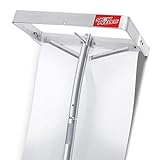
- EFFICIENT SNOW REMOVAL - Our roof rake revolutionizes the tedious task of roof snow removal with its innovative design and efficient performance. Engineered for ease of use, this winter shovel lets you keep both feet firmly on the ground, eliminating ladders. With a practical approach, our extendable shovel protects your roof against the snow loads that cause ice dams and features protective glide pads to prevent damage.
- TELESCOPIC REACH - This snow peeler is designed for convenience and efficiency with the adjustable 9m (30 ft.) telescopic handle, eliminating the need for precarious ladder use. With a sectional handle that allows you to add extensions as needed, our long snow shovel is a versatile solution for low-pitch roofs and challenging-to-reach valleys. This telescopic design is not only practical and user-friendly, but it is also a go-to tool for safeguarding your roof.
- ROOF PROTECTION - Our roof snow rake is not just a tool for snow removal; it's a safeguard for your roof. Engineered with precision and care, our large snow shovel snow rake prioritizes the protection of your home. With its unique design and robust commercial-grade aluminum blade, it effortlessly cuts through fresh and hard-packed snow, preventing the formation of ice dams that can threaten your roof's integrity.
- UNIQUE DESIGN - This roof shovel keeps safety and efficiency at the forefront, allowing users to clear snow effortlessly. Designed for durability and practicality, our snow rake for roof includes protective glide pads to safeguard your roof from damage and a tear-resistant 3m (10 ft.) slide for efficient snow clearance. This solution prevents ice dams and ensures a swift and secure snow removal experience.
- TEAR-RESISTANT SLIDE - This shovel keeps safety and efficiency at the forefront, allowing users to clear snow effortlessly. Designed for durability and practicality, our snowpeeler includes protective glide pads to safeguard your roof from damage. With our big snow shovel, you can confidently tackle snow-covered roofs, knowing that the tear-resistant slide delivers exceptional performance and durability, making snow removal a quick and efficient task.
Snow removal addresses the snow ingredient, not the heat leaking from the home. It therefore should be understood as temporary risk reduction rather than a lasting correction. If you are considering a roof rake, weigh that limited benefit against the possibility of scraping or otherwise damaging roofing, and keep people clear of falling snow and ice. For work that requires roof access, use qualified help rather than taking winter fall risks.
If water is already backing up
For an active emergency, Minnesota Extension describes cutting a channel through the dam so backed-up water can drain. It also describes using tap water on a warm day, working upward from the lower edge. This is temporary damage control: a channel can become ineffective within days, and work around winter ice carries injury and property-damage risks. Seek qualified help rather than treating this as a routine DIY procedure.
Those methods are not durable prevention and should not be read as general instructions to chip away at a roof. The safety and property-damage warning applies, and an active leak should be handled promptly. Once the immediate water problem is controlled, investigate heat loss and dry the affected building materials before repairing interior finishes.
Eaves membrane protects against leaks; it does not stop a dam
A self-sealing bituminous membrane or similar material beneath the roofing at the eaves can help keep backed-up water from reaching roof sheathing and the interior if a dam forms. U.S. Department of Energy Building Science Education guidance describes this protection for Climate Zones 5 and higher. Its installation guidance calls for the membrane to extend at least two feet inward from the interior plane of the exterior wall, begin at the eave edge, and lap over the metal drip edge.
Those are assembly-specific roof-installation details, not instructions to climb onto an existing roof for a DIY retrofit. A membrane is backup protection against water intrusion; it does not prevent the heat-driven melting and refreezing that create ice dams. Discuss its suitability with a qualified roofing professional, particularly when reroofing.
The membrane belongs in the damage-protection column, not the prevention column. It may help protect sheathing and the interior if water backs up, but it does not make the roof colder or stop snow from melting. The cited guidance’s Climate Zone 5-and-higher context and installation dimensions should be considered with the roof assembly and local requirements; do not assume the same detail applies to every roof or climate.
Choose the response that matches the problem
| Measure | What it does | Work location | Limits to consider |
|---|---|---|---|
| Air sealing and insulation | Reduces heat transfer that contributes to uneven roof temperatures and melting. | Ceiling plane and attic | Air seal before adding insulation; preserve required ventilation and follow local code and assembly guidance. |
| Natural roof ventilation | Can help maintain more uniform roof temperatures and supports drying and summer heat management. | Roof assembly or attic | Design depends on climate and building; powered fans are not a default ice-dam solution. |
| Snow removal | Temporarily removes snow, one ingredient in ice-dam formation. | Roof surface, often approached from below | A rake may damage roofing; winter work is hazardous, and removed snow increases the load the roof must carry. |
| Eaves membrane | Helps limit water intrusion if water backs up behind a dam. | Under roofing at the eaves | Does not stop the dam from forming; dimensions and suitability depend on the specified assembly and climate. |
In practical terms, first identify whether you are trying to reduce the chance of another dam, deal with snow or ice already on the roof, or limit damage from water that has backed up. Air sealing and insulation address contributing heat flow. Snow removal is temporary and carries roof and personal-safety risks. A membrane is a protective layer installed as part of a suitable roofing assembly. A gutter-guard change is not supported by the reviewed evidence as a substitute for any of these measures.
Quick wins for a faster PC:
Repair Windows errors before they cause bigger problemsFix Now →Scan for outdated or missing drivers - takes under a minuteDriver Scan →Clear out junk files and repair common Windows errorsFree Scan →When to call a professional—and what to do after a leak
Call a weatherization professional to assess attic heat loss and ceiling airtightness. Ask whether a blower-door test and infrared inspection are appropriate, and have insulation, ducts, exhausts, and eave ventilation considered together. Use a qualified roofing professional for roof access, roof repairs, and eaves-membrane work. If structural capacity is uncertain, consult a professional engineer.
Keep people away from falling icicles and ice. Water entering ceilings or walls can wet insulation and contribute to mold or mildew; excessive water and ice can also damage the structure, and heavy accumulation may threaten the roof. Address active leaks promptly. Do not repair interior finishes until walls and ceilings are dry, and pair restoration with correcting the heat-loss source to reduce recurrence.
A useful professional assessment should connect the visible symptom to the whole assembly: ceiling airtightness, insulation depth and continuity, ducts and exhaust routes, and the ventilation path at the eaves. Ask what work is proposed and whether it complies with local code and the roof’s design. The reviewed guidance does not provide universal prices, a single vent layout for every home, or a tested gutter-guard product ranking, so avoid treating any estimate or product claim as a guaranteed solution.
Rank #4

- COMPLETE 16' ROOF RAKE SYSTEM — Ready to Clear Snow Right Out of the Box Includes the EZ Smart Adjustable Snow Roof Rake, 16-foot sectional extension pole, and mesh storage bag. Everything you need to start clearing roof snow safely from the ground in one complete package.
- PATENTED ADJUSTABLE DESIGN — Adapts to Changing Roof & Snow Conditions Unlike traditional fixed-width roof rakes, the EZ Smart patented umbrella-style adjustable design lets you smoothly adjust the blade from 3 to 36 inches wide without tools. Open it wide to move more snow in a single pass or narrow it for greater control around valleys, chimneys, skylights, and other roof obstacles.
- HELPS PREVENT ICE DAMS — Remove Roof Snow Safely from the Ground Regular roof snow removal helps reduce snow buildup that can contribute to damaging ice dams. The EZ Smart Roof Rake helps you clear problem areas while keeping your feet safely on the ground instead of climbing onto snowy roofs.
- BUILT TO LAST — The Snow Roof Rake You May Never Need to Replace Designed for years of demanding winter use, the durable roof-safe blade resists bending and breakage that shorten the life of many traditional roof rakes. Built with long-term durability in mind, it may just be the last snow roof rake you'll ever need to buy.
- COMPACT STORAGE — Full-Size Performance, Surprisingly Small Storage The complete 16-foot roof rake system collapses into the included mesh storage bag for compact storage in your garage, workshop, vehicle, or cabin. A full-size roof rake that stores where traditional roof rakes simply can't.
After a leak, drying comes before cosmetic repairs. Wet insulation and building materials should be addressed, and walls and ceilings should be dry before restoring interior finishes. Fixing only the stain leaves the heat-transfer cause in place and can allow the same pattern to return. If water has reached the structure or the extent of moisture is uncertain, seek qualified assessment.
Do these 3 things before closing this tab:
1Repair Windows errors before they cause bigger problems2Fix the driver behind crashes, sound loss and screen glitches3Clear out junk files and repair common Windows errorsFrequently Asked Questions
Do gutter guards cause ice dams?
The reviewed extension and government building-science guidance explains ice dams primarily through uneven roof temperatures: snow melts on warmer roof areas, then refreezes at colder eaves. It does not establish that all gutter guards cause dams. Ice near a guard is not, by itself, proof the guard is defective.
Will gutter guards prevent ice dams?
The cited sources do not establish gutter guards as ice-dam prevention. Guards do not address heat escaping through the ceiling and warming the roof. Air sealing and adequate insulation are the durable measures that reduce this heat transfer.
How do I stop icicles from forming on gutter guards?
There is no supported guard-specific adjustment that reliably stops icicles. Address ceiling air leaks and insulation, and have the roof assembly assessed. Icicles indicate melting somewhere on the roof, but do not pinpoint the heat-loss source.
Should I use a roof rake to remove snow?
Removing snow can temporarily remove one ingredient in ice-dam formation, but a rake or push broom may damage roofing. Winter roof work is hazardous, so the University of Minnesota Extension recommends professionals for this work. Snow removal also means that snow no longer melts away and increases the load the roof must carry.
Does an eaves membrane prevent ice dams?
No. A self-sealing membrane under roofing at the eaves can help limit water intrusion if a dam forms, but it does not stop heat-driven melting or ice formation. Installation details depend on the roof assembly and climate; consult a qualified roofing professional.
Are powered attic fans a good ice-dam fix?
Not as a default. Minnesota Extension does not recommend mechanical attic ventilation to solve ice dams in Minnesota because it can create moisture problems and negative pressure. Ventilation needs depend on climate, code, and the roof assembly.
Who should inspect an ice-dam problem?
A weatherization professional can assess heat loss and ceiling airtightness; a blower-door test and infrared camera may help locate problems. Use a qualified roofer for roof access and membrane work, and consult a professional engineer if roof snow-load capacity is uncertain.
The Bottom Line
Ice dams and icicles near gutter guards usually point to melting and refreezing caused by uneven roof temperatures, not a proven guard defect. Reduce heat loss by air sealing the ceiling plane first and then ensuring adequate, even insulation; treat ventilation as assembly- and climate-specific. Snow removal is temporary and risky, while eaves membrane helps limit leaks if a dam forms. For active leaks, roof work, or uncertain snow loads, get qualified help.
Free tools Windows power users keep installed
One-click scans. No signup required.
Quick Recap
Product prices and availability are accurate as of the date/time indicated and are subject to change. Any price and availability information displayed on Amazon at the time of purchase will apply.