Preventing condensation and mold in a container home requires a complete moisture-control plan, not a single product. Keep rain and groundwater out, build a continuous insulation and air-control layer around the steel, choose vapor-control and drying details for the actual climate, and control indoor moisture with planned ventilation or dehumidification. A dehumidifier cannot compensate for a leaking roof, and a vapor barrier cannot correct an air leak or a cold, uninsulated steel bridge.
Because the correct wall, roof and floor assembly depends on climate, code, occupancy and construction details, use the sequence below as a design and inspection framework. Have the final assembly reviewed by a qualified building professional before walls or ceilings are closed.
As an Amazon Associate I earn from qualifying purchases.
Why container homes are prone to condensation
A shipping container has a thin steel shell. Steel conducts heat readily, so its interior surface can become much colder than the room air. When warm, moisture-laden indoor air reaches a steel surface or another part of the enclosure that is cold enough, water vapor can condense into liquid water. Repeated wetting creates conditions for corrosion, staining and mold.
The risk is highest where insulation is interrupted or where air can reach the shell: corners, roof edges, floor and roof-wall junctions, door and window openings, service penetrations, fasteners and any steel left exposed as a thermal bridge. A small gap can matter because moving air transports far more moisture than slow vapor diffusion through an intact material layer.
#1 Best Overall

- Semiconductor dehumidifiers use thermoelectric cooling to remove moisture from the air. They create a drier, more comfortable environment by reducing humidity and improving air quality.
- Our home dehumidifier features intelligent auto-shutoff, automatically powering down when the water tank is full. Set it and forget it, knowing your dehumidifier is working efficiently and safely, giving you true peace of mind.
- Our dehumidifier features a captivating 7-color ambient light, allowing you to bathe your room in a spectrum of soothing hues. Choose from a calming blue, energizing green, romantic red, and more – easily select the perfect color to create your desired atmosphere and enhance your living space. Dehumidify in style and set the perfect mood, every time.
- Sleep Mode creates the perfect sleep sanctuary. The dehumidifier's atmosphere lights automatically turn off, and noise fades to a whisper. Experience truly undisturbed dehumidification for a night of perfect rest.
- Elevate your home's comfort and style with our sleek and compact dehumidifier. Designed to seamlessly blend into any space, from the living room and bedroom to the bathroom, basement, and even your RV. Its modern aesthetics and space-saving footprint make it the perfect dehumidification solution for every corner of your home.
Building Science Corporation’s BSD-012: Moisture Control for New Residential Buildings groups the main sources as rainwater, groundwater, air transport and vapor diffusion. The U.S. Department of Energy’s Building Science Education material describes the same problem in terms of bulk water, capillary movement, air-carried moisture and vapor dispersion. Your container enclosure must address each path rather than treating condensation as only a humidity problem.
Find the moisture source before adding insulation or paint
Surface droplets can be the visible symptom of an enclosure leak, a cold bridge or excessive indoor moisture. Investigate in wet weather and during heating or cooling extremes, and document where and when water appears. Use a moisture meter or thermal imaging only as investigation aids; readings still need to be interpreted against the assembly and the season.
| Possible source | Typical clues | What to inspect | First corrective action |
|---|---|---|---|
| Rainwater entry | Wet spots after storms, staining near the roof, seams, doors or penetrations | Roof membrane, welds, corner castings, flashing, window and door interfaces, vents and pipe penetrations | Redirect water and repair the opening before covering the area |
| Groundwater or splashback | Wet floor edges, corrosion at the base, dampness after snowmelt or heavy rain | Site drainage, finished grade, supports, underside of the container and floor penetrations | Keep water away from the base and repair drainage or waterproofing defects |
| Air leakage | Localized condensation at joints, outlets, ducts or fasteners; drafts or pressure-related odors | Continuous air-control layer, seams, penetrations, duct connections and exhaust paths | Seal the leakage path, then verify that required ventilation remains available |
| Vapor diffusion | Moisture within an assembly without an obvious hole; seasonal changes in wetting | Vapor-control layer, material order, climate and drying direction | Redesign the assembly so vapor control and drying work for the local climate |
| Indoor moisture generation | Condensation on several cold surfaces during cooking, bathing or clothes drying | Bathrooms, kitchen, laundry, combustion appliances and occupant activities | Capture moisture at the source and provide controlled ventilation or dehumidification |
Do not close a wall, ceiling or floor while the steel or absorbent materials are wet. Concealed moisture can continue to feed mold after the visible surface looks dry. If the source is not clear, stop the finish work and obtain an enclosure assessment.
Quick wins for a faster PC:
Fix the driver behind crashes, sound loss and screen glitchesFind Drivers →Clear out junk files and repair common Windows errorsFree Scan →Scan for outdated or missing drivers - takes under a minuteDriver Scan →Use a moisture-control sequence that works from outside to inside
1. Stop bulk water first
Inspect the roof, side seams, corner posts, container doors, windows, skylights, vents, plumbing penetrations and the base. Confirm that roof water drains away instead of ponding against the shell or foundation. Check the underside and floor system for ground contact, splashback and drainage problems. Repair leaks and improve site drainage before installing insulation, drywall or interior finishes.
Roof protection deserves special attention. The container-specific Building Science Corporation guidance discusses the need to protect the roof membrane and warns that container walls can leak. A roof coating alone is not a substitute for correctly detailed transitions, penetrations and drainage.
2. Design the enclosure for the actual climate
Insulation, air control, vapor control and drying paths are one assembly. The best arrangement changes with heating and cooling seasons, outdoor humidity, solar exposure and local code. A layer that is safe in one climate can trap moisture in another if it places vapor control on the wrong side or leaves no reliable drying direction.
Rank #2

- Quiet & High-Efficiency Dehumidifier: Featuring next-generation semiconductor cooling technology, this quiet dehumidifier delivers efficient moisture removal while running at ultra-low noise (≤40dB). Stable humidity levels are maintained, making your home environment more comfortable and pleasantly dry.
- Smart Auto Shut‑Off Protection: This dehumidifiers for home is equipped with an intelligent auto-shutoff feature - automatically cut off power once the water tank is full or incorrectly installed. It effectively avoids water leakage risk, so you can run this compact dehumidifier worry-free even when you are away from home.
- Remove Humidity, Say Goodbye to Dampness: Ideal as a dehumidifier for basement, closet and damp rooms, this unit absorbs up to 34 oz moisture per day (Tested at 86°F, 80% RH). Say goodbye to unpleasant smells, damp walls, and damp clothes – and enjoy a fresher, healthier living space.
- 7 - Color Soft Glow Ambiance Light for Bedroom Dehumidifier: Specially crafted as a bedroom dehumidifier, this small dehumidifier for bedroom comes with 7 adjustable soft glow ambient lights. You can freely switch preferred hues to customize room vibe, and the gentle light doubles as a warm night light while dehumidifying. It delivers calm, soothing bedtime atmosphere for your bedroom
- Ultra-Compact & Portable Design: This dehumidifier is compact with a built-in carry handle for easy relocation, this compact dehumidifier measures just 8.3 × 5.7 × 14 inches. This compact unit works great as dehumidifier for bedroom, basement, bathroom, garage, closet, RV, dorm and small apartment to fight excess humidity all year round.
Before selecting a product, document the project location, climate zone, intended heating and cooling, interior finish, roof build-up, floor build-up and ventilation strategy. Ask the designer to show where the air-control layer is continuous, where vapor is slowed, and how any incidental water can dry.
Crashes, No Sound, or Screen Glitches?
Random freezes, missing sound and display glitches usually trace back to one bad driver. Find and replace yours safely.Free scan · under a minuteWindows Errors? Fix Them Before They Spread
Repair common Windows errors and clear accumulated junk for a smoother, more stable PC - no reinstall needed.Free scan · no reinstall3. Provide continuous insulation around the steel
Insulation should remain continuous across walls, roof, floor edges, corners, openings and service zones. Breaks expose cold steel and create local condensation points even when the average wall has a high nominal R-value. Pay particular attention to the narrow strips around door frames, window bucks, corner posts and roof-wall junctions.
Interior insulation preserves the exterior footprint but reduces usable floor area and can make details at corners and openings difficult. Exterior insulation can keep the steel warmer and preserve interior dimensions, but it changes the outside dimensions, cladding and flashing requirements. Neither option is a universal winner; continuity, water protection, installation quality and climate-appropriate drying matter more than a product label.
4. Make the air-control layer continuous
Air sealing limits moisture-laden air from reaching the cold shell. Seal laps, joints, service penetrations, electrical boxes, plumbing, duct boots, window and door interfaces, and transitions between the container and any addition. Plan the air-control layer before framing so trades do not cut it repeatedly.
Seal ductwork as well as the enclosure. The Department of Energy’s building-science guidance also points to HVAC pressure balancing: return-air shortages or poorly located exhaust can pull humid outside air through leaks. Airtight construction does not mean eliminating ventilation; it means deciding where air enters and leaves.
Free tools Windows power users keep installed
One-click scans. No signup required.
5. Put vapor control and drying in the right place
Vapor diffusion is slower than air transport, but it can still wet a trapped layer over time. The correct vapor retarder class and location depend on climate, seasonal pressure direction and the materials on each side of the steel. Do not assume that adding a highly impermeable layer everywhere is safer. In some assemblies it can block drying toward the side that normally handles incidental moisture.
Rank #3

- 【Upgrade High Efficient Home Dehumidifier】PSOS dehumidifier utilize dual semiconductor condensation technology, ensuring quiet operation while effectively extracting moisture from the air. They create a drier, more comfortable environment by reducing humidity and improving air quality
- 【Two Dehumidifier Modes & Ultra Quiet】The dehumidifiers for home offers a powerful mode that efficiently reduces humidity, allowing for quick and effective moisture elimination.Low-speed sleep mode creates a light-free environment and keeps it quiet while you sleep (<30 dBA). Enjoy the peace and tranquility of a serene.Our dehumidifer with filtration system, ensures optimal airflow and efficiency! Dehumidifier removes fine pollutants such as hair and dust, providing cost-effective long-term maintenance
- 【Humidity Monitoring & 7-Color Mood Lights】The dehumidifier for bedroom integrates a smart control panel, allowing you to monitor humidity and temperature in real time.This dehumidifier comes in 7 Color Options For Amblance Lighting,you can choose a color you like and lock it, which can be used as a night light to create a cozy and romantic sleeping atmosphere
- 【 Auto Shut Off & Auto Defrost System】Our dehumidifier features intelligent auto-shutoff, automatically powering down when the water tank is full. This prevents spills and offers added safety and convenience, especially when you're not home.Our dehumidifier for bedroom operate smoothly even at low temperatures of 41°F (5°C). The intelligent power management system adjusts performance based on humidity levels, saving up to 20% on energy while maintaining a comfortable temperature
- 【Portable Dehumidifier For Home】This dehumidifier is compact in size, measuring about 9.44 (L) * 5.9(W) * 14.17 (H) inches, This dehumidifier covers up to 1000 sq.ft., making it ideal for living room,bedroom,bathroom, basement, and RV. Its modern aesthetics and space-saving footprint make it the perfect dehumidification solution for every corner of your home
Have the designer identify the intended drying directions and verify that membranes, sealants, insulation, sheathing and interior finishes are compatible. Protect water-sensitive materials from leaks during construction and provide a way to inspect or replace components that cannot dry in place.
Compare insulation approaches by performance criteria, not slogans
The cited container guidance discusses high-density spray polyurethane foam as an interior option, but it also stresses roof protection, possible wall leakage and the need for a durable, drying-capable assembly. Treat it as one design choice, not an automatic prescription.
| Approach or decision | Potential advantage | Questions that must be answered |
|---|---|---|
| Interior high-density spray polyurethane foam | Can conform to irregular steel surfaces and help combine insulation with air control when installed continuously | Is coverage complete at corners and penetrations? How will the roof be protected? Can the assembly dry if a wall leaks? Are finish layers and fire requirements satisfied? |
| Interior framed insulation system | Can simplify service cavities and finish installation | Does framing leave a cold gap against the steel? Where is the continuous air-control layer? Can humid air bypass the insulation? |
| Exterior insulation system | Can keep more of the steel on the warm side and preserve interior volume | How will cladding, flashing, doors, windows and roof edges accommodate the added thickness? Is the exterior finish protected from water? |
| Hybrid assembly | May combine thermal continuity with a service cavity or structural requirement | Do the layers create an unintended vapor trap? Are all transitions sealed and inspectable? |
For any option, require an installation plan showing material coverage, substrate preparation, thickness verification where applicable, protection from later trades and inspection before finishes conceal the work. The installer’s ability to achieve continuity is a practical performance factor.
Do these 3 things before closing this tab:
1Scan for outdated or missing drivers - takes under a minute2Clear out junk files and repair common Windows errors3Fix the driver behind crashes, sound loss and screen glitchesVentilate an airtight container home deliberately
Once uncontrolled leakage is reduced, the home needs a planned way to remove moisture and supply replacement air. Use local exhaust at bathrooms and the kitchen, and coordinate the exhaust locations, make-up air and HVAC returns with the enclosure design. The exact airflow, equipment and operating schedule must be calculated for the dwelling and checked against local code; the available evidence does not establish one ventilation rate for every container home.
Keep exhaust ducts sealed and routed so they do not discharge into a wall, roof cavity or floor void. Insulate or otherwise detail ducts where temperature differences could cause condensation. Confirm that exhaust fans do not create excessive negative pressure that draws humid outdoor air through hidden leaks or affects combustion safety.
Mechanical ventilation equipment or design services can be useful for a tightly built home, but equipment should be selected after the moisture load and climate are known. Commission the system by checking actual airflows, controls, filters, condensate drainage and occupant instructions rather than relying on the nominal rating.
Rank #4
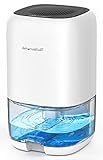
- High Efficient Dehumidifiers for Home: Still annoyed about the muggy weather? Just Take it easy! have a try at TABYIK 35OZ Peltier dehumidifier, in a closed small room with humid environment of 86°F and 80% RH, it can collect a max of 16oz(450ml) of water in 24 hours, and with very low energy consumption (no more than 1-kilowatt hour a day).
- Small Dehumidifiers with Colorful Light: There is a separate light button, which can emit 7-color romantic atmosphere lights for you, and the ultra-quiet operation (28dB) creates a comfortable and peaceful environment for your bedroom and office.
- 35OZ Dehumidifiers for Bathroom: With 1000ml (35OZ) large transparent tank, you can see the water collection volume of the dehumidifier in real-time, and there is a groove design at the bottom of the water tank, you can easily take it out, pour water and clean it!
- Auto Shut Off Protection: When the water tank is 700~800ml full, dehumidifiers will auto shut off work, and the light will flash red to inform you. It is also very safe and convenient to use when you are not at home.
- Portable Dehumidifier for Bedroom: With a compact size of 5.9X5.9X10.1 inch and a built-in handle on the back, it is very convenient to be placed everywhere. Helping to get the excess moisture out of the air for you in bedroom, bathroom, RV, closet.
Control moisture generated inside the home
Bathrooms, cooking, laundry, plants, wet clothing and unvented combustion all add water vapor. Capture that moisture where it is produced: run bathroom exhaust during and after bathing, use a kitchen hood that actually exhausts outdoors when permitted, vent the dryer outdoors, and avoid drying large loads indoors without a planned removal strategy.
Monitor indoor relative humidity in several locations and record trends during the seasons. A single humidity setpoint or dehumidifier size cannot be prescribed without room volume, climate, envelope leakage and occupant load. If readings remain high after source control and ventilation are operating, a dehumidifier may be an appropriate supplement. It will not repair a roof leak, dry a wet floor assembly or correct a vapor-trapping wall.
Place dehumidifiers where condensate can drain safely, keep filters and coils clean, and verify that the unit can operate in the expected temperature range. Treat persistent humidity as a diagnostic signal: look again for leaks, pressure imbalances, blocked exhaust, unsealed ducts or a missing air-control transition.
Independent reader supportYour contribution helps us test, update, and keep practical guides available for everyone.Detail the places where condensation starts
Corners and roof-wall junctions
Corner posts and roof edges combine several pieces of steel and often interrupt insulation. Draw the insulation and air-control layers through each corner in section, then specify how sealants, tapes or membranes join. Inspect for narrow unfilled wedges and fasteners that bridge from the exterior to the interior.
Floor and base transitions
Keep the container off wet ground, provide drainage beneath and around the supports, and protect the floor edge from splashback. Connect the floor insulation and air-control layer to the wall without leaving a cold perimeter strip. Check for water entering through damaged flooring, service openings or condensation on the underside.
Windows, doors and other openings
Openings require a continuous connection between the container shell, frame, flashing, insulation and interior air seal. Sloped or drained sill details should direct incidental water outward. A gap hidden behind trim can wet framing and finishes long before a stain appears.
Best Value

- Upgrade High Efficient Dehumidification: Dehumidifier utilize semi conductor condensation technology, ensuring quiet operation while effectively extracting moisture from the air. This advanced feature helps keep humidity levels below 45%
- Two Dehumidifier Modes: The dehumidifiers for home offers a powerful mode that efficiently reduces humidity, allowing for quick and effective moisture elimination. It also features a low-speed sleep mode for quiet operation (< 30 dB) while you sleep
- Seven Color Options For Amblance Lighting: This dehumidifier comes in 7 different colors that are constantly changing. You can choose a color you like and lock it, which can be used as a night light to create a cozy and romantic sleeping atmosphere
- Automatic Shutdown Protection: Our dehumidifier is designed with an intelligent automatic shut-off function. When water tank is full or not placed correctly, it will automatically stop working to prevent water overflow. This function ensures your safety
- Portable Dehumidifier For Home: This dehumidifier is compact in size, measuring about 8.27 (L) * 5.55 (W) * 13.78 (H) inches, but covers up to 1000 square feet. With handles can be convenient moved to bedrooms, bathrooms, basements, romms, closets and more
Utilities and penetrations
Group services where possible so fewer holes cross the enclosure. Seal around pipes, conduits, ducts, outlets and fasteners with materials compatible with the surrounding membrane and finish. Leave access to shutoffs and inspection points without cutting the air-control layer later.
If you already see condensation or mold
- Make the area safe. Limit occupancy of visibly moldy or persistently wet spaces, protect workers from dust and avoid disturbing concealed materials unnecessarily.
- Find and stop the source. Check rainwater, groundwater, air leakage, vapor movement and indoor moisture rather than assuming the cause from the appearance alone.
- Document the assembly. Photograph the location, note weather and HVAC conditions, and identify what lies behind the finish before opening it.
- Dry the enclosure. Remove standing water and provide controlled drying while preventing humid outdoor air from being driven into colder cavities. Do not close wet insulation, sheathing or framing.
- Assess concealed damage. A qualified contractor or building-science professional should determine whether corrosion, wet insulation, deteriorated finishes or hidden mold require removal and replacement.
- Repair the design defect. Rebuild the affected transition with continuous insulation, air sealing, vapor control and drainage. Cleaning the visible surface without correcting the enclosure leaves the moisture pathway intact.
- Verify before closing. Inspect repairs, confirm dryness with appropriate measurements, and photograph the completed air and water-control details for future maintenance.
A surface cleaner or fresh paint is not a moisture-control strategy. If mold returns, treat recurrence as evidence that water or humid air is still reaching a vulnerable surface.
Commissioning and maintenance checklist
- Confirm the roof drains and has no ponding, damaged membrane, open seam or unsealed penetration.
- Inspect the base, supports and surrounding grade after heavy rain for groundwater or splashback.
- Verify continuous insulation at corners, roof-wall and floor-wall junctions, openings and service zones.
- Photograph the air-control layer before it is concealed and record every penetration that was sealed.
- Check that vapor-control materials match the climate-specific design and do not block intended drying.
- Test exhaust fans, outdoor terminations, make-up air and HVAC pressure balance.
- Seal and inspect ducts; confirm that no duct discharges into an enclosure cavity.
- Trend indoor humidity in representative rooms through heating and cooling seasons.
- Clean ventilation filters, inspect condensate drains and service dehumidification equipment as specified by the manufacturer.
- Recheck cold surfaces, corners and concealed access points when occupants report odors, staining or recurring droplets.
Common mistakes that create mold risk
- Installing a vapor barrier as the only fix: it does not stop rain, groundwater or air-carried moisture.
- Relying on a dehumidifier: equipment cannot compensate for a leaking roof or wet floor assembly.
- Leaving small steel bridges uninsulated: localized cold spots can condense even when most of the wall is insulated.
- Sealing the home without planned ventilation: moisture then accumulates indoors, or pressure imbalances pull humid air through hidden leaks.
- Closing assemblies before inspection: leaks and gaps become inaccessible and concealed moisture can persist.
- Choosing insulation by nominal rating alone: continuity, air control, vapor behavior, water protection and workmanship determine real performance.
- Ignoring construction weather: wet materials or an exposed roof can put moisture inside the assembly before occupancy begins.
When to bring in a designer or specialist
Get project-specific help when the container will be occupied year-round, located in a humid or cold climate, joined to another structure, built over a crawlspace, or fitted with complex mechanical systems. A professional should review the structural modifications, local code, fire protection, vapor-control strategy, roof and floor drainage, HVAC pressure relationships and the sequence of inspections.
What’s actually slowing this PC down?
Pick the symptom - the matching free tool is one click away.
The available container guidance does not establish a universal insulation thickness, ventilation capacity, humidity setpoint or dehumidifier size. Those values require the site, climate, occupancy and complete assembly. Ask for drawings or specifications that identify each control layer and show how every transition remains continuous.
The practical standard for a dry container home
A durable container home keeps bulk water out, keeps humid air from contacting cold steel, gives vapor a safe drying path and removes indoor moisture through controlled ventilation or dehumidification when needed. Build and inspect those functions as one enclosure system. If condensation or mold appears, investigate the pathway and repair the assembly instead of treating only the visible symptom.
Quick Recap
Product prices and availability are accurate as of the date/time indicated and are subject to change. Any price and availability information displayed on Amazon at the time of purchase will apply.

