What’s actually slowing this PC down?
Pick the symptom - the matching free tool is one click away.
Some links on this page are affiliate links: if you buy through them we may earn a commission, at no extra cost to you.
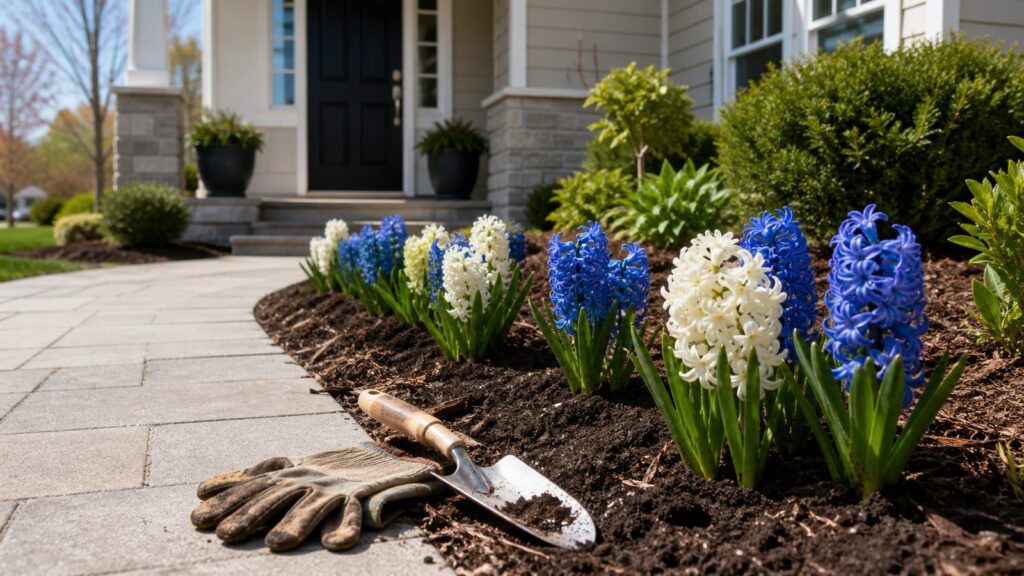
Hyacinths are fall-planted, spring-blooming bulbs that deliver a lot of curb appeal for the money. They work best near entries, patios, walkways, porch steps, and windows where their fragrance can actually be noticed. If you bury them in a far back corner of the yard, you lose one of the main reasons to plant them.
The short version: plant common garden hyacinth, Hyacinthus orientalis, in fall after the soil cools but before the ground freezes. Set bulbs about 4 to 6 inches deep and 3 to 6 inches apart in rich, well-drained soil. Water once after planting, keep spring soil evenly moist but never soggy, remove spent flower spikes after bloom, and leave the leaves in place until they yellow naturally.
As an Amazon Associate I earn from qualifying purchases.
Windows Errors? Fix Them Before They Spread
Repair common Windows errors and clear accumulated junk for a smoother, more stable PC - no reinstall needed.Free scan · no reinstallOutdated Drivers Are Slowing You Down
One free scan finds every outdated or missing driver and matches the right update for your exact hardware.Free scan · exact hardware matchOn our job sites, the difference between a good bulb display and a disappointing one usually comes down to site prep. Hyacinths do not ask for constant care, but they do punish bad drainage, compacted builder soil, low foundation beds, and careless digging around utilities. Treat the planting area like a small construction detail, not a random hole in the ground, and the bulbs perform much better.
What Hyacinths Need Before You Plant
Hyacinths are true spring bulbs, not annual bedding plants. The bulb stores the energy and flower structure it needs, then uses a cold winter period to trigger spring growth. In much of the United States, that cold period happens naturally outdoors. In warm-winter regions, it often does not.
Popular on Amazon

- GRAPE HYACINTH BLOOMS – Grape hyacinth bulbs produce dense, grape-like clusters of deep blue flowers with a soft, honey-like fragrance. Their compact blooms naturalize easily, adding rich color to borders, pathways, and garden beds.
- GUARANTEED TO GERMINATE – Our muscari bulbs are stored in temperature-controlled refrigeration, ensuring peak freshness for strong, reliable germination and vibrant spring blooms.
- PLANT IN FALL FOR SPRING COLOR – Plant muscari bulbs in sun or part shade with well-drained soil. Water thoroughly after planting and keep soil slightly moist through fall. Thrive in zones 3-9, blooming early spring. Includes 15 bulbs.
- QUALITY BULBS FROM MARDE ROSS & COMPANY – A trusted California nursery since 1985, we provide the finest untreated muscari bulbs, ensuring reliable growth and stunning blue flowers year after year.
- ESSENTIAL EARLY NECTAR – Grape hyacinths provide pollinators with an early-season nectar source when few flowers are in bloom, supporting bees and butterflies as they emerge in spring.
Most homeowners should think of hyacinths as reliable in USDA Zones 4 through 8. In colder parts of Zone 4, mulch and proper depth matter. In warmer Zone 8 locations and beyond, hyacinths may need pre-chilled bulbs or may be treated as seasonal color and replaced each year. They need roughly 10 to 15 weeks of cold conditions for good bloom. For forced indoor bulbs, a practical target is 40 to 45 degrees F for 12 to 15 weeks. Outdoor bulbs in warm climates often need similar chilling support.
Hyacinths bloom in early to mid-spring, often after crocus and before or alongside many tulips. Individual blooms commonly last about 2 to 4 weeks, depending on temperature, wind, rain, and sun exposure. Cool spring weather stretches the show. A sudden hot spell shortens it.
Do these 3 things before closing this tab:
1Fix the driver behind crashes, sound loss and screen glitches2Clear out junk files and repair common Windows errors3Scan for outdated or missing drivers - takes under a minuteOne clarification matters: grape hyacinth, commonly called muscari, is not the same plant as common garden hyacinth. Muscari is smaller, looser, and often naturalizes more easily. This guide focuses on the larger, fragrant garden hyacinth used for bold spring color in beds, borders, and containers.
Best Places to Plant Hyacinths Around a Home
Hyacinths are not background plants. Their flower spikes are compact, fragrant, and highly detailed, so they belong where people pass close by. Good locations include front steps, porch beds, mailbox beds, patio containers, walkway edges, courtyard planters, and window-view beds.
For curb appeal, plant in clusters instead of single-file rows. Groups of 5, 7, 9, or 15 bulbs look fuller and more intentional than a thin line of evenly spaced bulbs. A 25-bulb bag can create three small clusters near a walk, two generous entry groups, or one dense statement planting in a container-and-bed combination.
Full sun to part shade is the right light range. More sun usually gives stronger stems and better repeat bloom. Afternoon shade can help in warmer regions where spring heat arrives early. Under deciduous trees can work because hyacinths bloom before many trees fully leaf out, but avoid dry, root-choked soil where bulbs have to compete heavily for water.
Quick wins for a faster PC:
Fix the driver behind crashes, sound loss and screen glitchesFind Drivers →Repair Windows errors before they cause bigger problemsFix Now →Scan for outdated or missing drivers - takes under a minuteDriver Scan →Keep Bulbs Away From Wet Foundation Beds
Many homes have landscape beds tight against the foundation. Some are fine. Others are where bulbs go to rot. If downspouts dump into the bed, if the grade slopes back toward the house, or if mulch is piled high against siding, do not treat that as a simple planting problem. It is a drainage problem.
Hyacinths need well-drained soil. They can handle cold. They can handle ordinary spring rain. They do not handle sitting in a wet clay pocket for weeks. If the bed stays damp long after rain, build a raised planting pocket, correct the drainage, or use containers instead.
Plan Around Utilities, Edging, and Irrigation
Bulb planting seems shallow, but homeowners still hit low-voltage lighting wire, irrigation lines, shallow drain pipe, invisible dog fence wire, and utility laterals. Call 811 before digging if you are opening new beds, cutting into a lawn edge, working near utility routes, or using power equipment. It is free in most areas and far cheaper than repairing a service line.
Also check sprinkler coverage. Hyacinths need moisture during root growth and spring bloom, but overspray from lawn irrigation can keep beds too wet after the foliage starts fading. Wet summer soil is one reason bulbs decline or rot before the next season.
When to Plant Hyacinth Bulbs
The best planting window is fall, after the soil cools and before the ground freezes. A practical benchmark is soil temperature below 60 degrees F. In many northern and mid-Atlantic areas, that means mid-September through October. In milder regions, the window often shifts into November or even early December, as long as the bulbs still get enough chill before spring.
Do not plant too early just because bulbs are available in stores. Warm soil can push premature top growth, and that growth may get damaged by winter weather. Store bulbs in a cool, dry, ventilated location until conditions are right. Do not store them in a sealed plastic bag or near apples and other fruit. Ripening fruit gives off ethylene gas, which can damage developing flowers inside the bulbs.
If you live in a warm-winter area, buy pre-chilled bulbs or chill them separately at about 40 to 45 degrees F for 12 to 15 weeks. Use a refrigerator only if it is not storing fruit. Label the bulbs clearly and keep them dry but not desiccated. After chilling, plant promptly.
How to Prepare the Soil
Good hyacinth planting starts with the soil profile, not the flower color. In newer subdivisions and recently renovated properties, we often find compacted builder soil under a thin layer of mulch. That soil sheds water in some places and holds it like a bathtub in others. Neither condition is ideal.
The Tool Desk
Outbyte Driver Updater FREEFix the driver behind crashes, sound loss and screen glitchesFind Drivers →Outbyte PC Repair FREERepair Windows errors before they cause bigger problemsFix Now →For a small planting, loosen the bed 8 to 10 inches deep. Remove construction debris, stones larger than a couple of inches, thick roots, and old landscape fabric if it blocks water movement. Mix in compost where the soil is lean or compacted. The goal is soil that holds some moisture but drains freely.
In clay soil, do not just dig individual holes, drop bulbs in, and backfill with fluffy amendment. That can create a water-holding basin around each bulb. Instead, improve a wider bed area or create a raised planting pocket 3 to 6 inches above the surrounding grade. A broad amended mound drains better than a narrow amended hole.
In sandy soil, compost helps hold moisture and nutrients. In heavy soil, compost improves structure, but it is not a substitute for grade correction. If water naturally collects in the spot, move the bulbs, raise the bed, or fix the drainage first.
Also popular on Amazon

- DIVERSE MIX OF FLOWERS: Get 50 Fresh Bulbs to Grow a Diverse Spring Flower Garden. Get a variation of any of the following, depending on the season, Mixed Tulips and or Yellow Daffodil, 10 Mixed Gladiolus with a mix of some or any of these seasonal favorites. Mixed Oxalis or crocus or Iris, Mixed Freesia and Lily or Amaryllis, and Mixed Allium, or chinodoxa, puschkinia shamrocks or hyacinth. A stunning blend only available online by CZ Grain.
- BLOOMS ALL SEASON: A nice variety that will have blooms early in the spring to well into the summer. Ideal for beginners or seasoned gardeners. Plant once and enjoy low-maintenance beauty all season long.
- VERSATILE PLANTING OPTIONS – Perfect for flower beds, borders, or containers. Create layers, textures, and eye-catching arrangements effortlessly. Perennial garden, just plant one and they come back each year.
- FITS ANY SIZE: Ideal in mass plantings. Pair with CZ Grain Allium Bulbs and Crocus Bulbs for a real stunner spring show of colorful flowers.
- PERFECT FOR GIFTS & GARDENING FUN – Ideal for Mother’s Day, birthdays, or gardening enthusiasts. Inspire joy and creativity with a complete garden solution.Great for any garden or flower lover. Easy to have big beautiful blooms.
How Deep and How Far Apart to Plant Hyacinths
For most garden hyacinths, plant bulbs about 4 to 6 inches deep, measured from the soil surface to the bottom of the bulb. Large bulbs, very loose soil, or colder climates may justify going closer to 6 to 8 inches. Space bulbs 3 to 6 inches apart. Tighter spacing creates a denser spring display; wider spacing is better if you want the bulbs to settle in for several years.
Set each bulb pointed end up and root plate down. If you are unsure, the pointed end usually goes up and the flatter, rougher end goes down. Backfill gently, firm the soil with your hands, and water thoroughly once to settle the soil and start root growth.
A light mulch layer, about 1 to 2 inches, helps moderate soil temperature and reduce winter heaving. Do not bury the bed under a heavy mulch blanket. Too much mulch can trap moisture and delay spring emergence.
Planting Grid for a 25-Bulb Accent Bed
For a practical front-entry planting, use a bed area around 10 to 15 square feet. Plant 25 bulbs in three clusters: one group of 9 near the main focal point and two groups of 8 offset along the walk or bed curve. Keep bulbs about 4 inches apart within each cluster. This reads better from the street than a single row of 25 bulbs stretched thin across the front of the house.
Watering, Fertilizing, and Routine Care
After planting, water the bed well. The goal is to settle soil around the bulbs and support fall root growth. After that, normal rainfall is often enough unless fall is unusually dry. The soil should be moist, not saturated.
In spring, keep the soil evenly moist while shoots emerge and flowers open. If the bed gets less than about 1 inch of water per week from rain, water deeply rather than misting the surface. Once flowering is done and foliage begins to yellow, reduce watering and allow the bulbs to move toward dormancy.
Hyacinths are not heavy feeders, but compost or bulb fertilizer can help. Add compost during bed prep or apply a bulb fertilizer at planting. A second light application as shoots emerge in spring can support next year’s flower formation. Avoid high-nitrogen lawn fertilizer overspray. Too much nitrogen can push leaves at the expense of flowers and may make stems softer.
After bloom, cut off the spent flower spike so the plant does not waste energy setting seed. Leave the leaves alone until they turn yellow and collapse naturally. The foliage is recharging the bulb. Cutting it too early is one of the fastest ways to reduce next year’s bloom.
Growing Hyacinths in Pots and Planters
Hyacinths grow very well in containers if the pot drains. A 10- to 15-inch pot can usually hold 5 to 9 bulbs, depending on bulb size and the look you want. Use a container with drainage holes and a quality potting mix, not dense yard soil.
Plant bulbs close, but do not let them touch. Leave about 1 inch between bulbs and keep them away from the pot wall if possible. In containers, you can plant slightly tighter than in open beds because the display is seasonal and controlled.
Layered bulb containers are a good use of space. Put larger tulips or daffodils deeper, hyacinths in the middle, and smaller bulbs such as crocus or muscari nearer the top. Keep bulbs separated by potting mix and avoid stacking them directly on top of each other. The container still needs winter chilling unless you bought pre-chilled bulbs.
In cold climates, protect containers from freeze-thaw cycles. A pot above ground gets colder than soil in a bed. Move containers into an unheated garage, cold frame, or sheltered area where they stay cold but are not repeatedly frozen solid and thawed. Check occasionally so the mix does not become bone dry.
What Hyacinths Cost in 2026
Hyacinths are one of the lower-cost ways to improve a front entry, but the final price depends on bulb grade, site prep, and whether you hire labor. Current U.S. retail examples show hyacinth bulbs around $0.91 per bulb for a 25-count bag at the value end, while smaller 10-count sets often run about $2.27 to $2.57 per bulb. Premium named varieties, jumbo bulbs, pre-chilled bulbs, and mail-order selections can cost more.
Recommended Free Tools
For a small DIY 25-bulb bed, expect roughly $40 to $170 in materials. That includes $25 to $90 for bulbs, $10 to $40 for compost or soil amendment, $5 to $20 for bulb fertilizer, and $5 to $20 for mulch if you do not already have it. A container with 5 to 9 bulbs in a 10- to 15-inch pot usually lands around $25 to $85, depending mostly on the pot and bulb quality.
| Project Type | Typical Scope | 2026 Cost Range | What Drives the Price |
|---|---|---|---|
| DIY container | 5 to 9 bulbs in a 10- to 15-inch pot | $25 to $85 | Pot quality, pre-chilled bulbs, potting mix |
| DIY accent bed | 25 bulbs near entry or walkway | $40 to $170 | Bulb size, compost, fertilizer, mulch |
| Professional small display | Modest front-entry planting | $150 to $600+ | Labor minimums, bed prep, edging, mulch, access |
| Installed flower bed work | Bulbs as part of a larger planting plan | $15 to $45 per square foot | Soil correction, layout, plant mix, local labor rates |
| Mulch installed | Bed finish after planting | $77 to $94 per cubic yard | Material, delivery, labor, bed size |
Professional landscaper rates commonly run about $50 to $65 per hour nationally, with broader planting and bed-work ranges around $30 to $70 per hour. Some contractors price flower bed planting by the square foot, while smaller jobs may be governed by a minimum service charge. If the crew has to correct compacted clay, add edging, remove old fabric, extend irrigation, or regrade a low spot, the bulb cost becomes the smallest part of the job.
When to DIY and When to Hire a Pro
DIY is a good fit when the bed already drains, the planting area is small, and you are working with hand tools. A homeowner can plant a 25-bulb accent bed in 1 to 3 hours if the soil is loose and the layout is simple. Containers are even easier as long as the bulbs receive proper chilling.
Hire a pro when the planting is part of a larger front-yard refresh, when the soil is compacted or poorly drained, when you need bed edging or grading corrected, or when the display must look uniform for a commercial property, HOA entrance, church, office, or high-visibility home sale. For those jobs, specify the bulb variety, bulb size, bulb count, planting depth, spacing grid, mulch depth, and replacement schedule. That makes bids comparable.
Also popular on Amazon

- 524 PREMIUM SEEDS – BRILLIANT COLOR, FAST GROWTH: This large pack includes 524 USA-packed, high-germination Zinnia Dahlia seeds that bloom into stunning double flowers in red, pink, orange, white, and more. Easy to grow, beginner-friendly, and perfect for bouquets, borders, and containers. Blooms in just weeks and lasts all summer!
- A TRUE GARDEN ARISTOCRAT WITH STRIKING FORM: Zinnia Dahlia is a radiant floral showstopper, beloved for its uniquely bold shape and opulent floral structure. Each bloom evokes a sense of floral nobility with plush, layered petals arranged in a near-geometric sphere. This variety of zinnia has earned its place among the top ten most cherished garden flowers, widely appreciated across the United States and beyond.
- RED FOR EXCEPTIONAL COLOR, SHAPE, AND VARIETY: Decades of horticultural development have resulted in this magnificent line of Zinnia Dahlia seeds. Carefully selected to represent the best of modern breeding, this variety offers a visual spectacle of rich tones and impressive structure. The blooms are large and fully double, featuring countless tightly arranged petals that radiate with saturated color. Each flower opens like a celebration—vivid, elegant, and unforgettable.
- EXPLOSION OF COLOR IN EVERY PLANT: This seed mix produces a stunning range of shades including snow white, coral, salmon pink, lavender, purple, bright orange, cream-yellow, cherry red, scarlet, deep crimson, and plum. Two-toned blooms with dramatic edging offer even more visual interest. Whether planted in clusters or as a standout specimen, Zinnia Dahlia puts on a breathtaking display all summer long.
- LARGE PACK FOR FULL GARDEN COVERAGE: Each seed pack includes approximately 524 premium Zinnia Dahlia seeds, giving you enough to plant a wide area—ideal for garden borders, flower beds, or large landscape designs. Enjoy continuous blooms and a high return on planting. This makes them an ideal value choice for mass planting or sharing with friends and family.
For commercial or front-entry work, we prefer clear counts over vague descriptions. “Plant 150 Blue Jacket hyacinths, 5 inches deep, 4 inches on center, in five marked drifts, with 1.5 inches of mulch” is a real scope. “Add spring bulbs” is not. A tight scope prevents thin planting, wrong varieties, and surprise change orders.
Independent reader supportYour contribution helps us test, update, and keep practical guides available for everyone.Safety, Permits, and Site Rules
Simple bulb planting in an existing private flower bed usually does not require a building permit. That changes when the work expands into grading, drainage changes, retaining walls, irrigation tie-ins, right-of-way work, or large soil disturbance. If you are changing how water moves across the property, check local rules before work starts.
Stormwater rules matter on larger projects. Construction activity that disturbs significant land area can trigger erosion, sediment control, and stormwater requirements. Local governments may also regulate work near sidewalks, curbs, drainage easements, and public rights-of-way. If a bulb display is part of a broader landscape renovation, the contractor should confirm whether permits, inspections, erosion controls, or HOA approvals apply.
Call 811 before digging where utilities may be present. Even shallow landscape work can hit irrigation, lighting, communications lines, or other buried services. Use hand tools around marked lines and follow the locator instructions.
Free tools Windows power users keep installed
One-click scans. No signup required.
Wear gloves when handling hyacinth bulbs. Hyacinths are listed as mildly toxic if ingested and can cause contact dermatitis in some people. Keep bulbs away from pets and children, and do not leave loose bulbs sitting where a dog can chew them.
Common Hyacinth Problems and Fixes
| Problem | Likely Cause | Practical Fix |
|---|---|---|
| Leaves but no flowers | Not enough winter chill, foliage cut too early last year, or bulbs exhausted | Use pre-chilled bulbs in warm zones, leave foliage until yellow, refresh old bulbs |
| Short flower spikes | Insufficient chilling or early warm weather | Plant at the right fall timing, buy quality bulbs, chill warm-climate bulbs 12 to 15 weeks |
| Bulbs rot | Poor drainage, wet clay pocket, or overwatering | Move to raised beds, amend a wider area, reduce irrigation, avoid low foundation beds |
| Stems flop | Too much shade, soft growth from excess nitrogen, or weather damage | Plant in more sun, avoid lawn fertilizer overspray, use sheltered locations |
| Poor rebloom | Normal decline, early leaf removal, warm winters, or weak soil | Fertilize lightly, keep leaves after bloom, replace every 2 to 3 years for high-impact beds |
| Indoor bulbs fail to open | Chilling period too short or storage near fruit | Chill at 40 to 45 degrees F for 12 to 15 weeks and keep bulbs away from apples |
Hyacinths often return for several years, but the first year is usually the strongest. Blooms may become smaller over time. That is normal. For a private garden, the softer second- and third-year bloom can still be worthwhile. For a front entry, retail storefront, model home, or event landscape, plan on annual replacement or refreshing every 2 to 3 years.
Good Companion Plantings
Hyacinths pair well with daffodils, tulips, crocus, pansies, violas, low groundcovers, and emerging perennials. The best combinations hide fading hyacinth foliage without requiring you to cut it too early. Later perennials can grow up around the leaves as the bulbs recharge.
For a clean spring sequence, plant crocus or muscari near the front, hyacinths in the middle, and tulips or daffodils behind them. In a formal entry bed, use one hyacinth color in repeated clusters. In a cottage-style border, mix two compatible colors but avoid scattering too many varieties in small numbers. Small plantings look stronger when the color choice is disciplined.
What’s actually slowing this PC down?
Pick the symptom - the matching free tool is one click away.
Near walkways, keep mature height and overhang in mind. Hyacinths are compact, but companion plants may spread later. Leave enough edge clearance so foliage does not flop into the walking path after rain.
Final Planting Checklist
Before planting, confirm your USDA zone, fall timing, drainage, and utility risk. Buy firm, healthy bulbs with no soft spots or mold. Choose a location with full sun to part shade and good visibility from the places people actually use. Loosen soil 8 to 10 inches deep, improve drainage if needed, and plant bulbs 4 to 6 inches deep and 3 to 6 inches apart.
Water once after planting, mulch lightly, and let winter do its work. In spring, keep the bed evenly moist, enjoy the bloom, then deadhead spent flower spikes. Leave the leaves until they yellow. That last step is not decorative, but it is what gives the bulb a chance to perform again next year.
Hyacinths are simple, but they are not random. Handle the soil, water, spacing, and timing correctly, and a small bulb planting can make an entry feel finished for a fraction of the cost of larger landscape work.
Do these 3 things before closing this tab:
1Repair Windows errors before they cause bigger problems2Scan for outdated or missing drivers - takes under a minute3Clear out junk files and repair common Windows errorsFrequently Asked Questions
When is the best time to plant hyacinth bulbs in the United States?
Plant hyacinth bulbs in fall after the soil cools below about 60 degrees F and before the ground freezes. In many northern and mid-Atlantic areas, that means mid-September through October. Warmer regions often plant later and may need pre-chilled bulbs.
How deep should hyacinth bulbs be planted?
Most hyacinth bulbs should be planted about 4 to 6 inches deep and 3 to 6 inches apart. Large bulbs, loose soil, or colder climates may call for a depth closer to 6 to 8 inches.
Do hyacinths come back every year?
Hyacinths can come back for several years in suitable climates, especially USDA Zones 4 through 8, but the flowers are often smaller after the first year. High-visibility displays are commonly refreshed annually or every 2 to 3 years.
Can hyacinths grow in pots?
Yes. Use a 10- to 15-inch pot with drainage holes, quality potting mix, and about 5 to 9 bulbs. The bulbs still need a cold period unless they were purchased pre-chilled.
Are hyacinths toxic?
Yes. Hyacinths are mildly toxic if ingested and can cause skin irritation for some people, especially when handling bulbs. Wear gloves and keep bulbs away from pets and children.
Do I need to call 811 before planting hyacinths?
Call 811 before digging new beds, working near utilities, using power equipment, or planting close to irrigation, lighting, or service routes. Simple planting in an existing shallow bed is low risk, but buried lines can be much shallower than expected.
Quick Recap
Product prices and availability are accurate as of the date/time indicated and are subject to change. Any price and availability information displayed on Amazon at the time of purchase will apply.

