Recommended Free Tools
Planting a tree properly is not complicated, but the details matter. The goal is not to dig the deepest hole or add the richest soil. The goal is to set the tree at the correct height, spread roots into real site soil, keep the trunk dry, and give the tree enough water to establish without drowning it.
On our job sites, the trees that struggle years later usually have one of four problems: they were planted too deep, placed in compacted or poorly drained soil, mulched against the trunk, or installed too close to buildings, pavement, utilities, or overhead lines. A tree can look fine on day one and still be set up for failure if those basics are wrong.

For most residential trees, the planting hole should be about 2 to 3 times wider than the root ball and only as deep as the root ball once the true root flare is exposed. The root flare should be visible at the surface and set at or slightly above the surrounding grade. Backfill with native soil in most cases, water deeply right after planting, and mulch 2 to 4 inches deep while keeping mulch several inches away from the trunk.
Start With the Right Tree in the Right Place
Before you buy the tree, decide where it can live at full size. A 6-foot nursery tree is easy to underestimate. A shade tree that matures to 40 feet tall with a 30-foot spread needs a very different location than a small ornamental tree that stays under 20 feet.
Quick wins for a faster PC:
Fix the driver behind crashes, sound loss and screen glitchesFind Drivers →Repair Windows errors before they cause bigger problemsFix Now →#1 Best Overall
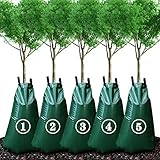
- 【BIG CAPACITY】Holds up to 20 gallons of water for deep watering to keep trees hydrated longer, especially in drought or hot weather areas. Most bags typically empty within 5–9 hours, while actual watering time may vary depending on soil type, weather, tree size, and water pressure. In some cases, it may take 5–24 hours to fully empty. Based on our testing, this release rate helps water reach the roots effectively while reducing evaporation in hot or dry conditions.
- 【EASY TO USE】Very easy to use, just wrap this water bag around the trunk, tighten the zipper and pour water in it. For larger trees, you can pull two of these drip irrigations together.
- 【HEAVY DUTY MATERIAL】Made of durable PVC tarpaulin material, UV resistant. Designed with wide water fill hole suitable for universal size hose, and sturdy handle for long time use.
- 【TIMELY HYDRATION】Our carefully tested watering system efficiently nourishes trees, saving you time and water. It guarantees water reaches the roots, preventing waste and evaporation, especially important during hot summers or droughts. Plus, It reduces the risk of waterlogging and root rot for too slow release. These are essential for newly planted or transplanted trees growth.
- 【BUY WITH CONFIDENCE】Thank you very much for your great support. Product quality and customer satisfaction is our top priority. If you're not completely satisfied with anything you get from us, contact us and we'll make it right.
Think like a builder, not just a gardener. Check the mature canopy width, root space, sunlight, drainage, utility conflicts, sightlines, and maintenance access. A tree planted too close to a sidewalk, driveway, foundation, patio, septic field, sewer lateral, or retaining wall can become a repair bill instead of an asset.
As a practical rule, keep large shade trees away from overhead utility lines unless the species is specifically selected for that location. Near pavement, choose species with less aggressive surface rooting and give the tree enough open soil volume. For small front yards, narrow side yards, and parking strips, mature size matters more than how attractive the tree looks in a container at the nursery.
Also look at the soil. Most tree roots grow in the upper 12 to 18 inches of soil, so surface compaction is a serious issue. After construction, remodeling, grading, or driveway work, the soil may be packed hard by equipment. If water runs off instead of soaking in, or if a shovel bounces off the ground, correct the soil condition before planting.
Call 811 and Check Permit Rules Before You Dig
In the United States, call 811 before digging. That applies even if you are planting a small tree. Utility lines can be shallower than expected, and service lines may run through parts of the yard that do not look obvious from the surface.
811 marking typically covers public utility lines, but it may not locate every private line on your property. Irrigation lines, landscape lighting wire, detached garage power, propane lines, pool equipment lines, and private drainage systems may need separate locating. On our sites, we treat utility locating as a planning step, not a formality, because a tree hole, root-barrier trench, or auger can hit more than soil.
Permits are another location-specific issue. Many cities require permission to plant in a public right-of-way, tree lawn, parkway strip, or area between the sidewalk and curb. Some jurisdictions regulate species, spacing from intersections, distance from driveways, and clearance from utilities. Before planting near the street or sidewalk, check your local public works, urban forestry, or permitting department.
If the tree will be inside your private yard and away from public right-of-way, a permit is usually not required, but homeowners associations, historic districts, easements, and stormwater rules can still apply. If you are unsure where the property line or right-of-way begins, verify it before you plant.
Best Time of Year to Plant a Tree
For much of the United States, the best planting seasons are fall and early spring. Cooler weather reduces heat stress, and the tree can put energy into root growth before summer demand peaks. Fall planting is often excellent where winters are not severe and the tree has time to begin root establishment before the ground freezes.
PC Slower Than It Used to Be?
A free scan shows the junk files, broken settings and background clutter dragging Windows down - then fixes them in one click.Free scan · Windows 10 & 11Crashes, No Sound, or Screen Glitches?
Random freezes, missing sound and display glitches usually trace back to one bad driver. Find and replace yours safely.Free scan · under a minuteSpring planting works well when the soil is workable and before hot weather arrives. In harsh-winter regions, spring may be safer for borderline-hardy species. In hot-summer climates, avoid planting during peak heat unless you have a strong watering plan and the species handles summer planting well.
You can plant container-grown trees during more of the year than bare-root trees, but that does not mean every week is equal. A tree installed during a 95-degree week with dry wind needs far more attention than one installed in mild spring weather. If you are paying for professional installation, ask how the warranty handles watering, heat stress, and replacement timing.
What It Costs to Plant a Tree in 2026
Tree planting cost depends heavily on tree size, access, soil conditions, and whether the job is DIY or professionally installed. National 2026 estimates for professional planting commonly land around $200 to $700 for many residential trees, with typical semi-mature or installed-tree ranges around $540 to $680. Larger mature trees, difficult access, specialty species, or equipment-heavy installs can run from about $1,300 to $3,000 or more, and some large-tree projects can approach $5,000.
DIY can be much cheaper for a small sapling or container tree. A basic DIY project may be around $115 when you already own common tools and only need the tree, mulch, and watering supplies. That number climbs quickly if you need delivery, equipment rental, soil correction, irrigation work, stump removal, or help moving a heavy balled-and-burlapped tree.
The Tool Desk
Outbyte Driver Updater FREEFix the driver behind crashes, sound loss and screen glitchesFind Drivers →Outbyte PC Repair FREERepair Windows errors before they cause bigger problemsFix Now →Rank #2

- Package Include: You will receive 12 slow release tree watering bags, these are suitable for planting saplings in the arid areas or in the dry wheater, they can increase survival rate of saplings in the dry season well.
- Durable Material: These automatic tree drip irrigation bags are made of premium PE material and surface of these drip irrigation bags is sunlight-proof, so they are resistant to aging so you can keep them for a long time for not one-season use.
- Easy To Use: First, you need to place a tree watering bag around the bottom of the trunk, then tighten the zipper on the drip irrigation bag, finally you can put the water pipe into the water injection port at the top of the bag and fill the tree watering bag with water.
- Efficiently Work: These tree drip irrigation bags are all with a large capacity fo 20 gallon, and after you install these irrigation bag and fill them with water, the water in the bag body will slowly release and penetrate into the soil and trunk within 4-5 hours to keep the roots of the saplings moist.
- Of Great Benefits: These tree drip irrigation bags can save more than 30% of water than traditional irrigation methods, they are also very adaptable and do not pick soil, at the same time, they save lobor and can be used with nutrient solutions to improve the quality of tree growth.
| Cost item | Typical 2026 range | What changes the price |
|---|---|---|
| Small sapling or young container tree | $50 to $200+ | Species, size, nursery quality, warranty |
| DIY planting supplies | About $50 to $150+ | Mulch, compost used sparingly, hose, watering bags, hand tools |
| Professional planting, common residential tree | $200 to $700 | Labor rates, site access, soil, tree size, mulch bed |
| Semi-mature installed tree | About $540 to $680 | Caliper, delivery distance, root ball weight, handling needs |
| Mature or difficult-access tree | $1,300 to $3,000+ | Machinery, crane or skid steer access, large root ball, replacement risk |
| Large specialty installation | Up to about $5,000 | Large specimen trees, urban access, complex logistics, warranty terms |
The biggest price drivers are tree caliper and weight, container versus balled-and-burlapped stock, delivery distance, access for carts or equipment, rock or compacted soil, grading, irrigation, stump or root removal, disposal, permits, and whether several trees are planted in one mobilization. If you are comparing contractor bids, ask that the estimate separate the tree purchase, delivery, labor, mulch, soil correction, watering setup, permits, equipment, and warranty.
Tools and Materials You Need
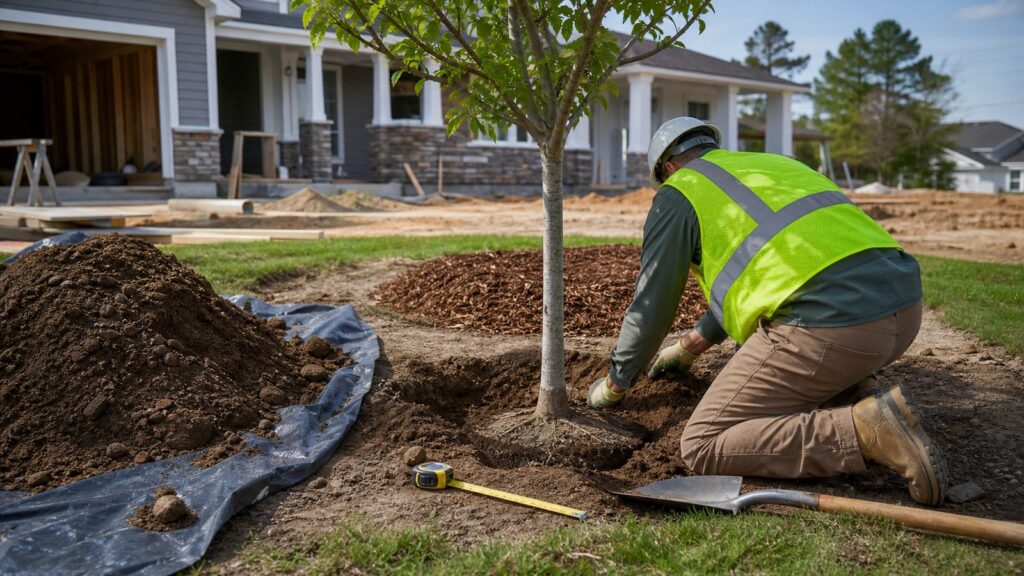
For a typical homeowner planting a small to medium container tree, you need a shovel, tape measure, utility knife or pruning saw for root correction, gloves, mulch, water, and a hose or watering bag. A tarp is useful for keeping excavated soil off turf and pavement. For compacted soil, a digging fork or mattock may help roughen and loosen the planting area.
For balled-and-burlapped trees, you may also need bolt cutters or wire cutters, a sharp knife, and enough help or equipment to move the tree by the root ball. Do not lift or drag a tree by the trunk. The trunk is not a handle; pulling on it can damage the root system and loosen the tree inside the root ball.
Stakes are optional, not automatic. Use them only when the root ball is unstable, the site is windy, the tree has a weak trunk, or the tree is in a high-traffic area where it may be bumped. If staking is needed, use broad flexible straps and remove them after about one growing season in most cases.
Do these 3 things before closing this tab:
1Repair Windows errors before they cause bigger problems2Scan for outdated or missing drivers - takes under a minute3Clear out junk files and repair common Windows errorsStep-by-Step: How to Plant a Tree Properly
1. Find the Root Flare Before You Measure
The root flare is the area where the trunk widens and transitions into major roots. It should be visible at the soil surface after planting. Nursery trees are often sold with soil or mulch covering the flare, so do not assume the top of the container or root ball is the correct planting height.
Gently remove excess soil from the top of the root ball until you find the first major roots and the trunk flare. Then measure from that flare to the bottom of the root ball. That measurement determines hole depth. If you skip this step, you can plant the tree several inches too deep before you even begin backfilling.
2. Dig a Wide, Shallow Hole
Dig the hole 2 to 3 times wider than the root ball. The depth should match the distance from the exposed root flare to the bottom of the root ball. The bottom of the hole should be firm and undisturbed so the tree does not settle lower after watering.
Do not dig a deep cone-shaped pit. Most roots expand horizontally through the upper soil layer, so width matters more than depth. If the sides of the hole become smooth or glazed, roughen them with a shovel so roots can move into the surrounding soil.
3. Check Drainage Before Setting the Tree
If the soil is heavy clay, compacted, or in a low spot, pause before planting. A simple drainage check is to fill the hole with water and watch how it drains. If water sits for many hours or the hole behaves like a bathtub, the tree may need a different location, a raised planting approach, drainage correction, or a species that tolerates wet soil.
In poorly drained soil, set the root flare slightly above surrounding grade and taper soil away from the root ball without burying the flare. Do not solve drainage by digging deeper and adding loose amended soil under the root ball. That often leads to settling, which puts the flare below grade.
4. Remove the Container or Open the Burlap
For container trees, slide the tree out of the pot and inspect the outer root mass. If roots are circling around the container shape, loosen them, slice the outer edge, or shave the outside of the root mass as needed. Planting a pot-shaped root system intact can lead to girdling roots that choke the tree later.
For balled-and-burlapped trees, set the tree in the hole first, then remove twine from the trunk and peel back burlap from the top of the root ball. Remove as much of the upper wire basket or obstruction as feasible once the tree is positioned. Keep the root ball intact during handling, and always move it by the ball, not the trunk.
5. Set the Root Flare at Grade
Place the tree so the root flare is at or slightly above the surrounding soil grade. Stand back and check the tree from two directions before backfilling. Rotate it so the best structure faces the main viewing angle, but do not sacrifice root position for appearance.
If the tree sits too low, lift it out and add firm soil beneath the root ball, then tamp lightly enough to prevent settling. If it sits too high by an inch or so, that is usually easier to correct with a tapered soil transition than a tree planted too deep. Never pile soil against the trunk to hide a height mistake.
6. Backfill With Native Soil
In most residential situations, backfill with the soil that came out of the hole. Break up large clods and remove construction debris, rocks that interfere with backfilling, trash, and chunks of concrete or asphalt. Lightly firm the soil as you backfill to remove large air pockets, but do not compact it hard.
Avoid heavily amending only the planting hole with compost, peat, or rich bagged soil. A sharply different soil texture can hold water like a bowl or encourage roots to stay inside the amended area instead of moving outward. If the whole bed needs improvement, amend a broad area, not just the hole.
Free tools Windows power users keep installed
One-click scans. No signup required.
7. Water Thoroughly
Water immediately after planting. The first watering settles soil around the roots and reveals low spots or air pockets. Add soil only where settling creates a depression, and keep the root flare exposed.
A slow soak is better than a quick splash. For a small tree, this may mean several gallons at planting. For a larger root ball, it can take substantially more. The right amount depends on root ball size, soil texture, drainage, temperature, and rainfall.
8. Mulch Wide, Not High
Apply mulch 2 to 4 inches deep over a wide ring around the tree. Keep mulch off the trunk and root flare. A clear gap of several inches around the trunk is a simple way to avoid moisture trapped against bark.
The mulch ring reduces grass competition, moderates soil temperature, and keeps mowers and string trimmers away from the bark. Do not build a mulch volcano. Mulch piled against the trunk encourages decay, pests, and girdling roots.
What’s actually slowing this PC down?
Pick the symptom - the matching free tool is one click away.
9. Stake Only When Needed
A properly planted small tree often does not need staking. Movement helps the trunk develop strength. If the root ball rocks in the hole, the site is windy, or the tree is exposed to traffic, use two or three stakes outside the root ball with broad flexible straps.
The straps should allow some trunk movement, not hold the tree rigid. Remove stakes and straps after about one growing season unless a qualified arborist recommends otherwise. Forgotten straps can girdle the trunk.
Watering Schedule for a Newly Planted Tree
Water by soil moisture, not by the calendar alone. Check the root ball and surrounding soil several inches down. The root ball can dry out faster than the surrounding soil, especially with container-grown trees, while clay soil around it may still feel damp.
Immediately after planting, water deeply. During the first growing season, check frequently, especially during heat, wind, and dry spells. Many young trees need water several times per week at first, then less often as roots begin to expand. In cool rainy weather, reduce watering. In hot dry weather, increase it.
Rank #4

- 🌳 Made Tree Watering Easy:Keep your trees stronger and healthier with this premium tree watering bag designed for slow release irrigation. It delivers water directly to the root zone over 5–8 hours, ensuring deep soil penetration, reducing runoff, and improving water absorption. Ideal for newly planted trees and young saplings that need consistent hydration.
- 💧 Efficient Slow Release Irrigation System:This tree irrigation bag provides an eco-friendly and efficient watering solution by gradually releasing water where trees need it most. Compared to traditional watering methods, it minimizes waste while maintaining evenly moist soil—perfect for hot summers, drought conditions, and long-term tree health.
- 🛡️ Durable, UV-Resistant & Leak-Proof Design:Built from heavy-duty, UV-resistant materials, this tree water bag is designed to withstand harsh outdoor environments season after season. Reinforced seams and a secure zipper system ensure reliable performance and leak-free watering, even with repeated use.
- ⚙️ Easy to Install & Use No digging, staking, or tools required. Simply wrap the watering bag around the tree trunk, zip it up, and fill through the wide 3” opening. The setup takes just minutes, making it an easy tree irrigation solution for homeowners, landscapers, and gardening professionals. Refill as needed 1–2 times per week.
- 🌿 Versatile Use & Ideal for New & Established Trees Suitable for street trees, garden trees, park trees, shrubs, and newly planted trees, this watering bag for trees is ideal for both residential and professional landscaping use. It helps reduce transplant shock, improve survival rates, and ensure long-term healthy growth in all environments. Great for homeowners, landscapers, and anyone looking for an easy tree irrigation solution.
A practical homeowner approach is to check soil moisture every 2 to 3 days for the first few weeks, then weekly once the tree shows consistent moisture and new growth. Water slowly over the root ball and nearby soil. The goal is moist soil, not saturated soil. If water puddles for long periods or the soil smells sour, drainage or overwatering may be the problem.
Continue establishment watering beyond the first month. Depending on species, size, climate, and planting season, a new tree may need supplemental water through the first one to three growing seasons. Larger caliper trees take longer to establish than smaller young trees because they have more canopy to support and a heavier root ball that was disturbed during harvest or transplanting.
Independent reader supportYour contribution helps us test, update, and keep practical guides available for everyone.Common Tree Planting Mistakes That Cause Long-Term Problems
The most common mistake is planting too deep. If the root flare is buried under soil or mulch, the trunk stays wet, roots may grow incorrectly, and the tree can decline slowly over several years. A tree can survive the first season and still be compromised.
The second mistake is digging a narrow, deep hole. That creates a post-hole condition where roots have a harder time moving into surrounding soil. A broad planting area is better because most active roots grow near the surface.
Container-grown trees need special attention. Circling roots should be corrected before planting. If a root is already wrapping around the trunk or outer root ball, cut or redirect it. Leaving those roots in place can cause girdling as the trunk expands.
Another mistake is over-improving the hole. A little compost may be useful in a broad bed preparation plan, but filling one isolated hole with fluffy amended soil can create drainage and root-growth problems. Fertilizer is also not the first priority at planting. Water, root position, soil contact, and mulch are more important.
We also see mechanical damage around newly planted trees. Turf growing to the trunk invites mower scars and string-trimmer cuts. Those wounds can permanently damage young bark. A wide mulch ring is cheap protection.
Construction-Site Issues: Compaction, Grading, Drainage, and Access
Tree planting after a construction project needs extra care. Heavy equipment, material staging, dumpsters, and repeated foot traffic can compact soil far beyond the visible work area. A beautiful new tree planted into compacted subsoil may struggle even if the planting hole itself looks correct.
Do these 3 things before closing this tab:
1Scan for outdated or missing drivers - takes under a minute2Clear out junk files and repair common Windows errors3Fix the driver behind crashes, sound loss and screen glitchesBefore planting, protect the future planting area from equipment traffic when possible. After planting, keep equipment, stored materials, and vehicles off the root zone. If grading changed the yard, make sure water does not now collect around the planting location or run away so fast the tree cannot use it.
Watch for buried construction debris. Chunks of concrete, mortar, asphalt, treated wood, plastic, and stone can interfere with drainage and root expansion. If the site was recently remodeled, do not assume the topsoil tells the whole story.
Access also affects cost and method. A small container tree can be carried by hand through a gate. A large balled-and-burlapped tree may need a dolly, mini skid steer, plywood protection over lawn or pavement, or even crane access on high-end projects. Those logistics are why a tree that costs a few hundred dollars at the nursery can cost much more installed.
When to DIY and When to Hire a Pro
DIY makes sense when the tree is small enough to move safely, the location is clearly on private property, utilities are marked, drainage is straightforward, and you can commit to watering. A healthy 5- to 15-gallon container tree is often a good homeowner project. Smaller trees are easier to plant correctly and often establish faster than oversized nursery stock.
Best Value

- Time-saving: if you got sick of manually watering trees in the Hot Summer over and over again with the hose.Tree Watering Bags Simply fill the bags with a hose or bucket, and they will provide continuous hydration for your plants, requiring only one simple operation from you.especially for maintaining large areas of trees
- Drought Savior: The stable water release function ensures continuous moisture at the roots of trees, sparing you the hassle of manually watering them repeatedly during hot summer days. Providing timely hydration for trees ensures their healthy growth.
- Strong Material: tree watering bags are made of Sturdy PVC material, ensuring durability and reliability for long-term use. they are resistant to tearing, eliminating concerns about damage if snagged. The sturdy material can easily withstand the pressure when the bags are filled.
- Slow Release Design: Each tree watering bag has a capacity of 20 gallons, ensuring that trees receive sufficient water during drought seasons or in the early stages of planting. The water is released slowly, penetrating into the ground to avoid wastage. Release time is between 8 hours.
- Easy Installation and Use: Ensure that trees are at least 25 inches above the ground with branches, and that one bag fits tree trunk diameters of 2-8 inches. Wrap the bag around the base of the tree, zip it up, insert the hose, and start filling. For larger trees, multiple bags can be connected together for use.
Hire a professional when the tree is heavy, the root ball requires equipment, the site has compacted clay or drainage problems, the planting location is near utilities or hardscape, or the tree is going in a public right-of-way. A pro is also worth considering when you are planting several trees, building a new landscape after construction, or trying to screen a view with specific spacing and mature-size requirements.
Professional installation should include more than digging a hole. Ask how the contractor handles root flare exposure, circling roots, burlap and basket removal, drainage concerns, staking, mulch depth, watering instructions, and warranty documentation. For higher-value installs, we like to document the species, install date, watering plan, warranty terms, and photos showing the exposed root flare at planting.
Final Checklist Before You Walk Away
Before the job is done, confirm the root flare is visible. The tree should be straight, stable, and sitting at or slightly above grade. The backfill should be native soil, firm enough to remove air pockets but not compacted hard. Mulch should be 2 to 4 inches deep, spread wide, and pulled back from the trunk.
Make sure the tree has been watered thoroughly and that water is soaking in rather than ponding for hours. If stakes were used, straps should be broad, flexible, and loose enough to allow movement. Put a reminder on your calendar to remove stakes after about one growing season.
Free tools Windows power users keep installed
One-click scans. No signup required.
Finally, write down the watering plan. Most tree failures after correct installation come from the weeks and months that follow. A new tree needs attention through heat, wind, dry spells, and the first full growing season. Plant it at the right height, protect the root zone, water with judgment, and you give the tree the best chance to become a long-term part of the property instead of a short-term landscape expense.
Frequently Asked Questions
How deep should you plant a tree?
Plant the tree only as deep as the distance from the exposed root flare to the bottom of the root ball. The hole should have a firm bottom so the tree does not settle lower after watering.
Should the root flare be above ground?
Yes. The root flare should be visible at the surface and set at or slightly above surrounding grade. In heavy clay or poorly drained soil, slightly above grade is often safer as long as soil is tapered away without burying the flare.
How wide should the planting hole be?
A good rule is 2 to 3 times wider than the root ball. Width matters because most tree roots grow in the upper 12 to 18 inches of soil and need loosened horizontal space.
Recommended Free Tools
Do I need to call 811 before planting a tree?
Yes. Call 811 before digging so public utilities can be marked. Also check for private lines such as irrigation, landscape lighting, pool equipment, propane, or detached-garage electrical service.
How much does it cost to plant a tree in 2026?
Many professional residential tree installations fall around $200 to $700, with common semi-mature installs around $540 to $680. Large, mature, difficult-access, or equipment-heavy tree installations can run $1,300 to $3,000 or more.
Should I stake a newly planted tree?
Not always. Stake only when the root ball is unstable, the site is windy, the trunk is weak, or the tree may be bumped. Use broad flexible straps, allow some movement, and usually remove stakes after about one growing season.
Quick Recap
Product prices and availability are accurate as of the date/time indicated and are subject to change. Any price and availability information displayed on Amazon at the time of purchase will apply.