Plan campus construction by treating the academic calendar as one of several operating constraints—not as a rule that every disruptive task must happen during a break. The University of Maryland’s Campus Facilities Plan calls for “purposeful consideration of the academic calendar” and for leveraging summer and winter breaks to start major construction activities. A workable plan also protects teaching, research, clinical and support services, movement, and public safety while accounting for neighboring projects, approvals, funding, deliverables, and supply conditions.
The practical objective is a sequence that places the most disruptive work in feasible low-occupancy or service windows, provides surge or swing space before programs are displaced, maintains safe routes, and can be adjusted when campus needs or project conditions change.
As an Amazon Associate I earn from qualifying purchases.
Start with a campus operating calendar, not just term dates
Construction schedules often begin with a notice to proceed and a target completion date. On a campus, that is incomplete. The same week can contain a term start, residence-hall move-in, a laboratory shutdown, a clinical operation, a major event, and a delivery peak. Each can change what work is safe or tolerable.
Crashes, No Sound, or Screen Glitches?
Random freezes, missing sound and display glitches usually trace back to one bad driver. Find and replace yours safely.Free scan · under a minutePC Slower Than It Used to Be?
A free scan shows the junk files, broken settings and background clutter dragging Windows down - then fixes them in one click.Free scan · Windows 10 & 11Create one controlled calendar that the project team and campus operators use together. Mark the following inputs:
#1 Best Overall

- Highly Visible: The bright orange safety color and 360 degree reflective collars make the parallel parking cones visible from a long distance during day or night
- Easy to Store: This set of collapsible traffic cones can be easily folded to a height of 1.7 inches, which is very easy to store, and there is a storage bag inside, so you can stack them when you don't need to use them, which is convenient for you to carry
- Stable: The base of cones is 11.4" X 11.4" and the weight of each road cone is 1.45 lbs, meaning that they'll stay put exactly where they need to be. Whether you're trying to control driveway traffic or keep footfall in order at a festive event
- Widely Use: These road cones can collapse up to 28 inches tall, and each cone with 2 reflective collars means people are unlikely to miss them, suitable for parking lots, driving Training, building construction, warning areas
- Plastic Base: The cone part of our traffic cone is made of Oxford cloth, the base is made of plastic, and the base size is 11.4 inches X 11.4 inches. NOTE: the base is made of plastic, please be careful not to be crushed by cars when using it
- Teaching terms, reading periods, examinations, orientation, and commencement.
- Residence-hall move-in and move-out, campus holidays, and other periods when population and traffic surge.
- Research, clinical, animal-care, data-center, utility, and other operations that cannot simply pause.
- Events that change pedestrian, bicycle, vehicle, loading, transit, or emergency-access patterns.
- Service dependencies such as dining, housing, libraries, custodial work, deliveries, waste removal, and accessible routes.
- Known work by other capital projects, utilities, roads, landscape crews, or maintenance teams.
The calendar is a decision record. Give every activity an owner, a source, a last-confirmed date, and a rule for change. A registrar’s term dates may be reliable months ahead, while an event route or a research shutdown can move. Review the calendar at design, procurement, mobilization, each major phase change, and before every planned interruption.
Separate occupancy from operational sensitivity
Breaks generally reduce classroom use, but they do not make a site empty. Researchers, resident students, facilities staff, contractors, visitors, and essential services may remain. Conversely, a term-time week can sometimes accommodate work if noise, vibration, access, and utilities are controlled. Record both expected occupancy and the sensitivity of nearby activities instead of labeling a week simply “available.”
Classify the work by the disruption it creates
Do not assign a whole project to “summer” and stop there. Break the scope into activities and identify the disruption mechanism for each one.
Noise, vibration, dust, and odor
Demolition, coring, pile work, concrete placement, roof work, and certain finishes can affect instruction, examinations, research instruments, and concentration. A break may be the best starting window, but the decision depends on the adjacent rooms, the hours permitted by the institution, and the controls that can be installed. If noisy work must continue during a term, define measurable limits, notice periods, quiet hours, monitoring, and a stop-work contact before mobilization.
Access-limiting work
Excavation, cranes, scaffolding, facade work, utility trenches, and staging can remove doors, sidewalks, cycleways, loading areas, parking, or emergency approaches. The affected route—not the construction fence alone—belongs in the schedule. A short closure during a low-traffic period can be less disruptive than a long partial restriction, but only if an accessible, signed, and operational alternative exists.
Utility and service interruptions
Power, water, steam, cooling, information technology, fire protection, elevators, and laboratory systems can have consequences far beyond the building under construction. Identify the users, required shutdown duration, redundancy, testing, restart sequence, and contingency before choosing a date. A break can make a shutdown easier to coordinate, yet critical research or clinical functions may still operate then.
Low-disruption tasks
Surveying, prefabrication, interior work behind sealed partitions, commissioning, and other controlled activities may fit during a term if routes, noise, life safety, and building operations remain acceptable. Treat that as a project-specific determination, not a blanket exemption.
Recommended Free Tools
Use breaks strategically, not mechanically
UMD’s plan supports leveraging summer and winter breaks for starting major construction activities; it does not say that all disruptive work must occur in those periods. Use a break when it improves the risk profile, then test whether the resulting sequence is actually feasible.
Rank #2

- 5.5 lbs Heavy Duty Base: These 28-inch traffic cones meet US MTUCD standards and won't be blown over or moved easily, meaning they stay where you need them
- Flexible PVC: The road parking cones is made of sturdy PVC material, can withstand vehicle impacts, bend under pressure, and rebound to their original shape without cracking
- High Intensity Reflective Strips: Each large traffic cone has 1 4-inch and 1 6-inch reflective collar, ensuring 360° visibility day and night even in low-light or rainy conditions, enhancing the safety of drivers and workers
- Multiple Uses: Can be used for highway maintenance, road works and construction, marking road hazards, parking lots, or crowd control
- Easily Stored for Transport: The traffic cones are easy to stack together and take up very little space in your car or garage, making storage and transportation very easy
When a break is a strong candidate
- The work needs broad access to rooms, roofs, utilities, or loading areas.
- Noise, vibration, dust, or traffic would materially affect instruction or public movement during a term.
- A service interruption can be completed, tested, and recovered within an approved window.
- Temporary routes, swing space, and staffing can be ready before occupancy rises again.
- Neighboring projects and major events do not create a combined access problem.
When a break can be misleading
A break may contain move-in, athletic events, conferences, summer programs, research campaigns, or maintenance shutdowns. It can also compress the schedule so tightly that a late delivery or failed test pushes work into the next term. Compare the complete sequence, including commissioning and recovery, rather than counting only the days available for physical work.
Protect continuity with surge and swing space
Schedule protection is not enough if a program loses the rooms, equipment, routes, or services it needs. UMD specifically identifies optimizing campus surge space as a way to maintain program continuity during construction.
Define what must continue
For every affected program, document the minimum service that must remain available, the people and equipment involved, the environmental or security conditions required, and the time needed to relocate and return. Include teaching, research, clinical care, student services, accessibility functions, deliveries, and emergency response.
Match space to the activity
Identify candidate rooms or facilities, then verify capacity, technology, ventilation, power, accessibility, security, hours, and travel time. A nominally vacant room is not surge space until it is commissioned, furnished, connected, and assigned to an accountable operator. Show the move sequence and the date by which each temporary location is usable.
Protect the return path
Temporary arrangements often last longer than planned. Reserve a recovery window, retain essential records and equipment, and set a decision point for extending or ending the relocation. Link demobilization, cleaning, testing, and occupancy approval to the construction schedule so a nominal completion date does not leave the program without a functioning home.
Make traffic and site safety schedule requirements
Access planning must be approved before work starts, not improvised after a sidewalk closes. The University of British Columbia requires an approved traffic-management plan before construction begins. Its stated purposes include maintaining public safety, minimizing campus impact, providing advance warning, and identifying alternative routes where needed.
Build the traffic-management plan around actual movements
- Map pedestrian, bicycle, vehicle, transit, service, accessible, and emergency routes.
- Show the work zone, hoarding, crane swings, delivery points, queue areas, and sight-line restrictions.
- Specify the alternative route, signs, lighting, barriers, crossing controls, and responsible inspection role for each closure.
- Coordinate changes with security, emergency services, transport operators, event managers, and affected building operators.
- Set the communication date, field-installation date, inspection, and removal date for every control.
UBC also publishes institution-specific work hours, a variance process, and site-safety and contractor responsibilities. Those requirements are an example of how a campus may govern work; they are not a universal standard. Confirm the current rules, permits, approval authority, allowable hours, accessibility requirements, and emergency procedures for the institution where the project is located.
What’s actually slowing this PC down?
Pick the symptom - the matching free tool is one click away.
Do not treat a product as a plan
Route-marking items such as traffic cones may be used as one component of an approved, site-specific arrangement, but cones alone do not make a route safe or satisfy local requirements. The plan, trained personnel, physical separation, inspection, lighting, signage, and maintained alternative route are what control risk.
Rank #3
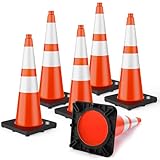
- BLACK WEIGHTED BASE: These safety cones are 28 inches tall and feature a heavy duty black rubber base that ensures they stay upright and are not easily knocked over by people or cars. They also remain stable in high winds, heat, direct sunlight and other inclement weather
- 2 HIGHLY VISIBLE REFLECTIVE COLLARS: The bright orange color and 2 highly refective collars on each cone ensure high visibility during the day and night
- FLEXIBLE PVC:These construcion cones are made of sturdy, stable flexible pvc that can withstand heavy loads without deforming
- EASY STORAGE: Each cone can be stacked for compact storage, taking up minimal space in your car or garage. This makes them easy to carry and storage
- Suitable for Multiple Scenarios:This black base traffic safety cone is designed for versatile use in various settings, including roadway control, parking lots, construction sites, school zones, and event management. It can assist with vehicle guidance, temporary lane marking, hazard warnings, and crowd control, making it a practical option for both indoor and outdoor safety needs
Coordinate adjacent projects and campus events
Review the area as a network, not as isolated project boundaries. Princeton cautions that adjacent projects can create severe combined pedestrian or bicycle disruption even when each project’s separate impact appears modest.
Overlay the constraints
Put all active and proposed work on one map with pedestrian and bicycle corridors, accessible paths, loading, transit, parking, emergency approaches, utility alignments, and event routes. Ask whether two projects close different segments of the same desire line, whether their delivery peaks overlap, and whether a detour remains usable for the full period.
Use a shared coordination forum
Assign a coordinator with authority to resolve conflicts. Require each project to provide its next access change, major delivery, utility interruption, noisy operation, and restoration date. Keep a forward-looking look-ahead and a short-term field plan; a quarterly master schedule will not reveal a closure that shifts next week.
Free tools Windows power users keep installed
One-click scans. No signup required.
Test the combined impact
Walk the proposed routes at busy periods with representatives of accessibility services, transportation, security, building operations, and event management. If the combined route fails, change the sequence, provide a different route, stagger deliveries, or move one project’s activity. Do not wait for complaints to reveal the interaction.
Compare break, term-time, and phased options on the same axes
No official source assigns universal weights to schedule options. Use a transparent scoring workshop so the project sponsor can see why a date was selected and what would change the decision.
| Schedule option | Potential advantage | Questions that must be answered |
|---|---|---|
| Break-period start or major phase | Lower routine classroom use may make noisy, access-limiting, or utility work easier to launch. | Are research, clinical, housing, events, and essential services still operating? Can temporary routes and surge space be ready in time? Is there enough recovery time before the next term? |
| Term-time work | Can preserve momentum when a break is too short or when controlled work can occur without unacceptable disruption. | What are the noise, access, safety, and service effects on instruction and operations? What notices, quiet periods, monitoring, and contingency arrangements are required? |
| Phased or hybrid sequence | Can keep part of a program operating while isolating the most disruptive activities in selected windows. | Do partitions, temporary routes, relocations, utility changeovers, and repeated mobilizations add risk, cost, or duration? Can neighboring projects use the same access plan? |
Score each option against disruption to instruction, research, and services; continuity arrangements; safety and access for pedestrians, cyclists, vehicles, and building users; interactions with other projects and events; the duration and feasibility of interruptions; and dependencies such as funding, approvals, and deliverables. Record the evidence and the owner for each score.
Build dependencies into the baseline schedule
Construction cannot start merely because a calendar window looks quiet. UBC notes that start dates can depend on funding, project deliverables, and supply-chain conditions. UMD’s plan also allows sequencing to be adjusted to reflect current needs.
Show the gates
Include funding release, design and procurement deliverables, permits, traffic-plan approval, utility outage authorization, environmental or safety reviews, long-lead materials, contractor mobilization, testing, occupancy approval, and restoration. Give each gate a required date and a decision owner. If a gate slips, show the downstream term, event, and service consequences rather than silently consuming float.
Rank #4

- Nighttime Visibility - These orange cones with high-intensity 360° reflective bands help drivers spot hazards from afar after dark and in daylight, guiding traffic around a work zone or driveway.
- Heavy-Duty Stability - These are weighted 5.3-lb parking cones. Each traffic cone uses a square base for stability on asphalt, concrete, and uneven surfaces - reliable for job sites and lane control.
- Flexible PVC Durability - Withstanding impact, these street cones bend when bumped, then spring back to shape without easily cracking, which means fewer replacements even during repeated deployment.
- Ready for the Sun & Cold Weather - The road cones stay bright and dependable through sun exposure and low temperatures, maintaining performance across seasons for long-term use on campuses or properties.
- Stackable, 28-Inch Tall Cones - The traffic safety cones create clear boundaries fast; they're stackable construction cones that nest together for compact storage - easy to transport and store.
Protect the reopening date
Count inspections, commissioning, cleaning, training, move-back, route reinstatement, and contingency in the schedule. A room that is physically complete but not tested or released is not available for teaching or research. Define the evidence required to declare each space, route, and service operational.
Use explicit change triggers
Set thresholds that force a review: a funding or delivery slip, a failed utility test, a changed event route, a new adjacent project, an unsafe detour, or a program that cannot use its temporary space. Preapprove who can resequence work, extend a closure, or move an interruption to another window.
Independent reader supportYour contribution helps us test, update, and keep practical guides available for everyone.A practical planning sequence
- Assemble the calendar. Collect term and examination dates, orientation, move-in and move-out, research and clinical constraints, events, services, access routes, and nearby project schedules. Confirm each item with its operational owner.
- Break the scope into activities. Label each activity by noise, vibration, dust, access, utility, delivery, safety, and occupancy effect. Identify predecessor work and the earliest safe start.
- Define continuity measures. Assign surge or swing space, temporary routes, service substitutions, equipment moves, staffing, communications, and return criteria before selecting dates.
- Overlay movement and neighbors. Produce one map of closures, detours, deliveries, emergency access, events, and adjacent projects. Resolve combined impacts with the responsible coordinators.
- Develop schedule options. Compare break-period, term-time, and phased sequences using the same disruption, continuity, safety, interaction, interruption, and dependency tests.
- Secure approvals and readiness evidence. Obtain the required traffic, safety, utility, accessibility, permit, and operational approvals. Verify that materials, crews, temporary facilities, signs, barriers, and communications are ready.
- Publish a controlled look-ahead. Issue the next access changes, noisy operations, deliveries, outages, and restoration dates to affected operators and users. Keep one current source of truth.
- Review and resequence. At each gate and major phase change, compare actual conditions with assumptions. Adjust the sequence when funding, deliverables, supply, events, or operational needs change.
Communicate changes in the language of affected users
A technically correct schedule can still fail if people cannot tell when a route closes or where a service moves. Every notice should state the location, exact start and expected restoration, what users will experience, the alternative route or service, accessibility information, who is responsible in the field, and where urgent problems should be reported.
Use layered communication: advance notices for planned changes, on-site signs and wayfinding at the decision point, updates to building operators and emergency personnel, and a same-day channel for unexpected conditions. Notify again when a route reopens or a temporary service ends. Keep an archive so the project can explain which assumption led to a change.
Common failure modes and corrective actions
Failure: putting every disruptive task in summer
Why it fails: Summer may contain research, housing, events, maintenance, or move-in activity, and the compressed window leaves little recovery time.
Correction: Verify occupancy and operational sensitivity, reserve surge space, include commissioning and recovery, and move only the activities that genuinely benefit from the window.
Failure: treating a break as a vacant campus
Why it fails: Essential services and high-consequence operations may continue even when classes do not.
Quick wins for a faster PC:
Repair Windows errors before they cause bigger problemsFix Now →Fix the driver behind crashes, sound loss and screen glitchesFind Drivers →Clear out junk files and repair common Windows errorsFree Scan →Correction: Obtain operating-owner confirmations and plan service continuity before approving the shutdown.
Best Value
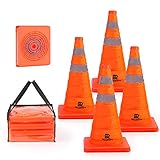
- Highly Visible: The bright orange safety color and 360 degree reflective collars make the parallel parking cones visible from a long distance during day or night
- Easy to Store: This set of collapsible traffic cones can be easily folded to a height of 0.9 inches, which is very easy to store, and there is a storage bag inside, so you can stack them when you don't need to use them, which is convenient for you to carry
- Stable: The base of cones is 9.6" X 9.6" and the weight of each road cone is 0.7 lbs, meaning that they'll stay put exactly where they need to be. Whether you're trying to control driveway traffic or keep footfall in order at a festive event
- Widely Use: These road cones can collapse up to 18 inches tall, and each cone with 2 reflective collars means people are unlikely to miss them, suitable for parking lots, driving Training, building construction, warning areas
- Sturdy PVC: We construct every tall traffic cone in this 4 pieces set from orange oxford fabric and sturdy PVC. This material is a very strong type of plastic
Failure: approving a closure without an operational detour
Why it fails: A map line does not prove that an accessible, safe, lit, signed, and available route exists.
Correction: Walk and inspect the alternative, assign maintenance responsibility, and include it in the approved traffic-management plan.
Failure: reviewing projects one at a time
Why it fails: Adjacent closures and deliveries can combine into a severe corridor problem.
The Tool Desk
Outbyte PC Repair FREERepair Windows errors before they cause bigger problemsFix Now →Outbyte Driver Updater FREEFix the driver behind crashes, sound loss and screen glitchesFind Drivers →Correction: Require a shared map and look-ahead for all projects affecting the same routes, buildings, or services.
Failure: locking dates before dependencies are ready
Why it fails: Funding, deliverables, approvals, or supply conditions can move the start and push work into a term.
Correction: Make each dependency a dated gate with an owner and a resequencing trigger.
Failure: measuring completion by construction activity alone
Why it fails: Testing, cleaning, training, moves, and route restoration may still prevent use.
Do these 3 things before closing this tab:
1Fix the driver behind crashes, sound loss and screen glitches2Repair Windows errors before they cause bigger problems3Scan for outdated or missing drivers - takes under a minuteCorrection: Define operational readiness evidence for every room, route, and service and schedule it before the promised return date.
Use the scale of the program to set coordination discipline
The University of Illinois Urbana-Champaign reported more than 40 active facility and infrastructure capital projects in its June 25, 2026 summer construction update, including renovations, accessibility, transportation, life safety, and utilities. That figure is a dated example of coordination scale, not a benchmark for another campus. A program with many simultaneous projects needs a shared calendar, route map, outage register, event overlay, and decision forum rather than separate project schedules that happen to use the same campus.
What a reliable calendar-based plan contains
- A dated academic and operational calendar with named owners and confirmation dates.
- An activity-level disruption classification and a reason for each proposed work window.
- Documented surge or swing space and continuity arrangements.
- An approved traffic-management plan with safe, accessible alternatives and inspection duties.
- A combined map and look-ahead covering adjacent projects, deliveries, and events.
- Funding, design, procurement, permit, utility, safety, material, testing, and occupancy gates.
- Communication responsibilities, escalation contacts, and field-change procedures.
- Readiness criteria for reopening spaces, routes, and services.
The result is not a calendar with construction pasted into empty weeks. It is an operating plan that uses breaks where they reduce risk, keeps essential programs functioning, and gives campus leaders a defensible way to change sequence when conditions change.
Quick Recap
Product prices and availability are accurate as of the date/time indicated and are subject to change. Any price and availability information displayed on Amazon at the time of purchase will apply.

