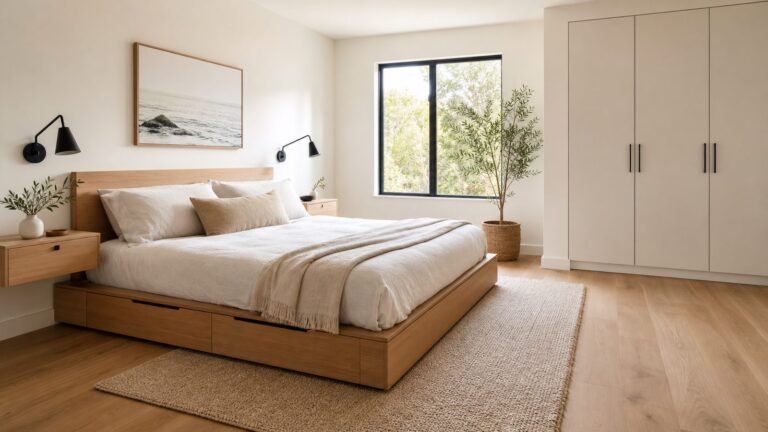
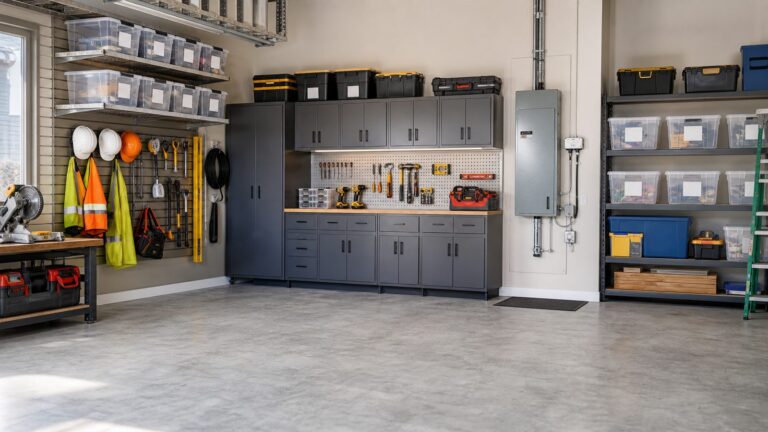
Before planning an addition, try a sequence of lower-impact changes: sort belongings, clear the routes you use every day, give routine items convenient homes, improve the layout, and add storage only for a specific need that remains. These steps can make a compact home easier to use, though no design change guarantees that an expansion will be unnecessary.
Start by reducing what the home needs to hold
More storage is not always the first answer to a crowded room. If belongings are spread across counters, floors, or furniture, adding containers can preserve the clutter rather than solve it. Begin by looking at what the home must accommodate, then decide whether each item belongs in the space.
As an Amazon Associate I earn from qualifying purchases.
Work in small, manageable batches
Choose one drawer, shelf, or category at a time instead of emptying the whole home. The City of Angel Fire’s downsizing handout recommends short sorting sessions and starting with a single category; Molly Maid similarly advises tackling one area at a time. This keeps the task contained and makes it easier to finish a useful portion of work.
Sort items into keep, donate, relocate, recycle, or discard. Duplicates are often a straightforward place to begin, but decluttering does not require getting rid of belongings that matter to you. Ask whether an item is used, whether it belongs in this room, and whether the space it occupies is worthwhile for your household.
#1 Best Overall

- Enhanced Safety with Dual Hinges: Our storage bench for bedroom is equipped with dual safety hinges; Allowing the lid to open wider and more smoothly. Enjoy quiet operation and protection against finger pinching
- Button Tufting with Diamond Stitching: Our versatile ottoman bench with storage features high-quality, soft and breathable fabric with no unpleasant odors. The lid is adorned with button tufting and delicate diamond stitching; Enhancing its modern design
- Powerful and Versatile: This bench with storage and seating offers ample storage space. This storage ottoman bench for bedroom is perfect for storing board games and controllers that you want to keep within easy reach blankets or magazines
- Superior Quality and Load-Bearing: Enhance your bedroom's style with this storage bench, built with a solid wood frame and sturdy Square legs, It supports up to 330 lbs. Offering added safety for your family
- Assembly Instructions: First, connect the metal connectors to the side panels without tightening the screws to avoid misalignment. After assembling the four frames; Securely tighten all screws; Finally. Attach the cover panel to complete the assembly
As Molly Maid advises, assess the space already available before buying organizers. If an item can be stored where it is used without obstructing a route or surface, that may be all the system it needs.
It can help to make the sorting decision concrete: if you keep an item, identify where it will live; if it belongs elsewhere, relocate it rather than letting it remain in the current room. If you are unsure about a meaningful object, you do not have to force a decision during a short session. The immediate goal is to distinguish what the household needs to keep from what is simply occupying convenient space.
Starting with one category can also make duplicates easier to notice. Gather like items in that bounded area or category, then decide how many are useful for your routine. The aim is not a bare room; it is a more deliberate match between belongings, available storage, and the activities the room needs to support.
Find where movement and daily routines get pinched
Walk through the home as you normally do: entering, carrying laundry, preparing food, sitting down, or moving between rooms. Notice where furniture narrows a route, where doors or drawers are hard to use, and where objects collect because there is no convenient place to put them. These observations point to practical changes more clearly than a general feeling that the room is too full.
Clear the routes that matter most
Move or remove furniture that interrupts the main paths through a room. A layout can feel more usable when walking routes, door swings, and access to everyday furniture are considered together. Measure clearances before settling on a new arrangement, especially where people need to pass one another or where a chair, cabinet, or appliance has to open.
There is no universal clearance number established by the guidance cited here, so judge the route in the context of the room and the people using it. A change that looks open in a plan may still be awkward if it makes a frequently used item hard to reach.
When trying an arrangement, pay attention to the whole route rather than one isolated spot. A chair pulled out for use, an open cupboard door, or a commonly used entry area can change whether the path works in daily life. Rearrangement is relatively easy to reverse: live with a promising layout long enough to notice whether it supports the routine, then adjust if it does not. Do not treat a visually open plan as successful if it makes a necessary task harder.
Give open-plan areas clear purposes
In a shared living, dining, or work area, define uses without automatically adding partitions. Furniture orientation, a rug, lighting, or a narrow console can signal where one activity ends and another begins. The aim is to make the arrangement understandable while keeping movement through the space comfortable.
Design advice from architect Bahar Seyed Tabatabaei of Tiam Architects is that “Overcrowding a space can make a room feel smaller and more restrictive,” while “thoughtfully placed furniture can improve flow, define zones, and make each area feel intentional.” These are design recommendations, not a measured promise of extra floor area. Livingetc published the comments on March 25, 2026.
Rank #2
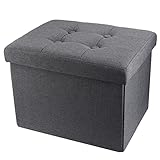
- 【ottoman】Our ottoman has the better size and Relaxed color,Length 17 x width 13 x height 13 inches and Grey,It is also a comfortable footstool,Proper size and thickened sponge pad can make him a good footrest,Sitting on the sofa and putting your feet on the ottoman can relax your legs, relax your whole body and enjoy the pleasant time
- 【Magic storage space】When our storage ottoman is assembled, we have 43L storage space,Put tools, blankets, books, magazines, sports equipment, dog leashes, etc. that can be temporarily used in the room to reduce the clutter.
- 【Multipurpose ottoman】Storage ottoman footstool can be used as a coffee table, small seat, chair stool, bed footstool, fishing stool, catapult good for study, bedroom, living room,dormitory,etc.
- 【Easy to assemble and to fold】Folding storage ottoman design, unfolded size: 17*13*13", only 17 "L x 13 "W x 2.5 "H when folded,Our storage ottoman is very easy to set up, without any tools.
- 【Strong and durable】This storage ottoman is made of quality E1 MDF, strong and durable, has the load bearing capacity up to 400lbs. The solid fixed plate and thicker high quality MDF wood give the bench a sturdy and non-deforming frame, you can safely stand on the bench or use it as a ladder or climbing tool
Before adding a divider or another piece of furniture to mark a zone, ask whether orientation, lighting, a rug, or a narrow console already does the job. A partition may create a stronger boundary, but it also adds another visual and physical element. Choose the lightest intervention that makes the activity areas legible without interrupting the routes between them.
Give frequently used items a convenient home
Keys, mail, chargers, shoes, and other repeat-use items can create small piles when they lack an obvious place. Choose a consistent home near the point where each item is used or brought into the home. A drop zone by the entry, for example, is useful only if it is easy to reach and simple to keep orderly.
Outdated Drivers Are Slowing You Down
One free scan finds every outdated or missing driver and matches the right update for your exact hardware.Free scan · exact hardware matchWindows Errors? Fix Them Before They Spread
Repair common Windows errors and clear accumulated junk for a smoother, more stable PC - no reinstall needed.Free scan · no reinstallPrefer a system that fits the routine rather than one that demands constant effort. A brief reset can return items to their homes before piles spread, but it should support daily life—not become a rigid housekeeping rule. Molly Maid recommends keeping frequently used belongings accessible and choosing furniture that earns the space it occupies.
Notice where a pile starts, not just where it ends up. If mail repeatedly lands on a counter, a convenient home near that point may work better than storage across the room. If shoes gather by the door, consider whether the available drop zone is easy to use. A storage system that is hard to access can fail even when it technically has enough capacity. Keep the solution simple enough that the household can maintain it without constant sorting.
Adjust the visual field without confusing it with extra space
A room can feel busy even when its walkways are clear. Many small objects spread across surfaces, competing finishes, and clusters of undersized decor can create visual interruptions. Try reducing surface displays and using a few appropriately scaled anchor pieces instead of many smaller ones.
Create continuity between rooms
Repeating a limited palette of colors or materials can make adjoining areas feel more connected. This does not require every room or object to match; the goal is to reduce the sense that every surface is competing for attention. Preserve access to windows and natural light where possible.
Use this as a way to choose among existing objects and finishes, not as a reason to replace everything. A repeated material or color can link spaces, while a succession of competing finishes may make transitions feel more visually busy. Likewise, a few larger, appropriately scaled pieces can feel more composed than many small decorations grouped across the same surfaces. These choices alter the visual impression, not the room’s measured area.
Use light and mirrors as visual tools
Mirrors, layered lighting, and wall lighting may help direct light or make activity zones easier to read. They do not increase actual square footage. Treat them as ways to shape perception and improve how a room is used, not as substitutes for clear circulation or needed storage.
Livingetc’s March 25, 2026 design guidance also discusses continuity and visual restraint as ways to make a space feel more intentional. Such advice is useful for considering the visual character of a room, but it does not establish a guaranteed result for every home.
Rank #3
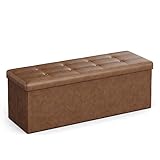
- 【QUICK ASSEMBLY, EASY FOLDAWAY】This storage ottoman from the SONGMICS MAZIE Collection has a foldable design that allows quick setup in seconds by simply inserting the bottom panel. Easily fold and store it under the bed or in a closet when not in use
- 【OODLES OF STORAGE】Unfold this storage box, insert the sturdy base plate, and you have 35 gal. (131 L) space for storing bed linen, books, or clothing
- 【GREAT STRENGTH】Built with thick MDF panels and reinforced with metal corner guards on the lid, this storage chest is strong enough to hold up to 660 lb (300 kg), so you can sit on it with your mind at ease
- 【COMFORTABLE SEATS】Padded with 1" (2.5 cm) thick, high-resilient, high-density foam, this storage bench is resistant to deformation, so you can sit on it comfortably
- 【MULTIPURPOSE】Place this storage chest in the bedroom as a bed end bench, in front of the sofa in the living room as a footrest, or in the hallway as a shoe bench—you have the final say!
Add storage only after identifying a remaining problem
Once belongings are sorted and the layout is considered, identify what still lacks a workable home. Then look for unused wall space, the backs of doors, cupboard interiors, or upper closet areas. Molly Maid and storage guidance from The Spruce describe options such as wall shelves, hooks, over-door organizers, and cupboard additions that can preserve floor or counter area.
Free tools Windows power users keep installed
One-click scans. No signup required.
Match the storage location to the kind of item and how often it is used. Wall shelves or hooks can make use of wall space; an over-door organizer or cupboard addition can use existing surfaces and interiors. These are options to assess, not a shopping checklist. First confirm what specific item or category needs a home and whether the proposed location leaves the room’s routes and working surfaces usable.
Match storage to frequency and weight
- Everyday items: Keep them within easy reach so the storage system supports the routine.
- Occasional-use items: Upper closet areas may suit belongings used less often.
- Heavy items: Store them where they can be retrieved safely rather than in a difficult or risky position.
- Visually busy collections: Consider closed storage if exposed objects make the room feel crowded.
Before installing shelves or hooks, check the wall or door, the intended load, and any building or rental restrictions. Safe fixing methods and permissions vary by property; do not assume a particular installation method is suitable everywhere.
Also weigh convenience against visual effect. Open shelves and hooks keep items visible and accessible, while closed storage can conceal objects that make a room feel busy. Neither choice is automatically better: use the approach that suits the belongings, the room, and the household’s ability to keep it orderly. Keep frequently used things reachable; reserve higher locations for occasional-use items rather than placing heavy belongings where retrieval is difficult or unsafe.
Choose furniture that replaces something else
A useful multipurpose piece should solve a real problem and fit the room. A storage ottoman can hold blankets; a bed with drawers may provide storage that otherwise calls for a separate dresser; a narrow console can combine a landing spot with storage. The benefit is strongest when the new piece replaces a separate item rather than simply adding another footprint.
What’s actually slowing this PC down?
Pick the symptom - the matching free tool is one click away.
Check the fit before buying
- Measure the room and the intended location, including the space needed to walk past the piece and open drawers or doors.
- Identify what the furniture will hold and whether that storage will be reachable in ordinary use.
- State what existing item or recurring clutter it will replace.
- Check that it does not block a route, window, door, or frequently used fixture.
If the piece has no clear purpose beyond “more storage,” pause. Storage can create capacity for additional accumulation if the belongings are not edited first. Prices, product dimensions, and availability vary, so confirm current specifications before purchasing.
A tape measure is a useful first step because a piece needs to work in the room, not just fit on a product page. Include the space needed for drawers to open and for people to pass the furniture. Then compare the proposed piece with the item it might replace: a bed with drawers is most useful if it can take the place of separate storage, rather than being added alongside a dresser that still occupies the same footprint.
Shopping should follow the problem, not lead it. The available guidance does not establish current prices, product specifications, or savings, so compare the dimensions and function of the specific options you are considering. Buy only when the piece has a clear job, fits the measured space, and keeps its contents accessible.
Independent reader supportYour contribution helps us test, update, and keep practical guides available for everyone.Compare changes by effort, access, and permanence
Start with changes that are easy to reverse, and consider more involved work only after seeing what those changes solve. The guidance supports a progression from decluttering and rearrangement to freestanding storage or furniture, then built-in work or structural changes. It does not provide comparative prices, so obtain local estimates rather than assuming one option is cheaper by a fixed amount.
Quick wins for a faster PC:
Fix the driver behind crashes, sound loss and screen glitchesFind Drivers →Repair Windows errors before they cause bigger problemsFix Now →Rank #4

- 【QUICK ASSEMBLY, EASY FOLDAWAY】This storage ottoman from the SONGMICS MAZIE Collection has a foldable design that allows quick setup in seconds by simply inserting the bottom panel. Easily fold and store it under the bed or in a closet when not in use
- 【AMPLE STORAGE】Measuring 15"D x 43"W x 15"H (38 x 110 x 38 cm), this storage bench offers a 35-gallon (131 L) volume. Its removable divider keeps your books, clothes, and blankets neatly sorted, or stores larger items like bed sheets
- 【STURDY AND DURABLE】Built with premium MDF panels and reinforced with metal corner guards on the lid, this ottoman is strong enough to support up to 660 lb (300 kg), making it a reliable seating or storage solution that will stand the test of time
- 【ELEGANT DESIGN, ENDURING COMFORT】This ottoman boasts a chic linen-look surface with an elegant tufting design, adding a stylish touch to your space. The double-layer fabric and high-resilience foam ensure lasting comfort for relaxation
- 【VERSATILE USES】This folding ottoman serves as a storage box, a footstool, and even a coffee table! It fits seamlessly into the living room, bedroom, entryway, or dressing room to meet various needs
| Change | What it can address | Key consideration |
|---|---|---|
| Decluttering and rearrangement | Unneeded belongings, blocked routes, and awkward activity zones | Begin with one manageable area and preserve access to daily-use items. |
| Freestanding organizers or multipurpose furniture | A specific storage gap or a need that can replace a separate piece | Measure the fit and confirm the storage is accessible. |
| Built-in storage | Awkward corners or storage needs that a movable piece does not address | Assess how it affects circulation and the room before committing. |
| Structural changes | A layout problem that remains after less permanent options are considered | Individual conditions, building requirements, and household needs determine suitability. |
Interior designer Juliette Byrne told Livingetc that “Bespoke joinery and built-in storage can transform awkward corners into practical features,” and described improving flow “without altering the architecture.” Built-ins may make better use of a specific constraint, but they are not a universal remedy; consider them against the cost, disruption, and purpose of other options. Livingetc published the comments on March 25, 2026.
The options differ in reversibility and access as well as appearance. Decluttering and rearranging let you test what changes help before committing to a purchase or construction. Freestanding furniture can address a defined gap but must fit without creating a new obstruction. Built-ins may turn an awkward corner into useful storage, while structural changes may be considered when a layout problem remains. Current guidance from Livingetc and the sources cited here does not establish price comparisons or a standard amount of space gained for any of these choices.
For any storage addition, evaluate the specific job: what will it hold, how often will it be used, and can the household retrieve it comfortably? For built-in or structural work, account for the room’s circulation and the property’s requirements. Installation rules, rental permissions, and professional services vary, so check local conditions rather than assuming a particular approach is allowed.
Decide whether the changes are enough for your household
After trying the changes that suit the home, consider whether the rooms support the activities that matter and whether people can move through them comfortably. If essential routines still do not fit, the issue may be more than visual crowding. There is no established universal threshold at which a household should expand; the decision depends on the home’s constraints, needs, and available alternatives.
Recommended Free Tools
A professional organizer or small-space interior designer may help when awkward constraints make it difficult to find a workable arrangement. If the remaining problem involves construction, building rules, or a possible addition, seek an individualized assessment from an appropriately qualified local professional. Practitioner and editorial design advice can guide practical choices, but it does not quantify how much larger a room will feel or prove that an addition can always be avoided.
When deciding whether to continue adjusting the existing home or explore expansion, focus on function: can people move through the rooms, reach what they use, and carry out essential activities? If the answer remains no after reasonable sorting, layout, and storage changes, consider the constraints that have not been solved. That does not by itself mean an addition is the right answer; it means the next step should be based on the household and property rather than a universal rule.
Frequently Asked Questions
What should I do first to make a small home feel less crowded?
Start with one drawer, shelf, or category and sort belongings before buying storage. Then identify blocked routes and places where everyday items collect. This order helps reveal what storage or layout change, if any, is still needed.
Will adding storage make my home feel less cramped?
It can help when it addresses a specific remaining storage need, especially if it uses wall, door-back, cupboard, or upper-closet space. But adding containers before sorting can preserve clutter or make room for more accumulation. Keep daily-use items reachable and retrieve heavy items safely.
Do these 3 things before closing this tab:
1Scan for outdated or missing drivers - takes under a minute2Clear out junk files and repair common Windows errors3Fix the driver behind crashes, sound loss and screen glitchesCan mirrors or a lighter visual palette create more space?
They may change how a room looks and feels, but they do not increase its actual square footage. A limited, repeated palette, fewer competing objects, mirrors, and layered lighting are visual design tools—not substitutes for usable circulation or needed storage.
How do I know whether to rearrange, add storage, or consider an expansion?
Try the lower-impact, more reversible steps first: edit belongings, improve routes and zones, and give routine items convenient homes. Add furniture or built-ins only for a defined problem. There is no universal expansion threshold; if essential activities still do not fit, seek an individualized assessment based on your household and property.
The Bottom Line
Before expanding, reduce what the home needs to hold, clear the routes and routines that matter, and add storage only when a specific gap remains. Measure and check access before buying furniture, and treat visual changes as perception—not extra square footage. If essential activities still do not fit, there is no universal threshold for expansion; get advice based on your home and household.
Quick Recap
Product prices and availability are accurate as of the date/time indicated and are subject to change. Any price and availability information displayed on Amazon at the time of purchase will apply.
The Tool Desk
Outbyte Driver Updater FREEFix the driver behind crashes, sound loss and screen glitchesFind Drivers →Outbyte PC Repair FREERepair Windows errors before they cause bigger problemsFix Now →