Recommended Free Tools
Do not make a homemade spotted-lanternfly spray. Dish soap, vinegar, oils, salt, and other household mixtures are not tested or approved for this use and can injure plants, pets, people, pollinators, and other wildlife. For a few lanternflies you can safely reach, use a physical method: knock them into a container, crush them, or place them in a container of soapy water or rubbing alcohol. If a spray is genuinely necessary, use a registered insecticidal soap labeled for the exact site and follow its directions completely.
This distinction matters: a container of soapy water is a way to dispose of insects you have captured. It is not a recommendation to spray soapy water across a tree, deck, garden, or building.
As an Amazon Associate I earn from qualifying purchases.
Why a homemade lanternfly spray is a bad idea
Spotted lanternflies are invasive planthoppers, but that does not make every household pesticide recipe safe or effective. University extension guidance specifically warns against using dish detergent, white vinegar, salt, boric acid, vegetable oil, garlic, chili, cayenne, essential oils, or similar ingredients as an improvised pesticide.
There are several problems with these recipes:
- They are untested for this use. A mixture that kills an insect in a jar may burn foliage, damage bark, contaminate surfaces, or fail to control insects outdoors.
- The dose is unknown. Household products vary in concentration and may contain fragrances, solvents, dyes, or other ingredients not intended for use on plants or pests.
- Non-target organisms can be harmed. Broad applications may expose bees, butterflies, beneficial predatory insects, birds, pets, aquatic life, and other animals.
- They may create a pesticide-use problem. In the United States, a registered pesticide label controls where, how, and under what conditions that product may be used. The permitted site, user, method, amount, and timing all matter. Local rules may add restrictions.
“Natural,” “organic,” or “homemade” does not automatically mean harmless. Do not use a recipe that tells you to dilute dish soap or vinegar and spray it on lanternflies or plants.
#1 Best Overall

- Chapin Garden Sprayer: Complete lawn care and basic cleaning tasks faster with the 1‑gallon translucent funnel‑top tank that allows quick, easy, spill‑free refills and fluid checks
- Reliable performance: Achieve consistent spray coverage of weeds, pesticides, fertilizers and general spraying. Improved modular design prevents leaks and lets you easily clean, replace seals, and maintain a tight, secure connection
- Comfortable handling: move easily around the yard during garden, cleaning and lawn maintenance jobs thanks to the lightweight poly tank and ergonomic pump handle designed for reduced fatigue
- Versatile spraying: switch between targeted stream or broad spray for weed control, cleaning and lawn care using the adjustable cone nozzle and 34‑inch hose for flexible reach and precision
- Proudly Made in the USA: Expertly designed and manufactured in the USA with global materials, backed by Chapin’s 1-year limited warranty and supported by a dedicated US-based customer service and technical help centre
First, make sure it is actually a spotted lanternfly
Before killing insects or destroying egg masses, confirm the identification. Spotted lanternfly (Lycorma delicatula) is native to Asia and feeds on many plants, including grapevines, hops, stone-fruit trees, and hardwoods. Tree-of-heaven (Ailanthus altissima) is a preferred host.
- Early nymphs: black with white spots.
- Fourth-instar nymphs: red with white spots and black striping.
- Adults: gray-brown forewings with black spots. Red, black, and white hind wings show when the insect flies or opens its wings.
- Egg masses: gray or gray-brown, mud-like patches that may weather and crack.
Feeding can produce honeydew, a sticky sugary residue that encourages black sooty mold. The insects can be a serious agricultural and nuisance concern, but they do not bite or sting, do not bore into houses or other structures, and are not routinely responsible for killing healthy ornamental plants in residential landscapes.
Population status, quarantine boundaries, reporting instructions, and pesticide restrictions vary by location. USDA APHIS reported spotted lanternfly populations in 19 states and the District of Columbia in its August 26, 2025 update, but readers should verify current information with their state agriculture department or Cooperative Extension.
Quick wins for a faster PC:
Repair Windows errors before they cause bigger problemsFix Now →Scan for outdated or missing drivers - takes under a minuteDriver Scan →Safest immediate response for a few reachable insects
If only a small number of insects are within safe reach, physical removal is usually the most proportionate response. Do not climb trees, use ladders carelessly, or put yourself near traffic, power lines, or unstable outdoor structures to reach them.
- Knock them down. A strong stream of plain water can dislodge insects from a plant. Direct the water at the insects rather than applying a household soap mixture to the foliage.
- Capture them in a container. Knock or brush adults and nymphs into a container holding soapy water or rubbing alcohol. Keep the insects in the liquid, close the container, and dispose of it appropriately.
- Crush, swat, or stomp reachable insects. This avoids broadcasting an untested chemical across the property.
- Stop when the job becomes unsafe. Many egg masses and insects are higher than a homeowner can safely reach. Removing a few visible insects will not eliminate a mobile population from an entire neighborhood.
Maryland Extension describes spot or whole-yard spraying as capable of making only a small, temporary reduction while exposing beneficial organisms. Lanternflies continue to move in from surrounding areas, so an outdoor contact spray should never be presented as season-long or area-wide protection.
Rank #2

- Designed for homeowners and professionals: reduce mess and speed up lawn care with a wide‑mouth, translucent 48‑ounce tank that makes refilling and fluid‑level checks simple. The seals and gaskets work with all common lawn and garden, weeds and pest chemicals
- Versatile spraying: handle weed control, plant care, and cleaning tasks using an adjustable cone nozzle that switches from fine mist to focused stream - perfect for feeding plants and flowers, mist beehives, and general cleaning
- Consistent performance: stay productive during garden projects with an in‑tank anti‑clog filter that helps maintain smooth, uninterrupted spray output
- Comfortable control: work longer with less hand fatigue thanks to the ergonomic handheld design and thumb‑controlled shut‑off making it ideal for extended lawn and garden use
- Proudly Made in the USA: Expertly designed and manufactured in the USA with global materials, backed by Chapin’s 1-year limited warranty and supported by a dedicated US-based customer service and technical help centre
If you truly need a spray: choose a labeled insecticidal soap
If lanternflies are concentrated on a valuable plant or another site where treatment is justified, the closest legitimate alternative to a homemade soap spray is a registered insecticidal soap spray. This is a formulated pesticide, not ordinary dish detergent.
Use this decision path:
- Confirm the pest and treatment site. Read the product label to ensure it covers spotted lanternfly, the plant or surface being treated, and your intended use. Labels differ for ornamental plants, edible crops, landscapes, and other sites.
- Decide whether treatment is warranted. A nuisance cluster on a hard surface may not justify treating an entire tree or yard. Consider the number of insects, the plant’s value, the risk to pollinators, and whether physical removal is practical.
- Read the entire label before opening the container. Follow the listed application method, protective-equipment requirements, weather restrictions, re-entry instructions, harvest interval, and disposal directions. Never improvise a stronger concentration or combine the product with vinegar, detergent, oils, or another pesticide unless the label specifically permits it.
- Apply only where the label allows. Keep the spray off people, pets, waterways, edible plants, and surfaces not covered by the label.
- Target the insects directly. Insecticidal soap works primarily by contact. It must wet the lanternflies; it does not create a durable treated zone that prevents new insects from arriving.
- Repeat only as directed. Insecticidal soap has little residual activity. A second application may be permitted, prohibited, or subject to a waiting period depending on the product and site.
Avoid treating blooming plants or making broad applications that could expose bees and other beneficial insects. Do not make a casual homeowner application of pyrethroid products: Maryland Extension cautions that these products are non-selective and can harm pollinators and other non-target organisms.
If you are considering an insecticidal soap spray, select one whose current label covers your specific site and pest. The product category is not a license to substitute dish soap, and the label—not an online recipe—determines how it may be used.
Remove reachable egg masses during the egg season
Eggs are stationary, so they can be a more practical management target than moving adults. Spotted lanternfly egg masses are generally laid from late summer into early winter, with much of the deposition occurring in October. They overwinter and hatch in spring.
Look on tree trunks and branches as well as hard outdoor surfaces, including:
Rank #3

- PetraTools Garden Sprayer - Perfect for DIYers Seeking Professional Results: Our durable yet lightweight water sprayer, with a 52” hose and 16” wand, ensures comfortable extended use and excellent coverage, making it ideal for versatile liquids such as fertilizers, mulch glue, and pesticides.
- Translucent Tank with Large Ergonomic Handle for Comfortable Use: This weed sprayer features a funnel-shaped opening for easy pouring, a large handle to reduce hand strain during extended use, and a translucent tank with markings to simplify every gardening task.
- Built-in Pressure Release Valve for Safe Operation - Prevent accidental spray bursts with a safety valve that releases excess air pressure. Built with heavy-duty components, our sprayers in lawn and garden offers consistent and leak-free operation when correctly assembled and maintained.
- 1 Gallon Sprayer with 2 Nozzles for Precise Spray Control: The HD101 pressure sprayer features an adjustable nozzle for a gentle mist or powerful jet and a fan tip nozzle for wide coverage, making it perfect for lawn care, pest control, weed killing, fertilizing, watering, and more!
- Clog-Free Performance with Built-In Filters: Our garden sprayer 1 Gallon features high-quality built-in filters that prevent debris from clogging the nozzle, ensuring consistent operation every time. If the nozzle becomes clogged, clean the filters to restore optimal performance.
- decks, concrete, fences, and outdoor furniture;
- grills and other equipment;
- vehicles, trailers, campers, and firewood; and
- other smooth or rough surfaces exposed outdoors.
A typical mass may resemble a gray-brown smear and contain approximately 30 to 50 eggs. However, do not destroy every gray or mud-like patch. Beneficial insects can also leave egg masses on bark and other surfaces. Confirm the identification first using current state or Cooperative Extension guidance.
For a correctly identified, reachable mass:
- Wear suitable gloves and use a putty knife or plastic scraper.
- Scrape the mass into a bag or container holding rubbing alcohol or hand sanitizer.
- Keep the eggs in the liquid rather than allowing them to dry on the ground.
- Seal the container or bag and dispose of it according to current local guidance.
Do not simply scrape an egg mass onto soil, pavement, or a deck. Eggs left on the ground may still hatch. Do not climb or take other dangerous measures to reach masses high in a tree.
Prevent lanternflies from traveling with your equipment
Spotted lanternfly eggs can be laid on many hard surfaces, and adults and nymphs can hitchhike on outdoor items. Before leaving an area where lanternflies are established, inspect and clean:
- vehicles, wheel wells, trailers, and campers;
- firewood and outdoor tools;
- lawn and construction equipment;
- patio furniture, grills, and decorations; and
- boxes, tarps, gear, and other items stored outdoors.
Remove insects and egg masses before moving these items. Check current quarantine and transport requirements for your state, because those rules can change.
Rank #4

- Easy to See, Easy to Refill: No more guessing—the clear 50oz tank lets you check liquid levels at a glance, while the side filling port with measuring cup makes refills quick, accurate, and mess-free—no need to remove the top lid
- Durable & Leak-Resistant Seals: Upgraded fluororubber gaskets inside the pump sprayer provide excellent resistance to corrosion and wear; This ensures longer service life and reduces the risk of leaks while spraying
- Safety You Can Rely On: Worry less while you work—the pressure release valve automatically vents excess air to keep spraying safe and controlled, while the ergonomic handle with lockable trigger supports both continuous and intermittent spraying with ease
- Spray Your Way, Comfortably: Adjust the nozzle from a fine mist for delicate plants to a strong stream for your lawn or patio; The ergonomic pump handle offers a comfortable grip, helping reduce fatigue during long garden sessions
- One Tool, Endless Possibilities: From watering and fertilizing plants, spraying herbicides, cleaning around the home, or even washing cars, this versatile sprayer handles all your lawn, garden, and household tasks with ease
Non-spray measures for plants and trees
Fine-mesh barriers
Fine-mesh netting can protect vulnerable plants such as grapevines. Secure the sides and bottom so insects cannot crawl underneath. Stems touching the mesh can still be reached and fed upon, and enclosing vegetation can increase humidity and disease pressure in some conditions. Inspect the plant and barrier regularly.
The Tool Desk
Outbyte Driver Updater FREEFix the driver behind crashes, sound loss and screen glitchesFind Drivers →Outbyte PC Repair FREEClear out junk files and repair common Windows errorsFree Scan →Covered circle traps
A circle trap can be purchased or built around a tree trunk to guide lanternflies into a collection chamber. Do not use an exposed sticky trap as a general solution. Uncovered adhesive traps can capture or injure birds, squirrels, beneficial insects, and other animals. A screen or other protective cover is needed to reduce by-catch.
Tree-of-heaven management
Tree-of-heaven is a preferred spotted-lanternfly host, so its presence may contribute to local pressure. Identification is essential: it can be confused with native sumac and black walnut. Do not remove or chemically treat a tree based on a casual resemblance, and do not apply herbicide without a product label and locally appropriate guidance.
What not to expect from any contact spray
- It will not protect an entire neighborhood.
- It will not stop new lanternflies from arriving.
- It will not provide season-long residual control unless a product label specifically supports that claim and use.
- It will not make an unsafe tree-climbing or egg-removal job safe.
- It will not justify treating flowering plants or every surface on a property.
The practical goal is targeted management: remove reachable insects, protect high-value plants when appropriate, destroy correctly identified reachable egg masses, inspect items before transport, and consult local authorities when the infestation or quarantine situation requires it.
When to contact local experts
Contact your state agriculture department or Cooperative Extension if you need help confirming an identification, reporting a suspected infestation, understanding a quarantine, choosing a treatment site, or determining whether a tree-of-heaven is present. A licensed pest professional may be appropriate when insects are high on trees, concentrated around a commercial crop, or creating a problem that cannot be handled safely with physical removal.
Free tools Windows power users keep installed
One-click scans. No signup required.
Frequently Asked Questions
Can I use dish soap to kill spotted lanternflies?
Do not spray dish soap on lanternflies or plants. Extension guidance warns that household dish detergents are untested for this use and may damage plants and harm people, pets, pollinators, and other non-target organisms. You may place insects you have captured into a container of soapy water, but that is different from spraying soapy water over vegetation.
Best Value
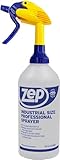
- High-Output Sprayer: Delivers more than three cubic centimeters per pull and streams of up to 30 feet
- Ergonomic Comfortable Trigger: Allows for three-finger spraying, reducing fatigue
- Adjustable Nozzle: Provides a range of sprays, from a fine mist to a direct stream
- Contains Graduated Measurements On Side: Makes accurate refilling simple
- Ready-To-Use: Quick identification with designated area for product labeling
Can I spray vinegar on spotted lanternflies?
No. White vinegar is not a recommended spotted-lanternfly pesticide. It can injure plants and expose other organisms, while its effectiveness and safe concentration for this use have not been established.
Do spotted lanternflies bite or damage houses?
They do not bite or sting, and they do not bore into houses or other structures. They can be a nuisance and produce sticky honeydew that encourages sooty mold. They also feed on many plants, but they have not been shown to significantly damage otherwise healthy ornamental plants in typical residential landscapes.
Will one spray keep spotted lanternflies away for the season?
No. Contact products such as labeled insecticidal soaps work only when they directly wet the insects and generally have short residual activity. Lanternflies move continuously, so new insects can arrive after treatment. Follow the product label for any repeat application.
What’s actually slowing this PC down?
Pick the symptom - the matching free tool is one click away.
The Bottom Line
Bottom line: There is no responsible homemade lanternfly-spray recipe to publish. Skip dish soap, vinegar, oils, and other household mixtures. For a few reachable insects, use physical removal or a container of soapy water or rubbing alcohol. If treatment is justified, use a registered insecticidal soap labeled for the exact site, apply it only as directed, and expect direct-contact, short-lived control—not whole-yard or season-long protection.
Quick Recap
Product prices and availability are accurate as of the date/time indicated and are subject to change. Any price and availability information displayed on Amazon at the time of purchase will apply.




