Keep your business easy to reach and easy to find. Before work begins, learn the project schedule, map customer and delivery routes, and agree on a reliable way to raise access problems with the project team. As conditions change, give customers precise directions and keep staff, suppliers, and online listings up to date. These steps can reduce friction, but they cannot guarantee that construction-related losses will be avoided; local schedules, permits, support programs, and eligibility vary.
Start with the two things customers need most: access and visibility
Customers need to know both that your business is open and how to get to it. The Federal Highway Administration (FHWA) identifies customer and delivery access, together with signs that explain how to enter and leave, as central issues during road construction. Its guidance is in “What Can Be Done to Keep Businesses Going During Construction?” in Safe Access for Everyone Is Good for Business. FHWA puts the point plainly: “The two main issues during construction are maintaining access to businesses for customers and deliveries and having sufficient signage and visibility so that customers know a business is open and understand how to enter and exit the site.”
As an Amazon Associate I earn from qualifying purchases.
That focus helps keep planning practical. A business may be technically open but hard to find behind fencing, cut off from its usual parking, or difficult to reach on foot. Plan around the actual routes customers, workers, and deliveries will use—not just the construction notice’s general description of the work. No single mitigation measure can guarantee that customers will keep coming or that revenue will remain unchanged. Toronto’s guidance notes that mitigation can reduce negative financial effects but will not eliminate them entirely.
Quick wins for a faster PC:
Scan for outdated or missing drivers - takes under a minuteDriver Scan →Clear out junk files and repair common Windows errorsFree Scan →Before construction begins, make an access and continuity plan
Get the schedule, phases, and project contacts
Check the project notice and the relevant city, county, state, or transportation agency project page. Ask for the work phases and dates, and how each phase may affect sidewalks, vehicle routes, transit, parking, loading, utilities, and entrances. Sign up for official notices and attend project briefings if available. Ask for a named contact and a dependable way to report urgent access problems. FHWA recommends a single agency point of contact and regular progress reports for affected businesses.
#1 Best Overall

- Will never rust or need repainting.
- Ordering a 2-Pack White "Signicade Deluxe" saves money
- Base can be filled with sand or water to add weight for wind resistance / Lift Up/Drop In feature to hold your sign panel
- No tape, screws or Velcro needed because of drop-in sign holder
- Holds two 24" x 36" signs (Signs not included with stand)
Before contacting the project team, write down the needs specific to your business:
- Hours when customer access is most important, including busy periods or seasonal peaks.
- Delivery and pickup windows, loading needs, and any time-sensitive receiving requirements.
- Accessible routes customers and staff need to use.
- Where staff arrive and park, and whether they rely on transit or a particular entrance.
- Utilities or internet service essential to daily operations.
Bring that list to a project briefing or call. Ask which phase will affect each need, when changes are expected, how much notice businesses will receive, and how schedule changes will be shared. Ask whom to contact if an entrance, sidewalk, loading area, or utility is unexpectedly blocked. If you have more than one access requirement, make them concrete: for example, identify the hours a delivery must arrive or the route that customers using mobility devices need to follow. A general request to “keep access open” is harder to act on than a clear description of the access customers and staff require.
Ask which measures can be incorporated into the project plan. Potential requests include keeping entrances clear, adding approved directional signs, arranging temporary or secondary access, identifying alternative parking, staging work along the corridor, scheduling disruptive work after hours or during a slower season, and providing progress updates. These are requests to discuss, not guaranteed accommodations; feasibility and local rules determine what can be done. Raise them early, while schedules and traffic-management plans may still be under discussion, and confirm any agreed arrangements in writing or in the project’s official updates when possible.
Recommended Free Tools
Map customer routes, parking, and deliveries
Walk or map likely approaches to the business by foot, car, transit, and delivery vehicle. Confirm which sidewalks and crossings will remain open, where customers can park, whether loading zones will move, and whether a rear entrance or lane could serve as an alternative. Discuss customer parking and pickup arrangements with the project team, your business association, and neighboring businesses. Ask whether construction-worker parking can be kept out of customer spaces.
Think through the trip from the customer’s point of view, not only the final entrance. A route that technically remains open may still be confusing if a crossing is moved or a detour sign points away from the business. If parking changes, explain where to park and how to walk from the parking area. If customers use transit, check whether stops, routes, or pedestrian approaches are affected. Confirm whether a route is accessible and safe rather than assuming that a path shown on a map is usable for every visitor.
Give suppliers and delivery companies the revised route, loading location, and delivery window before work starts. Decide how you will receive or send goods if the usual route becomes unavailable. Confirm who at the business will monitor delivery updates and communicate changed instructions to drivers. A practical alternative depends on the business; a plan suitable for a retailer may not work for a restaurant or a service business. Discuss timing and access constraints with suppliers rather than waiting until a truck is delayed or unable to reach the loading area.
Make directions clear before access changes
Prepare short instructions customers can act on, such as: “We are open. Use the side entrance on [street], park at [location], and follow [route].” Keep an up-to-date route map or written directions on your website and social accounts. Refresh your business listings, hours, and voicemail when access changes.
Rank #2

- Versatile Poster Placement: Our A Frame Sidewalk Sign features a push-in design, allowing for easy poster placement from top to bottom or bottom to top. This exquisite and convenient design streamlines the process of replacing ads effortlessly (Frame Only).
- Optimal Size Compatibility: Designed to accommodate 24 x 36 inches boards and posters up to 8mm thick, our A-Frame sandwich board sidewalk sign maximizes advertising impact. Displaying two signs simultaneously attracts attention from multiple directions.
- Robust and Weather-Resistant: Coated with classic black paint and constructed from high-quality painted iron, our sign holder boasts a sturdy and durable design. Its all-metal construction ensures resilience against the elements, making it resistant to dust and weather conditions.
- Portable and Easy to Store: The foldable design of our Sidewalk Sign makes it highly portable and easy to carry, fitting seamlessly into your car boot. With a structure that doesn't break the ground, changing posters becomes a breeze, making it perfect for on-the-go advertising.
- Wide Range of Applications: With its solid construction, worry less about stability. Suitable for outdoor placement on pedestrian streets, outside restaurants, bars, museums, and ideal for indoor displays. Its versatility ensures effective advertising in various settings.
Ask the project team or business association about approved open-for-business and directional signs. Wayfinding may require coordination among the business, association, contractor, and local government, and public approval may be required. Do not place a sign in a public right-of-way until you have checked applicable rules. Signs should show the route customers actually need to follow, not just announce that the business is open. Check that fencing, hoarding, equipment, or other signs do not hide the entrance, and use wording and languages customers can understand.
A portable A-frame sidewalk sign is one possible way to show an approved open-for-business or directional message, but it is not automatically permitted or effective. Check placement rules and coordinate with the project team, property owner, or local authority before using one. Make sure the sign is visible without blocking the walking route or directing people toward a closed entrance. Milwaukee describes project-specific open-for-business signs, and FHWA emphasizes clear access signage; those examples support the use case, not a universal right to place a sign wherever it is convenient.
Prepare operations and cash flow
Compare the construction plan with your hours, staffing, inventory, customer service, marketing, suppliers, utilities, internet, sales channels, and any landlord responsibilities. Consider changes that fit your business, such as curbside pickup, delivery, online sales, revised receiving windows, a new service, or adjusted hours. A strategy used successfully by a nearby business may not suit your customers, costs, or capacity.
Ask the landlord, project team, suppliers, and staff about operational dependencies that may be affected. Construction can disrupt more than foot traffic: it may affect utilities, internet, staff access, public transit, parking, visibility, noise, and dust. Identify which disruptions would prevent you from serving customers or receiving goods, and decide whom to contact if they occur. Share practical instructions with staff before the first change, including where customers should be directed and how to handle pickup or delivery questions.
Do these 3 things before closing this tab:
1Fix the driver behind crashes, sound loss and screen glitches2Clear out junk files and repair common Windows errors3Scan for outdated or missing drivers - takes under a minuteBuild a basic budget and cash-flow plan for the possibility of lower revenue or delayed deliveries. Check local resources rather than assuming financial assistance exists. Toronto’s construction guidance recommends looking into applicable grants and payment deferrals after construction is announced. Minneapolis, by contrast, directs businesses to low-interest loan information and explicitly says the city does not provide construction-impact grants or tax breaks. Availability and eligibility are local and program-specific. Ask about application steps and timing, and do not count on a program until you have verified that it exists and that your business may qualify.
During construction, keep directions and operations current
Tell people what changed and how to respond
Update customers, employees, suppliers, and your project contact whenever routes, entrances, parking, hours, or delivery instructions change. Each notice should say what changed, when it applies, and exactly how to reach or work with the business. For customers, include where to park and walk, which entrance to use, and any pickup instructions. Milwaukee’s guidance recommends sharing routes and detours through channels such as voicemail and website maps; Minneapolis likewise emphasizes telling customers where to park and walk.
Keep the same current directions wherever a customer might look: your website, business listings, social media, voicemail, signs, and staff instructions. Assign someone to check them when the project changes phase. Inconsistent directions can send customers to a closed entrance even when another route is available. Include the timeframe in each update, and remove or revise outdated instructions so customers are not left to choose between conflicting routes. If a route changes with little notice, update the channels customers are most likely to use first and tell staff what to say when questions come in.
Rank #3

- Stand Only, capable of holding two signs 24" wide 36" tall
Do not limit communication to people who already follow your social accounts. Use the project’s approved signage or business-association channels where available, and make sure your website or listing answers the basic question, “How will customers access my business during construction?” Wisconsin DOT uses that exact question in its business guide. A clear answer should explain the current route, entrance, parking or drop-off option, and the best way to check for further changes.
Coordinate with nearby businesses
Where it is practical, work with neighboring businesses and your local business association on shared wayfinding, parking, and promotion. Some project or city programs may provide business notices, area advertising, detour maps, or signs, but the support offered and the businesses eligible depend on the particular program. Ask the project contact or association what is available for your location.
Coordination can also help prevent contradictory directions. Agree on shared information about parking or a detour when businesses use the same approach, and check with the responsible agency before distributing a map or placing signs. Ask whether worker parking can be separated from customer spaces and whether a shared pickup or parking arrangement is workable and permitted. Keep the plan simple enough for staff and customers to follow, and revisit it if the project phase changes.
Track the effect and adjust deliberately
Keep consistent records of sales, customer counts, average transaction or order mix when available, operating costs, delivery problems, and construction disruptions. Compare them with a pre-construction baseline and note when phases or access conditions change. The NSW Small Business Commission says accurate financial records can help document effects on profits and customer numbers if a business needs to raise a dispute or concern about obligations.
Start the baseline before work begins if you can. Record the same measures in a consistent way over time, and note unusual events or changes in access alongside them. This makes it easier to distinguish a construction-related disruption from ordinary variation without assuming that every sales change has one cause. Keep copies of project notices and relevant communications with your records. The goal is not to produce a prediction of losses, but to understand what is happening and support any assistance request or concern with contemporaneous information.
Outdated Drivers Are Slowing You Down
One free scan finds every outdated or missing driver and matches the right update for your exact hardware.Free scan · exact hardware matchPC Slower Than It Used to Be?
A free scan shows the junk files, broken settings and background clutter dragging Windows down - then fixes them in one click.Free scan · Windows 10 & 11Use the records to decide whether to change marketing, staffing, inventory, hours, or sales channels. Toronto’s guidance recommends monitoring sales, revenue, and traffic to identify whether aid may be needed. Milwaukee advises tracking revenue by customer type and cautions against reflexively using deep discounts: a promotion that increases visits can still hurt profit if the margin does not support it. Evaluate promotions against costs and actual results rather than assuming that more traffic means better returns. Make one change at a time where practical, then review whether it improved access, sales, or workload before committing more resources.
Choose measures that fit your customers and constraints
There is no single access solution for every business. Before committing staff time or money, compare practical options against the following questions. This is a decision aid, not a published scoring system.
Rank #4
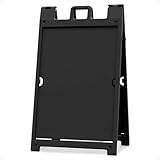
- QUICK CHANGE FEATURE - Change signs by easily sliding in and out of Stay Tabs, no adhesive required to attach display panels
- INTERNAL WEIGHT CAPABLE - Each sign frame has four fill holes. Remove plug from fill hole and fill each hole with up to 2.5 pounds of sand for added weight
- DOUBLE-SIDED - Display signs on both sides of frame to maximize exposure. Each side holds one 24" x 36" sign, up to 3/16" thick
- PORTABLE AND STORABLE - Sign frame easily folds down for convenient transport and storage. Hinges lock in open position to prevent over-extending
- NO MAINTENANCE - All plastic construction is weather resistant and made for indoor and outdoor use. Weighs 20 lbs with an overall folded size of 45" x 28" x 4"
- Customer effort: Is the alternate route, entrance, parking, pickup, or delivery arrangement simple to understand and use?
- Feasibility and permission: Can the project team, landlord, municipality, or property owner approve it, and can you operate it safely?
- Cost and margin: What will it cost, and could delivery charges, promotions, or changed hours reduce profit?
- Reach: Does it help walk-in customers, drivers, delivery recipients, existing regulars, or new customers?
- Reliability and updates: How often may routes change, and can staff keep directions accurate?
- Business fit: Does the option suit your customer base, product or service, staffing, and delivery capacity?
For example, a new pickup route is only useful if customers can follow it and staff can manage orders there. A sign can help only if its placement is permitted and it points to a usable entrance. Online ordering or delivery may suit some restaurants and retailers, but it requires suitable operations and may add costs; it is not a universal replacement for in-person access.
Saint Paul’s small-business toolkit includes examples of a restaurant using third-party delivery and online orders and a bakery adding catering. These are examples of possible adaptations, not proof that the same strategy will work for every business or a guarantee of results. Consider whether you can fulfill additional orders, whether customers use the channel, and whether the costs fit your margins before adopting it. A short-term workaround should not create a workload or expense the business cannot sustain.
The Tool Desk
Outbyte Driver Updater FREEFix the driver behind crashes, sound loss and screen glitchesFind Drivers →Outbyte PC Repair FREEClear out junk files and repair common Windows errorsFree Scan →Check for trade-offs as well as benefits. Adjusted hours might better match customer access or staffing constraints, but customers need accurate hours wherever they look. Delivery can reach customers who cannot easily visit, but it may bring fees or capacity demands. A temporary sign can improve visibility, but an unapproved or poorly placed sign can create a new problem. Compare each option with your actual customers, operating capacity, and project constraints rather than choosing it simply because another business has tried it.
Look for local support, but verify its limits
Contact the project liaison, local government, or business association to ask about communication, signage, parking, business notices, financial resources, or claim procedures. Examples of local programs show why it is important to check the specific rules:
- Toronto: The city’s guide covers preparation, sign coordination, sales monitoring, and investigating grants or payment deferrals.
- Milwaukee: Its Support for Business program describes business liaisons, communication and education, and project-specific open-for-business signs.
- Minneapolis: The city points businesses to construction schedules, financial planning resources, low-interest loan information, and damage or claim guidance. It says it does not provide construction-impact grants or tax breaks.
- Alameda Corridor-East: The project’s voluntary program may provide notices, advertising, directional signs, and detour maps to eligible businesses near specified major construction projects. Eligibility is determined after outreach.
A San Antonio program page listed up to $300 for an eligible construction-area business sign, but the amount and conditions apply to its specified project areas and local rules; the year was not stated on the accessed page. The page was not available for full verification during source review, so recheck the current official information before relying on the figure. Do not treat it as a general grant or assume it applies to another location. For any assistance, confirm the current terms, application process, eligibility, and deadlines with the administering agency.
Keep records of project notices, changed routes, access disruptions, and communications with the project team. If you have concerns about damage, insurance, contractual obligations, or a claim, ask the relevant local agency and your insurer or professional adviser about the applicable process. The available guidance does not establish your legal rights, insurance coverage, or eligibility; those depend on your location, policy, contract, and circumstances. Guidance from another city can help you identify questions to ask, but it is not a substitute for your local project notice and rules.
When construction ends, help customers return
Tell customers when normal access returns and update route information, signs, listings, and voicemail. Reconnect with customers who stopped visiting and review whether delivery, online ordering, or other temporary services should continue. A reopening event or joint promotion with nearby businesses may help reintroduce the area, but judge it against your costs and results. The NSW Small Business Commission notes that customers may take time to return; Milwaukee also recommends post-construction promotions and reviewing performance.
Best Value

- 【The A Frame Sidewalk Sign】Our A Frame Sidewalk Sign push-in design, posters can be placed into the slot from top to bottom or from bottom to top , which is exquisite and beautiful and helps you replace ads in a much easier and more convenient way (Frame Only).
- 【Double-Sided Display】A-Frame sandwich board sidewalk sign 24"W x 36"H and the thickest poster that can be placed is 8mm , maximizes advertising from multiple directions and angles,Displaying two signs simultaneously attracts attention from multiple directions. bring you excellent advertising effect.
- 【Wide Range of Applications】With its solid construction, worry less about stability. Suitable for outdoor placement on pedestrian streets, outside restaurants, bars, museums, and ideal for indoor displays. Its versatility ensures effective advertising in various settings.
- 【Robust and Weather-Resistant】Our a frame sign holder 24x36 outdoor Coated with classic black paint and coupled with high-quality painted iron frame. All metal construction, durable, keep the dust out, resistance to weather.
- 【Portable Structure】The Sidewalk Sign is foldable design, easy to carry and storage, can easily fit into your car boot. It does not break the ground structure, and is easy to Change posters, perfect for advertisement display.
Check that temporary information is removed or corrected so customers do not keep following a detour after access is restored. Review which communications customers used, which operational changes were useful, and which added cost or staff burden without helping. Keep the measures that fit your business and customers; discontinue those that no longer make sense. Do not assume that sales will return immediately or that a particular promotion will produce a set result. Use your records to plan the next phase of recovery and to inform future discussions with project teams.
Frequently Asked Questions
What should I ask the construction project team before work starts?
Ask for the project phases and dates, expected changes to entrances, sidewalks, crossings, parking, loading, transit, utilities, and delivery routes, plus how schedule changes will be communicated. Give the team your specific needs—such as busy access hours, delivery windows, accessible routes, staff parking, or essential utilities—and request a named contact and a reliable way to report urgent problems. Possible measures such as signs, alternative parking, temporary access, staged work, or after-hours scheduling are requests, not guaranteed accommodations.
How can I help customers find my business during construction?
Use concise, current directions that explain whether you are open, which entrance to use, where to park or walk, and how to reach pickup. Update your website, online listings, social accounts, voicemail, signs, and staff instructions whenever a route or phase changes. Coordinate with the project team or business association about approved directional signs, and check local rules before placing a sign in a public right-of-way.
Free tools Windows power users keep installed
One-click scans. No signup required.
Can I get financial help or compensation for construction-related losses?
It depends on the location and program. Some cities or project programs may offer resources such as loans, grants, payment deferrals, advertising, signs, or claim guidance; others do not offer construction-impact grants or tax breaks. Verify current eligibility, terms, deadlines, and claim procedures with the responsible local agency. Keep financial and disruption records, and check insurance or contractual questions with the relevant insurer or professional adviser. The available guidance does not establish that a business qualifies for aid or compensation.
How should I decide whether to offer delivery, online ordering, or discounts?
Compare customer reach and convenience with feasibility, staff capacity, direct costs, and profit margin. Delivery or online ordering may suit some restaurants and retailers, but they are not universal substitutes for in-person access. Deep discounts can bring visits while reducing profit, so track results and evaluate any promotion against its costs and margins.
What should I do after construction ends?
Tell customers when normal access returns, update or remove temporary route instructions, and reconnect with customers who stopped visiting. Review whether temporary services such as delivery or online ordering are still useful, and assess any reopening event or joint promotion against cost and results. Customers may take time to return, so use your records rather than assuming an immediate recovery.
The Bottom Line
Plan around the routes people and goods will actually use: get the schedule and a named contact, request specific access and signage measures, and keep directions current across every customer channel. Track sales and disruptions, check local support rather than assuming it exists, and adapt only when a response fits your customers, permissions, capacity, and margins. Mitigation can help, but it cannot guarantee that construction will not affect the business.
What’s actually slowing this PC down?
Pick the symptom - the matching free tool is one click away.
Quick Recap
Product prices and availability are accurate as of the date/time indicated and are subject to change. Any price and availability information displayed on Amazon at the time of purchase will apply.




