Reuse a salvaged building component only after you can document five things: what it is, where it came from, its physical condition, its hazard status, and its suitability for the proposed use and local code. If any one of those is unknown, quarantine the item and obtain the inspection or laboratory result that resolves the uncertainty.
The safest process is staged. Establish provenance and intended use, inspect without disturbing suspect materials, separate safe-to-handle items from hold items, arrange targeted testing, then obtain professional sign-off for structural, electrical, plumbing, fire-rated, or hazardous-material decisions.
As an Amazon Associate I earn from qualifying purchases.
Start with a use decision, not an appearance decision
A reclaimed door, beam, brick, window, or fitting can look excellent and still be unsuitable. A component that is acceptable as decorative finish may be unsafe as a joist, a potable-water fitting, a fire door, or an exterior product exposed to frost and rain.
Outdated Drivers Are Slowing You Down
One free scan finds every outdated or missing driver and matches the right update for your exact hardware.Free scan · exact hardware matchWindows Errors? Fix Them Before They Spread
Repair common Windows errors and clear accumulated junk for a smoother, more stable PC - no reinstall needed.Free scan · no reinstallWrite the proposed use before testing. Record whether the material will be:
#1 Best Overall

- Upgraded Formulation for Optimal Lead Testing: NewPos lab specializes in researching the best lead test kit, starting with chemical formulations, we have global formulations of lead testing kits, and after 1,000 experiments, NewPos have upgraded our chemical formulations to make the test results more accurate
- It's the Vinegar-Activated Test that's Most Accurate: The 30 Swabs lead paint test kit must be dipped in vinegar to get accurate results; this is much more accurate than using water; take a bit of vinegar from the kitchen, put a lead test swabs in the vinegar, and wet it all down to test
- Results in 30 Seconds: Dip a lead test kit for dishes into white vinegar for a while, the tip of the lead swab turns orange yellow, then wipe the surface of the object with the tip of the lead swab for 30 seconds; when the swab turns red/purple or pink, it indicates the presence of lead, while Yellow signifies no lead detected
- Suitable for Many Surfaces Containing Lead: Caution is needed if you want to test valuable items such as antiques, as vinegar itself is acidic and can affect solid surfaces; at home lead testing kit are suitable for various painted metal & ceramic surfaces, such as dishes toys pottery jewelry water bottle woodwork cups glazes and plumbing
- Unable to Determine the Results & Any Problems with the Lead Detection Kit Please Contact us ! NewPos are responsible for every lead test strips NewPos produce, no matter there is any problem you can contact us on the packaging, we will help you solve the problem as soon as possible
- Structural or load-bearing
- Exposed to weather, wetting, frost, or ground contact
- Connected to drinking-water plumbing
- Installed inside occupied living space
- Part of an electrical, heating, gas, or fire-protection system
- Used only as a non-structural decorative element
The use determines the evidence you need. A surface inspection may be enough to reject a badly damaged decorative board, but it cannot establish the capacity of a beam or the fire rating of a door assembly.
1. Establish provenance and intended use
Create a record for each batch or individual item before cleaning, cutting, stripping, or selling it. The record should include:
- Approximate age and location of the original building
- Former use, such as house, factory, agricultural building, laboratory, or industrial premises
- Known exposure to fire, flood, sewage, chemicals, fuel, or industrial processes
- Removal date, storage conditions, and any period spent outdoors
- Original dimensions, manufacturer or product labels, grade stamps, and serial numbers
- Plans, previous surveys, installation history, repair records, and photographs supplied by the owner or dismantling contractor
- Proposed new location and function, including whether the item will be altered
Ask specifically about past contamination. A material from a dry residential room has a different risk profile from one recovered near a boiler house, chemical store, vehicle workshop, or flood-damaged basement. Unknown history is not proof of contamination, but it is a reason to increase controls and testing.
Keep an item identity trail
Give each item or lot a reference number. Photograph every face before work starts, add a scale or dimension reference, and record measurements in the inspection sheet. Keep the reference number on the physical item so a laboratory result or engineer’s note cannot later be matched to the wrong component.
2. Separate safe-to-handle items from hold items
Do not begin dismantling or preparation merely because an item has entered a reuse yard. Put it in a clearly marked hold area if it has any of the following:
- Suspected asbestos-containing material
- Deteriorating or heavily flaking paint that may contain lead
- Unknown chemical, oil, sewage, or industrial contamination
- Severe structural cracking, crushing, charring, displacement, or instability
- Unknown tanks, cylinders, pressure vessels, or pipework that may still contain contents
- Loose insulation, fireproofing, gaskets, panels, or coatings of uncertain composition
Do not enter or inspect a structurally unsound building to look for asbestos, PCBs, lead, or other hazards. EPA warns that the building itself may be unsafe. Stabilize the area and use a competent professional to plan access.
Use a simple status system
| Status | Meaning | Permitted action |
|---|---|---|
| Released | Identity, condition, hazards, suitability, and code path are documented. | Proceed with the specified preparation and installation. |
| Hold | A question remains about a hazard, condition, or intended performance. | Isolate, label, and arrange the targeted inspection or test. |
| Reject | The item is damaged, contaminated, unidentifiable, or unsuitable for the proposed use. | Do not install; follow applicable disposal or recycling rules. |
3. Perform a non-destructive visual inspection
Visual inspection is the first investigation stage. GOV.UK guidance on structural assessments describes it as observations, photographs, and dimensions in critical areas. It normally does not include material testing. Its purpose is to find defects and decide what needs closer examination.
Quick wins for a faster PC:
Scan for outdated or missing drivers - takes under a minuteDriver Scan →Clear out junk files and repair common Windows errorsFree Scan →Fix the driver behind crashes, sound loss and screen glitchesFind Drivers →- Clean only enough to see the surface safely. Do not sand, wire-brush, pressure-wash, drill, or abrade an unidentified coating. Remove loose dirt by a method appropriate to the suspected hazard.
- Photograph all faces and connection areas. Include ends, concealed edges that are already exposed, fastener holes, labels, stamps, joints, and damage. Take close-ups and context photographs.
- Measure critical dimensions. Record length, width, thickness, section loss, bow, twist, out-of-square conditions, hole sizes, and damaged zones.
- Map defects. Mark rot, insect holes, splits, cracks, spalling, corrosion, delamination, warping, missing fasteners, staining, coatings, and impact damage on the item record.
- Look for patterns, not isolated marks. Repeated cracking at supports, decay at end grain, corrosion around fixings, or damage concentrated on one face can indicate a wider failure mechanism.
- Compare the item with the proposed load and exposure. A defect that is tolerable in trim may be disqualifying in a beam, exterior sill, or fire-rated assembly.
What visual inspection can and cannot establish
It can identify obvious defects, reveal missing information, and select locations for further investigation. It cannot prove that paint is lead-free, that a panel is asbestos-free, that a beam has adequate capacity, that brick will resist frost, or that an electrical fitting is safe to energize.
Rank #2

- 🧪【RAPID 30S RESULTS & HIGH SENSITIVITY】Empower your home safety with our lead test kit for dishes and paint. Engineered for consumer-friendly accuracy, these lead test swabs provide rapid results in just 30 seconds. The upgraded chemical reagent is highly sensitive, capable of detecting lead on many common household surfaces. Simply watch for the color change: Red/Purple/Pink means lead is present, while Mustard Yellow indicates a no lead detected surface.
- 🚫【MUSTARD YELLOW BASELINE & ACCURATE RESULTS】Tired of confusing results? Our lead paint test kit features a clear color-coded system to eliminate guesswork. Unlike generic lead test strips that might give ambiguous readings, our swabs transform into a vibrant Mustard Yellow immediately after being moistened under water for 2-8 seconds, providing a stable baseline. This ensures you can accurately distinguish between a safe item and a hazardous one without "false positive" frustrations.
- 🏠【VERSATILE HOME APPLICATIONS】A comprehensive lead testing kit for every household's needs. From vintage crockery and pottery to children's toys, jewelry, and metal plumbing, our swabs cover all bases. It is the ideal lead tester pen alternative for inspecting antique furniture, bathtub glazes, and woodwork. Whether you are a homeowner or an antique collector, this kit helps users make informed decisions about household surfaces.
- 📦【30 COUNT VALUE PACK & 2-YEAR SHELF LIFE】Each bottle contains 30 Pcs of high-quality lead check swabs, providing a cost-effective solution for whole-house testing. Designed for longevity, these swabs have a 2-year shelf life, allowing you to keep them on hand for future purchases. Please Note: This product is designed for surface testing only and is not intended for detecting lead in water or other liquids.
- ⚠️【SAFE OPERATION & EXPERT COMPLIANCE】Safety is our priority. These lead swabs are easy to use: Moisten, Shake, and Rub. Designed for adult use (Entry-level skill), the kit requires no complex lab equipment. To ensure accuracy and safety, avoid touching the swab head with your bare hands and never put it in your mouth. Proudly sourced with high-quality standards, AssuTest provides a practical tool for household surface screening in your daily life.
4. Build a targeted testing brief
Do not order a vague “salvage test.” State the knowledge gap and the decision the result must support. A useful brief specifies:
- The item reference and exact sampling locations
- The proposed use and expected exposure or load
- The suspected hazard or performance question
- The test method or professional discipline required
- The applicable standard, building regulation, or code requirement
- The number of samples and whether samples must represent different locations
- The report format, photographs, assumptions, limitations, and pass/fail or suitability conclusion required
- How holes, cut-outs, or other sampling damage will be made good
Several samples from different locations may be necessary for a reliable result, especially where the material has changed over time or has been exposed unevenly. A laboratory result applies to the sample and the stated sampling plan; it is not automatically proof about every item in a mixed lot.
5. Test for lead-based paint before disturbing painted salvage
EPA recommends that reuse stores assume lead-based paint on residential building materials from before 1978 and on all other non-residential building materials, unless the materials are tested. This is a screening and control decision, not an invitation to strip old paint casually.
Available testing routes
- EPA-recognized lead test kit: Useful for screening suspect painted surfaces when used exactly as directed. Treat an uncertain, failed, or disputed result as unresolved.
- X-ray fluorescence (XRF): A trained operator can examine painted surfaces without removing a chip and can map different layers or locations.
- Laboratory paint-chip analysis: A laboratory analyzes a collected sample. Sampling must be planned so the chip represents the coating that will be disturbed.
EPA states that the only way to know for certain whether a building has lead-based paint or lead hazards is to have it tested. An inspection identifies whether lead paint is present and where; a risk assessment goes further by evaluating paint, dust, and soil hazards and recommending controls.
Control friction and impact hazards
Older windows and doors can generate lead dust where sashes, stops, hinges, latches, and other surfaces rub or strike. Label suspect items and educate workers and customers. Do not sand, dry-scrape, cut, or machine painted wood until the hazard and required controls are established. De-nailing and re-milling can turn a seemingly intact board into a dust-generating operation.
6. Treat suspect asbestos as hazardous until analysis says otherwise
HSE advises treating buildings built or refurbished before 2000 as potentially containing asbestos until appropriate information and survey work establish otherwise. It can be hidden in wall cavities, fire doors, insulation, gaskets, switchgear, heat-resistant panels, ceiling products, and many other components.
Do not drill, cut, sand, snap, pressure-wash, or break a suspect material. HSE’s rule is direct: “The only way to confirm if a material contains asbestos is to analyse a sample.” Sampling and analysis are specialist tasks for trained and competent analytical laboratories.
The Tool Desk
Outbyte PC Repair FREEClear out junk files and repair common Windows errorsFree Scan →Outbyte Driver Updater FREEFix the driver behind crashes, sound loss and screen glitchesFind Drivers →Choose the survey for the work
Use an asbestos management survey for ongoing occupation and maintenance, or a refurbishment or demolition survey when planned work will disturb the fabric. The survey must cover the locations and materials affected by the proposed reuse or dismantling work.
Rank #3

- Due to the drying process, there are slight variations in the shade of the cotton swabs from batch to batch; however, this does not affect the final test results.
- 🧪【RAPID 30S RESULTS & HIGH SENSITIVITY】Empower your home safety with our lead test kit for dishes and paint. Engineered for consumer-friendly accuracy, these lead test swabs provide rapid results in just 30 seconds. The upgraded chemical reagent is highly sensitive, capable of detecting lead on many common household surfaces. Simply watch for the color change: Red/Purple/Pink means lead is present, while Mustard Yellow indicates a no lead detected surface.
- 🚫【MUSTARD YELLOW BASELINE & ACCURATE RESULTS】Tired of confusing results? Our lead paint test kit features a clear color-coded system to eliminate guesswork. Unlike generic lead test strips that might give ambiguous readings, our lead test swabs transform into a vibrant Mustard Yellow immediately after being moistened under water for 2-8 seconds, providing a stable baseline. This ensures you can accurately distinguish between a safe item and a hazardous one without "false positive" frustrations.
- 🏠【VERSATILE HOME APPLICATIONS】A comprehensive lead testing kit for every household's needs. From vintage crockery and pottery to children's toys, jewelry, and metal plumbing, our swabs cover all bases. It is the ideal lead tester swab alternative for inspecting antique furniture, bathtub glazes, and woodwork. Whether you are a homeowner or an antique collector, this kit helps users make informed decisions about household surfaces.
- 📦【30 COUNT VALUE PACK & 2-YEAR SHELF LIFE】Each bag contains 30 Pcs of high-quality lead check swabs, providing a cost-effective solution for whole-house testing. Designed for longevity, these swabs have a 2-year shelf life, allowing you to keep them on hand for future purchases. Please Note: This product is designed for surface testing only and is not intended for detecting lead in water or other liquids.
Do not buy or sell equipment known to contain asbestos. Use competent or licensed contractors where local law requires it, and keep the survey, laboratory report, chain of custody, and disposal records with the item file.
7. Inspect reclaimed lumber
Record species if known, original dimensions, moisture condition, grade stamps, nail holes, and any previous structural role. Examine every face and especially the ends, bearing zones, joints, and areas hidden by old finishes.
- Decay, soft or crumbly fibres, fungal staining, and moisture damage
- Live or historic insect holes, galleries, frass, and weakened cross-sections
- Splits, checks, shakes, excessive holes, and torn grain
- Twist, bow, crook, cup, or other distortion that prevents proper bearing or connection
- Fire charring, smoke damage, heat distortion, and brittle areas
- Chemical staining, oil, salt deposits, and unknown coatings
- Missing, cut, or illegible grade information
De-nailing and re-milling may be required, but machining painted or suspect lead-coated wood can create hazardous dust. A qualified professional must evaluate lumber intended for beams, joists, trusses, posts, or other load-bearing work. Do not infer structural capacity from a board’s age, species appearance, or visual straightness.
8. Evaluate salvaged brick and masonry
Inspect faces, arrises, bed surfaces, cores where visible, and any areas damaged during removal. Note cracks, spalling, soft faces, frost damage, laminations, mortar contamination, unevenness, and dimensional variation.
InterNACHI advises testing salvaged bricks for durability before use. The result must match the actual exposure and load. A brick that looks attractive indoors may not resist repeated wetting and freezing, and a brick with adequate durability may still be unsuitable where dimensions or compressive performance are critical.
Check whether old mortar can be removed without excessive loss of the brick. Record the proposed mortar and joint details, because an incompatible repair mortar can damage historic masonry or fail to accommodate movement. Have an engineer or masonry specialist review load-bearing or heavily exposed applications.
9. Treat plumbing components as part of a water-safety system
Identify pipe material, solder, coatings, internal deposits, fittings, and previous service. Old plumbing may contain lead that can leach into drinking water. Do not connect questionable pipes, valves, faucets, tanks, or fittings to a potable-water system without qualified testing and code review.
Do these 3 things before closing this tab:
1Fix the driver behind crashes, sound loss and screen glitches2Repair Windows errors before they cause bigger problems3Scan for outdated or missing drivers - takes under a minuteCheck internal corrosion, pitting, scale, cracks, deformed threads, damaged seals, and compatibility with the new system. A clean exterior does not establish that the internal surface is suitable for drinking water. Confirm local approval requirements for reused components, backflow protection, pressure ratings, and disinfection.
Rank #4
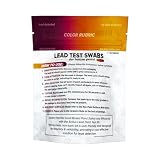
- Batch Traceability & Satisfaction Guarantee – Every swab is part of a rigorously tracked batch for full traceability and quality assurance. If you're not 100% satisfied, we’ll make it right—no questions asked.
- SCIENTIFICALLY FORMULATED: Scitus Labs; lead testing kits offer an exceptionally reliable method for detecting lead on painted surfaces—by using vinegar to activate, our swabs trigger a targeted chemical reaction that specifically identifies lead, ensuring greater consistency and accuracy compared to generic water-activated lead tests.
- MADE IN THE USA: Our lead tests are proudly manufactured in the United States for 100% quality assurance. We take pride in our exceptional product, delivering accurate, fast, and reliable lead testing results for personal and professional use.
- FOR USE ON PAINTED SURFACES: Our convenient lead test swabs are perfect for testing windows, doors, walls, floors, baseboards, ceilings, and any other painted surface in your home or office. Compact, reliable, and easy to use, these lead testing swabs are also perfect for new homeowners, renters, real estate agents, contractors, and anyone wanting to test for lead paint in their environment.
10. Inspect electrical and lighting items before energizing
Have a licensed electrician evaluate any salvaged item intended for service. Inspect insulation, grounding conductors, strain relief, terminals, switches, sockets, plugs, corrosion, heat damage, labels, and compatibility with the voltage and wiring method of the new installation.
Old appliances may have damaged or faulty wiring. Older lighting equipment can contain PCBs or mercury. Do not assume that replacing a plug or polishing a fitting makes the assembly safe. Verify earthing, enclosure integrity, over-current protection, heat clearance, and required certification before connection.
11. Check windows and doors as complete assemblies
Assess glazing, putty, frame rot, joints, hinges, locks, operation, weather seals, drainage, and squareness. Check egress dimensions and safety glazing requirements where applicable. Examine friction and impact surfaces for lead paint and dust generation.
Free tools Windows power users keep installed
One-click scans. No signup required.
An intact window or door may still be unsuitable because its energy performance, weather resistance, opening size, or safety features do not meet current requirements. Confirm the opening dimensions, sill and head conditions, flashing, air sealing, and emergency-egress path before committing to reuse.
Fire doors and rated assemblies
Verify the label, door leaf, frame, hinges, closer, latches, glazing, seals, and compatibility as one tested assembly. The rating path must remain unbroken. A salvaged door without a verifiable rating must not be represented as a compliant fire door, even if it is heavy or resembles a rated product.
Independent reader supportYour contribution helps us test, update, and keep practical guides available for everyone.12. Examine roofing and weather-exposed products
Check remaining service life, brittleness, cracking, corrosion, fastener holes, previous leaks, staining, and edge damage. Confirm manufacturer and code requirements for the new roof or cladding system.
Roofing products often cannot be reclaimed because their remaining lifespan is too short. If the product has already spent most of its service life outdoors, a good appearance is not evidence of adequate weather performance. Establish how it will be supported, flashed, fixed, and maintained before reuse.
What’s actually slowing this PC down?
Pick the symptom - the matching free tool is one click away.
13. Know when professional evaluation is mandatory
Escalate before installation when the item is load-bearing, part of a truss or roof system, a masonry support, a pressure or water vessel, connected to potable water, part of an electrical installation, a fire-rated assembly, or affected by suspected asbestos, lead, chemical contamination, fire, flood, or structural movement.
Best Value

- 2-in-1 LEAD DETECTION: Safe Home provides the only LEAD COMBO-KIT on the market which includes 10 DIY surface swabs that issue results in 30-seconds to a detection of 5 ppm AND a sample-submission kit for optional in-depth Lead testing at our EPA-certified lab to a detection of 0.006 ppm. All of this…in ONE KIT!
- DIY LEAD SCREENING: Safe Home provides the only Do-It-Yourself Lead screening kit that uses ultra-sensitive ACS (American Chemical Society) Grade Reagents, in our test swabs. This minimizes background interferences and issues more reliable results, than competitive brands. Safe Home costs a bit more, but you can trust the quality of our products.
- OPTIONAL LEAD TESTING AT OUR CERTIFIED LAB: Contractors and discerning homeowners can also use our Lead Sample Submission Kit, for optional testing at our EPA-certified lab. Testing at our laboratory meets EPA, NLLAP, RRP, and PPE guidelines. Our lab results can also be used for disposing of remediated materials to hazardous vs. non-hazardous landfills. NOTE: Lab fees are required for optional testing at our EPA-certified laboratory.
- MULTI-PURPOSE APPLICATIONS: Test for Lead in paint, dust, soil, wood, toys, furniture, metal, plastic, and more. Includes simple instructions for DIY screening and for sample collection and submission to our EPA-certified lab, for testing. MADE in the USA with domestic and international components. *Please Note: If testing surfaces that are sealed like ceramics, only the outer surface will be tested.
- EXPERIENCED CUSTOMER SUPPORT: Before, during, and after DIY screening or LAB testing for Lead, Safe Home provides qualified personnel with 40+ years of experience in testing Lead, to guide you. Reach out any time. We are happy to assist!
The professional brief should identify the uncertainty rather than ask for a generic approval. For example, ask whether a beam retains adequate capacity after insect damage at one bearing, whether a door assembly has a verifiable rating for a specified opening, or whether a pipe is acceptable for potable service under the local code.
Use the professional’s stated assumptions and limitations in the release decision. If the report covers one sample or one component, do not extend the conclusion to an untested lot without documented justification.
14. Match evidence to the proposed use
| Proposed use | Minimum evidence to document | Typical escalation |
|---|---|---|
| Decorative, non-structural interior finish | Identity, condition, lead/asbestos status where coatings or hidden materials may be disturbed, and safe preparation method | Hazard specialist or laboratory if material status is uncertain |
| Structural lumber, masonry, or steel | Dimensions, defects, material identity, connection condition, and evidence of capacity for the new loads | Structural engineer or qualified material professional |
| Exterior cladding, brick, or roofing | Durability, remaining service life, weather exposure, dimensions, fixings, and code compatibility | Envelope, roofing, or masonry specialist |
| Potable-water plumbing | Material and coating identity, contamination or leaching assessment, pressure condition, and code acceptance | Qualified plumbing professional and appropriate laboratory testing |
| Electrical or lighting service | Insulation, grounding, heat, corrosion, component compatibility, and required certification | Licensed electrician |
| Fire door or rated assembly | Verifiable label, matching frame and hardware, intact seals, and an unbroken rating path | Fire-door or code specialist |
15. Prepare, repair, and store without creating a new hazard
Only start preparation after the hold status has been cleared. Use a method that matches the material and hazard controls. Keep painted or coated items segregated from clean stock, control dust, collect debris, and prevent workers or customers from handling suspect pieces without information.
Retain removed labels, stamps, hardware, and representative samples with the item record. If a repair changes dimensions, removes damaged material, replaces fasteners, or alters a rated assembly, update the inspection record and obtain a new suitability decision where necessary.
Store materials off the ground, protected from new wetting and impact, with spacers that allow appropriate ventilation. Do not mix tested and untested pieces in one unmarked stack. Protect sharp edges, unstable stacks, and protruding fasteners.
16. Make the final release decision
Release an item only when all five questions have documented answers:
- Identity: Do we know what the material or assembly is?
- Condition: Is remaining damage compatible with the proposed use?
- Hazard status: Have lead, asbestos, chemical, electrical, and other relevant hazards been addressed?
- Performance: Is there adequate evidence for structural, weather, water, electrical, fire, or other required performance?
- Acceptance: Does the local authority, code, inspector, or approving professional accept the reuse in this application?
If any answer is unknown, quarantine the item and obtain the specific professional inspection or laboratory test that resolves it. Regulations for lead, asbestos, plumbing, electrical work, fire ratings, and disposal vary by state, province, and local authority, so confirm the applicable requirements before work begins.
Recommended Free Tools
Common mistakes that make salvage unsafe
- Judging by appearance: A clean surface does not prove structural capacity, durability, or absence of hazardous coatings.
- Testing only the easiest piece: A result from one board, brick, or painted face may not represent the rest of a mixed lot.
- Disturbing coatings before testing: Sanding, cutting, and dry-scraping can spread lead dust or asbestos fibres.
- Ignoring the new use: Reuse as trim, structure, plumbing, and fire protection require different evidence.
- Separating the door leaf from its frame: A fire rating applies to a compatible assembly, not automatically to a loose door.
- Assuming old electrical items are simple: Replacing a cord does not resolve grounding, insulation, heat, or hidden component hazards.
- Failing to preserve records: Without photographs, dimensions, sample locations, and reports, a later installer cannot verify what was actually tested.
Practical inspection record
For each item, retain one file containing the reference number, provenance, intended use, photographs, dimensions, defect map, hazard observations, test reports, professional opinions, repairs, storage history, and final release or rejection decision. Record who made each observation and when. Attach the item label or lot number to every laboratory report and make-good note.
This documentation protects the next person who handles the material and prevents a tested component from being mistaken for an untested one. It also gives the building control officer, client, engineer, electrician, plumber, or fire specialist the information needed to make a properly limited decision.
Quick Recap
Product prices and availability are accurate as of the date/time indicated and are subject to change. Any price and availability information displayed on Amazon at the time of purchase will apply.

