Do not bid on an abandoned historic house until you have lawful access, a contract review, and a detailed inspection by a professional who understands traditional buildings. A walk-through can reveal warning signs, but it cannot diagnose damp, structural movement, asbestos, service safety, or repair cost. Obtain the auction documents, confirm heritage controls and insurance options, commission the right survey, price urgent work and unknowns, then set a maximum bid that you can afford even if the building is worse than it looks.
Why an abandoned historic house needs a different inspection
Vacancy changes the risk profile of an older building. Historic England warns that vacant historic buildings face increased risk of damage and decay. Water can enter through failed roofs and gutters, blocked drainage can saturate walls, unventilated rooms can develop mould, and small defects can progress without routine maintenance. A building that appears merely neglected may therefore contain active deterioration, concealed instability, or systems that have been disconnected for years.
As an Amazon Associate I earn from qualifying purchases.
Historic construction also behaves differently from a modern cavity-wall house. Masonry, timber, slate, lime mortar, earth floors and traditional finishes may be designed to absorb and release moisture. An inappropriate repair can trap water or damage historic fabric. That is why a general visual inspection is only the beginning and why the surveyor’s experience with traditional buildings matters.
The property may also be subject to planning or heritage controls. A listing, conservation-area designation, protected tree, easement or restrictive covenant can affect what you may alter, remove or rebuild. These constraints should be investigated before you calculate renovation costs or bid against other buyers.
#1 Best Overall
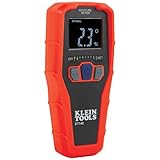
- WATER LEAK DETECTOR detects relative moisture content from leaks and flooding
- PINLESS MOISTURE METER measures relative moisture content in building materials
- NONDESRUCTIVE DETECTION up to 3/4-Inch deep using Electromagnetic field (EMF) technology
- USE ON DRYWALL, MASONRY, HARDWOOD, AND SOFTWOOD; calibrated for these materials only
- REVERSE-CONTRAST DISPLAY for easy viewing of reading and nine LED bars to indicate moisture range
Set the inspection sequence before you arrange entry
Use this order. It keeps safety and legal exposure ahead of cosmetic observations.
- Identify the jurisdiction and auction rules. Ask a local solicitor or conveyancer to explain when a bid becomes binding, what deposit is due, the completion timetable, and whether any cooling-off right exists.
- Obtain permission and access instructions. Confirm who may enter, which areas are open, whether a professional may bring equipment, and whether roof spaces, basements, outbuildings or services require separate arrangements.
- Collect the auction pack. Request the contract, title information, known reports, keys, service-status information, hazard notices and any documents describing the building or land included in the sale.
- Commission a detailed survey. Ask for a scope suited to an older, vacant property and require the report to identify exclusions and inaccessible areas.
- Arrange specialist investigations. Electrical, gas, drainage, asbestos, arboricultural, ecological or conservation advice may be needed where the principal survey cannot safely or competently answer a question.
- Confirm heritage and planning status. Contact the local authority before assuming that an extension, window replacement, roof change, demolition or internal alteration is permissible.
- Build a repair and risk budget. Separate priced work from allowances and unknowns. Include professional fees, approvals, insurance, security, utilities and contingency.
- Set a maximum bid and stop at it. A competitive auction is not a reason to accept an unquantified life-safety or legal risk.
Make entry safe and lawful
Never treat an abandoned building as an invitation to explore. Enter only with the owner’s or agent’s permission and follow the auctioneer’s access rules. Do not climb through broken windows, cross cordons, remove boards, force locks, enter visibly unstable rooms or access a roof, cellar, loft or outbuilding without authorization and suitable professional support.
Before the appointment, ask whether the property has known hazards, live utilities, animals, contaminated areas, water damage, recent fire damage or structural restrictions. Wear clothing and footwear appropriate to the site, but do not let personal protective equipment create false confidence. A hard hat or mask does not make an unstable floor or suspect asbestos safe to investigate casually.
Do these 3 things before closing this tab:
1Clear out junk files and repair common Windows errors2Fix the driver behind crashes, sound loss and screen glitches3Repair Windows errors before they cause bigger problemsTake photographs only where permitted and keep a written log of the location and direction of each image. Record what you could not see: locked rooms, overgrown boundaries, covered roof areas, flooded spaces, concealed wall finishes and disconnected services. An inaccessible area is an uncertainty to carry into your bid, not evidence that no defect exists.
What to request before the survey
Auction and legal documents
Ask for the complete auction pack rather than relying on a brochure description. Give the contract and title material to your lawyer or conveyancer early enough for questions to be answered before the auction. The review should cover ownership, boundaries, rights of way, easements, service rights, restrictive covenants, access, included fixtures, special conditions, deposit, completion date and any unusual liability imposed on the buyer.
Confirm whether the sale includes outbuildings, boundary walls, shared drives, wells, septic systems, private roads, trees or adjoining strips of land. The physical inspection must match the legal extent of the property. A sound house can still be a poor purchase if access, drainage or services depend on rights that the title does not grant.
Access and condition information
Request keys and access to every area the seller can lawfully open. Ask for previous surveys, repair invoices, insurance claims, notices from authorities, reports of leaks or movement, service disconnection details and any records of hazardous materials. Treat an agent’s verbal statement as a question for the professional report unless it is confirmed in the contract or supporting documentation.
Service status
Find out whether electricity, gas, water, drainage, heating and alarm systems are connected, isolated or unknown. Do not energize or operate abandoned services yourself. A qualified specialist can determine what testing is safe and what reconnection work may be required.
Commission the right survey, not just a mortgage valuation
Historic England explains that a suitable survey can describe construction, visible defects, likely concealed problems, repair priorities and probable costs. It also cautions that a lender’s mortgage valuation is not a condition survey. For older buildings, Historic England reports that RICS recommends a Level 3 survey. Ask the surveyor to confirm whether the proposed inspection is equivalent to that level, what the report will cover and what it expressly excludes.
Choose someone who regularly inspects historic or traditional construction, not merely someone who is available on the auction timetable. Ask about experience with the building’s materials and local heritage requirements. The surveyor should explain whether they can safely inspect roof spaces, floors, basements, chimneys, outbuildings and concealed service routes, and which questions require another specialist.
Rank #2

- WOOD MOISTURE METER: Prevent water and moisture build-up with our humidity reader. It can quickly determine what level of remediation is needed to keep your family safe. High levels of dampness that go untreated can cause hazardous living conditions.
- PROTECT YOUR WORK SURFACE: This tool has no pins, so it won't mar, scratch, or damage walls. It features auto-calibrating, a 2" diagonal backlit LCD screen, a 3-color LED bar graph, a hold button, and an audible alert for fast and accurate detection.
- DEEP READER: It can read the levels up to 3/4" (19mm) deep into the surface with a broad measurement range of 0 to 53% for softwood, 0 to 35% for hardwood, and relative readings for wallboard, drywall, and masonry.
- MOLD DETECTOR: Early prevention is vital when stopping mold formation. Check and test suspicious water stains around the house to determine if the area is wet or has already dried. It includes an out-of-range alarm and a low 9V battery alert.
- GENERAL TOOLS: We have been a recognized leader in the innovation, design, and development of specialized precision tools for many years. We encourage craftspeople, artisans, and DIYers to work smarter, measure better, and increase productivity.
| Survey proposal question | Why it affects your decision |
|---|---|
| What areas and elevations are accessible? | Uninspected fabric creates uncertainty that must be reflected in the bid or resolved before bidding. |
| Is the surveyor experienced with traditional construction? | Moisture movement, masonry, timber and historic finishes require interpretation that a modern-house inspection may not provide. |
| Will urgent safety and stabilization needs be graded? | You need to distinguish work that cannot wait from improvements that can be planned later. |
| Are repair options and likely cost ranges discussed? | A defect may have several conservation-compatible solutions with different scopes and prices. |
| Which tests are included and which require specialists? | Electrical, gas, drainage, asbestos, ecology and some structural questions may fall outside a general survey. |
| Are inaccessible areas and exclusions listed in the report? | A clear exclusion is safer than assuming an unseen roof, floor or void was inspected. |
Give the surveyor your specific concerns and the planned use of the building. Ask for a written explanation of urgent defects, probable causes, recommended next investigations, temporary protection and the consequences of postponing work.
PC Slower Than It Used to Be?
A free scan shows the junk files, broken settings and background clutter dragging Windows down - then fixes them in one click.Free scan · Windows 10 & 11Crashes, No Sound, or Screen Glitches?
Random freezes, missing sound and display glitches usually trace back to one bad driver. Find and replace yours safely.Free scan · under a minuteInspect the outside first
Roof, chimneys and rainwater disposal
Start at ground level and work around every elevation. Look for sagging roof lines, missing or slipped tiles or slates, damaged flashings, open valleys, failed chimney masonry and vegetation rooted in gutters or wall joints. Check whether gutters and downpipes discharge safely away from walls or spill at their bases. Water penetration can damage historic fabric and contribute to timber decay, but the visible symptom does not identify the entry point by itself.
Do not climb onto a roof or lean ladders against uncertain masonry during a viewing. A surveyor can decide whether close inspection, access equipment or a separate roofing specialist is appropriate.
Walls, openings and masonry
Look for stepped or widening cracks, bulging elevations, displaced lintels, leaning walls, eroded joints, spalled brick or stone, and patches of hard cement repair over softer historic masonry. Record the position, length and direction of cracks rather than labeling them as structural. Cracks can result from movement, thermal change, settlement, failed gutters or deteriorated finishes; only a competent investigation can establish significance.
Inspect window heads, sills, door thresholds and external render for staining or loss. Peeling paint, mould, damp brickwork and water pooling are warning signs identified in Victorian inspection guidance. They justify investigation of drainage, ventilation and moisture sources; they do not prove that a particular treatment is required.
The Tool Desk
Outbyte Driver Updater FREEFix the driver behind crashes, sound loss and screen glitchesFind Drivers →Outbyte PC Repair FREERepair Windows errors before they cause bigger problemsFix Now →Grounds, drainage and trees
Check whether soil, paving or mulch has been raised against walls, whether surface water flows toward the building, and whether drains, gullies or inspection chambers are blocked or broken. Note large trees close to foundations, boundary structures that may be shared, and overgrown areas that conceal walls, wells or uneven ground. Ask the surveyor or an appropriate specialist to assess any consequential risk rather than inferring root damage from proximity alone.
Inspect the inside without disturbing hazards
Floors, stairs and ceilings
Look for springy or sloping floors, rotten boards, sagging ceilings, loose plaster, distorted door frames and stairs with missing or unstable components. Keep to clearly sound routes and obey any instruction not to enter a room. Do not test a floor by jumping, pull at balustrades, or open a ceiling void that may release debris or expose hazardous materials.
Signs of water and prolonged vacancy
Map staining on ceilings and walls and compare it with the exterior roof and rainwater layout. Mould, peeling finishes, salt deposits, swollen timber and musty odours can indicate moisture, but each has multiple possible causes. Note whether damage is active, dry and historic, or impossible to classify without monitoring. A surveyor may recommend further observation, targeted opening-up or drainage tests.
Services and fire precautions
Record the presence and apparent condition of consumer units, wiring, boilers, flues, radiators, pipework, tanks, smoke alarms and fire doors without operating abandoned systems. Historic England includes building services and fire risk among issues that may need assessment in vacant buildings. A qualified electrician, gas engineer or fire professional should determine safety and reinstatement requirements.
What’s actually slowing this PC down?
Pick the symptom - the matching free tool is one click away.
Asbestos and other hazardous materials
Do not drill, scrape, sample or remove suspect materials. HSE guidance says an asbestos survey must locate asbestos-containing materials, including hidden materials, before structural work in the United Kingdom; the work may require destructive inspection and can disturb the building. Older vinyl flooring, textured coatings, insulation, cement products, lagging and fire-protection materials may not be identifiable from a casual viewing. Arrange the appropriate survey before opening walls, removing ceilings, altering services or starting demolition.
Rank #3

- Wood Moisture tester: Detects moisture in walls, wood & masonry with a maximum sensing depth of 0.75 inches. User-friendly for contractors and homeowners, perfect for home inspections and damp testing.
- Prevent Water Damage Early:Identify moisture caused by leaks, flooding, or high humidity in time. Ideal for home inspection, renovation, and DIY repairs.
- For reliable results, avoid metal pipes, wiring, or steel studs, which may interfere with signals. Includes simple, step-by-step guidance for testing different materials
- Accurate Readings – Avoid Metal Surfaces:For best results with this moisture reader for walls, keep away from metal objects to avoid interference and ensure accurate readings
- The pinless sensor measures moisture without leaving holes or marks, making it safe for finished floors, painted walls, tiles, furniture, and sensitive materials.
Ecology and protected occupants
Vacant buildings can shelter bats, birds or other wildlife. Historic England lists ecology as a possible assessment topic. Do not block openings, remove nests or start roof work until the relevant ecological and legal checks have been made.
How to investigate damp without misdiagnosing it
Damp is one of the easiest defects to overstate. Historic England’s practical guide, published 13 July 2026, discusses the accuracy and limitations of moisture-measurement methods and devices. A handheld meter can provide an indicator, but a reading is not a diagnosis of rising damp, penetrating damp, plumbing leakage or condensation.
Ask the surveyor to identify the moisture source, the path it takes, the materials affected and whether the building is drying, stable or worsening. Useful evidence may include external drainage, roof and flashing condition, ventilation, heating history, salts, timber moisture, concealed plumbing and the relationship between readings at different heights and locations. RICS professional guidance emphasizes professional judgment rather than mechanically accepting a device recommendation.
- Do not buy a meter and treat one high reading as proof of a defect or a prescribed chemical solution.
- Do not remove breathable finishes or inject walls before the cause and construction have been assessed.
- Do not assume that a dry surface means the wall, floor void or timber behind it is sound.
- Ask for monitoring or targeted investigation when the cause cannot be established during one visit.
Confirm heritage status and alteration constraints
Before planning repairs, ask the relevant local authority whether the property is listed, lies in a conservation area, has protected trees or is subject to other heritage controls. Historic England advises checking planning regulation before purchase and contacting the authority early if alterations are contemplated. The applicable names and permissions differ by jurisdiction, so obtain local confirmation rather than relying on a general internet description.
Ask a conservation-accredited or otherwise suitably experienced professional to outline repair approaches that respect the building’s significance. They can identify where consent may be needed for windows, roof coverings, masonry, internal partitions, services, extensions or demolition. No professional can promise approval without reviewing the actual designation and a specific proposal.
Heritage status can change both scope and sequence. A repair that appears inexpensive in modern materials may be unsuitable, while a conservation-compatible method may require specialist labor, detailed specifications and longer lead times. Include these constraints in the budget before comparing the property with an ordinary renovation.
Check whether the building can be insured
Ask insurers or a specialist broker whether cover is available in the building’s present condition, during vacancy and during works. Historic England warns that standard home insurance may not be adequate for listed buildings and notes that rebuilding costs are likely to be higher. Obtain the rebuild valuation basis, exclusions, security requirements, vacancy conditions, escape-of-water provisions and requirements for temporary protection.
Insurance availability is a purchase condition in practical terms. If a policy cannot be secured on acceptable terms, finance, contractors and your ability to protect the asset after completion may all be affected. Obtain written indications before bidding, and disclose the known vacancy and condition rather than assuming a policy will be issued after exchange.
Independent reader supportYour contribution helps us test, update, and keep practical guides available for everyone.Use a cost plan that separates facts from unknowns
No reliable repair total can be stated without a property-specific survey and priced scope. Build a decision sheet with separate lines for urgent stabilization, weatherproofing, security, temporary works, surveys, design and conservation advice, statutory approvals, asbestos management, service reconnection, insurance, taxes or charges, and the main repair packages.
For each line, label the evidence as a quotation, measured estimate, allowance or unresolved risk. Add a contingency for defects hidden by finishes or inaccessible areas. A missing roof-space inspection, uncertain drainage route or untested floor is not a zero-cost item; it is an uncertainty that should reduce your maximum bid or delay bidding until investigated.
Rank #4

- FIND HIDDEN MOISTURE WITHOUT DAMAGING SURFACES – Scan walls, floors, wood and other compatible materials without drilling holes or leaving pin marks. Quickly identify areas with higher moisture readings for closer inspection.
- CHECK AROUND WATER STAINS & LEAK-PRONE AREAS – Use the pinless moisture meter around water stains, ceilings, walls, floors, windows and areas affected by previous water exposure to compare moisture levels and locate potential problem areas.
- SCAN FIRST, INSPECT FURTHER – Move the meter across the surface and compare readings from different locations. Higher readings can help you identify areas that may need additional inspection, drying or follow-up work.
- Rechargeable Moisture detector: With a 1200mAh lithium battery and USB charging, it provides up to 8 hours of use per charge—designed for efficient moisture detection to reveal hidden issues beyond visible inspection.
- User-Friendly & Safe Operation: Includes factory reset, mute function, and auto screen-off; enables quick relative moisture measurement of walls, wood, flooring, and concrete for efficient detection of damp risk areas.
| Cost-plan category | Questions to answer before bidding |
|---|---|
| Immediate safety | Are walls, floors, stairs, roofs, chimneys or services unsafe, and what temporary stabilization is required? |
| Weatherproofing | Can the building be made watertight quickly enough to prevent further decay? |
| Investigations | Are asbestos, drainage, ecology, structural, electrical, gas or specialist conservation reports needed? |
| Permissions and professional fees | What surveyors, designers, approvals and inspections are required? |
| Services and security | What will reconnection, replacement, alarms, boarding, fencing or temporary utilities cost? |
| Repair scope | Which items are priced, which are allowances, and which remain inaccessible or unknown? |
| Insurance and carrying costs | Can suitable cover be obtained during vacancy and works, and what conditions apply? |
Understand the auction rules before you bid
Auction law is jurisdiction-specific. New South Wales Government guidance states that a successful bidder signs the contract and pays the deposit on the spot, with no cooling-off period. It recommends confirming finance, obtaining building and pest reports, and having a solicitor or licensed conveyancer review the contract. Consumer Affairs Victoria says that bidding accepts the terms of the displayed contract.
Free tools Windows power users keep installed
One-click scans. No signup required.
These are examples from NSW and Victoria, not universal rules. Ask a local lawyer or conveyancer to explain the actual process where the property is located, including registration, deposit method, settlement, default consequences and any special auction conditions. Have legal and condition due diligence complete before the auction begins; do not expect a post-bid inspection to rescue an unexamined risk.
Set a maximum bid that reflects uncertainty
Start with the amount the completed property would be worth to you, then subtract the purchase-related charges, urgent work, professional fees, approvals, insurance, service reconnection, planned repairs and a contingency for unresolved defects. This is a decision framework, not a legal formula. The key is to include the cost of uncertainty rather than pricing only the visible damage.
Reduce the ceiling further when access was restricted, documents are missing, the survey excludes important areas, insurance is uncertain, or heritage consent could materially change the design. If the resulting ceiling is below the level at which the property is likely to sell, walking away is a rational outcome. A winning bid does not turn an unknown defect into a negotiable one.
What happens if major defects appear after you win?
Assume that your auction obligations continue unless your local contract and law provide otherwise. Contact your conveyancer immediately, preserve the auction documents and inspection records, and notify your insurer or broker if damage has worsened. Do not authorize intrusive repairs until safety, asbestos and heritage implications have been assessed.
Quick wins for a faster PC:
Scan for outdated or missing drivers - takes under a minuteDriver Scan →Repair Windows errors before they cause bigger problemsFix Now →Fix the driver behind crashes, sound loss and screen glitchesFind Drivers →Ask the surveyor or an appropriate specialist to document the defect, likely cause, urgency, temporary protection and permanent options. Your lawyer can then advise on the contract, disclosure, representations, title issues and any remedy that may exist in the relevant jurisdiction. Do not assume that a serious surprise automatically permits cancellation or a price reduction.
Compare properties and survey proposals consistently
When several abandoned houses are available, compare them on the same risk axes rather than on appearance alone:
- Immediate life-safety and structural stabilization needs.
- Water ingress, drainage and continuing decay.
- Condition and reconnection requirements for electrical, water, gas, heating and drainage systems.
- Extent of inaccessible or uninvestigated fabric.
- Heritage designation and likely consent constraints.
- Title, access, service rights and auction-contract risk.
- Insurability and rebuilding valuation.
- Confidence in the cost plan, distinguishing priced work from allowances and unknowns.
Compare surveyors by competence with historic fabric, access and inspection scope, exclusions, targeted tests, urgency grading, repair options and whether cost information is included. The cheapest report is not necessarily the lowest-risk choice if it leaves the questions that matter most unanswered.
A printable pre-bid checklist
- Jurisdiction, auction procedure and binding-bid consequences confirmed with a local professional.
- Lawful access arranged, including permission for every specialist and restricted area.
- Auction contract, title, boundaries, access rights and special conditions reviewed.
- Historic-building survey commissioned with clear scope, exclusions and urgency grading.
- Roof, rainwater goods, walls, floors, stairs, services, drainage and outbuildings considered.
- Damp investigated by a competent professional rather than inferred from one meter reading.
- Asbestos survey arranged before disturbance or structural work where applicable.
- Fire, ecology, electrical, gas and other specialist risks referred to qualified professionals.
- Listing, conservation-area status, protected trees and alteration permissions checked.
- Insurance availability and rebuilding valuation confirmed for vacancy and works.
- Repair budget separates quotations, estimates, allowances and unknowns.
- Maximum bid written down before the auction and not increased under pressure.
The practical decision
Bid only when you understand what has been inspected, what remains inaccessible, which defects require immediate action, what permissions may constrain the work, and whether the building can be insured. Historic character can make a project rewarding, but it does not reduce the consequences of unsafe structure, hidden asbestos, active water ingress, defective services or an unfavorable contract. If those questions remain materially unresolved, the safest inspection result may be a decision not to bid.
Recommended Free Tools
Quick Recap
Product prices and availability are accurate as of the date/time indicated and are subject to change. Any price and availability information displayed on Amazon at the time of purchase will apply.

