Quick wins for a faster PC:
Repair Windows errors before they cause bigger problemsFix Now →Scan for outdated or missing drivers - takes under a minuteDriver Scan →A hole is a clue, not an identification. Before buying a repellent, determine whether you are seeing a shallow feeding divot, a raised mole tunnel, a vole runway, a pocket-gopher mound, or holes in plant leaves. The most reliable general response while the species is uncertain is to remove attractants and install a correctly sized physical barrier—not to reach for poison or a universal ultrasonic device.
A hole is a clue, not an identification
The safest way to stop animals digging in a garden is to identify the sign before choosing a repellent. A shallow divot, a raised tunnel, a vole runway, a fan-shaped mound, and a hole in a plant leaf point to very different problems—and require different remedies.
As an Amazon Associate I earn from qualifying purchases.
Begin with observation. Measure the opening, check how soil has been moved, look for tracks and tooth marks, and note whether new damage appears overnight or during the day. When the species is uncertain, start with physical exclusion and removal of attractants rather than poison, indiscriminate pesticide, or a device marketed as a universal solution.
The Tool Desk
Outbyte Driver Updater FREEScan for outdated or missing drivers - takes under a minuteDriver Scan →Outbyte PC Repair FREERepair Windows errors before they cause bigger problemsFix Now →Quick identification guide
| What you see | Likely possibilities | What to check next |
|---|---|---|
| Small, shallow, scattered divots with little or no soil pile | Skunk, raccoon, gray squirrel, or chipmunk | Tracks, nighttime activity, disturbed mulch, fallen fruit, birdseed, and whether holes are cone-shaped |
| Raised ridges or surface tunnels, often with molehills | Mole | Whether the ridge is an active tunnel; look for repeated raised runs rather than isolated holes |
| Surface runways about 1–2 inches wide | Vole | Gnawing or girdling at the base of trees and shrubs, vegetation cover, and runways under mulch |
| Fan-shaped mounds and extensive underground disturbance | Pocket gopher | Root, irrigation-line, or utility damage and the location of the mound in relation to the burrow |
| Round holes in leaves or stems | Insect pest, such as a flea beetle | Inspect the plant, not the soil; look for small beetles and repeated shot-hole injury |
These patterns are clues, not proof. Local food supplies, soil conditions, weather, and the animal’s age can change the appearance of damage. Use “consistent with” rather than assuming that every hole was made by a mole, a skunk, or grubs.
#1 Best Overall

- Heavy-Duty 19 Gauge Hardware Cloth Construction: This hardware cloth is made from thick 19 gauge welded steel wire, creating a rigid and stable structure that holds its shape during installation. It is designed for outdoor and DIY applications where strength and durability are important.
- 1/2 Inch × 1/2 Inch Welded Wire Mesh for Balanced Coverage: The 1/2 inch welded wire mesh offers a practical balance of coverage, airflow, and visibility. This mesh size is commonly selected for fencing, enclosure, and barrier projects without making spaces feel overly enclosed.
- Hot-Dipped Galvanized Steel for Outdoor Environments: After welding, the steel wire is hot-dipped galvanized to help resist rust and corrosion. This galvanized chicken wire mesh is suitable for long-term use in gardens, yards, and other outdoor environments.
- Versatile Applications for Coops, Gardens & DIY Projects: This welded wire fencing is commonly used for chicken coops, chicken runs, garden fencing, raised garden beds, tree protection, compost bins, and a wide range of DIY outdoor projects when properly installed.
- Easy to Cut, Shape & Install (16" x 50' Roll): The 19 gauge wire mesh comes in a 16 inch x 50 ft roll and can be cut and shaped with standard wire cutters. The roll format makes it easy to handle, measure, and customize for wire fencing, underground barriers, cages, and other custom outdoor projec.
Document the damage before you disturb it
- Measure the diameter and depth. A rough measurement is enough to separate a shallow feeding divot from a substantial burrow entrance.
- Study the soil. Is soil piled beside the opening, pushed into a fan, arranged in a ridge, or absent from the rim?
- Classify the feature. It may be a dead-end divot, a raised tunnel, a runway, or a true burrow. These are not interchangeable signs.
- Photograph associated evidence. Capture tracks, droppings, tooth marks, clipped stems, girdled bark, disturbed mulch, and the surrounding plants. Put a ruler or another familiar object beside the hole for scale.
- Record the timing. Check the area at dusk, early morning, and after a night of rain. Squirrel digging may be especially noticeable in spring, while skunk and raccoon foraging may increase in fall, but seasonal patterns vary with weather and available food.
- Look for attractants. Note bird-feeder spill, pet food, fallen fruit, compost, accessible garbage, standing water, and dense cover.
- Test only a few shallow holes. Rake or lightly close a small number of openings and see whether they reopen. Do not seal a suspected occupied burrow or an opening under a porch, shed, deck, or building until you know what is inside and understand the applicable wildlife rules.
A motion-activated trail camera can resolve uncertainty, particularly when damage appears overnight. Place a size reference near—but not inside—the camera’s viewing area. A ruler or clearly measured marker helps prevent overestimating the size of a small mammal from a single image.
Start with exclusion, not a general-purpose repellent
When the culprit is not confirmed, metal mesh is the most adaptable first measure. Depending on the target, it can cover bare soil, form a basket around an individual plant, protect bulbs, shield the base of a tree, or create a buried perimeter around a garden bed.
1/2-inch galvanized hardware cloth is a practical search term for general garden exclusion, but it is not a universal specification. Smaller animals may require 1/4-inch mesh. Larger wildlife may be excluded with wider welded wire. Choose galvanized metal rather than relying on thin plastic netting where squirrels or other animals can chew through it.
- Lay mesh flat over vulnerable soil and secure the edges so an animal cannot lift it.
- Use a wire basket around bulbs, seedlings, or the root zone of a high-value plant.
- For a buried perimeter, extend the barrier below grade and bend the lower section outward where appropriate; this creates an underground apron that is harder to bypass.
- Cover or protect the top of a barrier if climbing animals are the concern. An underground barrier alone will not stop an animal that simply climbs over it.
- Inspect for gaps at gates, corners, transitions, and around irrigation lines.
For mole protection, an L-shaped barrier made from hardware cloth or sheet metal can block tunneling beneath a protected garden. For vole-prone trees and shrubs, a cylinder of 1/4-inch hardware cloth around the trunk can reduce girdling. Keep the guard slightly away from the bark, bury the lower portion sufficiently to discourage animals from working underneath, and check it as the trunk grows.
Remove reasons for wildlife to visit
Exclusion works better when the yard is less rewarding. Clean up spilled birdseed, bring pet food indoors, harvest fallen fruit, secure compost and garbage, and reduce dense ground cover around vulnerable beds where doing so will not harm beneficial habitat. A squirrel-proof feeder or a different feeder location may be more useful than treating every new hole.
Attractant reduction is not a guarantee that animals will leave. Wildlife may still pass through or forage for earthworms and other invertebrates. It does, however, remove some of the conditions that encourage repeated visits.
Use sprinklers and repellents as supplements
A motion-activated sprinkler is a reasonable nonlethal supplement for nighttime visitors. It produces a harmless startle response and may make a bed less attractive. Its results vary: agile animals such as squirrels can be difficult to deter, and animals may become accustomed to a fixed device. Repositioning it occasionally can preserve some novelty.
What’s actually slowing this PC down?
Pick the symptom - the matching free tool is one click away.
Rank #2

- Galvanized After Welding: Hot-dip galvanized after welding coats every welded joint, so the heavy duty mesh resists rust and breakage far longer than pre-galvanized wire in rain, soil, and sun.Thicker wire builds a sturdier fence that resists bending and animal push-through
- Product Size & Coverage: The roll is 16 inch wide by 25 foot long, and 1/2 inch×1/2 inch mesh opening, enough to cover a small run, a few beds, or one coop, cut to length for any project. Measure your project need first so you order the right length and avoid mid-job gaps
- Easy to Cut & DIY: Smooth welded edges reduce scratches while cutting and installing. And works well with fence posts, zip ties, and landscape staples for quick, tool-light setup. Installing it is a breeze, making it a convenient choice for DIY enthusiasts
- Multipurpose Garden & Coop Mesh: This hardware cloth is designed to build garden fences, poultry netting, and backyard animal barriers that keep rabbits, snakes, and gophers away from your plants and coops.Ideal for gardens, raised beds, chicken coops, and farms during spring planting and summer fencing
- Made for Home Gardeners & Chicken Keepers: Perfect for DIY homeowners, poultry raisers, and landscapers. Whether you're preventing small animals from accessing your garden or reinforcing fences for added security, this metal mesh is a reliable solution that will give you peace of mind
Commercial odor or taste repellents may help in particular situations, but they are species-specific and temporary. Rain can wash them away, odors weather, and animals can habituate. Follow the label, keep products away from edible crops unless the label permits that use, and expect reapplication when the product instructions require it. Treat repellents as a controlled experiment after exclusion and attractant reduction—not as a guaranteed fix.
Electronic, magnetic, vibration, and ultrasonic devices are frequently promoted for digging pests. Do not assume that a claimed frequency or vibration will solve the problem. Extension guidance cited for mole control reports that electronic, magnetic, and vibration devices have not been proven effective.
What different digging signs mean
Skunks and raccoons: shallow feeding divots
Small cone-shaped holes or patches of upturned earth—sometimes approximately 3–4 inches across—are consistent with skunk foraging. Raccoons can produce similar damage. Both may be searching for grubs, earthworms, and other invertebrates, so holes do not prove that the lawn has a grub infestation.
Concentrate on reducing food attractants, protecting high-value soil with metal mesh, and identifying where the animals are entering. If a skunk is denning beneath a porch, deck, shed, or building, do not immediately block the opening. The animal could be inside, and young may be present. A licensed wildlife-control professional can plan exclusion at a safe time and account for local requirements.
Squirrels and chipmunks: neat holes in loose soil
Squirrels and chipmunks may dig neat, shallow holes while caching food. Pots, loose beds, and freshly worked soil are common places to notice this behavior. Squirrel digging may be more visible in spring, although local conditions matter more than the calendar alone.
Cover loose soil with secured metal mesh, use wire baskets around vulnerable plants, and reduce spilled food around feeders. Metal is generally more defensible than plastic netting where squirrels can chew. Move or squirrel-proof bird feeders if they are contributing to the pattern. Ultrasonic devices should not be treated as a dependable substitute for a physical barrier.
Moles: raised tunnels and molehills
Moles are often blamed for any hole, but their clearest signs are raised surface tunnels and molehills. They primarily consume soil invertebrates and can damage turf through tunneling even though they are not usually eating plant roots.
Rank #3

- Amagabeli Hardware Cloth is cut with tin snips and shaped for specific projects in a home or on a property. Gardening Mesh: Wire mesh, easy to use.
- Production Method: Galvanizing after welding to ensure that all welding points are galvanized to prevent rust. Increase service life.
- Material & Size: 19gauge, heavy duty hot dipped galvanized hardware cloth, measures 48 inch 100 foot, cut easily with scissors. Molded or folded as needed without any problems.
- Enclosure Projects: The 1/2" galvanized hardware cloth for a huge space for your home improvement projects.
- Engineering Projects: Work with T posts and wooden box to generate large space in projects or big airport engineering.
Confirm active raised runways before considering a mole trap. Trapping is a species-specific option, but placement, handling, and local rules matter. Electronic, magnetic, and vibration repellents have not been proven effective in the cited extension guidance, and the cited guidance reported no registered chemical mole repellents at the time of publication. Product registrations and laws can change, so check current local information before using any pesticide or trapping method.
Crashes, No Sound, or Screen Glitches?
Random freezes, missing sound and display glitches usually trace back to one bad driver. Find and replace yours safely.Free scan · under a minutePC Slower Than It Used to Be?
A free scan shows the junk files, broken settings and background clutter dragging Windows down - then fixes them in one click.Free scan · Windows 10 & 11For a small protected garden, an underground L-shaped hardware-cloth or sheet-metal barrier may be more predictable than trying to repel moles across an entire property.
Voles: runways and bark girdling
Voles are rodents, not moles. Look for narrow surface runways approximately 1–2 inches wide, especially beneath vegetation or mulch, and irregular gnawing or a stripped ring of bark near ground level. Girdling can seriously injure or kill young trees and shrubs even when there is no obvious large hole.
Where appropriate, clear excessive vegetation and litter around plantings so voles have less protected cover. Install a 1/4-inch hardware-cloth cylinder around vulnerable trunks and shrubs. The guard should not press against the bark, and the buried edge must be checked periodically for gaps and adjusted as the plant grows.
Pocket gophers: fan-shaped mounds and underground damage
Fan-shaped mounds point more toward pocket gophers than toward a shallow nighttime feeding hole. Their underground burrows can damage roots, trees, irrigation lines, and utility cables.
Do not treat a gopher mound like a skunk divot or a mole tunnel. The burrow system requires a different management approach, and control methods may be regulated locally. If the damage is extensive or near utilities, contact your local extension service or wildlife authority for region-specific identification and a compliant control plan.
Flea beetles and other insects: holes in leaves
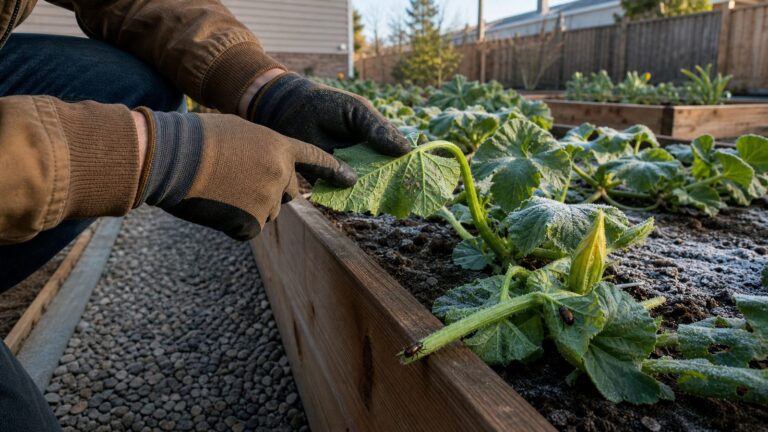
If the “holes” are round openings in leaves rather than openings in the soil, change the diagnosis completely. Flea beetles can create characteristic shot-hole injury. Inspect the plant for small insects, repeated damage on young leaves, and stem symptoms. Soil barriers, mole traps, and wildlife repellents will not address a leaf-chewing insect.
Rank #4
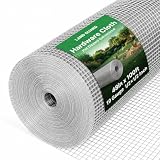
- Material and size: The size of the hardware cloth is 48 inch×100 ft square and 1/2 inch×1/2 inch thickness, adopt 19 guage hot-dipped galvanized material
- The amazing craft projects: select high-quality iron wire to be welded into wire fencing and then galvanized. The flat hardware fabric beautifies the appearance and have a certain function of decorative. The structure is firm and has high corrosion resistance. It is easy to install and not easily fading and deformed.
- Perfect poultry netting: Are you still worried about your chickens, ducks, rabbits, and other farm animals being attacked by various creatures such as rattlesnakes, raccoons, etc.? Buy it now. This roll cage is especially suitable for chicken fence, it will become your poultry protection cage such as rabbit wire, chicken fencing and duck run. it will become extremely safe and put your mind at ease.
- Multifunctional use: You can freely cut this chicken wire fencing into what appearances you want. The galvanized wire mesh screen roll can effectively protect your garden fruits, vegetables, flowers, and other plants from rodents. While install this mesh wire, please dig a shallow trench first and install the fence 2 to 3 feet deep in ground, so that it will provide the most beneficial protection for your ground. The 1/2inch net diameter can block most crawling creatures
- Warm reminder, before you buy, please read the product size and specifications carefully. The product is heavier, please be careful when installing it to avoid inconvenience to you.
Why common fixes fail
- Assuming every hole is a molehole: Moles usually reveal themselves through raised tunnels and molehills, while shallow divots may be made by several surface-foraging animals.
- Treating grubs without confirming the cause: Skunks and raccoons may also be looking for worms or other invertebrates. Removing grubs does not guarantee that digging will stop.
- Relying on one odor or predator-urine product: Weather and habituation reduce persistence, and effectiveness varies by species.
- Buying an electronic device before identifying the animal: Evidence for many electronic, magnetic, vibration, and ultrasonic products is weak or species-limited.
- Installing mesh with the wrong opening: A large opening may allow small rodents through, while a barrier that is not secured or buried can simply be lifted or bypassed.
- Closing a burrow immediately: This can trap an animal or young inside a structure and may turn a wildlife problem into an odor, damage, or safety problem.
Safety, pesticide, and legal considerations
Do not use homemade poison mixtures, indiscriminate toxicants, or pesticides off-label. Wildlife-control methods can harm children, pets, beneficial animals, and the environment. They may also be restricted or unlawful depending on the species, state, municipality, crop, and location.
Before using any pesticide, read the entire current label. Confirm that the product is registered for the target species and site, follow application and re-entry instructions, keep it away from pets and children, and check state wildlife rules. A product sold for one rodent or one setting is not automatically legal or suitable for another.
Recommended Free Tools
Wear gloves when handling disturbed soil, droppings, traps, or damaged vegetation, and avoid reaching into an unseen burrow. If an animal is acting abnormally, is cornered, or has entered a structure, keep people and pets away and seek professional advice.
When to call a professional
Contact a licensed wildlife-control professional or qualified wildlife-exclusion service when:
- an animal is entering a home, attic, crawlspace, porch, shed, or other outbuilding;
- the burrow is extensive or may be close to foundations, wiring, irrigation, or utility lines;
- a skunk or another potentially hazardous animal is denning near a structure;
- you are considering trapping, toxicants, or other regulated control;
- the species may be protected or local rules are unclear;
- you cannot distinguish among a mole, vole, gopher, squirrel, raccoon, or skunk; or
- an initial barrier and attractant-reduction plan has not changed the damage.
A professional should explain the suspected species, entry points, exclusion method, timing, and any required permits or restrictions. Do not hire someone solely because they promise that an ultrasonic, odor, or “permanent” repellent will eliminate every hole.
A practical decision sequence
- Separate soil holes from plant holes. Leaf shot-holes need an insect diagnosis; soil damage needs a mammal or other ground-dweller assessment.
- Classify the soil sign. Shallow divot, raised tunnel, runway, fan mound, or true burrow.
- Document it. Measure, photograph, note timing, and look for tracks, scat, gnawing, and attractants.
- Monitor if necessary. Use a trail camera with a size reference or rake a few shallow holes—not a potentially occupied structural burrow.
- Remove attractants. Clean birdseed, pet food, fallen fruit, compost, and accessible garbage.
- Install a correctly sized metal barrier. Match mesh size and installation depth to the suspected animal.
- Add a motion sprinkler or labeled repellent only as a supplement. Reposition or reapply according to conditions and instructions.
- Escalate when the risk or uncertainty is high. Use local extension or wildlife authorities, or a licensed professional, for extensive burrows, structural entry, regulated methods, or hazardous wildlife.
The goal is not to find the strongest-smelling product. It is to match the intervention to the evidence: reduce the reward, block access, and use species-specific control only when the animal and the rules are clear.
Free tools Windows power users keep installed
One-click scans. No signup required.
Frequently Asked Questions
No. Moles are more commonly identified by raised surface tunnels and molehills. Shallow scattered divots may be consistent with skunks, raccoons, squirrels, or chipmunks, while fan-shaped mounds suggest pocket gophers.
Are all holes in a garden caused by moles?
Document the hole and start with exclusion and attractant reduction. Secure food sources, protect vulnerable soil with correctly sized metal mesh, and avoid poison or off-label pesticides until the species and legal requirements are clear.
What is the safest first step when I do not know what is digging?
Do not immediately seal a suspected occupied burrow, especially one beneath a porch, deck, shed, or building. You could trap an animal or young inside. Confirm the species and seek professional guidance when the opening is connected to a structure.
Should I fill an animal burrow?
It may discourage some nighttime visitors, but results vary. Agile animals such as squirrels can be difficult to deter, and animals may become accustomed to a fixed device. Use a sprinkler as a supplement to barriers and attractant reduction.
Will a motion-activated sprinkler stop digging animals?
The Bottom Line
Identify the pattern before choosing a repellent. Shallow divots suggest surface foragers such as skunks, raccoons, squirrels, or chipmunks; raised tunnels suggest moles; narrow runways and girdled bark suggest voles; fan-shaped mounds suggest pocket gophers. Begin with attractant reduction and correctly installed metal mesh, use sprinklers or labeled repellents only as supplemental measures, and call a licensed professional for structural entry, hazardous wildlife, extensive burrows, or regulated control methods.
Quick Recap
Product prices and availability are accurate as of the date/time indicated and are subject to change. Any price and availability information displayed on Amazon at the time of purchase will apply.