Do these 3 things before closing this tab:
1Repair Windows errors before they cause bigger problems2Scan for outdated or missing drivers - takes under a minute3Clear out junk files and repair common Windows errorsTo grow and care for snowdrop flower plants, plant fresh bulbs or snowdrops in the green in partial or dappled shade, use moist but well-drained soil, and leave the leaves to yellow naturally after flowering. Plant dry bulbs 2–3 inches deep and apart, then divide established clumps as foliage dies back.
Snowdrops are Galanthus, most commonly the common snowdrop, Galanthus nivalis. Their early flowers make them valuable in woodland-style borders and lawns, but successful establishment depends more on fresh planting material, drainage, and correct aftercare than on fertilizer.
As an Amazon Associate I earn from qualifying purchases.
Key takeaways
- Snowdrops (*Galanthus*) grow best in partial or dappled shade and soil that stays moist but drains freely.
- Plant fresh dormant bulbs promptly, or plant snowdrops “in the green” just after flowering while the foliage is still present.
- For dry bulbs, use a practical planting depth and spacing of 2–3 inches deep and 2–3 inches apart.
- Leave snowdrop foliage in place until it yellows and dies back naturally, and delay mowing grass until the leaves have disappeared.
- Divide established clumps as the foliage turns yellow; seed, twin scaling, and chipping are additional but more specialist propagation methods.
- Snowdrops must not be eaten and should be kept away from children and pets because the plants and bulbs are harmful if ingested.
What are snowdrop flowers?
Snowdrop flowers are members of the genus Galanthus; the familiar common snowdrop is Galanthus nivalis. These hardy bulbous perennials flower very early in the year, often before deciduous trees develop their leaves. Kew’s common snowdrop profile gives a January-through-March flowering window for Galanthus nivalis, although the exact dates vary with species, cultivar, climate, and local weather.
Snowdrops are especially effective planted in groups beneath deciduous trees and shrubs, along woodland-style borders, beside paths, or naturalized in grass. The plants are small, so a single bulb can be easy to overlook; a loose drift or established clump creates a much stronger display.
#1 Best Overall
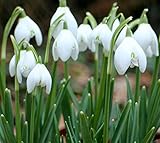
- Beautiful late winter, early Spring Blooms that come back year after year
How do you grow and care for snowdrop flowers?
To grow and care for snowdrop flowers successfully, give the bulbs dappled shade, humus-rich soil with reliable moisture and good drainage, fresh planting material, and time to complete their foliage cycle after flowering. The most common failures come from dried-out dormant bulbs, waterlogged soil, summer drought, or leaves being cut back too soon.
Choose the right light
Choose partial shade or dappled shade rather than a hot, exposed site. A position beneath deciduous trees or shrubs is particularly suitable: snowdrops receive light early in the season, while the developing canopy later provides shade and helps reduce summer drying. Snowdrops can tolerate some brighter conditions if the soil does not become excessively dry, but deep shade may reduce flowering.
Prepare moist, well-drained soil
Snowdrops need soil that holds moisture without remaining saturated. Improve soil that is low in organic matter by incorporating leaf mold or garden compost, while preserving adequate drainage. The Royal Horticultural Society’s snowdrop growing guide summarizes the target as “moist, but well-drained” soil with leaf mold or garden compost.
Recommended Free Tools
Do not interpret “moist” as waterlogged. Permanently wet ground can encourage bulb rot, while very dry, sandy soil can prevent bulbs from establishing and may leave them short of moisture during summer. If a planting area stays soggy after rain, improve drainage or choose another site rather than watering more carefully.
When should you plant snowdrop bulbs?
The best planting material is freshly lifted snowdrops planted in late spring as the foliage begins to die back. If freshly lifted plants or dormant bulbs are unavailable, plants sold just after flowering while they still have leaves—known as snowdrops in the green—are the next-best choice. Dormant snowdrop bulbs can dry out in storage or transit, so plant them promptly after purchase.
Rank #2
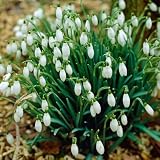
- Bulb Size: 2" (7/+ cm) Circumference
- Hardiness Zone: 3 to 9
- Light Requirements: Full Sun, Partial Shade
- Includes 50 Galanthus bulbs, temperature controlled and shipped with care.
- Easy to grow, attracts pollinators, deer resistant, winter hardy, good for containers.
| Planting material | When to plant | Main advantage | Main risk or limitation |
|---|---|---|---|
| Freshly lifted plants | Late spring, as foliage dies back | Fresh material can establish well when moved at the appropriate stage | Availability is seasonal and plants should not be left out of the ground |
| Snowdrops in the green | Just after flowering, while leaves remain | Foliage shows that the plant is alive and avoids prolonged dry storage | Seasonal availability and potentially higher purchase or shipping cost |
| Dry dormant bulbs | Promptly after purchase, during the seller’s planting season | Usually the simplest form to transport and plant | RHS warns that dormant bulbs are prone to drying out |
What should you buy?
Choose healthy snowdrop bulbs or cultivated snowdrops in the green from a reputable nursery, and plant them promptly. Availability, prices, shipping, and seller quality vary by country and season, so check that the material is freshly handled and legally cultivated rather than relying on a long-stored, unverified bulb listing.
Leaf mold or garden compost can be useful where soil lacks humus, but neither compost nor fertilizer compensates for poor drainage. A bulb planter or narrow trowel is optional; ordinary hand tools are sufficient for a small planting.
The Tool Desk
Outbyte Driver Updater FREEScan for outdated or missing drivers - takes under a minuteDriver Scan →Outbyte PC Repair FREEClear out junk files and repair common Windows errorsFree Scan →How deep and how far apart should snowdrop bulbs be planted?
Plant dry snowdrop bulbs about 2–3 inches deep and 2–3 inches apart. The Missouri Botanical Garden Plant Finder provides this practical depth and spacing reference for Galanthus nivalis. Set bulbs with the pointed growing tip upward, cover them with soil, and water once to settle the planting if the ground is not already moist.
Planting in groups gives a more natural effect than placing bulbs in a regular single line. You can make several irregular clusters or a broad drift beneath a tree, beside a path, or through a lawn. Avoid burying the bulbs excessively deeply, compacting the soil over them, or planting directly into a spot that remains wet.
How should snowdrops be watered?
Water snowdrops when the soil begins to dry, especially during a dry summer, but do not keep the bed saturated. A fixed weekly schedule is less useful than checking the soil because rainfall, soil type, shade, and local climate differ. The planting should retain moderate moisture through summer without standing in water.
Rank #3

- Low Maintenance: Perfect for both novice and experienced gardeners, Leucojum Aestivum is low-maintenance. Once planted, these bulbs require minimal care, making them an excellent choice for busy garden enthusiasts.
- Adaptable and Hardy: Thriving in various soil types and light conditions, these flowering bulbs are resilient and adaptable. Whether in full sun or partial shade, Leucojum Aestivum graces the garden with its presence, effortlessly enhancing the landscape.
- Graceful Stature: Standing at a modest height of 12-18 inches (30-45 cm), Leucojum Aestivum presents a graceful silhouette in the garden beds. This makes them ideal for border plantings, adding vertical interest without overshadowing neighboring plants.
- Perennials: As perennials, Leucojum Aestivum returns year after year, ensuring a sustained display of beauty in the garden. Their longevity and resilience make them a wise investment for those looking to establish a garden that evolves and matures gracefully over time.
- Versatile Pairing: Complement the elegance of Leucojum Aestivum by pairing them with other spring-blooming bulbs like daffodils, tulips, or crocuses. The harmonious combination of colors and shapes creates a visually stunning tapestry that evolves throughout the seasons.
Mulching lightly with suitable organic matter can help maintain moisture and add humus, but keep the mulch from forming a wet, airless layer over the bulbs. In heavy soil, prioritize drainage before adding more moisture-retaining material.
Quick wins for a faster PC:
Scan for outdated or missing drivers - takes under a minuteDriver Scan →Repair Windows errors before they cause bigger problemsFix Now →Fix the driver behind crashes, sound loss and screen glitchesFind Drivers →Should you cut back snowdrop leaves after flowering?
No. Leave snowdrop leaves intact until they turn yellow and die back naturally. The RHS instruction is concise: “Simply allow the foliage to die back naturally.” Green leaves continue supporting the bulb after the flowers fade, so cutting them immediately can weaken future performance.
If snowdrops grow in grass, do not mow the area while the leaves are still green. Delay mowing until the foliage has yellowed and disappeared. Once the leaves have finished naturally, the grass can be cut and the planting will be ready for its dormant period.
How do snowdrops multiply?
Snowdrops increase naturally through offsets and can form larger colonies when they are planted in suitable conditions and left relatively undisturbed. The most practical way for a home gardener to multiply them is to divide an established clump as the foliage turns yellow.
Dividing an established clump
- Wait until flowering is over and the leaves are beginning to yellow.
- Lift the clump carefully with a fork or trowel, working far enough away to avoid cutting through the bulbs.
- Separate the clump into smaller sections, keeping bulbs and roots attached where possible.
- Replant the divisions immediately at the same depth and in similar moist, well-drained soil.
- Water the new planting if the soil is dry, then allow the foliage to complete its natural dieback.
Division produces plants with the characteristics of the parent clump. Seed is slower and less predictable for named cultivars: collect fresh seed as soon as it ripens and sow it promptly, but understand that seedlings may not come true to the parent plant.
Rank #4
- Bulb Size: 2" (7/+ cm) Circumference
- Hardiness Zone: 3 to 9
- Light Requirements: Full Sun, Partial Shade
- Includes 100 Galanthus bulbs, temperature controlled and shipped with care.
- Easy to grow, attracts pollinators, deer resistant, winter hardy, good for containers.
What are twin scaling and chipping?
Twin scaling and chipping are specialist bulb-propagation techniques rather than routine snowdrop care. Twin scaling uses sections of bulb scales and the basal plate under controlled, clean conditions; chipping cuts the bulb into sections. Chipping can produce flowering plants more quickly, while twin scaling can produce many bulbs, but both methods require careful hygiene and handling. Division is the better choice for most gardeners.
What problems affect snowdrops?
| Symptom or problem | Likely cause | What to do |
|---|---|---|
| Bulbs fail to establish | Dormant bulbs dried out before planting | Buy fresher bulbs or choose plants sold in the green; plant promptly after purchase. |
| Leaves vanish shortly after flowering | Foliage was cut or mown too early | Leave leaves until they yellow and die back naturally. |
| Bulbs soften or rot | Persistently saturated soil or poor drainage | Improve drainage, reduce saturation, and move future plantings to a better site. |
| New bulbs are dug up | Squirrels disturbing dry-bulb plantings | Protect newly planted areas until the bulbs are secure. |
| Grey mold appears | Grey mold can affect snowdrops, particularly during mild winters | Remove affected material and improve air movement and drainage; do not maintain excessively wet conditions. |
Are snowdrops poisonous to dogs, cats, or children?
Yes. Snowdrops should not be eaten by people or pets. Kew states, “Snowdrops should not be eaten,” and reports that snowdrops contain lycorine, which can cause gastrointestinal symptoms if ingested. The RHS also identifies Galanthus nivalis as harmful if eaten by humans or pets and recommends protective equipment when handling the plant.
Keep bulbs, plants, fallen material, and gardening debris away from children and animals. Wear gloves when handling bulbs or plants, wash your hands afterward, and contact a medical professional or veterinarian promptly if ingestion is suspected. Do not induce vomiting unless a qualified professional tells you to do so.
Independent reader supportYour contribution helps us test, update, and keep practical guides available for everyone.Where can snowdrops grow, and when do they flower?
Snowdrops can suit cool temperate gardens and are commonly grown beneath deciduous trees, in woodland borders, and in lawns that are not mown until the foliage has died back. The Missouri Botanical Garden lists Galanthus nivalis for USDA Zones 3–7 in its current Plant Finder profile, but local performance still depends on drainage, exposure, snow cover, and the particular species or cultivar.
What’s actually slowing this PC down?
Pick the symptom - the matching free tool is one click away.
Flowering dates are not universal. Kew’s profile gives January through March for common snowdrop, while the Missouri Botanical Garden describes a later-February-to-late-March window for the St. Louis area. Treat those dates as regional examples, not a fixed calendar for every garden.
Best Value

- Galanthus are great border plants as specimen plants or as border plants.. great in north and midwest and beautiful flowers in the spring are followed by green foilage for the remainder of the growing season, Perennials come back year after year Are easy to grow and easy to care for
How can you buy snowdrops responsibly?
Purchase snowdrops from reputable cultivated sources and avoid casually collecting bulbs from the wild. Kew reports that all Galanthus species are listed in CITES Appendix II, so international trade is monitored. Legal availability and shipping rules differ by country; ask sellers about cultivation, plant health, and any required documentation before ordering across borders.
For most gardens, the reliable formula is straightforward: select fresh planting material, plant it in dappled shade, maintain moisture without waterlogging, leave the leaves alone after flowering, and divide clumps only after the foliage begins to die back.
Frequently Asked Questions
When should I plant snowdrop bulbs?
Snowdrop bulbs should be planted promptly after purchase because dormant bulbs can dry out. Freshly lifted plants are planted in late spring as the foliage dies back, while snowdrops in the green are planted just after flowering while leaves remain.
Can I plant snowdrops in the green?
Yes. Snowdrops in the green are plants sold just after flowering while their foliage is still present. They are a useful alternative when freshly lifted plants or healthy dormant bulbs are unavailable, because dormant bulbs are prone to drying out.
Do snowdrops need sun or shade?
Snowdrops prefer partial or dappled shade, especially beneath deciduous trees or shrubs. The soil should remain moist but drain freely; permanently wet soil can cause bulb rot, while very dry soil can prevent good establishment.
Should I cut back snowdrop leaves after flowering?
Do not cut snowdrop leaves immediately after flowering. Leave the foliage until it yellows and dies back naturally, and delay mowing a snowdrop lawn until the leaves have disappeared so the bulb can complete its seasonal recovery.
Are snowdrops poisonous to dogs, cats, or children?
Yes. Snowdrops should not be eaten by people, dogs, cats, or other pets. Kew reports that snowdrops contain lycorine and can cause gastrointestinal symptoms if ingested; keep bulbs and plants away from children and animals and seek professional help after suspected ingestion.
The Bottom Line
Snowdrops establish best when fresh bulbs or plants in the green are planted in partial shade and moist, well-drained soil. Plant dry bulbs 2–3 inches deep and apart, leave foliage to die back naturally, and divide clumps as the leaves yellow. Never eat snowdrops or allow children and pets to ingest them.
Quick Recap
Product prices and availability are accurate as of the date/time indicated and are subject to change. Any price and availability information displayed on Amazon at the time of purchase will apply.

