Some links on this page are affiliate links: if you buy through them we may earn a commission, at no extra cost to you.
Air plants grow without potting soil, but they do not grow without care. These Tillandsia bromeliads need bright filtered light, thorough watering, complete drying, and good airflow. Their roots mainly anchor them to trees, rocks, or other supports; leaf trichomes capture moisture and nutrients. The safest routine is to wet the entire plant, drain it well, and return it to its display only after it is fully dry.
Air plants need care—just not potting soil
Air plants are Tillandsia, a genus in the bromeliad family. They can grow attached to bark, driftwood, rocks, shells, or other supports instead of in soil because their short roots mainly hold them in place. Specialized leaf scales, called trichomes, help capture water and nutrients from rain, mist, dust, and humidity.
As an Amazon Associate I earn from qualifying purchases.
That does not mean air plants “feed on air” or can be neglected. They still need adequate light, thorough watering, good air circulation, and protection from temperature extremes. The most dependable care rule is simple: wet the whole plant, let all excess water drain, and do not return it to its display until it is completely dry.
Quick-care requirements
| Need | Good starting point | What to watch for |
|---|---|---|
| Light | Bright, filtered or indirect light | Weak growth in dim light; bleaching or scorch in harsh sun |
| Water | Thorough rinse or soak once or twice weekly, adjusted to conditions | Curled leaves suggest dehydration; a soft or dark center suggests rot |
| Drying | Open airflow until fully dry, usually within several hours | Water trapped in the crown is a major rot risk |
| Temperature | About 65–90°F by day and above 55°F at night | Protect from frost, freezing, heaters, and cold drafts |
| Humidity | Moderate to high humidity can help | Humidity never replaces watering or ventilation |
How much light do air plants need?
Give an air plant bright, diffused, or filtered light. An east- or west-facing window is a useful starting point. A bright south-facing window can also work if a sheer curtain, a few feet of distance, or another filter softens the strongest direct sun.
#1 Best Overall

- WONDERFULLY ORGANIC - Contains premium organic ingredients that makes nutrient rich spray perfect to use on all indoor and outdoor airplant types.
- PLANTS ENHANCED - Get the most out of your waterings and soaks! Pair our houseplant food with weekly care routines to aid and enhance root development, leaf growth, color vibrancy, and beautiful blooms.
- SUSTAINABLE GROWTH & VIGOR - Premium, urea free liquid fertilizer. Well-balanced mix of essential nutrients epiphytes need to flourish in their growing enviroment. Light NPK ratio sufficiently sustains both small and large air plants with the nutrition they require to thrive long term.
- READY MIXED PLANT MISTER - Already pre-mixed liquid fertilizer in a convenient ready to use spray bottle. Creates a fine mist perfect for gentle weekly feedings that help your houseplants flourish. Simply grab and spray!
- USE WHEREVER THEY GROW - Made to use on all varities of bromeliad, tillandisa including caput-medusae and xerographica, ferns, and other common epiphytes grown in and around the house. Excellent for plants grown in a terrarium, metal holders, or when nicely mounted on driftwood or placed in shells.
Light needs vary by species and by the plant’s leaf surface. Gray, fuzzy plants with abundant trichomes are often adapted to brighter and drier conditions. Smooth, green-leaved plants generally prefer more filtered light and steadier moisture. This is a helpful guideline rather than a substitute for observing the individual plant.
- Too little light: slow growth, weak new leaves, poor color, and less likely flowering.
- Too much unfiltered light: bleached, brown, crispy, or scorched foliage, especially behind hot glass.
- Dim room: a supplemental full-spectrum grow light may help, particularly during dark winters.
If you use artificial light, keep its schedule consistent and watch the plant rather than assuming a fixed distance works for every fixture. Different bulbs and plants produce different results.
Do these 3 things before closing this tab:
1Scan for outdated or missing drivers - takes under a minute2Repair Windows errors before they cause bigger problems3Fix the driver behind crashes, sound loss and screen glitchesHow to water an air plant
There is no universal “water every seven days” rule. Watering frequency depends on the species, leaf shape, temperature, humidity, light, airflow, mounting arrangement, and whether the plant is displayed in an enclosed container.
For many indoor air plants, begin with this routine:
- Wet it thoroughly once or twice a week. Rinse the entire plant under clean water, or submerge it for roughly 20–60 minutes.
- Drain it immediately. Remove the plant, gently shake off excess water, and position it upside down or at an angle so water cannot remain in the center.
- Dry it in open airflow. Leave it somewhere bright and ventilated until it is completely dry—typically several hours.
- Adjust after observing it. Check more often in hot, dry, bright conditions. In cool or humid conditions, allow more time between waterings and be especially careful that the plant does not stay wet.
Misting can be useful as a supplement, particularly in a dry environment, but a light mist alone often does not hydrate the entire plant. If the leaves remain curled, dull, or crispy, switch to a more thorough rinse or soak. Some heavily trichomed, xeric species may prefer lighter, more frequent wetting rather than a long soak; adjust conservatively and prioritize rapid drying.
How to dry an air plant safely
Drying is part of watering, not an optional extra. Air plants naturally grow in exposed or elevated locations where water does not remain stagnant around the crown. After watering, place the plant on a towel, rack, or open shelf with enough ventilation to dry it fully within several hours.
Quick wins for a faster PC:
Fix the driver behind crashes, sound loss and screen glitchesFind Drivers →Clear out junk files and repair common Windows errorsFree Scan →Scan for outdated or missing drivers - takes under a minuteDriver Scan →Rank #2
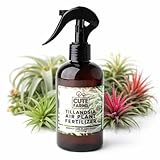
- Made For Air Plants - Our Tillandsia Air Plant Fertilizer Weekly formula is created for all varieties of air plants including Brachycaulus, Bulbosa, Capitata, Caput Medusae, Ferns, Ionantha, Stricta, Xerographica, and other common Epiphytes. Perfect for air plants grown in planters, terrariums, frames, seashells, glass, metal and wood holders
- Easy To Use - The fertilizer comes in an 8 fl oz. sealed bottle with an ultra-fine mist sprayer designed to mist easily. The convenient pre-mixed liquid formula is ready to use right out of the package. Simply use 3-5 sprays weekly, directly onto air plants, in addition to regular watering and misting
- Enhance Growth - Keep your houseplants healthy with a gentle and well-balanced formula of all the essential nutrients to boost their growth. Our weekly fertilizer helps air plants with leaf growth, root & pup development, color vibrancy, blooms, hydration, and vitality
- Value - The product includes 8 fl oz. bottle with weekly solution formula, trigger sprayer with a leakproof foam liner inside to prevent leakage of liquid. Each bottle can feed houseplants for more than 6 months
- Made in the United States - Our plant fertilizers are made and packed in the USA to ensure quality. If you don’t absolutely love our Tillandsia Air Plant Fertilizer we’ll refund your entire purchase amount within 30 days. Please contact us with any questions or concerns
Do not put a wet plant directly beside a heater, air-conditioner outlet, or cold draft. These locations can cause temperature swings, overly rapid dehydration, or chilling while the plant is still wet.
What water should you use?
Rainwater is commonly recommended for Tillandsia. Hard tap water may leave a white mineral coating on the trichomes. Distilled water avoids mineral buildup but contains no minerals, and local tap-water chemistry varies, so plant response matters.
If you use tap water, avoid heavily softened water or water known to contain high mineral levels. White residue on the leaves is a sign to review your water source. Rinse mineral deposits gently rather than scrubbing the trichomes, which are part of the plant’s water- and nutrient-absorbing surface.
Temperature, humidity, and airflow
Air plants are tropical or warm-temperate plants. A practical indoor target is approximately 65–90°F during the day, with nighttime temperatures above 55°F. Protect them from frost and freezing temperatures.
Humidity can reduce dehydration, but a humid room does not eliminate the need to water. A bathroom may be suitable if it also has adequate light and ventilation. In a dry, heated home, monitor the plant more closely rather than keeping it continuously damp.
Air circulation is especially important in humid conditions. A plant that is wet for too long is at greater risk than one that experiences a brief dry interval between thorough waterings. Enclosed terrariums and glass globes should remain open, or the plant should be removable for watering and drying.
Rank #3
- Made for Air Plants & Tillandsia – Formulated to support healthy growth in air plants and tillandsia.
- Supports Vibrant Color & Growth – Helps encourage bright foliage and balanced plant development.
- Gentle Nutrition for Air Plants – Provides nutrients suited for delicate, soil-free plant care.
- Ideal for Indoor Displays & Terrariums – Suitable for home décor, mounts, and container displays.
- Made in USA
Do air plants need fertilizer?
Fertilizer is optional for survival. It can support active growth, flowering, and the production of offsets when the plant already has appropriate light and water. Those fundamentals matter more than feeding.
During active growth, a monthly application of fertilizer formulated for bromeliads, orchids, or air plants can be a reasonable starting point. Dilute it according to the product label, and err on the weak side because air plants absorb nutrients through their leaves. A dedicated air plant fertilizer can be convenient, but it is not a cure for poor light, dehydration, or rot.
Free tools Windows power users keep installed
One-click scans. No signup required.
Never fertilize a severely dehydrated, rotting, or otherwise stressed plant as the first response. Correct watering, drainage, light, and airflow first. Do not pour concentrated fertilizer into the crown and leave it standing.
Where and how to display an air plant
You can display air plants loose on an open shelf or attach them to driftwood, bark, rocks, shells, wire structures, or ventilated stands. The support should satisfy three tests:
- It does not hold water around the base.
- It leaves the leaves and crown exposed to air.
- It allows the plant to be removed easily for watering and drying.
An open air-plant holder or ventilated display stand can be useful, but decorative appearance should never take priority over ventilation. Avoid sealed terrariums, narrow vessels that trap water, and mounts that permanently glue the plant in place.
If you use wire, ties, or adhesive, choose a non-damaging method that does not constrict the growing plant or cover its crown. Inspect the attachment periodically as the plant expands. If mounting prevents you from soaking and drying the plant properly, the display is working against its care requirements.
Flowering and propagation
Most Tillandsia flower once and then gradually decline while producing offsets, commonly called pups. Flowering is more likely when the plant receives sufficient light, adequate hydration, and appropriate nutrition. A plant that has not flowered may simply be immature or growing in insufficient light; lack of flowers is not automatically a disease.
After flowering, leave pups attached for a fuller clump, or separate them once they are approximately one-third the size of the mother plant. Detach them gently and continue normal care. Seeds are possible, but growing air plants from seed is much slower and more demanding than separating pups.
Rank #4

- Made For Air Plants - Our Tillandsia Air Plant Fertilizer Daily formula is created for all varieties of air plants including Brachycaulus, Bulbosa, Capitata, Caput Medusae, Ferns, Ionantha, Stricta, Xerographica, and other common Epiphytes. Perfect for air plants grown in planters, terrariums, frames, seashells, glass, metal & wood holders
- Easy To Use - The fertilizer comes in an 8 fl oz. sealed bottle with an ultra-fine mist sprayer designed to mist easily. The convenient pre-mixed liquid formula is ready to use right out of the package. Simply use 2-3 sprays daily, directly onto air plants, in addition to regular watering and misting
- Enhance Growth - Keep your houseplants healthy with a gentle and well-balanced formula of all the essential nutrients to boost their growth. Our daily fertilizer helps air plants with leaf growth, root & pup development, color vibrancy, blooms, hydration, and vitality
- Value - The product includes 8 fl oz. bottle with daily solution formula, trigger sprayers with a leakproof foam liner inside to prevent leakage of liquid. Each bottle can feed houseplants for more than 6 months
- Made in the United States - Our plant fertilizers are made and packed in the USA to ensure quality. If you don’t absolutely love our Tillandsia Air Plant Fertilizer we’ll refund your entire purchase amount within 30 days. Please contact us with any questions or concerns
Troubleshooting common problems
Leaves are curled, rolled, dull, or crispy
This commonly indicates dehydration, especially when the plant is exposed to heat, low humidity, bright light, or infrequent watering. Rehydrate it thoroughly, drain it well, and let it dry in open airflow. Then reassess the light and watering interval. Do not leave a distressed plant submerged indefinitely.
Leaves are brown, bleached, or scorched
Possible causes include excessive direct sun, overheating behind glass, low humidity, or mineral residue. Move the plant into bright filtered light, stabilize its environment, and review the water quality. Damaged tissue will not return to its original color, so judge recovery by the condition of new growth and the plant’s firmness.
What’s actually slowing this PC down?
Pick the symptom - the matching free tool is one click away.
The center is brown or black, the base is mushy, or the plant is collapsing
These are serious signs of crown or base rot, often associated with water trapped in the center, poor airflow, or prolonged wetness. Remove standing water, improve ventilation, and isolate the plant while you assess it. Once extensive crown rot has developed, recovery may not be possible. Do not respond by adding fertilizer or keeping the plant wetter.
There are pests
Air plants can develop common indoor-plant pests such as scale or mealybugs. Inspect plants regularly, isolate an affected plant from other houseplants, and correct environmental stress. Use only a treatment whose label permits use on the plant, and follow that label’s dilution and application instructions.
Independent reader supportYour contribution helps us test, update, and keep practical guides available for everyone.A simple weekly air-plant routine
- Check the plant’s color, firmness, and leaf posture.
- Confirm that it is receiving bright filtered light.
- Rinse or soak it according to its species and growing conditions.
- Shake out retained water, especially from the crown.
- Leave it in open airflow until completely dry.
- Inspect for pests, mineral buildup, rot, and loose or restrictive mounting materials.
- Fertilize only during active growth and only with properly diluted bromeliad, orchid, or air-plant fertilizer.
Air-plant supplies: what is actually useful?
You do not need a large kit. The essentials are a suitable light source, clean water, and a location where the plant can dry. Optional supplies should solve a specific problem:
- Full-spectrum LED grow light: useful when natural light is weak, but unnecessary for a bright window and not a guarantee of flowering.
- Air plant fertilizer: an optional source of diluted monthly nutrition for a healthy, actively growing plant.
- Open holder or ventilated stand: useful for display only if the plant remains removable and can dry quickly.
- Open support or mounting wire: suitable when it does not constrict the plant or retain water.
The “no soil” advantage mainly changes the display. It does not change the plant’s fundamental requirements: light, water, ventilation, and appropriate temperatures.
Crashes, No Sound, or Screen Glitches?
Random freezes, missing sound and display glitches usually trace back to one bad driver. Find and replace yours safely.Free scan · under a minutePC Slower Than It Used to Be?
A free scan shows the junk files, broken settings and background clutter dragging Windows down - then fixes them in one click.Free scan · Windows 10 & 11Best Value

- Made For Air Plants - Our Tillandsia Air Plant Fertilizer Daily formula is created for all varieties of air plants including Brachycaulus, Bulbosa, Capitata, Caput Medusae, Ferns, Ionantha, Stricta, Xerographica, and other common Epiphytes. Perfect for air plants grown in planters, terrariums, frames, seashells, glass, metal & wood holders
- Easy To Use - The fertilizer comes in an 8 fl oz. sealed bottle with an ultra-fine mist sprayer designed to mist easily. The convenient pre-mixed liquid formula is ready to use right out of the package. Simply use 2-3 sprays daily, directly onto air plants, in addition to regular watering and misting
- Enhance Growth - Keep your houseplants healthy with a gentle and well-balanced formula of all the essential nutrients to boost their growth. Our daily fertilizer helps air plants with leaf growth, root & pup development, color vibrancy, blooms, hydration, and vitality
- Value - The product includes 8 fl oz. bottle with daily solution formula, trigger sprayers with a leakproof foam liner inside to prevent leakage of liquid. Each bottle can feed houseplants for more than 6 months
- Made in the United States - Our plant fertilizers are made and packed in the USA to ensure quality. If you don’t absolutely love our Tillandsia Air Plant Fertilizer we’ll refund your entire purchase amount within 30 days. Please contact us with any questions or concerns
Frequently Asked Questions
Do air plants really need no care if they need no soil?
No. Air plants are not maintenance-free. They absorb water and some nutrients through leaf trichomes, but they still need light, regular thorough watering, and airflow.
How often should you water an air plant?
Begin by rinsing thoroughly or soaking for about 20–60 minutes once or twice a week. Drain the plant and let it dry completely in open airflow. Adjust the frequency for species, temperature, humidity, light, and airflow.
Can I keep an air plant alive by misting it?
Misting may supplement watering, but light misting alone often does not hydrate the entire plant. If leaves remain curled, dull, or crispy, use a thorough rinse or soak instead.
Why is my air plant turning brown or mushy in the center?
A brown or black center, mushy base, or rapidly collapsing plant can indicate rot caused by trapped water and poor airflow. Remove standing water, improve ventilation, and isolate the plant; advanced crown rot may be fatal.
Do air plants need fertilizer?
Yes, but fertilizer is optional. Use a properly diluted bromeliad, orchid, or air-plant fertilizer about monthly during active growth, and correct light and watering problems before feeding.
The Bottom Line
Grow air plants without soil by giving them bright filtered light, thoroughly wetting them about once or twice a week as a starting point, and drying them completely in open airflow before putting them back on display. Adjust the schedule to the species and room, and treat water trapped in the crown as a rot warning—not as extra hydration.
Quick Recap
Product prices and availability are accurate as of the date/time indicated and are subject to change. Any price and availability information displayed on Amazon at the time of purchase will apply.

