Some links on this page are affiliate links: if you buy through them we may earn a commission, at no extra cost to you.
No grass is best everywhere. The correct lawn grass is the one that matches your climate, sunlight, available water, soil, traffic, desired appearance, and willingness to maintain it. For a hot, sunny, heavily used lawn, start with bermudagrass; for a partially shaded cool-season lawn, start with turf-type tall fescue; and for warm-season light shade, compare zoysiagrass with St. Augustinegrass. Then verify the cultivar and establishment method locally.
There is no single best grass for every lawn. The right choice is the species and cultivar that match your region’s temperature pattern, available water, sunlight, soil, expected traffic, preferred appearance, establishment method, and maintenance capacity.
As an Amazon Associate I earn from qualifying purchases.
Recommended Free Tools
As a quick starting point for a U.S. lawn:
- Hot climate, full sun, drought or heavy traffic: Start with bermudagrass. Buffalograss may be a lower-water alternative where it is locally adapted.
- Warm climate with light shade: Compare zoysiagrass and, in suitable warm regions, St. Augustinegrass.
- Cool climate with partial shade: Start with a blend of turf-type tall fescue cultivars.
- Cool climate, full sun, and adequate moisture: Compare Kentucky bluegrass, tall fescue, and perennial ryegrass according to your priorities for density, drought response, wear, and establishment speed.
- Transition-zone location: Use the site—not the state line—as the deciding factor. Sunny areas may favor warm-season turf, while shaded or reliably irrigated areas may favor tall fescue or another cool-season choice.
The most important mistake to avoid is buying grass because it looks attractive on a package. First identify whether your lawn favors cool-season or warm-season turf, then filter the options by sunlight, water, traffic, soil, cultivar, and installation method.
Cool-season or warm-season grass?
This is the first major decision because the two groups have different growth cycles and management requirements. A lawn normally should not be planted as an unplanned mixture of cool-season and warm-season species. They become active, stressed, dormant, and ready for maintenance at different times of year.
#1 Best Overall

- SUN AND SHADE GRASS SEED: This combination lawn seed, grass fertilizer, and soil improver thrives in a variety of conditions
- WHEN TO APPLY: Use this sun and shade lawn grass seed mix to seed a new lawn or overseed an existing lawn in the spring or fall when daily average soil temperatures are consistently between 55°F and 70°F, or air temperatures between 60°F and 80°F
- GROW THICK, GREEN GRASS: Scotts Turf Builder Grass Seed Sun & Shade Mix features Root-Building Nutrition crafted to help establish deep roots to build a better, stronger lawn
- WHERE TO USE: This grass seed for lawns is designed for full sun and moderate shade, and has medium drought resistance with medium to high durability
- COVERAGE: One 5.6 lb. bag of Scotts Turf Builder Grass Seed Sun & Shade Mix has a new lawn coverage of 745 sq. ft. and an overseeding coverage of 2,240 sq. ft.
| Grass group | Growth pattern | Usually worth considering when | Main caution |
|---|---|---|---|
| Cool-season | Grows most actively during cooler periods, especially fall and spring. Many types perform well when temperatures are approximately 60–75°F. | You live in much of the northern United States, or you have a cooler, shaded, or irrigated site in a transition region. | Hot summer weather can cause heat and drought stress, dormancy, or injury, particularly without irrigation. |
| Warm-season | Grows most vigorously during hot weather and commonly turns brown or dormant during winter. | You have hot summers, strong sunlight, and are willing to accept winter dormancy in exchange for better warm-weather performance. | Shade, cold winters, or a short warm growing season can limit performance depending on the species and cultivar. |
Common cool-season lawn grasses include turf-type tall fescue, Kentucky bluegrass, perennial ryegrass, and fine fescues. Common warm-season choices include bermudagrass, zoysiagrass, St. Augustinegrass, centipedegrass, and buffalograss.
Transition-zone states require more careful planning. Oklahoma State University describes Oklahoma, for example, as a transition zone where both groups are grown. Summer heat and limited rainfall can restrict cool-season grasses largely to shaded or irrigated locations, while warm-season grasses may perform better in sunny areas. Similar site-specific trade-offs occur in other transition regions.
1. Measure sunlight before choosing a species
Sunlight is often a stronger filter than a product label. Track the amount of direct or filtered light over the actual lawn area, not just the light at midday. Trees, buildings, fences, and neighboring structures can cast long seasonal shadows, and a site that looks sunny in spring may receive much less light when tree canopies are full.
Use these broad comparisons:
- Full sun: Bermudagrass is a strong warm-season candidate, especially where heat, drought, and wear are concerns.
- Partial or light shade in a cool-season region: Turf-type tall fescue is often the most practical starting point. Fine fescues may work where traffic is low and fine texture is desirable.
- Light shade in a suitable warm-season region: Zoysiagrass may outperform bermudagrass. St. Augustinegrass is also relatively shade tolerant, but it needs a warm climate and has limited cold tolerance.
- Very limited light: Do not assume a shade-labeled seed mixture will solve the problem. Turf can fail because trees and turf compete for light, water, and nutrients. A shade-tolerant cultivar, a higher mowing height, pruning where appropriate, or a non-turf groundcover may be a better long-term solution.
Bermudagrass is particularly unsuitable for heavily shaded lawns. Common types have very poor shade tolerance, and many hybrids range only from poor to fair. Choosing Bermuda for a shaded site usually creates a maintenance problem that extra fertilizer and watering will not correct.
Shaded turf generally benefits from being mowed somewhat higher than turf in strong sun, but higher mowing cannot compensate for inadequate light. If the site receives too little usable light, change the landscape plan rather than repeatedly reseeding the same failing area.
2. Match the grass to water availability
Ask how much supplemental irrigation the lawn can realistically receive during a hot, dry period. A homeowner who wants minimal watering should not choose a grass whose summer appearance depends on regular irrigation simply because it is attractive or dense.
Do these 3 things before closing this tab:
1Repair Windows errors before they cause bigger problems2Scan for outdated or missing drivers - takes under a minute3Clear out junk files and repair common Windows errors- Bermudagrass: One of the strongest drought-oriented options in suitable warm-season regions, particularly in full sun.
- Buffalograss: A strong low-water candidate in its adapted central and Plains range, especially in full sun.
- Zoysiagrass: Can perform well under heat and drought, but response varies by cultivar and site, and establishment is slower.
- Tall fescue and Kentucky bluegrass: Can be appropriate in cool regions or on shaded and irrigated sites, but hot summer conditions can increase their water needs and stress.
“Drought tolerant” does not mean immune to damage or independent of management. Survival depends on mowing, soil condition, irrigation, the severity and duration of the dry period, and whether the grass is actually adapted to that region. A warm-season grass that handles drought in the Plains is not automatically the right choice for every dry site, and a native grass is not automatically adapted to every U.S. climate.
For new seed, irrigation is especially important during establishment. A lawn sprinkler or hose-end irrigation tool can help provide supplemental water when the species and local conditions call for it, but no watering tool can make a poor climate-and-site match succeed.
3. Consider traffic, pets, and recovery speed
Compare both wear tolerance and recuperative ability. A grass can tolerate occasional foot traffic yet recover slowly from a worn path, or it can spread rapidly into damaged areas after use.
- Bermudagrass: A strong choice for sunny, warm-season, high-use lawns. Its stolons and rhizomes form a spreading network that helps it tolerate wear and recover quickly.
- Hybrid bermudagrass: Generally rates very highly for wear tolerance, although the specific cultivar and its maintenance needs matter.
- Perennial ryegrass: Offers useful wear tolerance and rapid establishment in appropriate cool-season settings.
- Kentucky bluegrass: Its creeping rhizomes help it form dense turf and recover from some wear, but summer heat and water requirements may rule it out in warmer or drier locations.
- St. Augustinegrass and centipedegrass: Generally poor choices for heavily used play areas because their wear tolerance is limited.
No species eliminates bare spots from concentrated traffic. If children, pets, vehicles, or repeated footpaths use one area, consider a defined path, a hardscape or durable groundcover, periodic rest for the damaged area, and repair during the grass’s proper establishment window. Improving the soil and using the correct seed, sod, plugs, or sprigs will produce better results than repeatedly applying seed at the wrong time.
4. Compare the main lawn-grass candidates
Turf-type tall fescue
Best general fit: Cool-season or transition-zone lawns, particularly sites with partial shade, moderate heat, and a homeowner willing to irrigate during severe summer stress.
Turf-type tall fescue is often the most useful all-purpose starting point for a partially shaded cool-season lawn. It has comparatively good shade tolerance, reasonable heat and drought tolerance for a cool-season grass, and can be established from seed. It is also used for home lawns and soil stabilization.
A blend of several turf-type tall-fescue cultivars can spread risk across differences in shade response, color, texture, and stress tolerance. Keep the blend within the cool-season group; mixing several fescue cultivars is not the same as mixing cool-season and warm-season species.
Its limitations are summer stress in hot climates and the possibility that a thinning stand will need periodic overseeding or renovation. For a hot, sunny, unirrigated lawn, bermudagrass or another locally adapted warm-season option may be a better fit.
Free tools Windows power users keep installed
One-click scans. No signup required.
Rank #2

- Sun and shade grass seed for use in full sun to medium-shaded areas
- This bag of tall fescue grass seeds for lawns covers up to 4,000 sq. ft.
Kentucky bluegrass
Best general fit: Cooler regions with adequate moisture, good sunlight, and a homeowner who values dense, attractive turf with spreading recovery.
Kentucky bluegrass has creeping rhizomes and can create a dense lawn. It is fine- to medium-textured and can become semidormant during hot weather. It performs best in fertile soil; University of Georgia comparison tables place approximately 5.5–6.5 as an optimal pH range for several common lawn grasses, including Kentucky bluegrass in the relevant regional guidance.
Do not make it the default choice for a hot, dry site without dependable irrigation. Its summer heat and drought limitations are often more important than its attractive color and density.
Perennial ryegrass
Best general fit: Cool-season lawns needing quick establishment, or temporary winter overseeding where local guidance recommends it.
Perennial ryegrass germinates and establishes quickly. It has a fine texture, dark green color, and useful wear tolerance, which makes it attractive for fast cover and some high-use cool-season applications.
Fast establishment does not make it the best permanent lawn grass everywhere. In hot regions such as Georgia, summer heat may make it functionally annual. It is also used to overseed warm-season lawns in some southern settings, but the temporary rye can compete with the permanent warm-season turf during spring transition. Treat overseeding as a deliberate seasonal practice, not as an unmanaged mixture.
Fine fescues
Best general fit: Cooler, lower-traffic, partly shaded sites where fine leaf texture and shade performance are priorities.
Fine fescues can be valuable components of northern cool-season mixtures and can perform well in shade. Their trade-offs are fair-to-poor heat tolerance and only fair-to-good wear tolerance in the comparative guidance. They are less suited to hot, humid, heavily trafficked, or highly irrigated situations than some alternatives.
The Tool Desk
Outbyte PC Repair FREEClear out junk files and repair common Windows errorsFree Scan →Outbyte Driver Updater FREEFix the driver behind crashes, sound loss and screen glitchesFind Drivers →Bermudagrass
Best general fit: Hot climates, full sun, drought-prone sites, and high-use lawns where rapid spreading and recovery matter.
Bermudagrass tolerates heat and drought well, spreads by stolons and rhizomes, and can recover quickly from wear. These traits make it a strong choice for sunny lawns used by children, pets, or recreational activities.
There is an important difference between common and hybrid Bermuda. Common seeded types are generally more accessible for do-it-yourself establishment. Many fine-textured hybrid cultivars are commonly installed vegetatively with sod, sprigs, or plugs and may require more intensive maintenance. Cultivar choice also affects texture, color, cold response, shade performance, and maintenance requirements.
The disadvantages are substantial: poor shade tolerance, winter dormancy, aggressive spread into beds and borders, and potentially frequent mowing when fertilized heavily. Bermuda is an excellent grass in the right site—not a universal warm-climate answer.
Quick wins for a faster PC:
Repair Windows errors before they cause bigger problemsFix Now →Scan for outdated or missing drivers - takes under a minuteDriver Scan →Zoysiagrass
Best general fit: Warm-season regions where a homeowner wants dense, attractive turf with more light-shade potential than bermudagrass and accepts slow establishment.
Rank #3

- This pack of lawn seeds is ideal for new lawns, overseeding and lawn repair
- All-purpose lawn grass seed mix formulated and mixed specifically for the region of the country where it is sold
- Pennington Contractors Grass Seed Mix is a pack of spring and fall grass seeds for lawn
- Pennington Contractors Grass Seed Mix is a pack of spring and fall grass seeds for lawn
- See effects in 7 to 21 days with this grass patch repair for lawn
Zoysiagrass spreads through stolons and rhizomes, tolerates heat, and can handle light shade better than Bermuda in some conditions. It also offers useful winter hardiness in appropriate cultivars. Its principal liability is slow establishment, particularly when installed from plugs.
Do not choose zoysia solely at the species level. Cultivars differ meaningfully in shade tolerance, winter hardiness, texture, color, and establishment speed. A zoysia cultivar that succeeds in one state or shade level may not be the best choice on a nearby property.
St. Augustinegrass
Best general fit: Warm, humid regions with mild winters and lawns needing better shade tolerance than bermudagrass.
St. Augustinegrass is relatively shade tolerant among warm-season grasses. Its limitations are poor wear tolerance and fair-to-poor cold hardiness in comparative regional guidance. It is therefore better suited to a warm, humid ornamental lawn with moderate use than to a cold-prone or heavily trafficked site.
Centipedegrass
Best general fit: Suitable warm, humid regions where a relatively low-input lawn is desired and traffic is modest.
Centipedegrass can offer good drought resistance and fair-to-good shade performance in appropriate conditions, but its wear tolerance is poor. It should not be the first choice for a play lawn, dog run, or other area that receives concentrated traffic.
Buffalograss
Best general fit: Central and Plains regions with full sun, low rainfall, and conditions suited to this native warm-season prairie grass.
Crashes, No Sound, or Screen Glitches?
Random freezes, missing sound and display glitches usually trace back to one bad driver. Find and replace yours safely.Free scan · under a minutePC Slower Than It Used to Be?
A free scan shows the junk files, broken settings and background clutter dragging Windows down - then fixes them in one click.Free scan · Windows 10 & 11Buffalograss is known for drought tolerance and can be a lower-water alternative within its adapted range. Oklahoma guidance lists it as a full-sun, highly drought-resistant warm-season grass.
Native to parts of the United States does not mean suitable throughout the country. In humid southeastern conditions, disease and weed problems can cause buffalograss to decline. Local adaptation matters more than the word “native” on its own.
5. Choose the cultivar, not just the species
Species names narrow the field; cultivars often determine whether the final choice actually works. Cultivars within one species can differ in:
- Shade tolerance
- Winter hardiness
- Drought response
- Leaf texture and color
- Establishment speed
- Wear tolerance and recovery
- Mowing and fertility requirements
For example, the shade performance of individual Bermuda and zoysia cultivars can differ materially. “Zoysia for shade” or “Bermuda for drought” is less useful than a recommendation for a named cultivar that has been evaluated for your region and site conditions.
What’s actually slowing this PC down?
Pick the symptom - the matching free tool is one click away.
Before buying seed or sod, check whether the named cultivar is recommended by your state’s land-grant university extension service or turfgrass program. Buy from a reputable supplier and verify that the material is regionally appropriate rather than relying on a generic “sun and shade” label.
6. Decide between seed, sod, plugs, and sprigs
Establishment method can eliminate some otherwise attractive choices.
Rank #4
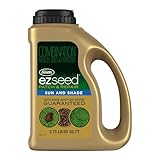
- WHEN TO APPLY : This lawn seed mix of Kentucky bluegrass seed, perennial ryegrass, and fine fescue grass seed germinates best when daytime temperatures are between 60°F and 80°F with no danger of frost
- PATCH & REPAIR: Scotts EZ Seed Patch & Repair Sun and Shade is a revolutionary grass seeding product that makes grass patch repair for lawns easy; it's designed to fill in bare spots and repair lawn damage
- COVERAGE: One 3.75 lb. jug of EZ Seed Patch & Repair lawn grass seed mix covers up to 85 sq. ft. in 3 easy steps: prep the area, evenly apply the seed and water until no more water is being absorbed
- WHERE TO USE: This sun and shade lawn repair grass seed mix is guaranteed to grow anywhere with proper care including in full sun, dense shade, high traffic areas and on slopes
- SUN AND SHADE GRASS: Contains a combination of high performance grass seed for lawns, mulch that expands to surround the seed, controlled release fertilizer, tackifier to help keep seed from washing away and a protectant to help keep seedlings safe
| Method | Advantages | Trade-offs | Common fit |
|---|---|---|---|
| Seed | Usually the most accessible and economical DIY method; offers access to blends and seeded cultivars. | Requires suitable timing, seedbed preparation, moisture during establishment, and patience while coverage develops. | Cool-season grasses, common bermudagrass, and selected other cultivars. |
| Sod | Provides immediate surface coverage and reduces the period of exposed soil. | Costs more and requires careful soil preparation, delivery coordination, installation, and watering. | Many warm-season cultivars and lawns where quick coverage is important. |
| Plugs | Can establish cultivars that are not normally available as ordinary seed. | Coverage develops slowly and requires control of weeds and moisture during establishment. | Some zoysiagrass and other vegetatively propagated turf. |
| Sprigs | Useful for installing certain warm-season cultivars without laying full sod. | Requires suitable site preparation and careful establishment management; availability is regional. | Many hybrid bermudagrasses and selected warm-season cultivars. |
Many hybrid bermudagrasses and some zoysiagrasses are normally established vegetatively rather than from ordinary seed. Do not substitute a generic seeded Bermuda product for a named hybrid cultivar that is intended to be installed as sod, sprigs, or plugs.
If you are ready to seed, compare grass seed only after identifying the appropriate group, species, cultivar, and planting window. Check the label for the species, named cultivar or blend composition, germination information, weed-seed content, and regionally appropriate planting instructions. A seed mixture advertised for both sun and shade is not automatically suitable for every climate or every degree of shade.
For vegetatively established turf, look for regionally adapted sod, plugs, or sprigs from a supplier that can identify the cultivar and confirm that it is suitable for your climate and light conditions. Availability varies by region, so local turf suppliers and extension recommendations are more useful than a national ranking.
Independent reader supportYour contribution helps us test, update, and keep practical guides available for everyone.7. Test soil before correcting it
Soil pH and fertility affect establishment and long-term performance. Before applying lime or fertilizer—especially on a new lawn or a site with repeated failures—obtain a soil test. Several common lawn grasses perform well around a pH of approximately 5.5–6.5 in the relevant University of Georgia comparisons, but that range should not be treated as a universal prescription for every species, soil, or region.
Use the test results to guide lime, fertilizer, and other amendments. Applying lime by habit can move the soil in the wrong direction, and fertilizer cannot compensate for unsuitable shade, poor drainage, severe compaction, or an incompatible grass choice.
A home soil test kit can be a useful screening tool for pH and basic conditions, but it should not be treated as a replacement for a laboratory or extension-affiliated test when precise amendment and fertility recommendations matter. A professional lawn soil test is the higher-confidence option when installing a substantial lawn, correcting recurring failure, or making significant pH changes.
Do these 3 things before closing this tab:
1Repair Windows errors before they cause bigger problems2Scan for outdated or missing drivers - takes under a minute3Clear out junk files and repair common Windows errorsA practical grass-selection decision guide
- Identify the seasonal pattern. Decide whether the lawn should remain actively green through hot weather or whether warm-season winter dormancy is acceptable.
- Map sunlight. Account for morning, midday, and afternoon exposure, plus seasonal tree and building shadows.
- Set a realistic water budget. Note whether irrigation is available during extended heat and drought, not just during installation.
- Estimate use. Separate ordinary household use from concentrated play, pet traffic, sports, and recurring paths.
- Shortlist species. Use the comparisons above, but remove any grass that fails the sunlight or climate test.
- Check cultivars locally. Confirm that the named cultivar is recommended for the region, soil, winter conditions, and shade level.
- Test the soil. Correct pH and fertility based on test results rather than habit.
- Choose the establishment method. Confirm whether the selected cultivar is available and intended as seed, sod, plugs, or sprigs.
- Plan maintenance honestly. Include mowing frequency, summer irrigation, overseeding or renovation, shade management, and the amount of spread into beds you are willing to control.
What to choose in common situations
| Site and priority | Best starting shortlist | What to verify first |
|---|---|---|
| Hot region, full sun, low irrigation, heavy use | Bermudagrass; buffalograss where locally adapted and traffic is not extreme | Cultivar, winter dormancy, aggressive spread, and whether seed or vegetative installation is required |
| Hot region, light shade | Zoysiagrass or, in suitable warm climates, St. Augustinegrass | Exact shade level, cultivar, cold tolerance, wear expectations, and local disease pressure |
| Cool region, partial shade | Turf-type tall-fescue blend; fine fescue or Kentucky bluegrass components where locally recommended | Summer irrigation, traffic level, cultivar blend, and whether the shade is increasing |
| Cool region, full sun, dense appearance | Kentucky bluegrass, tall fescue, or perennial ryegrass | Drought exposure, desired establishment speed, wear, soil fertility, and summer temperatures |
| Transition zone | Warm-season grass for sunny areas; tall fescue or another cool-season choice for shade or irrigated areas | Microclimate, irrigation reliability, winter expectations, and local extension guidance |
| Fast temporary green cover | Perennial ryegrass for overseeding where locally recommended | Spring transition timing and the possibility of competition with the permanent warm-season turf |
Common grass-selection mistakes
- Choosing by package color: A photograph says little about climate, shade, soil, or maintenance requirements.
- Planting Bermuda in heavy shade: Its excellent sun and heat performance does not transfer to low-light sites.
- Planting cool-season grass in a hot, unirrigated location: Expecting summer color without water ignores the grass’s growth cycle and stress limits.
- Treating “drought tolerant” as universal: Drought response depends on species, cultivar, climate, soil, mowing, irrigation, and the length of the dry period.
- Mixing cool-season and warm-season species casually: Their seasonal growth and management requirements conflict. Temporary overseeding is a separate, planned practice.
- Ignoring the cultivar: Two cultivars of the same species can have materially different shade, winter, drought, texture, and wear performance.
- Skipping the soil test: Lime and fertilizer applied without evidence can worsen the problem or waste money.
- Treating seed, sod, plugs, and sprigs as interchangeable: The preferred establishment method is part of the grass choice, not an afterthought.
Bottom line for homeowners and construction projects
Choose grass by matching the lawn to its site. Start with cool-season versus warm-season growth, eliminate options that cannot handle the available sunlight, then compare water needs, traffic recovery, appearance, soil, cultivar, establishment method, and maintenance workload.
For a sunny, hot, high-use lawn, bermudagrass is often the strongest starting point. For a shaded cool-season lawn, begin with turf-type tall fescue. For a dense warm-season lawn with some light shade, investigate the right zoysiagrass cultivar. For low-water central and Plains sites, consider locally adapted buffalograss. Those are starting points—not universal winners.
State, region, cultivar, soil, shade, and irrigation can change the answer. If you provide your ZIP code or state, hours of sunlight, soil and drainage conditions, expected traffic, and whether you want seed or sod, a local extension service or turf professional can narrow the choice much more reliably than a national “best grass” list.
This guide reflects comparative guidance from University of Georgia Cooperative Extension, Oklahoma State University, and Penn State Extension. Local extension and turfgrass-program recommendations should take precedence where cultivar availability, disease pressure, winter hardiness, or planting windows differ.
Quick wins for a faster PC:
Fix the driver behind crashes, sound loss and screen glitchesFind Drivers →Clear out junk files and repair common Windows errorsFree Scan →Scan for outdated or missing drivers - takes under a minuteDriver Scan →Frequently Asked Questions
Is bermudagrass good for shade?
Bermudagrass is usually a poor choice for heavily shaded locations because its shade tolerance is very low. In a suitable warm-season region with light shade, compare zoysiagrass or St. Augustinegrass, then verify the cultivar and cold tolerance.
What is the best grass for a shady lawn?
A turf-type tall-fescue blend is often the best starting point for a partially shaded cool-season lawn. Fine fescues may also work in cooler, lower-traffic sites. If the area receives too little light, no turf species may provide a reliable solution.
Can I mix cool-season and warm-season grass?
Do not casually mix cool-season and warm-season grasses because their growth cycles and management needs differ. Perennial ryegrass may be used as temporary winter overseeding in some southern areas, but it must be managed during spring transition.
What is the most drought-tolerant lawn grass?
Bermudagrass and buffalograss are strong drought-oriented choices in suitable warm-season regions, while zoysiagrass can also perform well depending on cultivar and site. Drought tolerance does not mean a grass will never need water or avoid damage during a prolonged dry period.
What’s actually slowing this PC down?
Pick the symptom - the matching free tool is one click away.
Should I use grass seed, sod, plugs, or sprigs?
Seed is generally the most accessible DIY method for cool-season grasses and common bermudagrass. Sod provides faster coverage but costs more, while plugs and sprigs are used for some vegetatively propagated warm-season cultivars. Check the selected cultivar before choosing an installation method.
The Bottom Line
The best grass is the one that fits your site. Match climate first, then sunlight, water, traffic, soil, cultivar, and establishment method. Bermuda often suits hot, sunny, high-use lawns; turf-type tall fescue is a practical cool-season shade starting point; zoysia can suit warm areas with light shade; and buffalograss can reduce water demand in its adapted central and Plains range.
Quick Recap
Product prices and availability are accurate as of the date/time indicated and are subject to change. Any price and availability information displayed on Amazon at the time of purchase will apply.

