Grow a weeping fig in bright, indirect light, keep it warm and away from draughts, and water when the top 2 cm (about 1 in) of compost is dry. Let the compost dry slightly between waterings in spring and summer; keep it only just moist in winter. Because a change of position or conditions can trigger leaf drop, choose a suitable spot and keep its environment steady.
What a weeping fig needs indoors
Weeping fig, or Ficus benjamina, is an evergreen tree native to South and Southeast Asia, Malesia, northern Australia, and the southwest Pacific. In temperate regions it is commonly grown as a houseplant. The Royal Horticultural Society’s plant profile describes the species and its growing conditions.
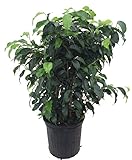
As an Amazon Associate I earn from qualifying purchases.
Light and position
Set the plant in a bright place with indirect or filtered light. Variegated forms generally need more light than green-leaved forms. Avoid harsh direct sun if leaves become dry or shrivelled. Once you find a suitable position, leave the plant there: moving it can cause leaf drop.
The Tool Desk
Outbyte Driver Updater FREEFix the driver behind crashes, sound loss and screen glitchesFind Drivers →Outbyte PC Repair FREERepair Windows errors before they cause bigger problemsFix Now →Warmth, draughts, and humidity
Keep the plant in a warm, even environment, away from cold draughts and abrupt temperature changes. The RHS advises keeping most ornamental figs above 10–13°C (50–55°F); this is general guidance for ornamental figs, not a precise species-specific threshold. Medium to high humidity can help. Misting in hot weather or setting the pot on a tray of damp gravel are optional aids; keep the water level below the gravel surface so the pot does not sit in water. See the RHS ornamental fig growing guide for general indoor care.
#1 Best Overall

- Air Purifier: Like many ficus species, it is known for its air-purifying qualities, removing toxins like formaldehyde and benzene from indoor air, making it a functional and decorative choice for homes and offices.
- This plant comes fully rooted in a 6" pot, ready to grow in and your beautiful home or your office.
- Enhance Your Environment
- The bark is light gray and smooth. The bark of young branches is brownish. The widely spread, highly branching tree top often covers a diameter of 10 meters. It is a relatively small-leaved fig.
How to water and pot a weeping fig
Water by checking the compost
During active spring and summer growth, water regularly with room-temperature water, allowing the compost to dry slightly between waterings. A practical cue from the RHS ornamental fig guide is to water when the top 2 cm (about 1 in) of compost is dry. Do not rely on a fixed weekly schedule: compost dries at different rates depending on light, temperature, pot size, and indoor conditions.
In winter, growth is slower, so keep the compost only just moist rather than watering as often. Avoid leaving the root area persistently wet; overwatering is a common cause of sudden leaf drop and can also be associated with yellowing or dark spots.
Choose suitable compost
For container growing under glass, the RHS lists peat-free, loam-based compost. The guidance does not specify a commercial brand.
Quick wins for a faster PC:
Scan for outdated or missing drivers - takes under a minuteDriver Scan →Repair Windows errors before they cause bigger problemsFix Now →Why a weeping fig drops leaves
Sudden leaf drop is a symptom, not a diagnosis. The RHS says overwatering is a usual cause, but low winter temperatures, low light, excess fertilizer, cold draughts, and moving the plant can also contribute. Older lower leaves may yellow and fall naturally.
Rank #3

- All of our listings have very representative pictures of what you would receive.
- This plant comes fully rooted in a 4" pot, ready to grow in and your beautiful home or your office.
- Enhance Your Environment
- Perfect gift for any occassion!
- Check what changed recently. Consider whether the plant was moved, exposed to a draught, or subjected to a sudden temperature shift.
- Assess the light. Make sure it has bright indirect or filtered light, especially in winter.
- Check compost moisture. Feel the top layer and adjust watering to its dryness rather than following a calendar.
- Review humidity and feeding. Dry, shrivelled leaves may be linked to low humidity, dry compost, or too much direct sun; excess fertilizer is another possible contributor to leaf drop.
These checks reflect the causes identified by the RHS; they are a practical way to investigate conditions, not a guaranteed diagnostic test.
Pruning and propagation
Pruning for size and shape
Weeping figs tolerate pruning. The RHS lists the plant in pruning group 1 and notes that an overgrown ornamental fig can be cut back to size and should recover well. The University of Florida IFAS also describes the species as tolerant of severe pruning in its weeping fig guidance. Prune to manage the plant’s shape or size, without assuming a particular regrowth rate.
Rank #4

- WINTERGREEN WEEPING FIG: A classic, elegant indoor tree featuring glossy, dark green leaves and a graceful weeping growth habit.
- LOW LIGHT FRIENDLY: Thrives in low to moderate indoor light conditions, making it ideal for offices, living rooms, and spaces with limited sunlight.
- READY TO GROW: Arrives in an 8" pot, giving the tree a strong, established root system and a head start for healthy growth indoors.
- NATURAL AIR PURIFIER: This Ficus variety is well known for improving indoor ambiance by adding lush, tropical greenery to any interior space.
- EASY CARE: Requires minimal maintenance — simply water when the top inch of soil feels dry and keep in a stable indoor environment away from drafts.
Ways to propagate
The RHS lists seed, leaf-bud cuttings, and semi-hardwood cuttings. University of Florida IFAS lists cuttings or layering. These are different options, but the sources do not establish that each is equally easy for home growers.
Pests, disease, and safety
Plants grown under glass may be susceptible to red spider mite, thrips, mealybugs, and scale insects; the RHS also lists honey fungus as a possible disease. These are potential problems, not inevitable ones. Check leaves and stems when inspecting the plant.
Best Value

- Easy to grow indoor bonsai prefers bright indirect light or artificial light
- The perfect gift for the home office apartment dorm or den
- Grows up to 6 feet tall
- Prune at any height
- Brand: Mickey Hargitay Plants
The RHS warns that Ficus benjamina can cause skin allergy and is harmful if eaten by people or dogs. Keep it out of reach of children and pets likely to touch or chew it. If an exposure is suspected, seek appropriate medical or veterinary advice.
Growing a weeping fig outdoors
Outdoor cultivation is suited to frost-free areas. The RHS recommends humus-rich, moist but well-drained soil, in full sun or partial shade with protection from wind. Conditions and suitability vary by climate, so this is not a recommendation for frost-prone gardens. University of Florida IFAS notes that outdoor roots can spread aggressively and lift sidewalks, patios, or driveways; account for that when choosing a planting site.
Quick Recap
Product prices and availability are accurate as of the date/time indicated and are subject to change. Any price and availability information displayed on Amazon at the time of purchase will apply.
Recommended Free Tools

