The fastest way to stop squash bugs is to act before the eggs hatch. Inspect squash, zucchini, pumpkins, and other cucurbits at least weekly; remove bronze egg clusters, handpick adults and nymphs into soapy water, and repeat the inspection every few days. Protect young, pest-free plants with floating row covers, clean up cucurbit debris after harvest, and use an appropriately labeled insecticide only when physical control is not keeping up—especially against newly hatched nymphs.
There is no single spray or home remedy that reliably eliminates an established infestation. An integrated sequence of scouting, egg removal, handpicking, exclusion, sanitation, and carefully timed treatment gives you the best chance of protecting the harvest.
As an Amazon Associate I earn from qualifying purchases.
First, make sure they are squash bugs
The main pest discussed here is the squash bug, Anasa tristis. Adults are flat-backed, grayish-brown insects about five-eighths of an inch long. The edges of the abdomen and the underside may have orange or orange-brown markings. Nymphs are smaller, wingless, and lighter colored, ranging from pale green to nearly white when young.
What’s actually slowing this PC down?
Pick the symptom - the matching free tool is one click away.
Squash bugs hide where they are easy to miss: around the plant crown, beneath leaves, along stems and vines, under fallen leaves or other debris, and beneath fruit resting on the soil. Look especially closely where leaf veins meet the underside of a leaf.
#1 Best Overall

- Comprehensive Winter Protection for Your Garden: Our outdoor plant covers provide complete freeze protection for strawberries, vegetables, tomatoes, fruit trees, citrus plants, shrubs, and potted plants throughout the winter. This frost cloth plant freeze protection shields delicate plants from sudden temperature drops, frost, and strong winds, ensuring they survive harsh winter conditions. Ideal for those looking for frost blankets for outdoor plants and reliable plant freeze protection covers.
- Lightweight and Breathable Floating Row Cover: Made from 0.9 oz/sq non-woven, breathable frost fabric for plants, our frost row cover allows essential air, moisture, and sunlight to reach your plants. This frost cover helps regulate sunlight exposure to prevent overheating and maintain stable soil temperatures, ensuring optimal growing conditions, this planket frost protection plant cover guarantees healthy growth.
- Reusable Freeze Cloth for Outdoor Plants: No need to remove and replace the frost cloths for outdoor plants daily. Easily cut to fit various sizes and shapes, wrap the plant protector for winter around trees and shrubs, or lay it directly over potted plants, flowers, vegetables, raised beds, or grow tunnels. This garden bed row cover can be secured with stones, stakes, or supported with garden hoops or frames.
- Versatile Floating Row Cover: Our winter plant covers freeze protection products offer multiple functions, including garden beds frost protection, snow resistance, animal barriers, insect barriers, and shade cover. The plant frost protection covers shield your plants from frost, wind, snow, ice, and freezing temperatures in late fall and winter. In spring and summer, these frost protection for outdoor plants defend your garden against strong sunlight, insects, and birds.
- Extended Growing Season: Frost blankets for plants and plant covers for winter for vegetables frost protection allow gardeners to plant earlier in the spring or extend their growing season into the winter. The garden covers for raised beds helps retain warmth during cold nights, promoting faster seed germination and seedling growth, leading to earlier harvests and increased yields.
They pierce plant tissue and suck sap. Damage may appear as:
- Speckled leaves that gradually turn yellow or brown
- Wilting, blackened feeding sites, or dying runners
- Scarring on fruit
- Fruit that aborts before maturity
- Severe decline or death of a young plant
- Fruit decay where feeding wounds occur while the fruit rests on damp soil
Wilting alone does not prove that squash bugs are responsible. Cucumber beetles can spread bacterial wilt, and squash vine borers damage plants from inside the stems. Squash bugs are more likely when you can find the insects themselves or their yellow-bronze egg masses on leaf undersides, stems, or near the crown.
How to scout for squash bugs
Begin checking young plants at least once a week. If squash bugs have been a recurring problem, inspect every few days during the period when plants are growing rapidly and producing new foliage.
- Turn over leaves and inspect the undersides, particularly near the veins.
- Examine stems, vines, and the crown where the plant meets the soil.
- Look beneath dropped leaves, boards, rocks, and other nearby debris.
- Check beneath fruit that touches the ground.
- Search for adults, groups of small nymphs, mating adults, and yellow-bronze egg clusters.
Newly hatched nymphs are usually the most useful treatment target. They are easier to kill than mature adults and have not had as much time to feed or reproduce.
Some regional extension recommendations use approximately one egg cluster per plant as a point at which insecticide treatment might be considered. That is not a universal rule. The appropriate response depends on the crop, plant age, region, pest pressure, and how much damage you are willing to tolerate. In a small home garden, physically removing the eggs and bugs is often practical and avoids unnecessary spraying.
The immediate rescue plan
1. Remove every egg mass you can find
Squash bug eggs are commonly found in clusters on the undersides of leaves. Scrape or crush the cluster, lift it away, or remove the affected section of leaf if necessary. A short piece of duct tape for squash bug eggs can help lift a cluster from a leaf; fold the tape over itself afterward so the eggs cannot hatch nearby.
Dispose of removed leaves, tape, and egg masses where they cannot return to the garden. Do not leave them on the soil beside the plant.
Rank #2

- Comprehensive Winter Protection for Your Garden: Our outdoor plant covers provide complete freeze protection for strawberries, vegetables, tomatoes, fruit trees, citrus plants, shrubs, and potted plants throughout the winter. This frost cloth plant freeze protection shields delicate plants from sudden temperature drops, frost, and strong winds, ensuring they survive harsh winter conditions. Ideal for those looking for frost blankets for outdoor plants and reliable plant freeze protection covers.
- Lightweight and Breathable Floating Row Cover: Made from 0.9 oz/sq non-woven, breathable frost fabric for plants, our frost row cover allows essential air, moisture, and sunlight to reach your plants. This frost cover helps regulate sunlight exposure to prevent overheating and maintain stable soil temperatures, ensuring optimal growing conditions, this planket frost protection plant cover guarantees healthy growth.
- Reusable Freeze Cloth for Outdoor Plants: No need to remove and replace the frost cloths for outdoor plants daily. Easily cut to fit various sizes and shapes, wrap the plant protector for winter around trees and shrubs, or lay it directly over potted plants, flowers, vegetables, raised beds, or grow tunnels. This garden bed row cover can be secured with stones, stakes, or supported with garden hoops or frames.
- Versatile Floating Row Cover: Our winter plant covers freeze protection products offer multiple functions, including garden beds frost protection, snow resistance, animal barriers, insect barriers, and shade cover. The plant frost protection covers shield your plants from frost, wind, snow, ice, and freezing temperatures in late fall and winter. In spring and summer, these frost protection for outdoor plants defend your garden against strong sunlight, insects, and birds.
- Extended Growing Season: Frost blankets for plants and plant covers for winter for vegetables frost protection allow gardeners to plant earlier in the spring or extend their growing season into the winter. The garden covers for raised beds helps retain warmth during cold nights, promoting faster seed germination and seedling growth, leading to earlier harvests and increased yields.
2. Handpick adults and nymphs
Drop the insects into a container of soapy water. This is most effective when the infestation is limited and you revisit the plants repeatedly. Check the crown and leaf undersides rather than looking only at the tops of leaves, where many of the bugs will not be visible.
Hand removal is particularly worthwhile on young plants, which can be seriously damaged by a relatively small number of insects.
3. Set out boards as nighttime hiding places
Place a board or piece of newspaper on the ground near each affected plant. Squash bugs may shelter underneath it overnight. Check beneath the boards early in the morning and destroy the insects you find.
Move or reset the boards as needed, and do not allow them to become permanent debris piles. The trap works only if you inspect it consistently.
Do these 3 things before closing this tab:
1Scan for outdated or missing drivers - takes under a minute2Clear out junk files and repair common Windows errors3Fix the driver behind crashes, sound loss and screen glitches4. Repeat the process every few days
One pass through the garden is rarely enough. Eggs can hatch over several days, and adults can move in from nearby squash plantings, old vines, or sheltered debris. On each visit, remove new egg masses, handpick newly emerged nymphs, and check the crown and undersides again.
5. Remove a collapsing plant when that is the practical choice
If a small plant is heavily infested and already declining beyond recovery, removing it can reduce the number of squash bugs that mature and reproduce. Inspect neighboring plants first, then remove the affected plant and dispose of it rather than leaving it in the garden.
Rank #3

- ALL-SEASON PLANT PROTECTION - Safeguard your plants through the harsh winters with our breathable Plant Frost Cover, designed to shield against frost, freezing temperatures, snow, and harsh winds. Extend your growing season into the colder months while ensuring your plants thrive year-round.
- PROMOTES HEALTHY GROWTH - Our frost cover acts as an insulation layer, creating a microclimate that keeps plants warmer in cold weather. This helps prevent frost damage and promotes healthier growth, giving your plants a head start in the growing season and accelerating germination.
- BREATHABLE & PERMEABLE DESIGN - Engineered to allow essential light, air, and water to penetrate while keeping out the cold. Your plants receive the necessary nutrients for growth without being smothered, making it ideal for delicate seedlings and established plants alike.
- UV SUN SCORCH & WIND PROTECTION - Not just for the cold, this cover also offers UV protection to prevent sunburn scorching during unexpected winter sun exposure, while also serving as an effective windbreaker, reducing plant stress caused by strong winds.
- DURABLE & EASY TO USE - Made from high-quality, reusable materials, our Plant Frost Cover is easy to install and remove, making seasonal transitions simple. Its durable construction ensures long-lasting protection, giving you peace of mind through multiple winters.
Prevent the next infestation
Clean up after harvest
When the season ends, remove and destroy old squash, pumpkin, and other cucurbit vines and fruit. Clear nearby dead leaves, boards, rocks, rubbish, and other debris that could provide winter shelter for adult squash bugs.
Do not automatically place heavily infested material in a household compost pile. Compost it only if the process is adequate to destroy the pests; otherwise, remove or dispose of it according to local guidance. Sanitation will not prevent every adult from flying in from elsewhere, but it removes some of the shelter that allows bugs to survive and reappear next season.
Recommended Free Tools
Cover young plants before bugs arrive
Floating row covers or fine insect-exclusion fabric can keep colonizing adults away from young squash, zucchini, pumpkins, melons, and cucumbers. A floating row cover for squash is useful only when the plants underneath are pest-free at the time of installation.
Anchor the edges securely so insects cannot crawl underneath. Inspect the plants before covering them, and check periodically for bugs that may already be inside. Remove the cover when plants begin flowering because squash, pumpkins, melons, and cucumbers require insect pollination. Leaving the fabric on through bloom can prevent pollinators from reaching the flowers unless you remove it or deliberately manage pollination.
Choose relatively tolerant varieties
No cucurbit is squash-bug-proof, but some varieties are reported to have relative tolerance or lower susceptibility. Examples include butternut, buttercup, Royal Acorn, Sweet Cheese, and some Hubbard types. Performance can vary with region, growing conditions, and the local pest population, so treat these as risk-reduction choices rather than guaranteed protection.
Use a trap crop only if you will monitor it
Blue Hubbard squash has been studied as a possible perimeter or early-season trap crop because squash bugs may prefer it to later-planted pumpkins. Gardeners considering this approach can start with Blue Hubbard squash seeds and place the plants around or near the main cucurbit planting.
Quick wins for a faster PC:
Clear out junk files and repair common Windows errorsFree Scan →Scan for outdated or missing drivers - takes under a minuteDriver Scan →A trap crop is not a set-and-forget solution. Inspect the Hubbard plants closely, remove egg masses and bugs, or destroy the trap plants before the squash bugs move into the crop you intend to harvest. If you cannot monitor the sacrificial plants, they may increase rather than reduce pest pressure.
Keep plants vigorous and reduce hiding places
Healthy, well-established plants generally tolerate feeding better than stressed young plants. Provide appropriate water and growing conditions, and avoid allowing foliage to become an unmanaged, dense mat when the crop can be trellised safely.
Rank #4

- Defend Against Unwanted Visitors: Gardening is a rewarding and fulfilling endeavor, and you'll watch your plants grow from nothing to maturity before you finally harvest them. Once the plants begin to flower and bear fruit, these unwelcome visitors visit your garden and often leave a trail of destruction. Garden netting is the best choice for protecting your plants
- Effective Physical Barrier: The large size of 4 x 25ft provides more security. Ultra fine garden netting with 0.8 mm x 1 mm ultra fine mesh, garden netting covers are widely used in pastures, orchards, and gardens, protect your vegetable investment with this simple shelter, The plant netting can not only perfectly protect vegetation, but also improve agricultural yields
- Reusable: Made of high quality transparent mesh PE material, twice as thick as ordinary garden netting, with good elasticity and toughness to withstand sunlight, very durable, if properly maintained, it can last 3-5 years
- Perfect for Protecting Your Plants: The mesh design allows sunlight, rain, and air to pass through, and you can even water your crops directly through the mesh, garden mesh netting can be used in all growing seasons, and can be cut into different sizes to meet your different requirements
- Our Service: Jevrench garden netting makes your life easier, If you encounter any problems with our garden netting, please contact us, and we will be happy to resolve them for you
Trellising vining squash and melons may reduce hiding places compared with dense bush growth, although it will not eliminate squash bugs. Crop rotation can improve overall cucurbit pest management, but it is not a guaranteed squash-bug cure: adults can move into a garden from surrounding areas.
Independent reader supportYour contribution helps us test, update, and keep practical guides available for everyone.When insecticide may be justified
Consider an insecticide when repeated scouting and physical removal are not keeping up, the plant is young or under serious pressure, and the product is specifically labeled for the crop and intended use. The timing matters more than simply applying a stronger product.
Insecticides are generally more effective against newly hatched nymphs than against mature adults. Adults are harder to kill, and sprays may miss insects hiding beneath leaves, around stems, or at the crown. If treatment is warranted, time it shortly after egg hatch and direct the spray for appropriate coverage of the plant tops, leaf undersides, stems, vines, and crown. Dense foliage makes complete coverage difficult.
Products containing insecticidal soap, horticultural or neem-derived oils, azadirachtin, pyrethrins, or other active ingredients may appear in regional recommendations. A garden insecticidal soap can be an option for small nymph infestations, but it works through contact and will not reliably eliminate bugs that the spray does not reach. Effectiveness and plant safety depend on the exact formulation, coverage, weather, and label directions.
Read the label before treating edible squash
Never assume that a product is legal or safe for edible squash simply because it is sold for garden use. The pesticide label identifies the food crops and sites for which the product is registered. If squash, pumpkin, zucchini, or the crop you are treating is not listed, that use is not authorized under the label.
Labels can differ by product and change over time. Follow the current label for mixing, protective equipment, application method, re-entry, harvest interval, storage, disposal, and any restrictions specific to your location. Do not improvise a dilution rate or harvest interval.
Free tools Windows power users keep installed
One-click scans. No signup required.
Protect pollinators
Avoid broad-spectrum spraying during bloom whenever possible. Read the label for restrictions involving flowers, bees, application timing, drift, and wind. Extension guidance commonly favors late-day or evening applications when pollinators are less active, but the product label always controls.
Best Value
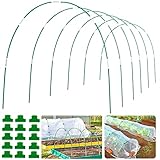
- 36 PCS Garden hoops for Raised Bed : Greenhouse Hoops frame widely used indoors and outdoors, great for the yard, vegetable garden, and garden raised beds. DIY Garden Hoops Grow Tunnel Kit works well to protect your plants, seedlings, herbs flowers,strawberry in any season gardening plant.Plant support for climbing plants,plant stakes for outdoor plants,Tomato support garden stakes.
- Greenhouse Hoops DIY Kit Include : 6 Sets comes with 36 Pcs large diameter hoops frame, 17" in length suitable for 2.8 FT or wider bed, 36 connectors and 24 garden clips.In 6 pcs hoops combine size can be 2.8 FT (w) x 3.8 FT (H), You can combine with 5 or more garden stakes to DIY different sizes to built garden grow tunnel,mini grow tent, small greenhouse,chicken wire and garden arch to meet your need.(Garden mesh net not Included)
- Assemble & Just Bend it : Set up garden hoops is easy, Insert a hoop into the soil,then Connect 5 or more hoops with connector according to your needs; Just bend the garden hoops and inserted the other side into the soil, and use the clips to fix your row cover. Greenhouse row cover hoops kit suitable for row cover, raised beds, veggie garden, vineyard, vegetable plant protectors from animals.
- Premium & Rust-Free Material : Our Garden plant stakes made of Sturdy and heavy duty fiberglass, double layer, bendable and has good flexibility, strong resistance, never rust and anti-oxidation, lasting long garden poles . Hoop House Greenhouse kit can help extend your plants growing season.
- Plant Protection ALL Season:You can use garden hoops for row cover, plant covers, garden netting, row cover, sun shade cloth, bird net, frost cloth,put this on Garden hoops Greenhouse tunnel to protect plants, tree, fruits, vegetable from frost, insects, birds or intense sun. WYRJXYB Garden Hoops Grow Tunnel kit design to give your plants Best protection.
Do not spray open flowers, blooming weeds, or bees directly. Use only the amount and frequency permitted by the label. Unnecessary broad-spectrum applications can also reduce natural enemies such as spiders, ground beetles, big-eyed bugs, lady beetles, tachinid flies, and parasitoids that may contribute to pest control.
What will not reliably solve a squash-bug problem
- One pesticide application: It may miss eggs, hidden adults, or nymphs that hatch later.
- Neem oil or insecticidal soap used without scouting: These products cannot reach insects hidden under leaves or at the crown, and they are not guaranteed to eradicate an infestation.
- Diatomaceous earth: It should not be presented as a dependable stand-alone cure for squash bugs.
- Companion planting: Plant combinations may be attractive as a garden experiment, but they are not a proven replacement for inspection and removal.
- Beneficial insects alone: Natural enemies may help, but they rarely provide a predictable level of control during a serious outbreak.
- Crop rotation alone: Rotation can improve overall pest management, but adult squash bugs can migrate into a new planting.
- Row covers left on through flowering: Covers can exclude pests from young plants, but they must be removed when pollination is needed unless you have another pollination plan.
A seasonal squash-bug checklist
Before planting
- Remove old cucurbit vines, fruit, dead leaves, boards, rocks, and other possible shelter.
- Plan where young plants can be covered and how the cover edges will be anchored.
- Choose relatively tolerant varieties if squash bugs are a persistent local problem.
- If using Blue Hubbard as a trap crop, plan where it will go and how you will monitor or remove it.
While plants are young
- Scout at least weekly, or every few days when pressure is high.
- Inspect leaf undersides, veins, stems, crowns, debris, and fruit touching the ground.
- Remove egg clusters immediately.
- Handpick adults and nymphs into soapy water.
- Use anchored row covers only after confirming the plants are pest-free.
At flowering
- Remove row covers so pollinators can reach the flowers.
- Continue scouting, because flowering does not end squash-bug pressure.
- If treatment is necessary, check the label for bloom and pollinator restrictions before applying anything.
After harvest
- Remove and destroy spent cucurbit vines and fruit.
- Dispose of infested material appropriately.
- Clear sheltering debris around the planting.
- Make a note of where pressure was highest so next season’s scouting and exclusion can begin early.
Bottom line
Start with inspection, not spraying. Remove the bronze eggs, handpick adults and nymphs, use boards for early-morning trapping, and return every few days. Protect clean young plants with anchored row covers, remove the covers at flowering, clean up cucurbit debris after harvest, and reserve a correctly labeled insecticide for targeted use against small nymphs when other measures are not enough.
Frequently Asked Questions
What is the best time to treat squash bugs?
The best time is early in the infestation, especially shortly after eggs hatch and the bugs are still small nymphs. Remove egg masses and handpick adults whenever possible. Insecticides generally work less reliably on mature adults and hidden insects.
PC Slower Than It Used to Be?
A free scan shows the junk files, broken settings and background clutter dragging Windows down - then fixes them in one click.Free scan · Windows 10 & 11Crashes, No Sound, or Screen Glitches?
Random freezes, missing sound and display glitches usually trace back to one bad driver. Find and replace yours safely.Free scan · under a minuteCan squash bugs kill a zucchini or pumpkin plant?
Yes. Feeding can cause wilting, yellowing or browning leaves, runner loss, fruit damage, fruit abortion, and sometimes plant death. Young plants are particularly vulnerable, so frequent early scouting matters.
Should I leave row covers on squash all season?
Usually not. Remove floating row covers when plants begin flowering so bees and other pollinators can reach the flowers. The plants must also be pest-free before they are covered, and the edges must be anchored to prevent insects from crawling underneath.
Are squash bugs the same as cucumber beetles or squash vine borers?
No. Squash bugs are visible sap-feeding true bugs, often accompanied by bronze egg clusters. Cucumber beetles are different insects and can spread bacterial wilt, while squash vine borers attack inside stems. Correct identification determines the appropriate response.
The Bottom Line
Act early: scout the undersides of leaves and plant crowns, destroy egg masses, handpick bugs, repeat the inspection every few days, and protect young clean plants with anchored row covers. Use insecticide only when needed, against small nymphs, and only according to the current label for the edible crop and your location.
Quick Recap
Product prices and availability are accurate as of the date/time indicated and are subject to change. Any price and availability information displayed on Amazon at the time of purchase will apply.