Windows Errors? Fix Them Before They Spread
Repair common Windows errors and clear accumulated junk for a smoother, more stable PC - no reinstall needed.Free scan · no reinstallOutdated Drivers Are Slowing You Down
One free scan finds every outdated or missing driver and matches the right update for your exact hardware.Free scan · exact hardware matchStart with a walk-through, but do not assume the draft you feel at a window is the home’s biggest energy leak. In many homes, important leaks are hidden in attics and basements: around attic hatches, wiring and plumbing penetrations, recessed lights, rim joists and duct chases. Check visible gaps, use simple tests to screen likely spots, and match the repair to the location and whether the part moves. For concealed leaks, extensive work or possible combustion-safety issues, arrange a qualified home energy assessment rather than sealing blindly.
Where to look for air leaks
Air leaks can make rooms uncomfortable and contribute to wasted heating or cooling energy. In the United States, where climate, house construction, fuel-burning equipment and rental status all affect what to prioritize, a useful first step is to inspect broadly instead of treating every draft as a window problem.
As an Amazon Associate I earn from qualifying purchases.
ENERGY STAR says significant leaks in many homes are hidden in the attic and basement. Look at the boundary between different materials and around openings where pipes, wires, ducts or other services pass through walls, floors and ceilings. Include these areas in a walk-through:
- Doors, windows, baseboards and the places where window or door frames meet the surrounding wall.
- Attic hatches, kneewalls, open soffits and ceiling penetrations, including recessed lights.
- Gaps around plumbing vents, electrical wiring, duct chases and furnace flues.
- Basement rim joists and places where the foundation or framing meets another material.
- Service entrances, vents and fans.
Do not assume a visible gap is the most consequential one. A draft near a window is easy to notice, while leakage at an attic hatch, around a flue or through a basement rim joist may be less obvious. The walk-through is a way to identify suspects, not a measurement of how much energy any one leak wastes.
#1 Best Overall

- No light penetration: Our door seals are made of high-density foam core material, which effectively blocks light from penetrating around the door.
- Lower Energy Costs: This weather stripping protects your home from air leakage in both winter and summer, while increasing comfort and saving energy.
- Fits Most Doors: Door seal strip are flexible to fit slots from 0.35" to 0.59" and will fit most doors. Please check the slot you need to seal before ordering.
- Easy to Install: The door seal requires no adhesive and will not leave marks. Simply insert the door strips into the grooves or recesses to complete a tight seal that will not fall off easily.
- Enhance Your Living Space: The weather strip offers good resilience and sound insulation, effectively sealing gaps to block dust, water, and reduce noise, creating a comfortable and serene living environment.
Think of the inspection as following the home’s boundary between indoor and outdoor or unconditioned spaces. Where different materials meet, or where a service passes through that boundary, there may be an opening. A small-looking gap can still be worth noting, but appearance alone cannot tell you its effect. Conversely, a cold or warm spot in a room does not prove that air is leaking at that exact location; uneven temperatures can have more than one cause.
ENERGY STAR’s Locating Air Leaks page (accessed October 9, 2026) emphasizes that, in most homes, the most significant leaks are hidden in the attic and basement. That is a useful reminder when deciding where to spend inspection time: look beyond the easiest-to-see window seams. If you can safely access the attic hatch or basement, note visible gaps and locations for follow-up, but do not climb into unsafe or inaccessible areas just to complete a checklist.
How to check a suspected leak
Use a simple check to decide whether an area needs attention. These methods can indicate a weak seal or airflow, but none calculates energy loss or substitutes for a comprehensive professional diagnosis. Try to compare similar points around a door or window, rather than drawing a conclusion from a single spot.
Recommended Free Tools
| Check | How to use it | What the result can tell you |
|---|---|---|
| Visual inspection | Look for visible gaps, openings and damaged or loose sealing material around the areas listed above. | A visible opening is a candidate for repair; hidden pathways may still be present. |
| Paper test | For a door or window, close it on a piece of paper. Try to pull the paper out. | If it comes out easily, the seal may be weak. This is a screening check, not proof of the cause or scale of energy loss. |
| Light test | Look for places where light passes through a closed door or another suspected opening. | Light can reveal an opening, but the check does not quantify airflow. |
| Smoke or powder check | ENERGY STAR describes holding incense or talcum powder near a suspected leak while exhaust fans draw air out, then watching for movement. | Movement can indicate airflow at that spot. Follow the guide’s safety precautions, including its direction to turn off combustion appliances for the test. |
For the paper test, close the door or window on the paper and gently pull. If it slides out easily, the seal at that point may not be holding well. Repeat at a few places along the closed edge if you want to compare the fit. The result is a clue, not a verdict: it does not identify why the seal is weak, show how much air is moving, or tell you whether weatherstripping is the only repair needed.
A light test is similarly limited. Light passing through a closed opening can reveal a gap, but no visible light does not establish that the area is airtight. A visual inspection may also miss a pathway concealed behind trim, insulation or a building surface. These tests are best treated as screening tools that help you decide what to inspect or discuss with a professional.
ENERGY STAR describes a smoke or powder check using incense or talcum powder near a suspected leak while exhaust fans draw air out. Watch for smoke or powder movement that may indicate air movement at that spot. Follow the guide’s safety precautions, including its instruction to turn off combustion appliances for the test. If you are unsure how to do that safely or whether the test is appropriate for your home, skip it and ask a qualified professional. Do not use an open flame as a substitute for the described method.
Even when a check points to airflow, it does not rank that leak against others in the home. A professional assessment is a better choice if you need a comprehensive diagnosis, suspect hidden leakage or are planning more extensive work. The U.S. Department of Energy’s 2021 Consumer Guide to Home Energy Assessments describes a proper assessment as a way to understand household energy use and identify cost-effective efficiency measures.
Rank #2

- Press-In Kerf Fit: This weather stripping door seal fits 1/8" kerf slots and 1/4"–1/2" closed door gaps. For pre-cut kerf frames only; not self-adhesive. Measure before ordering
- Block Drafts & Energy Loss: The flexible door frame seal strip helps reduce cold drafts, light leaks, outside noise and heating or cooling loss for year-round comfort
- Replace Worn Exterior Door Seals: Ideal for replacing old, cracked, compressed or pet-damaged door weather stripping on front, back and garage entry doors
- Easy Press-In Installation: Remove the old seal, clean the kerf groove, measure and cut, then press the flange firmly into place. The 40FT roll can be cut to fit multiple doors
- Durable PE-Covered Foam: Resilient PU foam with a tough PE cover compresses and rebounds to help maintain a snug, long-lasting seal
Choose a repair that suits the gap
The key distinction is whether the joint is stationary or moves during normal use. Use products only in locations and applications for which they are intended, and follow their directions for compatibility and installation. Compare the gap’s size and location, whether the component moves, and what materials are nearby before choosing a product. There is no single sealant that fits every opening.
| Location or condition | Approach | Important qualification |
|---|---|---|
| Moving door or operable window | Weatherstripping | Inspect the existing material and fit before replacing it; the seal must accommodate the part’s movement. |
| Stationary crack or joint, such as around a fixed frame | Caulk | Caulk is generally for fixed components, not the moving edge of a door or operable window. |
| Gap between framing and a jamb | The Department of Energy describes using foam backer rod plus caulk, or low-expansion foam, for certain gaps. | This approach may require removing and replacing trim without damage; it is not a default treatment for every frame gap. |
| Small attic opening around a plumbing vent pipe or electrical wire | ENERGY STAR describes using foam or caulk around the penetration. | Choose a material suited to the location, follow its directions, and replace the insulation over the area after the sealant dries. |
| Door-base gap in a rental | A draft stopper may be an option; weatherstripping or caulk may address other gaps. | Consider whether a change is removable and check with the property owner before altering the home. |
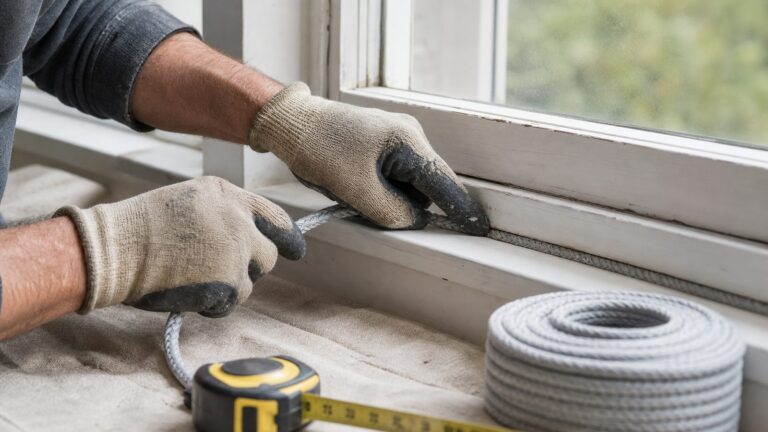
Weatherstripping is for places where parts meet but still need to move, such as a door that opens or an operable window. The material has to let the component work while reducing the gap when it is closed. Before replacing it, inspect what is already there and how it fits. A damaged seal may be the issue; a poorly fitting door or window may need a different kind of attention. Do not apply caulk across a moving edge that must open.
Caulk is generally suited to stationary joints, including some gaps around fixed frames. A gap between a frame and the surrounding wall may call for a more involved approach. The Department of Energy describes foam backer rod plus caulk, or low-expansion foam, for certain openings between framing and jambs. This can involve removing and replacing trim, so it is not an automatic first step for every draft at a window or door. If the trim cannot be removed and replaced without damage, or the gap is concealed or difficult to assess, get advice before opening up the area.
For small attic penetrations around plumbing vent pipes or electrical wires, ENERGY STAR describes using foam or caulk. Select a product suited to the location and follow its directions. After the material dries, cover the area with insulation again. The instruction to restore the insulation matters: sealing a penetration and leaving the surrounding area exposed is not the complete sequence described in the guidance.
Do these 3 things before closing this tab:
1Clear out junk files and repair common Windows errors2Scan for outdated or missing drivers - takes under a minute3Repair Windows errors before they cause bigger problemsFor product selection, compare intended use, gap size, movement, location and compatibility with adjacent materials. Read manufacturer safety and application directions rather than assuming that a product suitable for a window frame is also suitable around an attic penetration or another material. The cited guidance does not establish brand rankings or product tests, so a label’s stated application and fit for the particular gap matter more than a generic “best” claim.
Work through common draft problems
Draft around a door or window
- Close the door or window and inspect the existing seal for gaps or damaged material.
- Use the paper check at several points along the closed edge if you need to screen for a weak seal.
- If the leak is at a moving edge, choose weatherstripping intended for that application. If the gap is at a stationary frame joint, caulk may be appropriate.
- For a gap between the framing and jamb that calls for a more involved repair, consider whether trim can be removed and replaced without damage. The DOE describes backer rod with caulk or low-expansion foam for certain such gaps.
Do not apply caulk across a part that must open or move. The correct material depends on the location of the gap, the size of the opening, movement and compatibility with nearby materials.
Also distinguish the edge that moves from the joint that does not. A draft near a window could come from the operable sash seal, a fixed frame joint, or another opening nearby. The paper test can help screen the closed edge, while a visual check can help you identify a stationary gap. If you cannot tell which joint is leaking, avoid sealing parts indiscriminately: a professional assessment may help identify the pathway and the appropriate repair.
Rank #3

- BLOCK DRAFTS EFFECTIVELY - High-quality door draft stopper made from industry-grade silicone with exceptionally strong adhesive. Our door sweep for the bottom of doors puts an end to all draft problems, cold air, and dust (for exterior doors and indoors). Size: 2” H x 39” L
- SAVE MONEY AND ENERGY - Our bottom door seal blocks thermal bridges effectively. This under door seal perfectly blocks both cold air and heat transfer, keeping your home comfortable and saving you money on energy expenses.
- INSTALLS IN UNDER 1 MINUTE - To install our door draft stopper just clean the door surface, pull back the adhesive strip, and attach the door sweeper for bottom of door to the lower door. As needed, any protruding door seal can be simply trimmed away. Fast and easy!
- PERFECT FOR ANY SURFACE - Our special exceptionally strong adhesive works on any surface. It offers a rock-solid grip. Our door weatherstripping can be easily removed without damaging your door if needed. Weatherstrip made for outdoor and indoor use.
- REDUCE AMBIENT NOISES - Thanks to its thick 3d chambers, our door gap filler insulation strip brings in the added bonus of reducing sounds and external noise. Say goodbye to unwanted sounds and embrace a more peaceful home environment.
Leak at a small attic penetration
- Inspect around accessible plumbing vent pipes and electrical wires for openings.
- Use foam or caulk only if the material is suitable for that location and follow its application directions.
- After the material dries, cover the area with insulation again.
Attic work can involve hidden conditions and nearby equipment or penetrations that call for additional care. If the opening is inaccessible, extensive or near combustion equipment, get a qualified assessment rather than guessing at a repair. The same caution applies when an attic hatch, kneewall, recessed light, flue or duct chase appears to be part of a larger leakage path rather than a small, accessible penetration.
Quick wins for a faster PC:
Repair Windows errors before they cause bigger problemsFix Now →Fix the driver behind crashes, sound loss and screen glitchesFind Drivers →Several rooms feel drafty or temperatures are uneven
Drafty rooms, uneven temperatures and high bills can point to a broader air-sealing or insulation project rather than one obvious gap. ENERGY STAR maps these symptoms to possible air-sealing and insulation measures, but symptoms alone do not identify the cause. A home energy assessment can evaluate the house as a system and help distinguish accessible repairs from hidden or more extensive work.
Write down where and when you notice the discomfort, along with the gaps or test results you have observed. That does not diagnose the problem, but it can make a conversation with an auditor or home-performance professional more specific. A comprehensive assessment is especially useful if several rooms are affected, the likely leak is concealed, or you are considering work on ducts or insulation.
Drafts in a rental home
DOE renter guidance from 2023 suggests weatherstripping or caulk for gaps and draft stoppers at door bases. In a rental, first consider whether a proposed change is removable and check with the property owner before altering the building. A draft stopper may be a less permanent option at a door base; caulk or installed weatherstripping can change the surface or building and may need approval. A tenant should not assume that every repair is authorized simply because it is small.
If you are reporting a problem to the owner, describe the room and location, whether the opening is visible, and what simple check suggested a weak seal. Ask before removing trim or applying a permanent product. The right solution depends on the lease, the building and the owner’s permission, so focus first on documenting the issue and asking about an appropriate repair.
Free tools Windows power users keep installed
One-click scans. No signup required.
When a DIY check is enough—and when to call a professional
A visible, accessible gap at a stationary joint or moving door edge may be a reasonable place to start with an appropriate material. A broader assessment is more useful when leaks are hidden, symptoms occur in multiple areas, the work involves ducts or insulation, or you need a whole-home diagnosis. The decision is not just about skill: consider access, scope, whether a part moves, whether the work touches concealed cavities or combustion equipment, and whether you need an overall picture of the home.
| Situation | Reasonable next step |
|---|---|
| One visible, accessible gap at a door, window or fixed joint | Screen the opening and choose weatherstripping for moving parts or caulk for stationary joints. |
| Suspected attic or basement leakage, concealed openings, or multiple rooms with comfort problems | Consider a professional home energy assessment to identify cost-effective improvements. |
| Air sealing that could affect fuel-burning appliances, ducts or ventilation | Seek qualified inspection and testing as appropriate before or as part of the work. |
| Rental property where a repair changes the building or may not be removable | Check with the property owner before making alterations; consider removable options such as a draft stopper. |
The U.S. Department of Energy’s 2021 Consumer Guide to Home Energy Assessments says a proper assessment can show how much energy a home uses and guide cost-effective efficiency measures. The DOE suggests asking a utility company or state energy office about an audit. ENERGY STAR also recommends professional assessment when hidden leaks, a comprehensive evaluation or potential safety issues are involved.
Rank #4

- 【Strong Adhesive, Saves Money】Weather stripping door seal prevent heat and cold from escaping, save your heating and cooling bills. block noise, super adhesive, durable, not easy to degumming, easy to install
- 【5P High-Density Soft Hair】Brush weather stripping made of environmental friendly woven material, high density Brush, wear resistance, corrosion resistance, high-temperature resistance, excellent workmanship, soft bending without deformation
- 【Diverse Functions, Durable】The patio door weatherstripping has good anti-aging sealing performance,windproof, rainproof, dustproof, anti-collision, soundproof and energy saving
- 【Wide Application】Window insulation for winter Self adhesive seal strip widely used in various glass doors, aluminum doors windows, plastic steel windows, wooden doors, security doors, sliding doors, closets, cabinets and other gaps
- 【Easy to install】First measure the size of the gap between doors and windows, how much to use, how much to cut, energy saving, and environmental protection. If you have any questions, please contact us, and we will provide a perfect solutio
A useful assessment is not simply a longer version of a paper test. It is intended to evaluate how the home uses energy and help identify measures that make sense for that home. Ask your utility company or state energy office whether they can point you toward an assessment. If you contact a provider directly, explain whether your concern is a single visible gap, recurring drafts in several rooms, attic or basement leakage, or a planned air-sealing project. That helps clarify whether you need a limited repair or a more comprehensive evaluation.
The official guidance cited here does not set a universal price for an audit or a repair. Avoid treating a generic estimate as a promise for your home; scope and conditions matter. Ask any provider what the assessment includes, what areas it can inspect, and whether the recommendations distinguish immediate repairs from more extensive work. The objective is to identify appropriate, cost-effective measures, not to buy the largest possible upgrade package.
The Tool Desk
Outbyte PC Repair FREEClear out junk files and repair common Windows errorsFree Scan →Outbyte Driver Updater FREEFix the driver behind crashes, sound loss and screen glitchesFind Drivers →Air sealing, insulation and safety
Air sealing and insulation should be considered together. ENERGY STAR says sealing leaks and adding insulation can improve comfort and energy efficiency, and reports potential savings of up to 10% on annual energy bills. That is a broad potential, not a forecast or guarantee for an individual home; the result depends on the house and the work performed.
Sealing a home or ductwork can also change how air moves. ENERGY STAR warns that extensive air sealing may cause combustion appliances, such as water heaters, to backdraft and create unsafe indoor conditions. A tighter home can trap pollutants such as radon, carbon monoxide and volatile organic compounds, and may require mechanical ventilation. If the home has fuel-burning equipment or the planned work is extensive, seek qualified inspection and testing as appropriate rather than assuming that tighter is always safer.
This safety issue is one reason not to treat whole-house air sealing as a casual extension of sealing a visible window joint. A small, accessible repair and an extensive project that changes airflow are not the same undertaking. If your home has fuel-burning equipment, or a proposed project involves substantial air sealing or ductwork, ask a qualified professional how combustion safety and ventilation will be evaluated. Do not assume that the absence of a noticeable draft proves that ventilation is adequate.
The potential savings figure also needs context. ENERGY STAR reports that sealing leaks and adding insulation can save up to 10% on annual energy bills, but “up to” is not a house-specific estimate. Your home’s conditions and the work performed affect the outcome. Use the number as a broad indication of potential, not as a guaranteed return, a promised payback period or a reason to skip diagnosis.
What to do first
- Walk through the home and note both visible gaps and less obvious attic and basement locations.
- Use the paper, light or appropriately safeguarded smoke check only to screen suspected spots; do not treat a test result as a measure of energy loss.
- Match the fix to the component: weatherstripping for movement, caulk for stationary joints, and only suitable materials for attic penetrations.
- For hidden, widespread or safety-sensitive work, ask the utility company or state energy office about a home energy assessment, or seek a qualified professional.
Keep the order simple: inspect broadly, screen likely spots, repair only what you can identify and access safely, then reassess. If the pattern points to hidden attic or basement leakage, several rooms, ducts, insulation or combustion-safety concerns, do not keep adding sealant in the hope that it will solve the problem. A professional assessment can help prioritize what to do next.
Best Value
- 【THICKENED SILICONE MATERIAL - COMPLETELY BARRIERING AIR AND NOISE】:The weather stripping is made of thickened TPE material with good sealing and anti-deformation properties, with this weather stripping you can completely seal the gaps, keep the room warm in winter and cool in summer, Helps To Reduce Energy Consumption ,and blocking the entry of noise, light, rain, dust, wind, leaves, snow, and odor, and no reptile will sneak in.
- 【CUSTOMIZABLE IN A VARIETY OF SIZES】This weatherstripping is easy to customize, can be cut to size with scissors, and can be easily bent into any shape. Overall length 50 feet, width: 0.35 inch; thickness: 0.23 inch; fits gaps and spacing from 0.1 to 0.22 inch.NOTE: Please measure the width of the gap before purchase
- 【STRONG ADHESION - WON'T FALL OFF】This door weather stripping is covered with a strong adhesive substance. Simply remove the red film from the surface and install. After 24 hours of bonding, everything is securely bonded and there is no need to worry about peeling or adhesive residue, ensuring that this door seal strip in place long after use (and is no longer affected by extreme temperatures).
- 【EASY INSTALLATION】Measure the length of the groove to be sealed, cut the Universal Weatherstrip to the desired length, clean and dry the surface, and insert the Soundproof Weatherproof Weather strip into the groove.(Note:Low Temperature Will Result In Poor Adhesive Performance,Please Use A Hair Dryer To Heat The Adhesive Backing To Increase The Bonding Effect Before Installation)
- 【WIDELY USED】The Door Insulation Strip is a tough, long-lasting self-adhesive tape with minimal compression that helps prevent rattles, vibrations and squeaks. It is widely used as weather stripping, gaskets or cushioning and stabilizes major appliances such as doors, windows, furniture, electrical cabinets, speakers, toys, crafts, sports equipment, vents, air conditioning, plumbing, HVAC. Also, in cars, trucks and boats.
Frequently Asked Questions
How do I find air leaks in my home?
Start with a visual walk-through at doors, windows, baseboards, attic hatches, wiring and plumbing penetrations, recessed lights, duct chases and basement rim joists. A paper test can screen a closed door or window for a weak seal; light or carefully performed smoke or powder checks can also reveal possible openings or airflow. These checks do not measure energy loss or replace a professional assessment.
Where do the biggest drafts usually come from?
A draft at a window may be noticeable, but ENERGY STAR says significant leaks in many homes are hidden in attics and basements. Check attic hatches, wiring and plumbing openings, recessed lights, duct chases and basement rim joists as well as visible door and window seals.
Should I use caulk or weatherstripping around a window or door?
Use weatherstripping where a part moves, such as an operable window or door edge. Caulk is generally for stationary cracks and joints, such as some gaps around fixed frames. The right choice depends on the location and size of the gap, movement, and compatibility with nearby materials.
What’s actually slowing this PC down?
Pick the symptom - the matching free tool is one click away.
Can a DIY leak test tell me how much energy I am losing?
No. Visual, paper, light, smoke and powder checks can screen for possible gaps or airflow, but they do not quantify energy loss or rank one leak against others. A professional home energy assessment is more appropriate for hidden leaks or a comprehensive diagnosis.
When should I get a home energy assessment?
Consider one when leaks are hidden, several rooms are drafty or have uneven temperatures, the work may involve ducts or insulation, or you need a whole-home diagnosis. The U.S. Department of Energy suggests asking your utility company or state energy office about an audit.
Is sealing every air leak always safe?
Not necessarily. ENERGY STAR warns that extensive air sealing can affect combustion appliances, potentially causing backdrafting, and that a tighter home may trap pollutants or require mechanical ventilation. Homes with fuel-burning equipment and extensive projects may need qualified inspection and testing.
How much can air sealing save on energy bills?
ENERGY STAR reports potential savings of up to 10% on annual energy bills from sealing leaks and adding insulation. This is a broad potential, not a guaranteed saving or a forecast for a particular home.
What can renters do about drafts?
DOE renter guidance suggests weatherstripping or caulk for gaps and draft stoppers at door bases. Consider whether a change is removable and ask the property owner before making alterations.
The Bottom Line
Look beyond the window where you feel the draft: significant leaks may be hidden in attics and basements. Use simple tests to screen, not to estimate energy loss, and match the repair to the gap—weatherstripping for moving parts and caulk for stationary joints. For concealed or widespread leaks, extensive air sealing, or homes with fuel-burning equipment, ask about a qualified home energy assessment and safety testing.
Quick Recap
Product prices and availability are accurate as of the date/time indicated and are subject to change. Any price and availability information displayed on Amazon at the time of purchase will apply.