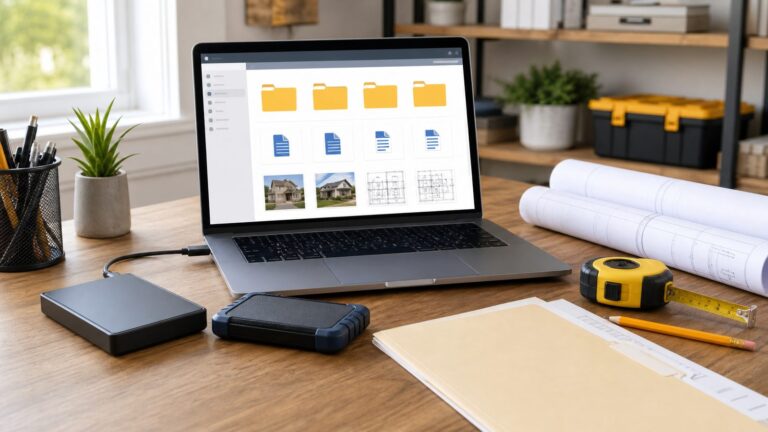
To document a home repair dispute, build one dated record that links what you agreed to, what happened on site, what you told the contractor, and what you paid. Preserve original contracts and messages, photograph the disputed work, reconcile payments in a ledger, and send a focused written complaint that states the remedy you want. A clear, indexed packet makes it easier for a local regulator, dispute-resolution service, or court to understand the issue; the correct process and deadlines depend on where you live.
The goal is not to collect every paper you own. It is to make the sequence understandable and support each important point with a record: what the agreed scope was, what work was done or left incomplete, when concerns were raised, and how much was paid. Keep facts separate from opinions, preserve the material in its original form where possible, and check the rules for the location of the property before filing a complaint.
As an Amazon Associate I earn from qualifying purchases.
Start with a dated chronology
Make a timeline from the first quote through the latest exchange. Record observable events and dates rather than conclusions about the contractor’s intent. Include planned and actual start or finish dates, site visits, work stages, inspections, changes, complaints, responses, and payments. Note the names of people who witnessed important events.
The Tool Desk
Outbyte Driver Updater FREEScan for outdated or missing drivers - takes under a minuteDriver Scan →Outbyte PC Repair FREEClear out junk files and repair common Windows errorsFree Scan →Queensland’s Building and Construction Commission (QBCC) asks complainants to provide relevant dates, explain how they engaged the contractor, and describe money paid and other concerns. Use a consistent date format and distinguish confirmed dates from estimates. If an exact date is unclear, say so rather than guessing. QBCC’s complaint guidance describes the information and evidence it may need.
#1 Best Overall

- Size: 13 x 10 x 0.7 inches. Fits A4 and letter-size paper, standard documents and filing needs.
- User-Friendly Features: Included sticker labels allow you to easily distinguish between different categories of files, maintaining neatness and enhancing productivity!
- Sleek and Portable: Designed to slip seamlessly into backpacks, laptop bags, or file cabinets, our lightweight folder keeps your documents tidy and accessible wherever you go.
- Built to Last: Crafted from polypropylene, our folders resist tears and deformation while remaining flexible. The secure snap closure offers easy access while keeping your papers securely in place.
- Versatile Utility: This folder isn't limited to organizing course papers for college students; it's perfect for storing business tax documents, recipes, important receipts, and more!
A useful chronology is brief but specific. For each entry, record the date, event, people involved, and the record that supports it. For example, an entry might point to a quote, a text thread, a photograph, an invoice, or a call note. If the contractor gave a revised completion date, include when and how it was communicated. If you cannot confirm whether an event happened on a particular day, label the date as approximate and explain why.
Keep this timeline factual. “The contractor did not arrive for the scheduled visit” describes an event; “the contractor deliberately ignored me” is a conclusion about motive that the timeline may not establish. You can describe your concern elsewhere, but a neutral chronology lets a reviewer see what happened without having to sort facts from accusations. Link the timeline to the relevant evidence instead of repeating every message or document in full.
Preserve the agreement and the exact scope
Keep the signed contract, quote or estimate, plans, specifications, permits, inspection correspondence, invoices, warranties, and every approved change to the work or price. Save texts and emails showing what was promised, what materials or finish were specified, and what both sides agreed would happen. Keep the files in their original form where possible, with a backup.
Changes are a frequent source of disagreement: the record should show what changed, who approved it, when, and whether it altered the price or schedule. California’s Contractors State License Board (CSLB) advises that contract changes be made through a written change order signed before the changed work begins. That is California guidance; check the rules that apply where the property is located. CSLB also states that California covered home-improvement projects over $500 require a written contract, and that the down payment is limited to $1,000 or 10% of the contract price, whichever is less. These are California-specific rules, not nationwide thresholds. See CSLB’s home-improvement contract guidance.
Keep the estimate even if you later signed a more detailed agreement: it may show how the project was first described or priced. Preserve every version of plans or specifications if the scope evolved, and label which version you believe was current at each stage. Keep approvals for additions, substitutions, or deleted work alongside the original scope rather than replacing the earlier record. An invoice can show what the contractor billed, but it does not necessarily establish that you approved a change or that the work was completed; compare it with the agreement and related messages.
For a change, look for a record that answers four practical questions: what was altered, who agreed to it, when the agreement was made, and whether the price or timing changed. If agreement occurred in a conversation, make a dated note of the participants and what you understood, then preserve any written follow-up. Do not assume a verbal discussion changed the contract in a particular legal sense; local law and the contract control. The point of collecting the record is to show the sequence and identify what remains disputed.
Record the condition of disputed work
Photograph or video both the overall area and close-ups of each defect or incomplete item. Capture enough context to identify the room, surface, fixture, or location; a close-up alone may not show where the problem is. For each file, keep a short note with the date, location, and what it depicts. Retain the original files and avoid editing or drawing on the only copy. If you need to annotate an image for clarity, keep an untouched original as well.
Try to document the condition in a way that another person can follow: take a wider image for location, then closer views that show the particular issue. If the dispute concerns several areas, identify each area consistently in your notes, filenames, or index. Record when the image was taken and what it shows, rather than relying on a reviewer to infer the context. Keep both useful photographs and any relevant video files, and do not discard originals after making a smaller copy for sharing.
If another contractor must open or repair the work, document the existing condition first when that is safe and practical. Do not delay addressing an urgent hazard to gather evidence. Keep any inspection findings or repair estimates, and distinguish a written professional assessment from your own observations.
Rank #2

- Great Capacity: Keep your workspace organized and clutter-free with our file holder, perfect for storing documents,receipts and papers.This file folder has 13 individual rainbow color pockets, large enough for every thing you need to hold.
- Multi-Color Inner Compartments: With 12 separate and colorful compartments, this file folder is perfect for storing and organizing documents, pictures, notes, and any other items. Product size is 13”×9.4”×1.1”Fit for A4 paper 100 pcs.
- Made of high-quality materials, our file holder is durable and built to last, providing long-term storage solutions.
- Versatile Use: Ideal for home, school, office, or any other place, this file folder can help you stay organized and focused on your tasks.Save space and minimize desk clutter with our compact file holder design, fitting perfectly on any desk or tabletop.
- Convenient storage: Keep all your important documents and files in one place with this file organizer.
Consumer Affairs Victoria recommends photographs of disputed work and keeping contracts, invoices, communications, and conversation records. QBCC also lists photographs as potentially relevant evidence. Their guidance is local to their jurisdictions, but the records help explain what condition was visible and when. See Consumer Affairs Victoria’s building-dispute guidance and QBCC’s evidence guidance.
If work is concealed, altered, or repaired before a complaint is reviewed, you may no longer be able to photograph its original condition. When practical, take and label the evidence before work changes. This is not a reason to leave unsafe or urgent damage unaddressed: handle immediate risks first and document what you reasonably can. Keep repair estimates or inspection records that explain the issue, and identify who prepared them and when. A contractor’s estimate for corrective work and a regulator’s or inspector’s finding are different kinds of records; do not describe one as the other.
Recommended Free Tools
Make a payment ledger that reconciles
List every payment separately. A ledger is more useful than a single total because it ties each transaction to its recipient, stated purpose, and supporting record.
| Date | Amount | Method | Recipient | Purpose or milestone | Receipt or invoice | Transaction reference |
|---|---|---|---|---|---|---|
| Payment date | Amount paid | Check, card, transfer, cash, or other | Person or business paid | What the payment was for | Number or file name | Bank or card reference, if applicable |
Reconcile the amount paid against the original quoted or contracted price, approved changes, invoices, refunds, credits, and the amount still disputed. Keep receipts and bank statements. QBCC specifically requests a full list of payments, including how and when they were made, and identifies receipts and bank statements as relevant records. New York City’s Department of Consumer and Worker Protection (DCWP) also identifies proof of payment among the documentation relevant to its local Home Improvement Contractor Trust Fund process. See QBCC’s complaint guidance and NYC DCWP’s Trust Fund information.
For cash payments, write down the date, amount, recipient, and purpose as soon as possible, note any witness or contemporaneous message, and request a receipt. Do not describe a payment as documented by a bank record if it was not; label the evidence you actually have.
To make the reconciliation clear, show how you arrived at the current total. Start with the contract price, add any approved price changes, then list payments, refunds, or credits separately. Compare the resulting figures with invoices and note any difference you cannot explain. A ledger should distinguish an amount paid from an amount invoiced and from an amount you believe remains in dispute; they are not always the same figure.
Quick wins for a faster PC:
Fix the driver behind crashes, sound loss and screen glitchesFind Drivers →Repair Windows errors before they cause bigger problemsFix Now →For each transaction, record the date the money left your account or was handed over, the amount, the person or business that received it, the method, and the stated purpose or milestone. Add the receipt or invoice number and a bank or card reference where available. If one transfer covered more than one invoice or purpose, explain the allocation and preserve the supporting message or invoice. Keep copies of receipts and statements with the ledger entry they support.
When payment was made in cash, the lack of a bank transaction does not mean you should leave the event out. Make a dated note of what you recall, identify any witness, save a contemporaneous message if there is one, and request a receipt. Be transparent about the type of proof you have. A note written later is not the same thing as a receipt created at the time, so do not label it as one.
Keep communications in a usable record
Save emails and texts in their original threads so dates, participants, and context remain visible. For phone or in-person conversations, make a dated note with the participants and a factual summary of what was discussed and agreed. After an important call, send a concise written recap if appropriate; this gives both sides an opportunity to correct a misunderstanding and creates a record of your understanding.
Rank #3

- STORE MORE INSIDE: These Pendaflex File Pockets have sides that expand 5-1/4" to store your biggest projects—up to 1,050 sheets
- BUILT TALL AND TOUGH: 6-1/2" high sides hold and protect papers of all sizes; top-edge reinforced with strips of tear-resistant Tyvek material
- STURDY ENOUGH TO REUSE: Double-thick manila-lined redrope panels provide lasting performance; holds 8-1/2" x 11" documents and smaller odds and ends
- KEEP IT WITHIN REACH: A fold-down front panel gives you open access to ongoing projects
- STOCK UP WORTHY: Get 25 straight-cut letter size file pockets per box and wave goodbye to clutter
Consumer Affairs Victoria advises keeping conversation records and, if direct discussion does not resolve the issue, writing to the builder to set out the concern and request a response. Its guidance was last updated April 30, 2024. Keep the sent message and available delivery evidence, not only a draft.
What’s actually slowing this PC down?
Pick the symptom - the matching free tool is one click away.
Preserve the whole relevant thread rather than a cropped excerpt that removes the date or surrounding discussion. If you export, print, or take screenshots of messages for a packet, retain the original messages too. Make call notes promptly and separate what you remember from what another person said. A short note such as “contractor said the visit was postponed; new date not confirmed” is more useful than a general label like “delay.”
After a significant conversation, a written recap can help clarify your understanding: identify the date, briefly state the points discussed, and invite correction if you misunderstood. Keep the recap and any reply. Do not present your note or recap as if the other party independently confirmed it unless they did. The record should make clear whether a statement came from you, the contractor, a witness, or a written document.
Send a focused written complaint
Write in neutral, specific terms. Identify the property and work, the contract or invoice, each incomplete or defective item, relevant dates, payments, and the records you are attaching. State the remedy you are requesting—for example, completion of specified work or a proposed way to address a defect—and ask for a response by a reasonable date that takes account of the contract and local requirements. Avoid broad accusations that are not supported by your records.
Keep a copy of the message and proof of sending or delivery. A written complaint makes your requested resolution clear and preserves evidence that you tried to address the problem directly. Victoria’s guidance recommends formally outlining the issue and requesting a response when discussion alone has not resolved it.
Free tools Windows power users keep installed
One-click scans. No signup required.
Make the requested action understandable. If you want a response about a particular defect, name the room or item and describe the condition. If you are asking the contractor to complete specified work, identify what remains unfinished. If you are proposing another remedy, state it as a request rather than presenting it as an automatic entitlement. Attach only the records that help explain the points, and refer to them by a clear filename or exhibit number.
A complaint can be concise without being vague. A useful sequence is: identify the agreement; describe each disputed item and when you noticed or reported it; state what you understand was paid; identify the supporting records; then say what response or remedy you want and when you would like a reply. Choose a response date that considers the contract and any local requirements, not a deadline copied from another jurisdiction. Keep the sent copy and whatever delivery record is available.
Writing down concerns creates a record that can be shown to a third party and helps demonstrate an effort to resolve the matter. Consumer Affairs Victoria recommends formally contacting the builder if direct discussion has not settled the issue. A letter or email is not a substitute for filing a complaint or meeting a legal deadline where one applies, so check the correct local route and timing separately.
Organize records for a regulator or other third party
Prepare a short summary and a numbered index so a reader can quickly locate the underlying proof. Submit copies unless the process specifically requires originals, and keep the originals safe. A practical packet can be arranged in this order:
Rank #4

- Standard expanding file pockets with double-thick fold-down front, Tyvek reinforced gusset top and Manila lined back.
- Double-thick front folds down for easy access to documents.
- Single pocket expands up to 3.5".
- Tyvek reinforced gusset tops resists tearing.
- Red fiber with Manila lined back.
- Summary: property, contractor, agreed work, central problem, amount paid, and the resolution requested.
- Chronology: dated events, including agreement, work, changes, complaints, responses, and payments.
- Agreement and scope: contract, quote, plans, specifications, permits, invoices, and written changes.
- Work condition: labeled photographs or videos, inspection records, and repair estimates.
- Communications: relevant message threads, call notes, and the written complaint with delivery evidence.
- Payments: ledger, receipts, bank or card records, refunds, credits, and supporting invoices.
Use filenames or exhibit numbers that match the index. Avoid sending a large, unfiltered collection when a smaller set of clearly labeled, relevant records will explain the issue. QBCC’s evidence list includes contracts, invoices, plans, quotes, receipts, communications, photographs, payment history, and bank statements.
Keep the summary to the essentials: what was agreed, what happened, what remains disputed, what you paid, and what you are asking the reviewer to do. The chronology supplies detail; the attachments support it. Number or name the attachments consistently and refer to those names from the chronology, complaint, or summary. For example, a timeline entry about a payment can point to the corresponding ledger line and receipt or statement record.
Group materials by subject rather than mixing unrelated files. Keep an unaltered copy of the originals in a safe place and prepare a separate set for submission. If you need to redact information that is not relevant, preserve the unredacted original and follow the recipient’s rules. Check the agency or court’s current instructions for file formats, submission limits, and whether originals are required; do not assume that every process accepts the same packet.
Agencies may ask for different material depending on the issue and route. QBCC lists contracts, invoices, plans, quotes, receipts, communications, photos, payment history, and bank statements as potentially relevant evidence. Organizing those records in advance makes it easier to respond to a request without rebuilding the history from scattered files. A simple digital folder structure or paper folder can help, but an expanding file folder or other organizer is optional; it is not evidence by itself.
Do these 3 things before closing this tab:
1Fix the driver behind crashes, sound loss and screen glitches2Clear out junk files and repair common Windows errors3Scan for outdated or missing drivers - takes under a minuteChoose the local process; do not assume one jurisdiction’s rules apply
Complaint eligibility, deadlines, remedies, and court requirements vary by location and by the type of dispute. Check the contract and the official regulator or dispute-resolution service for the property’s jurisdiction before deciding where to file. Some agencies separate defective-work complaints from incomplete-work, payment, or possible-offence reports.
First identify the nature of the problem you are reporting: defective work, incomplete work, delay, payment or contract disagreement, or conduct that may need to be reported through a separate route. These categories can lead to different processes. A local agency’s general contractor page may not explain every eligibility condition or deadline, so read the instructions for the particular process and confirm what evidence it requires. Keep a copy of the complaint and submission confirmation.
Queensland
QBCC distinguishes offence reports from its processes for defective work, incomplete work, and payment or contract issues; eligibility and limitation details apply to its own enforcement routes. Confirm the route and current requirements on QBCC’s contractor complaint page.
Victoria
Consumer Affairs Victoria recommends discussion and record-keeping followed, if necessary, by a formal letter or email. Eligible building disputes may be referred to the relevant Victorian dispute-resolution service, but some engagements for a single trade may not qualify. Check current eligibility and the appropriate service through Consumer Affairs Victoria.
New York City
NYC DCWP’s Home Improvement Contractor Trust Fund is a local program with eligibility conditions, including a DCWP-licensed contractor and supporting documentation such as contracts, proof of payment, and repair receipts. DCWP’s page states that the maximum for its Trust Fund claim process became $20,000 effective July 18, 2025. The page also describes up to $40,000 under a Standard Trust Fund Invasion Process for eligible consumers. These are program limits, not guaranteed awards, general recovery amounts, or rules for locations outside New York City. Check the current conditions at NYC DCWP’s Trust Fund page.
Best Value

- LASTS ALL YEAR. GUARANTEED! Guarantee is valid for one year from purchase or delivery date, whichever is longer. Does not cover misuse.
- Scan, study and organize your notes with the Five Star Study App. The clear front pocket on the file makes any paper compatible with the Five Star Study App, so you can access your notes, handouts and more from any device.
- Get organized! 6 tabs let you see what's filed and where. They also help you with prioritization and organization.
- Durable plastic outer shell with secure zipper closure helps protect those important papers, while reinforced gussets help prevent sides from tearing
- Holds letter size 8-1/2" x 11" sheets. Available in Black.
Do not treat the listed maximum as a prediction of what an individual claim will recover. Eligibility and documentation conditions apply, and the two program figures describe local processes. Before relying on a program, confirm the current requirements with DCWP and keep records showing the contractor, agreement, payments, and any repair costs relevant to the claim.
California
CSLB’s written-contract threshold, down-payment cap, and change-order advice apply to California as described above. For current contract guidance or contractor licensing information, consult CSLB rather than applying those figures elsewhere.
Other locations
Contact the local consumer-protection agency, contractor licensing board, or building dispute-resolution service to confirm complaint routes and deadlines. Massachusetts has state guidance on home-improvement disputes and litigation, but procedures depend on the claim and current official requirements; verify them directly with the appropriate Massachusetts authority or a qualified local adviser.
Crashes, No Sound, or Screen Glitches?
Random freezes, missing sound and display glitches usually trace back to one bad driver. Find and replace yours safely.Free scan · under a minuteWindows Errors? Fix Them Before They Spread
Repair common Windows errors and clear accumulated junk for a smoother, more stable PC - no reinstall needed.Free scan · no reinstallBefore taking a dispute to court, check the contract, current local court rules, and any steps that may apply to the type of claim. The reviewed Massachusetts guidance concerns documentation and litigation considerations, including possible demand-letter requirements for a particular statutory claim, but those details should be confirmed on the current official page and for the reader’s circumstances. Do not rely on another state’s examples as if they were a general deadline or remedy.
Frequently Asked Questions
How do I document a contractor dispute?
Create a dated chronology that links the agreement, work events, changes, complaints, responses, and payments. Preserve the contract and written scope changes, photograph disputed work, save message threads and call notes, and prepare a payment ledger with supporting receipts or bank records. Then send a focused written complaint and keep the sent copy and delivery evidence.
What proof do I need if a contractor did bad or incomplete work?
Useful records can include the contract or quote, plans and specifications, approved changes, dated photographs or videos, inspection findings, repair estimates, invoices, relevant communications, and a timeline of what happened. Take photos that show both the overall location and close-ups, retain originals, and identify when and where each image was taken. The exact evidence a regulator or court accepts depends on the local process.
How do I prove what I paid a contractor?
List each payment by date, amount, method, recipient, purpose or milestone, receipt or invoice, and transaction reference. Keep receipts and bank or card statements, then reconcile the total against the contract price, approved changes, refunds, and credits. For cash payments, make a dated note, identify any witness or contemporaneous message, and request a receipt; describe the proof accurately rather than calling a later note a receipt.
Outdated Drivers Are Slowing You Down
One free scan finds every outdated or missing driver and matches the right update for your exact hardware.Free scan · exact hardware matchWindows Errors? Fix Them Before They Spread
Repair common Windows errors and clear accumulated junk for a smoother, more stable PC - no reinstall needed.Free scan · no reinstallShould I contact the contractor before filing a complaint?
Consumer Affairs Victoria recommends discussing the issue and, if that does not resolve it, sending a formal letter or email that outlines the concern and requests a response. Local processes differ, however, and writing to the contractor may not replace a filing requirement or stop a deadline. Check the rules for the property’s jurisdiction and keep a copy of any complaint and delivery record.
Do I need a signed change order to prove a scope change?
Preserve any written record showing what changed, who approved it, and whether the price or schedule changed. California CSLB advises using a written change order signed before changed work begins, but that is California guidance and legal requirements vary. Keep relevant messages and notes, and check the contract and local rules.
Are California’s contract and down-payment figures national rules?
No. CSLB’s guidance says covered California home-improvement projects over $500 require a written contract and limits the down payment to $1,000 or 10% of the contract price, whichever is less. Those figures are California-specific; check the rules where the property is located.
Does NYC’s $20,000 or $40,000 Trust Fund figure mean I will recover that amount?
No. The figures are maximums described for separate New York City program processes, not guaranteed awards or general recovery amounts. Eligibility and documentation conditions apply. Check DCWP’s current Trust Fund information before relying on either figure.
The Bottom Line
Build a record that lets someone else follow the dispute without guessing: a dated chronology, the agreement and changes, labeled evidence of the work’s condition, a reconciled payment ledger, and a focused written complaint. Keep originals and copies organized, and verify the correct complaint route, eligibility rules, and deadlines with the official authority for the property’s location. Local examples such as California contract limits or New York City Trust Fund caps do not apply everywhere.
Quick Recap
Product prices and availability are accurate as of the date/time indicated and are subject to change. Any price and availability information displayed on Amazon at the time of purchase will apply.