Free tools Windows power users keep installed
One-click scans. No signup required.
In a hot, humid climate, design natural ventilation as a way to use favorable breezes—not as a dependable replacement for summer air conditioning or dehumidification. Plan openings and interior airflow paths around the site, add effective solar shading and ceiling fans, and make sure the home can manage moisture with its windows closed. The right design gives occupants useful options when outdoor conditions cooperate without bringing unwanted heat and humidity indoors when they do not.
What natural ventilation can—and cannot—do
Natural ventilation moves outdoor air through a home because of wind pressure and temperature differences. Wind can push air through an opening on one side and draw or release it through another. Temperature differences can also create stack effect: warmer air rises and can leave through higher openings as replacement air enters lower down. The actual airflow depends on the building, the openings, the weather and the obstructions around the house, so a window layout alone cannot guarantee a particular flow rate. The U.S. Department of Energy explains these mechanisms and the conditions in which natural ventilation is most useful in its natural ventilation guidance.
As an Amazon Associate I earn from qualifying purchases.
That distinction matters especially in summer. Outdoor air that is hot and humid may make rooms less comfortable and add moisture to a cooled home. ASHRAE’s 2025 Handbook—Fundamentals, Chapter 16 says that, without special consideration, natural ventilation “is not considered practical in hot and humid climates in the summer.” Treat open windows as an option for suitable hours or seasons, not a promise of passive summer cooling.
A useful design therefore has two operating modes: openings that can capture outdoor air when conditions are favorable, and a closed-window strategy that can provide temperature control, required ventilation and moisture management when they are not. Shading and fans improve comfort in either mode, but they do different jobs: shading limits heat entering the house, while fans move air around occupants. Neither removes humidity.
#1 Best Overall

- Perfect Size for Rooms: This 52-inch ceiling fan is ideal for cooling and illuminating spacious areas like living rooms, bedrooms, and kitchen, featuring an 20W 2000LM bright light and powerful average 3057 Cubic Feet Per Minute airflow.
- High Configuration: The flush mount fan is equipped with APP & Remote Control, 10~100% Dimmable, Stepless Color Temperature (warm → neutral → cool white, 3000K→6500K), Memory Function (the memory function retains your settings), Energy-efficient LED Light, Pure Copper High-performance DC Motor, High-Quality Tough Plywood.
- Quiet and Efficient Operation: Experience peaceful relaxation with the energy-efficient, quiet, high-RPM motor that provides strong airflow without the noise.
- Stylish and Functional: Enhance your home decor with this modern ceiling fan featuring a sleek design and a built-in light kit. Choose from a variety of finishes to match your style.
- Year-Round Comfort: Enjoy a cool breeze in the summer and improved air circulation in the winter with the reversible blade feature.
Start with the climate, lot and daily conditions
Before deciding where to put windows, determine when outdoor air could actually help. The DOE’s hot-humid climate guidance describes principles for a region with persistent moisture loads; it is not a universal house plan or a site-specific airflow calculation. Local weather, construction, nearby development and the intended use of rooms all affect what will work.
Map the forces that shape airflow
Review prevailing breeze directions, but do not assume a regional wind direction will reach the house unchanged. Neighboring buildings, terrain and vegetation can redirect, block or channel air. DOE notes that landscaping can either enhance or hinder natural ventilation, and ASHRAE likewise recognizes that surroundings affect airflow. Consider these site conditions together:
- Nearby buildings and topography: note obstructions, gaps and exposed edges that could alter wind reaching the proposed openings.
- Trees and other landscape features: plan shade without blocking the breeze paths the design depends on.
- Noise and outdoor air quality: an opening is not useful when occupants cannot comfortably or safely leave it open.
- Rain exposure and storms: determine which facades and openings are vulnerable to wind-driven rain and how occupants will respond to changing weather.
- Privacy and security: establish where windows can be used without compromising safe, comfortable occupancy.
These are not secondary details. A theoretically favorable opening can be unusable if it faces noise, poor air quality, storm exposure or a security concern. An architect or residential designer should evaluate the specific lot and how the home will be occupied before treating any side of the building as a reliable inlet or outlet.
Think in terms of favorable periods, not a fixed promise
Natural ventilation is most useful when outdoor conditions support the goal: for example, when a breeze is available and the outdoor air is cooler and sufficiently dry relative to indoors. DOE says natural ventilation works best where nights are cool and regular breezes occur. Its hot-humid guidance highlights shoulder-season use of stack ventilation. Those are opportunities to assess for the local site, not a guarantee that a particular night, season or room will receive enough airflow.
Rank #2

- Ceiling Fan with Light: Decorate your home with Amico ceiling fan! While bringing you coolness and comfort, it also becomes a beautiful decorative piece for your home. Our 42 inch small ceiling fan with light remote control has A energy efficiency rating, which can avoid 80% of electricity loss compared with traditional fans.
- Ceiling Fans with Remote: All operations can be controlled by the remote controller, adjust the fan speed with 6 levels, select light color temperature, and supports timing (1/2/4 hour) sleep shutdown, on/off. The fan and light can be turned on separately. (Tips: After fixed, the remote control can be used as a wall switch)
- Low Profile Flush Mount: We provide very detailed instructions and installation videos to help you complete the flush mount installation. Suitable for farmhouse, living room, bedroom, office, study, kitchen or other small indoor spaces. Besides, this is also a outdoor ceiling fan for patio, breezeways, gazebos, pergolas and other outdoor spaces. (Not to be exposed directly to rain)
- Noise-free Experience: This modern ceiling fan with light is designed for light sleepers, brings you comfortable sleeping with a quiet living environment. The volume is low to 35dB when the fan is running, like the sound of falling leaves, or like a butterfly flaps its wings(30dB). It is more suitable for families with babies or elders. Super quiet, only wind.
- Reversible DC Motor: The high-quality & high-speed motor brings a perfect wind experience. The wind speed can be adjusted in 6 gears, you can choose between comfortable wind, natural wind and strong wind. Reversible dual-direction fan improves air circulation to keep you warm in winter and cool in summer. Our fan blades are double sided in different colors, one side is black and the other side is walnut. Choose the fan blade color that best fits your home decor!
Lay out openings and the route between them
For cross-ventilation, plan a connected route: air needs a way into the house, a reasonably open path through the interior, and a way out on the opposite side. Position operable openings with favorable breezes in mind, rather than simply maximizing the number of windows. DOE’s hot-humid guide describes placing openings toward prevailing breezes and providing openings on the opposite side for coastal cross-ventilation.
Give incoming air a clear path
Sketch the route through each room or zone that should receive airflow. An inlet and outlet may be present, but partitions, closed interior doors or a disconnected floor plan can interrupt the route. Keep internal paths reasonably open where cross-flow is a design goal. If bedrooms are expected to benefit, consider how the air path works with the doors closed for privacy or nighttime use; do not assume that flow through the open living area will also reach enclosed rooms.
Make the intended path practical for occupants. Window operation, screens, furniture placement, door positions and privacy needs all influence whether people will use the openings as planned. A design that only works with doors left open or furniture moved may not deliver its intended everyday benefit. The openings and interior layout should be considered together during design, not treated as independent choices.
Use high and low openings selectively
Where building form and room layout make it practical, upper-level openings can support stack effect: warmer air can rise and exit above, with replacement air entering lower down. DOE identifies open interiors and upper-level openings as ways to use stack ventilation in two-story homes during shoulder seasons. This is a design principle, not a measured airflow guarantee. The effect depends on temperature differences, opening locations and sizes, the route between openings, and the surrounding conditions.
Rank #3

- Smart Ceiling Fans with APP & Remote Control: This modern ceiling fan with lights has all functions controllable via both the included remote and smartphone app. Adjust fan speed, light brightness/color, and set timers hands-free
- Ultra-Quiet Reversible DC Motor: Our low profile ceiling fan with light features a ultra-quiet DC motor with noise levels as low as 20 dB. With 6-speed settings delivering 4,580 CFM airflow, the reversible motor provides summer cooling breezes or winter warm air circulation – ideal for year-round climate control
- Dimmable LED & Stepless Color Temperature: Equipped with an energy-efficient 18W LED light, this flush mount ceiling fan offers stepless color temperature adjustment from 3000K warm light to 6000K cool white, along with 5%–100% brightness dimming. Enjoy eye-friendly, flicker-free illumination tailored to your needs, whether relaxing, reading, or working
- Modern Minimalist Style: The black ceiling fan with light features a double-sided 5-blade design with different colors, one side is black and the other side is wood-grey. This design allows the 52 inch ceiling fan to blend seamlessly with various home decor styles, suitable for indoor use in spaces like living room, bedroom, farmhouse, kitchen, office and outdoor use for coverd patio
- Easy 30-min Installation: Effortlessly install the fan on flat ceilings, this bedroom ceiling fan comes with all necessary mounting hardware and detailed installation instructions, following the instructional video ensures a hassle-free setup
Do not infer a universal window-to-floor-area ratio, air-change rate or opening size from general guidance. The sources do not establish one, and conditions differ from one project to another. If a performance target matters, have a qualified professional evaluate the building geometry, wind exposure, openings, screens and interior partitions for that project.
Choose the right operating mode for the weather
Make the operating strategy part of the design. Occupants need to know when windows are intended to be open, when they should be closed, and what provides comfort and moisture control in closed-window periods. The answer changes with outdoor temperature, humidity, breeze, rain, air quality and security—not simply with the calendar.
| Consideration | Open-window natural ventilation | Closed-window cooling and moisture control |
|---|---|---|
| When it may suit the home | When outdoor conditions are favorable and usable breezes or temperature differences support airflow; DOE notes the value of cool nights and regular breezes. | When hot, humid summer air would undermine indoor comfort or add moisture; ASHRAE cautions against relying on natural ventilation in these conditions without special consideration. |
| What it depends on | Site wind, opening placement, an interior route, weather, screens, air quality and occupant willingness to open windows. | Appropriately designed mechanical cooling, controlled ventilation and moisture management. |
| What it can address | Air movement and, under favorable conditions, exchange with outdoor air. | More dependable temperature and indoor humidity control when designed for the home and conditions. |
| Important limitations | Does not assure a particular airflow or reliable hot-humid summer cooling; open windows also expose the home to outdoor moisture, rain, noise, air quality and security conditions. | Requires suitable equipment and operation; outdoor-air ventilation still needs to meet applicable local requirements. |
Use this comparison as an operating decision, not as a claim that one mode is universally better. A home may benefit from both: natural ventilation when conditions cooperate, then closed windows and mechanical systems when they do not. The DOE and ASHRAE guidance does not provide a universal energy-cost comparison between the modes.
Recommended Free Tools
Make the switch straightforward
Design for a clear occupant response to changing conditions. When air outside is hot, humid, polluted, rainy or insecure, occupants should be able to close the openings and use the home’s mechanical cooling and moisture-control strategy. When conditions become suitable, they can use the planned inlet-to-outlet route. Specific temperature or humidity cutoffs for opening and closing windows cannot be set from general climate guidance alone; they depend on the home, its systems and the local conditions.
Rank #4

- All-in-One Cooling & Lighting: This 46-inch black ceiling fan light combines a powerful fan with dimmable, three-color LED lighting. Control everything by one remote—choose from 6 fan speeds and 3 light colors to match any mood or weather.
- Advanced Remote Control with Timer: Enjoy convenient control from anywhere in the room with the included remote. Adjust fan speed, set lighting color and brightness, or activate the 2-hour automatic shut-off timer for energy savings and peace of mind—all without leaving your bed or sofa.
- Sleek Design & Easy Flat-Mount Installation: Designed for flush ceiling installation (sloped ceilings not supported), this fan light combines a modern matte black finish with hassle-free setup. Just secure it directly to flat ceilings for a clean, integrated look that complements any decor.
- Energy-Efficient & Quiet Performance: Engineered for powerful yet silent operation, the fan delivers optimal airflow without distracting noise. The energy-saving LED lights provide bright, long-lasting illumination while reducing electricity costs, making it ideal for daily use in homes or offices.
- Reliable Quality & Assurance: Rest easy with our commitment to durability and customer satisfaction. This product comes with an ensuring long-term performance and support. Should any issues arise, our responsive service team is ready to assist.
Reduce solar heat and improve comfort without opening windows
Do not make window ventilation carry the whole comfort strategy. Solar gains can make a room harder to keep comfortable, whether windows are open or closed. Include shading suited to each orientation. Overhangs and covered porches can shade openings; shade trees can help where their placement does not obstruct useful breezes. Design shading with both sun exposure and airflow in mind instead of treating a tree or porch as an automatic improvement.
Ceiling fans can improve perceived comfort by increasing air movement around people. DOE’s 2011 Building America guide reports that studies show ceiling fans can allow occupants to raise an air-conditioned room’s thermostat by 4°F without noticeable comfort reduction. This is a reported result, not a guarantee for every room or occupant. It concerns perceived comfort, not humidity removal: a fan does not dehumidify a room or cool the air itself. Use fans in occupied areas, and coordinate them with the cooling system rather than treating them as moisture-control equipment.
Independent reader supportYour contribution helps us test, update, and keep practical guides available for everyone.Control indoor humidity and keep water out of the enclosure
Moisture management has to be designed alongside ventilation. In a humid climate, open windows can bring moisture indoors; when humid air reaches cool surfaces in an air-conditioned home, condensation can become a concern. ASHRAE’s 2025 Handbook—Fundamentals, Chapter 37 gives an indoor relative-humidity target below 60% through dehumidification to avoid mold growth and surface condensation. The target makes humidity control a building-system consideration, not a job a ceiling fan or open window can perform.
What’s actually slowing this PC down?
Pick the symptom - the matching free tool is one click away.
Protect the building from bulk water as well as humid air. Building Science Corporation’s guidance on moisture control for new residential buildings identifies rain penetration, groundwater and high indoor humidity during cooling as key concerns in hot-humid conditions. Coordinate roof, wall, window and foundation details so rain and ground moisture are managed, and avoid relying on ventilation to compensate for leaks or enclosure problems.
Best Value
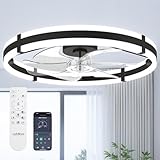
- Wider Airflow for Larger Rooms:Upgraded from our 20″ model, this 24″ low profile ceiling fan with light delivers up to 80% wider airflow coverage for stronger circulation. Perfect as a bedroom ceiling fan, kitchen ceiling fan, or living room flush mount ceiling fan in medium-sized spaces.
- Dimmable LED Light with 3 Color Temperatures:This ceiling fan with lights features an integrated LED panel that adjusts from 10%–100% brightness and supports 3000K warm white, 4500K natural white, and 6000K cool white. Easily create the right atmosphere for relaxing, working, or entertaining.
- Remote & APP Control with Memory Function: Control your ceiling fan with lights and remote or through the mobile app. Choose from 6 fan speeds, set 1- or 2-hour timers, and turn the fan or light on/off instantly. The built-in memory function restores your last-used light setting. When using the wall switch, please turn the power off for more than 5 seconds to activate the memory function. (No waiting time is required when using the remote.)
- Reversible DC Motor for Year-Round Comfort: Powered by an energy-efficient DC motor, this black ceiling fan with light runs quietly and smoothly. Switch between downdraft mode in summer and updraft mode in winter to improve air circulation throughout the year.
- Modern Flush Mount Fandelier Design: Designed as a flush mount ceiling fan, this small fandelier ceiling fan with light is ideal for low ceilings. The blade design enhances safety while maintaining strong airflow, making it suitable for bedrooms, kitchens, and living rooms.
Coordinate the envelope and mechanical systems
Ask the residential designer and HVAC professional to coordinate the enclosure, cooling, dehumidification and ventilation strategy. Building Science Corporation discusses airtight enclosures and controlled ventilation as tools supporting moisture control. The aim is not to seal a home and omit needed outdoor air; it is to control how air and moisture enter while providing the required ventilation by a deliberate method.
A temperature-and-humidity monitor can help occupants observe indoor conditions, but measurement is not control. A monitor does not dehumidify, ensure compliance with a humidity target, or guarantee that mold will not grow. Use readings as information for operating and maintaining a properly designed system, not as a substitute for system design or investigation of moisture problems.
Keep natural ventilation separate from code-required ventilation
Operable windows do not automatically satisfy whole-house ventilation requirements. ASHRAE says dwellings should receive outdoor air according to the code adopted by the local jurisdiction. Requirements vary by jurisdiction, and no current, jurisdiction-specific rate or universal opening rule is established here. Before finalizing the design, confirm the locally adopted code and applicable ventilation provisions with the authority having jurisdiction and a qualified residential designer.
Ask specifically how required outdoor air will be provided when windows are closed, how that ventilation interacts with cooling and humidity control, and what controls or operating instructions occupants will need. A window strategy intended for favorable weather should not be confused with the system that must deliver required ventilation under the conditions specified by local rules.
A practical design and review sequence
- Document site conditions. Map likely breeze directions alongside nearby buildings, topography, vegetation, noise, outdoor air quality, rain and storm exposure, and security. Identify which factors make openings usable or unsuitable.
- Set the goal for each opening. For each room or zone, decide whether an opening is meant to serve as an inlet, outlet, or both under changing wind conditions. Base the plan on the actual site rather than a generic orientation rule.
- Draw the complete airflow route. Trace air from an exterior opening through the interior to another opening. Check partitions and door positions, including how bedrooms or other enclosed rooms work when doors are closed.
- Consider stack effect only where form supports it. Evaluate whether high and low openings and an open interior can use temperature-driven airflow, especially during shoulder seasons. Do not present this principle as a guaranteed airflow rate.
- Design shading and fan placement. Reduce unwanted solar gains with orientation-appropriate shade, and provide air movement in occupied areas. Keep the distinct roles clear: shade limits heat gain; fans support perceived comfort.
- Specify the closed-window plan. Coordinate cooling, dehumidification and controlled outdoor-air ventilation for periods when windows should remain closed. Have a qualified professional design the systems for the house and climate.
- Detail water management. Review roof, walls, windows and foundation for rain penetration and groundwater concerns. Resolve enclosure moisture risks rather than expecting open windows or HVAC to make up for water intrusion.
- Verify local requirements and explain operation. Confirm adopted code requirements with the local authority and designer. Give occupants clear guidance on when to use openings and when to close them and rely on the home’s systems.
Common design mistakes to avoid
- Promising passive summer cooling: hot, humid outdoor air may worsen comfort and indoor moisture conditions. Design natural ventilation for favorable periods and provide a closed-window strategy.
- Counting windows instead of designing a route: openings that do not connect through usable interior paths may not create the intended cross-flow.
- Assuming a breeze from a map will reach the house: vegetation, buildings and terrain can change airflow at the site.
- Using fans as dehumidifiers: fans move air around occupants; they do not remove water vapor.
- Treating window ventilation as code compliance: required whole-house outdoor air must be checked against the locally adopted code, including operation when windows are closed.
- Ignoring rain and ground moisture: ventilation is not a remedy for water entering through the roof, walls, openings or foundation.
- Inventing a universal opening ratio or airflow figure: general principles cannot establish a project’s performance without site- and design-specific analysis.
Design for options, not a single cooling strategy
A well-designed naturally ventilated home in a hot, humid climate has openings that can use favorable breezes and a connected interior path, but it does not depend on those openings to control summer heat or moisture. Pair them with orientation-aware shading, fans for occupied spaces, a moisture-resilient enclosure, and appropriately designed mechanical cooling, dehumidification and controlled ventilation. Confirm local code requirements and have project-specific airflow and HVAC decisions reviewed by qualified professionals.
Quick Recap
Product prices and availability are accurate as of the date/time indicated and are subject to change. Any price and availability information displayed on Amazon at the time of purchase will apply.




