What’s actually slowing this PC down?
Pick the symptom - the matching free tool is one click away.
Most homeowners can safely clean removable registers, return grilles, and the shallow, accessible parts of duct openings. That is not the same as cleaning an entire HVAC duct system. Whole-system duct cleaning requires controlled vacuuming, specialized agitation equipment, and access to components that should not be opened casually.
Cleaning accessible surfaces can remove visible dust and keep grilles from redistributing it. It does not prove that the air is healthier, cure allergies, prevent illness, or reliably lower energy bills. The EPA does not recommend routine duct cleaning because its benefits are uncertain. Focus first on the filter, moisture control, and the actual source of any odor or contamination.
As an Amazon Associate I earn from qualifying purchases.
What you can clean yourself
A careful DIY job is limited to parts you can reach without damaging the HVAC system:
Free tools Windows power users keep installed
One-click scans. No signup required.
- Removable supply registers and return-air grilles
- The visible opening behind each grille
- A short, shallow section of duct that can be vacuumed without forcing a tool inside
- Dust on the surrounding wall, ceiling, or floor
- The system filter, using the size and specifications required by the equipment manufacturer
Do not describe this as “whole-house air duct cleaning.” A complete system includes supply and return ducts, registers, grilles, diffusers, plenums, coils, drain pans, blower housing, heat exchangers, and the air-handler housing. Reaching and cleaning those components safely generally requires professional equipment and training.
#1 Best Overall

- 【Deep Cleaning, Done Right】 Flexible stainless-steel shafts bend effortlessly into dryer vents, fridge coils, AC units, and behind heavy appliances—removing lint, dust, and debris from hard-to-reach areas.
- 【Upgraded Crevice Tool with Built-in Tweezers】 Our exclusive crevice brush features a detachable mini tweezer cleverly hidden in the handle—perfect for plucking stubborn lint, hair, or tangled threads from tight gaps.
- 【Multipurpose for Home & Vehicle】 More than just a dryer cleaner—tackle car air vents, baseboard corners, keyboard cracks, bathroom drains, and more with this all-in-one brush set.
- 【Durable, Reusable, Eco-Friendly】 Made with sturdy bristles and ergonomic plastic handles, each tool is built to last—ditch disposable dusters and invest in long-term cleanliness.
- 【Compact Design for Easy Storage】 Lightweight and slim, these brushes store easily in utility drawers or cleaning kits. A must-have for proactive home maintenance.
Tools and supplies
Gather:
- A household vacuum with a crevice tool and soft-brush attachment
- A screwdriver that fits the register or grille fasteners
- Microfiber cloths
- A drop cloth or old towels
- Gloves and eye protection
- A mild dish soap, if the grille material and its manufacturer permit washing
- A replacement filter with the correct nominal size and equipment compatibility
A HVAC vent cleaning brush kit can be useful for removable grilles and shallow, accessible openings only. Do not force a brush deep into a duct, and do not use a household brush kit as a substitute for the negative-pressure vacuum and containment methods used in professional source-removal cleaning.
A vacuum crevice or soft-brush attachment is also appropriate for accessible dust. It does not give a household vacuum the containment or suction arrangement needed to clean an entire duct system.
Step-by-step: clean registers and accessible openings
1. Turn off the HVAC system
Set the thermostat to “Off” and wait for the blower to stop. If your system has an accessible service switch, you can turn it off as an additional precaution, but do not open electrical panels.
Outdated Drivers Are Slowing You Down
One free scan finds every outdated or missing driver and matches the right update for your exact hardware.Free scan · exact hardware matchPC Slower Than It Used to Be?
A free scan shows the junk files, broken settings and background clutter dragging Windows down - then fixes them in one click.Free scan · Windows 10 & 11Turning the system off prevents the fan from carrying loosened dust through the home. Close nearby doors where practical, move furniture away from the work area, and put down a drop cloth.
2. Photograph or label the grilles if necessary
If several registers look alike but have different positions or orientations, take a quick photograph of each one or label it with removable tape. This makes reinstallation easier and helps you avoid accidentally leaving a return grille or supply register in the wrong location.
3. Remove one grille or register at a time
Remove the screws carefully and support the grille as you take it down. Some covers may have accumulated dust around their edges. Avoid bending thin metal, breaking plastic tabs, or pulling on anything attached to the duct.
If a grille is painted in place, stuck, or connected to damaged ductwork, do not pry aggressively. A broken connection can create leakage or allow insulation and debris into the system.
4. Clean the removable cover
Vacuum both sides of the register or grille using a soft brush. If it is made of washable metal or plastic, wipe or wash it with mild soap and water only when the material and manufacturer allow it.
Dry the cover completely before putting it back. Never reinstall a wet grille, and never pour or spray water into the duct opening.
5. Vacuum the accessible opening
Use the vacuum’s crevice tool or soft brush to remove dust from the rim and the short section immediately behind the grille. Keep the tool within the area you can see and control.
Rank #2
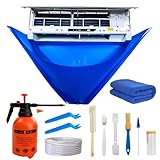
- 【Kit Contents】- Includes all accessories for split AC maintenance & cleaning—1 spray bottle with a universal nozzle, 1 AC cleaning cover, 5 different types of cleaning brushes, 1 towel, 1 water hose, and 2 pry bars.
- 【Durable Material】-The water-collecting cleaning bag is made of thick PVC with high-quality raincoat fabric—waterproof, wear-resistant, scratch-proof, heat-resistant, and won’t harden in winter. Foldable for storage and reusable, it’s a great investment to extend AC lifespan.
- 【Usage Instructions】-Install the AC cleaning cover and drain pipe first. Use the spray bottle with cleaning brushes/cleaner to clean core parts like AC filters and coils, then dry with the towel. Let it sit briefly, and your AC is ready for use.
- 【Fits Most Home ACs】- Small size works for 90% of wall-mounted mini-split ACs (covers mainstream 1-2 ton models); Large size fits high-power split ACs (covers mainstream 2-2.5 ton models).
- 【After-Sales Guarantee】- Choose the kit size that fits your AC before purchase. For any issues, email us anytime—we’ll provide the best solution for you.
Stop if you encounter any of the following:
- Flexible duct that moves, tears, or collapses
- Fiberglass liner or duct board that is shedding, crumbling, or becoming detached
- Insulation fibers
- Deep debris that you cannot remove without pushing the tool farther inside
- Water, sludge, mold-like growth, pests, or an unusual odor
Do not scrape fiberglass, bend internal fins, puncture flexible duct, or dislodge insulation. Soft-bristled tools are the least aggressive option, but even a soft brush should not be used on fragile or deteriorating material.
Recommended Free Tools
6. Clean the return-air area
Return grilles often collect more visible household dust than supply registers. Vacuum the grille, the surrounding wall or floor, and the accessible opening in the same controlled manner.
Do not remove sealed air-handler panels or attempt to reach the blower, evaporator coil, heat exchanger, burner compartment, or other internal parts through the return opening.
7. Reinstall the cover securely
Make sure the register or grille sits flat and that every screw is secure without overtightening. A loose cover can rattle and may allow air to bypass the intended opening.
8. Repeat, then test the system
Work through the remaining registers and grilles. Once everything is dry and firmly reattached, restore power or set the thermostat back to its normal mode. Check that airflow is normal and listen for new rattles, whistling, scraping, or vibration.
Stop the system again if you notice a new odor, loose material, weak airflow, or an unusual sound. Those symptoms may indicate a mechanical or duct problem rather than ordinary surface dust.
Replace or inspect the HVAC filter
Filter maintenance is usually more important than dusting the visible duct openings. A dirty or poorly fitted filter can restrict airflow, while a filter that does not fit can allow air to bypass it.
- Find the filter compartment, usually near the return-air duct, furnace, air handler, or indoor unit.
- Record the filter’s nominal dimensions and airflow direction before removing it.
- Check the equipment manual or the existing filter’s requirements.
- Install a correctly sized replacement HVAC air filter with the arrow pointing in the direction of airflow.
- Confirm that the filter fits snugly without being forced or crushed.
ENERGY STAR recommends checking common HVAC filters monthly and replacing them when dirty, with a minimum interval of every three months for many systems. Your actual interval may be shorter if you have pets, construction dust, smoke, frequent renovations, a large household, or unusually high occupancy.
Rank #3

- Home Essentials: Fireplace chimney brushes includes two high quality synthetic brush head and flexible rods that extend up to 30 feet
- Home Improvement with Simple Instructions: Dryer vent brush can be used with or without any kind of power drill and will help you achieve professional results; By sealing the connection points of the rod with tape, the risk of the rod falling off is reduced
- Improve Dryer Working Efficiency: Improving cloth dryer working performance by using this cleaning tools to clean the build up lint and dust in dryer vent, duct and exhaust port; It is recommended to select the area to be cleaned according to the diameter of the brush head
- Effortless Maintenance: Skip the service calls. Clean your dryer vent yourself in minutes and keep everything running smoothly, year after year.
- Preventing Fire Risks: Lint buildup can be dangerous and failure to clean it is the leading cause of clothes dryer fires; So remove the lint periodically is the only way to prevent dryer fires risk
Do not choose a filter solely because it has the highest MERV number available. The equipment must be designed to handle the filter’s resistance. Use the manufacturer’s guidance or ask a qualified HVAC technician if you are unsure.
Do not add chemicals, fragrances, ozone, or steam
Routine DIY spraying inside ductwork is not a safe shortcut. Avoid spraying disinfectants, fragrances, ozone, or “duct sanitizers” into operating ducts.
The effectiveness and safety of many biocides and ozone applications remain uncertain. Products that are legally registered for a specific use must be applied exactly as their labels direct, and some applications may introduce moisture that encourages mold growth. Routine sealants used to encapsulate contaminants are not a substitute for removing the source and are not generally recommended by the EPA.
Never steam-clean or wet the inside of ductwork. Moisture control matters more than cosmetic cleaning: repair plumbing or roof leaks, correct condensation, keep drain pans draining, maintain humidifiers, and replace wet or moldy porous duct materials through a qualified contractor.
What not to clean yourself
Do not open, dismantle, or clean these components as part of a casual register-cleaning project:
The Tool Desk
Outbyte PC Repair FREERepair Windows errors before they cause bigger problemsFix Now →Outbyte Driver Updater FREEFix the driver behind crashes, sound loss and screen glitchesFind Drivers →- Electrical compartments, wiring, capacitors, motors, or controls
- Gas burners, combustion chambers, heat exchangers, or furnace interiors
- Refrigerant lines or coils
- Blower assemblies and blower housings
- Sealed air-handler panels
- Deep sections of supply or return ductwork
- Wet, moldy, damaged, or deteriorating fiberglass duct liner or duct board
Manufacturer maintenance guidance commonly limits homeowner work to tasks such as changing filters and clearing exterior debris. Deep cleaning of coils, blowers, ducts, and electrical components is better left to a qualified technician.
When duct cleaning or professional evaluation may be justified
The EPA identifies circumstances in which duct cleaning may be appropriate, including:
- Substantial visible mold growth inside hard-surface ducts or on other HVAC components
- A confirmed pest or vermin infestation inside the system
- Substantial deposits of dust or debris that are released into the home or obstruct airflow
A musty smell alone does not prove that the ducts are contaminated or that cleaning them will solve the problem. Investigate the filter, evaporator coil, drain pan, humidifier, insulation, crawl space, basement, and other possible moisture or odor sources.
Rank #4

- All-in-One Dryer Duct Cleaning Kit — No more running to the hardware store for missing parts. This complete vent cleaning kit includes a heavy-duty dryer vent cleaning brush for 4-inch pipes, a set of flexible nylon rods, a dedicated lint brush, a dryer vent cleaner drill attachment, and protective gloves—everything you need in one box, ready to use right away.
- Help Improve Dryer Operation — Lint and pet hair buildup can slow down your dryer and raise energy use. This dryer cleaner vent kit reaches into filters and ducts to lift out stubborn debris, supporting more efficient operation and may help shorten drying times—so laundry day goes faster.
- Simple Operation for Deep Cleaning — Designed for dryer vent lines, the easy-screw handle and drill connector attach to standard household drills in seconds. The rotating motion reaches deep into ducts to pull out hidden lint that traditional duct cleaning tools can't access.
- Helps Clear Stubborn Lint Buildup — Lint can build up in dryer vent lines over time. Using this dryer vent snake cleaning tool regularly helps clear debris from vent walls, supporting a tidier laundry space—whether it's a busy holiday or a quiet family evening.
- Cost-Effective DIY Cleaning — Why pay for professional duct cleaning every few months? This dryer exhaust vent cleaning kit lets you handle the job yourself and keep your dryer running smoothly—keeping costs low over time.
If the system is part of a known mold or water-damage problem, professional remediation may require containment and specialized protective equipment. Duct cleaning by itself is not a general substitute for source control, moisture correction, or ventilation.
Stop immediately if you find these hazards
Put the covers back only if it is safe to do so, keep the HVAC system off when appropriate, and contact a qualified professional if you find:
- Suspected asbestos-containing insulation, wrap, or duct material
- Wet, visibly moldy, torn, or deteriorating fiberglass liner or duct board
- Standing water, recurring condensation, a blocked drain, or an active leak
- Rodents, insects, nesting material, droppings, or other pest evidence inside the system
- Heavy deposits beyond the accessible register area
- Disconnected duct joints, damaged flexible duct, or suspected duct leakage
- Soot, combustion residue, a gas odor, or a furnace or heat-exchanger concern
- Wiring, capacitors, motors, refrigerant components, coils, or sealed air-handler parts
- Respiratory symptoms or a major mold problem requiring containment
Do not disturb suspected asbestos. OSHA treats work that disturbs asbestos-containing or presumed asbestos-containing materials as regulated work categories. Requirements for asbestos, mold remediation, licensing, and contractor qualifications vary by state and locality, so check local rules before hiring or performing regulated work.
Independent reader supportYour contribution helps us test, update, and keep practical guides available for everyone.How professional duct cleaning differs
Professional source-removal cleaning is more than inserting a brush through each register. A qualified provider should explain how the supply and return sides will be placed under controlled negative pressure, how debris will be contained, and which components will be cleaned.
Incomplete cleaning can allow recontamination. Before hiring, ask:
Do these 3 things before closing this tab:
1Repair Windows errors before they cause bigger problems2Fix the driver behind crashes, sound loss and screen glitches3Clear out junk files and repair common Windows errors- What exact components will be cleaned—ducts, plenums, coils, drain pans, blower housing, and air-handler surfaces?
- How will loosened debris be contained and prevented from entering the living space?
- What equipment and agitation methods will be used?
- How will the company protect fiberglass liner, flexible duct, insulation, and dampers?
- What contamination or moisture source will be corrected before cleaning?
- Are the technicians licensed or otherwise qualified under the rules where you live?
- Will the company document the condition before and after the work?
- Are chemical treatments being proposed, and what product label authorizes that use?
Be cautious of anyone promising that duct cleaning will cure allergies, remove “toxins,” prevent illness, or automatically cut energy costs. The EPA does not certify, endorse, or approve duct-cleaning companies.
What can actually help indoor air quality?
For ordinary household dust, prioritize source control and filtration:
- Replace or clean the HVAC filter as the equipment requires.
- Vacuum and dust living spaces regularly, especially around returns.
- Control moisture and repair leaks promptly.
- Ventilate with clean outdoor air when weather and outdoor conditions permit.
- Use a properly selected portable air cleaner or DIY air cleaner for airborne particles when appropriate.
An air cleaner can reduce airborne particles; it cannot repair leaking ducts, remove contamination hidden inside the HVAC system, or correct a wet air handler. Likewise, clean grilles do not eliminate pollutants generated elsewhere in the home.
Best Value
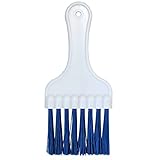
- Professional-Style Hvac Coil Cleaning Brush – Designed for use by HVAC technicians, plumbers, and heating contractors, this long-bristle fin cleaner reaches deep into condenser and evaporator fins to dislodge caked-on dirt and dust quickly and effectively.
- Works On All Major Appliances – Purpose-built for AC condenser coils, evaporator coils, refrigerator coils, HVAC fins, window AC units, and hydronic heating registers. One brush handles every coil and fin cleaning job around your home.
- Restores Efficiency And Lowers Energy Bills – Dirty coils force your AC and refrigerator to work harder, raising operating costs. Regular cleaning with this HVAC fin brush takes under 3 minutes and can meaningfully reduce energy consumption — paying for itself on the very first use.
- The Right Tool Without The Bundle Markup – Sold as a single professional-style air conditioner brush with no unnecessary extras. Skip the overpriced kits — this is the dedicated coil cleaning brush that HVAC professionals reach for, available at an exceptional value.
- Durable Design Built To Last – Stiff plastic bristles resist bending and maintain their shape through repeated use. The comfortable grip handle gives you full control whether you are cleaning tight refrigerator coils or wide outdoor AC condenser fins.
Bottom line
Turn off the system, remove and clean the grilles, vacuum only the visible and accessible openings, replace or inspect the correctly sized filter, and keep moisture out of the ductwork. Stop when you encounter insulation damage, mold, water, pests, asbestos concerns, heavy debris, or mechanical components.
That approach is safer and more accurate than treating a household vacuum and brush as a whole-system duct-cleaning machine. For contamination or equipment problems, arrange a qualified HVAC inspection or professional duct-cleaning evaluation rather than forcing tools deeper into the system.
Frequently Asked Questions
Can cleaning air ducts yourself make the air healthier?
It can remove visible dust from registers and accessible openings, but routine duct cleaning has uncertain benefits and has not been shown to prevent health problems or cure allergies. For indoor air quality, prioritize source control, moisture correction, ventilation when appropriate, and correct filter maintenance.
How often should I clean my air ducts?
There is no general routine schedule recommended for whole-system duct cleaning. Clean removable grilles when visibly dusty and inspect the filter monthly. Professional evaluation may be appropriate after substantial mold growth, pest infestation, or heavy deposits that obstruct airflow.
Can I use a dryer-vent brush in HVAC ducts?
No. Dryer-vent brushes are intended for dryer exhaust systems and should not be treated as interchangeable with HVAC duct-cleaning equipment. Deep brushing can damage flexible duct, fiberglass liner, insulation, or duct connections.
Quick wins for a faster PC:
Repair Windows errors before they cause bigger problemsFix Now →Scan for outdated or missing drivers - takes under a minuteDriver Scan →Should I spray disinfectant or fragrance into my air ducts?
Avoid routine DIY spraying. The safety and effectiveness of many biocides, ozone applications, and duct sanitizers are uncertain, and moisture introduced by some products can encourage mold. Never spray chemicals into operating ductwork unless a product is specifically registered and its label instructions are followed exactly.
How do I know whether the smell is coming from the ducts?
A musty odor alone does not establish that ducts are the source. Check the filter, drain pan, coil, humidifier, insulation, crawl space, basement, and other moisture or pollution sources. Persistent odors, visible growth, or water damage warrant professional evaluation.
The Bottom Line
Clean only what you can safely reach: removable grilles, registers, and shallow accessible openings. Do not wet or chemically treat duct interiors, disturb insulation or suspected asbestos, or open HVAC equipment. Correct filters and moisture problems first, and call a qualified professional for mold, pests, water, damaged ductwork, heavy debris, or mechanical hazards.
Quick Recap
Product prices and availability are accurate as of the date/time indicated and are subject to change. Any price and availability information displayed on Amazon at the time of purchase will apply.




