Recommended Free Tools
A burnt pot or pan is often salvageable, but the safest cleaning method depends on what it is made of. Stainless steel can usually tolerate a stronger restoration process. Nonstick and ceramic-nonstick cookware need gentle treatment to protect their coatings. Seasoned cast iron must be dried and re-oiled, while enameled cast iron should be cleaned without scratching its glass-like surface.
Before scrubbing, identify the material, let the cookware cool completely, and start with warm water and mild dish soap. Never put a hot pan under cold water: the sudden temperature change can warp cookware or crack enamel.
As an Amazon Associate I earn from qualifying purchases.
Identify the cookware before you clean it
If you are unsure, check the manufacturer’s markings, packaging, or care instructions before using vinegar, powdered cleanser, or any abrasive tool. Until the material is confirmed, use only warm water, mild dish soap, and a soft or nylon utensil.
| Cookware type | Typical appearance | Safest starting approach | Never make routine practice |
|---|---|---|---|
| Stainless steel | Silver-colored metal with no coating | Warm soapy water, gentle heat, a wooden or nylon scraper, then baking soda or an approved stainless-steel cleanser | Steel wool, chlorine products, oven cleaner, or harsh abrasives unless the manufacturer specifically permits them |
| Conventional nonstick | Smooth dark or colored coating over metal | Warm soapy water, a soft sponge or nylon brush, and—if permitted by the manufacturer—a short vinegar-and-water simmer | Metal utensils, steel wool, metal scouring pads, oven cleaner, bleach, and aggressive scraping |
| Ceramic nonstick | Smooth ceramic coating, often light-colored or decorative | Simmering water with dish soap, followed by gentle washing | Steel wool, abrasive scrubbers, harsh cleaners, and high heat |
| Seasoned cast iron | Heavy black iron with a seasoned cooking surface | A pan scraper, a short water simmer if needed, thorough drying, and a thin coat of cooking oil | Prolonged soaking, routine dishwasher use, and unnecessary stripping of the seasoning |
| Enameled cast iron | Heavy cast iron covered by a glossy, glass-like colored or cream enamel | Warm soapy water, soft or nylon tools, and baking soda for stubborn residue | Metal sponges, abrasive cleaners, knives, and uncontrolled scraping |
The safe first step for any burnt pan
- Turn off the heat and let the cookware cool completely. For enameled cast iron, allow it to reach room temperature before washing.
- Remove loose food gently. Use a wooden, silicone, rubber, or nylon utensil appropriate for the surface. Do not use a knife to pry off the crust.
- Wash with warm water and mild dish soap. This removes grease and loose particles before you use a more targeted treatment.
- Rinse and inspect the surface. If the residue is still attached, follow the method for the specific material below.
Do not cool a hot pan under cold running water. Thermal shock can warp cookware and may crack the enamel on an enameled pan or Dutch oven. Cooling completely is safer than trying to speed up the process.
#1 Best Overall

- SIX SCRUBBING SPONGES: This pack of Scotch-Brite Heavy Duty Scrub Sponges includes six sponges.
- 3X SCRUBBING POWER*: Tackle tough messes with these heavy duty sponges that provide 3X more scrubbing power compared to other leading sponges.
- LASTS 3X LONGER*: Made from durable material, these dish sponges last 3X longer than the leading national value brand.
- LASTS 3X LONGER*: Made from durable material, these dish sponges last 3X longer than the leading national value brand.
- FLEXIBLE, DURABLE, STRONG: These scrub sponges for dishes are S-shaped for a comfortable grip while getting into corners easily.
How to clean burnt stainless steel
Stainless steel is usually the best candidate for a dramatic restoration. Because it has no fragile nonstick coating, you can use controlled heat, baking soda, and—when the manufacturer permits it—a nonabrasive stainless-steel cleanser.
Method 1: loosen the burn with water and heat
- Cover the burnt area with water and add a small amount of dish soap.
- Set the pan over low or moderate heat until the water becomes hot and the residue begins to soften. Do not let the pan boil dry.
- Turn off the heat and loosen the softened food with a wooden spoon or nylon scraper.
- Rinse the pan. If a shadow remains, apply a paste made from baking soda and a little water, then rub gently with a soft cloth or sponge.
- Rinse thoroughly and dry immediately to reduce water spotting.
For a heavier layer of burnt food, sprinkle baking soda over the affected surface, add enough water to cover it, and bring the mixture to a boil. Use a wooden spoon to work at the loosened particles while the pan is still filled with water. Keep the heat controlled and never allow the mixture to evaporate completely.
Method 2: use a compatible stainless-steel cleanser
Burnt fat, protein residue, and dark char may respond better to a nonabrasive, non-chlorine cleanser made into a paste with water. A Bar Keepers Friend powdered cleanser is one example specifically identified in stainless-steel cookware care guidance, but it belongs only on compatible stainless-steel surfaces. Apply it with a soft cloth or sponge, follow the product label, rub in the direction or pattern recommended by the cookware maker, rinse very thoroughly, and dry at once.
Free tools Windows power users keep installed
One-click scans. No signup required.
Compatibility warning: Do not transfer stainless-steel cleanser to nonstick, ceramic-nonstick, enamel, aluminum, anodized, or specialty-coated cookware unless that cookware’s manufacturer explicitly approves it. The same product that restores bare stainless steel can damage a coating or finish.
For rainbow discoloration and hard-water marks
A rainbow sheen on stainless steel is usually a discoloration issue rather than a thick burnt-food layer. Wiping with white vinegar may remove it. For hard-water spots, a 1:1 mixture of white vinegar and water can be brought to a boil, then the pan should be rinsed and dried.
For severe burned grease or residue, some stainless-steel care guidance permits bringing a 50/50 white-vinegar-and-water mixture to a boil. Use this only when the cookware manufacturer allows vinegar, and never use it on an unidentified finish simply because the pan looks metallic. Vinegar is not a universal cookware cleaner.
Rank #2
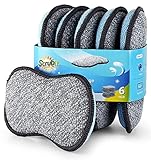
- CLEAN SMARTER - NOT HARDER: We all know the pain of scrubbing away dirty or burnt food on pots with a soft cloths, and the hassle of a dish cloth and scrubber taking up space on the sink. Why not get the best of both worlds with our brand designed scourer/microfiber cloth combo sponge.
- MADE FOR A TOUGH JOB: These sponges were made to last. They’re made from the best quality polyester, polyamide, and polyurethane, ensuring you they won’t wear out in a week like the average store-bought scouring pads do.
- CHEMICAL FREE: The tough kitchen scrub sponge contain no harmful chemicals. For the health and safety of our customers, we ensure that our sponges are 100% safe to use.
- MACHINE WASHABLE: When a scouring pad becomes a little… smelly, you usually replace it, but why not save money and throw them in the washing machine? These sponges are built to last and are 100% washer and dryer safe for easy cleaning.
How to clean burnt nonstick cookware
With nonstick cookware, preserving the coating matters more than removing every last cosmetic mark. Treat the surface as a coating, not as bare metal that can be scoured back to brightness.
- Let the pan cool completely.
- Wash it with warm water and mild dish soap using a soft sponge or nylon brush.
- If residue remains, add enough water to cover it and heat gently. Do not heat the pan empty.
- If the manufacturer permits vinegar, a short simmer of water and white vinegar—Circulon’s guidance specifies 5–10 minutes—can help loosen burnt food. Turn off the heat and let the pan cool completely before washing it again.
- For stubborn spots, use a paste of baking soda and water with light pressure. Rinse thoroughly.
Some manufacturers also permit a 50/50 vinegar-and-water boil for severe burnt grease or food residue. Follow the instructions for your particular pan rather than assuming that vinegar is safe for every nonstick formula.
Use a soft nylon cookware brush or nonabrasive sponge if the residue needs more agitation. Never use steel wool, a steel scouring pad, a metal scraper, a knife, or an abrasive powder on the coating. Avoid oven cleaners, chlorine products, and peroxide-containing detergents where the cookware maker prohibits them.
When a nonstick pan should be replaced
Stop treating severe coating damage as a cleaning problem. Blistering, peeling, large flakes, or exposed base metal are signs that the pan should be replaced. A pan that is merely stained may still function, but a coating that is lifting or breaking down can no longer provide the intended performance and should not be rescued with harsher scrubbing.
How to clean ceramic-nonstick cookware
Ceramic nonstick cookware also needs a coating-preservation approach. For a moderate burn, cover the residue with water, add dish soap, and simmer gently until the food softens. Turn off the heat, let the pan cool, and wash with a soft sponge or nylon brush.
For a stubborn spot, a baking-soda-and-water paste may be appropriate if the manufacturer permits it. Use light pressure and rinse completely. Avoid steel wool, abrasive scrubbers, harsh cleaners, and metal utensils. Do not assume that ceramic nonstick can be cleaned like enamel or stainless steel simply because it has a hard-sounding finish.
Rank #3

- GOODBYE TO CLEANING SPONGES, HELLO CASPIAN STONE: Your new best friend for cleaning and scrubbing your kitchen and bathroom. This sponge will help you keep your dishes, pots, pans, sinks, oven, microwave, BBQ grill, and everything else sparkling clean.
- WHAT IS CARBORUNDUM? A compound of silicon and carbon which occurs in nature as the extremely rare mineral moissanite. In other words, it’s awesome sauce that will ensure you spend less time scrubbing and cleaning since it will do most of the work for you.
- PREMIUM QUALITY: Created with quality pads and then sprinkled with rare nano-particles promising to make your stains regret they ever came near your kitchen and bathroom.
- CLEAN WITHOUT DETERGENTS AND CEMICALS : Just dip this cleaning pad in water and let the nano-particles do all the heavy scrubbing without any harmful chemicals.
- WIDE APPLICATION: This sponge will help you keep your dishes, pots, pans, sinks, oven, microwave, BBQ grill, and everything else sparkling clean. Washing sponge can be used to brush Pans, Kettles, wipe Chopping Board, Tires and some another Kitchen Utensils. Perfect for using in the kitchen, bathroom, garage or outdoor, etc.
Burnt oil often becomes sticky carbonization. Cooking at low to medium temperatures and avoiding an empty overheated pan helps prevent that residue from forming again. If the ceramic coating is chipped, peeling, blistered, or exposing the metal underneath, replacement is safer than aggressive restoration.
How to clean burnt seasoned cast iron
Seasoned cast iron needs a different goal: remove the burnt food while preserving as much of the seasoning as possible. A short cleaning process will not necessarily damage a well-maintained pan, but prolonged moisture and unnecessary stripping can create rust or force you to reseason it.
- Wash the pan with warm water, mild dish soap, and a stiff brush or suitable scrubbing pad.
- For burnt-on food, use a pan scraper to lift the crust. A nylon or silicone pan scraper is a useful choice because it can remove stuck food without introducing a sharp metal edge.
- If scraping alone is not enough, add a little water and simmer it in the pan for 3–5 minutes.
- Turn off the heat, carefully scrape again, and discard the loosened water.
- Dry the cast iron completely, then apply a thin layer of cooking oil.
Do not soak cast iron for a prolonged period. Dishwasher use can remove seasoning and promote rust, so it should not be routine care. If food remains after the short simmer and scraping, or if the burnt layer has damaged the seasoning, the pan may need reseasoning rather than increasingly aggressive scrubbing.
Windows Errors? Fix Them Before They Spread
Repair common Windows errors and clear accumulated junk for a smoother, more stable PC - no reinstall needed.Free scan · no reinstallOutdated Drivers Are Slowing You Down
One free scan finds every outdated or missing driver and matches the right update for your exact hardware.Free scan · exact hardware matchHow to clean burnt enameled cast iron
Enameled cast iron combines a heavy iron body with a glass-like enamel surface. It can withstand cooking heat, but the enamel can be scratched by metal tools and abrasive cleaners. Let the cookware cool to room temperature before adding water.
- Fill the cookware with warm water and add mild dish soap.
- Use a soft natural sponge, soft nylon sponge, or nylon brush to loosen what you can without force.
- For baked-on food, boil two cups of water with four tablespoons of baking soda for a few minutes.
- Turn off the heat, allow the contents to cool enough to handle safely, and lift the softened residue with a pan scraper.
- Rinse thoroughly and dry the cookware.
A purpose-made enameled cast iron cleaner may be useful for compatible cookware, but follow its label and the cookware manufacturer’s care instructions. Do not use metal sponges, steel wool, abrasive powders, knives, or metal scrapers on enamel.
Not every dark mark needs to disappear. A small amount of staining or discoloration on enamel can be cosmetic and may not affect performance. The practical standard is a clean, sound, intact cooking surface—not necessarily a perfectly white interior.
What not to use on a burnt pan
- Cold water on hot cookware: The temperature shock can warp a pan or crack enamel.
- Steel wool and metal scouring pads: These can scratch nonstick and enamel, and some stainless-steel manufacturers specifically prohibit them.
- Knives and metal scrapers: They can gouge coatings and enamel and leave damage that cleaning cannot repair.
- Oven cleaner, drain cleaner, and lye: Strong alkalis can cause chemical burns and should not be treated as ordinary cookware-cleaning hacks.
- Bleach, chlorine products, and peroxide-containing detergents: Avoid them where the cookware manufacturer prohibits them.
- Unapproved vinegar treatments: Vinegar may help stainless-steel discoloration, but it is not automatically safe for aluminum, anodized finishes, decorative exteriors, or specialty coatings.
- Prolonged soaking of cast iron: Extended moisture can encourage rust and damage the seasoning.
Never mix these cleaning products
Never mix vinegar or another acid with chlorine bleach. The combination can produce highly irritating chlorine gas. More broadly, household cleaning products should not be mixed unless the label specifically says the combination is safe.
Rank #4

- Mr. Scrub sponge’s quality resembles that of market-leading brands.
- Strong enough for stubborn and stuck-on messes.
- Long-lasting and reusable.
- All-purpose and non-scratch. Safe on: Non-stick cookware, dishes, countertops, aluminum, cast iron, enamel, porcelain, appliances, fruits, vegetables, tiles, shower doors, fixtures, walls, carpets, and more.
- Our products have been vacuum-compressed. After opening the packaging, this product will appear very flat and its shape might have changed. Put it in warm water and wait for 2 to 6 hours. Afterwards, it will gradually return to its original shape. If you don’t like this product, please contact us to receive a refund.
Use one method at a time. Rinse the cookware thoroughly before changing products, ventilate the area, follow both the cookware and cleaner labels, and keep cleaning products away from children and pets. If a product causes fumes, skin irritation, or eye exposure, stop using it and follow the product’s safety instructions.
Independent reader supportYour contribution helps us test, update, and keep practical guides available for everyone.Does baking soda and vinegar work better together?
Not necessarily. Baking soda is useful as a mild abrasive and appears in care guidance for stainless steel, nonstick, and enameled cast iron. Vinegar can help with stainless-steel discoloration, mineral marks, and some residue when the manufacturer permits it. When the two are combined, they react and much of their acid-base action is spent; the visible fizz is not proof that the mixture is a stronger cleaner. Any benefit may come mainly from the paste and the gentle mechanical action of wiping.
Using one suitable ingredient at a time makes it easier to control the treatment and avoid exposing an incompatible finish to acid.
Secondary pantry options
For compatible cookware, a Utah State University Extension kitchen-tips handout suggests baking soda or cream of tartar combined with salt and water, followed by an overnight rest and scraping with a rubber spatula. Treat this as a secondary option, not a universal formula: check the cookware’s care instructions first, especially if the surface is coated, enamelled, aluminum, anodized, or otherwise specialized.
A simple troubleshooting guide
| What you see after the first wash | What to do next |
|---|---|
| Thick black or brown food on stainless steel | Use a controlled water-and-soap simmer, loosen with wood or nylon, then try baking soda or a compatible nonabrasive stainless-steel cleanser. |
| Rainbow or cloudy marks on stainless steel | Try white vinegar; for hard-water spots, use a 1:1 vinegar-water treatment if the manufacturer permits it, then rinse and dry. |
| Residue on nonstick or ceramic nonstick | Use warm soapy water, a soft or nylon tool, and only a manufacturer-approved vinegar simmer or baking-soda paste. |
| Burnt food on seasoned cast iron | Scrape first; if needed, simmer a little water for 3–5 minutes, scrape again, dry completely, and re-oil. |
| Dark staining on enameled cast iron | Try the baking-soda simmer and a nonmetal scraper, but accept that some cosmetic staining may remain. |
| Peeling, blistering, flakes, or exposed metal on nonstick cookware | Replace the pan rather than increasing the force or harshness of the cleaning method. |
How to prevent another burnt pan
- Use low to medium heat for nonstick and enameled cast iron. Avoid overheating oil or heating enameled cookware empty.
- Clean cooking residue promptly so leftover grease or food does not burn into the surface during the next heat cycle.
- Use wood, silicone, rubber, nylon, or another tool approved for the cookware’s surface.
- Rinse stainless steel thoroughly and dry it immediately to reduce water spots.
- Dry cast iron completely after washing and apply a thin coat of cooking oil.
- Follow the manufacturer’s instructions when a pan has a specialty coating or decorative exterior. If you buy a cleaner, choose a manufacturer-approved cookware cleaner for that exact material.
How clean is clean enough?
For stainless steel, repeated gentle treatment can often remove both the burnt food and much of the discoloration. For nonstick cookware, the condition of the coating matters more than achieving a perfect appearance. For cast iron, preserving the seasoning and preventing rust are the priorities. For enamel, a sound but slightly stained surface can still be perfectly serviceable.
Best Value

- AMERICA’S #1 SELLING SCRUB SPONGE BRAND: One package of Scotch-Brite Heavy Duty Scour Pads; one pack contains eight scouring pads
- HEAVY DUTY CLEANING POWER: Powerful, multi purpose cleaning pads ideal for scrubbing tough, stuck-on messes
- USE WITH: These scouring pads are safe to use on non-coated cookware, oven racks, concrete, tools, and more surfaces across the household
- PERFECT FOR TOUGH JOBS: They’re ideal for cleaning uncoated pots and pans, grates, oven racks, outdoor grills, and more. Do not use on stainless steel appliances, sinks or glass.
- MADE FROM RECYCLED CONTENT: The scrubbing fibers are made from 100% recycled plastic for a sustainable clean.
Results vary according to the material, the severity and chemistry of the burn, the age of the finish, and the manufacturer’s instructions. No cleaning method can restore every pan, and a surface that is peeling, cracked, chipped, or otherwise structurally damaged should be replaced rather than forced back to a like-new appearance.
This material-specific approach reflects cookware-care guidance from All-Clad, Circulon, GreenPan, Lodge, and Le Creuset, along with household chemical-safety guidance from Poison Control and pantry-cleaning suggestions from Utah State University Extension.
Frequently Asked Questions
Can I use Bar Keepers Friend on a nonstick pan?
Do not use a stainless-steel cleanser on nonstick cookware unless the nonstick manufacturer explicitly approves that exact product. Bar Keepers Friend powdered cleanser is discussed here only for compatible stainless-steel surfaces.
The Tool Desk
Outbyte PC Repair FREERepair Windows errors before they cause bigger problemsFix Now →Outbyte Driver Updater FREEScan for outdated or missing drivers - takes under a minuteDriver Scan →Can I clean a burnt pan with baking soda and vinegar at the same time?
There is no general advantage to combining them. Baking soda can provide mild abrasion, while vinegar can help with certain stainless-steel discoloration and mineral marks. Use one suitable method at a time, rinse thoroughly between products, and never mix vinegar with chlorine bleach.
Is a stained enameled Dutch oven ruined?
Not necessarily. Some staining on enameled cast iron is cosmetic and does not affect performance. Use warm soapy water, a baking-soda simmer, and a soft or nylon scraper. Replace the cookware or seek the manufacturer’s advice if the enamel is chipped, cracked, or flaking.
How do I know when a burnt nonstick pan should be replaced?
Blistering, peeling, large flakes, or exposed base metal indicate significant coating damage. Do not try to remove those defects with harsher cleaners or metal tools; replace the pan.
Can I put burnt cast iron in the dishwasher?
Routine dishwasher use is not recommended for seasoned cast iron because it can remove seasoning and promote rust. Scrape the burnt food, use a short water simmer if needed, dry the pan completely, and apply a thin layer of cooking oil.
What’s actually slowing this PC down?
Pick the symptom - the matching free tool is one click away.
The Bottom Line
Cool the cookware completely, identify its material, and escalate gently. Use baking soda or an approved stainless-steel cleanser on stainless steel; soft tools and manufacturer-approved treatments on nonstick; brief simmering, complete drying, and re-oiling on seasoned cast iron; and soft tools with baking soda on enamel. If a nonstick coating is peeling or an enamel surface is chipped or cracked, cleaning cannot make it safe again.
Quick Recap
Product prices and availability are accurate as of the date/time indicated and are subject to change. Any price and availability information displayed on Amazon at the time of purchase will apply.