Quick wins for a faster PC:
Clear out junk files and repair common Windows errorsFree Scan →Scan for outdated or missing drivers - takes under a minuteDriver Scan →Choose the grade and design conditions first; choose the species group second. SPF, Douglas Fir-Larch, and Southern Yellow Pine can all be appropriate structural lumber, but a species name alone does not tell you whether a particular board can carry your load. The grade stamp, actual dimensions, span, spacing, loads, moisture condition, treatment, and governing building code determine the safe choice.
For a joist, rafter, deck member, wall stud, or other structural part, compare lumber that has the same grade, size, and service condition. Then use a span table or design value basis that explicitly applies to that combination. If the load is unusual, the member is part of a major structural alteration, or local code requirements are unclear, have the design checked by the building official or a qualified structural professional.
As an Amazon Associate I earn from qualifying purchases.
Start with the project, not the species name
Before comparing lumber, write down the conditions the member must withstand. A board used as a short, lightly loaded wall stud is not selected the same way as a floor joist spanning a room or a roof rafter carrying snow and ceiling loads.
- Member function: joist, rafter, stud, beam, header, deck joist, stair part, or another use.
- Clear span: the distance between supports, measured as required by the applicable span table.
- Spacing: commonly expressed as inches on center; the table must match the actual spacing.
- Loads: dead load, live load, snow, roofing, ceiling, storage, partitions, equipment, and any concentrated loads.
- Service condition: dry interior exposure, ordinary exterior exposure, ground contact, or repeated wetting.
- Member size and grade: for example, the exact nominal size and the grade printed on the stamp.
- Code and design basis: the locally adopted code, current design values, connection requirements, and any engineered details.
Only after these items are known can you make a meaningful SPF-versus-Douglas-Fir-versus-Southern-Pine comparison. A heavier-looking board or a species label in a retail listing is not a substitute for a grade stamp and a matching design table.
#1 Best Overall
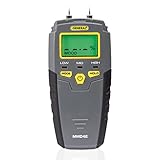
- HUMIDITY SENSOR: Our handy meter tool can quickly determine what level of remediation is needed to keep your family safe from black mold. High levels of dampness that go untreated are the leading cause of harmful fungus growth in the home.
- WATER LEAK DETECTOR: Finding the moisture content in your wood or drywall is the first step in early prevention. Continuously check and test suspicious water stains around the house so you can determine whether the area is wet or has already dried. Low, medium and high moisture tones and on-screen icons, Reading HOLD button
- MOISTURE READER: The mold test features large 0.3" high digits in a backlit LCD for quick and easy detecting. Our mildew scanner includes extra 8mm stainless steel pins, a protective cap that doubles as a calibration checker, and a “9V” battery.
- MOLD TESTER: For an accurate test read, stick the stainless steel pins into the surface of what you're measuring. The gauge has a broad range of 5 - 50% for wood and 1.5 - 33% for building materials such as concrete and drywall.
- GENERAL TOOLS: We're a recognized leader in designing and developing specialized precision tools dedicated to delivering exceptional customer service. We encourage artisans and DIYers to work smarter, measure better, and repair more productively.
What the three labels actually mean
SPF is a species group
SPF means Spruce-Pine-Fir. It is a recognized species group, not one tree species and not one universal strength rating. The stamp normally identifies the group and the lumber grade established by the grading agency. Two SPF boards with different grades or sizes can have different allowable design values.
Douglas Fir-Larch is the structural group name
Structural references commonly use the group name Douglas Fir-Larch, rather than treating every board marketed simply as “Douglas fir” as an identical design product. The Western Wood Products Association’s framing and design-values resource lists Douglas Fir-Larch alongside Hem-Fir, Southern Pine, and SPF. Use the group, grade, size, and design condition shown in the applicable reference rather than assuming all Douglas fir stock has one rating.
Southern Pine, Southern Yellow Pine, and Mixed Southern Pine
Southern Pine is made up of four principal species—longleaf, loblolly, shortleaf, and slash pine—and grows across a broad region from East Texas to Virginia. “Southern Yellow Pine” is a common market term, but the official stamped designation matters. The Southern Pine Inspection Bureau notes that Mixed Southern Pine is a separate species group from Southern Yellow Pine; do not treat those labels as interchangeable when selecting design values.
What’s actually slowing this PC down?
Pick the symptom - the matching free tool is one click away.
Retail listings may shorten or simplify these names. Read the stamp on the actual piece or bundle and confirm that it identifies the group and grade required by your plans or span table.
Why there is no universal strongest species
The useful question is not “Which is stronger, SPF or Douglas fir?” in isolation. Ask instead: “For this grade, size, span, spacing, load, and service condition, which listed product has the required design values and is available?”
Rank #2
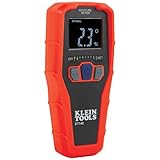
- WATER LEAK DETECTOR detects relative moisture content from leaks and flooding
- PINLESS MOISTURE METER measures relative moisture content in building materials
- NONDESRUCTIVE DETECTION up to 3/4-Inch deep using Electromagnetic field (EMF) technology
- USE ON DRYWALL, MASONRY, HARDWOOD, AND SOFTWOOD; calibrated for these materials only
- REVERSE-CONTRAST DISPLAY for easy viewing of reading and nine LED bars to indicate moisture range
The Southern Forest Products Association (SFPA) describes Southern Pine strength and stiffness as comparable with other softwoods used in residential and commercial construction. Some properties are higher, some are similar, and some are lower than corresponding SPF or Hem-Fir values. As SFPA puts it, “The exact comparison, however, depends on the specific application and varies by grade and size.” That is why a species-only leaderboard can give the wrong answer.
What changes the result
- Grade: visually graded and machine-graded products have defined limits for knots, slope of grain, checks, and other characteristics. A higher grade generally has a different design basis from a lower grade in the same species group.
- Size: changing depth or thickness changes bending, shear, and deflection behavior. A 2-by-10 and a 2-by-12 are not interchangeable simply because their species labels match.
- Span and spacing: a longer span or wider joist spacing increases the demand on each member.
- Load and deflection limit: a table may be based on a specified live load, dead load, and allowable deflection. Your project must fit those assumptions.
- Moisture and treatment: wet-service adjustments and treated-lumber tables can differ from dry-service tables.
- Connections: fasteners, bearing, hangers, and supports must also satisfy the applicable design and code requirements.
Specific gravity is a physical clue, not a design value
SFPA’s 2018 Southern Pine Use Guide, citing the 2012 National Design Specification for Wood Construction, lists these specific-gravity figures:
Recommended Free Tools
| Species group | Specific gravity | What the figure tells you |
|---|---|---|
| Southern Pine | 0.55 | A comparative physical-property value reported by SFPA; it is not an allowable span or load rating. |
| Douglas Fir-Larch | 0.50 | A comparative physical-property value reported by SFPA; it is not an allowable span or load rating. |
| Spruce-Pine-Fir | 0.42 | A comparative physical-property value reported by SFPA; it is not an allowable span or load rating. |
Density can affect handling, nail or screw driving, and fastener holding, but it cannot replace the grade-specific bending, shear, compression, and stiffness values used for structural design. Do not infer that the highest number in this chart automatically supports the longest span.
How to use span tables without misapplying them
Span tables are convenient only when every relevant assumption matches the project. SFPA’s joist-and-rafter resource contains 46 tables covering floor joists, ceiling joists, and rafters. The values depend on specified loads and deflection limits, and the underlying design and connections are assumed to conform to the National Design Specification for Wood Construction.
- Identify the member type. Select a floor-joist, ceiling-joist, or rafter table, not a generic “lumber span” chart.
- Match the species group. Confirm whether the table is for Southern Pine, SPF, Douglas Fir-Larch, or another group. Do not substitute a similar-sounding retail label.
- Match the grade. Use the grade printed on the lumber or specified by the plans. If the table does not list that grade, it is not the right table.
- Match the actual size. Use the nominal size and the table’s actual dressed dimensions where required.
- Match spacing and span. Select the row for the actual on-center spacing and the column or span limit for the support condition.
- Check loading assumptions. Confirm live load, dead load, snow load, ceiling load, and the table’s deflection limit. A table for ordinary residential loading may not cover storage, masonry, tubs, heavy equipment, or other concentrated loads.
- Check service condition. Verify whether the table assumes ordinary temperature and dry service or a wet-service adjustment for treated lumber.
- Check connections and bearing. The span number does not design joist hangers, fasteners, supports, notches, holes, or bearing length.
- Confirm the current local code. Building departments can adopt different code editions or amendments. Use the currently adopted requirements for your jurisdiction.
SFPA notes that its ordinary span tables do not check certain concentrated or partition loads and do not address wind uplift. If a partition sits over a joist, a point load lands between supports, or uplift is significant, a simple table lookup may be insufficient. Obtain a project-specific design rather than extending the table beyond its stated scope.
Rank #3

- 🌲【Accurate and fast measurements reveal hidden water leaks】: It has 2 high-precision pins that can penetrate the surface to be tested and quickly measure moisture content to estimate potential moisture increase throughout the home. COCZOW moisture meter is the ideal tool for measuring moisture.
- 🌲【Professional Wood Moisture Meter】: 6 calibrated scales. Our moisture meter is a great tool for manufacturers, floorers, inspectors and wood suppliers to quickly and easily measure moisture content (% Mc). You can quickly determine if the moisture content is low (5-12%), medium (12-17%) or high (17-60%). Checking moisture content prevents wood from cracking and warping.
- 🌲【Widely Used】: PM6811A moisture meter is ideal for carpentry, building construction, agricultural restoration and floor laying. Measure moisture content of wood products such as hardwood floors, cabinets, furniture, lumber, lath, beams, plywood, panels, composite boards, window frames, forestry wood, coils, building materials, etc.
- 🌲【User-friendly】: With LCD backlight, the backlight color is divided into three types of green, yellow and red, or display the moisture content of different measurement types. Hold function, maximum/minimum moisture measurement function and 5-minute automatic shutdown function (no power supply required).
- 🌲【Why choose COCZOW Wood Moisture Meter】: LED display function, large measuring range (wood: 2.0%-75.0%. Building materials: 1.5-30%), durable stainless steel needle, heat insulation, light weight and easy to carry. Get professional and accurate results with Peakmeter Wood Moisture Tester.
Dry lumber, wet service, and pressure treatment
Moisture content is part of the design condition
The 2018 SFPA Southern Pine Use Guide states that dimension lumber no thicker than 38 mm must be dried to a maximum moisture content of 19 percent. That statement belongs to the guide’s 2018 edition context; it is not proof that every current product or jurisdiction uses an unchanged requirement. Confirm the current specification for the lumber you are buying.
Moisture can change dimensions and strength behavior. Lumber that is installed wet may shrink as it dries, while repeated exterior wetting can require a wet-service design basis. A handheld moisture meter can help identify whether a board is unusually wet, but a reading does not verify species, grade, treatment retention, or load capacity.
What pressure treatment does—and does not do
Southern Pine is well suited to pressure treatment because its cellular structure permits deep, uniform preservative penetration. Treatment is intended to improve resistance to biological deterioration for the exposure identified on the label; it does not make an arbitrary board suitable for any span, load, or connection.
SFPA’s span resource separates ordinary dry-service tables from wet-service tables for specified pressure-treated Southern Pine grades where moisture content exceeds 19 percent. Do not use a dry-service table for a wet exterior floor or deck condition without checking the appropriate treated-lumber design basis. The treatment category, retention, end-use label, and required hardware still need to match the exposure.
Exterior and ground-contact decisions
- For an exterior deck or other member exposed to recurring rain, identify whether the design calls for a wet-service table and pressure-treated material.
- For ground contact, use lumber specifically labeled for that contact condition; ordinary above-ground treatment is not automatically equivalent.
- Use corrosion-compatible fasteners and connectors specified for the treatment and exposure.
- Provide drainage, ventilation, and end-grain protection where the design calls for them. Treatment does not correct water-trapping details.
Availability and cost: compare equivalent material
Southern Pine has a broad growing and manufacturing region in the U.S. South, with nearby manufacturing facilities described by SFPA. That helps explain why it may be plentiful in some markets, while SPF or Douglas Fir-Larch may be more readily stocked elsewhere. Regional availability is not a guarantee for your town, project date, or required size.
Windows Errors? Fix Them Before They Spread
Repair common Windows errors and clear accumulated junk for a smoother, more stable PC - no reinstall needed.Free scan · no reinstallCrashes, No Sound, or Screen Glitches?
Random freezes, missing sound and display glitches usually trace back to one bad driver. Find and replace yours safely.Free scan · under a minuteRank #4
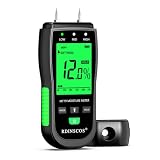
- FIND HIDDEN WALL MOISTURE EARLY — Check suspicious drywall and building surfaces after a leak, water stain, or other moisture concern. Detect abnormal moisture before a small issue develops into more extensive damage and costly repairs
- CHECK BEFORE YOU REPAIR — Don't rely on a wall looking or feeling dry. Use the moisture meter to check questionable areas before painting, repairing, or covering the surface, helping you make decisions based on actual moisture readings.
- CHECK FIREWOOD BEFORE YOU BURN — Test firewood before placing it in your fireplace or wood stove. Knowing the moisture level of your firewood helps you choose wood that is ready for burning and avoid relying on appearance alone.
- PIN-TYPE TESTING FOR DIRECT MEASUREMENTS — The contact pins penetrate the material to measure moisture inside wood and building materials. This makes it useful for checking areas where surface conditions may not tell the whole story.
- ONE TOOL FOR TWO IMPORTANT HOME CHECKS — Keep it ready for two practical jobs: checking walls for hidden moisture and checking firewood before burning. A simple way to make informed decisions before a moisture problem becomes expensive or wood goes into the fireplace.
Ask suppliers for quotes on equivalent products: the same nominal dimensions, grade, species group, treatment status, quantity, and appearance requirements. A lower unit price for a different grade or a shorter length is not a meaningful species comparison. Current prices were not established in the available technical material, so obtain local quotes rather than relying on a national price claim.
Independent reader supportYour contribution helps us test, update, and keep practical guides available for everyone.Choosing lumber by common application
Floor joists
Start with clear span, spacing, design loads, deflection limit, and the actual grade stamp. Compare the listed SPF, Douglas Fir-Larch, or Southern Pine options only within a table that includes all of those conditions. If the floor includes a heavy partition, tile assembly, aquarium, safe, or other concentrated load, ask for a design check instead of assuming the standard residential row applies.
Roof rafters
Rafters require the correct roof span definition, roof dead load, ceiling load where applicable, snow or other environmental load, and resistance to uplift. Use a rafter table for the actual species group and grade. A joist table is not a substitute for a rafter table.
Deck joists and exterior framing
Confirm the exposure, treatment label, wet-service design basis, connector compatibility, and ledger or beam details. For treated Southern Pine, use a table that explicitly covers the specified treated grade and wet condition when the moisture assumption exceeds 19 percent.
Free tools Windows power users keep installed
One-click scans. No signup required.
Wall studs
For ordinary stud walls, the practical choice often follows local stock and the grade required by the code or plans. Check wall height, spacing, openings, wind, bracing, and any heavy cladding or concentrated load. Do not select a stud solely because it feels heavier or straighter in the stack.
Best Value

- Easy to Read with Large LCD Screen: This wood moisture meter is easy to get an accurate reading from the surface of materials and displays accurate moisture readings on the 2.25" big screen. Use this handheld meter to check the moisture content in firewood or drywall, it can stand up on the table, the moisture content is displayed with a bar graph and percentage (_%RH) on the screen. Date Hold and Max/Min function is used to freezes readings, useful for writing down data
- Tricolor Backlight Display, Easy to Use: TopTes Moisture Meter TS-630 features an HD tri-color backlight to easily know if the wood/wall humidity is Dry, Moist, or Wet. Green backlight for Low moisture, orange backlight for middle moisture, and red moisture for high moisture. After selecting the mode, and putting pins into the firewood, easy and quick to get a visible alert from the clear screen
- Seven Calibration Scales, Two Material Mode: It is designed with built-in characteristic parameters of 7 calibration scales for wood and building material, ranging from 0.0% to 57%. This humidity meter is perfect for woodworking, water damage restoration, building construction, and home renovation. Easily Check and test suspicious water leaks around the wall/floor so you can quickly determine what level of remediation is needed
- Pin Type & Battery Operated: TopTes TS-630 moisture meter is a pin-type moisture meter and operates on batteries. With a high precision multi-material sensor, DON’T need calibration. It’ll support an accurate reading after inserting the stainless steel pins into the surface of the wood or building materials. It will auto shut off after 10 minutes of non-use to help save energy. A low-battery indicator will appear on the screen when the battery is running out
- What's in the Box: One TS-630 Moisture Meter, three AAA Batteries, one User Manual, one Carry Pouch, one Pair of Test Pins, one Mini Wrench
Headers, beams, and unusual members
Headers and beams concentrate load and frequently need engineered design, built-up-member rules, or manufacturer-specific products. A general joist span table should not be used to size them. Provide the opening width, tributary load, bearing, supports, and service condition to a qualified designer.
A practical selection procedure at the lumberyard
- Bring the project data. Have the plan’s member type, span, spacing, load assumptions, exposure, and required dimensions available.
- Inspect the grade stamp. Read the species group, grade, grading agency, mill or certification information, and any treatment mark.
- Separate comparable pieces. Do not mix SPF, Douglas Fir-Larch, Southern Yellow Pine, and Mixed Southern Pine in one design calculation unless the reference explicitly permits it.
- Measure and sort. Reject pieces with dimensions, straightness, damage, or defects outside the project specification. Do not downgrade a structural member informally because it is available.
- Check the matching table or design values. Verify member size, spacing, span, loads, deflection, and dry or wet service.
- Confirm availability for the whole job. A species that works on paper may be impractical if the required grade and length cannot be replenished.
- Resolve exceptions before installation. Ask about notches, holes, point loads, partitions, uplift, unusual snow, or changes from the approved plans.
- Document the selection. Keep the grade, species group, table or design reference, treatment label, supplier information, and code approval with the project records.
Common mistakes and how to correct them
“Southern Yellow Pine is always stronger than SPF.”
Correction: compare the specified grade, size, and design values. SFPA describes Southern Pine as comparable overall with other construction softwoods, with the exact relationship varying by application, grade, and size.
“Douglas fir is one uniform structural product.”
Correction: look for the Douglas Fir-Larch group designation and the grade on the stamp. Do not apply a value for one group or grade to another.
“A span chart found online applies to every board.”
Correction: read the table heading and footnotes. Confirm species group, grade, size, spacing, loads, deflection, support, and service condition. If one assumption differs, find the correct table or obtain a design.
“Pressure-treated means structurally stronger.”
Correction: treatment addresses biological durability for the labeled exposure. It does not automatically increase allowable span or eliminate wet-service adjustments.
“A moisture-meter reading proves the lumber is safe.”
Correction: use moisture readings only as one quality-control observation. Grade, dimensions, defects, treatment, design values, and code compliance still control structural suitability.
“The cheapest species is the best value.”
Correction: compare equivalent grade, dimensions, lengths, treatment, and quantity. Include waste, sorting time, delivery, and the cost of changing the design when a required grade is unavailable.
Decision checklist
- What member am I sizing, and what is its clear span?
- What spacing, loads, and deflection limit apply?
- What species group and grade are printed on the lumber?
- Does the table or design reference match the exact size and grade?
- Is the member dry service, exterior wet service, or ground contact?
- If treated, does the treatment label and hardware match the exposure?
- Are concentrated loads, partitions, uplift, holes, notches, or unusual supports outside the table assumptions?
- Does the selection comply with the currently adopted local code?
- Can the supplier provide the required grade, dimensions, and lengths consistently?
The safest choice among SPF, Douglas Fir-Larch, and Southern Yellow Pine is the product whose stamped grade and design basis match the real member and service conditions. Species-group reputation can guide where to look, but it cannot replace the grade stamp, the applicable span or design values, and a code-compliant check.
Quick Recap
Product prices and availability are accurate as of the date/time indicated and are subject to change. Any price and availability information displayed on Amazon at the time of purchase will apply.

