The right backup system starts with the loads you must keep running, not with a generator’s advertised peak number. List those loads, calculate both their continuous demand and motor-starting surges, decide how long the outage may last, then choose between a portable unit, a permanently installed standby generator, or battery storage. Have a qualified electrician design and permit the connection: a listed transfer switch or approved interlock must prevent backfeeding, and any combustion generator must operate outdoors with carbon-monoxide protection.
Grid-upgrade work can produce short planned interruptions or extended outages. A refrigerator and internet connection have very different needs from a medical device, a sump pump, a restaurant cooler, a server rack, or a three-phase production motor. The guide below turns those differences into a safe selection and installation plan for houses and small businesses.
As an Amazon Associate I earn from qualifying purchases.
1. Begin with a critical-load and runtime plan
Write down what must remain available during an outage and for how long. This list determines generator size, fuel storage, transfer equipment, and whether selected-circuit backup is enough. Include equipment that protects the building or prevents expensive losses as well as items that support occupants or business operations.
Do these 3 things before closing this tab:
1Clear out junk files and repair common Windows errors2Fix the driver behind crashes, sound loss and screen glitches3Repair Windows errors before they cause bigger problemsTypical home loads
- Refrigerator and freezer circuits.
- Heating-system controls, boiler pumps, furnace blowers, or cooling controls that are essential for safe temperatures.
- Medical equipment and charging for mobility or communications devices.
- Internet modem, router, cellular signal equipment, and a small number of lights.
- Sump, well, sewage-ejector, or other water pumps.
- Security, fire-alarm, and access-control equipment.
- Garage-door or gate controls when they are needed for safe access.
Typical small-business loads
- Refrigeration, freezers, pumps, and temperature-monitoring systems.
- Point-of-sale terminals, networking, telephones, security cameras, and access control.
- Servers, workstations, production controls, and data-protection equipment.
- Lighting in occupied or safety-critical areas.
- Heating, ventilation, or cooling controls needed to protect people, inventory, or equipment.
- Three-phase motors, compressors, elevators, or other machinery whose starting current can dominate the calculation.
Mark each item as essential, useful, or deferrable. A written schedule also gives an electrician the information needed to check voltage, phase, breaker size, starting current, and code requirements. For a business, preserve the schedule with the outage procedure and identify who can shut down noncritical equipment.
#1 Best Overall

- 𝗣𝗼𝘄𝗲𝗿𝗳𝘂𝗹 𝗢𝘂𝘁𝗽𝘂𝘁 - 4400 peak watts and 3400 running watts, perfect for RV camping and home backup
- 𝗠𝘂𝗹𝘁𝗶-𝗢𝘂𝘁𝗽𝘂𝘁 𝗢𝗽𝘁𝗶𝗼𝗻𝘀 - Includes 2*120V AC ports, 1*12V DC port, 1*RV port
- 𝗟𝗼𝗻𝗴 𝗥𝘂𝗻𝘁𝗶𝗺𝗲: Runs for up to 14 hours at 25% load with ECO mode, 2 gallon fuel tank with fuel gauge, allows you to check fuel levels at a glance, keeping you prepared
- 𝐋𝐨𝐰 𝐍𝐨𝐢𝐬𝐞: Under 72 dBA from 23FT away, this generator provides steady power for your home during a power outage or RV nights
- 𝗟𝗶𝗴𝗵𝘁𝘄𝗲𝗶𝗴𝗵𝘁 𝗮𝗻𝗱 𝗣𝗼𝗿𝘁𝗮𝗯𝗹𝗲: Only 56lbs, easy to move around
Separate running watts from starting watts
Every motor, compressor, pump, and transformer can draw a short starting surge above its normal running demand. Add the continuous running watts of the loads that may operate simultaneously, then verify that the generator can absorb the largest starting event while other essential loads are running. Manufacturer data, nameplates, or an electrician’s measurement are preferable to guessing.
A simple worksheet has four columns: equipment, running watts or volt-amperes, starting surge, and whether it may run at the same time as another large load. The generator’s continuous rating must cover the simultaneous running total; its surge rating and engine response must cover starts. If several motors can start together, use sequencing or load-shedding controls rather than assuming the advertised peak rating will handle them.
Set a realistic runtime target
Decide whether the system is for a brief switching interruption, an overnight event, or a prolonged grid-upgrade outage. The target affects fuel-tank size, refueling access, battery capacity, solar charging, and staffing. A federal facilities manual from the U.S. Environmental Protection Agency describes a 72-hour minimum design duration for a referenced backup-power class, but that figure is not a universal residential requirement. Treat it as a context-specific federal facilities design value, not a rule for a house.
Quick wins for a faster PC:
Clear out junk files and repair common Windows errorsFree Scan →Scan for outdated or missing drivers - takes under a minuteDriver Scan →2. Choose the coverage level before choosing equipment
Essential-circuit backup
An essential-load panel supplies only the circuits on your written list. This approach generally produces a smaller, less expensive system and avoids starting large discretionary loads. It is suitable when you can live without electric cooking, laundry, most air-conditioning capacity, water heating, or other high-demand circuits during the outage. A critical-load panel can be installed when the main service is reorganized, or a listed load-management system can shed selected loads automatically.
Whole-building backup
Whole-building service keeps the distribution panel energized, but the generator still must be sized for the loads that could run together. Load-shedding controls may be needed to start large air conditioners, heat pumps, water heaters, or motors in stages. Whole-building coverage is more attractive when the building has occupants who cannot easily manage circuits manually, when business continuity is important, or when the cost and permitting of a permanent installation are justified.
Rank #2
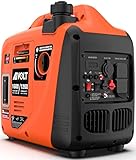
- 🔌 Safe for Sensitive Electronics | <3% THD Clean Power Inverter Generator - This portable inverter generator with advanced inverter tech delivers stable, clean power (THD <3%), safe for your phones, laptops, or small tools. It’s the perfect for home office backups during blackouts or generator for camping - keep your devices charged without worry
- ⚡ Powerful & Fuel-Efficient | Runtime: 8 hrs at 25% load, 2 hrs at full load – This AIVOLT quiet gas inverter generator, powered by a 60cc 4-stroke OHV engine with copper windings, delivers 1600 starting watts and 1260 running watts. The eco-mode switch intelligently adjusts fuel consumption, enabling up to 8 hrs of continuous operation at 25% load for significant fuel savings, while full 1260W operation runs approximately 2 hrs (refuel as needed). Perfect for camping, RV trips, tailgating, job sites, and home backup.
- 🔇 Ultra-Quiet (57 dBA) & Lightweight - This portable quiet generator (57 dBA at 23ft) is quieter than a normal conversation— no more noisy distractions during camping or backyard gatherings, truly a silent gas generator. At just 28lbs, it’s 20% lighter than similar models, a handy small inverter generator easy to carry to campsites or job sites as your go-to quiet generator for camping
- 🔌🔗 Multifunctional Panel & Parallel Capability - This portable inverter generator comes with 2x120V outlets and 2 USB ports (Type-A/C), perfect for charging phones while running a camping fridge. 3 indicator lights and an hour meter let you monitor power status in real time. Need more power? Connect two AIVOLT VS1600101 quiet inverter generators via a parallel kit (not included) to double your output seamlessly
- 🛡️ CO Protect & Comprehensive Safety - This gas powered generator features built-in CO Alert tech that auto-shuts down when unsafe CO levels are detected, protecting your family. Low oil auto-shutdown and overload protection also safeguard both the generator and your electronics - make it a safe for home or RV use, no safety worries
The U.S. Department of Energy notes that load management can reduce backup-generation cost. In practice, controlling or delaying noncritical loads can be cheaper than buying an engine large enough to carry every load at once.
3. Portable versus permanently installed standby generators
| Decision factor | Portable generator | Permanently installed standby generator |
|---|---|---|
| Coverage | Usually selected circuits through a transfer device or approved inlet; whole-building use depends on design. | Can serve a critical-load panel or larger portions of the building, subject to sizing and load management. |
| Starting the system | Normally requires a person to move, position, connect, start, and monitor it. | An automatic transfer switch can detect loss of utility power, start the engine, and transfer energy within seconds. |
| Installation | Lower permanent commitment, but still requires a safe outdoor location, connection equipment, storage, and operating procedure. | Requires a foundation or approved support, fuel piping or tank work, electrical permits, clearances, and commissioning. |
| Weather and security | Must be placed outdoors for each use and protected from rain without enclosing the exhaust. | Designed for an exterior installation with weather protection and a fixed connection. |
| Fuel logistics | Often relies on fuel that must be stored and replenished by the owner. | Can use a dedicated propane or natural-gas connection; fuel availability during a wider emergency still needs verification. |
| Best fit | Lower upfront cost, occasional use, manual operation, and selected-circuit coverage. | Automatic operation, frequent or long outages, weather-protected installation, or larger residential and business loads. |
Portable does not mean plug-and-play into a wall outlet. A qualified electrician should install a generator inlet and a listed transfer switch or interlock that isolates the building from the utility. Permanently installed units are set up outside the building and connected to natural gas or propane so they are ready when an outage occurs, as described by Puget Sound Energy.
4. Select an energy source with the outage scenario in mind
| Energy source | Advantages | Constraints to check |
|---|---|---|
| Gasoline | Common for portable equipment and readily available under normal conditions. | Requires safe storage and rotation; availability may be poor during evacuation, storms, or prolonged grid work. Never refuel a hot or operating engine. |
| Propane | Can be stored in a dedicated tank and used by many fixed standby systems. | Tank capacity, regulator sizing, delivery access, cold-weather performance, and local fuel-tank setbacks must be confirmed. |
| Natural gas | A piped supply can avoid on-site refueling and suits automatic standby equipment. | Service may be interrupted or pressure may fall during a regional emergency. Gas piping, meter capacity, appliance load, and inspection requirements apply. |
| Diesel | Well suited to larger commercial equipment and long, managed runtimes. | On-site storage, spill protection, emissions controls, fuel-quality maintenance, noise, and fire-code requirements can be substantial. |
| Battery energy storage | Quiet operation, no onsite combustion, fast transfer, and possible solar integration. | Finite stored energy, recharge time, temperature limits, battery location rules, and the need to prioritize loads when solar or the grid is unavailable. |
A battery can replace a combustion generator when quiet operation, indoor air quality, or solar integration is more important than unlimited runtime. It is not automatically equivalent: compare usable kilowatt-hours, maximum continuous output, surge capability, recharge rate, and the expected duration of an outage. A hybrid design can reserve a battery for sensitive electronics and short interruptions while a fuel generator handles long-duration loads, but the transfer and control design must be approved for the equipment.
5. Connect the generator without backfeeding
Backfeeding occurs when a generator energizes building wiring in a way that can put voltage onto utility lines. That can kill or injure line workers and damage equipment. The Pacific Northwest National Laboratory Building America Solution Center advises engaging a licensed electrical contractor to design, permit, and install generator circuitry with a transfer switch that prevents backfeeding. Wisconsin’s Department of Agriculture, Trade and Consumer Protection identifies a double-pole, double-throw transfer switch as the recommended device for keeping generator power from feeding the electric company’s system.
Safe connection sequence
- Have the service evaluated. Confirm service voltage, phase, main-disconnect arrangement, available fault current, panel compatibility, and the loads to be backed up.
- Choose a listed isolation method. Use a transfer switch or a panel interlock listed for the specific equipment. A cord connected to a receptacle, a homemade jumper, or an improvised breaker arrangement is not an acceptable substitute.
- Install a correctly rated inlet and conductors. The inlet, wiring, overcurrent protection, grounding and bonding, and transfer equipment must match the generator and local electrical code.
- Coordinate fuel and controls. Fixed generators need approved fuel piping, regulators, shutoff valves, exhaust routing, battery charging, and control wiring. Automatic systems also require a compatible automatic transfer switch (ATS).
- Label the system. Mark the generator inlet, transfer equipment, shutdown switch, backed-up circuits, and operating instructions so emergency users do not guess.
- Commission under load. Test utility loss, transfer, return to utility, alarms, shutdown, and the largest expected motor start. Record the result and correct nuisance trips before an outage.
Manual versus automatic transfer
With a manual transfer, a person starts the portable generator, connects it to the inlet, and moves the transfer device according to the written procedure. This costs less and is appropriate when someone can reach the equipment safely. An ATS starts a permanently installed unit and transfers energy within seconds when utility-fed power is unavailable, according to Puget Sound Energy. Automatic operation is valuable for refrigeration, medical equipment, security, or an unoccupied building, but it adds equipment, testing, and maintenance obligations.
Rank #3

- 【Extened Runtime】: This protable generator comes with 1.06-gallon fuel tank, allows for up to 17 hours of operation at 25% load, or 8.6 hours at 50% load, with parallel function and ECO mode, providing long-lasting power. perfect for RVs, camping, home backup emergency.
- 【Powerful Output】: The inverter generator produces 2500 peak watts and 1900 running watts clean power (less than 3% THD), gas powered by 80CC 4-stroke. making it safe for sensitive electronics like laptops, TV, lights, fans, small power tools, phone, laptop, drone and camera.
- 【Quiet Operation&Ultralight】: Under 59 dBA from 23FT away, this power generator provides quiet, steady environment for you. The portable generator at only 39.46 pounds, ultra light. comes with convenient and sturdy carrying handle. making it easy to transport for camping and outdoor work.
- 【Safety&3-year warranty】: With CO sensor, the generator will automatically shut down if carbon monoxide levels get too high, keeping you safe during use. Includes 3-years warranty with FREE lifetime technical support from experts.
- 【Full Service】: SIOKIUU begins with silent generators, backed by a full-service system, To ensure quality, all SIOKIUU generators are functionally tested in the factory, After the inspection, the engine oil inside the machine will be drained out. There may still be a very small amount of residual oil left inside. So there may be a slight smell of gas or minimum residual gasoline when you receive it. Don't worry about it, it's not second-hand.
6. Place combustion equipment safely outdoors
Carbon monoxide is colorless and can accumulate quickly. PNNL guidance says to keep a generator at least 20 feet from the home and to use carbon-monoxide detectors. Exhaust must point away from doors, windows, vents, and air intakes; never operate a combustion generator in a garage, basement, crawlspace, shed, or under an attached canopy where exhaust can collect.
Clearance rules are local and may be stricter than the general 20-foot safety guidance. For example, a 2026 residential submittal handout from the City of Fontana lists 10 feet from a property line, 3 feet from exterior walls or roofs, and 10 feet from building openings. Those measurements are a local example, not universal national requirements. The authority having jurisdiction may also regulate noise, screening, fire access, fuel tanks, exhaust direction, and access for maintenance.
Outdoor-location checklist
- Place the unit on a stable, noncombustible base that will not flood or settle.
- Maintain the manufacturer’s clearances and the stricter of applicable building, fire, gas, and zoning rules.
- Keep exhaust away from openings and from neighboring properties where practical.
- Install listed carbon-monoxide alarms inside the building, especially near sleeping areas; alarms do not make an unsafe generator location acceptable.
- Provide weather protection that does not restrict cooling air or trap exhaust.
- Allow access to filters, oil drains, battery, controls, fuel shutoffs, and emergency stop devices.
7. Check permits, utility rules, and business-specific obligations
Permits and setbacks vary by jurisdiction. Ask the building, electrical, fire, gas, and air-quality authorities which approvals apply before buying equipment. A fixed generator may require a site plan, equipment specification, foundation detail, fuel-piping permit, electrical permit, noise review, and final inspection. A propane tank or diesel tank can have separate location and fire-protection rules.
Utility requirements matter even when the generator is intended only for outages. If the system can operate in parallel with the grid, export power, or perform peak shaving, additional interconnection review may apply. EPA facilities guidance notes that grid-parallel or peak-shaving operation can trigger IEEE 1547, NFPA 70, utility interconnection, noise, and air-quality requirements. Do not assume an outage-only transfer switch is approved for parallel operation.
Small businesses should document whether legally required or life-safety standby rules apply. A system serving emergency lighting, fire pumps, health-related functions, or other regulated operations may have different transfer timing, testing, separation, and fuel-duration requirements. The EPA Facilities Manual describes a Type 60 transfer for legally required standby systems, meaning a 60-second transfer classification in that federal facilities context; it is not a blanket residential rule.
The Tool Desk
Outbyte Driver Updater FREEFix the driver behind crashes, sound loss and screen glitchesFind Drivers →Outbyte PC Repair FREEClear out junk files and repair common Windows errorsFree Scan →Rank #4
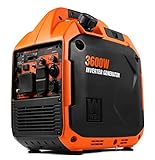
- 149cc engine generates up to 3600 surge watts and 2900 rated watts
- Produces clean power to prevent damage to sensitive electronics such as smart phones, tablets and laptops
- Ultralight body weighs in at a mere 46 pounds for easy transport and torage
- Fuel shutoff maximizes the generator’s lifespan by using up the remaining fuel in the carburetor before shutting down
- Includes two three-prong 120V receptacles, one TT-30R RV receptacle, one 12V DC receptacle, two 5V USB ports, and a three-year warranty
8. Size a home system methodically
- Inventory the circuits. Include refrigeration, heating controls, pumps, medical equipment, communications, security, and lighting that must remain available.
- Record electrical data. Use nameplates or measured values for volts, amps, phase, running watts, and starting current.
- Choose simultaneous loads. Decide which appliances can operate together and which can be delayed.
- Account for starts. Check the generator’s surge rating and engine response against the largest motor or compressor start while other loads are active.
- Design the panel or controls. Use a critical-load panel or automatic load shedding when that reduces the required generator size.
- Verify the installation. Have the electrician confirm conductor ratings, transfer equipment, grounding and bonding, clearances, alarms, permits, and fuel supply.
Do not select solely by the largest number printed on a product box. A unit can have enough peak watts to start one motor yet lack the continuous output, voltage stability, fuel supply, or transfer equipment needed for the rest of the house.
9. Size a small-business system with more documentation
Businesses need a load schedule that identifies phase, voltage, starting current, critical operations, and required runtime. Separate life-safety and business-continuity loads from equipment that can be shut down. Confirm whether refrigeration, pumps, servers, point-of-sale equipment, production controls, and three-phase motors can start in sequence. If a process cannot tolerate even a brief interruption, specify uninterruptible power equipment or controls rather than expecting an engine generator to bridge every transfer event.
Plan fuel deliveries, staff responsibilities, remote alarms, security, and a safe place to refuel. For a rented or multi-tenant property, obtain the owner’s approval and clarify who maintains the generator and who is authorized to operate the transfer equipment. A commissioning test should include the actual business load, not only a no-load engine run.
Independent reader supportYour contribution helps us test, update, and keep practical guides available for everyone.10. Compare operating costs and resilience, not just purchase price
No universal purchase price, fuel-cost figure, or rebate amount applies across models and jurisdictions. Obtain local quotations that separate equipment, transfer gear, electrical work, fuel piping or tanks, foundation, permits, commissioning, maintenance, and any required sound or emissions controls. Ask utilities and local agencies whether a current rebate or recommended-contractor program exists; availability and eligibility change by location.
Free tools Windows power users keep installed
One-click scans. No signup required.
Evaluate resilience with these questions:
- Can fuel be obtained during a multi-day road closure or emergency?
- How often must fuel be rotated, filters changed, oil serviced, or batteries replaced?
- Can the system run unattended, and who receives an alarm?
- What happens if natural-gas pressure falls, a propane tank empties, or solar charging is blocked by weather?
- Will neighbors, tenants, or employees tolerate the sound and exhaust?
- Can the electrician obtain replacement parts and service locally?
11. Commission, maintain, and rehearse the outage plan
- Document normal and emergency positions. Label utility, generator, and shutdown controls and keep instructions at the transfer equipment.
- Exercise the system. Follow the manufacturer’s schedule for no-load and loaded exercise, and record date, runtime, alarms, and fuel level.
- Maintain the engine or battery. Service oil, filters, spark plugs, coolant, belts, and starting batteries as specified; for batteries, check temperature, state of charge, firmware, and capacity alarms.
- Rotate stored fuel. Use approved containers and follow fire-code limits. Never store gasoline indoors or refuel while the engine is hot or running.
- Test transfer and return. Simulate a utility outage under controlled conditions and verify that the building returns to utility power without nuisance trips.
- Train more than one person. Staff or household members should know which loads are backed up, how to shut down safely, and when to call the installer or utility.
- Review after grid work. Planned upgrades may change outage timing, utility notices, or service configuration. Reconfirm the procedure and fuel plan before the next scheduled interruption.
12. Common mistakes and how to correct them
Buying by peak watts alone
Symptom: The engine starts but trips when a pump or compressor engages. Correction: Recalculate continuous load and starting surge, then add sequencing or a larger properly rated unit.
Best Value

- 224cc dual-fuel engine runs on both gasoline (6800 surge watts, 5100 rated watts) and propane (6000 surge watts, 4500 rated watts)
- Bonded-neutral 240V configuration provides low-power Level 2 charging for battery and hybrid electric vehicles
- The WEN Watchdog CO Shutdown Sensor helps protect both you and your family by automatically turning off the generator if dangerous levels of carbon monoxide are detected
- Fuel shutoff maximizes the generator’s lifespan by using up the remaining fuel in the carburetor before shutting down
- Includes fuel shut-off to help limit maintenance, onboard wheels, a telescoping pull handle, one L14-30R 120V/240V receptacle, two three-prong 120V receptacles, one TT-30R RV receptacle, one 12V DC receptacle, two 5V USB ports, a voltage selector switch, a tool-free LPG quick-connector, a six-foot-long LPG regulator hose, and a three-year warranty
Connecting through a wall receptacle
Symptom: A “suicide cord” or improvised breaker connection is proposed. Correction: Stop and have a licensed electrician install a listed inlet and transfer switch or interlock. This is the only safe way to isolate the generator from utility conductors.
Placing the generator too close to the building
Symptom: The unit sits beside a door, window, or intake because the driveway is convenient. Correction: Relocate it to an approved outdoor position, follow the manufacturer and local clearances, route exhaust away from openings, and install CO alarms.
Assuming natural gas or gasoline will always be available
Symptom: The generator is sized for several days but no delivery or storage plan exists. Correction: Confirm fuel continuity, tank capacity, refueling access, and a contingency such as reduced loads or battery storage.
Ignoring phase and starting current in a business
Symptom: Single-phase equipment works but a three-phase motor or production line will not start. Correction: Have the electrician document phase, voltage, motor starting current, and required sequence before specifying the generator.
13. A practical decision framework
| If your priority is… | Usually investigate first | Questions to resolve |
|---|---|---|
| Lowest permanent commitment and a few essential circuits | Portable generator with a manual transfer arrangement | Can someone operate it safely, store fuel, and place it 20 feet from the home or farther if local rules require? |
| Automatic response for refrigeration, medical, security, or an unoccupied building | Permanently installed standby generator with an ATS | Are fuel service, permits, setbacks, noise, and maintenance support available? |
| Quiet operation and no onsite combustion | Battery energy storage, possibly with solar | Are usable kilowatt-hours, surge output, recharge time, and critical loads sufficient for the longest likely outage? |
| Long commercial runtime and high motor loads | Engine generator sized from a documented load schedule | Do phase, fuel storage, emissions, fire protection, utility, and legally required standby rules apply? |
| Reduced generator size and cost | Critical-load panel plus load shedding | Which loads can be delayed, and will controls prevent simultaneous motor starts? |
The best choice is the smallest system that safely carries the documented critical loads, starts the largest required motor, meets the runtime target, and can be installed and maintained legally. A larger unit is not automatically better if its fuel, clearances, transfer equipment, or service plan are inadequate.
Quick Recap
14. Final pre-purchase checklist
- Critical-load list completed for the house or business.
- Running watts, starting surges, voltage, and phase verified.
- Runtime target and fuel or recharge plan documented.
- Portable versus permanent, manual versus automatic, and essential-circuit versus whole-building coverage decided.
- Licensed electrician identified to design the connection and prevent backfeeding.
- Transfer switch or interlock listed and compatible with the service equipment.
- Outdoor location checked against manufacturer instructions and local clearances.
- Carbon-monoxide alarms, exhaust direction, weather protection, and maintenance access planned.
- Building, electrical, fire, gas, air-quality, zoning, and utility requirements confirmed.
- Commissioning, exercise, fuel rotation, alarm response, and outage procedures written down.
Product prices and availability are accurate as of the date/time indicated and are subject to change. Any price and availability information displayed on Amazon at the time of purchase will apply.

