A resilient home is not an underground shelter or a single piece of emergency equipment. It is a home designed around the hazards at its site and the needs of the people who live there, so it is less likely to suffer avoidable damage and can preserve safety and essential functions during an outage or evacuation. The practical route is to assess local risk, correct basic building and safety defects, improve the envelope and mechanical systems as a whole, plan backup power around essential loads, add hazard-specific mitigation, and prepare the household to act.
The right work depends on location, construction, household circumstances, and local requirements. Use this guide to set priorities, then have location-specific decisions checked by the relevant authority and qualified professionals.
As an Amazon Associate I earn from qualifying purchases.
What resilience means in a house
Resilience has two connected parts: reducing the chance that a foreseeable hazard causes serious harm, and keeping people safe and the home usable when disruption still occurs. A measure may prevent damage, extend the time a room remains habitable, maintain communications, protect an essential medical device, or make evacuation safer. No single improvement does all of those jobs.
The Tool Desk
Outbyte Driver Updater FREEScan for outdated or missing drivers - takes under a minuteDriver Scan →Outbyte PC Repair FREERepair Windows errors before they cause bigger problemsFix Now →A bunker can provide a specialized refuge, but it does not solve a leaking roof, unsafe wiring, poor ventilation, an unplanned evacuation, or a refrigerator that loses power. A conventional house can be made substantially more resilient through targeted construction and preparedness work. The objective is a balanced system rather than maximum hardening everywhere.
#1 Best Overall
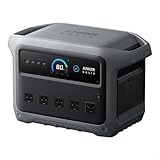
- 49 Min UltraFast Recharging: With upgraded HyperFlash tech, fully recharge at 1,600W—for outage prepping, camping trips, or tailgating events. Enable it in the Anker app.
- 2,000W Output via 10 Ports: Delivers 2,000W (3,000W peak) and 1,024Wh capacity. Power up to 10 devices—ideal for emergency backup, remote work setups, tiny homes, and off‑grid living.
- Compact and Portable: Easily carry, store, and move from room to room, your RV, or even on beach and park outings. C1000 Gen 2 is 14% smaller and 11% lighter than similar models.
- 10 Years of InfiniPower: Built to last through years of daily backup and RV and van life. After 4,000 cycles, the battery still has at least 80% capacity.
- 1.8 Hr Solar Recharging: Go fully off‑grid with sustainable power for tiny homes, camping RV off‑grid setups, and remote locations. Plug in 600W (60V max) of solar and recharge in just 1.8 hours.
- Exposure: Which hazards can reach this site, and through which paths?
- Vulnerability: Which parts of the building, equipment, or household are easiest to damage or disrupt?
- Consequence: What must continue operating for safety, health, communication, food, or medication?
- Recovery: Can the household inspect, repair, clean up, and reoccupy the home safely?
These questions prevent expensive work that addresses a hazard the property does not face while leaving a more important weakness untouched.
1. Map hazards and household needs before buying anything
Begin with the property and the people, not a product catalogue. FEMA preparedness guidance covers evacuation planning, flood and wind insurance, and hazard-specific property protection. It also emphasizes that hazards and personal circumstances vary. A generic upgrade should therefore be treated as a hypothesis to verify, not as a universal prescription.
Build a site hazard profile
Review the hazards that can affect the address, including flooding, wildfire, high wind, extreme heat, extreme cold, and extended electrical outages. Ask the local emergency-management office, planning or building department, fire authority, and insurance professional which maps, designations, and requirements apply. Local mapping, code requirements, and insurance terms differ by jurisdiction and were not established here, so do not infer them from a general checklist.
What’s actually slowing this PC down?
Pick the symptom - the matching free tool is one click away.
| Hazard or disruption | Questions to answer | Possible resilience objective |
|---|---|---|
| Flooding | Can water reach the site, lower level, access road, utilities, or drainage path? Are there elevation or flood-insurance requirements? | Keep water from entering where feasible, protect or elevate vulnerable equipment where appropriate, and preserve a safe route out. |
| Wildfire | Could embers, radiant heat, direct flame, or hot air reach the structure? Which nearby vegetation, fences, decks, vents, and stored materials could carry fire? | Reduce ignition pathways and combustible exposures, subject to site conditions and local requirements. |
| Wind and severe storms | Which roof, opening, cladding, tree, and utility weaknesses could turn wind or debris into interior damage? | Reduce openings and loose exterior hazards and maintain a weather-tight envelope. |
| Heat or cold | How quickly would indoor temperatures become unsafe without heating or cooling? Who is medically or physically vulnerable? | Improve the envelope and plan limited, safe conditioning for the rooms and people that need it. |
| Grid outage | What happens when communications, refrigeration, lighting, water systems, or medical equipment lose power? | Supply selected essential loads and establish a safe operating and refueling or recharging plan. |
List the household’s non-negotiable functions
Write down the people, animals, and equipment that affect the plan. Include older adults, children, people with disabilities, mobility limitations, respiratory or other medical needs, pets, medication storage, and anyone who may need extra time or assistance to evacuate. Add communications equipment, refrigeration requirements, lighting, and any heating or cooling need that becomes urgent during an outage.
Rank functions as life safety, essential continuity, or convenience. This ranking later determines which circuits a backup system should support and which improvements deserve the first budget.
2. Correct basic condition and safety problems first
Do not seal, insulate, electrify, or automate a building that has unresolved water or safety defects. The U.S. Department of Energy’s whole-house weatherization approach begins by inspecting the envelope and major energy systems and screening for occupant health and safety issues. Its example is straightforward: insulation should not be installed over a leaking roof; the leak must be repaired first.
Use a pre-upgrade inspection
- Roof and drainage: Check coverings, flashing, penetrations, gutters, downspouts, grading, and signs of active or concealed leaks.
- Water entry: Look for damp foundations, standing water, damaged finishes, musty odors, and failed seals around doors and windows.
- Combustion safety: Have fuel-burning appliances, flues, chimneys, and venting evaluated. Tightening a house without addressing unsafe combustion can create a dangerous condition.
- Electrical safety: Identify damaged wiring, overloaded circuits, obsolete or improperly modified equipment, and unsafe extension-cord practices.
- Moisture and mold: Find the water source and correct it before covering materials or increasing airtightness.
- Structure and exterior attachments: Check for deterioration, loose elements, unstable trees, and attached structures that could become hazards in wind or fire.
Document defects with photographs, locations, and dates. Separate urgent safety repairs from efficiency work and from hazard-specific improvements. A qualified building, roofing, electrical, mechanical, or environmental professional should handle conditions outside ordinary maintenance.
Recommended Free Tools
3. Improve the envelope and mechanical systems as one system
Insulation, air sealing, windows, doors, heating, cooling, ventilation, moisture control, and combustion appliances interact. DOE’s whole-house method evaluates them together because a change in one can alter pressure, humidity, indoor air quality, and equipment performance elsewhere.
Start with a continuous, weather-tight envelope
Repair the roof and water-shedding details, then address gaps and penetrations in the air barrier. Weatherstripping and caulk can help with small maintenance tasks, while larger discontinuities may require a trained contractor. Insulation is most effective when it is correctly placed, dry, and connected to a sound air-control strategy. Repaired windows and doors can reduce drafts and water entry, but replacement is not automatically the best first investment.
Ask the person assessing the work to explain where the air barrier, insulation layer, drainage plane, and thermal bridges are located. A patchwork approach can leave cold surfaces, condensation, or bypasses that undermine the intended result.
Protect habitability during an outage
DOE states that insulation and air sealing can help a home maintain more comfortable temperatures for longer during outages and extreme weather. That benefit is time, not a guarantee of safe conditions. The result depends on weather, the building, occupancy, internal heat, and the ability to ventilate and control moisture.
Rank #2
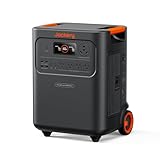
- Essential Home Backup: The Jackery HomePower 3600 Plus delivers 3600W output (7200W in parallel) to run pumps, heaters, and dryers with ease. With dual voltage (120V & 240V in parallel) and 3584Wh capacity expandable to 21kWh per unit or 43kWh with multiple units, it can power a 3-person household for over 2 weeks.
- Safe Power That Lasts: Built with high-temp resistant ceramic membrane battery cells tested at 302 °F, the Jackery HomePower 3600 Plus Portable Power Station prevents thermal runaway from heat or overcharge. Offering 6,000 cycles and a 10-year lifespan, it delivers safe, reliable even in -4 °F blizzards.
- Plug-and-Play: With its easy plug-and-play design, the Jackery HomePower 3600 Plus, paired with MTS, powers your home effortlessly—no complex installation required. Whether at work, in the kitchen, or with family, simply plug in, press "Power-On" and keep life running smoothly through any outage.
- 4 Charging Options: With 4 convenient ways to charge, the Jackery HomePower 3600 Plus solar generator can be fully recharged from 0–100% in just 2 hours via hybrid AC+DC. It also supports charging via AC in 2.5 hours, solar in 4 hours, or a gas generator in 2.5 hours —delivering a full day of quiet, clean energy.
- Ultra-Portable & Lightweight: The Jackery HomePower 3600 Plus, the lightest 3.6kWh LFP power station, boasts automotive-grade CTB tech and is 34% smaller and 29.3% lighter than other models. Its luggage-style design with wheels and a telescopic handle allows effortless rolling from kitchen to garage or beyond.
Plan a safe “habitable zone” rather than assuming the entire house can be conditioned indefinitely. Identify the room or rooms that can be closed off, the people who may use them, and the ventilation and heating or cooling method that will be used. Never use an appliance or fuel-burning device in a way not approved by its manufacturer or local safety authority.
Do not omit ventilation, moisture, or combustion checks
Air sealing can reduce uncontrolled air movement. DOE’s health-and-safety measures include mechanical-ventilation review, combustion-appliance testing, and moisture assessment. Have these considered as part of the same project. If a contractor proposes extensive tightening, ask how fresh air will be supplied, how exhaust will operate, how indoor humidity will be controlled, and how combustion gases will be verified.
Smoke alarms and carbon-monoxide alarms should be installed, tested, and maintained according to applicable requirements and manufacturer instructions. Keep exits usable after any retrofit and do not block vents, relief openings, or access panels.
4. Design outage power around essential loads
Solar panels alone do not guarantee backup power. DOE states, “Technically, residential solar panels alone are not enough to make your home resilient.” A grid-tied photovoltaic system normally stops supplying the premises when the grid is down unless it is configured with the equipment and controls needed to operate safely while separated from the grid.
Do these 3 things before closing this tab:
1Fix the driver behind crashes, sound loss and screen glitches2Repair Windows errors before they cause bigger problems3Scan for outdated or missing drivers - takes under a minuteDOE describes photovoltaic generation paired with battery storage as an arrangement that can island during a grid loss. That is a different capability from solar without storage. It still does not mean every appliance, circuit, or heating system will run. The system must be designed for the loads it is expected to serve.
Make a critical-load schedule
| Load category | Why it may matter | Questions for the design |
|---|---|---|
| Communications | Receives alerts and maintains contact with helpers or emergency services. | What equipment must remain powered, and where will it be located? |
| Medical equipment | May be essential to health and may have startup or continuous-power requirements. | What are the device’s running, starting, and duration requirements? Is there a clinical backup plan? |
| Refrigeration | May protect medication or food. | Which refrigerator or freezer is essential, and how will temperature be monitored? |
| Lighting | Reduces falls and supports safe movement. | Which rooms, exits, and exterior points need reliable lighting? |
| Heating or cooling | Can be critical during extreme temperatures. | What limited zone can be conditioned, and what are the equipment’s starting demands? |
| Water or wastewater equipment | May affect sanitation or access to stored water. | Does the property depend on a pump or control system, and can it be safely isolated? |
Have an electrician or qualified energy professional verify circuit capacity, transfer or isolation requirements, battery location, ventilation, clearances, and the applicable permit process. Do not connect a portable source to house wiring through an improvised cord or switch. Ask for a written list of supported circuits, expected operating conditions, shutdown steps, inspection intervals, and battery replacement or end-of-life provisions.
Compare backup approaches by capability
| Approach | What it can provide | Important limitation |
|---|---|---|
| Grid-tied solar without storage | On-site generation while the grid and required equipment are operating. | Does not by itself provide power during a grid outage. |
| Solar with battery storage and appropriate controls | Can support selected loads while isolated from the grid, subject to system design and available energy. | Capacity, duration, recharge conditions, and supported circuits are finite; it is not automatically whole-home backup. |
| Portable power equipment | May supply a limited set of plug-in devices if its ratings and connection method are suitable. | A generic unit should not be assumed to run a whole home, large heating or cooling equipment, or medical devices without verification. |
Power resilience is also an operating plan. Keep the instructions accessible, label supported circuits, test the system as permitted, and know how alerts and shutdowns will work. DOE describes electric-power resilience as reducing the likelihood and impact of long-duration outages and restoring service quickly; a household system addresses only the loads and conditions for which it was designed.
5. Match construction work to flood exposure
Flood mitigation is site-specific. First determine whether the building, access route, utilities, or lower level can be affected and what local rules require. FEMA mitigation examples include elevating water heaters, furnaces, and electrical panels in relevant circumstances. Elevation may not be appropriate or sufficient for every property, and it must be designed so that equipment remains accessible, serviceable, and code-compliant.
Prioritize the vulnerable equipment and entry paths
- Identify low electrical, mechanical, fuel, and communications equipment that could be damaged by water.
- Address cracks, failed penetrations, floor drains, door thresholds, and other potential entry paths according to the site’s conditions.
- Keep shutoffs, cleanouts, and essential controls accessible during an emergency.
- Protect stored chemicals, fuel, documents, and electrical equipment from foreseeable water exposure.
- Confirm whether a proposed barrier, pump, elevation, or alteration changes drainage onto neighboring property or conflicts with local requirements.
Flood insurance terms and mitigation-program eligibility are conditional and can change. Obtain current information from the appropriate authorities and insurer before treating a measure as a coverage or compliance solution.
6. Reduce wildfire ignition pathways, not just visible flames
USFA describes wildfire exposure through embers, radiant heat, direct flame contact, and convection. A resilient design considers all four. Embers can enter through openings or collect in combustible debris; radiant heat can ignite nearby materials; direct flame can reach attachments; and convection can carry hot gases and embers around the structure.
Work outward from the structure
- Inspect roof coverings, valleys, gutters, vents, eaves, and other places where embers may land or enter.
- Review decks, fences, siding, stored materials, vegetation, and outbuildings for combustible connections or accumulations.
- Keep roof and gutter areas free of leaves and other debris through regular maintenance.
- Examine the path from surrounding vegetation and neighboring structures to the home, rather than focusing only on the wall surface.
- Use materials and details appropriate to the local fire exposure and code; do not assume one product rating solves every ignition route.
Wildfire work should be evaluated by site and construction type. A contractor or fire-safety professional can identify pathways that are easy to miss, while the local authority can clarify required clearances and permissible vegetation or exterior work.
Rank #3

- 1500VA/1000W PFC Sinewave Uninterruptible Power Supply (UPS): Uses sine wave output to provide battery backup power for Active PFC & conventional power supplies; Safeguards computers, workstations, network devices, and telecom equipment
- 12 NEMA 5-15R OUTLETS: 6 battery backup & surge protected outlets, 6 surge protected outlets; INPUT: NEMA 5-15P right angle, 45 degree offset plug with 5 foot power cord; 2 USB charge ports (1 Type-A, 1 Type-C) quickly charge phones and tablets
- MULTIFUNCTION, COLOR LCD PANEL: Displays immediate, detailed information on battery and power conditions; Color display alerts users to potential issues before they can affect critical equipment and cause downtime; Screen tilts up to 22 degrees
- AUTOMATIC VOLTAGE REGULATION (AVR): Corrects minor power fluctuations without switching to battery power; UL SAFETY CERTIFIED: Product has been tested in a UL certified lab and listed with UL as meeting or exceeding safety standards
- 3-YEAR WARRANTY – INCLUDING THE BATTERY; $500,000 Connected Equipment Guarantee; FREE PowerPanel Management Software (Download)
7. Prepare the household for outage, severe weather, and evacuation
Building measures cannot replace a household plan. Keep written instructions for who helps whom, where people and pets meet, what medications and documents travel, and which routes lead away from the property. Include a backup destination and a way to communicate if normal services fail.
Crashes, No Sound, or Screen Glitches?
Random freezes, missing sound and display glitches usually trace back to one bad driver. Find and replace yours safely.Free scan · under a minuteWindows Errors? Fix Them Before They Spread
Repair common Windows errors and clear accumulated junk for a smoother, more stable PC - no reinstall needed.Free scan · no reinstallMaintain alerts and safe lighting
FEMA severe-weather guidance recommends monitoring orders with a weather radio. A weather radio supplements, rather than replaces, official alerts and evacuation instructions. Keep it powered, test reception periodically, and know which local alert channels apply to the address.
USFA recommends flashlights instead of candles during severe-weather outages. Store working flashlights where they can be reached without crossing a dark room, and keep spare batteries or an approved charging method. Maintain smoke alarms with battery backup as required and test them according to the manufacturer’s instructions.
Keep supplies usable, not merely stored
- Store water, food, medications, first-aid items, sanitation supplies, and copies of critical documents in an accessible, protected location.
- Keep tools for shutting off utilities and clearing a safe path, and ensure household members know how to use them.
- Include pet food, carriers, mobility aids, and child or elder-care items.
- Rotate consumables and batteries, and record dates for inspections, filter changes, and equipment servicing.
- Practice the evacuation route and the backup-power procedure under safe conditions.
When officials order evacuation, leave. Home hardening, stored supplies, and backup power should never delay departure or encourage anyone to remain in an unsafe area.
8. Choose projects with a hazard-and-function decision test
Before approving a project, ask the same questions of every option. This keeps an attractive technology from outranking a basic repair or a household need.
Quick wins for a faster PC:
Repair Windows errors before they cause bigger problemsFix Now →Fix the driver behind crashes, sound loss and screen glitchesFind Drivers →- Which hazard does it address? Name the site-specific exposure rather than using a general label such as “resilience.”
- What outcome does it improve? Distinguish damage reduction, habitability, warning, communication, evacuation, or recovery.
- Which loads or systems does it actually support? Obtain ratings, supported circuits, operating conditions, and duration assumptions in writing.
- What could go wrong if installed incorrectly? Check ventilation, combustion, moisture, electrical, fire, structural, and access consequences.
- Who should perform the work? Separate routine maintenance from work requiring a licensed trade, permit, inspection, or site assessment.
- What continuing care is required? Account for inspections, cleaning, testing, fuel or charging, filter changes, replacement parts, and eventual disposal.
Use this test to compare a roof repair, air-sealing project, battery system, elevated utility, wildfire detail, or weather radio on equal terms. The best first project is the one that addresses a significant local risk or safety defect and can be operated and maintained reliably.
9. Build in phases and verify each phase
A phased plan reduces the chance of spending on equipment before the building is safe and understood.
Phase 1: document and make safe
- Map hazards and household needs.
- Repair active leaks, unsafe wiring, dangerous combustion conditions, and other urgent defects.
- Install or verify smoke and carbon-monoxide alarms, safe lighting, and clear exits.
- Write the evacuation, communication, and outage plan.
Phase 2: improve the envelope and systems
- Complete roof, drainage, moisture, and air-barrier repairs.
- Add insulation, weatherstripping, repaired openings, and efficient heating or cooling where the whole-house assessment supports them.
- Verify ventilation, combustion safety, humidity control, and equipment operation after the work.
Phase 3: add targeted hazard mitigation
- Elevate or protect flood-vulnerable equipment where appropriate.
- Reduce wildfire ember, radiant-heat, flame, and convection pathways.
- Address wind and severe-weather weaknesses identified by the site assessment.
Phase 4: design and commission outage power
- Finalize the critical-load schedule.
- Obtain a design that states isolation, supported circuits, capacity, duration assumptions, and safety controls.
- Use required permits and inspections, then test the system and train every household member who may operate it.
After each phase, update drawings, photographs, shutoff locations, warranties, inspection records, and maintenance dates. A resilient home is easier to manage when the next person can understand what was installed and why.
Common mistakes that weaken resilience
- Buying before assessing: A product cannot compensate for an unrecognized flood path, roof leak, or unsafe appliance.
- Treating solar as automatic backup: Grid-tied panels without the required storage and controls may not serve the house during a grid loss.
- Tightening without ventilation planning: Air sealing must be coordinated with fresh-air, moisture, and combustion safety.
- Planning for the whole house by default: Backup systems should be sized and connected for defined essential loads, not an assumed unlimited demand.
- Hardening only the wall surface: Wildfire embers, radiant heat, direct flame, and convection can exploit roofs, vents, decks, gutters, vegetation, and stored materials.
- Ignoring maintenance: Debris, dead batteries, untested alarms, blocked drains, and expired supplies can erase the benefit of an installation.
- Assuming a general guide settles local compliance: Codes, permits, insurance, flood designations, and program eligibility must be checked for the property and date.
- Letting equipment delay evacuation: No building project is a reason to disregard an official order.
How to budget without false precision
There is no responsible single price for a resilient home. Costs depend on the property’s condition, hazard exposure, construction, access, equipment capacity, labor, permits, and local requirements. The available guidance does not establish local prices, rebates, product-model performance, or tested whole-home results.
Free tools Windows power users keep installed
One-click scans. No signup required.
Request itemized proposals that separate inspection, repair, design, installation, permits, commissioning, and ongoing maintenance. Ask each bidder to identify the hazard addressed, the expected function, exclusions, assumptions, and what happens if concealed damage is found. Compare proposals on delivered capability and safety, not on a headline equipment size or a promise of “resilience.”
The practical standard
Build resilience in the order that protects people and prevents avoidable damage: understand the site’s hazards, account for the household, make the existing building safe and dry, improve the envelope and mechanical systems together, design backup power for defined essential loads, add flood or wildfire measures that fit the property, and rehearse alerts, supplies, and evacuation. That approach can make an ordinary home safer and more habitable through disruption without turning it into a bunker.
Quick Recap
Product prices and availability are accurate as of the date/time indicated and are subject to change. Any price and availability information displayed on Amazon at the time of purchase will apply.

