The Tool Desk
Outbyte PC Repair FREEClear out junk files and repair common Windows errorsFree Scan →Outbyte Driver Updater FREEFix the driver behind crashes, sound loss and screen glitchesFind Drivers →The simplest inexpensive design is a normally closed 12-V DC solenoid valve, a properly sized 12-V power supply, and either a Shelly Plus 1 relay or an ESP32 running ESPHome. Add a fuse, coil suppression, weatherproof enclosure, manual shutoff, and a local maximum-run timer.
This approach is well suited to garden hoses, irrigation branches, tanks, and other non-potable utility-water projects. It is not automatically suitable for a home’s main water line or drinking-water plumbing.
As an Amazon Associate I earn from qualifying purchases.
Choose the right architecture first
| Application | Recommended approach | Why |
|---|---|---|
| Small garden or irrigation branch | 12-V DC normally closed solenoid plus Shelly or ESP32 | Low voltage, inexpensive, and straightforward |
| Existing sprinkler system | 24-V AC irrigation valve plus a suitable relay and the existing irrigation transformer | Many conventional sprinkler valves use 24 V AC |
| Whole-house shutoff | Purpose-built motorized ball valve or professionally installed smart shutoff | Better suited to pressure, pipe sizing, manual override, and leak protection |
| Battery or solar system | Latching irrigation valve and a controller designed for pulse operation | The valve does not need continuous coil power |
The Wi-Fi controller is usually the inexpensive part. The valve, power supply, fittings, enclosure, backflow protection, and failure behavior determine whether the installation is reliable and safe.
What valve should you buy?
For an unattended irrigation or leak-prevention project, start with a normally closed (NC), non-latching, 12-V DC valve. It should stop water when power is removed. That means a power outage or deliberate controller shutdown normally stops flow, although it cannot protect you from a valve that is mechanically stuck open.
#1 Best Overall

- Ensure strong 2.4Ghz WiFi coverage for reliable operation. Proper alignment is CRITICAL: the pivot point of the opener MUST be directly above the valve's pivot point. Misalignment will cause insufficient force to open the valve and may damage the unit due to mechanical stress. Triple-check Alignment, Alignment, Alignment...!
- If you don't know how to connect APP or install, please contact us, we will send video to you soon. If the unit loses power, it shuts off or turn on or no change when power returns, change the setting at APP.
- Download APP "Tuya Smart or Smart Life" App,you can remotely trun on/off your valve anywhere and anytime(Compatible with Android & iOS).Timer for Valve Opener, Garden Faucet Watering Timer you can set a time, it will open or close the valve automatically,No hub required,no monthly charges.
- Voice Control, This Smart Wifi Water Valve Compatible with Alexa(Echo Show/Echo Dot/Echo Plus), Google Assistant(Google Home),APP(Tuya Smart / Smart Life) etc. tell it turn on/off( just speak the command directly, it will execute immediately),enjoy the great convenience of voice control. Not work with Smarthings.
- What you get:1xWIFI controller(without ball valve),1xPower Adaper,1x DN20 bracket,1x adjustable bracket,1x Manual. You can add water detector or gas detector to have a smart system to prevent water/gas leaks etc. If you don't know how to install or meet any questions, please contact us, we will response soon.
Do not choose a valve from a marketplace title alone. Confirm all of the following in the manufacturer’s data sheet:
- 12 V DC coil voltage, rather than 24 V AC or another rating.
- Normally closed operation.
- Port size and thread standard, such as NPT, BSP, hose, or compression fittings.
- Pressure range and minimum pressure differential.
- Flow rate and the required pressure for the application.
- Coil current, wattage, and continuous-duty rating.
- Fluid, temperature, and wetted-material compatibility.
- Potable-water certification if the valve will ever carry drinking water.
Many inexpensive diaphragm valves need a pressure differential to open. They may work poorly on a gravity-fed tank or very low-pressure line. A direct-acting valve can be a better low-pressure choice, but it may have lower flow or consume more power.
Normally open valves are generally a poor default for irrigation: they can continue flowing when the controller loses power. Motorized ball valves cost more and may open slowly, but they typically use power only while moving and can be preferable for occasional main-line shutoff. Latching irrigation valves are efficient for battery systems but require pulse-capable electronics.
For conventional sprinkler equipment, do not assume 12 V DC is interchangeable with 24 V AC. For example, Rain Bird’s CP/CPF valves specify 24 V AC, 50/60 Hz and require approved backflow prevention for in-line installation; the backflow device is not included. See the manufacturer’s specifications.
Parts for the two practical builds
Option A: Shelly Plus 1
- 12-V DC, normally closed solenoid valve.
- Shelly Plus 1, preferably the UL-certified version where applicable.
- Listed 12-V DC power supply.
- Inline fuse or fused terminal block.
- Weatherproof electrical enclosure, cable glands, and outdoor-rated low-voltage cable.
- Correct pipe or hose adapters, PTFE tape where appropriate, and a manual upstream shutoff.
- Optional strainer, flow meter, leak sensor, and water-hammer protection.
Shelly lists the Plus 1 as a Wi-Fi device with dry, potential-free contacts, 12-V DC support, local operation, cloud operation, and irrigation applications. The U.S. vendor page showed a price of $21.49 for one unit when checked on August 16, 2026, but availability and pricing can change.
Option B: ESP32 and ESPHome
- ESP32 development board.
- 12-V DC normally closed valve.
- Logic-level N-channel MOSFET module rated for the valve’s current, or a properly rated DC relay module.
- Flyback diode if the driver module does not include suitable suppression.
- 12-V supply for the valve and a suitable 5-V or 3.3-V regulator or USB supply for the ESP32.
- Fuse, enclosure, glands, outdoor-rated cable, and optional push button or flow sensor.
- Home Assistant if you want its dashboard, schedules, notifications, and automations.
This version costs less and is more customizable, but requires firmware configuration and more electrical troubleshooting. ESPHome documents its supported components in the component index and provides a template valve component.
Rank #2

- Ensure strong 2.4Ghz WiFi coverage for reliable operation. Proper alignment is CRITICAL: the pivot point of the opener MUST be directly above the valve's pivot point. Misalignment will cause insufficient force to open the valve and may damage the unit due to mechanical stress.
Size the power supply instead of guessing
Use the valve’s published wattage or current:
Valve current = valve wattage ÷ valve voltage
Required supply current ≥ valve current + controller current
Allow at least 25–50% spare capacity, especially if the valve has inrush current.
12-V valve rated at 6 W:
6 W ÷ 12 V = 0.5 A

Controller allowance: approximately 0.1–0.2 A
A practical supply choice: 12 V, 1 A or greater
The example is only a sizing method. Use the exact coil rating for the valve you purchase. Do not connect the valve directly to an ESP32 GPIO. A GPIO supplies a control signal; it is not a valve power driver.
The power chain should be arranged generally as:
120-V outlet
   │
Listed 12-V DC power adapter
   │
Fuse
   │
Wi-Fi controller and valve
Keep the power supply indoors unless it is specifically listed and rated for the outdoor environment. An ordinary indoor adapter does not become outdoor-safe merely because it is placed inside a weatherproof box.
Wiring the Shelly version
The Shelly Plus 1 is powered according to Shelly’s current 12-V wiring diagram, while its dry relay contact switches the separate valve circuit conceptually like this:
12-V supply positive ── Shelly relay contact ── valve positive
12-V supply negative ───────────────────────── valve negative
Shelly power wiring ─── according to the current Shelly diagram
Use the current Shelly documentation and the diagram for your exact model and voltage. Do not infer terminal positions from a different Plus 1 revision or from a photograph.
Free tools Windows power users keep installed
One-click scans. No signup required.
A solenoid is an inductive load. When switched off, its collapsing magnetic field can produce a voltage spike. For a suitable DC coil, install a flyback diode across the coil with the cathode toward the positive terminal and the anode toward the switched negative side, unless the valve, relay arrangement, or manufacturer’s instructions already provide suppression. Use an appropriate snubber or other approved suppression method for AC coils.
Rank #3
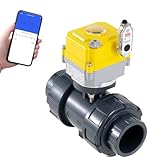
- Smart PVC electric ball valve With power-off return setting. Manual knob switch valve.
- TUYA APP WiFi control water valve
- Button open and close
- Durable PVC joint ball valve is more convenient to install
- Automatic return setting when power off
The relay rating must cover the valve’s voltage, current, and inductive-load behavior. A relay that can switch a resistive load of a certain size is not automatically appropriate for a solenoid.
Wiring the ESP32 and MOSFET version
12-V positive ───────────── valve positive
valve negative ─────────── MOSFET drain
MOSFET source ──────────── 12-V ground
ESP32 GPIO ─────────────── MOSFET gate/input
ESP32 ground ───────────── 12-V ground
Flyback diode ──────────── across the valve coil
The MOSFET must be rated for the valve’s voltage and current and must turn on reliably from the ESP32’s 3.3-V logic level. Many low-cost relay boards are designed for 5-V logic and may not trigger reliably from an ESP32. A module advertised as “5 V” is not automatically 3.3-V compatible.
Use a common ground between the ESP32 and the low-voltage valve supply when the driver requires it. Keep the high-current valve wiring separate from delicate signal wiring, provide strain relief, and protect the supply with a fuse.
PC Slower Than It Used to Be?
A free scan shows the junk files, broken settings and background clutter dragging Windows down - then fixes them in one click.Free scan · Windows 10 & 11Crashes, No Sound, or Screen Glitches?
Random freezes, missing sound and display glitches usually trace back to one bad driver. Find and replace yours safely.Free scan · under a minuteInstall the plumbing before finalizing the electronics
- Shut off the water and relieve pressure.
- Confirm the valve’s flow-direction arrow. Diaphragm valves often will not operate correctly when installed backward.
- Use adapters that match both the valve thread and the existing hose or pipe. Do not force mismatched thread standards together.
- Apply PTFE tape only where appropriate for the thread type; do not use it to compensate for a damaged or incompatible fitting.
- Install a strainer or filter if the valve manufacturer recommends one or debris is likely.
- Provide an accessible manual shutoff upstream of the smart valve.
- Add required backflow prevention for irrigation and comply with local plumbing rules.
- Pressure-test the plumbing and inspect for leaks before installing or energizing electronics.
Keep electrical components physically above likely leak paths, use drip loops, seal cable entries with correctly sized glands, and leave enough service access to replace the valve or close the manual shutoff.
Set up the Shelly build
After checking the wiring with power disconnected, power the controller and follow the current Shelly setup procedure. When connected to the device access point, Shelly’s web-interface guide identifies 192.168.33.1 as the universal local address. Join the device to the intended Wi-Fi network, change default credentials if prompted, and confirm that the relay is configured for the correct output behavior.
Shelly states that Plus 1 devices can operate locally on a Wi-Fi network as well as through cloud services. Local operation is preferable for safety-critical timing: a functioning internet connection should not be required to turn the valve off.
Rank #4
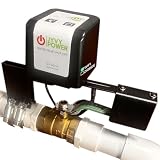
- ♥ 【Wi-Fi & Bluetooth Enabled】 - Simply use your phone to pair via Bluetooth for a swift, one-tap setup that joins your Wi-Fi 2.4GHz network instantly, no hub required.
- ♥【For Use on Ball Valves ONLY】- Works with 1/4-turn ball valves, even those found on water heaters and radiant heat systems. Compatible pipes' size:1/2",3/4",1",1-1/4",1-1/2".
- ♥【Smart & Voice Control】: Manage watering schedules remotely via the Smart Life/Tuya app (iOS/Android) or use voice commands with Amazon Alexa and Google Home. Perfect for worry-free travel.
- ♥【Reinforced & User-Friendly Design】 - Durable metal gear withstands over 5,000 on/off cycles for reliable performance in demanding environments; engineered with a dual hose clamp system and ample space for hassle-free installation.
- ⚠️ 【Critical Installation Note】- The valve axis must be aligned with the shut-off axis during installation.
Before adding schedules, operate the relay manually. Confirm that the physical valve opens when commanded on, closes when commanded off, and remains closed after a controller reboot. Do not assume that a relay status of “off” proves that water has stopped; it proves only what the controller believes it commanded.
Recommended Free Tools
Build the ESPHome version
GPIO numbers depend on the specific ESP32 board. The following example uses GPIO25 only as an example and deliberately initializes the output off:
esphome:
  name: wifi-water-valve

esp32:
  board: esp32dev
  framework:
    type: esp-idf

logger:
api:
ota:

wifi:
  ssid: !secret wifi_ssid
  password: !secret wifi_password
  ap:
    ssid: "Water Valve Fallback"
    password: !secret fallback_password

switch:
  - platform: gpio
    id: valve_relay
    name: "Water Valve Relay"
    pin:
      number: GPIO25
      inverted: false
    restore_mode: ALWAYS_OFF
    on_turn_on:
      - delay: 10min
      - switch.turn_off: valve_relay

  - platform: template
    id: water_valve
    name: "Water Valve"
    lambda: |-
      return id(valve_relay).state;
    turn_on_action:
      - switch.turn_on: valve_relay
    turn_off_action:
      - switch.turn_off: valve_relay
Check the syntax against the ESPHome version installed when you deploy it. Set inverted: true if the relay or driver is active-low. Confirm the board’s boot behavior and avoid pins that have special boot or peripheral functions on your particular board.
This configuration exposes the controlled entity as a template switch. If you need a true valve entity with explicit open and close actions, use ESPHome’s documented template valve component. The ten-minute local timeout is a second safety layer, not a guarantee against a crashed controller, welded relay, failed MOSFET, or mechanically stuck valve.
Independent reader supportYour contribution helps us test, update, and keep practical guides available for everyone.Connect Home Assistant only after manual testing
Home Assistant supplies dashboards, schedules, notifications, and integrations; it is not the valve driver. Entity names vary by installation. Typical actions look like this:
action:
  - action: switch.turn_on
    target:
      entity_id: switch.water_valve_relay
action:
- action: switch.turn_off
target:
entity_id: switch.water_valve_relayUse the entity picker in Home Assistant rather than copying these example entity IDs unchanged.
Best Value

- Cable Length: 5'
- Valve Type: Shut-Off
- Type: Ball Valve
A fixed-duration schedule is safer than turning the valve on and waiting for another event to turn it off:
alias: Water garden for five minutes
triggers:
  - trigger: time
    at: "06:30:00"

conditions:
  - condition: state
    entity_id: binary_sensor.rain_delay
    state: "off"

actions:
  - action: switch.turn_on
    target:
      entity_id: switch.water_valve_relay
  - delay: "00:05:00"
  - action: switch.turn_off
    target:
      entity_id: switch.water_valve_relay

mode: single
Use the controller’s local timeout as the primary overrun protection and Home Assistant’s automation as the convenience layer. Add an explicit off action, startup recovery that turns the valve off, an offline notification, and a lockout when a leak sensor is wet.
Multiple zones and flow confirmation
For multiple irrigation zones, add software interlocks so incompatible valves cannot open together. If a pump or master valve is involved, open the required zone first, start the pump only when appropriate, and stop the pump after all zone valves close. Apply a hard maximum cycle duration to every zone.
Do these 3 things before closing this tab:
1Fix the driver behind crashes, sound loss and screen glitches2Clear out junk files and repair common Windows errors3Scan for outdated or missing drivers - takes under a minuteA commanded state is not a verified hydraulic state:
- Stuck open: the relay may report off while water continues. A flow meter, pressure sensor, or leak sensor can detect this.
- Stuck closed: the relay may report on while no water flows. A flow sensor can identify missing flow after opening.
- Unexpected flow: close the valve, notify the homeowner, and provide an accessible manual shutoff.
Flow sensing is particularly important where an open valve could flood a structure or empty a tank.
Failure behavior to test
Normally closed means power-off tends toward no flow; it does not mean the complete system is fail-safe. Test the actual installation:
- Turn the valve on and verify water flows.
- Turn it off and verify flow stops.
- Restart the ESP32, Shelly, or relay controller and confirm the output initializes off.
- Remove power and confirm the valve closes when power returns to the system.
- Disconnect internet access while leaving the local network operating.
- Disconnect Wi-Fi and observe whether the valve remains in a known safe state.
- Stop Home Assistant and confirm that the controller’s local timeout still limits operation.
- Leave the system cycling long enough to expose leaks, overheating, or unreliable fittings.
- Verify that the manual shutoff remains reachable.
Wi-Fi failure, internet failure, Home Assistant failure, and controller failure are different events. Local Wi-Fi control may continue without internet, but it still depends on the local network and powered controller. No software timer can guarantee closure if the switching hardware fails short or the valve sticks mechanically.
Quick wins for a faster PC:
Scan for outdated or missing drivers - takes under a minuteDriver Scan →Clear out junk files and repair common Windows errorsFree Scan →Fix the driver behind crashes, sound loss and screen glitchesFind Drivers →Important hazards and limitations
- Water hammer: fast-closing valves can create pressure transients. High-pressure or household installations may need a slower valve or water-hammer mitigation.
- Outdoor electricity: use suitable enclosures, glands, strain relief, protected circuits, and code-compliant installation. Keep mains voltage out of wet outdoor boxes unless the entire assembly is appropriately listed and installed.
- Backflow: irrigation systems may require approved backflow prevention. Follow local requirements and the valve manufacturer’s instructions.
- Potable water: every wetted component, fitting, and installation detail must meet applicable drinking-water certification and plumbing requirements. Do not use an unverified general-purpose valve on drinking-water plumbing.
- Whole-house service: a cheap irrigation solenoid may have the wrong pressure rating, flow capacity, materials, or failure behavior for a main line.
When a cheap DIY valve is the wrong choice
Use a commercial smart shutoff or a qualified plumber for a household main, drinking-water plumbing, high-pressure service, flood-sensitive locations, inspected installations, or systems requiring certified leak detection and emergency shutoff. A purpose-built motorized ball valve is usually a better fit for an occasional whole-house shutoff than a continuously energized irrigation solenoid.
Bottom line
For a small non-potable water project, build around a documented 12-V DC normally closed valve, a listed and correctly sized supply, and a Shelly Plus 1 if you want the shortest setup. Choose an ESP32 with ESPHome when low cost, local control, sensors, and customization matter more than convenience. In either case, use a fuse, suppress the solenoid coil, initialize the output off, impose a local timeout, install a manual shutoff, and verify actual water flow rather than trusting the relay state.
Quick Recap
Product prices and availability are accurate as of the date/time indicated and are subject to change. Any price and availability information displayed on Amazon at the time of purchase will apply.




