Recommended Free Tools
You can automate almost any light without replacing the entire fixture—and you do not necessarily need Wi-Fi, smart bulbs, or a complicated home-automation system.
For a permanently wired ceiling or wall light, a smart in-wall switch or dimmer is usually the best everyday solution because the existing wall control remains usable. For a plug-in lamp, use a smart plug, plug-in dimmer, timer, or smart bulb. For simple outdoor schedules, an astronomical timer or dusk-to-dawn photocell can automate lighting entirely offline.
As an Amazon Associate I earn from qualifying purchases.
The correct choice depends first on how the light receives power, then on whether you need on/off control, dimming, color, sensors, remote access, or multi-device routines.
Outdated Drivers Are Slowing You Down
One free scan finds every outdated or missing driver and matches the right update for your exact hardware.Free scan · exact hardware matchPC Slower Than It Used to Be?
A free scan shows the junk files, broken settings and background clutter dragging Windows down - then fixes them in one click.Free scan · Windows 10 & 11What “automating lights” actually involves
Lighting automation means making a light respond to a trigger without someone operating the switch each time. Common examples include:
#1 Best Overall

- App-Guided Install: The Kasa or Tapo app guides you through step-by-step setup. Requires neutral wiring and 2.4 GHz Wi-Fi. Consulting an electrician is recommended if you’re unfamiliar with electrical wiring
- Control from Anywhere: Monitor your light status. Turn electronics on and off from anywhere with your smartphone using the Kasa app, whether you are at home, in the office or on vacation
- Voice Control: Enjoy the hands-free convenience of controlling the lights in your home with your voice via Amazon Alexa or Google Assistant; perfect for times when your hands are full or entering a dark room
- Scheduling: Use timer or countdown schedules to set your smart switch to automatically turn on and off while you're home or away. Enable ‘away mode’ to randomly switch on and off to trick potential intruders
- Trusted and reliable: Designed and developed in silicon valley, Kasa is trusted by over 4 million users. UL certified for safety use. System Requirements: Android 5.0 or higher, iOS 10 or higher
- Schedules: Turn lights on or off at fixed times.
- Sunrise and sunset: Follow changing daylight rather than using the same clock time every day.
- Motion or occupancy: Turn lights on when someone enters and off after the area is empty.
- Vacancy shutoff: Turn lights off automatically, while requiring manual activation.
- Presence or geofencing: React when someone arrives home or leaves.
- Scenes: Set several lights to particular brightness, color, or on/off states.
- Conditional rules: For example, turn on hallway lights only when motion occurs and it is dark.
- Away modes: Vary lighting while occupants are away.
Most automation systems use three building blocks:
- Trigger: The event that starts the rule, such as sunset, motion, a door opening, or arrival.
- Condition: What must also be true, such as “someone is home” or “ambient light is low.”
- Action: What the system does, such as turning on, dimming, waiting, changing color, or turning off.
Home Assistant documents this trigger-condition-action model and provides a visual automation editor at home-assistant.io/docs/automation.
Step 1: Identify the light and its wiring
Do not buy automation hardware until you know how the light is installed and controlled.
Plug-in lamps
Table lamps, floor lamps, desk lamps, decorative lamps, and many seasonal lights can be automated without touching fixed wiring.
- Use a smart plug for simple on/off control.
- Use a plug-in dimmer when brightness control is required and the lamp and bulb are compatible.
- Use a smart bulb for dimming, color temperature, color, and individual-bulb control.
- Use a mechanical or digital timer for an offline schedule.
A standard smart plug normally controls power only. It does not dim a lamp unless it is specifically designed as a plug-in dimmer. The lamp’s physical switch generally needs to remain in the on position.
Ceiling or wall lights
For ordinary bulbs controlled by a wall switch, a smart in-wall switch is usually the most natural upgrade. It controls the circuit feeding the fixture, so several ordinary bulbs can operate together and people can still use the wall control.
A smart dimmer is appropriate only when the bulbs and fixture are dimmable and the dimmer is rated for that particular load. LED compatibility is product-specific; check both the dimmer’s compatibility list and the bulb manufacturer’s guidance.
Recessed and integrated LED fixtures
Check whether the fixture is dimmable and whether its LED driver is compatible with the selected dimmer. Minimum-load requirements, maximum wattage, and driver behavior can determine whether the result is smooth, flicker-free, and reliable.
Free tools Windows power users keep installed
One-click scans. No signup required.
If the fixture has an integrated LED module, replacing the bulb may not be possible. You may need a compatible smart switch, a replacement smart fixture, or a control system approved for that driver.
Rank #2
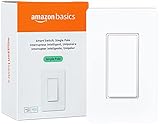
- SMART UPGRADE: Transform your home by upgrading to a smart switch that works seamlessly with Alexa, providing convenient voice control for an enhanced living experience
- GUIDED INSTALLATION: Enjoy a guided installation with our step-by-step video and user manual, providing necessary support for a smooth setup process of your smart switches for lights
- FLEXIBLE SCHEDULING: Take control of your home lighting by scheduling lights to turn on and off using Alexa routines, providing flexibility and convenience with your wifi light switch even when you're away
- VOICE-ACTIVATED CONTROL: The smart wall switch helps you effortlessly control your lighting system with voice commands via Alexa
- NO HUB REQUIRED: Simplify your setup with a smart switch that works exclusivly with Alexa, eliminating the need for additional smart home hubs or complex configurations
Three-way and multi-way circuits
A light controlled from two or more locations requires a switch designed for that arrangement. Before buying, verify support for:
- Three-way or multi-way wiring
- Companion switches or wireless remotes
- Neutral-wire requirements
- Travelers and the existing wiring layout
- The fixture and bulb load
Not every smart switch works with every three-way circuit. Follow the exact wiring diagram for the selected model.
Bathrooms, garages, laundry rooms, and exterior lights
These spaces often benefit more from occupancy, vacancy, motion, dusk-to-dawn, or countdown behavior than from color-changing bulbs. Exterior equipment must also be suitable for its location, weather exposure, voltage, and load.
The Tool Desk
Outbyte PC Repair FREERepair Windows errors before they cause bigger problemsFix Now →Outbyte Driver Updater FREEScan for outdated or missing drivers - takes under a minuteDriver Scan →Choose the right automation method
| Need | Best starting point | Important limitation |
|---|---|---|
| Automate an ordinary ceiling light | Smart in-wall switch | May require a neutral wire and electrical installation |
| Dim or color a lamp | Smart bulb or plug-in dimmer | The physical switch must not cut power to a smart bulb |
| Turn a lamp on and off | Smart plug or timer | A standard plug does not dim |
| Automate an outdoor light offline | Photocell or astronomical timer | Feature set is less flexible than a connected system |
| Control a bathroom or closet | Occupancy, vacancy, or motion switch | Timeout and sensor placement are critical |
| Coordinate multiple brands and sensors | Local automation hub | Requires setup, maintenance, and compatible devices |
Smart bulbs: best for renters, lamps, and color
A smart bulb contains its own wireless electronics and can connect through Wi-Fi, Bluetooth, Zigbee, Thread, Matter, or a manufacturer’s bridge.
Depending on the product, it may provide on/off control, dimming, color temperature, color effects, scenes, schedules, motion routines, and voice control.
Smart-bulb setup
- Turn the wall switch off and install the bulb.
- Turn the switch on and leave it on.
- Install the manufacturer’s app and add the bulb or bridge.
- Assign the bulb to a room.
- Install firmware updates if offered.
- Set brightness, color temperature, and power-on behavior.
- Create a schedule, scene, or sensor automation.
- Test the wall switch, app, voice control, and automation.
The main weakness is power interruption. If someone turns off the wall switch, the bulb is electrically offline and cannot respond to an app or automation. A wireless remote, smart-bulb-friendly switch, or clearly labeled control can prevent this conflict.
Philips Hue supports Alexa, Apple Home, Google Assistant, and Matter in qualified configurations. Its Matter documentation explains that requirements vary by product and connection method; for example, some setups require a Thread Border Router, and Bluetooth-connected products cannot use Matter through the Hue Bridge. See Philips Hue’s Matter information before assuming every feature will transfer between platforms.
Do these 3 things before closing this tab:
1Repair Windows errors before they cause bigger problems2Fix the driver behind crashes, sound loss and screen glitches3Clear out junk files and repair common Windows errorsSmart switches and dimmers: usually best for ceiling lights
A smart switch adds control to the electrical circuit rather than to each bulb. This makes it a strong choice for kitchens, hallways, porches, bedrooms, and other permanently wired fixtures where family members and guests expect a normal wall control.
Rank #3

- NEVER COME HOME TO A DARK HOUSE AGAIN – Schedule exterior lights to turn on at sunset for added safety, comfort, and convenience
- USE YOUR VOICE FOR HANDS‑FREE CONTROL – Works with Google Assistant, Amazon Alexa, and Apple Siri so you can adjust lights without lifting a finger
- CONTROL LIGHTS FROM ANYWHERE – Check if lights are on and adjust them remotely using your smartphone, whether you’re home, at work, or on vacation
- SET IT AND FORGET IT - Use the My Leviton app to schedule your lights to turn on and off when you want
- THE MOST CONNECTED – Works with Alexa, Google Assistant, Apple Home, SmartThings, Home Assistant, and is Matter ready out of the box
Systems such as Lutron Caséta are designed to control ordinary bulbs and can provide schedules, scenes, auto-off timers, geofencing, sunset-based control, motion sensors, and voice-assistant integration. Lutron also states that certain Caséta control functions do not depend on Wi-Fi for switch-to-control communication. That does not mean every remote or cloud feature works during every outage; behavior depends on the specific product and system.
Typical installation sequence
- Identify the circuit at the electrical panel.
- Turn off the breaker.
- Verify that the circuit is de-energized with an appropriate tester.
- Photograph the existing wiring.
- Identify line, load, neutral, ground, and travelers where applicable.
- Confirm voltage, load rating, bulb compatibility, box space, and hub requirements.
- Install the switch exactly as directed by its manufacturer.
- Restore power and pair the device with its app or hub.
- Name the room and light.
- Create and test schedules, scenes, sensor rules, and manual control.
Some switches require a neutral wire; others are designed for no-neutral installations. This is product-specific. Do not assume a switch box contains a usable neutral simply because it contains several wires, and do not rely on wire color alone.
Smart plugs and plug-in dimmers
A smart plug is a reversible way to automate a non-smart lamp:
- Plug the smart plug into the wall.
- Plug the lamp into the smart plug.
- Leave the lamp’s physical switch on.
- Pair the plug with its app or hub.
- Assign it to a room.
- Create a schedule, timer, motion rule, or voice command.
- Test what happens after a power interruption.
Check the plug’s voltage, current, wattage, load type, and location rating. Do not use an ordinary smart plug for dimming, and do not expose it to moisture unless it is specifically approved for that environment.
A plug-in dimmer requires compatible dimmable bulbs and a compatible lamp. Check incandescent, LED, and CFL support, minimum and maximum wattage, and whether the lamp contains a transformer or electronic driver. Lutron’s product information includes plug-in dimmer/switch options for lamps; consult the specific model’s instructions at Lutron’s sensor and control information.
Timers, photocells, and other non-smart options
“Non-smart” does not mean “non-automated.” A mechanical timer, digital timer, astronomical switch, photocell, or standalone occupancy switch can operate without an app, account, hub, or internet connection.
Use a timer when
- You need a simple fixed schedule.
- You want to automate a plug-in lamp or seasonal lights.
- You do not need remote access or cross-device scenes.
- You want a low-complexity solution.
Use an astronomical timer or photocell when
- You are controlling porch, driveway, or exterior lighting.
- The light should follow seasonal daylight.
- You want dusk-to-dawn operation without internet access.
Fixed clock times drift out of step with the seasons. An astronomical timer calculates sunrise and sunset from a location; a photocell responds to actual ambient light. Some systems can add a late-night shutoff while preserving manual control.
Add motion, occupancy, and presence sensing
These terms describe different behaviors:
- Motion: Detects movement. Someone sitting still may eventually be treated as absent.
- Occupancy: Attempts to determine whether a room remains occupied.
- Vacancy: Turns lights off when empty but requires manual activation.
- Presence: Often describes more persistent or higher-resolution occupancy detection, but implementation varies.
Lutron distinguishes occupancy sensors, which can turn lights on when someone enters and off after leaving, from vacancy sensors, which turn lights off automatically but require manual activation. See Lutron’s occupancy and vacancy guidance.
Rank #4

- 【Matter: All-Round Compatibility】With Matter, users are no longer tied to specific platforms and works with all certified smart home platforms, such as Apple Home, Amazon Alexa, Google Home and Samsung SmartThings. You can control all your smart home devices from a single app, reducing the need for multiple apps for different devices.
- 【Matter: Smooth LAN Control】With Matter, all devices in your LAN communicate efficiently, even if your internet goes offline. A direct device-to-device interaction eliminates the need for a 'forwarding' device. For instance, a Matter switch or sensor can control a Matter bulb without any cloud service. Once set up, direct communication between Matter devices on your local network is easily achieved.
- 【Matter: Multi-Admin】Matter also allows you to control devices via multiple smart home systems at the same time through its Multi-Admin feature. That means you can turn on your lights from the SmartThings app on a Samsung smartphone, dim them by asking Alexa on an Amazon Echo speaker, and then turn them off from the Apple Home app on an iPad.
- 【App-Guided Install】The Tapo app guides you through step-by-step setup. Requires neutral wiring and 2.4 GHz Wi-Fi. Consulting an electrician is recommended if you’re unfamiliar with electrical wiring.
- 【Voice Control】Enjoy the hands-free convenience of controlling the lights in your home with your voice via Amazon Alexa, or Google Assistant. Perfect for times when your hands are full or entering a dark room.
A reliable motion-light rule
- Trigger: Motion detected.
- Condition: It is after sunset or the ambient-light level is below a threshold.
- Action: Turn on at 30–70% brightness.
- Wait: No motion for a defined period.
- Action: Turn off.
- Override: Do not automatically shut off a manually selected scene, if the platform supports that distinction.
Use a longer timeout in bathrooms and offices than in hallways. Reposition sensors if they see movement through a doorway, a curtain, or a heat source. Pets, bright daylight, quiet reading, showering, and multiple sensors can all produce unexpected results.
Useful lighting automations
Ordinary porch light without a smart home
Install an appropriate astronomical timer switch or dusk-to-dawn photocell. Set it to turn on at sunset and off at sunrise, optionally adding a late-night shutoff. This provides seasonal adjustment without internet access.
Bedroom ceiling light
Use a smart switch or dimmer. A practical routine could turn on at 25% brightness at 6:30 a.m., turn off at 8:30 a.m., turn on at sunset when someone is home, and turn off at bedtime. A bedside wireless control provides a useful manual fallback.
Rental-apartment floor lamp
Use a smart plug for on/off control or a smart bulb for dimming and scenes. Turn it on 30 minutes before sunset and off at bedtime. Keep the lamp switch on.
Bathroom
Use an occupancy or motion-sensing switch, optionally with dimming. Set low brightness overnight and normal brightness during the day. Use a longer vacancy timeout and test carefully so the light does not turn off while someone is showering or sitting still.
Whole-home local automation
A local hub such as Home Assistant can coordinate switches, bulbs, sensors, and other systems. For example:
- At sunset, turn on entryway and living-room lights.
- Run the routine only when someone is home.
- After 11 p.m., use low brightness.
- When everyone leaves, turn off selected lights.
- Keep security or vacation lighting as an exception.
Home Assistant’s documentation describes local operation with compatible devices and protocols such as Zigbee, Z-Wave, Matter, Thread, and ESPHome. Its software is free and open source, but hardware and optional cloud services cost extra. A local system requires a continuously running hub and more hands-on maintenance.
What’s actually slowing this PC down?
Pick the symptom - the matching free tool is one click away.
Choose the control platform
Manufacturer app
Best for one brand or a small installation. It normally provides the quickest setup and the fullest access to proprietary features, but cross-brand automation and cloud dependence vary.
Best Value

- 【2-Gang Design】Seamless installation of two switches are now made possible. Control two different circuits with an elegant flush look. Form and function rolled into one.
- 【Easy Guided Install】Neutral wire is required. No need to understand complex switch wiring or master vs auxiliary switch configuration. The Kasa App guides you through easy step by step installation. Need 2.4GHz Wi-Fi connection
- 【App & Voice Control】Control your connected lights from anywhere, anytime, with the Kasa Smart app or your favorite voice assistant: Amazon Alexa, Google Assistant or Samsung SmartThings.
- 【Control From Anywhere】Monitor your light status. Turn electronics on and off from anywhere with your smartphone using the Kasa App, whether you are at home, in the office or on vacation.
- 【Advanced Scheduling & Timer】Use timer or countdown schedules to set your smart switch to automatically turn on and off while you're home or away. Enable 【Away Mode】 to randomly switch on and off to trick potential intruders
Alexa, Google Home, or Apple Home
These platforms are useful for voice control, schedules, routines, scenes, and relatively simple multi-brand automation. Compatibility is not symmetrical: a platform may expose on/off control while omitting a device’s color, button, sensor, or advanced dimming features. Google advises checking the manufacturer’s documentation for third-party support at Google Home’s automation guidance.
Matter
Matter can improve interoperability, but it does not guarantee identical feature support across ecosystems. Confirm the actual device’s Matter certification, firmware, controller compatibility, transport—Wi-Fi, Ethernet, or Thread—and whether a Thread Border Router or bridge is required.
Home Assistant
Choose a local automation hub when you need mixed brands, complex conditions, privacy, or long-term expansion. It is a poor fit if you want a five-minute setup or do not want to maintain a hub, network, and integrations.
Safety for fixed wiring and plug-in equipment
Manufacturers may describe some products as suitable for DIY installation, but actual difficulty depends on the wiring, electrical box, circuit complexity, pairing, and local requirements. Do not rely on a generic installation-time promise.
Troubleshooting common failures
The smart bulb is offline
- Confirm the wall switch is on.
- Power-cycle the bulb once.
- Check the bridge, hub, or router.
- Confirm the phone and device are using the intended network.
- Check firmware and account status.
- Reset and re-pair only if the earlier steps fail.
The smart switch does not power on
Check the breaker, wiring diagram, line/load connections, neutral connection, grounding, load compatibility, and whether a hub or pairing step is required. Turn the breaker off before inspecting. Stop and use an electrician if the wiring does not match the instructions.
The dimmer flickers
Likely causes include a non-dimmable bulb, incompatible LED driver, load below the dimmer’s minimum, excessive wattage, mixed bulb types, or an incorrect neutral or bypass configuration. Test one manufacturer-approved dimmable bulb, verify the total and minimum load, and replace the dimmer or bulbs if necessary.
The motion light turns off while someone is present
Increase the timeout, reposition the sensor, use occupancy or presence sensing, add a manual hold, or combine motion with door, pressure, or presence sensors.
Quick wins for a faster PC:
Repair Windows errors before they cause bigger problemsFix Now →Scan for outdated or missing drivers - takes under a minuteDriver Scan →The automation runs at the wrong time
Check the time zone, daylight-saving handling, location, sunrise/sunset settings, hub clock, automation status, and whether the platform uses local time or account-region time.
What happens during an internet outage?
A cloud-dependent device may stop responding remotely or may lose cloud-run automations. A local Wi-Fi device may continue on the local network. Zigbee, Z-Wave, Matter, Thread, or ESPHome devices controlled by a properly configured local hub can continue operating locally, while remote access and cloud-only integrations may not. Home Assistant explains these distinctions in its FAQ.
A practical way to start
- Choose one room and identify whether the light is plug-in or permanently wired.
- Decide whether you need on/off, dimming, color, motion, or only a schedule.
- Install the simplest suitable control.
- Test manual operation before adding automation.
- Create one routine, such as sunset on and bedtime off.
- Test power-loss behavior and sensor timeouts.
- Expand only after the manual fallback and basic automation work reliably.
The best lighting system is not necessarily the one with the most features. It is the one that matches the fixture, remains usable when technology or internet access fails, and does not create a safety or wiring problem.
Quick Recap
Product prices and availability are accurate as of the date/time indicated and are subject to change. Any price and availability information displayed on Amazon at the time of purchase will apply.




