Some links on this page are affiliate links: if you buy through them we may earn a commission, at no extra cost to you.
Road construction can temporarily disrupt a home with equipment noise, dust, vibration, detours and changing traffic. Once the road opens, the same project may improve local accessibility while bringing lasting traffic noise, visual changes or severance. Because those effects pull in opposite directions, there is no reliable universal percentage for how much a nearby home will gain or lose.
Your likely outcome depends on the route’s distance and design, the construction schedule, access arrangements, predicted noise, mitigation and local compensation rules. Treat general studies as context, then use the project’s own plans and assessments to judge your property.
As an Amazon Associate I earn from qualifying purchases.
Why a road project can raise or reduce a home’s value
A road changes several attributes that buyers price together. Faster or more reliable access to jobs, schools, shops and other roads can make a location more convenient. Conversely, construction disruption, traffic noise, vibration, air-quality concerns, visual intrusion and difficulty crossing the route can reduce its appeal. The balance is project-specific rather than a fixed effect of being “near a road.”
Construction is usually temporary, but not necessarily minor
Minnesota Department of Transportation guidance identifies noise, dust, additional traffic, safety concerns, temporary bypasses and detours as common construction impacts. Work can also require staging areas, temporary easements or other land needs. Some effects end when the works finish; changes to the road layout, access or traffic remain. The agency’s principle is that project managers should consider construction impacts on every project.
Popular on Amazon

- 2.25-inch LCD Screen with Backlight: This TS-501B sound level meter is measured noise levels are expressed in decibels and displayed on the 2.25-inch LCD screen, it easy to read on a big display design. Long press the backlight button to turn on a backlight, making it easy to view even in dim light
- Decibel Meter with A/C Weighting: TopTes TS-501B decibel meter uses a precise condenser microphone to capture sound. It’s equipped with A-weighting and C-weighting facilities that measure noise levels from 30 to 130 dB with an accuracy of 1.5 dB, Frequency from 30 to 8000Hz. Perfect for monitoring noise levels in communities, home theaters, audio systems, automobiles, workshops, schools, offices, factories
- MAX/MIN Measurement: The sound pressure level (SPL) meter has Max or Min measurement values to represent the maximum/minimum (high/low peak) value of the sound produced within a certain time, and the data hold function can freeze the current reading based on the sound measurement according to individual needs
- Easy Use and Feature Packed: The non-slip side design ensures that the portable noise meter fits easily in the hand. TS-501B SPL meter is a battery-operated noise meter that comes with three durable batteries and has an automatic power off function to extend battery life. A low battery indicator will appear on the screen when the battery is low to remind the user to replace the battery in time
- What’s in the Box: One TS-501B Decibel Meter, Three AAA Batteries, One User Manual, One Carry Case. The device has been factory calibrated to ensure high measurement accuracy and compliance with quality standards.
The completed road creates a different set of effects
After opening, the relevant question is not simply whether the road is closer, but how the scheme functions. A route that removes congestion or creates a useful connection may improve accessibility. A route that carries fast or heavy traffic past a home may increase noise and reduce privacy. Crossings, turning movements, barriers and the ability to reach a driveway or local street determine whether the road connects a community or severs it.
| Factor | Possible benefit | Possible cost |
|---|---|---|
| Accessibility | Shorter or more reliable trips and better connections | Longer local journeys if streets are closed, crossings are limited or traffic is diverted |
| Noise | Quieter streets if traffic is removed from an existing route | Construction noise first, then road-traffic noise after opening |
| Land and layout | Improved frontage or safer junction design in some locations | Loss of land, visual change, barriers or reduced privacy |
| Traffic conditions | Less congestion on an old road | More vehicles, heavy trucks or queues near particular properties |
Caltrans’s review of freeway-property studies found results that conflict across projects. It reports that improved accessibility sometimes coincided with higher residential values, while noise and other environmental effects reduced appreciation in other cases. Effects generally weakened with distance in the studies it reviewed, but route design, location and how the project fits the surrounding community changed the result. The review says those studies do not provide a reliable model for predicting the value effect of a future freeway.
What the evidence says about home-price changes
There is no defensible universal percentage
No current general statistic establishes that road construction lowers every nearby home by a particular percentage. A prediction would need the property’s distance and orientation, the existing baseline, the proposed traffic, access changes, construction duration and mitigation, as well as local market conditions. A percentage from another city or decade should not be applied mechanically to your address.
Historical noise estimate: useful context, not a forecast
A Virginia Transportation Research Council report published in 1980 analyzed 413 transactions using 1978–79 sales in Northern Virginia and Tidewater. In the Northern Virginia sample, a 1 dB(A) increase in the L10 noise measure was associated with a 0.15% reduction in dwelling price. The relationship was statistically significant in Northern Virginia for only one of five noise measures; in Tidewater it was not statistically significant except at low confidence levels. This is a geographically limited, historical association, not an estimate of what construction or a present road will do to your home.
Also popular on Amazon
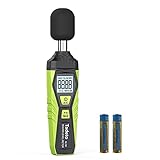
- 【Accurate Measurement】 The measuring range of the sound level meter is 30dB to 130dB . Highly accurate with ± 2.0 dB. Real-time monitoring can give you accurate data on the sound level in the area.
- 【A/C Weighted Measurement】 The A weighted simulates the frequency characteristics of low-intensity human ear noise, which is suitable for the detection of ambient noise. The C weighted simulates the frequency properties of high-intensity noises of the human ear, which are suitable for the sound pressure analysis of machine motors and machines. More professional measurement methods provide users with a more perfect user experience.
- 【Fast and Slow Measurement】 The sound level meter has the function of converting the fast and slow response rate. The fast response rate uses a time constant of 0.125s/time for general environmental measurement. The slow response rate uses a 1s/time constant, which is used for environmental measurements with relatively large changes in noise levels.
- 【Digital LCD Display 】 The digital display is a 4-digit LCD display with a resolution of 0.1 dB. Backlit LCD digital display, the reading effect is clearer in dark places. When the battery is low, the LCD display will display a low voltage icon, indicating that the power is low at this point and the battery needs to be replaced.
- 【Convenient and Lightweight 】Tadeto sound level meter is lightweight and easy to carry. It's widely used in factories, transportation, car, baby room and audio system offices, sound quality control in homes, schools, and construction sites.
An older accessibility result has the same limitation
Caltrans’s 2011 update summarizes a Palmquist study from 1981 in which properties receiving substantial accessibility improvements increased in value by 12% or more relative to properties without those access opportunities. That result belongs to the specific older study and its comparison group. Caltrans cautions against generalizing such findings to a new project.
How loud and disruptive construction may be
Construction-phase noise and vibration
Noise can change from week to week as crews move through excavation, utility work, piling, pavement breaking, rock removal, grading and surfacing. Heavy equipment, trucks, jackhammers and reversing alarms create different sound patterns. Vibration is more likely during compaction, breaking, drilling or other ground work than during every activity. The noisiest operation may therefore be short-lived even when the overall project lasts months or years.
Quick wins for a faster PC:
Clear out junk files and repair common Windows errorsFree Scan →Scan for outdated or missing drivers - takes under a minuteDriver Scan →Transport for New South Wales describes construction noise and vibration as temporary and changing as work progresses. For its Parramatta Light Rail project, the agency used measures such as monitoring, resident notifications, respite periods, noise blankets and acoustic sheds. Those are examples from that project, not guarantees for a road scheme elsewhere. Ask your own road authority what equipment, hours, monitoring and respite rules apply.
Documenting a property before vibration work
Some projects arrange a dilapidation or pre-construction condition survey before vibration-generating work. It records visible cracks and other existing defects so a later inspection can compare conditions. Such a survey is a project-specific practice; nearby owners are not automatically entitled to one. If offered, read the scope and keep your own dated photographs of interior and exterior areas.
Also popular on Amazon

- Accurate 30-130dB Noise Measurement: The Goldeep SL750A decibel meter measures sound levels from 30 to 130dB with ±1.5dB accuracy and a 31.5Hz-8KHz frequency response. This sound decibel meter is ideal for checking home noise, neighbor noise, traffic sound, office noise, construction sites, factories, classrooms, baby rooms and musical instruments.
- A/C Weighting for Different Sound Environments: This digital sound level meter supports A/C weighting modes for more flexible noise testing. A-weighting is suitable for environmental noise such as urban traffic, schools, offices, business areas and construction sites. C-weighting is designed for industrial noise from machinery, equipment, aerospace, high-speed rail and other high-intensity sound sources.
- dB/SONE Units for Sound & Loudness Testing: Use the dB unit to measure sound intensity for environmental noise, machine noise, traffic noise and workplace noise. Switch to SONE to better understand perceived loudness, making this db meter useful for music, audio systems, acoustic checks and instrument noise control..
- FAST/SLOW Response with MAX/MIN Tracking: The spl meter includes FAST and SLOW response settings. FAST response, 0.125s per reading, is useful for changing noise levels, while SLOW response, 1s per reading, is suitable for steady-state noise. MAX/MIN value tracking helps record peak and minimum noise levels over a period of time.
- Easy-to-Use Sound Meter for Daily & Professional Needs: Designed with data hold, clear LCD display, anti-slip grip and a windbreak ball, this sound meter is practical for indoor and outdoor use. Package includes 1 sound level meter, 2 AAA 1.5V batteries and 1 user manual, so you can start measuring noise right away.
Traffic noise after the road opens
Post-opening noise assessment is separate from construction monitoring. UK and Scottish guidance describes assessing how noise at a property is expected to change when a planned road opens. Possible measures include moving or redesigning the route, quieter road surfacing, earth mounds, acoustic fencing and, in limited circumstances, insulation for homes. These remedies depend on the predicted level, the scheme and local eligibility rules; they are not automatic benefits for every house near a road.
Transport Scotland states that its aim is to design and build schemes to minimise noise with high standards of environmental mitigation wherever reasonably practicable. That is an agency aim, not a promise that every property will experience no increase.
Free tools Windows power users keep installed
One-click scans. No signup required.
Will road work block access to your home?
Only the project’s traffic-management and access plan can answer that question. Construction may close a lane, move a driveway temporarily, introduce a one-way system, create a temporary bypass or route traffic through nearby streets. Pedestrian, cycle, emergency and business access can follow different arrangements. A detour may preserve legal access while adding substantial time or making deliveries difficult.
Minnesota DOT lists detours, temporary bypasses, safety concerns and effects on homes and businesses as matters agencies should examine in environmental review. The existence of those common impacts does not establish what will happen on your street. Look for a map showing driveway access, walking routes, crossing points, closure dates and emergency arrangements.
Also popular on Amazon

- 【Widely Used】The noise meter is the use of environmental sound level instrument, can be widely used in such as factories, workshops, schools, residential, office areas, traffic roads, audio and other occasions of sound level measurement. Also suitable for noise engineering, product quality control, health,prevention and control.
- 【Accurate Measurement】Measuring Range:30~130dB ;Accuracy:±1.5dB(94dB@1KHz);Display Resolution:0.1dB
- 【A Weighted Measurement】 A Weighted network (automatic switching range display)
- 【Fast/Slow mode selection】Press the MODE key, you can convert the response speed of the noise meter, FAST fast, SLOW slow
- 【MAX/MIN Measurement】Press RANGE key to measure the maximum value of MAX and minimum value of MIN.A maximum duration of more than 3 seconds is recorded, with a normal test sampling rate of 0.5 seconds. The maximum error is ± 5%.
How to evaluate a specific road scheme
When comparing route options or reading an environmental statement, use the same questions for each alternative:
- Distance and position: How far is the home from the carriageway, junction, ramps and construction compounds? Is the property elevated, screened or directly facing the route?
- Predicted noise and vibration: What are the construction forecasts, working hours and post-opening traffic-noise levels? Which properties qualify for barriers, surfacing or insulation?
- Access and duration: Which roads, driveways, footpaths and bus stops change, for how long, and what detours replace them?
- Accessibility benefit: Which destinations become faster or safer, and which local movements require a longer route or a new crossing?
- Design and mitigation: Are there earthworks, acoustic fencing, low-noise surfacing, route changes, speed controls or landscaping, and are they commitments or options?
- Distribution: Which residents, businesses, pedestrians, children, older people and people with disabilities experience the benefits or burdens?
UK Department for Transport appraisal guidance treats noise, severance and accessibility as distinct impacts and considers effects across social groups. That framework helps reveal why two homes at the same straight-line distance can have different experiences.
Crashes, No Sound, or Screen Glitches?
Random freezes, missing sound and display glitches usually trace back to one bad driver. Find and replace yours safely.Free scan · under a minuteWindows Errors? Fix Them Before They Spread
Repair common Windows errors and clear accumulated junk for a smoother, more stable PC - no reinstall needed.Free scan · no reinstallWhat residents should check and record
- Find the official project information. Review the latest notices, route maps, construction schedule, traffic-management plan, detour and access drawings, environmental assessment and named contact. Transport Scotland notes that schemes may be explained through leaflets, exhibitions, maps and online material.
- Ask targeted questions. Request the predicted construction and operational noise at your address, planned working hours, vibration-producing activities, driveway and pedestrian arrangements, emergency access and the process for reporting problems.
- Keep a dated log. Record the date, time, location, work type, noise character, vibration, dust, blocked route and practical consequence. Photographs of signs, detours and property condition can establish a timeline.
- Report through the stated channel. Contact the project team or the relevant local authority rather than relying on informal reports. In Scotland, environmental health departments determine limitations on work hours and construction-noise levels, and guidance directs residents with excessive-noise concerns to the project supervision team. Procedures differ elsewhere.
- Ask about surveys and mitigation. Confirm whether a condition survey, noise assessment, insulation scheme or other remedy applies to your property, and note eligibility deadlines in writing.
A consumer sound-level meter can help you keep personal observations, but a reading does not prove a legal breach, establish compensation eligibility or demonstrate a loss in market value. Official compliance decisions rely on the project’s specified monitoring and assessment methods.
Compensation and complaints depend on location
England: Part 1 claims
In England, the GOV.UK Part 1 process concerns depreciation in land value caused by listed physical factors arising from the use of qualifying public works. Listed factors include noise, vibration, smell, fumes, smoke, artificial light and discharge of solid or liquid substances. The claim addresses effects associated with traffic using the road, not simply the highway’s physical existence. Ownership or tenancy qualifications and timing conditions apply. It is not a general payment for every construction inconvenience.
Also popular on Amazon

- Datalogs up to 16,000 readings with USB interface for downloading to a PC
- Triple LCD displays humidity, temperature, and date (year, month, and day)
- Programmable from keypad or PC
- Selectable data sampling rate
- User programmable audible and visual alarms
Scotland: a separate injurious-affection route
Transport Scotland describes an injurious-affection route tied to demonstrable depreciation from listed physical factors resulting from use of the road. It also directs complaints about excessive construction noise to the project or local environmental-health contact. Scottish rules should not be merged with the English Part 1 process, and neither should be applied to another country without local advice.
Other jurisdictions
Construction hours, access rights, noise limits, insulation programs and compensation statutes are set locally. Minnesota, New South Wales, English and Scottish guidance illustrates different administrative approaches; none is a universal legal rule. If you are considering a claim, obtain the project’s published procedure and advice from a qualified local professional before a deadline expires.
Bottom line for a nearby homeowner
Expect the greatest uncertainty during construction: noise, vibration, dust, traffic changes and detours can be intense but may move as the work front advances. After opening, accessibility and noise become the central trade-off. Existing studies show both gains and losses, but they are too old, varied and project-dependent to produce a trustworthy percentage for your home. The most useful evidence is the scheme-specific noise and access plan, the mitigation commitments and the local rules for complaints, surveys and compensation.
Quick Recap
Product prices and availability are accurate as of the date/time indicated and are subject to change. Any price and availability information displayed on Amazon at the time of purchase will apply.

