Free tools Windows power users keep installed
One-click scans. No signup required.
Recycled ceramic powder and eggshell powder can replace part of Portland cement in some laboratory concrete, mortar and paste mixtures—but neither is a universal, ready-to-use cement substitute. Reported performance depends on the waste source, cleaning and grinding, particle size, replacement basis, dosage, water demand, curing age and the property being measured. The published evidence supports project-specific testing, not an untested recipe for load-bearing work.
What “replace cement” means in this context
In the studies available to date, ceramic and eggshell powders are used as partial cement replacements. A portion of the ordinary Portland cement is removed and an equal stated amount of waste-derived powder is introduced, usually by mass, although some experiments may use a different basis. The resulting binder is then tested in paste, mortar or concrete specimens.
As an Amazon Associate I earn from qualifying purchases.
That distinction matters. Replacing 5% of cement in a controlled laboratory specimen is not the same as substituting 5% in a field batch with different aggregates, moisture, mixing equipment, curing and exposure. The evidence does not establish a single percentage that is safe for every grade of concrete or every structural application.
How ceramic waste powder is used
Source and processing
Ceramic waste powder is made by processing discarded ceramic products into a fine powder. Reviews describe testing across cement paste, mortar and concrete, with fresh, mechanical, durability and microstructural measurements. Source material, fineness and curing time can change the result, so two powders both called “ceramic waste” should not automatically be treated as equivalent.
#1 Best Overall

- FOR EASY REPAIRS — It's the ideal concrete patch repair mix, neatly fixing cracks and spalls so your property looks like new. It's even textured for a more seamless blend with the existing structure
- TOUGH AND DURABLE — Formulated to avoid shrinking or cracking, the ready-to-use premixed cement patch offers good adhesion and high strength so your slabs, walls & walkways/sidewalks perform as good as ever
- EASY CLEANUP — Sika concrete patch is acrylic-based, so once application is done, it cleans up using only water. No need for special cleaners and chemicals
- GREEN — It follows regulations concerning the use of volatile organic compounds (VOC), helping to keep the air we breathe cleaner and fresher
- A BREEZE TO USE — Minimal prep is required, since it comes premixed. Just use a putty or trowel to spread where repairs are needed. It takes only a few hours to set and about a day for a full cure
A practical laboratory preparation normally begins with sorting out soil, wood, metal, glaze flakes that behave differently, gypsum, organic matter and other contaminants. The ceramic is dried, crushed, ground and sieved to a controlled fineness. Those steps are not a standardized field specification; they are controls needed to make one test batch comparable with another. Record the source, cleaning method, grinding equipment, sieve range and moisture condition.
What the ceramic studies report
A 2021 review found that low replacement proportions, up to about 20% in the studies it examined, generally produced non-considerable positive or negative effects rather than a consistent dramatic change. That does not mean 20% is an approved limit; it means the reviewed mixtures often did not show a large overall departure from their references at those low levels.
Another review of recycled ceramic powder reported that many of the studies it synthesized obtained performance around 20–25% replacement, with some mixtures matching or exceeding ordinary Portland cement at later curing ages. Because those results came from particular materials and specimen designs, the range is evidence to investigate, not a guaranteed optimum.
A 2024 mortar study found that ceramic powder improved some measured mortar properties at certain replacement proportions and recorded lower density at 20% replacement in its experiment. Lower density can be useful for a specific application, but it is not automatically an advantage if it accompanies unacceptable strength, absorption or durability.
Why curing age changes the interpretation
Some ceramic-powder mixtures look ordinary at early ages and perform differently after extended curing. A comparison made only at an early test age can therefore miss later development; a later-age improvement cannot be assumed if a project requires early stripping, rapid opening or immediate load capacity. Report the curing duration and conditions with every strength or durability result.
Rank #2

- Ready-to-use, concrete patch and repair formula is ideal for repairing horizontal cracks in interior or exterior concrete
- Self leveling cement filler dries gray to match and blend with most existing concrete
- Concrete crack repairs are ready for traffic in 30 to 45 minutes for fast project completion
- Concrete crack filler is easy to use; just shake and pour
- Versatile concrete filler may be painted with latex or oil-based paints
How eggshell powder is used
Material characteristics
Eggshell powder is a calcium-rich waste-derived powder investigated as a partial replacement for ordinary Portland cement. One 2026 experimental study measured 81.24% calcium oxide in the eggshell powder it tested and discussed calcite and hydration observations in its cement specimens. That figure describes that study’s prepared powder; it is not a universal composition for household or industrial eggshell waste.
Shells can carry membrane residue, food, salt, moisture and other contaminants. For a controlled test, shells should be collected by a traceable source, washed, dried, processed to a consistent powder and stored dry. The preparation details and particle size need to be reported because a different feedstock or fineness can change water demand and reaction behavior.
What the eggshell studies report
The 2026 experimental study reported favorable strength performance at 5% cement replacement in its tested specimens and a decline in mechanical strength at 10%. Those percentages apply to that study’s eggshell powder, mixture proportions, specimens and curing conditions.
A separate 2026 review described approximately 7.5–10% as an optimum range across the literature it reviewed. That range differs from the 5% result in the other 2026 study, illustrating why an “optimum eggshell percentage” cannot be quoted without naming the material and test conditions.
Reported replacement levels at a glance
| Material and evidence | Reported level or observation | How to interpret it |
|---|---|---|
| Ceramic waste powder, 2021 review | Low proportions up to about 20% | Generally non-considerable effects across the reviewed mixes; not a universal design limit. |
| Recycled ceramic powder review | Many studies around 20–25% | Some mixtures matched or exceeded ordinary Portland cement at later ages; results are mixture-specific. |
| Ceramic powder, 2024 mortar study | 20% produced lower density in that experiment | Some mortar properties improved at selected proportions; strength, absorption and exposure still require checks. |
| Eggshell powder, 2026 experimental study | 5% performed favorably; 10% showed reduced mechanical strength | Applies to the study’s powder and cement specimens, not all eggshell waste. |
| Eggshell powder, 2026 review | Approximately 7.5–10% described as optimum across reviewed studies | A literature synthesis that differs from the separate 5% experiment; do not merge the values into one prescription. |
Which properties must be checked
Fresh concrete and workability
Measure slump or another defined workability method, mixing water, setting behavior and segregation or bleeding. Fine waste powders can change the water needed to reach the same consistency. If water is added informally to rescue a stiff batch, the effective water-to-binder ratio changes and the strength comparison becomes unreliable. Keep the target consistency and mixing sequence fixed across control and replacement batches.
Rank #3
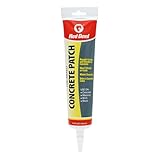
- REPAIRS CRACKS AND BREAKS IN CONCRETE: Premixed formula makes repairs easy
- DRIES A LIGHT TO MEDIUM GRAY COLOR: Ideal for lighter shades of concrete
- WON'T SHRINK OR CRACK: Provides maximum flexibility for a permanent repair
- INTERIOR OR EXTERIOR USE: Can be used inside or outside
- WATER CLEAN UP: Cleans up easily with soap and water. Made in the USA
Strength at the required ages
Test compressive strength at the ages relevant to the proposed use, rather than relying on one date. Flexural or splitting-tensile strength may matter for slabs, pavements and thin elements even when compressive strength appears acceptable. Report specimen type, dimensions, curing regime, replacement percentage and whether the percentage is by mass or volume.
Recommended Free Tools
Density, porosity and absorption
The 2024 ceramic mortar experiment observed a density reduction at 20% replacement. Density alone does not establish quality. Measure absorption, permeable porosity or a comparable transport indicator where moisture movement matters. A lighter mortar may still be unsuitable if it absorbs more water or loses strength under the intended exposure.
Durability and exposure
Ceramic-powder literature includes investigations of chloride transport and sulfate exposure. A favorable result in one specimen and exposure does not prove longer service life in all climates, marine conditions, sulfate soils, freeze–thaw cycles, carbonation environments or wet–dry regimes. Match the test to the actual exposure and use the same curing and conditioning history for the control mixture.
A defensible way to evaluate a replacement
- Define the use. State whether the material is a nonstructural block, repair mortar, paving element, laboratory specimen or another application. Do not begin with a percentage detached from the performance requirement.
- Characterize the waste. Record ceramic type or eggshell source, contaminants, moisture, processing method, particle-size distribution and storage. For eggshell powder, record the measured composition of the prepared batch rather than assuming a published value applies.
- Choose a control mix. Prepare a reference using the same cement, aggregates, water, admixtures, batch size and curing plan, with no waste powder. A replacement result is meaningful only against a clearly defined baseline.
- Plan several replacement levels. For ceramic powder, the literature commonly explores low levels through roughly 20% and, in some reviews, 20–25%. For eggshell powder, include levels around the reported 5% result and the approximately 7.5–10% range described by the separate review. Treat these as investigation points, not instructions to use them in construction.
- Keep the replacement basis explicit. State whether the percentage replaces cement by mass or volume. Do not compare a mass-based 10% result with a volume-based result as if they were identical.
- Mix and cure consistently. Use a documented sequence, measured water and controlled curing temperature and humidity. Label every specimen with powder batch, dosage and age.
- Test the required properties. At minimum, check workability, density and compressive strength at more than one age. Add flexural strength, absorption, porosity and exposure-specific durability tests when the application requires them.
- Set acceptance criteria before testing. Decide what strength, workability, absorption and durability performance is necessary. Select a replacement only when it meets the project’s criteria and can be reproduced with the available waste stream.
Can these powders be used in structural concrete?
Not on the evidence summarized here without a qualified design and project-specific validation. The published material does not establish code approval, a standardized preparation specification or a universally safe structural mix design for recycled ceramic or eggshell powders. A structural engineer, materials laboratory and the applicable building code authority would need to review the constituent materials, test program, exposure class and proposed design.
For a small demonstration, a nonstructural specimen can be a reasonable way to learn how a particular processed powder behaves. That is different from placing an unstandardized powder into a footing, column, beam, suspended slab or other load-bearing element. Do not substitute kitchen-prepared eggshells or unsorted ceramic debris in structural work.
Rank #4

- REPAIRS CRACKS AND BREAKS IN CONCRETE: Premixed formula makes repairs easy
- DRIES A LIGHT TO MEDIUM GRAY COLOR: Ideal for lighter shades of concrete
- WON'T SHRINK OR CRACK: Provides maximum flexibility for a permanent repair
- INTERIOR OR EXTERIOR USE: Can be used inside or outside
- WATER CLEAN UP: Cleans up easily with soap and water. Made in the USA
Common mistakes and how to avoid them
- Calling a partial replacement a full substitute: describe the exact percentage and binder basis.
- Assuming all ceramic waste is the same: identify source, glaze, contaminants and fineness.
- Using 81.24% calcium oxide as a universal eggshell specification: it was measured in one 2026 study’s powder.
- Choosing the highest reported percentage: higher dosage can reduce mechanical strength, as the 10% eggshell result illustrates, and can alter workability or transport properties.
- Comparing unlike tests: align specimen type, curing age, replacement basis, aggregate grading and exposure before drawing conclusions.
- Reporting only compressive strength: include workability, density, absorption or porosity and the durability exposure that the element will face.
- Ignoring early-age requirements: later-age ceramic performance does not guarantee early strength for stripping forms or opening a pavement.
What the evidence supports
Recycled ceramic powder is a credible research option for partial cement replacement, with reviews reporting broadly favorable or neutral outcomes in selected mixtures at low levels and, in some studies, around 20–25% at later ages. Eggshell powder is also a credible research option, but its reported dosage is less settled: one 2026 experiment favored 5% and found lower strength at 10%, while another 2026 review placed an optimum around 7.5–10% across the studies it considered.
The practical conclusion is narrower than “waste can replace cement.” A specific, clean, finely processed waste powder may work in a specific cementitious mixture after controlled testing. Until that evidence exists for the intended application, keep the material in the laboratory or in clearly nonstructural demonstrations and retain ordinary Portland cement as the controlled reference binder.
Frequently Asked Questions
Can eggshell powder replace cement in concrete?
It can replace a portion of cement in tested mixtures. A 2026 experiment reported favorable results at 5% replacement and reduced mechanical strength at 10%; another 2026 review described approximately 7.5–10% as optimal across its reviewed studies. These values are not interchangeable or universal.
How much ceramic powder can replace cement?
Reviews report generally non-considerable effects at low levels up to about 20% in many studied mixes, while another review found favorable results in some mixtures around 20–25%, particularly at later ages. The percentage must be validated for the specific powder, mixture and use.
The Tool Desk
Outbyte PC Repair FREERepair Windows errors before they cause bigger problemsFix Now →Outbyte Driver Updater FREEScan for outdated or missing drivers - takes under a minuteDriver Scan →Does recycled ceramic powder make concrete weaker?
It can, leave strength unchanged or improve selected properties, depending on source, fineness, dosage, curing age and test. No single outcome applies to every ceramic powder or concrete.
Quick Recap
Product prices and availability are accurate as of the date/time indicated and are subject to change. Any price and availability information displayed on Amazon at the time of purchase will apply.

