Some links on this page are affiliate links: if you buy through them we may earn a commission, at no extra cost to you.
Water new grass seed lightly and often enough to keep the upper inch of soil continuously moist—not saturated. In ordinary conditions, that usually means two light applications per day during germination. Hot, windy weather can require up to four, while rainfall may eliminate an application. Continue frequent light watering for roughly three weeks, or for as long as the seedbed dries quickly. When seedlings reach about 1 to 2 inches, begin spacing out waterings and make each one deeper. After the lawn has been mowed two or three times, Iowa State University Extension says a thorough weekly watering should generally be adequate, subject to local weather and rainfall.
The watering target: moist surface soil, not a flooded lawn
Grass seed germinates in the thin layer of soil where it was placed. If that layer dries, emerging roots can desiccate before they establish. If it stays saturated, water can puddle, run off, displace seed or leave the surface airless. The practical target is steady moisture in the upper inch of the seedbed.
As an Amazon Associate I earn from qualifying purchases.
Iowa State University Extension describes the newly seeded surface as needing to remain continuously moist and warns against applying more water than the soil can absorb. Its FAQ, updated June 9, 2026, states: “Grass seedlings are very susceptible to desiccation and the surface of a newly seeded lawn should not be allowed to dry.” The correct amount is therefore whatever restores moisture without creating standing water or visible runoff.
Because sprinkler output, soil texture, slope, wind and rainfall differ from site to site, a clock-based rule such as “run the sprinkler for 10 minutes” is not universal. A short application from a high-flow sprinkler may deliver more water than a longer application from a low-flow sprinkler. Treat the stated frequencies as starting points, then let the seedbed tell you whether to shorten, skip or repeat a cycle.
Popular on Amazon
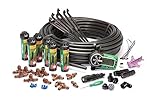
- Waters your lawn automatically the whole season
- Eliminates constant hassle of moving garden hoses and making sprinkler adjustments
- Attaches to an outside faucet and installs in one afternoon
- Sprinklers retract into lawn for a clean uncluttered appearance and easy mowing
- Covers medium size lawn areas from 1000 to 3000 sq. ft. with average residential water pressure and flow of 45 to 75 psi
How often should you water during germination?
Normal weather
Plan on two light waterings per day in ordinary conditions. The applications should wet the seedbed’s surface without washing soil or seed downhill. Check the bed between applications; if the upper inch is still damp, shorten or skip the next cycle. If the surface is drying before the next planned check, add a light cycle rather than waiting for a heavy evening soak.
Hot or windy weather
Heat and wind increase evaporation. Iowa State guidance allows for as many as four light applications per day in especially hot, windy conditions. Divide the water into short cycles rather than delivering one heavy soak that runs off. A site exposed to afternoon sun or persistent wind may need an additional check even when a shaded or sheltered area does not.
Windows Errors? Fix Them Before They Spread
Repair common Windows errors and clear accumulated junk for a smoother, more stable PC - no reinstall needed.Free scan · no reinstallOutdated Drivers Are Slowing You Down
One free scan finds every outdated or missing driver and matches the right update for your exact hardware.Free scan · exact hardware matchWind can also move a sprinkler’s spray, so an apparently covered lawn may have dry edges or bands. Watch the pattern while it runs and move the sprinkler when coverage is uneven. Increasing the duration for the entire lawn is usually a poor fix if only one strip is dry.
Rainy or cool weather
Rain counts as irrigation when it has actually moistened the seedbed. Do not water on top of a wet surface simply to follow a calendar. After a storm, feel or inspect the soil in several places; resume the normal pattern only when the upper inch begins to dry.
A brief shower can wet only the top film, while a longer storm may keep the upper inch moist for a day or more. Check high, low, sunny and shaded spots because the same storm can leave different moisture levels across one seeded area.
How long does frequent watering last?
Iowa State describes continuing the frequent-light approach for about three weeks after seeding. The University of California Statewide Integrated Pest Management Program notes that several light waterings a day may be needed for up to 30 days to keep a new seedbed moist. These are ranges, not deadlines. Stop adding cycles when the bed reliably holds moisture, not merely because a set number of days has passed.
Conversely, do not keep a germination schedule indefinitely. Once seedlings are established enough to be about 1 to 2 inches tall, the goal changes from repeatedly wetting the surface to wetting the developing root zone more deeply.
Watering schedule by establishment stage
| Stage | What to maintain | How often | How to adjust |
|---|---|---|---|
| Seedbed and germination | Moisture through the upper inch; no puddles or runoff | Usually two light applications daily | Increase toward four in hot, windy conditions; reduce or skip after sufficient rain |
| Early seedlings, about 1 to 2 inches tall | Moist root zone rather than a constantly wet surface | Gradually less often | Increase the depth of each application as frequency falls |
| After two or three mowings | A thoroughly wetted root zone between irrigations | Iowa State says a thorough weekly watering should generally suffice | Modify for rainfall, heat, wind, soil and local restrictions |
The transition should be gradual. Moving abruptly from several light cycles to a single weekly soak can let young roots dry between waterings. Conversely, keeping a mature-looking lawn on a germination schedule wastes water and encourages a perpetually wet surface.
Also popular on Amazon

- Effortless Yard Irrigation Setup: The Orbit All-in-One Automatic Watering System simplifies yard irrigation with a complete 2-zone automatic sprinkler system designed to deliver consistent watering
- DIY Sprinkler Installation: Built for reliability, this DIY sprinkler system uses easy push-fit technology with patented Blu-Lock tubing to create strong connections
- Even Lawn Coverage: Engineered for efficient large area watering with dependable head-to-head coverage, the gear drive sprinkler heads distribute water evenly to reduce dry spots
- Convenient Automatic Scheduling: The system includes a double outlet hose timer with an adjustable watering schedule, providing hassle-free timed watering
- Limited Warranty Coverage: We warrant this product against material or workmanship defects for private use, without limiting free statutory consumer rights
The useful comparison is not simply “daily versus weekly.” During germination, inspect the surface and favor frequent, light applications. During seedling growth, remove cycles one at a time while increasing the depth of each remaining application. After two or three mowings, reassess the lawn as an established stand and use thorough weekly watering only when the soil and weather support it.
How to water new grass seed: a step-by-step method
- Prepare the irrigation area. Use a sprinkler that can cover the seeded ground evenly. Keep the spray gentle enough that it does not expose seed, form channels or push soil to the low side of a slope. For a large area, you may need to move the sprinkler so every section receives a light application rather than leaving one position running longer.
- Start with a short, light application. Apply only enough water to moisten the upper inch. The correct duration depends on the sprinkler’s output and the soil’s intake rate, so observe the surface rather than copying a timer setting from another lawn.
- Inspect several locations. Check high, low, sunny and shaded areas. A single wet spot can hide a dry section outside the sprinkler’s pattern. If one area is drying first, adjust the sprinkler position or add a targeted application rather than soaking the whole lawn more heavily.
- Stop at the first sign of runoff or puddling. Pause the sprinkler and let water infiltrate. If the ground cannot accept the flow, use shorter cycles, reposition the sprinkler or reduce the amount applied at one time. Water moving downhill is not helping seed on the high side and may carry soil and seed with it.
- Recheck before the next planned cycle. The seedbed should feel damp below the surface, not glossy or muddy. Skip an application when rain has maintained that condition. If the surface is damp in one section but dry in another, correct coverage instead of applying more water everywhere.
- Repeat through the germination period. Continue frequent light watering for approximately three weeks, and in some conditions up to 30 days, while watching the soil and seedlings rather than following an inflexible schedule.
- Begin the transition at 1 to 2 inches of growth. Add a little more water per cycle while removing one cycle at a time. The aim is to encourage deeper wetting without allowing the young plants to wilt. Keep checking the seedbed during the change because weather can temporarily require more frequent applications.
- Move to deeper, less frequent watering after establishment. Once the lawn has been mowed two or three times, Iowa State’s guidance is a thorough weekly watering, adjusted whenever rainfall or weather changes the soil’s moisture.
How to tell whether the soil is too dry or too wet
Signs the seedbed is drying
- The surface looks pale, dusty or crusted rather than dark and slightly damp.
- The upper inch feels dry when checked in more than one location.
- Newly emerging seedlings wilt during the part of the day when the seedbed receives the most sun or wind.
- Water beads briefly and then disappears from one section while another section remains dry, indicating uneven coverage.
When these signs appear, add a light application and then reassess coverage. Avoid compensating with one long irrigation cycle; that can create runoff before the dry areas receive useful moisture. A dry patch is often a distribution problem, not proof that the entire lawn needs a heavier watering.
Signs of overwatering
- Water stands on the surface after the sprinkler stops.
- Water flows across the soil or carries fine soil and seed downhill.
- The surface stays glossy, muddy or saturated between scheduled checks.
- Low spots remain much wetter than the rest of the seedbed.
Shorten the application, split it into smaller cycles or wait longer between cycles. The objective is to restore moisture after the soil has absorbed the previous application, not to keep water visible at the surface. If only a low spot puddles, change the application pattern or duration for that area rather than flooding the whole lawn.
Adjust watering for weather, soil and site conditions
Heat and wind
Increase inspection frequency during hot, dry or windy periods. Wind can also distort a sprinkler’s pattern, leaving an apparently covered lawn with dry edges. Use several short applications when necessary and stop each one as soon as water begins to move downhill. A hot, windy day may justify moving toward four light cycles; it does not justify one long, forceful application.
Rainfall
Rainfall can replace one or more planned cycles. Measure its effect where the seed was placed, because a brief shower may wet only the top film while a longer storm may keep the upper inch moist for a day or more. Resume irrigation based on the seedbed’s condition. Record neither a storm nor a forecast as a substitute for checking the actual soil.
Soil and slope
Soils and slopes accept water at different rates. A compacted or sloping area may show runoff before a level area does. Apply less water per cycle, allow time for infiltration and check both high and low points. Do not use a low area’s puddling as a reason to flood the entire lawn. Split applications when necessary so the same total moisture can soak in without flowing away.
Free tools Windows power users keep installed
One-click scans. No signup required.
Sprinkler output and coverage
Two sprinklers with different flow rates can deliver very different amounts in the same number of minutes. Walk the pattern while it runs and check the soil afterward. Move the sprinkler to correct dry bands instead of lengthening every cycle for the whole area. A sprinkler is a practical tool for repeated light irrigation, but it cannot guarantee even establishment unless you monitor where the water lands.
Local restrictions and climate
The cited recommendations come from U.S. university extension and integrated-pest-management programs. Adapt them to your grass species, local climate, rainfall pattern and any municipal watering restrictions. A schedule that works during a cool spring may be inadequate during a hot, windy spell or excessive during a rainy one. If restrictions limit watering times or days, concentrate on efficient coverage and check whether rain has already supplied the needed moisture.
Also popular on Amazon

- ULTIMATE FLEXIBILITY FOR ANY GARDEN SHAPE – Place sprinklers exactly where you need them- Perfect for lawns, flower beds, raised gardens, and more.
- FULLY ADJUSTABLE SPRINKLER HEADS – Control spray angle (5°–360°), direction, and water flow without repositioning spikes.
- COVERS UP TO 1,638 SQ. FT. – Each sprinkler covers up to 840 sq. ft at 60 PSI- Combined system coverage up to 1,650 sq. ft. depending on configuration.
- INCLUDES COMPLETE SET FOR EASY SETUP – Comes with (4) adjustable sprinklers, (4) 5" riser extensions, (1) 50 ft hose (½" diameter), (1) 3-way hose connector, (1) hose connector, and (1) hose extender/mender.
- RAISE YOUR WATERING HEIGHT – Use included riser extensions to spray over tall plants or dense vegetation.
When can you stop watering grass seed every day?
Do not use a date alone to decide. Begin reducing daily frequency when seedlings are approximately 1 to 2 inches tall and the seedbed no longer dries rapidly between checks. Increase the depth of each remaining application as you remove cycles. This change supports developing roots while preventing the surface from staying wet all day.
After two or three mowings, Iowa State Extension says a thorough weekly watering should be adequate in general. “Weekly” is a starting point, not permission to water automatically: substantial rain means less irrigation, while unusual heat, wind or dry soil may require an earlier application.
Recommended Free Tools
Can mulch help keep new seed moist?
A thin protective cover can reduce surface drying and protect seed from weather. In its summer-turf establishment guidance, the University of California Statewide Integrated Pest Management Program gives a maximum mulch layer of 1/4 inch. That amount is context-specific, not a universal prescription for every grass-seeding project.
If you use mulch, keep it thin enough that seed remains in contact with soil and water can reach the surface. Mulch does not replace irrigation: continue checking the upper inch and reduce watering only when the covered seedbed actually retains moisture longer. Mulch also does not make puddling harmless; inspect beneath the cover and stop an application when the soil is already wet.
Common watering mistakes and their fixes
Using one heavy daily soak
A heavy application can run off before the seedbed is evenly wet. Switch to shorter, lighter cycles and observe infiltration.
Following a timer without checking the soil
Timer settings ignore sprinkler output, rain, wind and soil differences. Use the timer as a reminder, then shorten, skip or move a cycle according to the seedbed.
Quick wins for a faster PC:
Scan for outdated or missing drivers - takes under a minuteDriver Scan →Clear out junk files and repair common Windows errorsFree Scan →Watering the whole lawn because one patch is dry
Correct sprinkler coverage or hand-water the dry section. Flooding already-wet areas increases runoff without solving uneven distribution.
Keeping the germination schedule after growth accelerates
At 1 to 2 inches, begin spacing waterings and wetting more deeply. After two or three mowings, shift toward thorough weekly watering, subject to weather.
Also popular on Amazon

- Lush Lawn Coverage: The Orbit H2O-Six Gear Drive Sprinkler delivers efficient watering for lawns and gardens with six spray patterns, offering large-area coverage
- Effortless Spray Adjustments: Customize watering angles and spray distance with rotating head controls and adjustable collar tabs, creating a flexible 360-degree sprinkler
- Precise Water Distribution: Built with a four-position spray control system that helps fine-tune watering flow for consistent coverage
- Quick Outdoor Setup: Connect your hose and insert the spike for immediate watering using this sturdy, convenient lawn sprinkler on spike for simple garden irrigation
- Limited Warranty Coverage: We warrant this product against material or workmanship defects for private use, without limiting free statutory consumer rights
Assuming mulch makes overwatering safe
Mulch can slow surface drying but does not prevent puddling. Inspect beneath the cover and stop irrigation when the soil is already moist.
Applying a fixed number of minutes everywhere
Minutes measure run time, not the moisture that reaches the seed. Change the duration or move the sprinkler when the soil, slope or spray pattern changes. The upper-inch moisture test is more useful than a universal timer setting.
A simple decision routine for every watering check
- Look at the forecast and recent rainfall.
- Inspect the upper inch in several representative spots.
- If it is moist, wait; if it is beginning to dry, apply a light cycle.
- Watch the first minutes for runoff, puddling or displaced seed.
- Stop, split or reposition the application when water is not soaking in.
- As seedlings reach 1 to 2 inches, remove cycles gradually and increase depth.
- After two or three mowings, reassess weekly rather than daily, always accounting for weather.
This routine keeps the decision tied to the seedbed’s actual moisture instead of a universal number of minutes. It also accommodates the central difference between germination and establishment: seeds need a reliably moist surface first, while growing turf benefits from less frequent, deeper irrigation later.
What to remember before each watering
Ask four questions: Is the upper inch still moist? Has rain already supplied water? Is the sprinkler applying evenly without runoff? Have the seedlings reached the stage where frequency should be reduced? Those checks cover the main causes of failure—drying, saturation, uneven coverage and failure to change the schedule as the grass grows.
The safest approach is responsive rather than automatic. Start near two light applications daily, move toward four only when hot and windy conditions demand it, and let rainfall cancel cycles. Then transition at 1 to 2 inches of growth and use the two- or three-mowing milestone as a reason to evaluate thorough weekly watering.
Frequently Asked Questions
Should I water new grass seed if it rains the same day?
Only if inspection shows that the upper inch is drying. Rain that keeps the seedbed moist replaces a planned cycle; a brief shower may not.
What’s actually slowing this PC down?
Pick the symptom - the matching free tool is one click away.
Is watering four times a day always better for germination?
No. Iowa State identifies up to four light applications for especially hot, windy conditions. In cooler weather or after rain, that frequency can cause puddling and runoff.
How much water should each application deliver?
Enough to moisten the upper inch without runoff or saturation. Sprinkler output and soil conditions vary, so a universal number of minutes is not reliable.
Also popular on Amazon

- Able to adjust angle, direction, and range
- Three fully adjustable sprinklers to water right where it’s needed
- Two 15’ durable hoses for custom sprinkler placement
- Covers up to 1, 800 sq. ft. with gentle watering, great for the lawn, flower beds, or vegetable gardens
- Backed by a Melnor Limited 2-Year Warranty. We stand behind our products.
Can I use mulch instead of watering?
No. A thin layer can help retain moisture, but the seedbed still needs inspection and irrigation when the upper inch begins to dry.
When can I stop watering grass seed every day?
Begin reducing frequency when seedlings are about 1 to 2 inches tall and the seedbed no longer dries quickly. Water more deeply as you remove cycles. After two or three mowings, Iowa State says thorough weekly watering should generally be adequate, adjusted for rain and weather.
Do these 3 things before closing this tab:
1Fix the driver behind crashes, sound loss and screen glitches2Clear out junk files and repair common Windows errors3Scan for outdated or missing drivers - takes under a minuteWhat should I do if water runs off before the seedbed is wet?
Stop the application, let the water infiltrate, then use shorter cycles, a gentler pattern or a repositioned sprinkler. Do not lengthen the whole lawn’s watering time to compensate for one runoff-prone area.
How do I handle a dry patch under an otherwise wet sprinkler pattern?
Check coverage and move the sprinkler or give that section a targeted light application. Flooding already-moist areas increases runoff without correcting the dry patch.
Can a timer tell me exactly how long to water?
No. Run time depends on sprinkler output, soil intake, slope, wind and rainfall. Use a timer as a reminder, but adjust by inspecting the upper inch and watching for puddling or runoff.
How long should frequent light watering continue?
Iowa State describes about three weeks after seeding; UC Integrated Pest Management notes that several light waterings may be needed for up to 30 days. Continue while the seedbed dries quickly, then transition as seedlings develop.
The Tool Desk
Outbyte Driver Updater FREEFix the driver behind crashes, sound loss and screen glitchesFind Drivers →Outbyte PC Repair FREERepair Windows errors before they cause bigger problemsFix Now →The Bottom Line
Keep the upper inch moist with light, frequent watering—usually twice daily, up to four times in hot, windy weather, and less after useful rain. At 1 to 2 inches of growth, water less often but more deeply; after two or three mowings, reassess for thorough weekly watering.
Quick Recap
Product prices and availability are accurate as of the date/time indicated and are subject to change. Any price and availability information displayed on Amazon at the time of purchase will apply.

